Chapter - 22
Managing Channel
Conflicts
Managing Channel Conflicts 2
Objectives
 Sources of conflict
 Types of conflicts
 Conflict management techniques
 Channel leadership
Managing Channel Conflicts 3
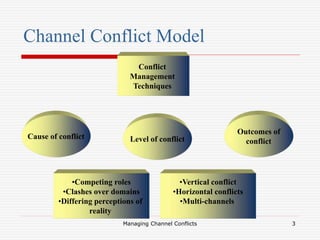
Channel Conflict Model
Conflict
Management
Techniques
Cause of conflict Level of conflict
Outcomes of
conflict
•Competing roles
•Clashes over domains
•Differing perceptions of
reality
•Vertical conflict
•Horizontal conflicts
•Multi-channels
Managing Channel Conflicts 4
Sources of Conflict
 Goal incompatibility
 Differing perception of reality
 Clashes over domains
 Product range
 Population and territory coverage
 Performance of channel functions
Managing Channel Conflicts 5
Types of Conflicts
 Pre-contractual and post-contractual conflicts
 Channel level conflicts
 Vertical channel conflicts
 Horizontal channel conflicts
 Multi-channel conflicts
Managing Channel Conflicts 6
Conflict Management Technique
 Negotiation (Bargaining)
 Initial bids
 Extent of flexibility
 Time of negotiation
 Communication content
 Negotiation outcome
Managing Channel Conflicts 7
Conflict Management Technique
 Persuasive Mechanism
 Problem-solving Strategies
 Political Strategies
 Co-option
 Personal Relationships
 Error clarification
 Distribution indicators
 Meetings
 Appreciate each channel member’s requirements
 Communication
Managing Channel Conflicts 8
Channel Leadership
 Role of leadership power in resolving conflicts
 Reward power
 Coercive power
 Expert power
 Reference power
 Legitimate power
Managing Channel Conflicts 9
Summary
 Sources of conflict
 Types of conflicts
 Conflict management techniques
 Channel leadership
Thank you

Channel Conflict.ppt

  • 1.
    Chapter - 22 ManagingChannel Conflicts
  • 2.
    Managing Channel Conflicts2 Objectives  Sources of conflict  Types of conflicts  Conflict management techniques  Channel leadership
  • 3.
    Managing Channel Conflicts3 Channel Conflict Model Conflict Management Techniques Cause of conflict Level of conflict Outcomes of conflict •Competing roles •Clashes over domains •Differing perceptions of reality •Vertical conflict •Horizontal conflicts •Multi-channels
  • 4.
    Managing Channel Conflicts4 Sources of Conflict  Goal incompatibility  Differing perception of reality  Clashes over domains  Product range  Population and territory coverage  Performance of channel functions
  • 5.
    Managing Channel Conflicts5 Types of Conflicts  Pre-contractual and post-contractual conflicts  Channel level conflicts  Vertical channel conflicts  Horizontal channel conflicts  Multi-channel conflicts
  • 6.
    Managing Channel Conflicts6 Conflict Management Technique  Negotiation (Bargaining)  Initial bids  Extent of flexibility  Time of negotiation  Communication content  Negotiation outcome
  • 7.
    Managing Channel Conflicts7 Conflict Management Technique  Persuasive Mechanism  Problem-solving Strategies  Political Strategies  Co-option  Personal Relationships  Error clarification  Distribution indicators  Meetings  Appreciate each channel member’s requirements  Communication
  • 8.
    Managing Channel Conflicts8 Channel Leadership  Role of leadership power in resolving conflicts  Reward power  Coercive power  Expert power  Reference power  Legitimate power
  • 9.
    Managing Channel Conflicts9 Summary  Sources of conflict  Types of conflicts  Conflict management techniques  Channel leadership
  • 10.