MANAGING A MASS COLLECTIONS REVIEW FROM
ASSESSMENT TO DESELECTION
David Burke
Managing Librarian for Description Management
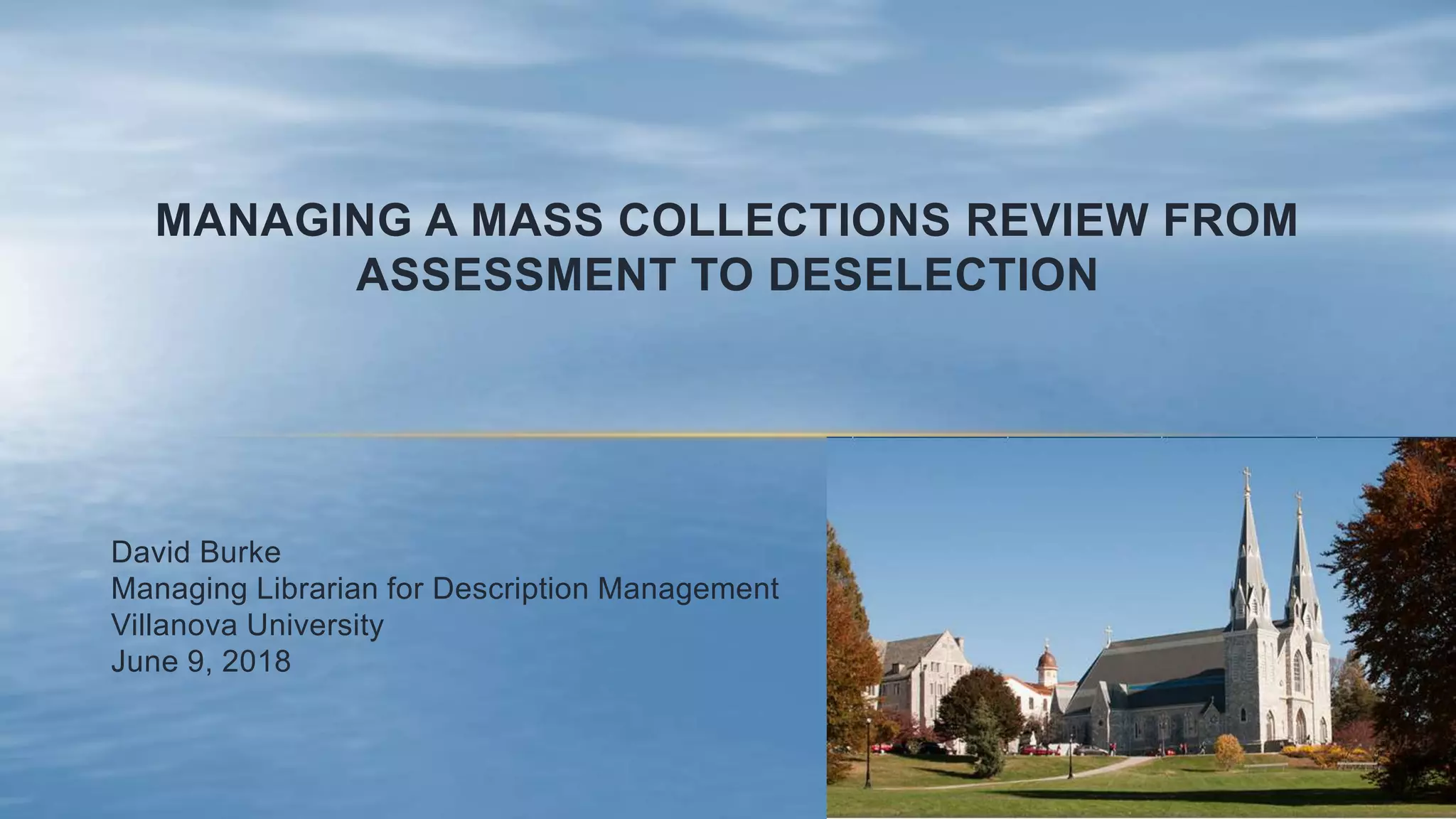
Villanova University
June 9, 2018
THE NEED TO WEED
• Preparation for a building renovation
• Campus-wide report demonstrated need for more study space on campus
• Past faculty complaints of students using outdated research
• No formal, overall, or systematic collections review in the past
• Evolving trends in collection building
• Electronic over print formats
• New collaborative collection building over multiple libraries (e.g.,
HathiTrust, EAST, PALCI)
TIMELINE
• January 2017: Director announces collection review to staff, and GreenGlass will help
narrow decisions
• March 2017: bibliographic, item, and circulation data sent to OCLC to load into
GreenGlass
• April 2017: Villanova’s GreenGlass instance goes live, training soon follows
• Summer 2017: 2 task forces created
Collections Review Working Group
GreenGlass Data Analysis Working Group
• August 2017: Collections Review Task Force convenes to oversee collection review
processes and adjust as necessary
• September 2017: Director talks to Provost, Deans, and Faculty Senate to announce
and justify the need for the review ; AI librarians do the same with their assigned
departments and begin preparing lists for public review
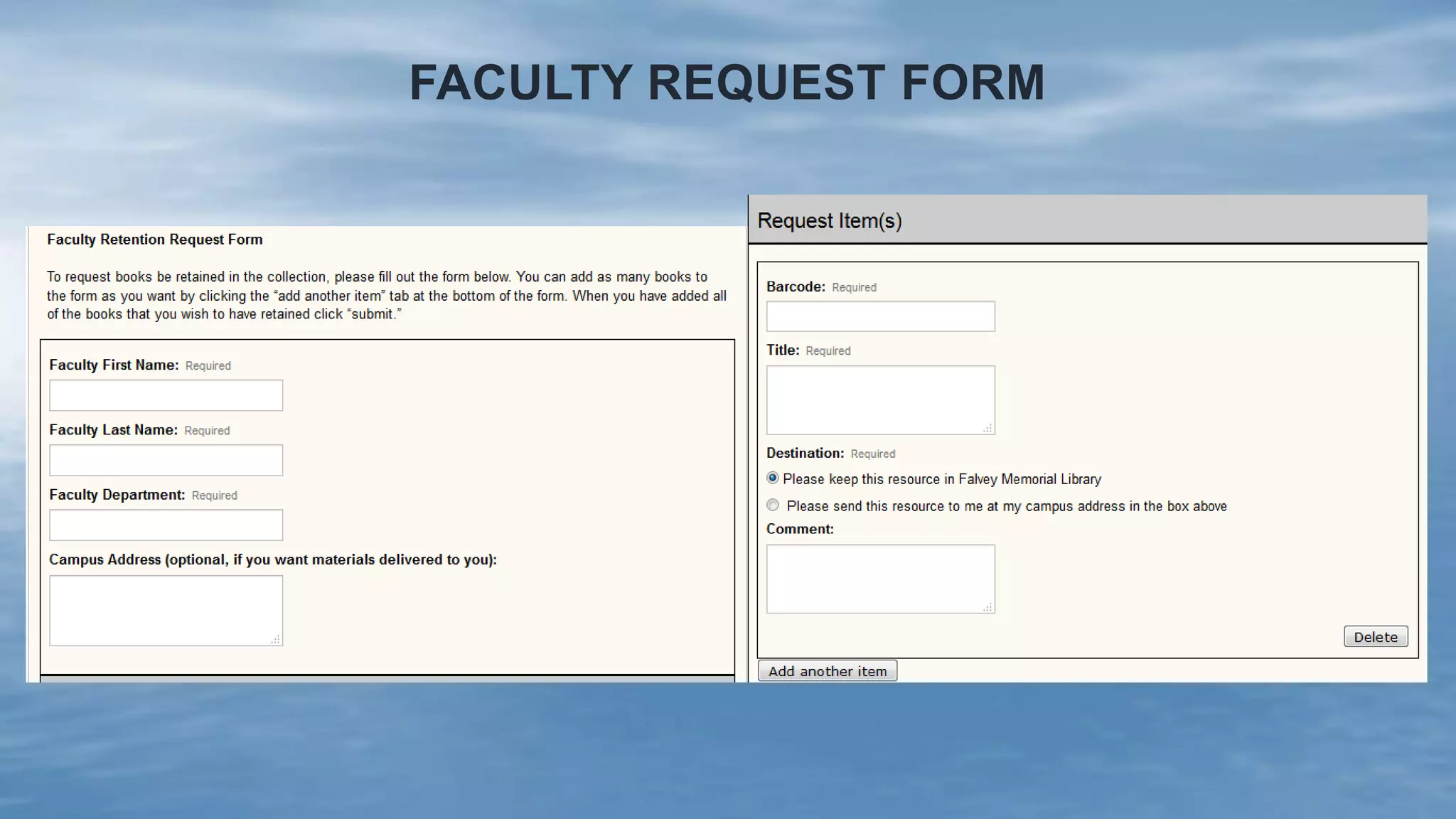
• October 2017: first lists made publicly available for faculty review ; online forms
created to allow faculty to request titles remain in collection or added to their personal
libraries
• November 2017: student workers use October lists to pull books from shelves and
remove from catalog ; first batch shipped to Better World Books ; new lists made
available for review while old lists taken down
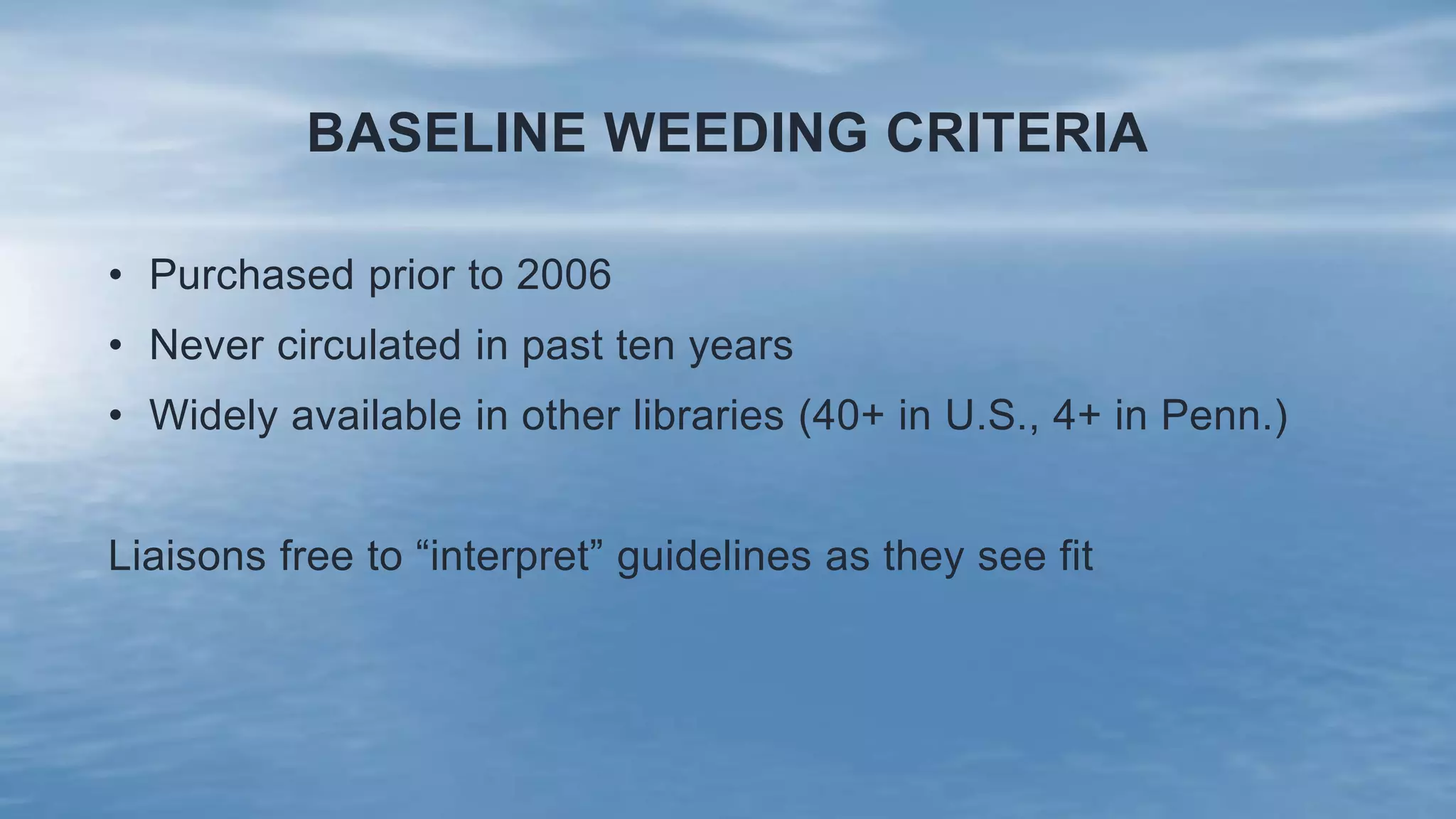
BASELINE WEEDING CRITERIA
• Purchased prior to 2006
• Never circulated in past ten years
• Widely available in other libraries (40+ in U.S., 4+ in Penn.)
Liaisons free to “interpret” guidelines as they see fit
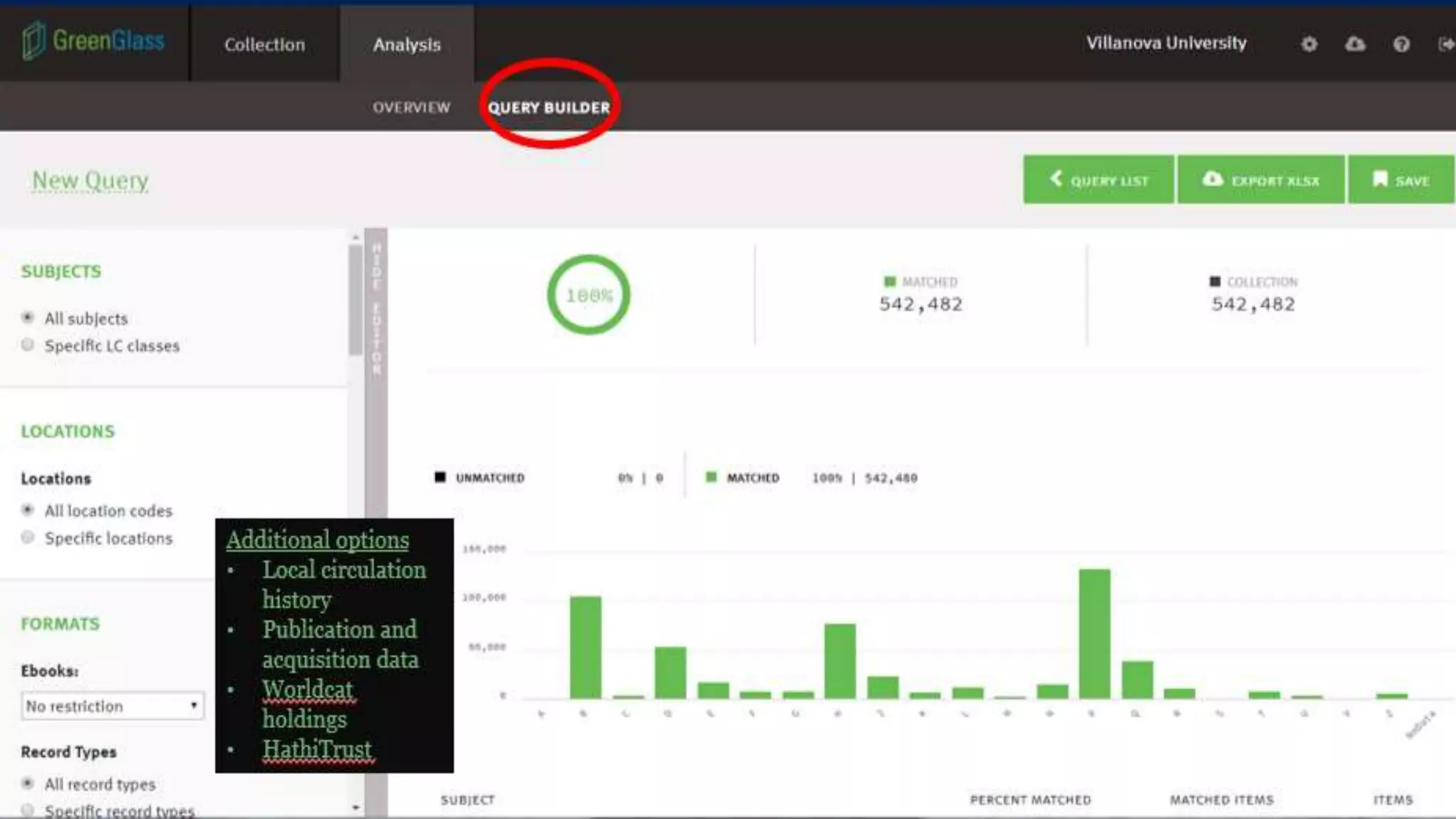
• Product of OCLC, Sustainable Collections Services (SCS)
• “Visualize and model your collection.”
• Promotional website: http://www.oclc.org/en/sustainable-
collections/features.html
• 215 libraries using GreenGlass (ca. April 2018)
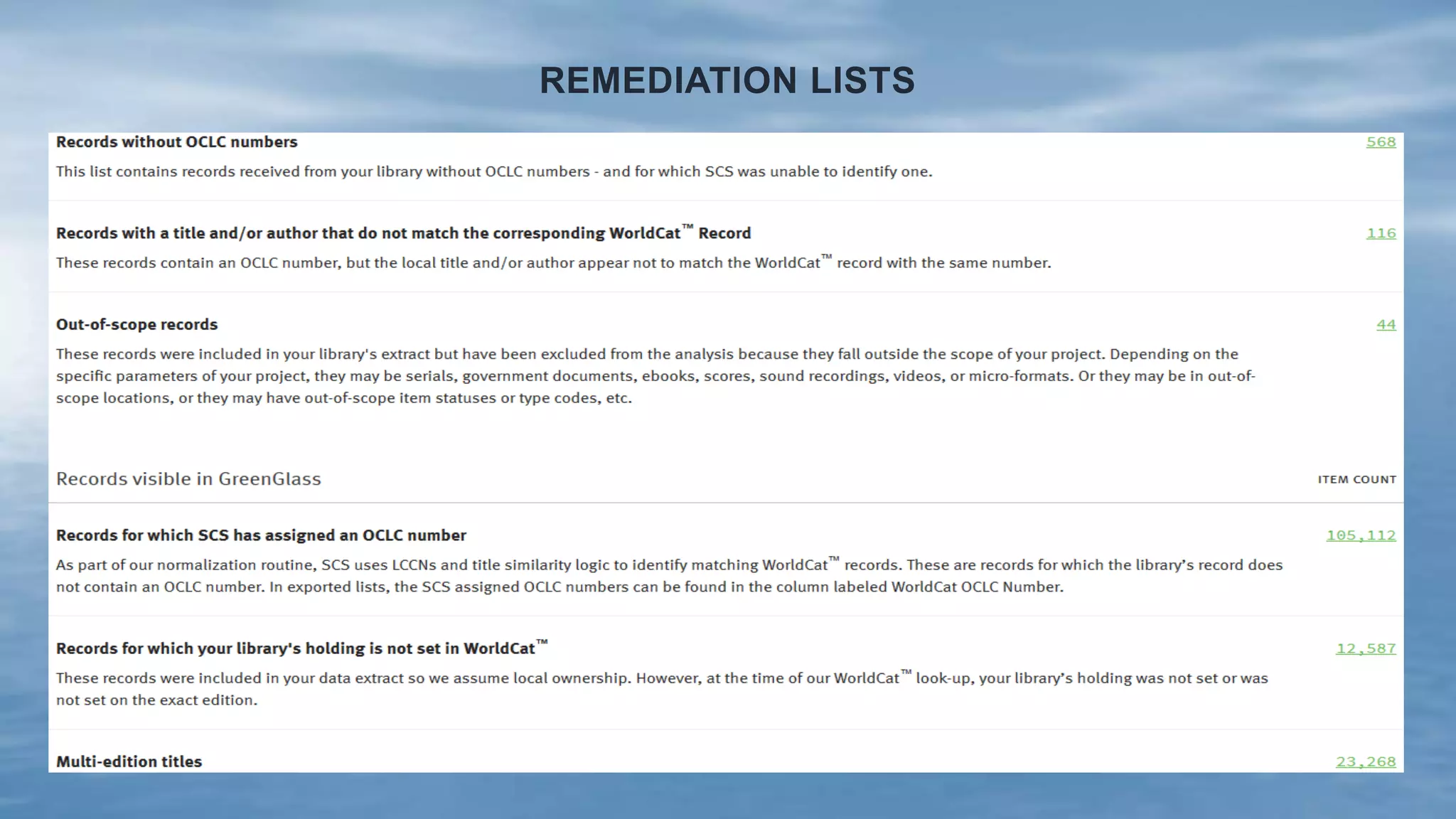
REMEDIATION LISTS
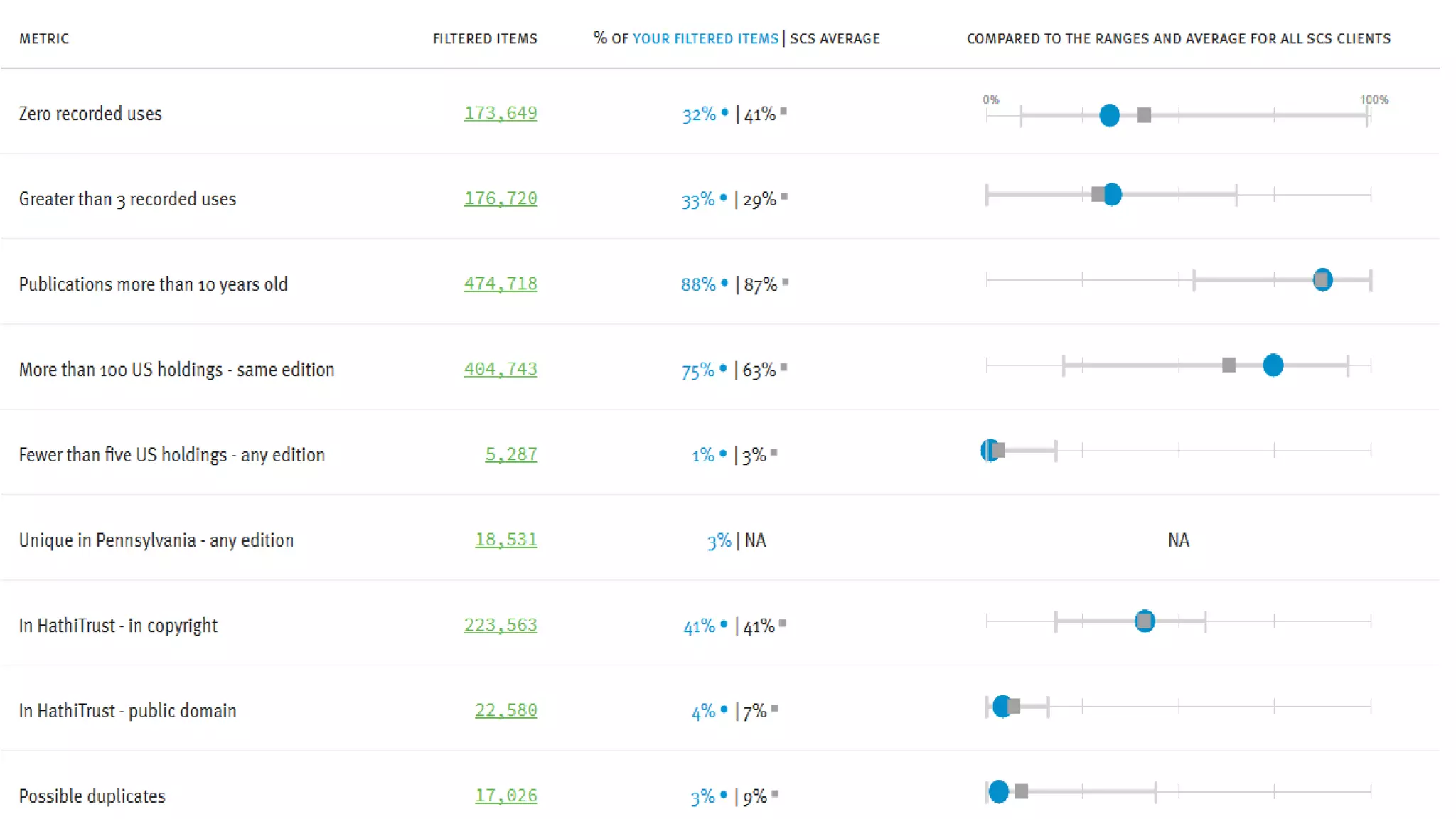
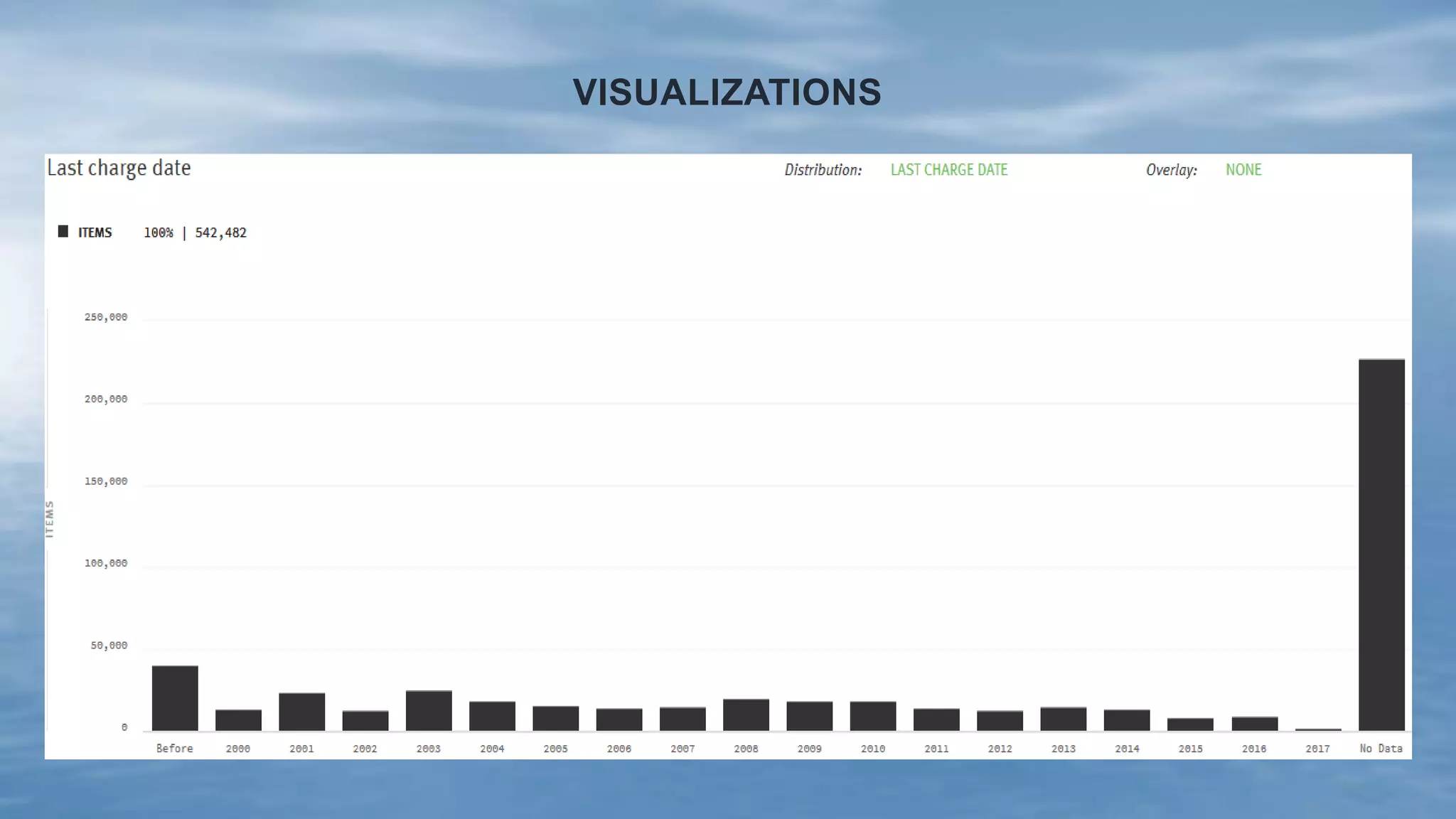
VISUALIZATIONS
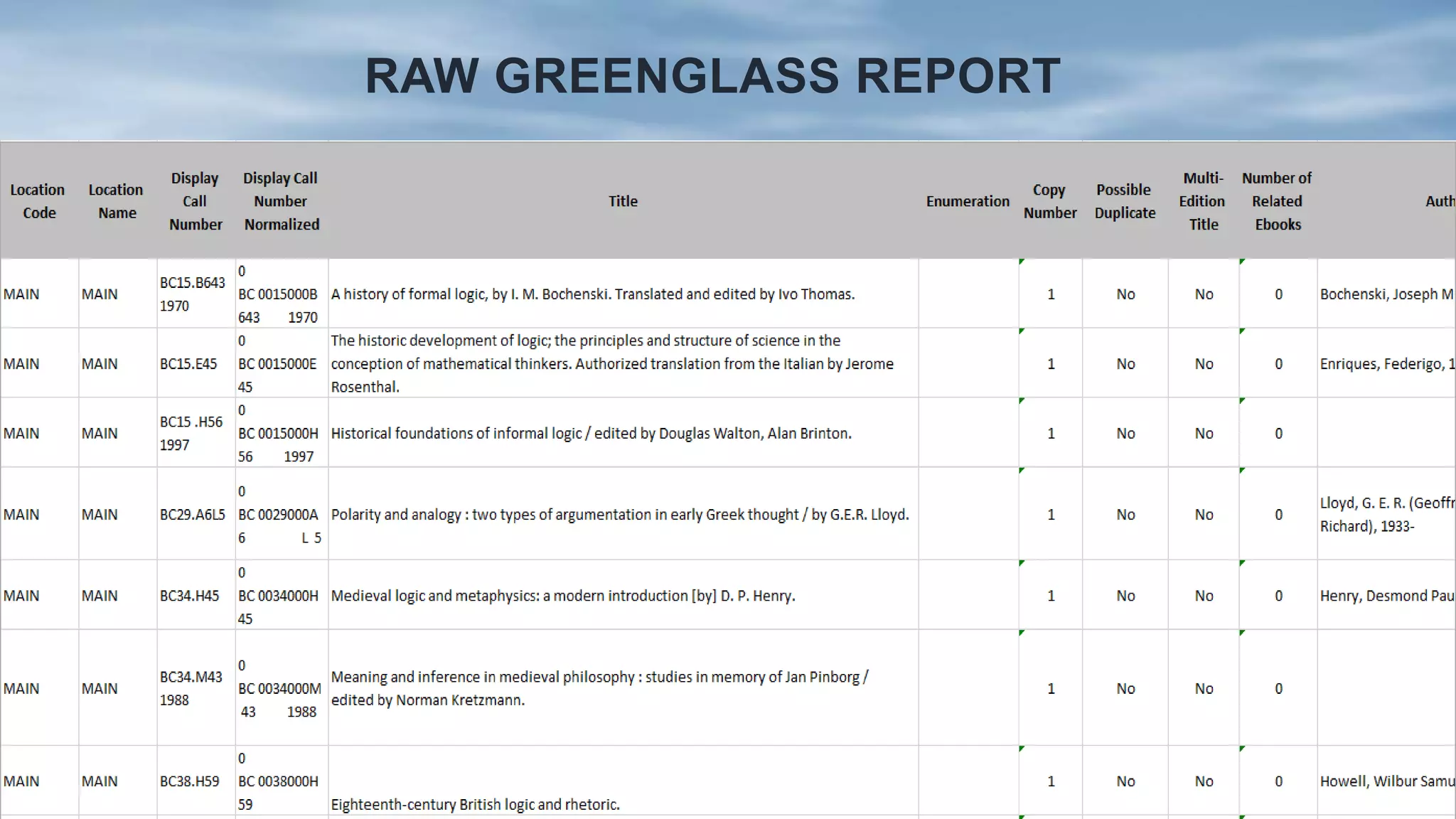
RAW GREENGLASS REPORT
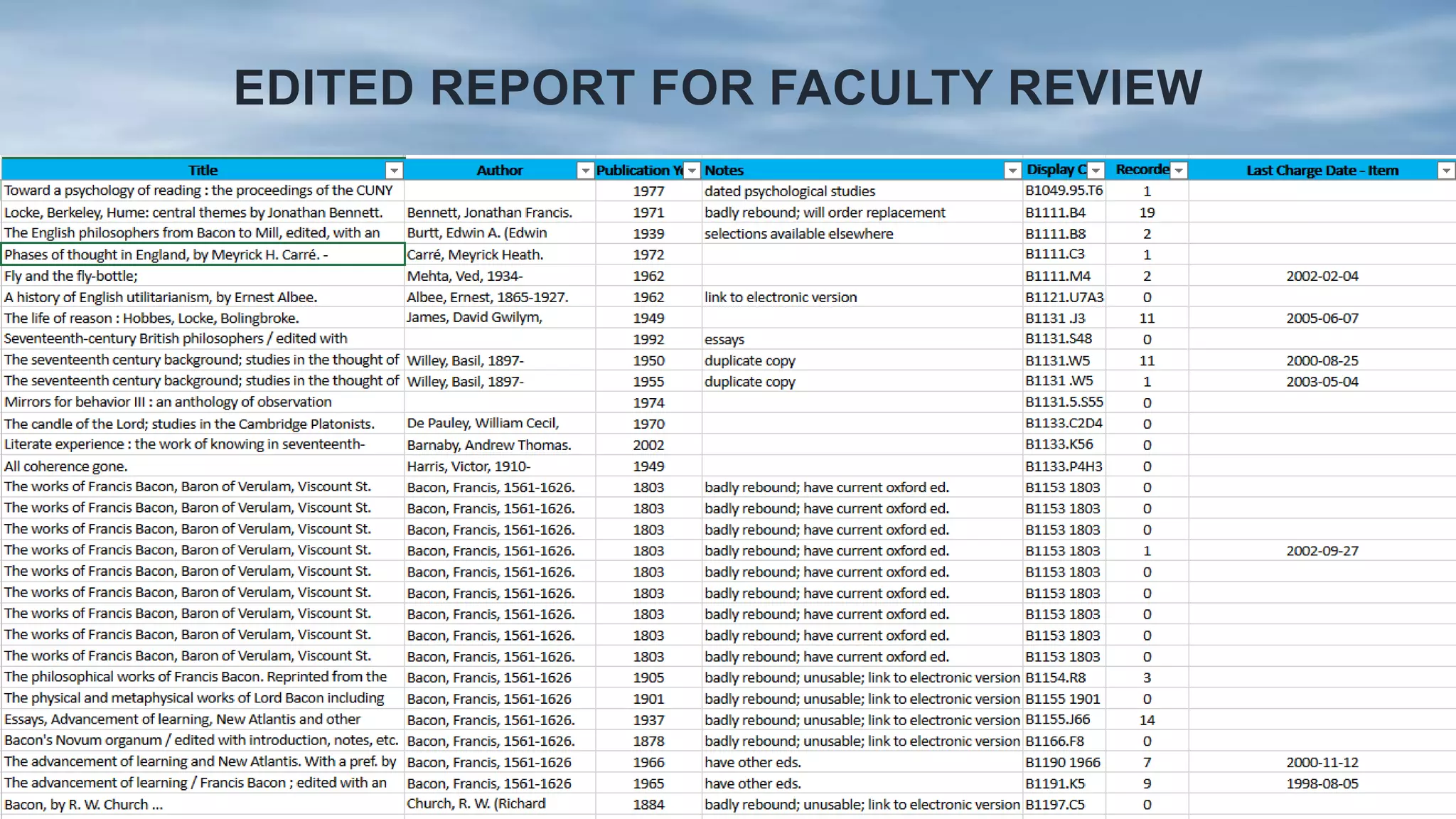
EDITED REPORT FOR FACULTY REVIEW
FACULTY REQUEST FORM
REACTIONS: LIBRARIANS
• Use of GreenGlass data & base criteria varied between liaison librarians
• OCLC holdings the least used datapoint
• How many check-outs were ILL; how many uses did not involve check-out
• Great for weeding in-bulk by answering easy questions
• Some usability issues (e.g., cannot download visualizations)
• Easier to share lists of interdisciplinary titles
• Discovered more post-1923 books are public domain and in HathiTrust than
expected
• Hope to inaugurate more systematic approach to collection review
REACTIONS: FACULTY
• Volume of GreenGlass data appeased those from whom we most needed support
(provost, deans, most department chairs)
• Most faculty silent on the project
• Appreciation for opportunity to claim weeded books for themselves
• Some vocal dissenters, most placated through further explanation
• Concerns of a weeding “quota”
• Over-reactions to limited titles on weeding lists (e.g., copy of The Republic listed
isn’t only one Library has)
• Some feel lists too long to review in a month
• Some diehard advocates of print over electronic under any and all circumstances
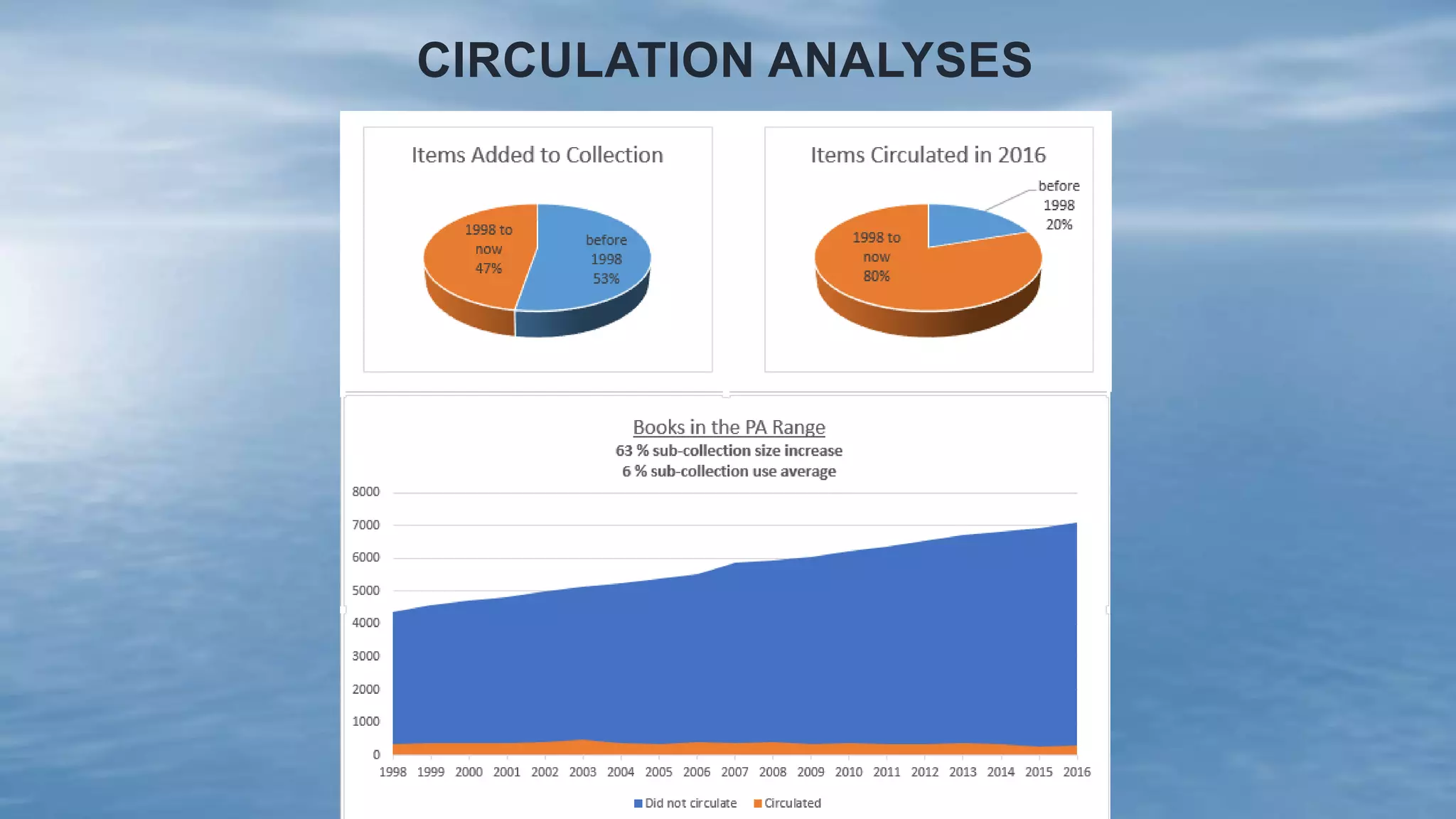
CIRCULATION ANALYSES
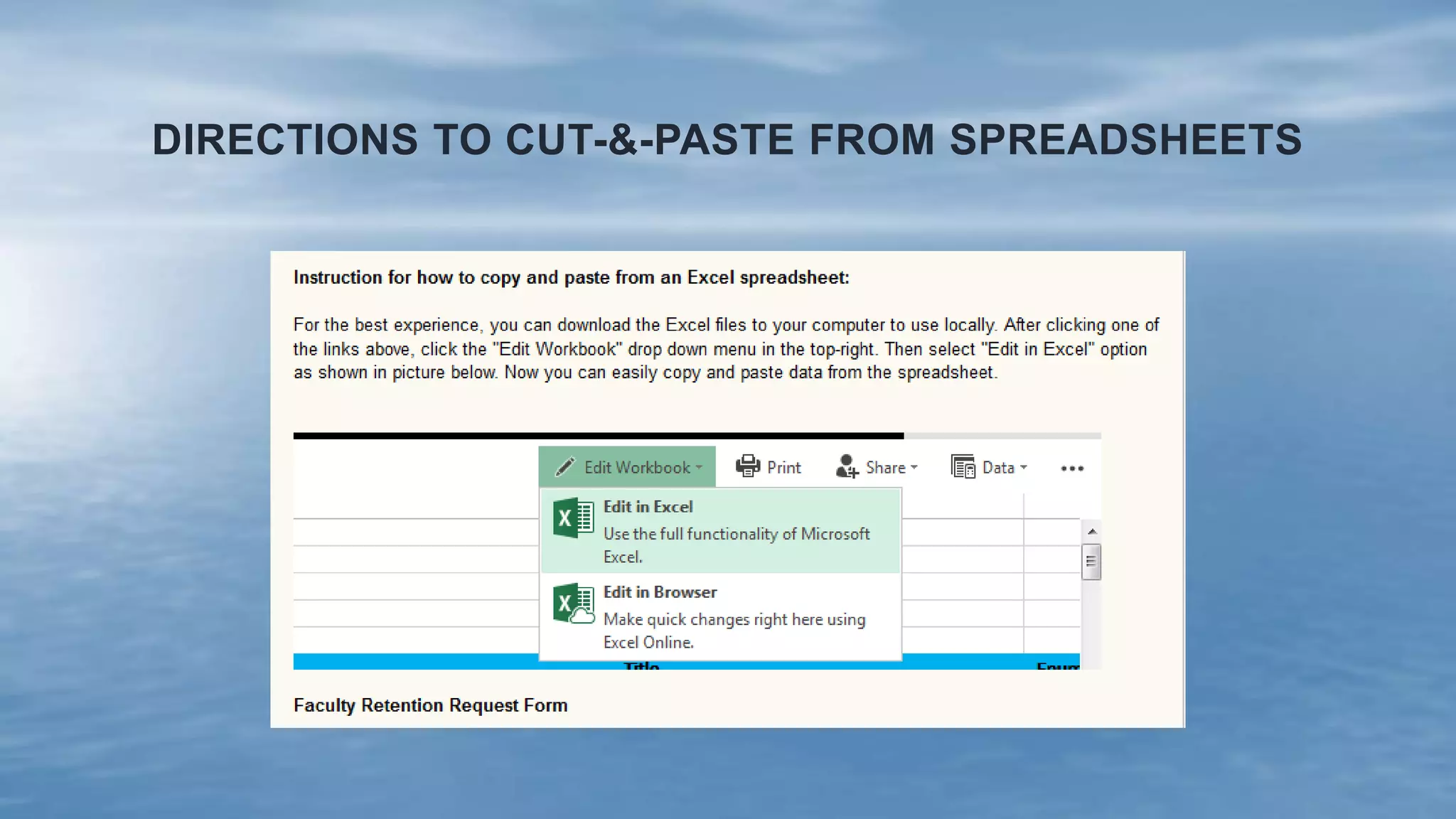
DIRECTIONS TO CUT-&-PASTE FROM SPREADSHEETS
GREENGLASS ASSESSMENT
• Amount of data and graphics makes for a great public relations tool
• Librarians mostly made decisions based on circulation data—readily available locally
in Voyager
• Cannot download graphics
• Faculty suggestions: Include citation counts and publisher for each title
• For holdings include metropolitan areas as option
• Some flaws in data (partly mistakes on our part)
NEXT STEPS
• New data run in GreenGlass, Winter 2019
• Cleanup of any remaining/new remediation candidates
• Full inventory of remaining collection
• Make collection reviews routine
• Educate faculty on costs of print retention
QUESTIONS?
David Burke
Villanova University
610-519-7365
david.burke@villanova.edu

Managing a Mass Collections Review from Assessment to Deselection

  • 1.
    MANAGING A MASSCOLLECTIONS REVIEW FROM ASSESSMENT TO DESELECTION David Burke Managing Librarian for Description Management Villanova University June 9, 2018
  • 2.
    THE NEED TOWEED • Preparation for a building renovation • Campus-wide report demonstrated need for more study space on campus • Past faculty complaints of students using outdated research • No formal, overall, or systematic collections review in the past • Evolving trends in collection building • Electronic over print formats • New collaborative collection building over multiple libraries (e.g., HathiTrust, EAST, PALCI)
  • 3.
    TIMELINE • January 2017:Director announces collection review to staff, and GreenGlass will help narrow decisions • March 2017: bibliographic, item, and circulation data sent to OCLC to load into GreenGlass • April 2017: Villanova’s GreenGlass instance goes live, training soon follows • Summer 2017: 2 task forces created Collections Review Working Group GreenGlass Data Analysis Working Group • August 2017: Collections Review Task Force convenes to oversee collection review processes and adjust as necessary
  • 4.
    • September 2017:Director talks to Provost, Deans, and Faculty Senate to announce and justify the need for the review ; AI librarians do the same with their assigned departments and begin preparing lists for public review • October 2017: first lists made publicly available for faculty review ; online forms created to allow faculty to request titles remain in collection or added to their personal libraries • November 2017: student workers use October lists to pull books from shelves and remove from catalog ; first batch shipped to Better World Books ; new lists made available for review while old lists taken down
  • 5.
    BASELINE WEEDING CRITERIA •Purchased prior to 2006 • Never circulated in past ten years • Widely available in other libraries (40+ in U.S., 4+ in Penn.) Liaisons free to “interpret” guidelines as they see fit
  • 6.
    • Product ofOCLC, Sustainable Collections Services (SCS) • “Visualize and model your collection.” • Promotional website: http://www.oclc.org/en/sustainable- collections/features.html • 215 libraries using GreenGlass (ca. April 2018)
  • 8.
  • 9.
  • 11.
  • 12.
    EDITED REPORT FORFACULTY REVIEW
  • 13.
  • 14.
    REACTIONS: LIBRARIANS • Useof GreenGlass data & base criteria varied between liaison librarians • OCLC holdings the least used datapoint • How many check-outs were ILL; how many uses did not involve check-out • Great for weeding in-bulk by answering easy questions • Some usability issues (e.g., cannot download visualizations) • Easier to share lists of interdisciplinary titles • Discovered more post-1923 books are public domain and in HathiTrust than expected • Hope to inaugurate more systematic approach to collection review
  • 15.
    REACTIONS: FACULTY • Volumeof GreenGlass data appeased those from whom we most needed support (provost, deans, most department chairs) • Most faculty silent on the project • Appreciation for opportunity to claim weeded books for themselves • Some vocal dissenters, most placated through further explanation • Concerns of a weeding “quota” • Over-reactions to limited titles on weeding lists (e.g., copy of The Republic listed isn’t only one Library has) • Some feel lists too long to review in a month • Some diehard advocates of print over electronic under any and all circumstances
  • 16.
  • 17.
    DIRECTIONS TO CUT-&-PASTEFROM SPREADSHEETS
  • 18.
    GREENGLASS ASSESSMENT • Amountof data and graphics makes for a great public relations tool • Librarians mostly made decisions based on circulation data—readily available locally in Voyager • Cannot download graphics • Faculty suggestions: Include citation counts and publisher for each title • For holdings include metropolitan areas as option • Some flaws in data (partly mistakes on our part)
  • 19.
    NEXT STEPS • Newdata run in GreenGlass, Winter 2019 • Cleanup of any remaining/new remediation candidates • Full inventory of remaining collection • Make collection reviews routine • Educate faculty on costs of print retention
  • 20.