MANAGEMENT OF
NATURAL RESOURCES
Made By:
Blue Group
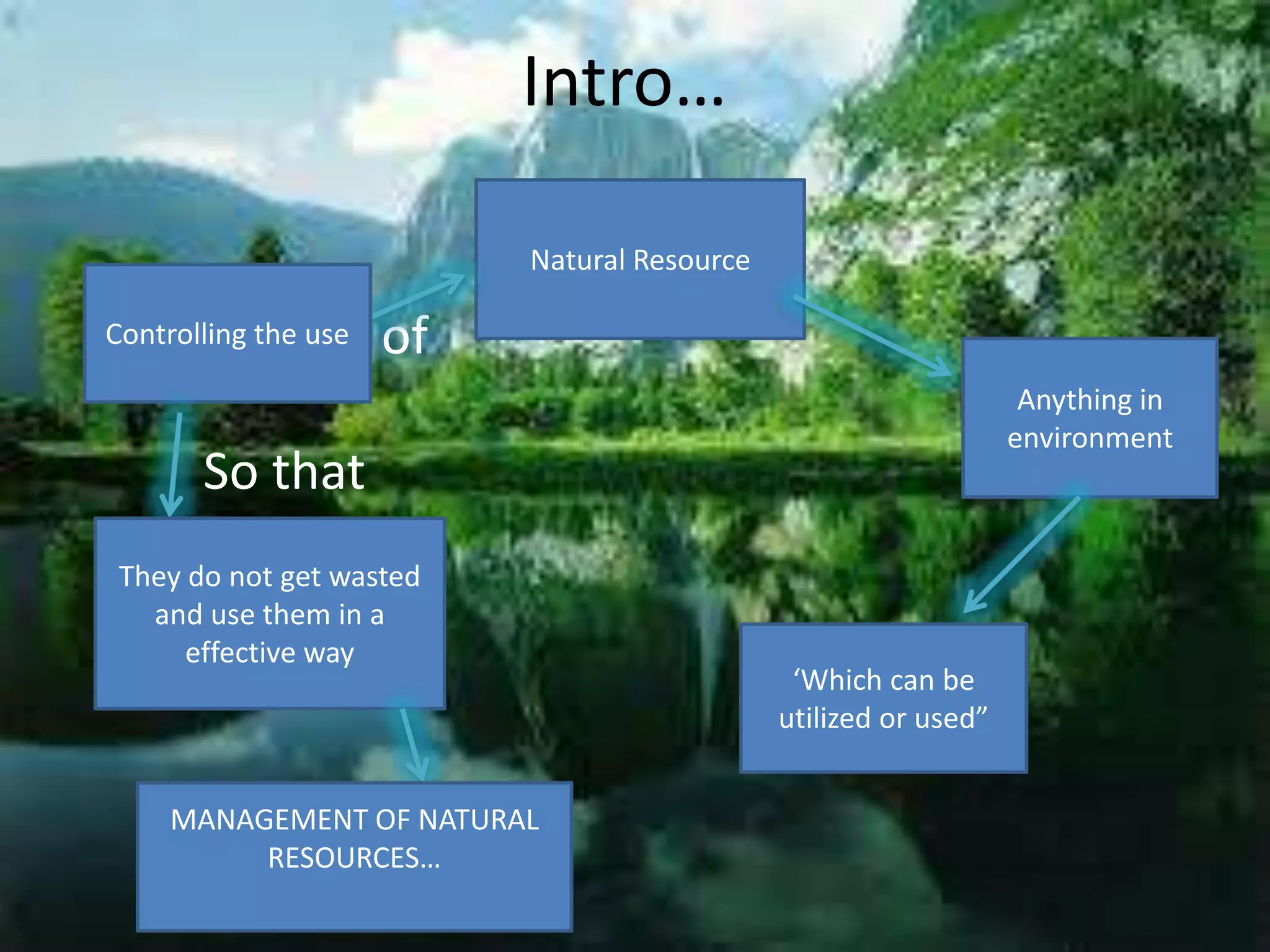
Intro…
Natural Resource

Controlling the use

of
Anything in
environment

So that
They do not get wasted
and use them in a
effective way

MANAGEMENT OF NATURAL
RESOURCES…

‘Which can be
utilized or used”
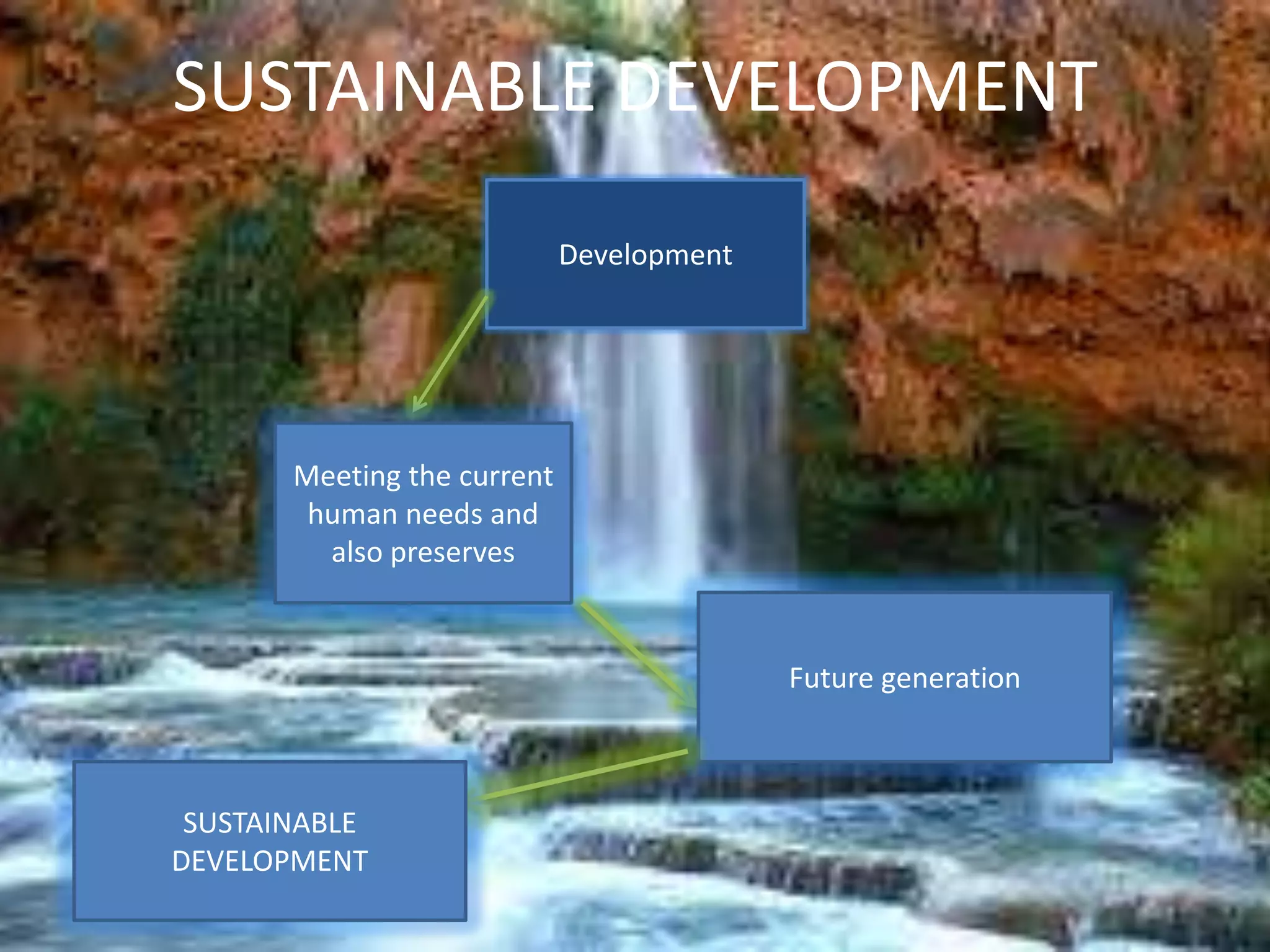
SUSTAINABLE DEVELOPMENT
Development

Meeting the current
human needs and
also preserves

Future generation

SUSTAINABLE
DEVELOPMENT
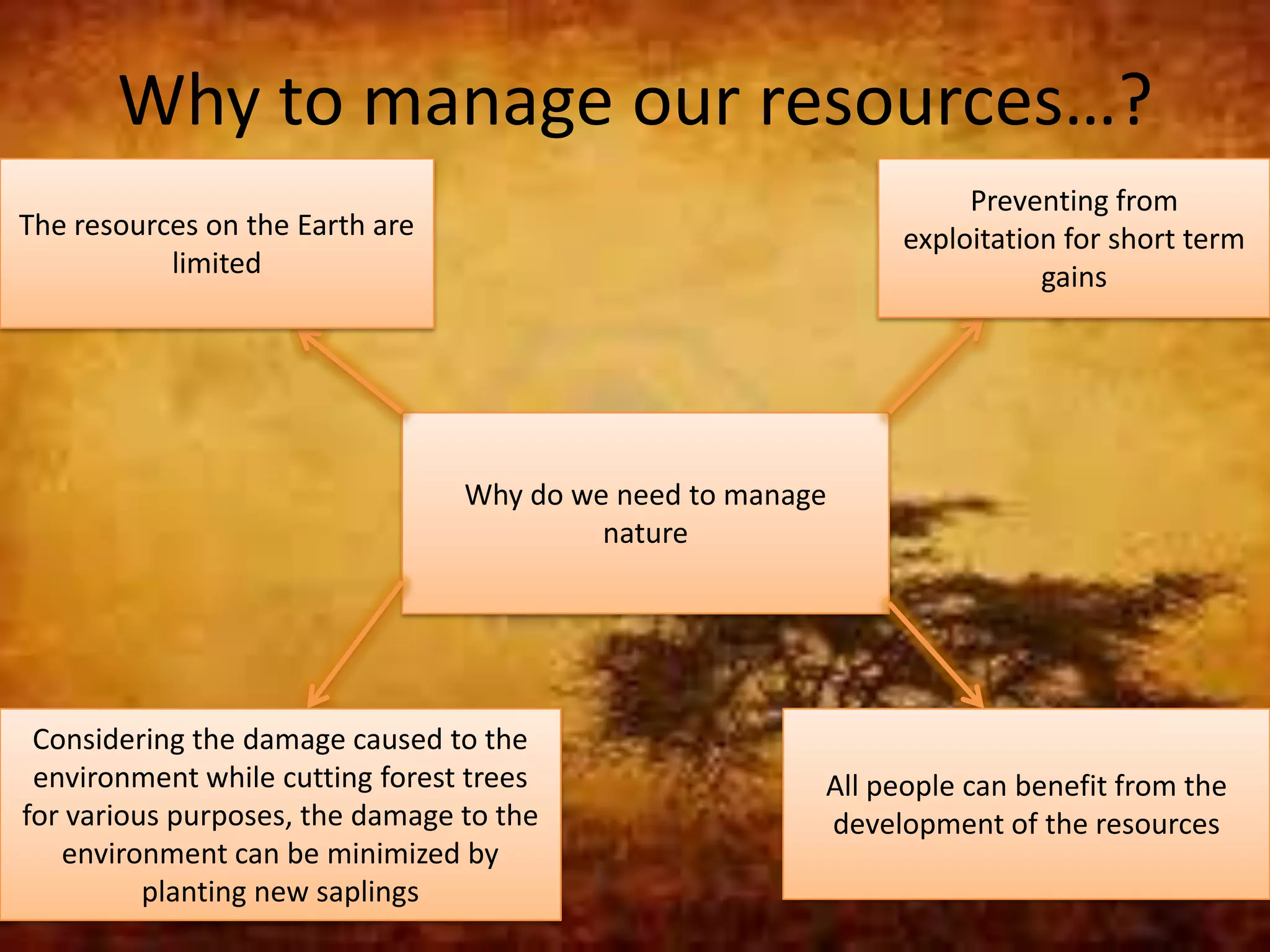
Why to manage our resources…?
Preventing from
exploitation for short term
gains

The resources on the Earth are
limited

Why do we need to manage
nature

Considering the damage caused to the
environment while cutting forest trees
for various purposes, the damage to the
environment can be minimized by
planting new saplings

All people can benefit from the
development of the resources
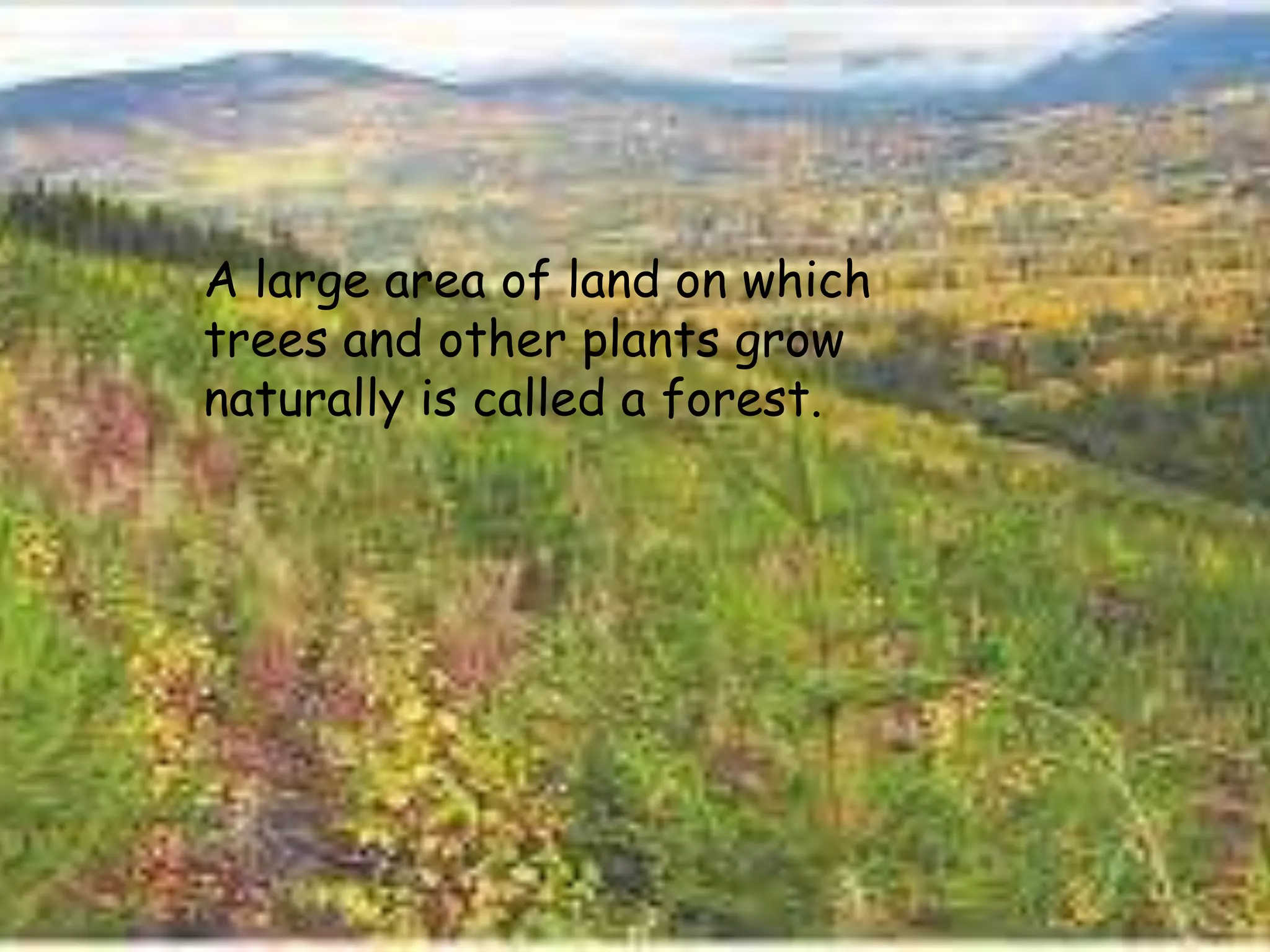
A large area of land on which
trees and other plants grow
naturally is called a forest.
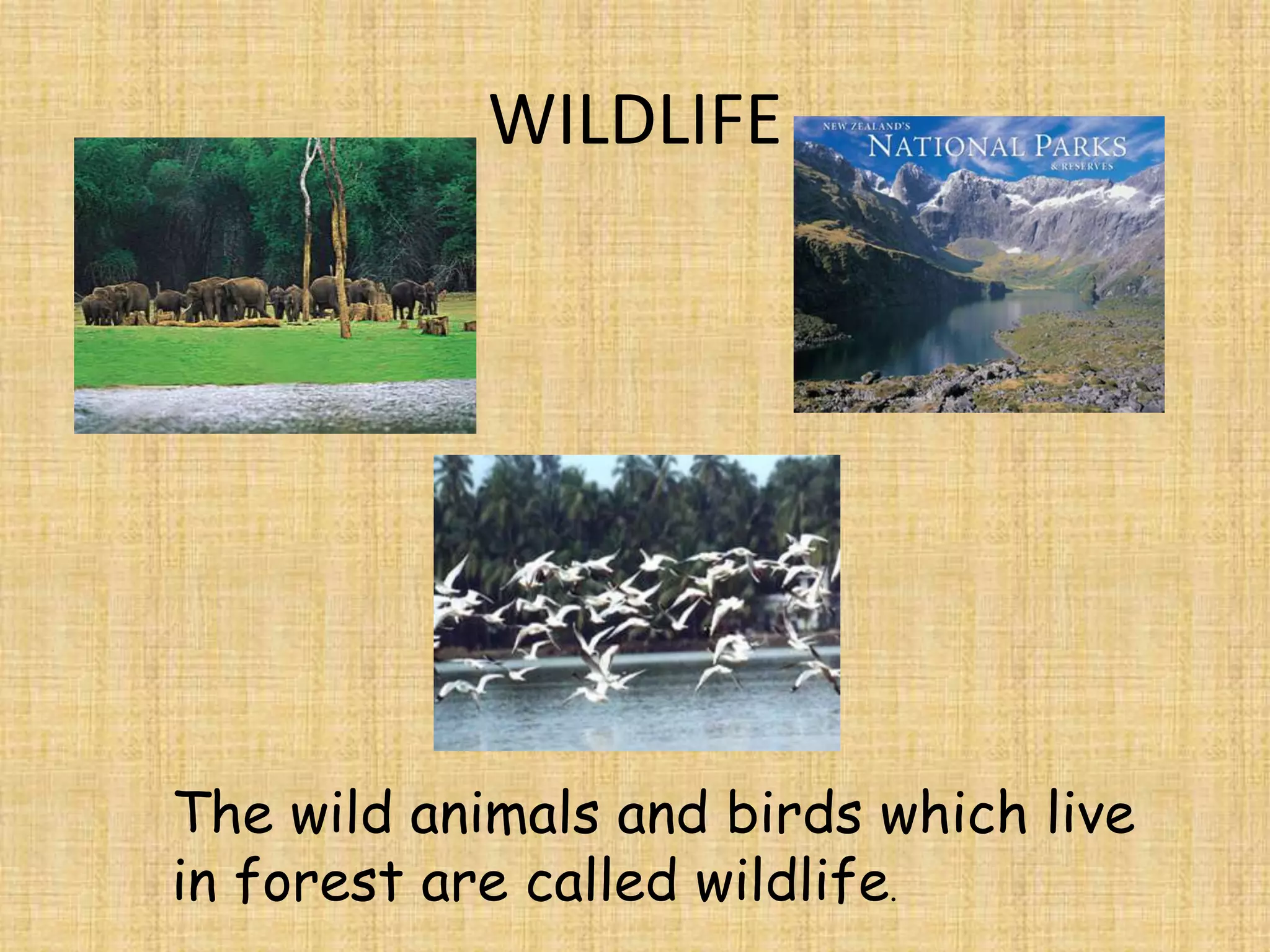
WILDLIFE

The wild animals and birds which live
in forest are called wildlife.
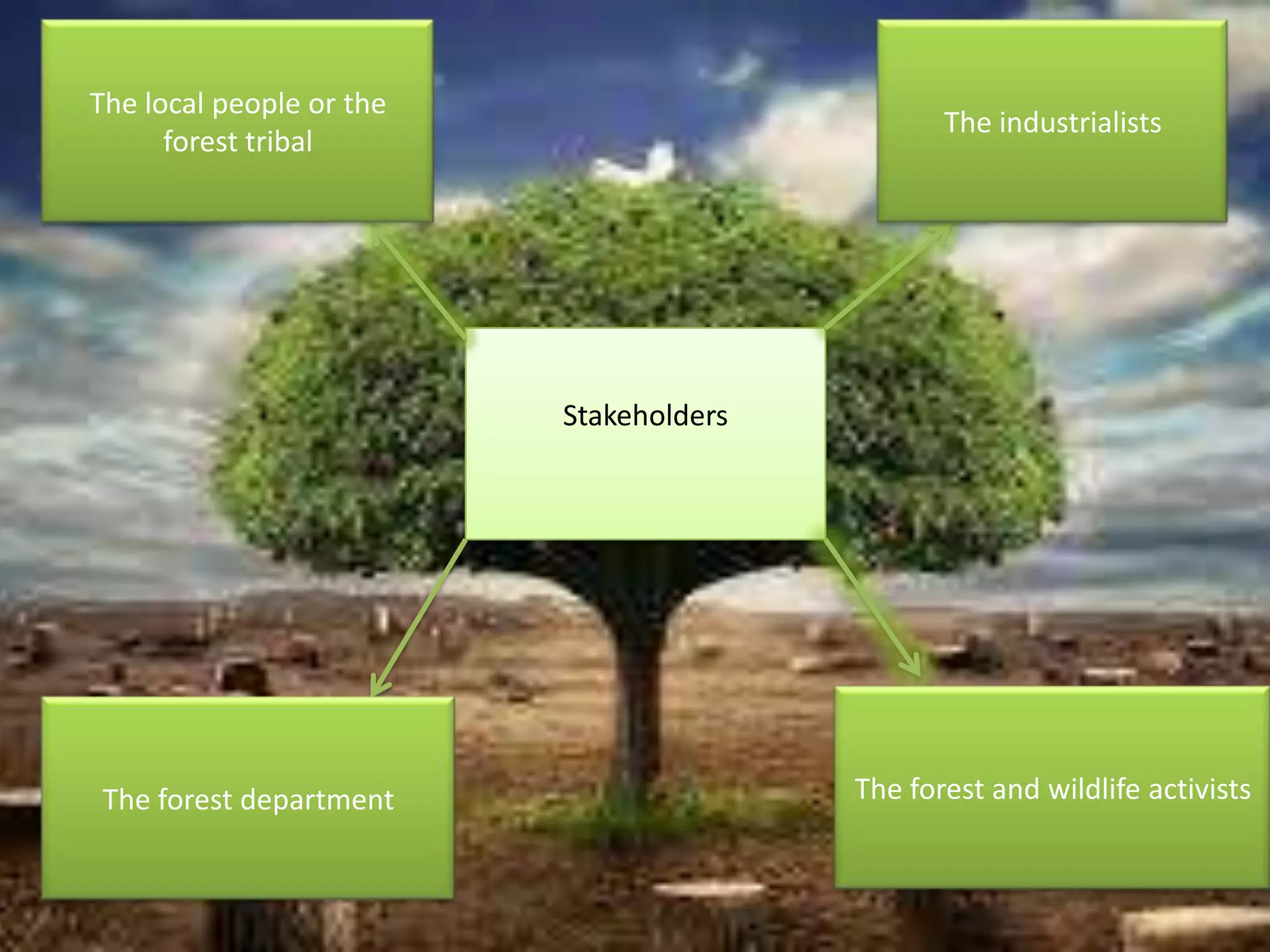
The local people or the
forest tribal

The industrialists

Stakeholders

The forest department

The forest and wildlife activists
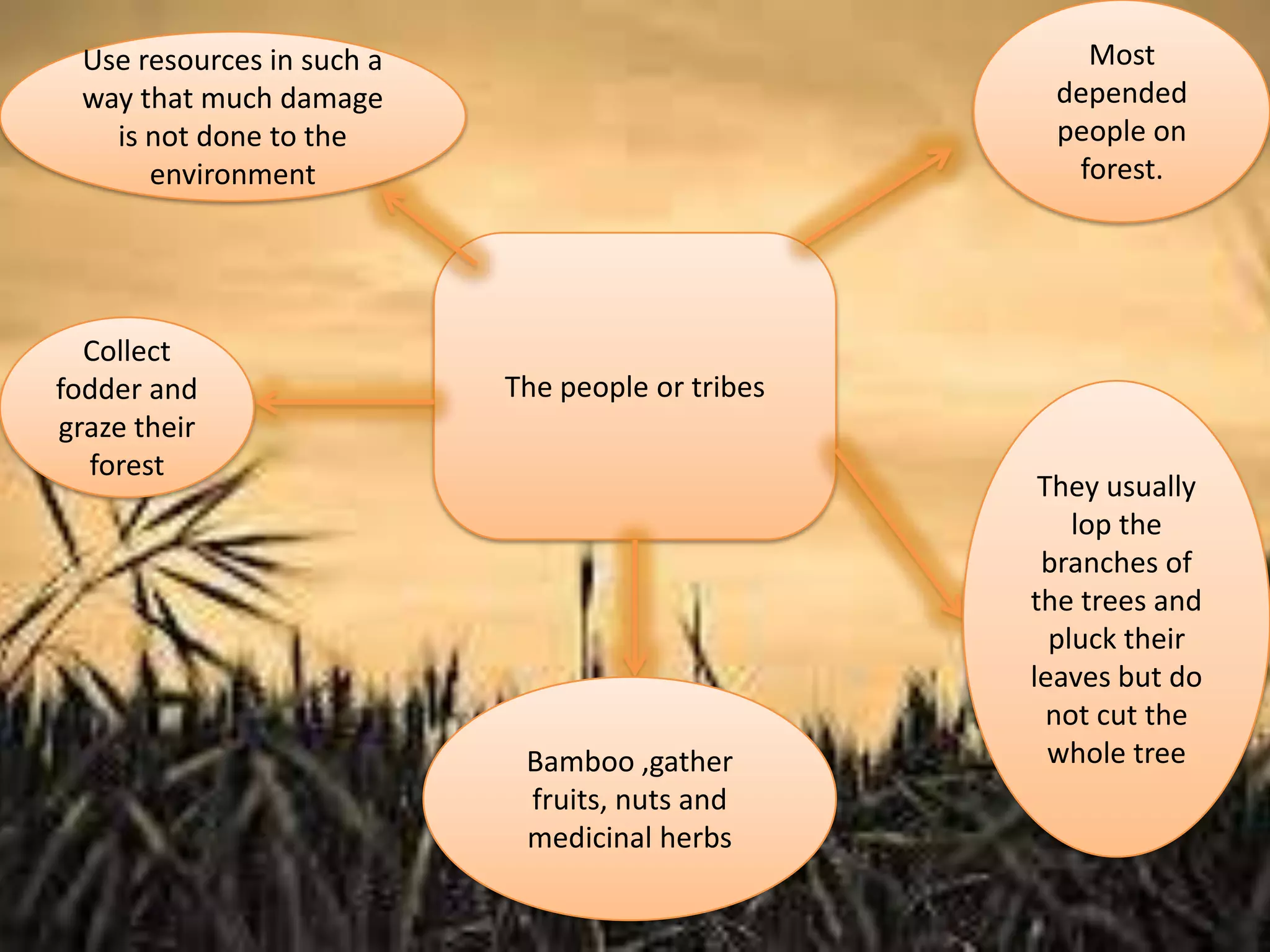
Most
depended
people on
forest.

Use resources in such a
way that much damage
is not done to the
environment

Collect
fodder and
graze their
forest

The people or tribes

Bamboo ,gather
fruits, nuts and
medicinal herbs

They usually
lop the
branches of
the trees and
pluck their
leaves but do
not cut the
whole tree
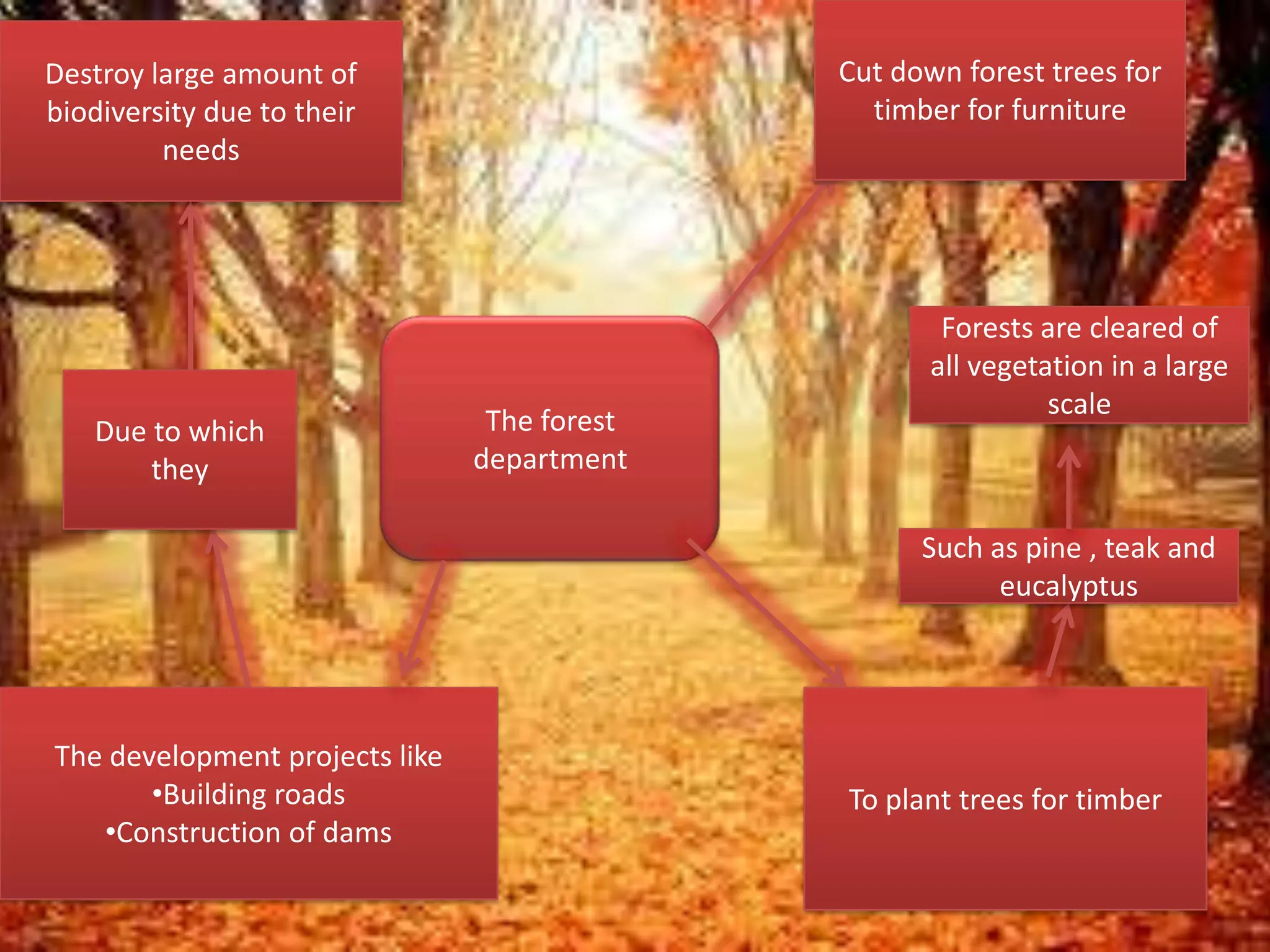
Cut down forest trees for
timber for furniture

Destroy large amount of
biodiversity due to their
needs

Due to which
they

The forest
department

Forests are cleared of
all vegetation in a large
scale

Such as pine , teak and
eucalyptus

The development projects like
•Building roads
•Construction of dams

To plant trees for timber
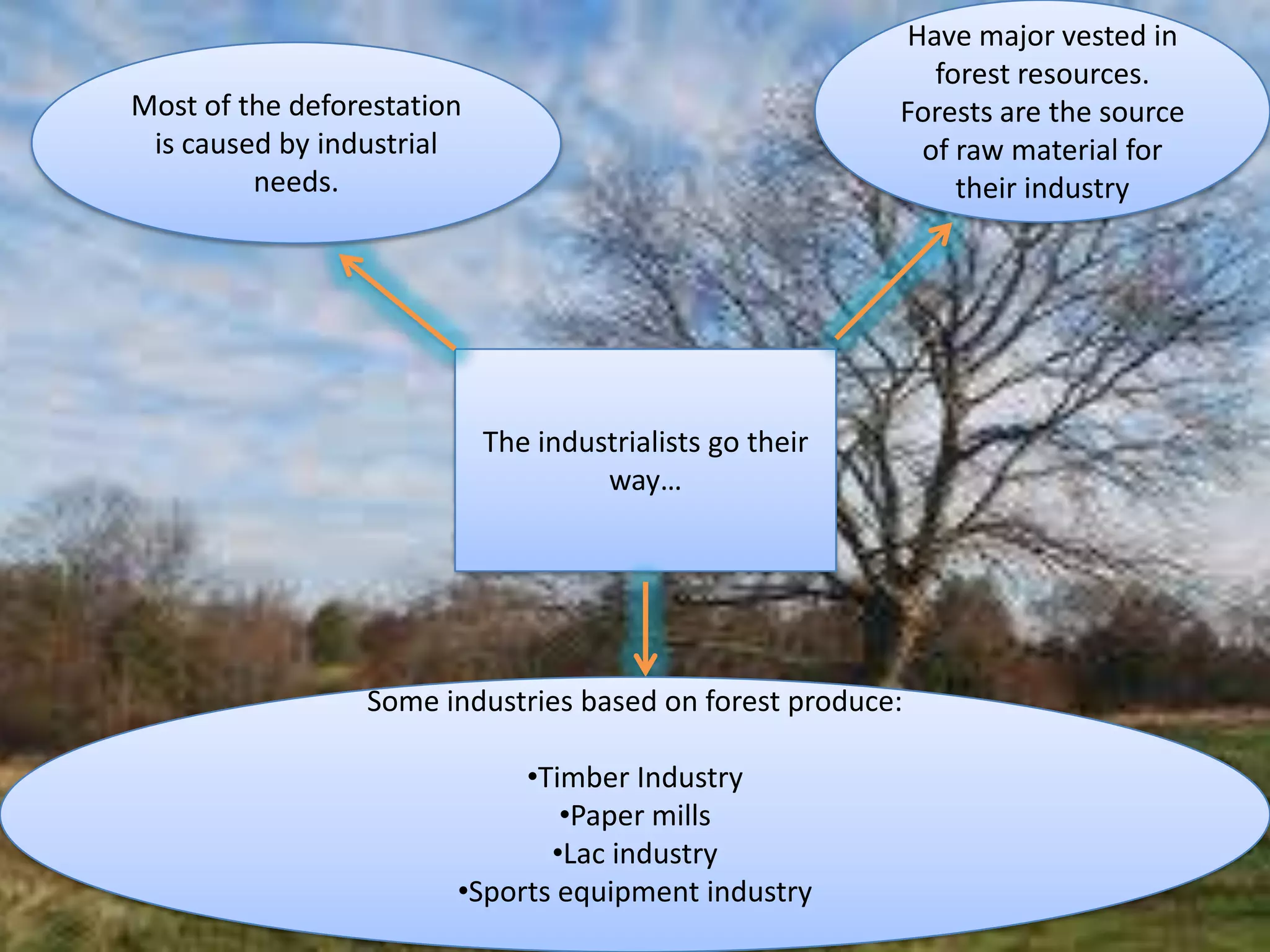
Have major vested in
forest resources.
Forests are the source
of raw material for
their industry

Most of the deforestation
is caused by industrial
needs.

The industrialists go their
way…

Some industries based on forest produce:
•Timber Industry
•Paper mills
•Lac industry
•Sports equipment industry
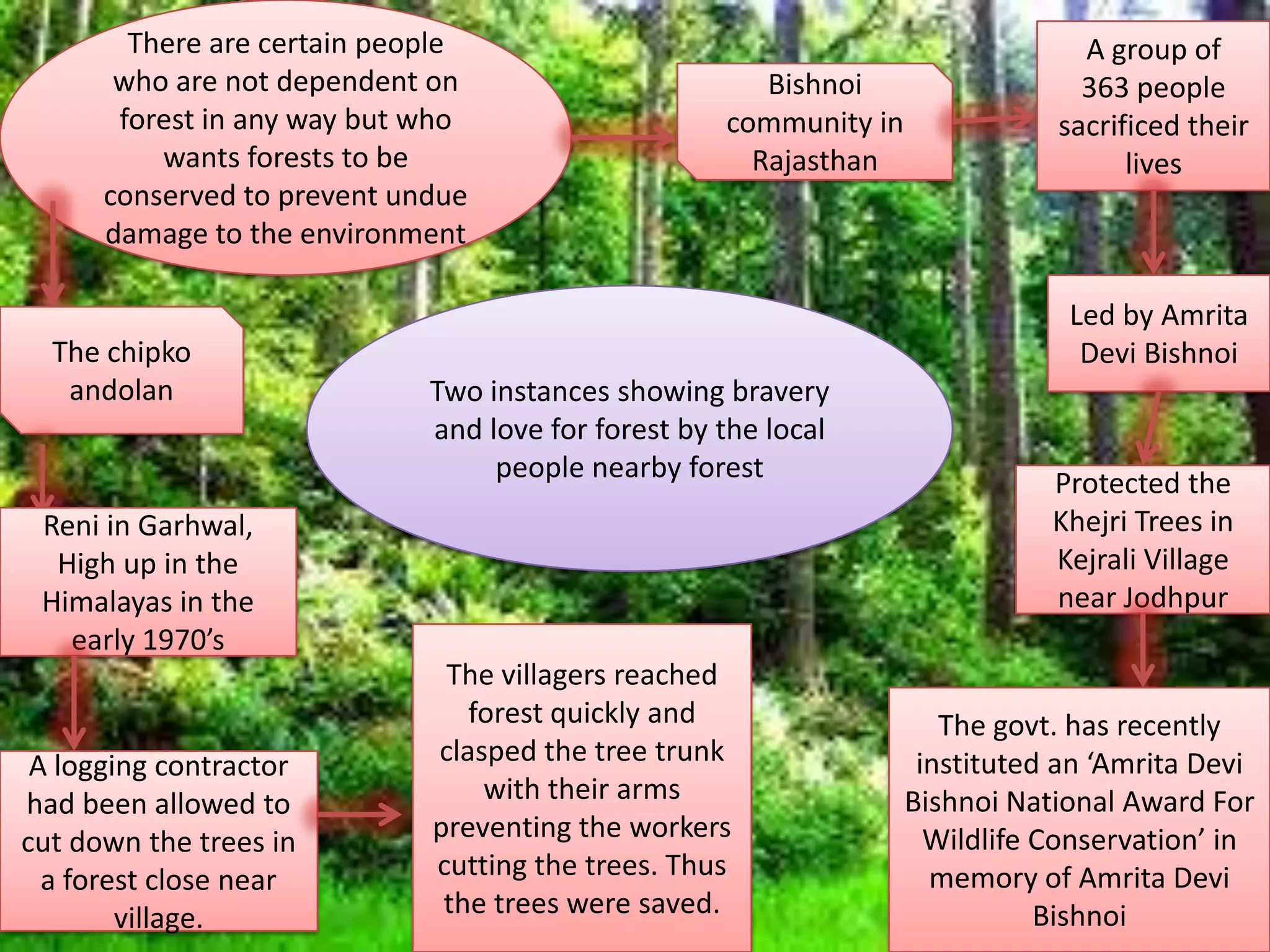
There are certain people
who are not dependent on
forest in any way but who
wants forests to be
conserved to prevent undue
damage to the environment

The chipko
andolan

Bishnoi
community in
Rajasthan

Led by Amrita
Devi Bishnoi
Two instances showing bravery
and love for forest by the local
people nearby forest

Reni in Garhwal,
High up in the
Himalayas in the
early 1970’s

A logging contractor
had been allowed to
cut down the trees in
a forest close near
village.

A group of
363 people
sacrificed their
lives

The villagers reached
forest quickly and
clasped the tree trunk
with their arms
preventing the workers
cutting the trees. Thus
the trees were saved.

Protected the
Khejri Trees in
Kejrali Village
near Jodhpur

The govt. has recently
instituted an ‘Amrita Devi
Bishnoi National Award For
Wildlife Conservation’ in
memory of Amrita Devi
Bishnoi
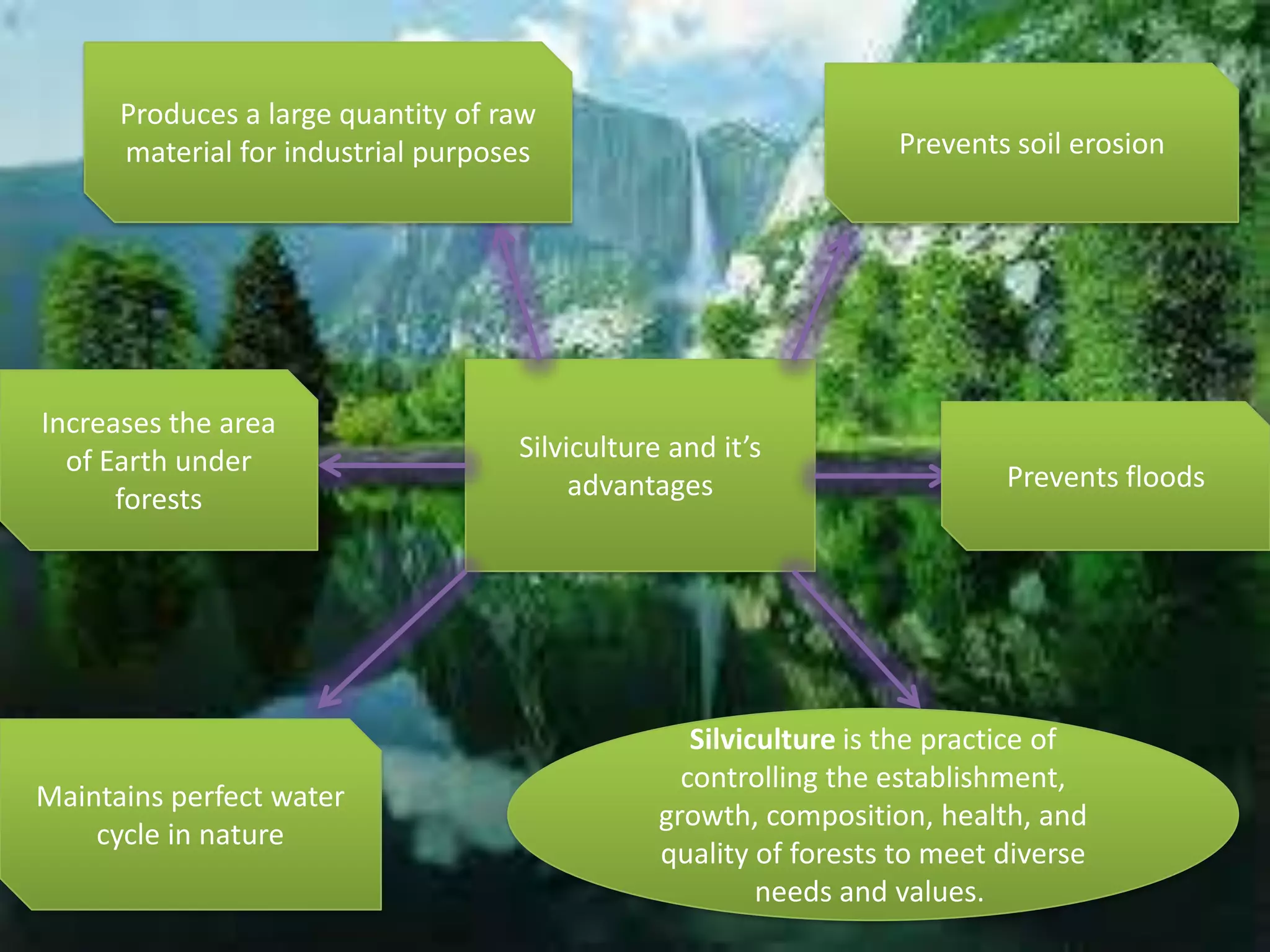
Produces a large quantity of raw
material for industrial purposes

Increases the area
of Earth under
forests

Maintains perfect water
cycle in nature

Prevents soil erosion

Silviculture and it’s
advantages

Prevents floods

Silviculture is the practice of
controlling the establishment,
growth, composition, health, and
quality of forests to meet diverse
needs and values.
Various sources of water are :
•Rains
•Ponds and lakes
•Rains
•Oceans
•Glaciers (Snow Mountains)

WATER FOR ALL

Rains are the most
important source of
water

Water: Basic need for
all forms of life ;
Humans, animals and
plants as well.
Lack of sufficient
vegetation cover on
ground

Population is increasing rapidly

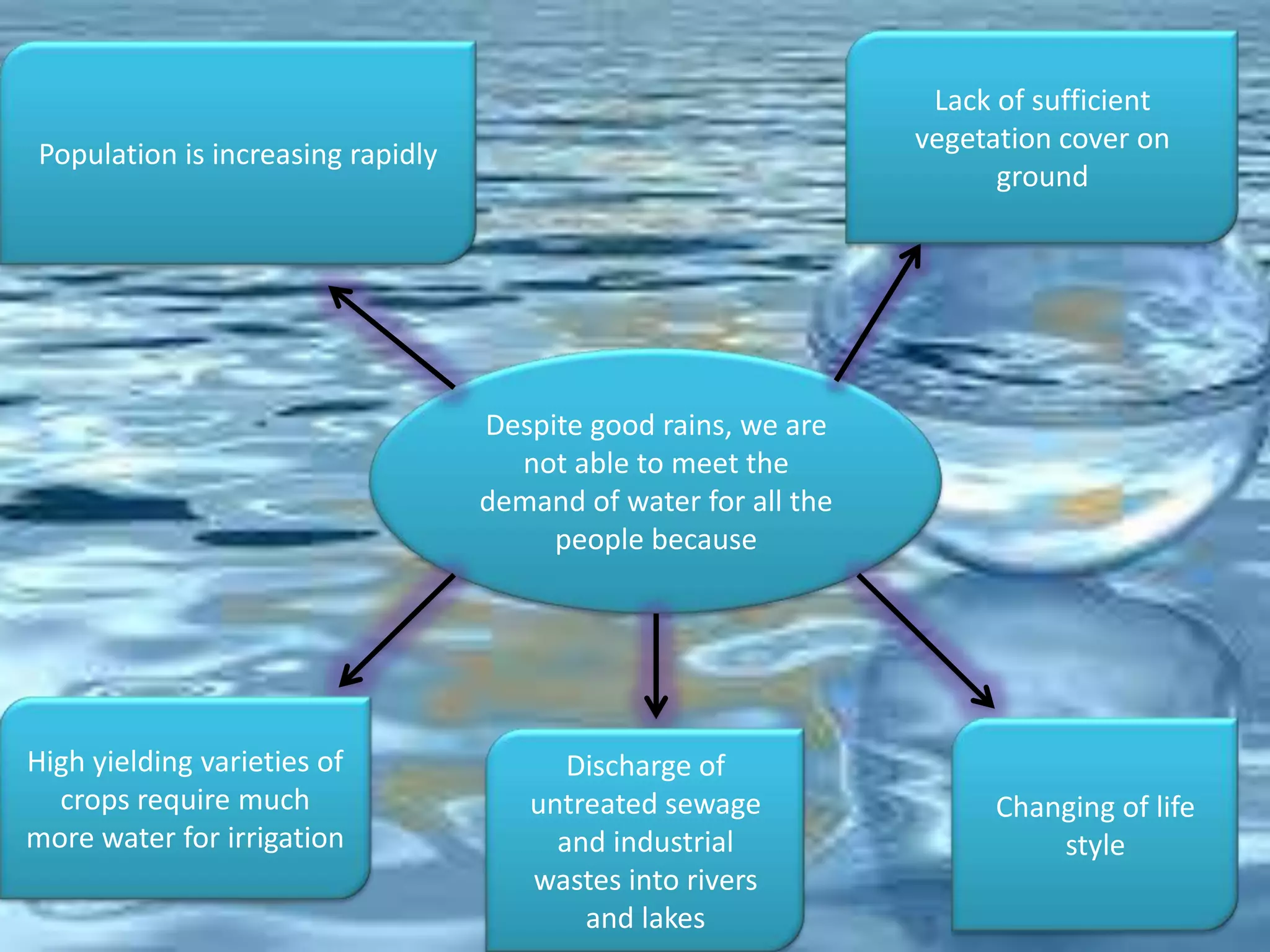
Despite good rains, we are
not able to meet the
demand of water for all the
people because

High yielding varieties of
crops require much
more water for irrigation

Discharge of
untreated sewage
and industrial
wastes into rivers
and lakes

Changing of life
style
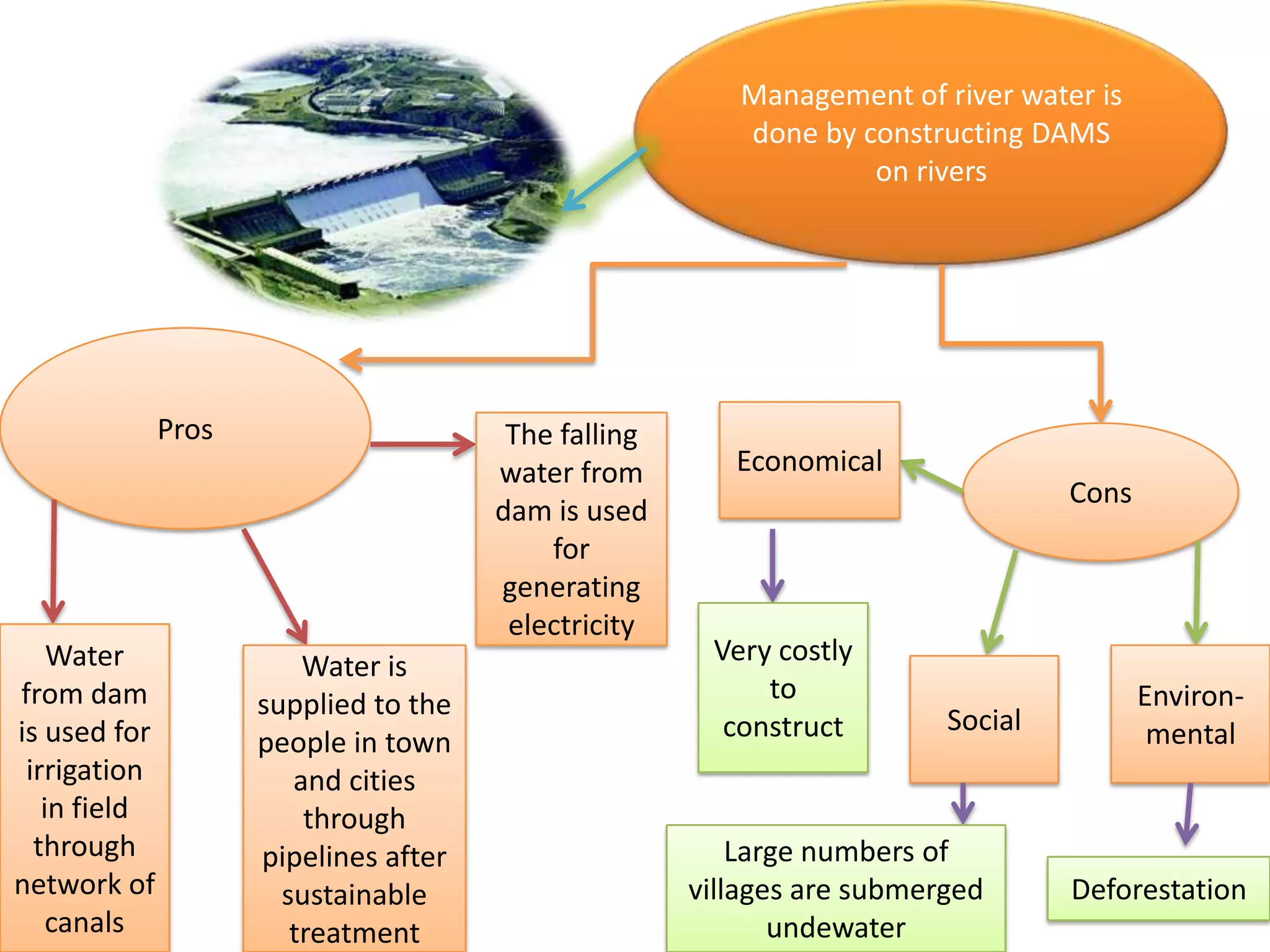
Management of river water is
done by constructing DAMS
on rivers

Pros

Water
from dam
is used for
irrigation
in field
through
network of
canals

The falling
water from
dam is used
for
generating
electricity
Water is
supplied to the
people in town
and cities
through
pipelines after
sustainable
treatment

Economical

Very costly
to
construct

Cons

Social

Large numbers of
villages are submerged
undewater

Environmental

Deforestation
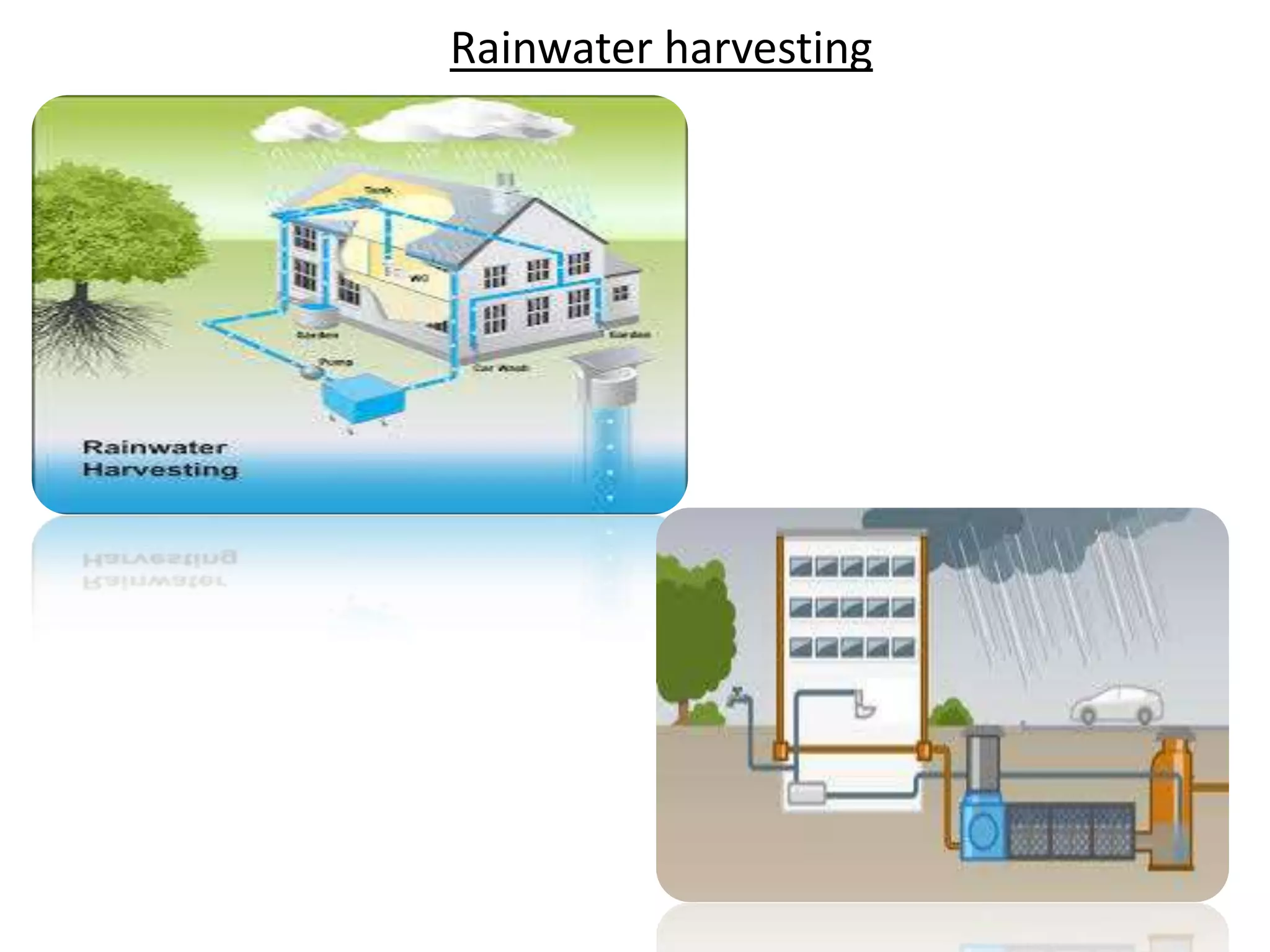
Rainwater harvesting
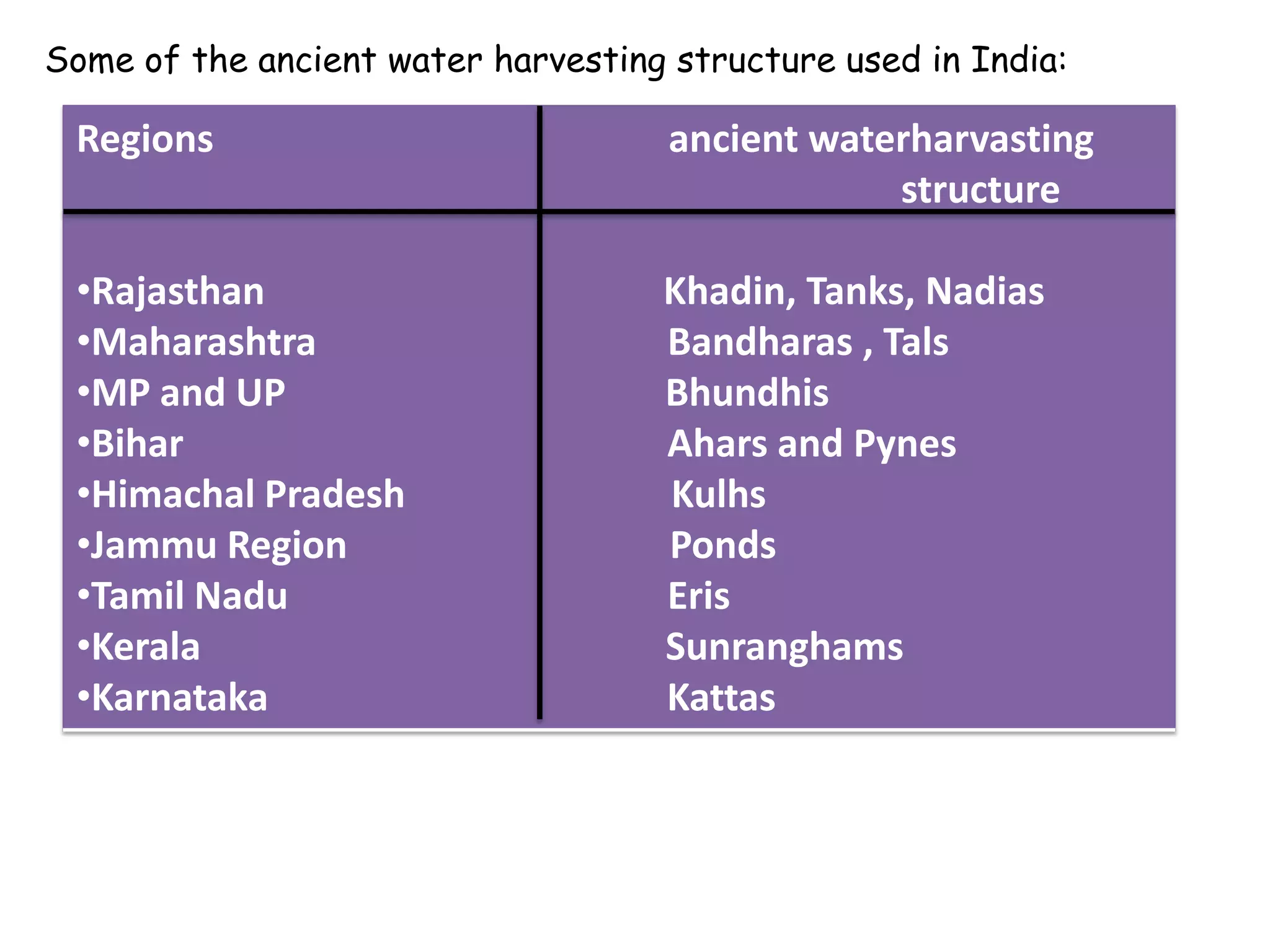
Some of the ancient water harvesting structure used in India:

Regions

ancient waterharvasting
structure

•Rajasthan
•Maharashtra
•MP and UP
•Bihar
•Himachal Pradesh
•Jammu Region
•Tamil Nadu
•Kerala
•Karnataka

Khadin, Tanks, Nadias
Bandharas , Tals
Bhundhis
Ahars and Pynes
Kulhs
Ponds
Eris
Sunranghams
Kattas
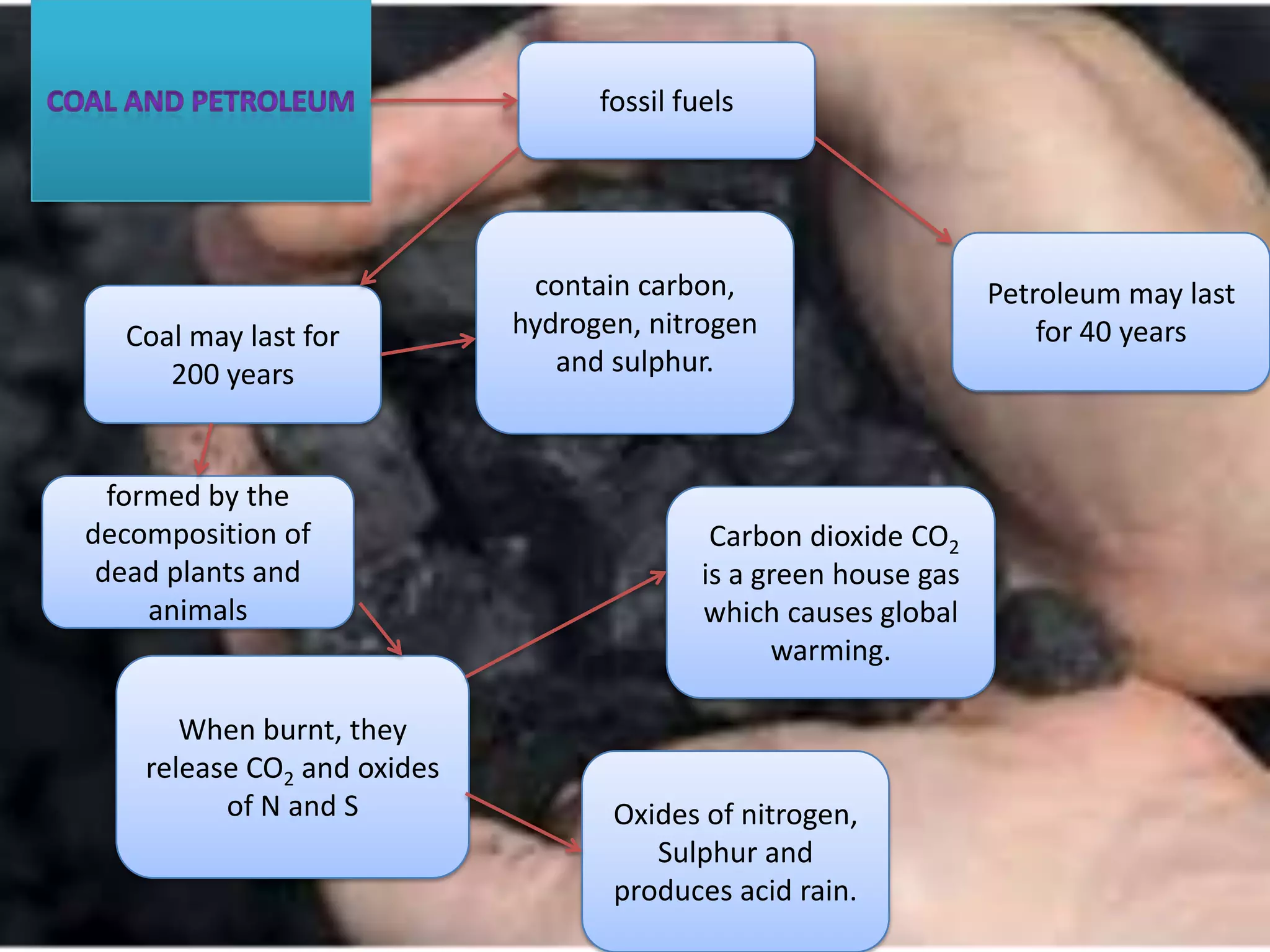
fossil fuels

Coal may last for
200 years

formed by the
decomposition of
dead plants and
animals

When burnt, they
release CO2 and oxides
of N and S

contain carbon,
hydrogen, nitrogen
and sulphur.

Carbon dioxide CO2
is a green house gas
which causes global
warming.

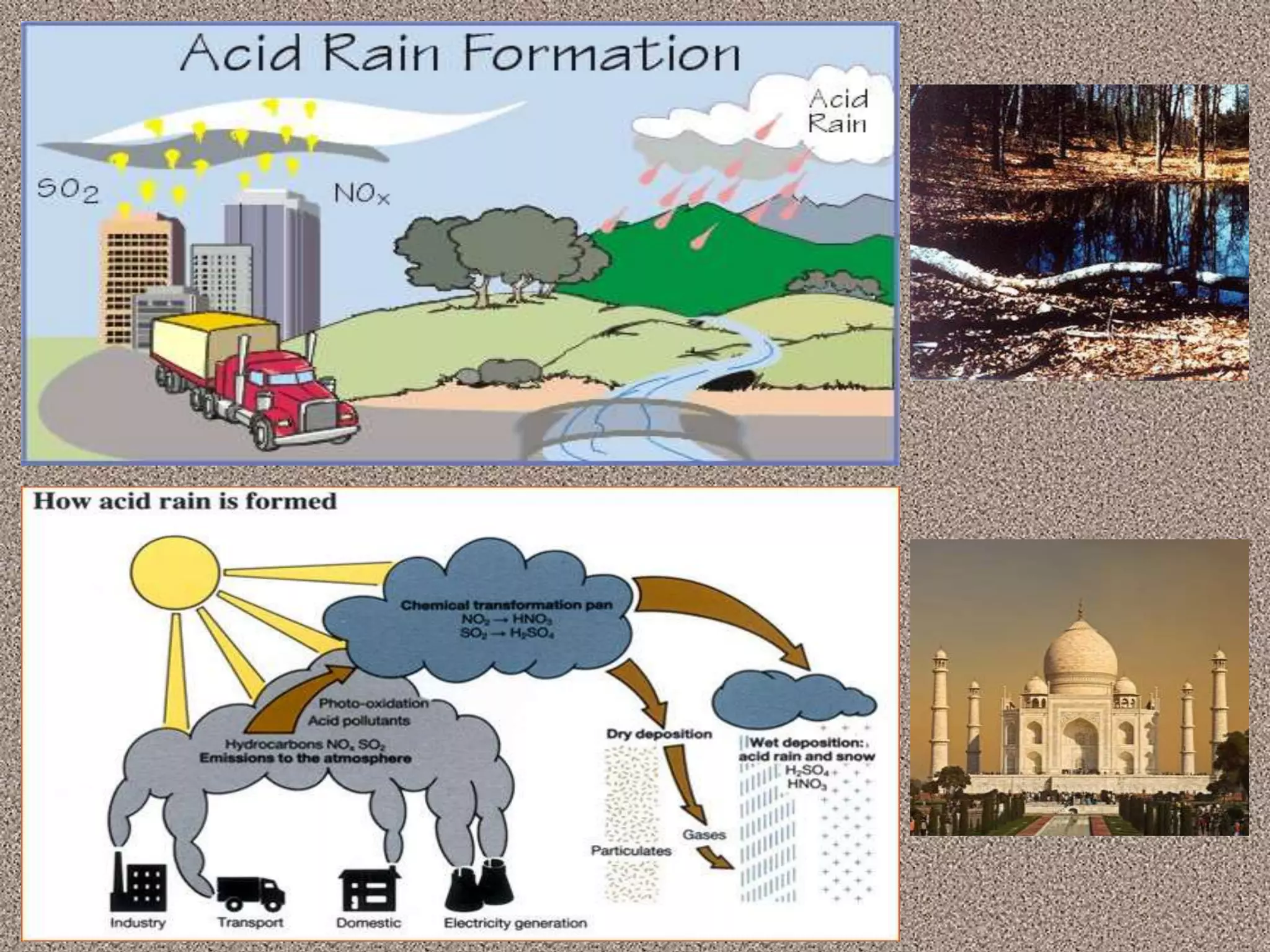
Oxides of nitrogen,
Sulphur and
produces acid rain.

Petroleum may last
for 40 years
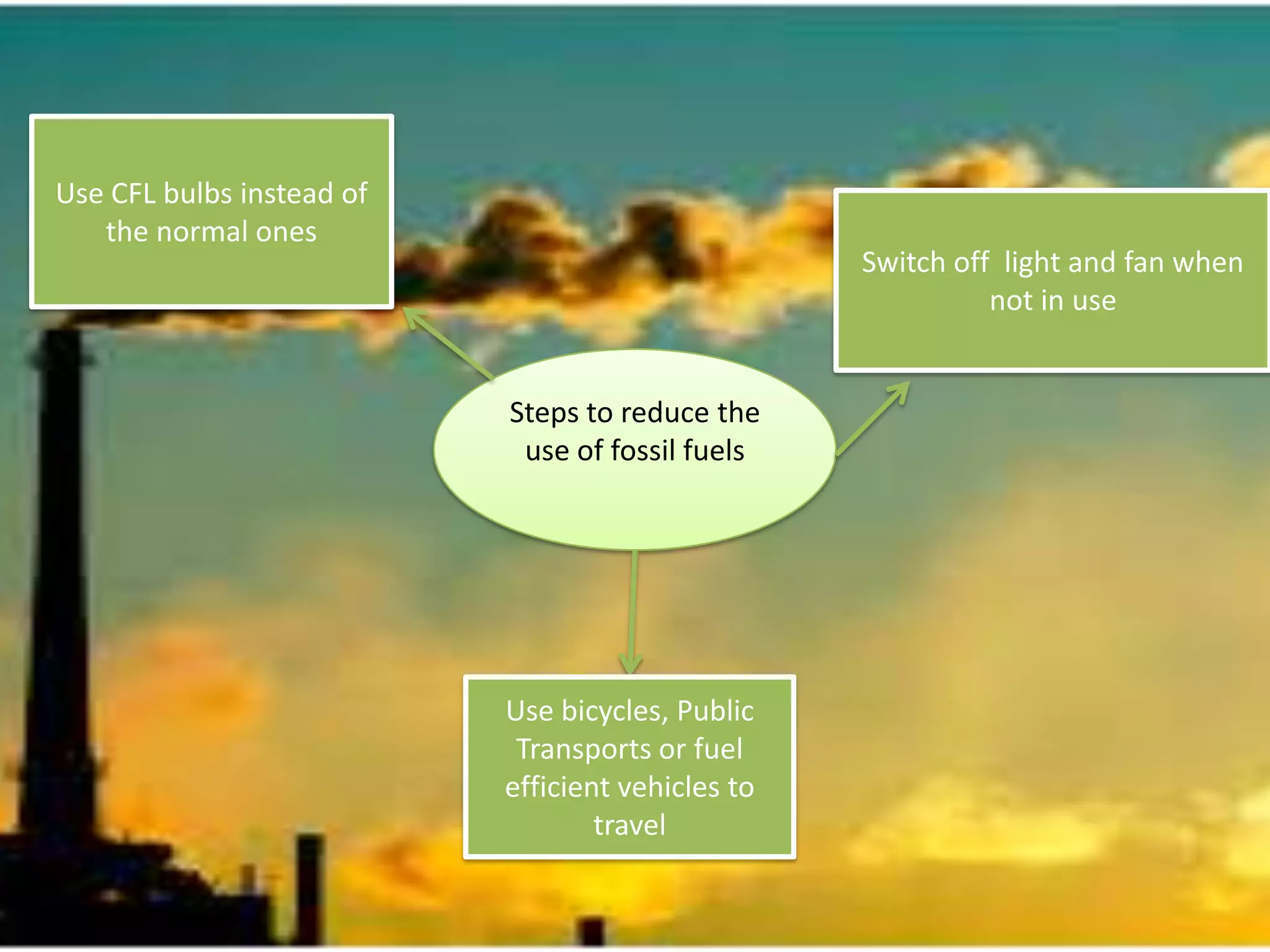
Use CFL bulbs instead of
the normal ones

Switch off light and fan when
not in use

Steps to reduce the
use of fossil fuels

Use bicycles, Public
Transports or fuel
efficient vehicles to
travel
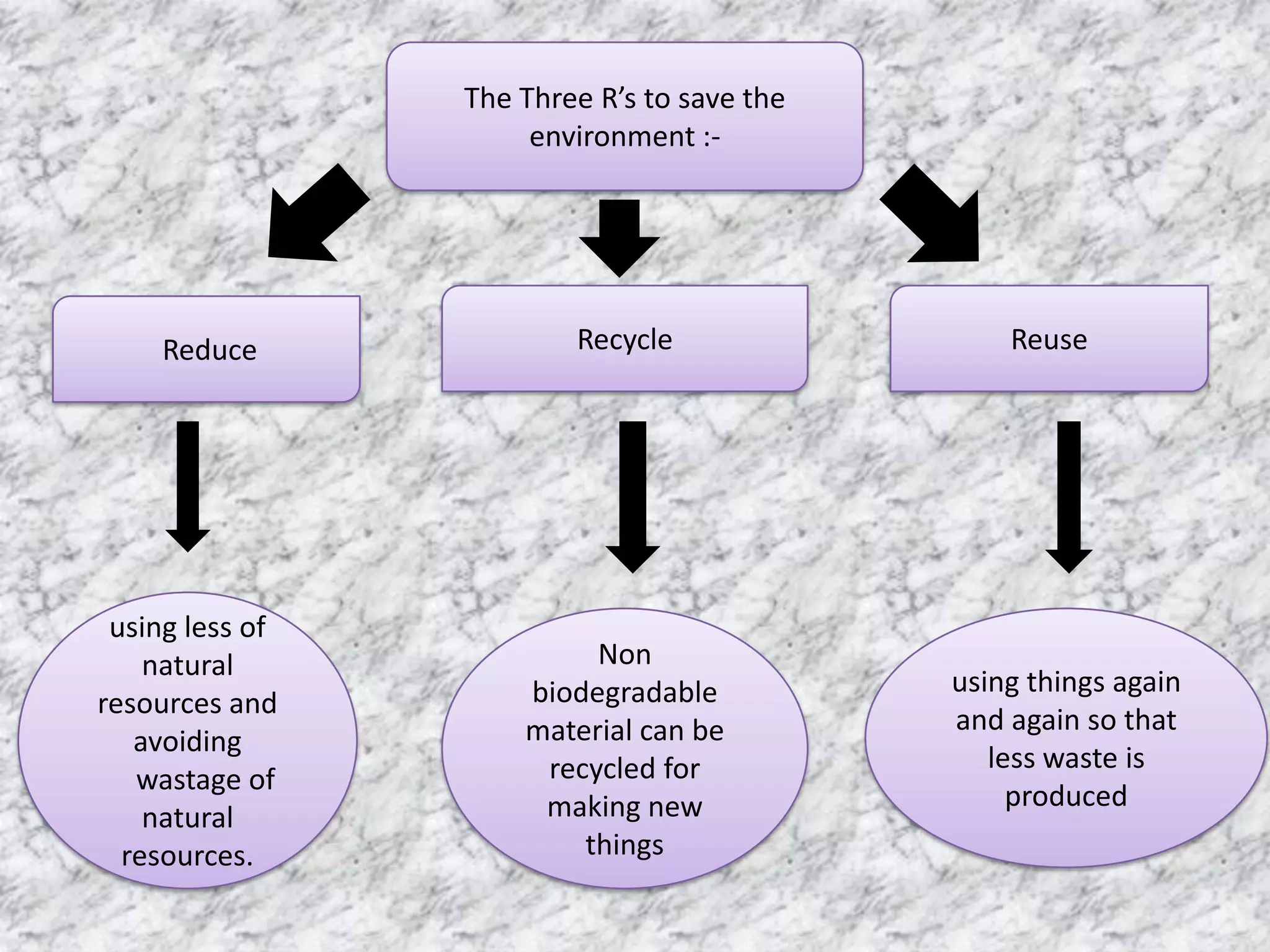
The Three R’s to save the
environment :-

Reduce

using less of
natural
resources and
avoiding
wastage of
natural
resources.

Recycle

Non
biodegradable
material can be
recycled for
making new
things

Reuse

using things again
and again so that
less waste is
produced
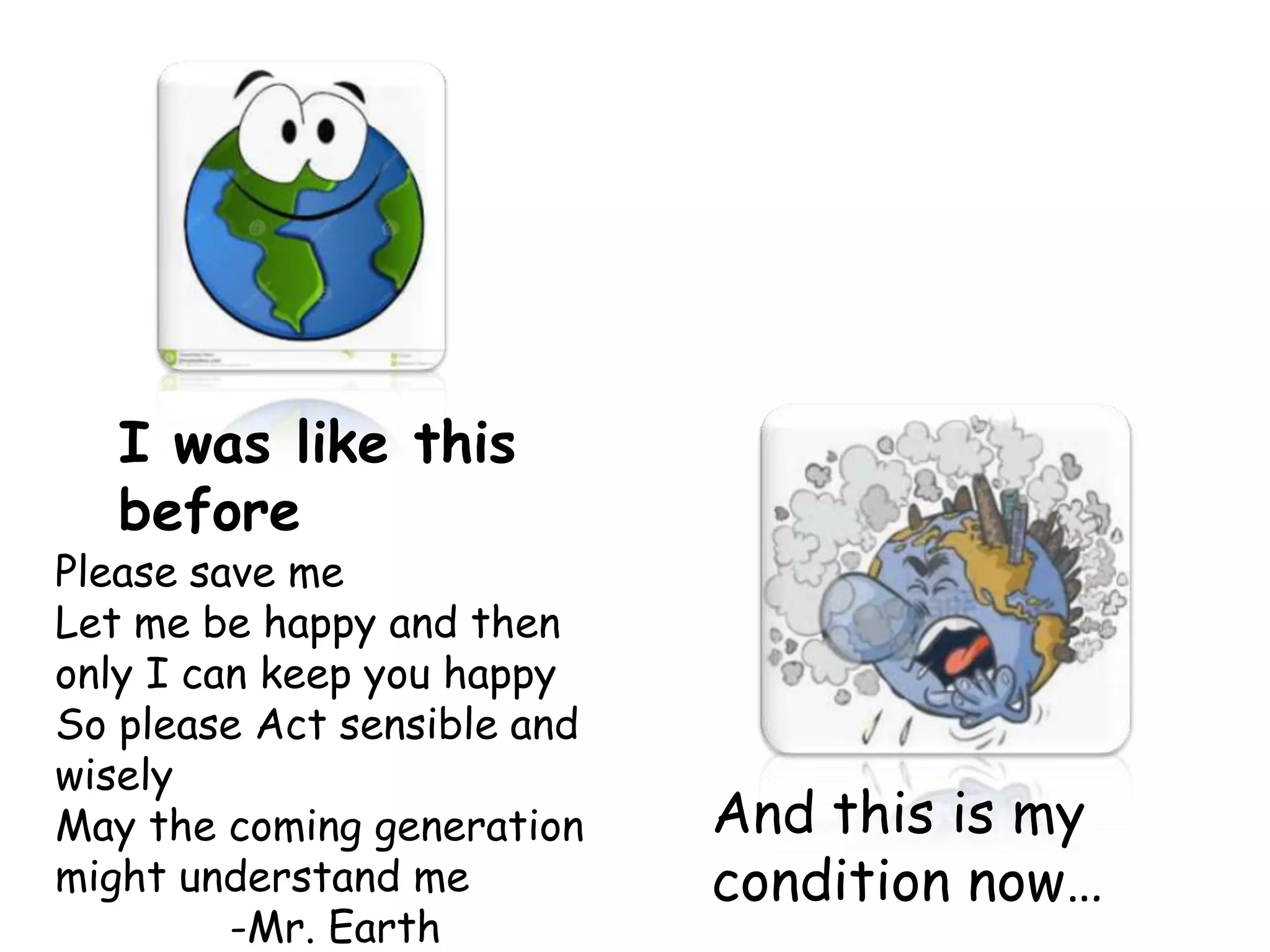
I was like this
before

Please save me
Let me be happy and then
only I can keep you happy
So please Act sensible and
wisely
May the coming generation
might understand me
-Mr. Earth

And this is my
condition now…
So friends Lets save our earth and keep it beautiful for the coming
generations …. So that they can enjoy what we had….
This PowerPoint
presentation was presented
by:
Aditi, Gaurav, Vaibhavi,
Saurabh and Preethi
X-’d’

Management of natural resources priti

  • 1.
  • 2.
    Intro… Natural Resource Controlling theuse of Anything in environment So that They do not get wasted and use them in a effective way MANAGEMENT OF NATURAL RESOURCES… ‘Which can be utilized or used”
  • 3.
    SUSTAINABLE DEVELOPMENT Development Meeting thecurrent human needs and also preserves Future generation SUSTAINABLE DEVELOPMENT
  • 4.
    Why to manageour resources…? Preventing from exploitation for short term gains The resources on the Earth are limited Why do we need to manage nature Considering the damage caused to the environment while cutting forest trees for various purposes, the damage to the environment can be minimized by planting new saplings All people can benefit from the development of the resources
  • 5.
    A large areaof land on which trees and other plants grow naturally is called a forest.
  • 6.
    WILDLIFE The wild animalsand birds which live in forest are called wildlife.
  • 7.
    The local peopleor the forest tribal The industrialists Stakeholders The forest department The forest and wildlife activists
  • 8.
    Most depended people on forest. Use resourcesin such a way that much damage is not done to the environment Collect fodder and graze their forest The people or tribes Bamboo ,gather fruits, nuts and medicinal herbs They usually lop the branches of the trees and pluck their leaves but do not cut the whole tree
  • 9.
    Cut down foresttrees for timber for furniture Destroy large amount of biodiversity due to their needs Due to which they The forest department Forests are cleared of all vegetation in a large scale Such as pine , teak and eucalyptus The development projects like •Building roads •Construction of dams To plant trees for timber
  • 10.
    Have major vestedin forest resources. Forests are the source of raw material for their industry Most of the deforestation is caused by industrial needs. The industrialists go their way… Some industries based on forest produce: •Timber Industry •Paper mills •Lac industry •Sports equipment industry
  • 11.
    There are certainpeople who are not dependent on forest in any way but who wants forests to be conserved to prevent undue damage to the environment The chipko andolan Bishnoi community in Rajasthan Led by Amrita Devi Bishnoi Two instances showing bravery and love for forest by the local people nearby forest Reni in Garhwal, High up in the Himalayas in the early 1970’s A logging contractor had been allowed to cut down the trees in a forest close near village. A group of 363 people sacrificed their lives The villagers reached forest quickly and clasped the tree trunk with their arms preventing the workers cutting the trees. Thus the trees were saved. Protected the Khejri Trees in Kejrali Village near Jodhpur The govt. has recently instituted an ‘Amrita Devi Bishnoi National Award For Wildlife Conservation’ in memory of Amrita Devi Bishnoi
  • 12.
    Produces a largequantity of raw material for industrial purposes Increases the area of Earth under forests Maintains perfect water cycle in nature Prevents soil erosion Silviculture and it’s advantages Prevents floods Silviculture is the practice of controlling the establishment, growth, composition, health, and quality of forests to meet diverse needs and values.
  • 13.
    Various sources ofwater are : •Rains •Ponds and lakes •Rains •Oceans •Glaciers (Snow Mountains) WATER FOR ALL Rains are the most important source of water Water: Basic need for all forms of life ; Humans, animals and plants as well.
  • 14.
    Lack of sufficient vegetationcover on ground Population is increasing rapidly Despite good rains, we are not able to meet the demand of water for all the people because High yielding varieties of crops require much more water for irrigation Discharge of untreated sewage and industrial wastes into rivers and lakes Changing of life style
  • 15.
    Management of riverwater is done by constructing DAMS on rivers Pros Water from dam is used for irrigation in field through network of canals The falling water from dam is used for generating electricity Water is supplied to the people in town and cities through pipelines after sustainable treatment Economical Very costly to construct Cons Social Large numbers of villages are submerged undewater Environmental Deforestation
  • 16.
  • 17.
    Some of theancient water harvesting structure used in India: Regions ancient waterharvasting structure •Rajasthan •Maharashtra •MP and UP •Bihar •Himachal Pradesh •Jammu Region •Tamil Nadu •Kerala •Karnataka Khadin, Tanks, Nadias Bandharas , Tals Bhundhis Ahars and Pynes Kulhs Ponds Eris Sunranghams Kattas
  • 18.
    fossil fuels Coal maylast for 200 years formed by the decomposition of dead plants and animals When burnt, they release CO2 and oxides of N and S contain carbon, hydrogen, nitrogen and sulphur. Carbon dioxide CO2 is a green house gas which causes global warming. Oxides of nitrogen, Sulphur and produces acid rain. Petroleum may last for 40 years
  • 19.
    Use CFL bulbsinstead of the normal ones Switch off light and fan when not in use Steps to reduce the use of fossil fuels Use bicycles, Public Transports or fuel efficient vehicles to travel
  • 21.
    The Three R’sto save the environment :- Reduce using less of natural resources and avoiding wastage of natural resources. Recycle Non biodegradable material can be recycled for making new things Reuse using things again and again so that less waste is produced
  • 22.
    I was likethis before Please save me Let me be happy and then only I can keep you happy So please Act sensible and wisely May the coming generation might understand me -Mr. Earth And this is my condition now…
  • 23.
    So friends Letssave our earth and keep it beautiful for the coming generations …. So that they can enjoy what we had….
  • 24.
    This PowerPoint presentation waspresented by: Aditi, Gaurav, Vaibhavi, Saurabh and Preethi X-’d’