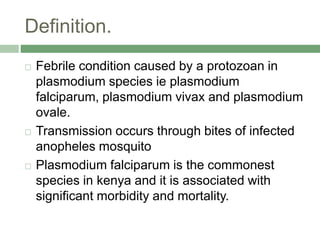
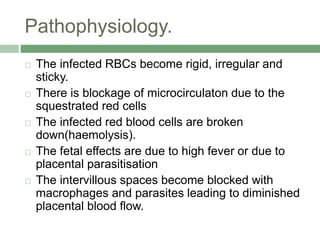
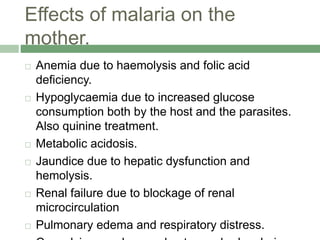
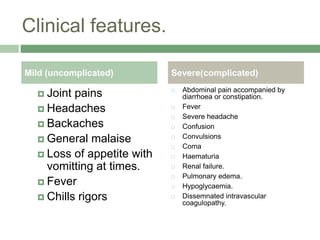
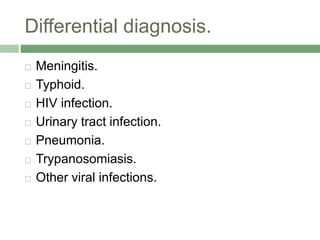
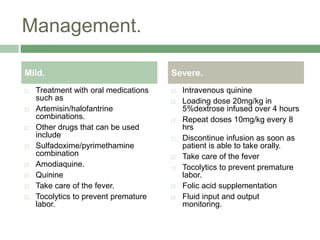
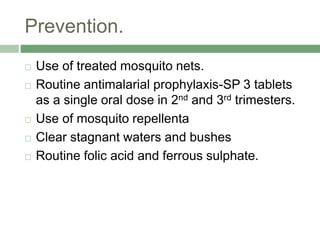
This document discusses malaria in pregnancy, including its definitions, pathophysiology, complications, clinical features, management, and prevention. Malaria is caused by plasmodium parasites transmitted via mosquito bites and can cause severe anemia, hypoglycemia, and other complications in both the mother and fetus. Symptoms range from fever and joint pains to seizures and coma. Diagnosis involves blood smears and treatment depends on severity, ranging from oral medications to intravenous quinine and tocolytics. Prevention focuses on mosquito nets, antimalarial prophylaxis, repellents, source reduction, and supplementation.



![Lecture note MALARIA_IN_PREGNANCY(2)[1].pptx](https://cdn.slidesharecdn.com/ss_thumbnails/malariainpregnancy21-240605091633-2619b0fc-thumbnail.jpg?width=640&height=640&fit=bounds)


![CTEV [ clubfoot] DR ARUN LAL ,DR MOHAMED ASHRAF travancore medical college k...](https://cdn.slidesharecdn.com/ss_thumbnails/ctevclubfootdrarunlaldrmohamedashraftravancoremedicalcollegekollamkeralaindia-260208063247-18fc466c-thumbnail.jpg?width=640&height=640&fit=bounds)


