CREATED BY: ERIN MCDANIEL 
APPLICATIONS OF TECHNOLOGY 
FA 2014
 Technology can be used in the classroom to 
enhance instruction. In today’s society 
technology is becoming more prevalent in the 
classroom. 
 Technology permeates classrooms with 
digital learning tools including computers 
and hand held devices.
 According to PBS Learning Media, a growing 
number of teachers are utilizing technology 
in their classrooms on a regular basis. 
 Educators are using technology to enhance 
instruction as well as lesson plans.
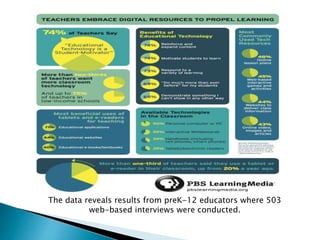
The data reveals results from preK-12 educators where 503 
web-based interviews were conducted.
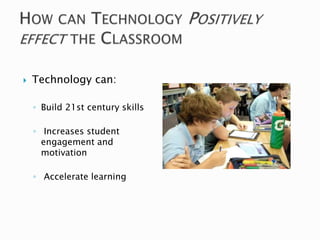
 Technology can: 
◦ Build 21st century skills 
◦ Increases student 
engagement and 
motivation 
◦ Accelerate learning
 Technology can: 
◦ Reduce costs associated with instructional materials. 
For example, purchasing online resources or 
technological equipment can decrease the amount of 
paper that is used for lessons and activities. 
◦ Gear the center of attention, in reference to learning, 
towards the students. The created environment will 
consists of a truly student-centered atmosphere. The 
teacher is forced to be only a facilitator and not produce 
and environment that is teacher-centered.
 Technology can: 
◦ Provide and environment that is accessible at 
school or home. Students have the ability to access 
information from different locations as opposed to 
only gathering information from the classroom. For 
example, students can use blogs for discussions 
and access this information from home. 
◦ Be used across all contents and even elective 
courses such as art, Spanish, or even physical 
education.
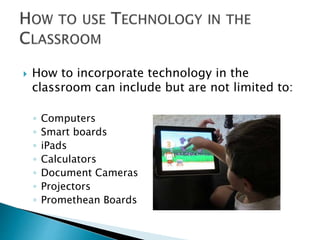
 How to incorporate technology in the 
classroom can include but are not limited to: 
◦ Computers 
◦ Smart boards 
◦ iPads 
◦ Calculators 
◦ Document Cameras 
◦ Projectors 
◦ Promethean Boards
 How to incorporate technology in the 
classroom can include but are not limited to: 
◦ Use email to communicate with parents 
◦ Create a class website such as a blog or even 
edmodo 
◦ Correspond with students in other cities, states, or 
even countries.
 Technology can: 
◦ Distract students from completing the task at hand. 
Students may get distracted and lose focus or get 
sidetracked with other information that is not 
relevant to the targeted information and goal. 
◦ Provide an opportunity for students to cheat in 
various ways. Students may be dishonest and cheat 
on online quizzes or exams.
 Technology can: 
◦ Cause students to become a target for theft. If 
students are provided with pieces of technological 
equipment, such as an iPad, there is a possibility 
that the student can be a target by other students 
or even someone in the community. 
◦ Create a face-to-face environment that is less 
social, therefore hindering the students from 
building in-person social skills.
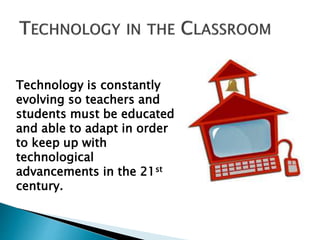
Technology is constantly 
evolving so teachers and 
students must be educated 
and able to adapt in order 
to keep up with 
technological 
advancements in the 21st 
century.
Mills, M. (2013, Feb 4). Teachers are Embracing 
Digital Resources to Propel Student Learning. 
Retrieved from: 
http://www.pbs.org/about/news/archive/20 
13/teacher-tech-survey/ 
Sahakov, R. (2014, January 15). 2 Pros and 2 
Cons to Educational Technology. Retrieved 
from: http://www.edudemic.com/education-technology- 
pros-cons/

Major project1

  • 1.
    CREATED BY: ERINMCDANIEL APPLICATIONS OF TECHNOLOGY FA 2014
  • 2.
     Technology canbe used in the classroom to enhance instruction. In today’s society technology is becoming more prevalent in the classroom.  Technology permeates classrooms with digital learning tools including computers and hand held devices.
  • 3.
     According toPBS Learning Media, a growing number of teachers are utilizing technology in their classrooms on a regular basis.  Educators are using technology to enhance instruction as well as lesson plans.
  • 4.
    The data revealsresults from preK-12 educators where 503 web-based interviews were conducted.
  • 5.
     Technology can: ◦ Build 21st century skills ◦ Increases student engagement and motivation ◦ Accelerate learning
  • 6.
     Technology can: ◦ Reduce costs associated with instructional materials. For example, purchasing online resources or technological equipment can decrease the amount of paper that is used for lessons and activities. ◦ Gear the center of attention, in reference to learning, towards the students. The created environment will consists of a truly student-centered atmosphere. The teacher is forced to be only a facilitator and not produce and environment that is teacher-centered.
  • 7.
     Technology can: ◦ Provide and environment that is accessible at school or home. Students have the ability to access information from different locations as opposed to only gathering information from the classroom. For example, students can use blogs for discussions and access this information from home. ◦ Be used across all contents and even elective courses such as art, Spanish, or even physical education.
  • 8.
     How toincorporate technology in the classroom can include but are not limited to: ◦ Computers ◦ Smart boards ◦ iPads ◦ Calculators ◦ Document Cameras ◦ Projectors ◦ Promethean Boards
  • 9.
     How toincorporate technology in the classroom can include but are not limited to: ◦ Use email to communicate with parents ◦ Create a class website such as a blog or even edmodo ◦ Correspond with students in other cities, states, or even countries.
  • 10.
     Technology can: ◦ Distract students from completing the task at hand. Students may get distracted and lose focus or get sidetracked with other information that is not relevant to the targeted information and goal. ◦ Provide an opportunity for students to cheat in various ways. Students may be dishonest and cheat on online quizzes or exams.
  • 11.
     Technology can: ◦ Cause students to become a target for theft. If students are provided with pieces of technological equipment, such as an iPad, there is a possibility that the student can be a target by other students or even someone in the community. ◦ Create a face-to-face environment that is less social, therefore hindering the students from building in-person social skills.
  • 12.
    Technology is constantly evolving so teachers and students must be educated and able to adapt in order to keep up with technological advancements in the 21st century.
  • 13.
    Mills, M. (2013,Feb 4). Teachers are Embracing Digital Resources to Propel Student Learning. Retrieved from: http://www.pbs.org/about/news/archive/20 13/teacher-tech-survey/ Sahakov, R. (2014, January 15). 2 Pros and 2 Cons to Educational Technology. Retrieved from: http://www.edudemic.com/education-technology- pros-cons/