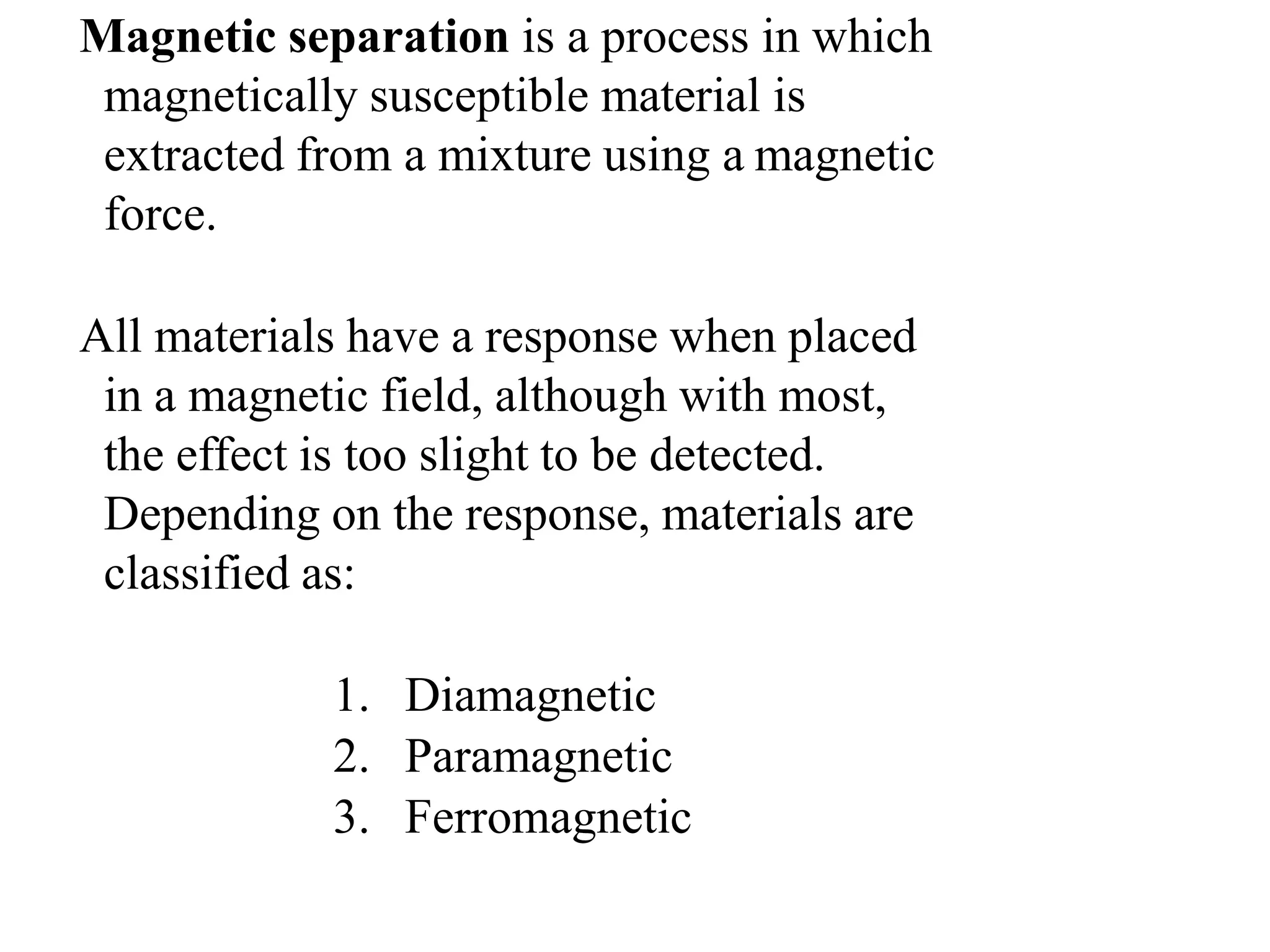
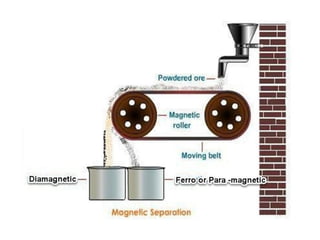
Magnetic separation is a process in which
magnetically susceptible material is
extracted from a mixture using a magnetic
force.
All materials have a response when placed
in a magnetic field, although with most,
the effect is too slight to be detected.
Depending on the response, materials are
classified as:
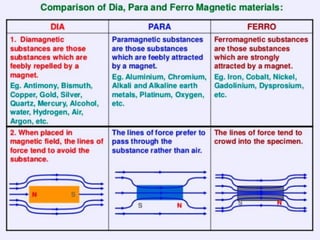
1. Diamagnetic
2. Paramagnetic
3. Ferromagnetic
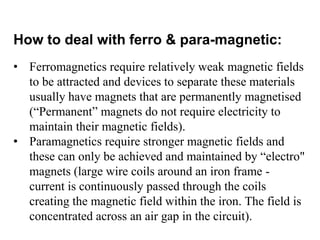
How to deal with ferro & para-magnetic:
• Ferromagnetics require relatively weak magnetic fields
to be attracted and devices to separate these materials
usually have magnets that are permanently magnetised
(“Permanent” magnets do not require electricity to
maintain their magnetic fields).
• Paramagnetics require stronger magnetic fields and
these can only be achieved and maintained by “electro"
magnets (large wire coils around an iron frame -
current is continuously passed through the coils
creating the magnetic field within the iron. The field is
concentrated across an air gap in the circuit).
Application in Mineral Processing:
Magnetic separation has two major applications in mineral
processing plants:
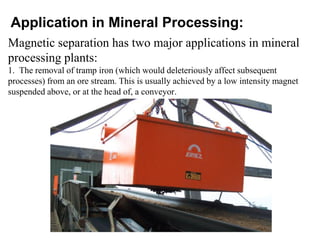
1. The removal of tramp iron (which would deleteriously affect subsequent
processes) from an ore stream. This is usually achieved by a low intensity magnet
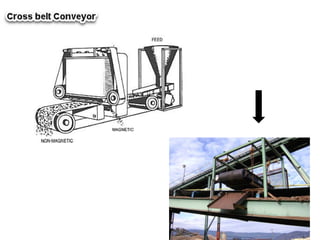
suspended above, or at the head of, a conveyor.
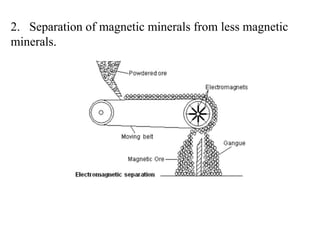
2. Separation of magnetic minerals from less magnetic
minerals.
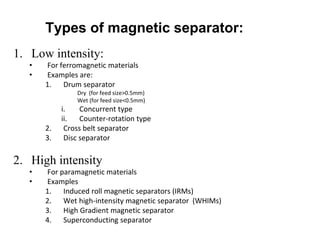
Types of magnetic separator:
1. Low intensity:
• For ferromagnetic materials
• Examples are:
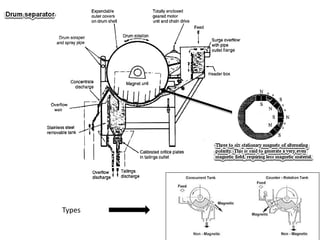
1. Drum separator
Dry (for feed size>0.5mm)
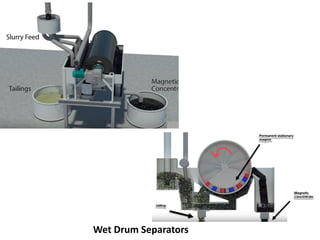
Wet (for feed size<0.5mm)
i. Concurrent type
ii. Counter-rotation type
2. Cross belt separator
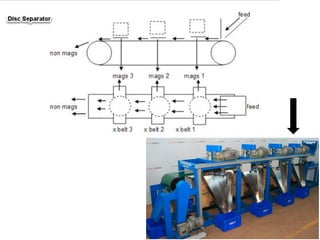
3. Disc separator
2. High intensity
• For paramagnetic materials
• Examples
1. Induced roll magnetic separators (IRMs)
2. Wet high-intensity magnetic separator (WHIMs)
3. High Gradient magnetic separator
4. Superconducting separator
Types
Wet Drum Separators
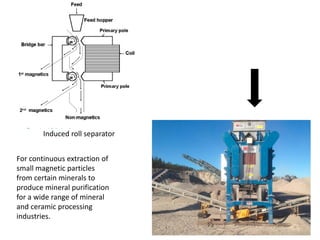
Induced roll separator
For continuous extraction of
small magnetic particles
from certain minerals to
produce mineral purification
for a wide range of mineral
and ceramic processing
industries.
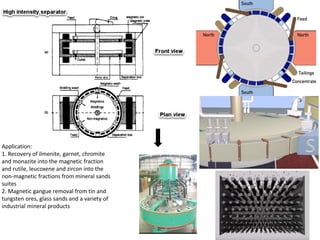
Application:
1. Recovery of ilmenite, garnet, chromite
and monazite into the magnetic fraction
and rutile, leucoxene and zircon into the
non-magnetic fractions from mineral sands
suites
2. Magnetic gangue removal from tin and
tungsten ores, glass sands and a variety of
industrial mineral products
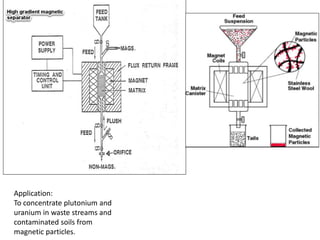
Application:
To concentrate plutonium and
uranium in waste streams and
contaminated soils from
magnetic particles.
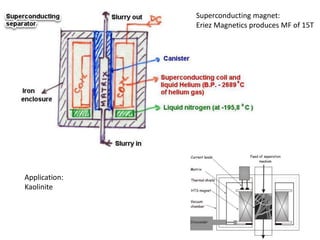
Superconducting magnet:
Eriez Magnetics produces MF of 15T
Application:
Kaolinite

Magnetic separation &it's different methods

  • 1.
    Magnetic separation isa process in which magnetically susceptible material is extracted from a mixture using a magnetic force. All materials have a response when placed in a magnetic field, although with most, the effect is too slight to be detected. Depending on the response, materials are classified as: 1. Diamagnetic 2. Paramagnetic 3. Ferromagnetic
  • 3.
    How to dealwith ferro & para-magnetic: • Ferromagnetics require relatively weak magnetic fields to be attracted and devices to separate these materials usually have magnets that are permanently magnetised (“Permanent” magnets do not require electricity to maintain their magnetic fields). • Paramagnetics require stronger magnetic fields and these can only be achieved and maintained by “electro" magnets (large wire coils around an iron frame - current is continuously passed through the coils creating the magnetic field within the iron. The field is concentrated across an air gap in the circuit).
  • 5.
    Application in MineralProcessing: Magnetic separation has two major applications in mineral processing plants: 1. The removal of tramp iron (which would deleteriously affect subsequent processes) from an ore stream. This is usually achieved by a low intensity magnet suspended above, or at the head of, a conveyor.
  • 6.
    2. Separation ofmagnetic minerals from less magnetic minerals.
  • 7.
    Types of magneticseparator: 1. Low intensity: • For ferromagnetic materials • Examples are: 1. Drum separator Dry (for feed size>0.5mm) Wet (for feed size<0.5mm) i. Concurrent type ii. Counter-rotation type 2. Cross belt separator 3. Disc separator 2. High intensity • For paramagnetic materials • Examples 1. Induced roll magnetic separators (IRMs) 2. Wet high-intensity magnetic separator (WHIMs) 3. High Gradient magnetic separator 4. Superconducting separator
  • 8.
  • 9.
  • 12.
    Induced roll separator Forcontinuous extraction of small magnetic particles from certain minerals to produce mineral purification for a wide range of mineral and ceramic processing industries.
  • 13.
    Application: 1. Recovery ofilmenite, garnet, chromite and monazite into the magnetic fraction and rutile, leucoxene and zircon into the non-magnetic fractions from mineral sands suites 2. Magnetic gangue removal from tin and tungsten ores, glass sands and a variety of industrial mineral products
  • 14.
    Application: To concentrate plutoniumand uranium in waste streams and contaminated soils from magnetic particles.
  • 15.
    Superconducting magnet: Eriez Magneticsproduces MF of 15T Application: Kaolinite