Quality Management of Safety
Data from Clinical Trials
Boris Videlov, MS, PMBA
Director PV QA
Forest Research Institute
2
Disclosure
 This presentation is intended to be used
for informational purposes only
 The views expressed herein are those of
the author and do not necessarily
represent the views of Forest Research
Institute or any of its staff
3
Main considerations
 Patient Safety
 Regulatory Compliance
but also
 Data Quality
 Trial Integrity
4
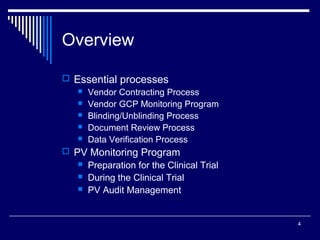
Overview
 Essential processes
 Vendor Contracting Process
 Vendor GCP Monitoring Program
 Blinding/Unblinding Process
 Document Review Process
 Data Verification Process
 PV Monitoring Program
 Preparation for the Clinical Trial
 During the Clinical Trial
 PV Audit Management
Governed by Procedure(s) 5
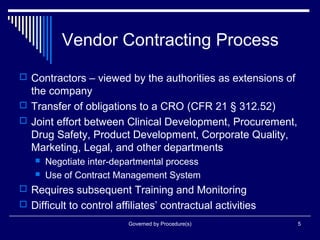
Vendor Contracting Process
 Contractors – viewed by the authorities as extensions of
the company
 Transfer of obligations to a CRO (CFR 21 § 312.52)
 Joint effort between Clinical Development, Procurement,
Drug Safety, Product Development, Corporate Quality,
Marketing, Legal, and other departments
 Negotiate inter-departmental process
 Use of Contract Management System
 Requires subsequent Training and Monitoring
 Difficult to control affiliates’ contractual activities
Governed by Procedure(s) 6
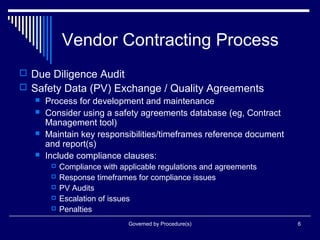
Vendor Contracting Process
 Due Diligence Audit
 Safety Data (PV) Exchange / Quality Agreements
 Process for development and maintenance
 Consider using a safety agreements database (eg, Contract
Management tool)
 Maintain key responsibilities/timeframes reference document
and report(s)
 Include compliance clauses:
 Compliance with applicable regulations and agreements
 Response timeframes for compliance issues
 PV Audits
 Escalation of issues
 Penalties
Governed by Procedure(s) 7
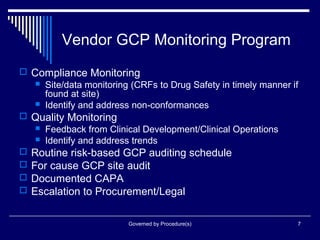
Vendor GCP Monitoring Program
 Compliance Monitoring
 Site/data monitoring (CRFs to Drug Safety in timely manner if
found at site)
 Identify and address non-conformances
 Quality Monitoring
 Feedback from Clinical Development/Clinical Operations
 Identify and address trends
 Routine risk-based GCP auditing schedule
 For cause GCP site audit
 Documented CAPA
 Escalation to Procurement/Legal
Governed by Procedure(s) 8
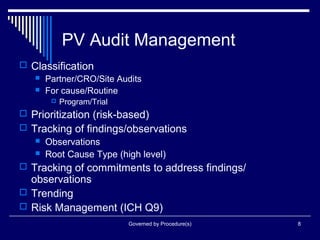
PV Audit Management
 Classification
 Partner/CRO/Site Audits
 For cause/Routine
 Program/Trial
 Prioritization (risk-based)
 Tracking of findings/observations
 Observations
 Root Cause Type (high level)
 Tracking of commitments to address findings/
observations
 Trending
 Risk Management (ICH Q9)
Governed by Procedure(s) 9
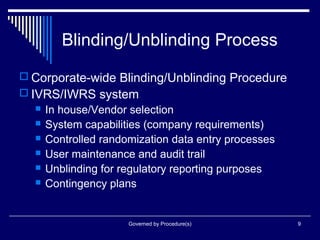
Blinding/Unblinding Process
 Corporate-wide Blinding/Unblinding Procedure
 IVRS/IWRS system
 In house/Vendor selection
 System capabilities (company requirements)
 Controlled randomization data entry processes
 User maintenance and audit trail
 Unblinding for regulatory reporting purposes
 Contingency plans
10
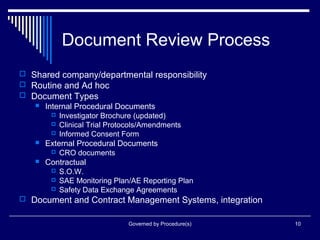
Document Review Process
 Shared company/departmental responsibility
 Routine and Ad hoc
 Document Types
 Internal Procedural Documents
 Investigator Brochure (updated)
 Clinical Trial Protocols/Amendments
 Informed Consent Form
 External Procedural Documents
 CRO documents
 Contractual
 S.O.W.
 SAE Monitoring Plan/AE Reporting Plan
 Safety Data Exchange Agreements
 Document and Contract Management Systems, integration
Governed by Procedure(s)
Governed by Procedure(s) 11
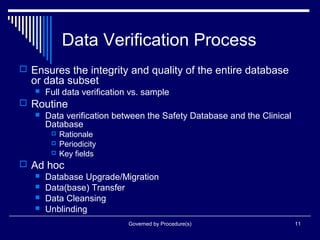
Data Verification Process
 Ensures the integrity and quality of the entire database
or data subset
 Full data verification vs. sample
 Routine
 Data verification between the Safety Database and the Clinical
Database
 Rationale
 Periodicity
 Key fields
 Ad hoc
 Database Upgrade/Migration
 Data(base) Transfer
 Data Cleansing
 Unblinding
Governed by Procedure(s) 12
PV Monitoring Program
-Preparation for the Clinical Trial
 Paper SAE Form vs. EDC
 CT Protocol review
 SAE and unblinding sections
 Forms customization
 SAE Form/Pregnancy Form/etc.
 Informed Consent Form review
 Site/Principal Investigator selection
 Coordinator and Investigator meetings
 Investigator Binder/CD preparation
 Training materials
Governed by Procedure(s) 13
PV Monitoring Program -
During the Clinical Trial
 Compliance Monitoring (metrics)
 Timeframes for SAE Form submission Investigator ⇨ (CRO) ⇨ Sponsor
(incoming) - Article 16 of Directive 2001/20/EC; 21 CFR § 312.64.
 Query response timeframes (incoming)
 Investigator/IRB/EC Notifications (outgoing) - Article 17 of Directive
2001/20/EC; 21 CFR § 312.32.
 Quality Monitoring (QA)
 SAE Form completeness and accuracy
 Query volume to sites and trends
 Discrepancies between Clinical Database and Drug Safety Database
 Documented CAPA – collaboration between Drug Safety, Corporate QA,
Clinical Development/Operations
 Official Notification/Memorandum
 Minuted teleconference
 F2F meeting
 Escalation to Corporate/Legal
Change Management
Planning for New Regulations
 Final Rule: IND Safety Reporting Requirements for
Human Drug and Biological Products and Safety
Reporting Requirements for BA and BE Studies in
Humans
 Revised definitions and new 15-day reporting requirement
 findings from clinical or epi studies that suggest a significant
risk to study subjects (and examples)
 SSARs that occur at a rate higher than expected
 SAEs from bioavailability studies (drug absorption rate by the
bloodstream and generic drug bioavailability)
 Draft: Guidance for Industry and Investigators: Safety
Reporting Requirements for INDs and BA/BE Studies
 effective date is March 28, 2011
15
Thank you for your attention!
www.LinkedIn.com

MAGI Presentation

  • 1.
    Quality Management ofSafety Data from Clinical Trials Boris Videlov, MS, PMBA Director PV QA Forest Research Institute
  • 2.
    2 Disclosure  This presentationis intended to be used for informational purposes only  The views expressed herein are those of the author and do not necessarily represent the views of Forest Research Institute or any of its staff
  • 3.
    3 Main considerations  PatientSafety  Regulatory Compliance but also  Data Quality  Trial Integrity
  • 4.
    4 Overview  Essential processes Vendor Contracting Process  Vendor GCP Monitoring Program  Blinding/Unblinding Process  Document Review Process  Data Verification Process  PV Monitoring Program  Preparation for the Clinical Trial  During the Clinical Trial  PV Audit Management
  • 5.
    Governed by Procedure(s)5 Vendor Contracting Process  Contractors – viewed by the authorities as extensions of the company  Transfer of obligations to a CRO (CFR 21 § 312.52)  Joint effort between Clinical Development, Procurement, Drug Safety, Product Development, Corporate Quality, Marketing, Legal, and other departments  Negotiate inter-departmental process  Use of Contract Management System  Requires subsequent Training and Monitoring  Difficult to control affiliates’ contractual activities
  • 6.
    Governed by Procedure(s)6 Vendor Contracting Process  Due Diligence Audit  Safety Data (PV) Exchange / Quality Agreements  Process for development and maintenance  Consider using a safety agreements database (eg, Contract Management tool)  Maintain key responsibilities/timeframes reference document and report(s)  Include compliance clauses:  Compliance with applicable regulations and agreements  Response timeframes for compliance issues  PV Audits  Escalation of issues  Penalties
  • 7.
    Governed by Procedure(s)7 Vendor GCP Monitoring Program  Compliance Monitoring  Site/data monitoring (CRFs to Drug Safety in timely manner if found at site)  Identify and address non-conformances  Quality Monitoring  Feedback from Clinical Development/Clinical Operations  Identify and address trends  Routine risk-based GCP auditing schedule  For cause GCP site audit  Documented CAPA  Escalation to Procurement/Legal
  • 8.
    Governed by Procedure(s)8 PV Audit Management  Classification  Partner/CRO/Site Audits  For cause/Routine  Program/Trial  Prioritization (risk-based)  Tracking of findings/observations  Observations  Root Cause Type (high level)  Tracking of commitments to address findings/ observations  Trending  Risk Management (ICH Q9)
  • 9.
    Governed by Procedure(s)9 Blinding/Unblinding Process  Corporate-wide Blinding/Unblinding Procedure  IVRS/IWRS system  In house/Vendor selection  System capabilities (company requirements)  Controlled randomization data entry processes  User maintenance and audit trail  Unblinding for regulatory reporting purposes  Contingency plans
  • 10.
    10 Document Review Process Shared company/departmental responsibility  Routine and Ad hoc  Document Types  Internal Procedural Documents  Investigator Brochure (updated)  Clinical Trial Protocols/Amendments  Informed Consent Form  External Procedural Documents  CRO documents  Contractual  S.O.W.  SAE Monitoring Plan/AE Reporting Plan  Safety Data Exchange Agreements  Document and Contract Management Systems, integration Governed by Procedure(s)
  • 11.
    Governed by Procedure(s)11 Data Verification Process  Ensures the integrity and quality of the entire database or data subset  Full data verification vs. sample  Routine  Data verification between the Safety Database and the Clinical Database  Rationale  Periodicity  Key fields  Ad hoc  Database Upgrade/Migration  Data(base) Transfer  Data Cleansing  Unblinding
  • 12.
    Governed by Procedure(s)12 PV Monitoring Program -Preparation for the Clinical Trial  Paper SAE Form vs. EDC  CT Protocol review  SAE and unblinding sections  Forms customization  SAE Form/Pregnancy Form/etc.  Informed Consent Form review  Site/Principal Investigator selection  Coordinator and Investigator meetings  Investigator Binder/CD preparation  Training materials
  • 13.
    Governed by Procedure(s)13 PV Monitoring Program - During the Clinical Trial  Compliance Monitoring (metrics)  Timeframes for SAE Form submission Investigator ⇨ (CRO) ⇨ Sponsor (incoming) - Article 16 of Directive 2001/20/EC; 21 CFR § 312.64.  Query response timeframes (incoming)  Investigator/IRB/EC Notifications (outgoing) - Article 17 of Directive 2001/20/EC; 21 CFR § 312.32.  Quality Monitoring (QA)  SAE Form completeness and accuracy  Query volume to sites and trends  Discrepancies between Clinical Database and Drug Safety Database  Documented CAPA – collaboration between Drug Safety, Corporate QA, Clinical Development/Operations  Official Notification/Memorandum  Minuted teleconference  F2F meeting  Escalation to Corporate/Legal
  • 14.
    Change Management Planning forNew Regulations  Final Rule: IND Safety Reporting Requirements for Human Drug and Biological Products and Safety Reporting Requirements for BA and BE Studies in Humans  Revised definitions and new 15-day reporting requirement  findings from clinical or epi studies that suggest a significant risk to study subjects (and examples)  SSARs that occur at a rate higher than expected  SAEs from bioavailability studies (drug absorption rate by the bloodstream and generic drug bioavailability)  Draft: Guidance for Industry and Investigators: Safety Reporting Requirements for INDs and BA/BE Studies  effective date is March 28, 2011
  • 15.
    15 Thank you foryour attention! www.LinkedIn.com

Editor's Notes

  • #2 Good afternoon Will provide information on SOME of the key elements of a Pharmacovigillance Quality management System and how to build it.
  • #7 Not to be tracked in QMS Subject to regulatory Audits Be mindful of the Regulatory Clock Start Date Compliance with applicable regulations Timeframes to respond to compliance issues – some difficulties Audit Clause - some difficulties Escalation/Penalties - some difficulties from Corporate/Legal Consider using a Contract Management tool Maintain key timeframes reference document/report
  • #9 Inspections & Audits are a important and highly visible source of quality records and most often company-wide CAPA. We always speak about Inspection readiness, but are we always ready? Anything said in Latin sounds profound
  • #10 # of queries Completion of SAE form Discrepancies between the CRF and SAE form
  • #13 # of queries Completion of SAE form Discrepancies between the CRF and SAE form
  • #14 # of queries SAE Form completeness and accuracy – Quality review of samle Discrepancies between the CRF and SAE form