Highlights from ExLPharma’s Proactive GCP ComplianceMarch 29-31, 2010Arlington, VA
GCP in Emerging RegionsEthics, Quality, and Compliance1
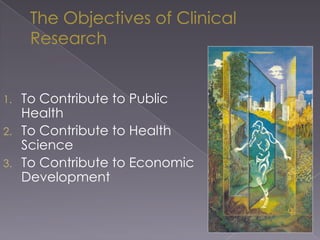
The Objectives of Clinical ResearchTo Contribute to Public HealthTo Contribute to Health ScienceTo Contribute to Economic Development
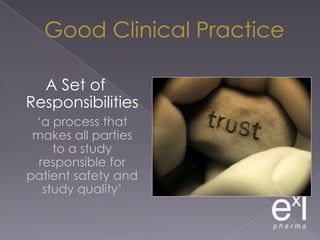
Good Clinical PracticeA Set of Responsibilities‘a process that makes all parties to a study responsible for patient safety and study quality’
US & EU Objectives inHarmonizing GCP(3 August 2009, Launch of a Bilateral GCP Initiative)To achieve common understandings and practicesTo share standards and methodologiesTo share knowledgeTo share resourcesTo improve human subjects protections
Challenges to GCP HarmonizationThe extensive reach of clinical trialsThe complexity of law and regulationLack of an internationally agreed code of ethics for human research protectionsThe progress of medical scienceThe lack of appropriately representative platforms
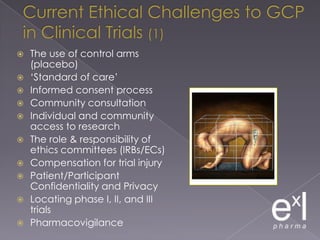
Current Ethical Challenges to GCP in Clinical Trials (1)The use of control arms (placebo)‘Standard of care’Informed consent processCommunity consultationIndividual and community access to researchThe role & responsibility of ethics committees (IRBs/ECs)Compensation for trial injuryPatient/Participant Confidentiality and PrivacyLocating phase I, II, and III trialsPharmacovigilance
Current Ethical Challenges to GCP in Clinical Trials (2)Medical treatment during the course of researchProduct availabilitySponsorshipLiability & InsuranceTissuesStem Cell ResearchData ProtectionMonitoring (DMCs)Data OwnershipProprietary Information/KnowledgePublishing Clinical Trial Information and ResultsBotanical/Traditional Medicines
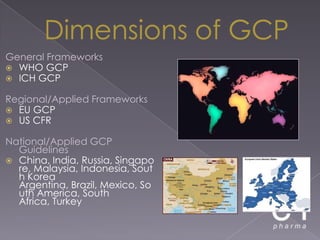
Dimensions of GCPGeneral FrameworksWHO GCPICH GCPRegional/Applied FrameworksEU GCPUS CFRNational/Applied GCP GuidelinesChina, India, Russia, Singapore, Malaysia, Indonesia, South Korea Argentina, Brazil, Mexico, South America, South Africa, Turkey
The Way Forward for GCPFurther National & Regional Development(e.g., CTTI, The AfroGuide Project)A Broader Scope to Include All Health ResearchModernizing Guidance to Meet New Developments (e.g., Registries, Results Publication, DMCs, Insurance, Regulatory Science)Appropriate National, Regional, & International PlatformsA Broad and Comprehensive Vision Complimented by Small Steps
Proactive GCP ComplianceInvestigator Responsibilities Guidance& A Few Comments on AE Reporting
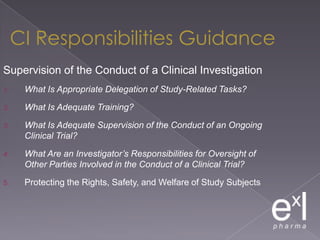
CI Responsibilities GuidanceSupervision of the Conduct of a Clinical InvestigationWhat Is Appropriate Delegation of Study-Related Tasks? What Is Adequate Training? What Is Adequate Supervision of the Conduct of an Ongoing Clinical Trial?What Are an Investigator’s Responsibilities for Oversight of Other Parties Involved in the Conduct of a Clinical Trial? Protecting the Rights, Safety, and Welfare of Study Subjects
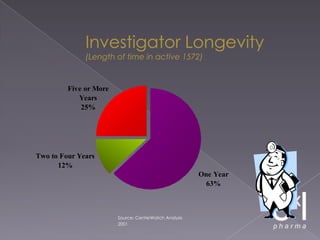
Investigator Longevity(Length of time in active 1572)Source: CenterWatch Analysis 2001
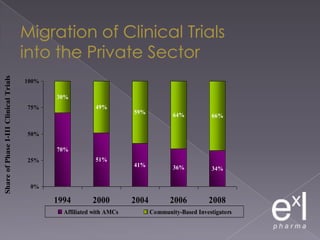
Migration of Clinical Trials into the Private Sector
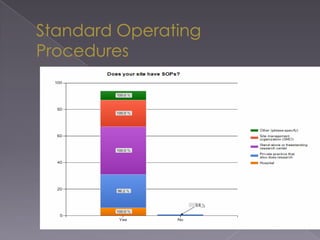
Standard Operating ProceduresSite Solutions Summit 2009 Survey
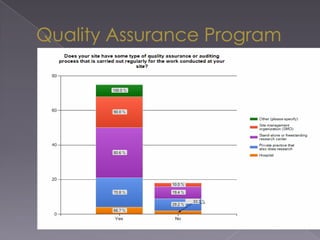
Quality Assurance ProgramSite Solutions Summit 2009 Survey
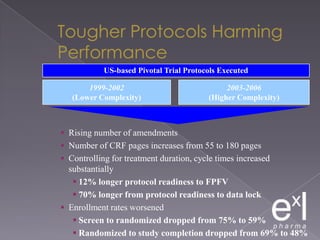
Tougher Protocols Harming PerformanceUS-based Pivotal Trial Protocols Executed1999-2002(Lower Complexity)2003-2006(Higher Complexity)Rising number of amendments
Number of CRF pages increases from 55 to 180 pages
Controlling for treatment duration, cycle times increased substantially
12% longer protocol readiness to FPFV
70% longer from protocol readiness to data lock
Enrollment rates worsened
Screen to randomized dropped from 75% to 59%
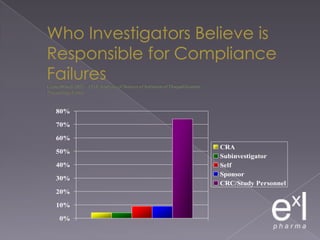
Randomized to study completion dropped from 69% to 48%Who Investigators Believe is Responsible for Compliance FailuresCenterWatch 2002 – FDA Analysis of Notices of Initiation of DisqualificationProceedings Letter
FDA Assessing InvestigatorsWhether delegated individuals were qualified to perform such tasks
Whether study staff received adequate training on how to conduct the delegated tasks and were provided with an adequate understanding of the study
Whether there was adequate supervision and involvement in the ongoing conduct of the studyDemonstrate Compliance With Appropriate DelegationDelegation of Responsibility Log
IRB questioning the acceptability of a persons credentials
Sponsors looking more seriously at who will do what, during the pre site visit
Investigator signing off on I/E source document	But it’s more then a list, it’s knowing who CAN do what and who SHOULD do what
Demonstrate Compliance With TrainingReview training records during the pre site visit
Training files – GCP & study specific
Which brings up - How many times must one complete GCP training?
Training tab in each regulatory binder
Template to document such trainingDemonstrate Compliance With Supervision Evidence of study staff meetings
Evidence of meetings with sponsor monitor
Monitor letter – reviewed, signed and preferably responded to
PI & CRA meeting minutes*
Set of SOPs to Guidance requirements & GCPs
Evidence of Investigator involvement in the study
Appropriate signature on lab results
Signature on I/E source documentation worksheet
AE assessment (causality & severity)*Protecting the Rights, Safety and Welfare of Study SubjectsReview treatment of, and follow-up of SAEs/AEs (sponsor's protocol/policy)
Evidence of subject's Primary Care Physician having been informed (with subject's consent)

Highlights from ExL Pharma's Proactive GCP Compliance

  • 1.
    Highlights from ExLPharma’sProactive GCP ComplianceMarch 29-31, 2010Arlington, VA
  • 2.
    GCP in EmergingRegionsEthics, Quality, and Compliance1
  • 3.
    The Objectives ofClinical ResearchTo Contribute to Public HealthTo Contribute to Health ScienceTo Contribute to Economic Development
  • 4.
    Good Clinical PracticeASet of Responsibilities‘a process that makes all parties to a study responsible for patient safety and study quality’
  • 5.
    US & EUObjectives inHarmonizing GCP(3 August 2009, Launch of a Bilateral GCP Initiative)To achieve common understandings and practicesTo share standards and methodologiesTo share knowledgeTo share resourcesTo improve human subjects protections
  • 6.
    Challenges to GCPHarmonizationThe extensive reach of clinical trialsThe complexity of law and regulationLack of an internationally agreed code of ethics for human research protectionsThe progress of medical scienceThe lack of appropriately representative platforms
  • 7.
    Current Ethical Challengesto GCP in Clinical Trials (1)The use of control arms (placebo)‘Standard of care’Informed consent processCommunity consultationIndividual and community access to researchThe role & responsibility of ethics committees (IRBs/ECs)Compensation for trial injuryPatient/Participant Confidentiality and PrivacyLocating phase I, II, and III trialsPharmacovigilance
  • 8.
    Current Ethical Challengesto GCP in Clinical Trials (2)Medical treatment during the course of researchProduct availabilitySponsorshipLiability & InsuranceTissuesStem Cell ResearchData ProtectionMonitoring (DMCs)Data OwnershipProprietary Information/KnowledgePublishing Clinical Trial Information and ResultsBotanical/Traditional Medicines
  • 9.
    Dimensions of GCPGeneralFrameworksWHO GCPICH GCPRegional/Applied FrameworksEU GCPUS CFRNational/Applied GCP GuidelinesChina, India, Russia, Singapore, Malaysia, Indonesia, South Korea Argentina, Brazil, Mexico, South America, South Africa, Turkey
  • 10.
    The Way Forwardfor GCPFurther National & Regional Development(e.g., CTTI, The AfroGuide Project)A Broader Scope to Include All Health ResearchModernizing Guidance to Meet New Developments (e.g., Registries, Results Publication, DMCs, Insurance, Regulatory Science)Appropriate National, Regional, & International PlatformsA Broad and Comprehensive Vision Complimented by Small Steps
  • 11.
    Proactive GCP ComplianceInvestigatorResponsibilities Guidance& A Few Comments on AE Reporting
  • 12.
    CI Responsibilities GuidanceSupervisionof the Conduct of a Clinical InvestigationWhat Is Appropriate Delegation of Study-Related Tasks? What Is Adequate Training? What Is Adequate Supervision of the Conduct of an Ongoing Clinical Trial?What Are an Investigator’s Responsibilities for Oversight of Other Parties Involved in the Conduct of a Clinical Trial? Protecting the Rights, Safety, and Welfare of Study Subjects
  • 13.
    Investigator Longevity(Length oftime in active 1572)Source: CenterWatch Analysis 2001
  • 14.
    Migration of ClinicalTrials into the Private Sector
  • 15.
    Standard Operating ProceduresSiteSolutions Summit 2009 Survey
  • 16.
    Quality Assurance ProgramSiteSolutions Summit 2009 Survey
  • 17.
    Tougher Protocols HarmingPerformanceUS-based Pivotal Trial Protocols Executed1999-2002(Lower Complexity)2003-2006(Higher Complexity)Rising number of amendments
  • 18.
    Number of CRFpages increases from 55 to 180 pages
  • 19.
    Controlling for treatmentduration, cycle times increased substantially
  • 20.
    12% longer protocolreadiness to FPFV
  • 21.
    70% longer fromprotocol readiness to data lock
  • 22.
  • 23.
    Screen to randomizeddropped from 75% to 59%
  • 24.
    Randomized to studycompletion dropped from 69% to 48%Who Investigators Believe is Responsible for Compliance FailuresCenterWatch 2002 – FDA Analysis of Notices of Initiation of DisqualificationProceedings Letter
  • 25.
    FDA Assessing InvestigatorsWhetherdelegated individuals were qualified to perform such tasks
  • 26.
    Whether study staffreceived adequate training on how to conduct the delegated tasks and were provided with an adequate understanding of the study
  • 27.
    Whether there wasadequate supervision and involvement in the ongoing conduct of the studyDemonstrate Compliance With Appropriate DelegationDelegation of Responsibility Log
  • 28.
    IRB questioning theacceptability of a persons credentials
  • 29.
    Sponsors looking moreseriously at who will do what, during the pre site visit
  • 30.
    Investigator signing offon I/E source document But it’s more then a list, it’s knowing who CAN do what and who SHOULD do what
  • 31.
    Demonstrate Compliance WithTrainingReview training records during the pre site visit
  • 32.
    Training files –GCP & study specific
  • 33.
    Which brings up- How many times must one complete GCP training?
  • 34.
    Training tab ineach regulatory binder
  • 35.
    Template to documentsuch trainingDemonstrate Compliance With Supervision Evidence of study staff meetings
  • 36.
    Evidence of meetingswith sponsor monitor
  • 37.
    Monitor letter –reviewed, signed and preferably responded to
  • 38.
    PI & CRAmeeting minutes*
  • 39.
    Set of SOPsto Guidance requirements & GCPs
  • 40.
    Evidence of Investigatorinvolvement in the study
  • 41.
  • 42.
    Signature on I/Esource documentation worksheet
  • 43.
    AE assessment (causality& severity)*Protecting the Rights, Safety and Welfare of Study SubjectsReview treatment of, and follow-up of SAEs/AEs (sponsor's protocol/policy)
  • 44.
    Evidence of subject'sPrimary Care Physician having been informed (with subject's consent)

Editor's Notes

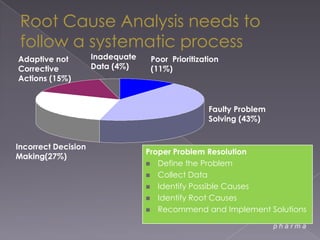
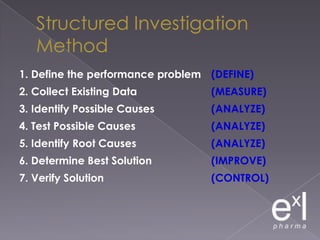
  • #38 As described in slide 14, the 3 basic steps of Cause mapping can further be broken up in identifiable steps and can be serve as a easy to follow Root Cause Analysis Process.*DEFINE*Step One: Define the Problem (DEFINE)What do you see happening?What are the specific symptoms?*ANALYZE*Step Two: Collect Data What proof do you have that the problem exists?How long has the problem existed?What is the impact of the problem?You need to analyze a situation fully before you can move on to look at factors that contributed to the problem. To maximize the effectiveness of your Root Cause Analysis, get together everyone who understands the situation.Step Three: Identify Possible Causal FactorsWhat sequence of events leads to the problem?What conditions allow the problem to occur?What other problems surround the occurrence of the central problem?During this stage, identify as many causal factors as possible. You don’t want to simply treat the most obvious causes – you want to dig deeper. Use the following suggested tools to identify causal factors:5xWhys and Fishbone Diagram (Cause and Effect Diagrams)Step Four: Identify the Root Cause(s)Why does the causal factor exists?What is the real reason the problem occurred? Use the same tools you used to identify the causal factors in step 3 to look at the roots of each factor. *PREVENT*Step Five: Recommend and Implement SolutionsWhat can you do to prevent the problem from happening again?How will the solution be implemented?Who will be responsible for it?What are the risks of implementing the solution?Identify the changes needed for various systems. It is also important to plan ahead to predict the effects of your solution. This way, you can spot potential failures before they happen.
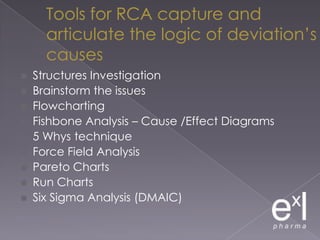
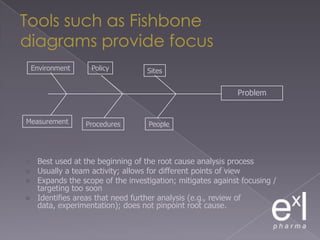
  • #39 This slide indicates some of the tools available to be utilized during Root Cause analysis. Only four will be explained in this presentation nl. Brainstorming, Fishbone Diagram/ Cause and Effect diagram, Why-Why Analysis and the Force Field Analysis.
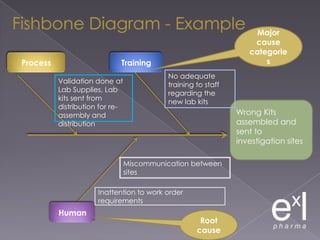
  • #42 When you use the fishbone diagram, you just list the causes under the Major cause categories Major categories is more a system level, for example, process, procedure, human, instrument, facility, training etc.The category with most causes is the root cause. So in this case, human error is the root cause that led to the issue.Just a side note that, when you develop the CAPA plans, u will have to consider the root cause, and also other causes that led to the issue.