Target Audience and genre- 
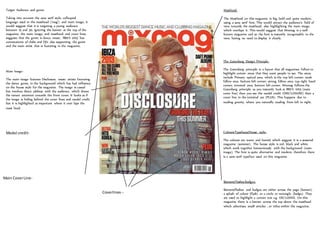
Taking into account the sans serif style, colloquial 
language used in the masthead (‘mag’) and main image, it 
would suggest that it is targeting a young audience 
between 15 and 30. Ignoring the banner at the top of the 
magazine, the main image, and masthead and cover lines 
suggests that the genre is dance music. ‘IBIZA 2013’ has 
connotations of clubs and DJ’s also supporting the genre 
and the main artist that is featuring in the magazine. 
Main Image- 
The main image features Disclosure, music artists favouring 
the dance genre, in the background which has had influence 
on the house style for the magazine. The image is casual 
but involves direct address with the audience, which draws 
the viewer attention towards the front cover. It looks as if 
the image is hiding behind the cover lines and model credit 
but it is highlighted as important where it over laps the 
mast head. 
Model credit- 
Main Cover Line- 
Masthead- 
The Masthead on this magazine is big, bold and quite modern, 
using a sans serif font. This would attract the audience’s field of 
view towards the masthead; also highlighting the main image 
which overlaps it. This would suggest that Mixmag is a well-known 
magazine and so the font is instantly recognisable to the 
view, having no need to display it clearly. 
The Gutenberg Design Principle- 
The Gutenberg principle is a layout that all magazines follow to 
highlight certain areas that they want people to see. The areas 
include Primary optical area; which is the top left corner; weak 
fallow area; bottom left corner; strong fallow area; top right hand 
corner; terminal area; bottom left corner. Mixmag follows the 
Gutenberg principle as you instantly look at IBIZA 2013 (main 
cover line) then you see the model credit (DISCLOSURE) then a 
cover line in the terminal are (PLUS). This happens due to 
reading gravity, where you naturally reading from left to right. 
Colours/Typefaces/House style- 
The colours are warm and humid, which suggest it is a seasonal 
magazine (summer). The house style is red, black and white 
which work together harmoniously with the background (main 
image). The font is quite alternative and modern; therefore there 
is a sans serif typeface used on this magazine. 
Coverlines-- 
Banners/Flashes/badges- 
Banners/flashes and badges are either across the page (banner), 
a splash of colour (flash) or a circle or rectangle (badge). They 
are used to highlight a certain text e.g. EXCLUSIVE. On this 
magazine there is a banner across the top above the masthead 
which advertises small articles , or titles within the magazine.

Magazine cover analysis disclosure

  • 1.
    Target Audience andgenre- Taking into account the sans serif style, colloquial language used in the masthead (‘mag’) and main image, it would suggest that it is targeting a young audience between 15 and 30. Ignoring the banner at the top of the magazine, the main image, and masthead and cover lines suggests that the genre is dance music. ‘IBIZA 2013’ has connotations of clubs and DJ’s also supporting the genre and the main artist that is featuring in the magazine. Main Image- The main image features Disclosure, music artists favouring the dance genre, in the background which has had influence on the house style for the magazine. The image is casual but involves direct address with the audience, which draws the viewer attention towards the front cover. It looks as if the image is hiding behind the cover lines and model credit but it is highlighted as important where it over laps the mast head. Model credit- Main Cover Line- Masthead- The Masthead on this magazine is big, bold and quite modern, using a sans serif font. This would attract the audience’s field of view towards the masthead; also highlighting the main image which overlaps it. This would suggest that Mixmag is a well-known magazine and so the font is instantly recognisable to the view, having no need to display it clearly. The Gutenberg Design Principle- The Gutenberg principle is a layout that all magazines follow to highlight certain areas that they want people to see. The areas include Primary optical area; which is the top left corner; weak fallow area; bottom left corner; strong fallow area; top right hand corner; terminal area; bottom left corner. Mixmag follows the Gutenberg principle as you instantly look at IBIZA 2013 (main cover line) then you see the model credit (DISCLOSURE) then a cover line in the terminal are (PLUS). This happens due to reading gravity, where you naturally reading from left to right. Colours/Typefaces/House style- The colours are warm and humid, which suggest it is a seasonal magazine (summer). The house style is red, black and white which work together harmoniously with the background (main image). The font is quite alternative and modern; therefore there is a sans serif typeface used on this magazine. Coverlines-- Banners/Flashes/badges- Banners/flashes and badges are either across the page (banner), a splash of colour (flash) or a circle or rectangle (badge). They are used to highlight a certain text e.g. EXCLUSIVE. On this magazine there is a banner across the top above the masthead which advertises small articles , or titles within the magazine.