Machine Learning 
(OCR) 
Presented By- 
Raunaq Kataria 
Amit Gupta 
11/29/2014 1
Overview 
1. What is it ? 
2. What are the Applications ? 
3. What are the types of ML Algorithms ? 
4. Why Machine Learning ? 
5. What is our Aim ? 
6. OCR 
Footer Text 11/29/2014 2
What is Machine Learning ? 
• Study of Algorithms that can ‘learn from data’ 
through iterations (experience) 
• Without being ‘explicitly programmed’ 
• Operation: 
1. Build models on Inputs. 
2. Making Predictions 
3. E.g. Predicting Flight Delays 
Footer Text 11/29/2014 3
Applications 
• Spam mail (recognition) 
• Web click data (recommendations) 
• Security (Pattern recognition, face detection) 
• Business (Stocks, user behaviors) 
• Medical (Research on medical records) 
Footer Text 11/29/2014 4
Types Of Algorithms 
• There are mainly 2 types of ML Algorithms: 
1. Supervised 
2. Unsupervised 
Footer Text 11/29/2014 5
Why Machine Learning? 
• Beginning towards the aim of Ultimate A.I. 
i.e. 
1. Self Aware 
2. Fully Conscious 
3. As Intelligent as The Human Race. 
Footer Text 11/29/2014 6
Our Aim 
• Implementing Machine Learning Algorithms to 
execute : 
OCR : Optical Character Recognition 
using Supervised Machine Learning Algorithm 
Footer Text 11/29/2014 7
What is OCR ? 
• OCR : 
1. First step in the field of Computer Vision 
2. A part of AI 
• Conversion of images of Handwritten or printed text into 
machine encoded text 
• Implement on MATLAB through supervised learning 
algorithm 
Footer Text 11/29/2014 8
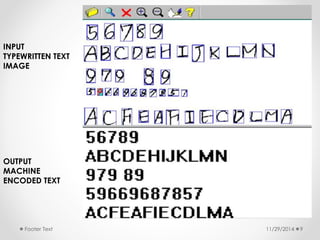
INPUT 
TYPEWRITTEN TEXT 
IMAGE 
OUTPUT 
MACHINE 
ENCODED TEXT 
Footer Text 11/29/2014 9
Preprocessing 
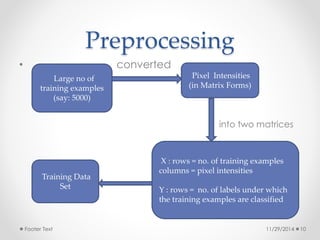
• converted 
Pixel Intensities 
(in Matrix Forms) 
into two matrices 
Large no of 
training examples 
(say: 5000) 
X : rows = no. of training examples 
columns = pixel intensities 
Y : rows = no. of labels under which 
the training examples are classified 
Training Data 
Set 
Footer Text 11/29/2014 10
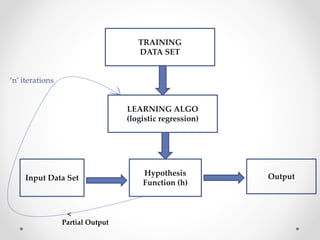
TRAINING 
DATA SET 
Output 
LEARNING ALGO 
(logistic regression) 
Hypothesis 
Function (h) 
Input Data Set 
< 
Partial Output 
‘n’ iterations
OCR - PROSPECTS 
• Extract key info from business documents, 
e.g. insurance policy, passport, bank statement etc. 
• Automatic number plate recognition 
• Assistive technology for visually impaired users 
( text-to-speech converter) 
• Extracting business card info into a contact list 
Footer Text 11/29/2014 12
BIBLIOGRAPHY 
• Lectures by - (Andrew Ng, Machine Learning- 
Stanford University ) 
• http://en.wikipedia.org/wiki/Machine_learning 
Footer Text 11/29/2014 13
Thank You 
Footer Text 11/29/2014 14

Machine learning

  • 1.
    Machine Learning (OCR) Presented By- Raunaq Kataria Amit Gupta 11/29/2014 1
  • 2.
    Overview 1. Whatis it ? 2. What are the Applications ? 3. What are the types of ML Algorithms ? 4. Why Machine Learning ? 5. What is our Aim ? 6. OCR Footer Text 11/29/2014 2
  • 3.
    What is MachineLearning ? • Study of Algorithms that can ‘learn from data’ through iterations (experience) • Without being ‘explicitly programmed’ • Operation: 1. Build models on Inputs. 2. Making Predictions 3. E.g. Predicting Flight Delays Footer Text 11/29/2014 3
  • 4.
    Applications • Spammail (recognition) • Web click data (recommendations) • Security (Pattern recognition, face detection) • Business (Stocks, user behaviors) • Medical (Research on medical records) Footer Text 11/29/2014 4
  • 5.
    Types Of Algorithms • There are mainly 2 types of ML Algorithms: 1. Supervised 2. Unsupervised Footer Text 11/29/2014 5
  • 6.
    Why Machine Learning? • Beginning towards the aim of Ultimate A.I. i.e. 1. Self Aware 2. Fully Conscious 3. As Intelligent as The Human Race. Footer Text 11/29/2014 6
  • 7.
    Our Aim •Implementing Machine Learning Algorithms to execute : OCR : Optical Character Recognition using Supervised Machine Learning Algorithm Footer Text 11/29/2014 7
  • 8.
    What is OCR? • OCR : 1. First step in the field of Computer Vision 2. A part of AI • Conversion of images of Handwritten or printed text into machine encoded text • Implement on MATLAB through supervised learning algorithm Footer Text 11/29/2014 8
  • 9.
    INPUT TYPEWRITTEN TEXT IMAGE OUTPUT MACHINE ENCODED TEXT Footer Text 11/29/2014 9
  • 10.
    Preprocessing • converted Pixel Intensities (in Matrix Forms) into two matrices Large no of training examples (say: 5000) X : rows = no. of training examples columns = pixel intensities Y : rows = no. of labels under which the training examples are classified Training Data Set Footer Text 11/29/2014 10
  • 11.
    TRAINING DATA SET Output LEARNING ALGO (logistic regression) Hypothesis Function (h) Input Data Set < Partial Output ‘n’ iterations
  • 12.
    OCR - PROSPECTS • Extract key info from business documents, e.g. insurance policy, passport, bank statement etc. • Automatic number plate recognition • Assistive technology for visually impaired users ( text-to-speech converter) • Extracting business card info into a contact list Footer Text 11/29/2014 12
  • 13.
    BIBLIOGRAPHY • Lecturesby - (Andrew Ng, Machine Learning- Stanford University ) • http://en.wikipedia.org/wiki/Machine_learning Footer Text 11/29/2014 13
  • 14.
    Thank You FooterText 11/29/2014 14