OPTOM ASKAR.PK
 History
 Vision evaluation
 Field
 Colour vision
 Binocularity
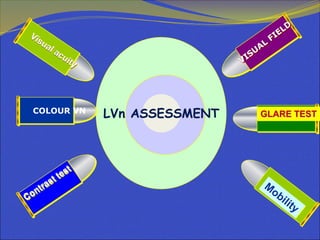
LVn ASSESSMENTCOLOUR VN GLARE TEST
 SYSTEMIC
 OCULAR
 TASK RELATED
 Onset
 Disease appearance
 Progression
 Treatment
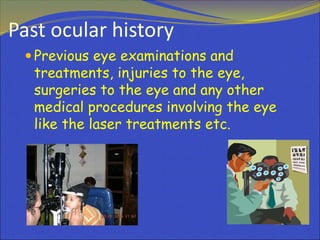
Past ocular history
 Previous eye examinations and
treatments, injuries to the eye,
surgeries to the eye and any other
medical procedures involving the eye
like the laser treatments etc.
Past medical history
 Diabetes, Hypertension.
 Arteriosclerosis, Heart disease.
 Migraine and other headache
 Thyroid disorders, multiple sclerosis…..
Medications used by the patient
 The name of the drugs used for both the
systemic and ocular pathologies, their
concentration, dosage & the time of last
application must all be noted and updated at
subsequent visits.
Allergies
 Allergies to drugs like Sulpha groups,
penicillin, steroids might help in planning
the treatment modality for many ocular
diseases
 Because the above mentioned drugs
might have been included in a drug which
is used to treat certain ocular
conditions.
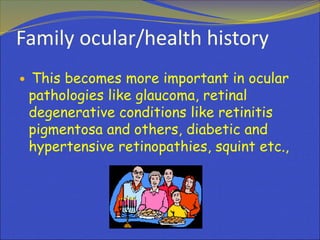
Family ocular/health history
 This becomes more important in ocular
pathologies like glaucoma, retinal
degenerative conditions like retinitis
pigmentosa and others, diabetic and
hypertensive retinopathies, squint etc.,
 Day- to-day problem visual task
oDistance – street signs, traffic light, face,
watching TV & black board work
oIntermediate – seeing the
computer, food on the plate, reading
musical notes and enjoying hobbies.
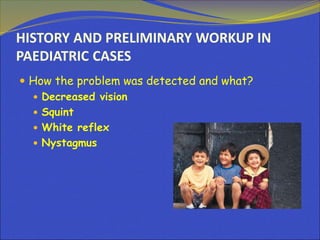
HISTORY AND PRELIMINARY WORKUP IN
PAEDIATRIC CASES
 How the problem was detected and what?
 Decreased vision
 Squint
 White reflex
 Nystagmus
PEDIATRIC CASE
 Pre natal
 Birth history
 Post natal history
PRE NATAL
 Fever & skin rashes (Torch's infection)
 Immunization
 Injury
Pre-natal factors
1. Maternal age at the time of delivery
2. H/o maternal infections
/medications/Radiation therapy
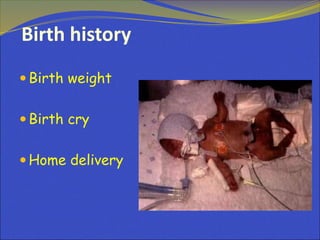
Birth history
 Birth weight
 Birth cry
 Home delivery
Peri-natal factors
 Normal delivery
 Caesarian/ forceps /traumatic delivery
 H/o premature delivery
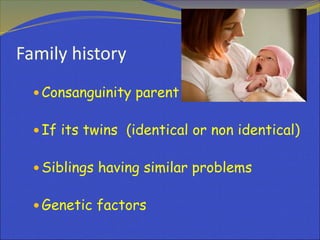
Family history
 Consanguinity parent
 If its twins (identical or non identical)
 Siblings having similar problems
 Genetic factors
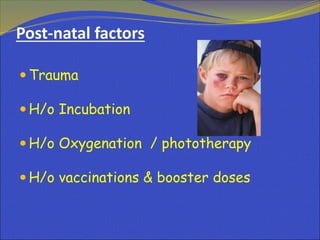
Post-natal factors
 Trauma
 H/o Incubation
 H/o Oxygenation / phototherapy
 H/o vaccinations & booster doses
Others
 Contact with pets (Toxoplasma,
Toxocara)
 Oral and genital ulceration (Behcet’s
disease)
 Fever, Weight loss, cough (Tuberculosis)
 Immunosuppressive usage.
IN SQUINT CASES
 Direction of deviation
 Age of onset
 Deviation constant or intermittent
 Head tilt , turn
 Chin up/down position
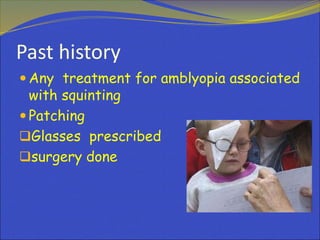
Past history
 Any treatment for amblyopia associated
with squinting
 Patching
Glasses prescribed
surgery done
Low vision assessment

Low vision assessment

  • 1.
  • 2.
     History  Visionevaluation  Field  Colour vision  Binocularity
  • 3.
  • 5.
  • 6.
     Onset  Diseaseappearance  Progression  Treatment
  • 7.
    Past ocular history Previous eye examinations and treatments, injuries to the eye, surgeries to the eye and any other medical procedures involving the eye like the laser treatments etc.
  • 8.
    Past medical history Diabetes, Hypertension.  Arteriosclerosis, Heart disease.  Migraine and other headache  Thyroid disorders, multiple sclerosis…..
  • 9.
    Medications used bythe patient  The name of the drugs used for both the systemic and ocular pathologies, their concentration, dosage & the time of last application must all be noted and updated at subsequent visits.
  • 10.
    Allergies  Allergies todrugs like Sulpha groups, penicillin, steroids might help in planning the treatment modality for many ocular diseases  Because the above mentioned drugs might have been included in a drug which is used to treat certain ocular conditions.
  • 11.
    Family ocular/health history This becomes more important in ocular pathologies like glaucoma, retinal degenerative conditions like retinitis pigmentosa and others, diabetic and hypertensive retinopathies, squint etc.,
  • 12.
     Day- to-dayproblem visual task oDistance – street signs, traffic light, face, watching TV & black board work oIntermediate – seeing the computer, food on the plate, reading musical notes and enjoying hobbies.
  • 13.
    HISTORY AND PRELIMINARYWORKUP IN PAEDIATRIC CASES  How the problem was detected and what?  Decreased vision  Squint  White reflex  Nystagmus
  • 14.
    PEDIATRIC CASE  Prenatal  Birth history  Post natal history
  • 15.
    PRE NATAL  Fever& skin rashes (Torch's infection)  Immunization  Injury Pre-natal factors 1. Maternal age at the time of delivery 2. H/o maternal infections /medications/Radiation therapy
  • 16.
    Birth history  Birthweight  Birth cry  Home delivery
  • 17.
    Peri-natal factors  Normaldelivery  Caesarian/ forceps /traumatic delivery  H/o premature delivery
  • 18.
    Family history  Consanguinityparent  If its twins (identical or non identical)  Siblings having similar problems  Genetic factors
  • 19.
    Post-natal factors  Trauma H/o Incubation  H/o Oxygenation / phototherapy  H/o vaccinations & booster doses
  • 20.
    Others  Contact withpets (Toxoplasma, Toxocara)  Oral and genital ulceration (Behcet’s disease)  Fever, Weight loss, cough (Tuberculosis)  Immunosuppressive usage.
  • 21.
    IN SQUINT CASES Direction of deviation  Age of onset  Deviation constant or intermittent  Head tilt , turn  Chin up/down position
  • 22.
    Past history  Anytreatment for amblyopia associated with squinting  Patching Glasses prescribed surgery done