Presenter
Yidersal S. (R3)
Moderator
Dr. Samson Y. (MD, neurologist )
Aug , 2021
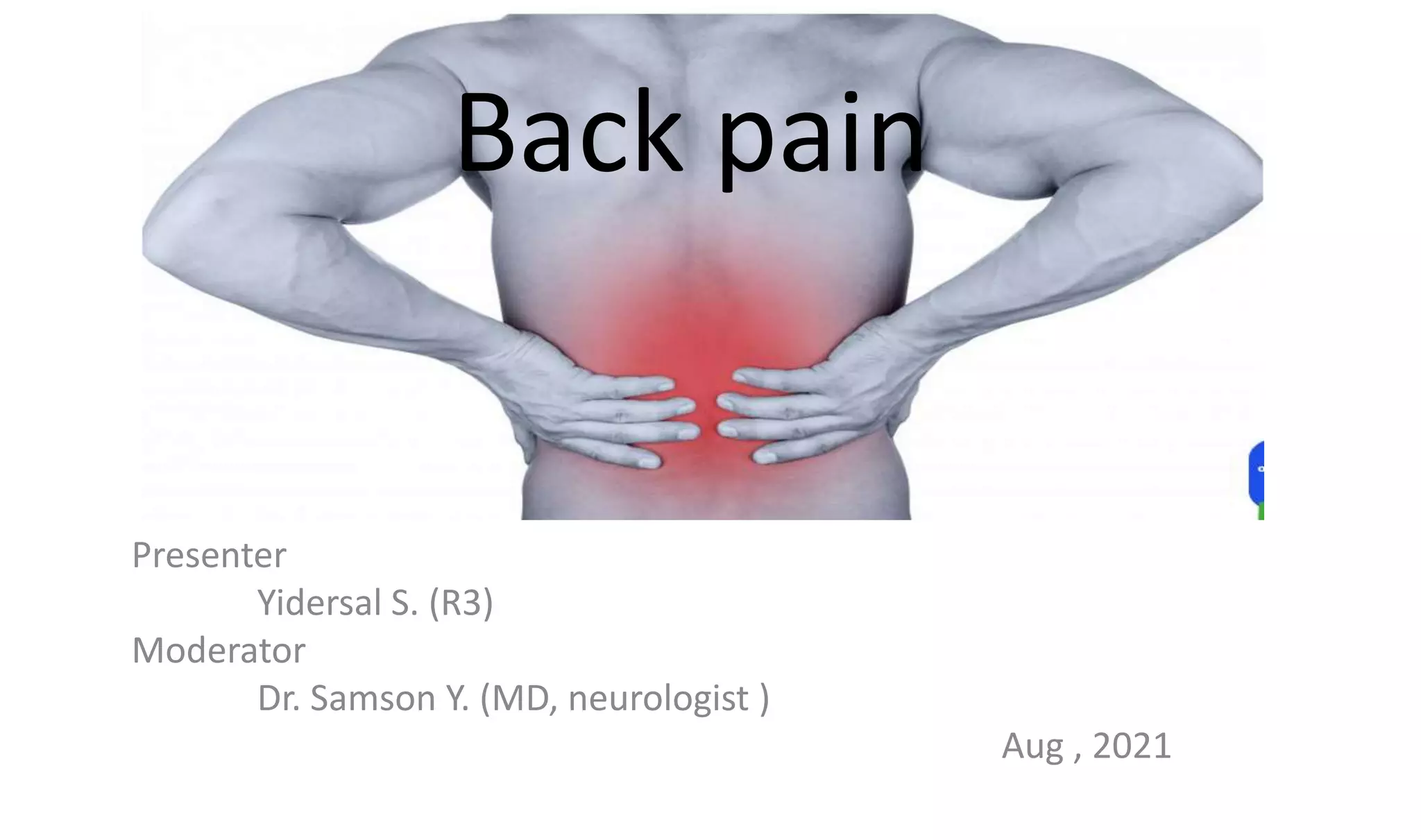
Back pain
Outline
• Case
• Introduction
• Epidemiology
• Approach to back pain patient
• Etiology
• Management
• Prognosis
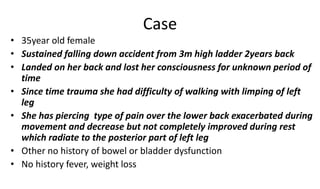
Case
• 35year old female
• Sustained falling down accident from 3m high ladder 2years back
• Landed on her back and lost her consciousness for unknown period of
time
• Since time trauma she had difficulty of walking with limping of left
leg
• She has piercing type of pain over the lower back exacerbated during
movement and decrease but not completely improved during rest
which radiate to the posterior part of left leg
• Other no history of bowel or bladder dysfunction
• No history fever, weight loss
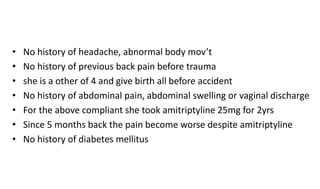
• No history of headache, abnormal body mov’t
• No history of previous back pain before trauma
• she is a other of 4 and give birth all before accident
• No history of abdominal pain, abdominal swelling or vaginal discharge
• For the above compliant she took amitriptyline 25mg for 2yrs
• Since 5 months back the pain become worse despite amitriptyline
• No history of diabetes mellitus
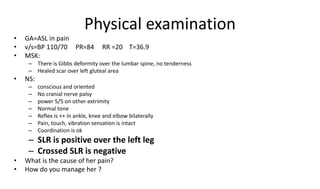
Physical examination
• GA=ASL in pain
• v/s=BP 110/70 PR=84 RR =20 T=36.9
• MSK:
– There is Gibbs deformity over the lumbar spine, no tenderness
– Healed scar over left gluteal area
• NS:
– conscious and oriented
– No cranial nerve palsy
– power 5/5 on other extrimity
– Normal tone
– Reflex is ++ in ankle, knee and elbow bilaterally
– Pain, touch, vibration sensation is intact
– Coordination is ok
– SLR is positive over the left leg
– Crossed SLR is negative
• What is the cause of her pain?
• How do you manage her ?
Introduction
• Why back pain is a concern in medical community ?
– High cost
– Most common cause of disability in individuals <45 years of age
– Second most common reason for visiting a physician
– More than four out of five people will experience significant back
pain at some point in their lives
• 84 % of adults have low back pain at some time in their lives
• Most of them are self-limited
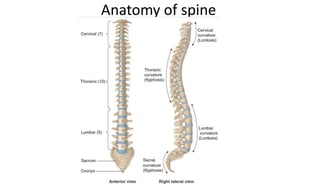
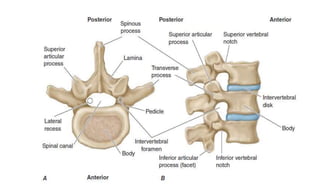
Anatomy of spine
Terminology
• Spondylosis
– Arthritis of the spine
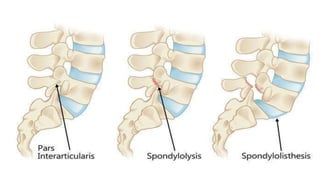
• Spondylolysis
– A fracture in the pars interarticularis where the vertebral body and the posterior
elements protecting the nerves are joined
• Spondylolisthesis
– The injured vertebra to shift or slip forward on the vertebra directly below it
• Spinal stenosis:
– Narrowing of the vertebral canal by bone or soft tissue elements.
• Radiculopathy
– Impairment of a nerve root, usually causing radiating pain, numbness, tingling,
or muscle weakness .
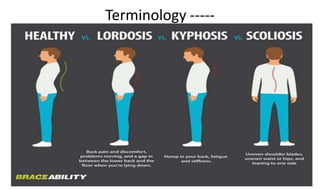
Terminology -----
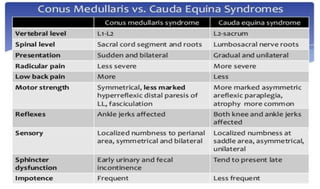
• Cauda equina syndrome
– Loss of bowel and bladder control
– Numbness in the groin and saddle area of the perineum
– Weakness of the lower extremities
– Spine stenosis or a large herniated disc
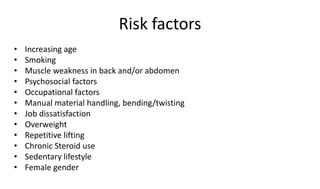
Risk factors
• Increasing age
• Smoking
• Muscle weakness in back and/or abdomen
• Psychosocial factors
• Occupational factors
• Manual material handling, bending/twisting
• Job dissatisfaction
• Overweight
• Repetitive lifting
• Chronic Steroid use
• Sedentary lifestyle
• Female gender
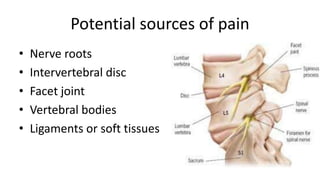
Potential sources of pain
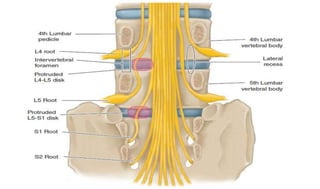
• Nerve roots
• Intervertebral disc
• Facet joint
• Vertebral bodies
• Ligaments or soft tissues
Approach to back pain patient
History
• Focus first on features of pain
 Mode of onset
 Character
 Distribution
 Associated motor and sensory symptoms
 Bladder and bowel control
 Exacerbating and remitting factors
 History of predisposing factors (e.g., trauma, cancer, osteoporosis)
Type of pain
• Back pain by duration
– Acute LBP → < 6 weeks*
– Sub acute LBP→ between 6 weeks and 12 weeks
– Chronic LBP → > 12 weeks
Type of back pain
• Local pain
– injury to pain-sensitive structures that compress or irritate
sensory nerve endings
– The site of the pain is near the affected part of the back
• Pain referred to the back
– From abdominal or pelvic viscera
– Unaffected by posture
– The patient may occasionally complain of back pain only
Cont.
• Pain of spine origin
– From upper lumbar spine tend to refer pain to the
Lumbar Region, Groin, or Anterior Thighs
– Pain from lower lumbar spine tend to refer to the
buttocks, posterior thighs, or rarely the calves or feet
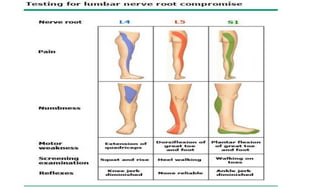
• Sclerotomal pain VS. radiculopathy?
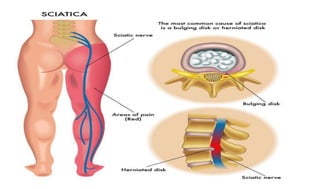
Sciatica
• Pain radiating down posterior or lateral leg below the
knee
• The most common cause for sciatica is lumbar disk
herniation
• Symptoms that increase the specificity of sciatica
– Pain that is worse in the leg than in the back
– Typical dermatomal distribution of neurologic symptoms
– Pain that is worse with the Valsalva maneuver
Cont.
• Pain associated with muscle spasm
Commonly associated with many spine disorders
The spasms are accompanied by
Abnormal posture
Tense paraspinal muscles
Dull or achy pain in the paraspinal region
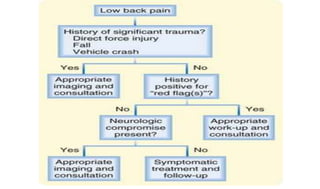
“Red flags” in back pain
• Age>55
• History of cancer
• Unexplained weight loss
• Failure to improve with conservative management after 4 weeks of
treatment
• Fever
• Immunosuppression
• Focal midline tenderness
• Bacteremia
• Indwelling catheter
• Iv drug use
• Bowel and bladder dysfunction
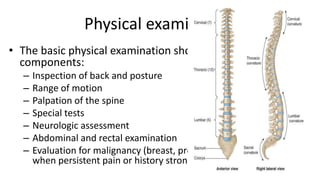
Physical examination
• The basic physical examination should include the following
components:
– Inspection of back and posture
– Range of motion
– Palpation of the spine
– Special tests
– Neurologic assessment
– Abdominal and rectal examination
– Evaluation for malignancy (breast, prostate, lymph node exam)
when persistent pain or history strongly suggests systemic disease
• Limited forward bending
– Paraspinal muscle spasm
• Lateral bending to the side opposite the injured spine
produce pain
• Limited hyperextension of the spine
– Nerve root compression, facet joint pathology, or other bony
spine disease is present
• Pain from hip disease may mimic the pain of lumbar spine
disease
• Hip pain can be reproduced
– By internal and external rotation at the hip with the knee and hip in
flexion (Patrick's Sign)
– By tapping the heel with the examiner's palm while the leg is
extended (Heel Percussion Sign)
Maneuver….
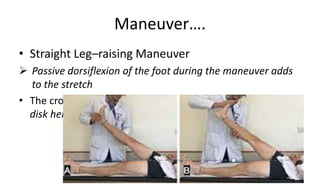
• Straight Leg–raising Maneuver
 Passive dorsiflexion of the foot during the maneuver adds
to the stretch
• The crossed SLR sign is less sensitive but more specific for
disk herniation than the SLR sign
• The Reverse SLR Sign
– Stretches the L2-L4 nerve roots, lumbosacral plexus, and
femoral nerve
• Naffziger’s test
– Pressure on jugular vein on patient lying on back for 10
second
– Back pain reproduce in the case of herniated disc
• Kerning sign
– Meningeal or spinal nerve root irritation
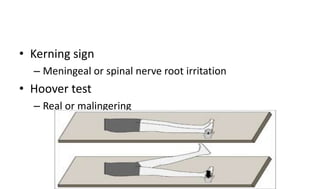
• Hoover test
– Real or malingering
Neurologic examination
• Includes
Focal weakness or muscle atrophy
Focal reflex changes
Diminished sensation in the legs, or
Signs of spinal cord injury
• Alert to the possibility of Breakaway Weakness,
defined as fluctuating strength during muscle testing
• Breakaway weakness
– may be due to pain or a combination of pain and
underlying true weakness
– Breakaway weakness without pain is almost always due
to a lack of effort
– Electromyography during ambiguous condition
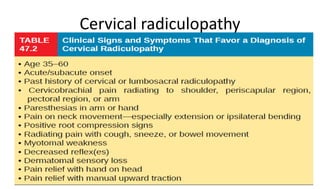
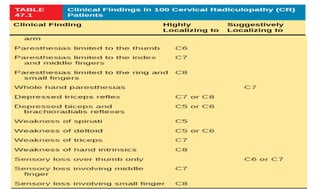
Cervical radiculopathy
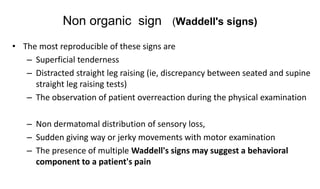
Non organic sign (Waddell's signs)
• The most reproducible of these signs are
– Superficial tenderness
– Distracted straight leg raising (ie, discrepancy between seated and supine
straight leg raising tests)
– The observation of patient overreaction during the physical examination
– Non dermatomal distribution of sensory loss,
– Sudden giving way or jerky movements with motor examination
– The presence of multiple Waddell's signs may suggest a behavioral
component to a patient's pain
Laboratory and imaging
• Laboratory studies are rarely needed for the initial evaluation of
nonspecific back pain
• CBC, ESR, urinalysis culture
• No need to investigating, if no serious risk factor
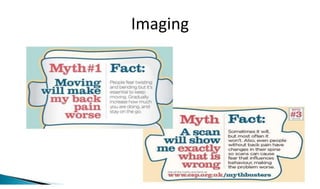
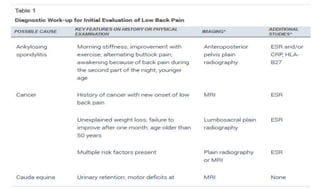
Imaging
• No need of earlier use of imaging for low back
– meta-analysis of six trials that compared immediate imaging with usual
care for patients
– Without signs or symptoms of infection or malignancy, found no
significant differences in out come
• Imaging scans often have abnormal findings in adults without
low back pain
– Disc herniation on MRI seen in 22 to 67% of asymptomatic adults and
spinal stenosis in 21% of asymptomatic adults over age 60
– Radiologic facet joint osteoarthritis increased with age and there was no
correlation with low back pain
Indication for imaging
• Infection
• Patients with cancer or at high risk of cancer
• Neurologic complication
• Radiculopathy with in need of intervention
• Compression fracture
• Patient with trauma
• Advanced imaging
– MRI without contrast is initial test for most patients with low back pain who require
advanced imaging
– Which can demonstrate normal and pathologic discs, ligaments, nerve roots, epidural
fat, as well as the shape and size of the spinal canal
– MRI is more sensitive and specific than plain radiographs for the detection of spinal
infection and malignancy
– MRI enhancement with gadolinium allows the distinction of scar from disc in patients
with prior back surgery
– In patients who require advanced imaging but cannot have an MRI, we generally
proceed with CT
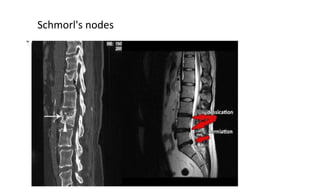
Schmorl's nodes
Etiology
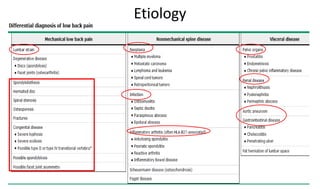
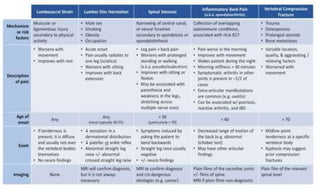
• 85% of patients have nonspecific low back pain
• Etiology of back pain can be categorized as
– Mechanical vs. non mechanical
– Back pain with led pain
– Back pain with out leg pain
– Back pain from visceral causes
– Leg pain with out back pain
Etiology
Etiology
• Causes of lower back pain without leg pain include:
– Ligamentous strain
– Muscle strain
– Facet pain
– Bony destruction
– Inflammation
• Causes of lower back with lower limb pain
– Radiculopathy
– Plexopathy
– Spinal stenosis
• causes of leg pain without low back pain
– Sciatic neuropathy
– Femoral neuropathy
– Peroneal neuropathy
– Meralgia paresthetica
– Peripheral polyneuropathies
• Back pain from visceral
– Pancreatitis
– Nephrolithiasis
– Pyelonephritis
– Abdominal aortic aneurysm
– Herpes zoster
Sprains and Strains
• Minor, self-limited injuries
• Lifting a heavy object, a fall, or a sudden deceleration
• Pain is usually confined to the lower back
• No radiation to the buttocks or legs
• Assume unusual postures
Traumatic vertebral fractures
• Results from injuries producing anterior wedging or compression
• Fracture-dislocation or "burst" fracture involving the vertebral body and
posterior elements
• A pars interarticularis fracture of the L5 vertebra is common in case of falls from
a height
• Sudden deceleration in an automobile accident
• Direct injury
• Neurologic impairment is common, and early surgical treatment is indicated
• Metastatic cancer
– The bone is one of the most common sites of metastasis
– A history of cancer
– Metastatic disease from breast, prostate, lung, thyroid, and kidney cancers
account for 80 percent of skeletal metastases
– ~ 60 % of patients with multiple myeloma have skeletal lytic lesions present at
diagnosis
– In patients with a history of cancer, sudden, severe pain raises concern for
pathologic fracture
– Patients may also have neurologic symptoms from either spinal cord
compression or spinal instability
• Spinal epidural abscess
– Spinal epidural abscess is a rare but serious cause of back pain
– Initial symptoms are often nonspecific
– Over time, localized back pain may be followed by radicular pain and, left
untreated, neurologic deficits
– Risk factors include recent spinal injection or epidural catheter placement,
injection drug use, contagious infections
– Immunocompromised patients may also be at higher risk
– Urgent antibiotic treatment and surgical therapy for those with neurologic
symptoms is required for patients with spinal epidural abscess
• Vertebral osteomyelitis
– Increases with age
– Men >women
– Post procedural from hematogenous spread of bacteremia
– Immunocompromised state and injection drug use
– Acute osteomyelitis typically presents with gradual onset of
symptoms over several days
– Present with back pain but may not have fevers or other
systemic symptoms
– Prompt antibiotic treatment improves outcomes
• Vertebral compression fracture
– 4 % of low back pain
– From no symptom to acute localize back pain
– There may be no history of preceding trauma
– Advanced age, chronic glucocorticoid use and previous
osteoporotic fracture
– 3 to 4 % of patients with compression fracture will have a
symptomatic disc herniation or spinal stenosis
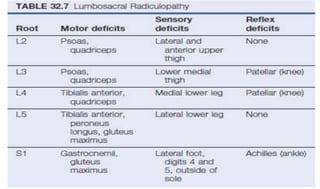
• Radiculopathy
– Results from degenerative changes in the vertebrae, disc protrusion, and other
causes
– Presentations vary according the level of nerve root or roots involved
– >90 % is L5 and S1 radiculopathies
– Patients present with pain, sensory loss, weakness, and/or reflex changes
consistent with the nerve root involved
– Many patients with symptoms of acute lumbosacral radiculopathy improve
gradually with supportive care
– Sciatica
– SLR positive
• Spinal stenosis
– Lumbar spinal stenosis is most often multifactorial
– Spondylosis , spondylolistheses, Space-occupying lesions,
traumatic and postoperative fibrosis
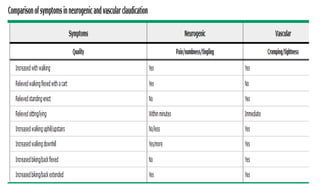
– Neurogenic claudication
– Back pain, sensory loss and weakness in the legs
– Rare patients develop a cauda equina syndrome
– Patients often have symptoms only when active
– A trial of conservative, nonsurgical treatment is the initial
therapy for most patients
• Ankylosing spondylitis
– Few (0.5%-1%).
– men under the age of 40 year
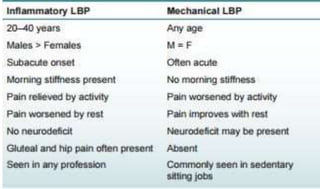
– back pain with inflammatory etiology (morning stiffness, improvement with exercise,
pain at night)
– Extra skeletal disease manifestations (eg, uveitis)
• Osteoarthritis
– Facet joint or hip joint
– Commonly presents in patients over the age of 40
– Pain is typically exacerbated by activity and relieved by rest
– Osteoarthritis can lead to spinal stenosis
• Psychological distress
– Who seek financial compensation (malingerers)
– Substance abuse
– Many patients with CLBP have a history of psychiatric illness
– Childhood trauma (physical or sexual abuse) that antedates the
onset of back pain
Management
• Depends on
– Symptom duration
– Potential cause
– Presence or absence of radicular symptoms
– Corresponding anatomical or radiographic abnormalities
Acute back pain
• Self limited
• Pharmacologic
– Acetaminophen
– NSAIDs
– SMRs
• Non pharmacologic
– Heat wrap: improved pain and function
– Massage: improved pain and function
– Acupuncture: improved pain
– Spinal manipulation: improved function
Grade 2C recommendation
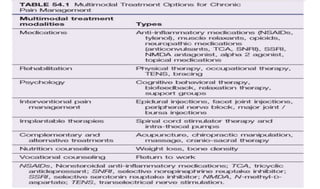
Chronic back pain
• Psychological evaluation and behaviorally based treatment paradigms are
frequently helpful
• Multidisciplinary approach
– Neurology, anesthesiology, physical therapy, psychiatry, psychology, and
primary care physicians
• Goals of therapy
– Improve pain
– Getting a good night’s sleep
– returning to work
• Pharmacologic
– NSAIDs: improved pain
– Opioids: improved pain and function
– Tramadol: improved pain and function
– Buprenorphine (patch or sublingual): improved pain
– Duloxetine: improved pain and function
• Non pharmacologic
– Exercise: improved pain and function
– Motor control exercise: improved pain and function
– Mindfulness-based stress reduction: improved pain and function
– Yoga: improved pain and function
– Progressive relaxation: improved pain and function
Surgical management
• Indicated for
– Neurologic deficits
– Cauda equina syndrome or conus medullaris syndrome
– No response with conservative management
Reference
Thank you

Low back pain Ys.pptx

  • 1.
    Presenter Yidersal S. (R3) Moderator Dr.Samson Y. (MD, neurologist ) Aug , 2021 Back pain
  • 2.
    Outline • Case • Introduction •Epidemiology • Approach to back pain patient • Etiology • Management • Prognosis
  • 3.
    Case • 35year oldfemale • Sustained falling down accident from 3m high ladder 2years back • Landed on her back and lost her consciousness for unknown period of time • Since time trauma she had difficulty of walking with limping of left leg • She has piercing type of pain over the lower back exacerbated during movement and decrease but not completely improved during rest which radiate to the posterior part of left leg • Other no history of bowel or bladder dysfunction • No history fever, weight loss
  • 4.
    • No historyof headache, abnormal body mov’t • No history of previous back pain before trauma • she is a other of 4 and give birth all before accident • No history of abdominal pain, abdominal swelling or vaginal discharge • For the above compliant she took amitriptyline 25mg for 2yrs • Since 5 months back the pain become worse despite amitriptyline • No history of diabetes mellitus
  • 5.
    Physical examination • GA=ASLin pain • v/s=BP 110/70 PR=84 RR =20 T=36.9 • MSK: – There is Gibbs deformity over the lumbar spine, no tenderness – Healed scar over left gluteal area • NS: – conscious and oriented – No cranial nerve palsy – power 5/5 on other extrimity – Normal tone – Reflex is ++ in ankle, knee and elbow bilaterally – Pain, touch, vibration sensation is intact – Coordination is ok – SLR is positive over the left leg – Crossed SLR is negative • What is the cause of her pain? • How do you manage her ?
  • 6.
    Introduction • Why backpain is a concern in medical community ? – High cost – Most common cause of disability in individuals <45 years of age – Second most common reason for visiting a physician – More than four out of five people will experience significant back pain at some point in their lives • 84 % of adults have low back pain at some time in their lives • Most of them are self-limited
  • 7.
  • 10.
    Terminology • Spondylosis – Arthritisof the spine • Spondylolysis – A fracture in the pars interarticularis where the vertebral body and the posterior elements protecting the nerves are joined • Spondylolisthesis – The injured vertebra to shift or slip forward on the vertebra directly below it • Spinal stenosis: – Narrowing of the vertebral canal by bone or soft tissue elements. • Radiculopathy – Impairment of a nerve root, usually causing radiating pain, numbness, tingling, or muscle weakness .
  • 12.
  • 13.
    • Cauda equinasyndrome – Loss of bowel and bladder control – Numbness in the groin and saddle area of the perineum – Weakness of the lower extremities – Spine stenosis or a large herniated disc
  • 15.
    Risk factors • Increasingage • Smoking • Muscle weakness in back and/or abdomen • Psychosocial factors • Occupational factors • Manual material handling, bending/twisting • Job dissatisfaction • Overweight • Repetitive lifting • Chronic Steroid use • Sedentary lifestyle • Female gender
  • 16.
    Potential sources ofpain • Nerve roots • Intervertebral disc • Facet joint • Vertebral bodies • Ligaments or soft tissues
  • 17.
    Approach to backpain patient History • Focus first on features of pain  Mode of onset  Character  Distribution  Associated motor and sensory symptoms  Bladder and bowel control  Exacerbating and remitting factors  History of predisposing factors (e.g., trauma, cancer, osteoporosis)
  • 18.
    Type of pain •Back pain by duration – Acute LBP → < 6 weeks* – Sub acute LBP→ between 6 weeks and 12 weeks – Chronic LBP → > 12 weeks
  • 19.
    Type of backpain • Local pain – injury to pain-sensitive structures that compress or irritate sensory nerve endings – The site of the pain is near the affected part of the back • Pain referred to the back – From abdominal or pelvic viscera – Unaffected by posture – The patient may occasionally complain of back pain only
  • 20.
    Cont. • Pain ofspine origin – From upper lumbar spine tend to refer pain to the Lumbar Region, Groin, or Anterior Thighs – Pain from lower lumbar spine tend to refer to the buttocks, posterior thighs, or rarely the calves or feet • Sclerotomal pain VS. radiculopathy?
  • 21.
    Sciatica • Pain radiatingdown posterior or lateral leg below the knee • The most common cause for sciatica is lumbar disk herniation • Symptoms that increase the specificity of sciatica – Pain that is worse in the leg than in the back – Typical dermatomal distribution of neurologic symptoms – Pain that is worse with the Valsalva maneuver
  • 23.
    Cont. • Pain associatedwith muscle spasm Commonly associated with many spine disorders The spasms are accompanied by Abnormal posture Tense paraspinal muscles Dull or achy pain in the paraspinal region
  • 24.
    “Red flags” inback pain • Age>55 • History of cancer • Unexplained weight loss • Failure to improve with conservative management after 4 weeks of treatment • Fever • Immunosuppression • Focal midline tenderness • Bacteremia • Indwelling catheter • Iv drug use • Bowel and bladder dysfunction
  • 25.
    Physical examination • Thebasic physical examination should include the following components: – Inspection of back and posture – Range of motion – Palpation of the spine – Special tests – Neurologic assessment – Abdominal and rectal examination – Evaluation for malignancy (breast, prostate, lymph node exam) when persistent pain or history strongly suggests systemic disease
  • 26.
    • Limited forwardbending – Paraspinal muscle spasm • Lateral bending to the side opposite the injured spine produce pain • Limited hyperextension of the spine – Nerve root compression, facet joint pathology, or other bony spine disease is present
  • 27.
    • Pain fromhip disease may mimic the pain of lumbar spine disease • Hip pain can be reproduced – By internal and external rotation at the hip with the knee and hip in flexion (Patrick's Sign) – By tapping the heel with the examiner's palm while the leg is extended (Heel Percussion Sign)
  • 28.
    Maneuver…. • Straight Leg–raisingManeuver  Passive dorsiflexion of the foot during the maneuver adds to the stretch • The crossed SLR sign is less sensitive but more specific for disk herniation than the SLR sign
  • 29.
    • The ReverseSLR Sign – Stretches the L2-L4 nerve roots, lumbosacral plexus, and femoral nerve • Naffziger’s test – Pressure on jugular vein on patient lying on back for 10 second – Back pain reproduce in the case of herniated disc
  • 30.
    • Kerning sign –Meningeal or spinal nerve root irritation • Hoover test – Real or malingering
  • 31.
    Neurologic examination • Includes Focalweakness or muscle atrophy Focal reflex changes Diminished sensation in the legs, or Signs of spinal cord injury • Alert to the possibility of Breakaway Weakness, defined as fluctuating strength during muscle testing
  • 32.
    • Breakaway weakness –may be due to pain or a combination of pain and underlying true weakness – Breakaway weakness without pain is almost always due to a lack of effort – Electromyography during ambiguous condition
  • 35.
  • 37.
    Non organic sign(Waddell's signs) • The most reproducible of these signs are – Superficial tenderness – Distracted straight leg raising (ie, discrepancy between seated and supine straight leg raising tests) – The observation of patient overreaction during the physical examination – Non dermatomal distribution of sensory loss, – Sudden giving way or jerky movements with motor examination – The presence of multiple Waddell's signs may suggest a behavioral component to a patient's pain
  • 38.
    Laboratory and imaging •Laboratory studies are rarely needed for the initial evaluation of nonspecific back pain • CBC, ESR, urinalysis culture • No need to investigating, if no serious risk factor
  • 39.
  • 40.
    • No needof earlier use of imaging for low back – meta-analysis of six trials that compared immediate imaging with usual care for patients – Without signs or symptoms of infection or malignancy, found no significant differences in out come • Imaging scans often have abnormal findings in adults without low back pain – Disc herniation on MRI seen in 22 to 67% of asymptomatic adults and spinal stenosis in 21% of asymptomatic adults over age 60 – Radiologic facet joint osteoarthritis increased with age and there was no correlation with low back pain
  • 42.
    Indication for imaging •Infection • Patients with cancer or at high risk of cancer • Neurologic complication • Radiculopathy with in need of intervention • Compression fracture • Patient with trauma
  • 43.
    • Advanced imaging –MRI without contrast is initial test for most patients with low back pain who require advanced imaging – Which can demonstrate normal and pathologic discs, ligaments, nerve roots, epidural fat, as well as the shape and size of the spinal canal – MRI is more sensitive and specific than plain radiographs for the detection of spinal infection and malignancy – MRI enhancement with gadolinium allows the distinction of scar from disc in patients with prior back surgery – In patients who require advanced imaging but cannot have an MRI, we generally proceed with CT
  • 45.
  • 46.
    Etiology • 85% ofpatients have nonspecific low back pain • Etiology of back pain can be categorized as – Mechanical vs. non mechanical – Back pain with led pain – Back pain with out leg pain – Back pain from visceral causes – Leg pain with out back pain
  • 47.
  • 48.
    Etiology • Causes oflower back pain without leg pain include: – Ligamentous strain – Muscle strain – Facet pain – Bony destruction – Inflammation
  • 49.
    • Causes oflower back with lower limb pain – Radiculopathy – Plexopathy – Spinal stenosis • causes of leg pain without low back pain – Sciatic neuropathy – Femoral neuropathy – Peroneal neuropathy – Meralgia paresthetica – Peripheral polyneuropathies
  • 50.
    • Back painfrom visceral – Pancreatitis – Nephrolithiasis – Pyelonephritis – Abdominal aortic aneurysm – Herpes zoster
  • 52.
    Sprains and Strains •Minor, self-limited injuries • Lifting a heavy object, a fall, or a sudden deceleration • Pain is usually confined to the lower back • No radiation to the buttocks or legs • Assume unusual postures
  • 53.
    Traumatic vertebral fractures •Results from injuries producing anterior wedging or compression • Fracture-dislocation or "burst" fracture involving the vertebral body and posterior elements • A pars interarticularis fracture of the L5 vertebra is common in case of falls from a height • Sudden deceleration in an automobile accident • Direct injury • Neurologic impairment is common, and early surgical treatment is indicated
  • 54.
    • Metastatic cancer –The bone is one of the most common sites of metastasis – A history of cancer – Metastatic disease from breast, prostate, lung, thyroid, and kidney cancers account for 80 percent of skeletal metastases – ~ 60 % of patients with multiple myeloma have skeletal lytic lesions present at diagnosis – In patients with a history of cancer, sudden, severe pain raises concern for pathologic fracture – Patients may also have neurologic symptoms from either spinal cord compression or spinal instability
  • 55.
    • Spinal epiduralabscess – Spinal epidural abscess is a rare but serious cause of back pain – Initial symptoms are often nonspecific – Over time, localized back pain may be followed by radicular pain and, left untreated, neurologic deficits – Risk factors include recent spinal injection or epidural catheter placement, injection drug use, contagious infections – Immunocompromised patients may also be at higher risk – Urgent antibiotic treatment and surgical therapy for those with neurologic symptoms is required for patients with spinal epidural abscess
  • 56.
    • Vertebral osteomyelitis –Increases with age – Men >women – Post procedural from hematogenous spread of bacteremia – Immunocompromised state and injection drug use – Acute osteomyelitis typically presents with gradual onset of symptoms over several days – Present with back pain but may not have fevers or other systemic symptoms – Prompt antibiotic treatment improves outcomes
  • 57.
    • Vertebral compressionfracture – 4 % of low back pain – From no symptom to acute localize back pain – There may be no history of preceding trauma – Advanced age, chronic glucocorticoid use and previous osteoporotic fracture – 3 to 4 % of patients with compression fracture will have a symptomatic disc herniation or spinal stenosis
  • 58.
    • Radiculopathy – Resultsfrom degenerative changes in the vertebrae, disc protrusion, and other causes – Presentations vary according the level of nerve root or roots involved – >90 % is L5 and S1 radiculopathies – Patients present with pain, sensory loss, weakness, and/or reflex changes consistent with the nerve root involved – Many patients with symptoms of acute lumbosacral radiculopathy improve gradually with supportive care – Sciatica – SLR positive
  • 59.
    • Spinal stenosis –Lumbar spinal stenosis is most often multifactorial – Spondylosis , spondylolistheses, Space-occupying lesions, traumatic and postoperative fibrosis – Neurogenic claudication – Back pain, sensory loss and weakness in the legs – Rare patients develop a cauda equina syndrome – Patients often have symptoms only when active – A trial of conservative, nonsurgical treatment is the initial therapy for most patients
  • 61.
    • Ankylosing spondylitis –Few (0.5%-1%). – men under the age of 40 year – back pain with inflammatory etiology (morning stiffness, improvement with exercise, pain at night) – Extra skeletal disease manifestations (eg, uveitis) • Osteoarthritis – Facet joint or hip joint – Commonly presents in patients over the age of 40 – Pain is typically exacerbated by activity and relieved by rest – Osteoarthritis can lead to spinal stenosis
  • 62.
    • Psychological distress –Who seek financial compensation (malingerers) – Substance abuse – Many patients with CLBP have a history of psychiatric illness – Childhood trauma (physical or sexual abuse) that antedates the onset of back pain
  • 64.
    Management • Depends on –Symptom duration – Potential cause – Presence or absence of radicular symptoms – Corresponding anatomical or radiographic abnormalities
  • 65.
    Acute back pain •Self limited • Pharmacologic – Acetaminophen – NSAIDs – SMRs • Non pharmacologic – Heat wrap: improved pain and function – Massage: improved pain and function – Acupuncture: improved pain – Spinal manipulation: improved function Grade 2C recommendation
  • 66.
    Chronic back pain •Psychological evaluation and behaviorally based treatment paradigms are frequently helpful • Multidisciplinary approach – Neurology, anesthesiology, physical therapy, psychiatry, psychology, and primary care physicians • Goals of therapy – Improve pain – Getting a good night’s sleep – returning to work
  • 67.
    • Pharmacologic – NSAIDs:improved pain – Opioids: improved pain and function – Tramadol: improved pain and function – Buprenorphine (patch or sublingual): improved pain – Duloxetine: improved pain and function
  • 68.
    • Non pharmacologic –Exercise: improved pain and function – Motor control exercise: improved pain and function – Mindfulness-based stress reduction: improved pain and function – Yoga: improved pain and function – Progressive relaxation: improved pain and function
  • 70.
    Surgical management • Indicatedfor – Neurologic deficits – Cauda equina syndrome or conus medullaris syndrome – No response with conservative management
  • 71.
  • 72.