Vitamin A deficiency
disorder
Dr Meseret
Lectures for medical students
Vitamin A
Outlines
• Functions of vit. A
• Causes of vit. A deficiency
• Ophthalmic features of vit. A deficiency
• Management of vit. A deficiency
• Prevention of vit. A deficiency
Functions of vit A
• Formation of visual pigments –Rods
• Regulates cellular differentiation:
Embryonic
Epithelial (eg, conjunctival, tracts)
Immune stem cells
Hematopoietic
Osteoid (osteoblasts, -clasts)
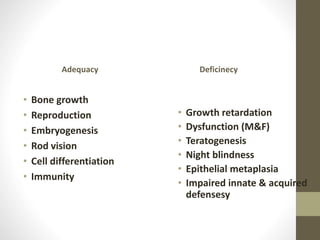
Adequacy
• Bone growth
• Reproduction
• Embryogenesis
• Rod vision
• Cell differentiation
• Immunity
Deficinecy
• Growth retardation
• Dysfunction (M&F)
• Teratogenesis
• Night blindness
• Epithelial metaplasia
• Impaired innate & acquired
defensesy
Causes of vitamin A deficiency
• 1. Poor intake of vita
A rich food stuffs
• 2. PEM
• Malabsorption
disorders ex diarrhea
• Intestinal parasites
Associated Measles
infection compounds
the risk of corneal
ulcer and perforation
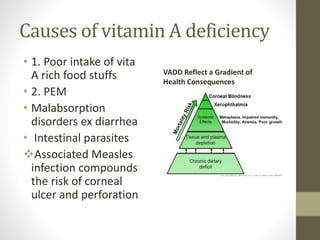
VADD Reflect a Gradient of
Health Consequences
Grading of Xerophthalmia
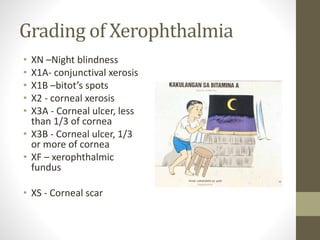
• XN –Night blindness
• X1A- conjunctival xerosis
• X1B –bitot’s spots
• X2 - corneal xerosis
• X3A - Corneal ulcer, less
than 1/3 of cornea
• X3B - Corneal ulcer, 1/3
or more of cornea
• XF – xerophthalmic
fundus
• XS - Corneal scar
Clinical feautres
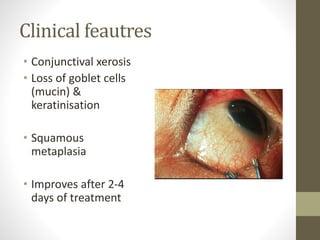
• Conjunctival xerosis
• Loss of goblet cells
(mucin) &
keratinisation
• Squamous
metaplasia
• Improves after 2-4
days of treatment
Clinical feautres…
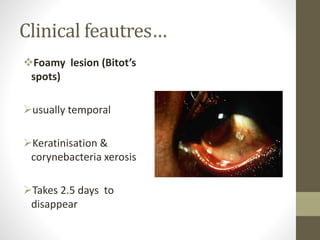
Foamy lesion (Bitot’s
spots)
usually temporal
Keratinisation &
corynebacteria xerosis
Takes 2.5 days to
disappear
Clinical feautres…
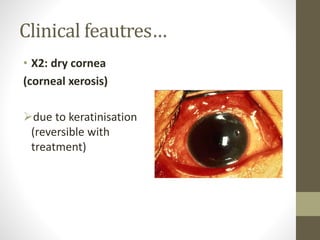
• X2: dry cornea
(corneal xerosis)
due to keratinisation
(reversible with
treatment)
Clinical feautres…
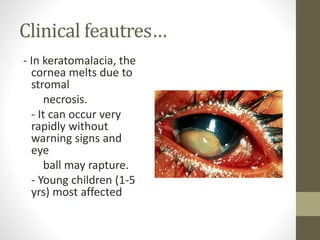
- In keratomalacia, the
cornea melts due to
stromal
necrosis.
- It can occur very
rapidly without
warning signs and
eye
ball may rapture.
- Young children (1-5
yrs) most affected
Clinical features…
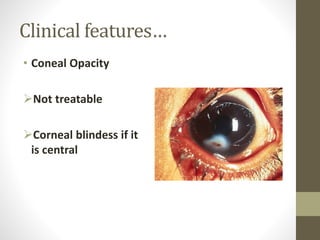
• Coneal Opacity
Not treatable
Corneal blindess if it
is central
Clinical feautres…
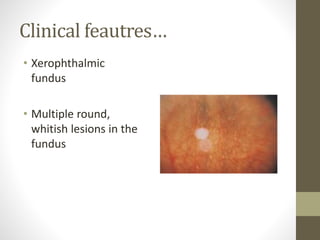
• Xerophthalmic
fundus
• Multiple round,
whitish lesions in the
fundus
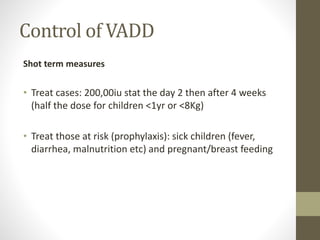
Control of VADD
Shot term measures
• Treat cases: 200,00iu stat the day 2 then after 4 weeks
(half the dose for children <1yr or <8Kg)
• Treat those at risk (prophylaxis): sick children (fever,
diarrhea, malnutrition etc) and pregnant/breast feeding
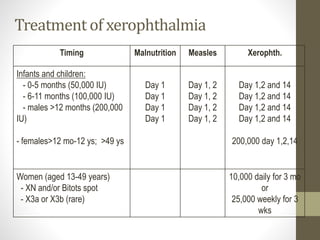
Treatment of xerophthalmia
Timing Malnutrition Measles Xerophth.
Infants and children:
- 0-5 months (50,000 IU)
- 6-11 months (100,000 IU)
- males >12 months (200,000
IU)
- females>12 mo-12 ys; >49 ys
Day 1
Day 1
Day 1
Day 1
Day 1, 2
Day 1, 2
Day 1, 2
Day 1, 2
Day 1,2 and 14
Day 1,2 and 14
Day 1,2 and 14
Day 1,2 and 14
200,000 day 1,2,14
Women (aged 13-49 years)
- XN and/or Bitots spot
- X3a or X3b (rare)
10,000 daily for 3 mo
or
25,000 weekly for 3
wks
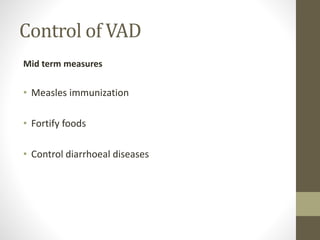
Control of VAD
Mid term measures
• Measles immunization
• Fortify foods
• Control diarrhoeal diseases
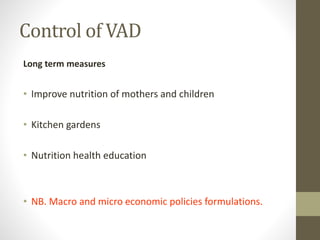
Control of VAD
Long term measures
• Improve nutrition of mothers and children
• Kitchen gardens
• Nutrition health education
• NB. Macro and micro economic policies formulations.

Vitamin A deficinecy.pptx

  • 1.
    Vitamin A deficiency disorder DrMeseret Lectures for medical students
  • 2.
    Vitamin A Outlines • Functionsof vit. A • Causes of vit. A deficiency • Ophthalmic features of vit. A deficiency • Management of vit. A deficiency • Prevention of vit. A deficiency
  • 3.
    Functions of vitA • Formation of visual pigments –Rods • Regulates cellular differentiation: Embryonic Epithelial (eg, conjunctival, tracts) Immune stem cells Hematopoietic Osteoid (osteoblasts, -clasts)
  • 4.
    Adequacy • Bone growth •Reproduction • Embryogenesis • Rod vision • Cell differentiation • Immunity Deficinecy • Growth retardation • Dysfunction (M&F) • Teratogenesis • Night blindness • Epithelial metaplasia • Impaired innate & acquired defensesy
  • 5.
    Causes of vitaminA deficiency • 1. Poor intake of vita A rich food stuffs • 2. PEM • Malabsorption disorders ex diarrhea • Intestinal parasites Associated Measles infection compounds the risk of corneal ulcer and perforation VADD Reflect a Gradient of Health Consequences
  • 6.
    Grading of Xerophthalmia •XN –Night blindness • X1A- conjunctival xerosis • X1B –bitot’s spots • X2 - corneal xerosis • X3A - Corneal ulcer, less than 1/3 of cornea • X3B - Corneal ulcer, 1/3 or more of cornea • XF – xerophthalmic fundus • XS - Corneal scar
  • 7.
    Clinical feautres • Conjunctivalxerosis • Loss of goblet cells (mucin) & keratinisation • Squamous metaplasia • Improves after 2-4 days of treatment
  • 8.
    Clinical feautres… Foamy lesion(Bitot’s spots) usually temporal Keratinisation & corynebacteria xerosis Takes 2.5 days to disappear
  • 9.
    Clinical feautres… • X2:dry cornea (corneal xerosis) due to keratinisation (reversible with treatment)
  • 10.
    Clinical feautres… - Inkeratomalacia, the cornea melts due to stromal necrosis. - It can occur very rapidly without warning signs and eye ball may rapture. - Young children (1-5 yrs) most affected
  • 11.
    Clinical features… • ConealOpacity Not treatable Corneal blindess if it is central
  • 12.
    Clinical feautres… • Xerophthalmic fundus •Multiple round, whitish lesions in the fundus
  • 13.
    Control of VADD Shotterm measures • Treat cases: 200,00iu stat the day 2 then after 4 weeks (half the dose for children <1yr or <8Kg) • Treat those at risk (prophylaxis): sick children (fever, diarrhea, malnutrition etc) and pregnant/breast feeding
  • 14.
    Treatment of xerophthalmia TimingMalnutrition Measles Xerophth. Infants and children: - 0-5 months (50,000 IU) - 6-11 months (100,000 IU) - males >12 months (200,000 IU) - females>12 mo-12 ys; >49 ys Day 1 Day 1 Day 1 Day 1 Day 1, 2 Day 1, 2 Day 1, 2 Day 1, 2 Day 1,2 and 14 Day 1,2 and 14 Day 1,2 and 14 Day 1,2 and 14 200,000 day 1,2,14 Women (aged 13-49 years) - XN and/or Bitots spot - X3a or X3b (rare) 10,000 daily for 3 mo or 25,000 weekly for 3 wks
  • 15.
    Control of VAD Midterm measures • Measles immunization • Fortify foods • Control diarrhoeal diseases
  • 16.
    Control of VAD Longterm measures • Improve nutrition of mothers and children • Kitchen gardens • Nutrition health education • NB. Macro and micro economic policies formulations.