Love Your Code
14 February 2020
Welcome and introduction
Actors in the reproducibility landscape
● Data owners
● Official /regulatory bodies
● Data publishers
● Journals
● Researchers and peer community
● Research /educational institutions
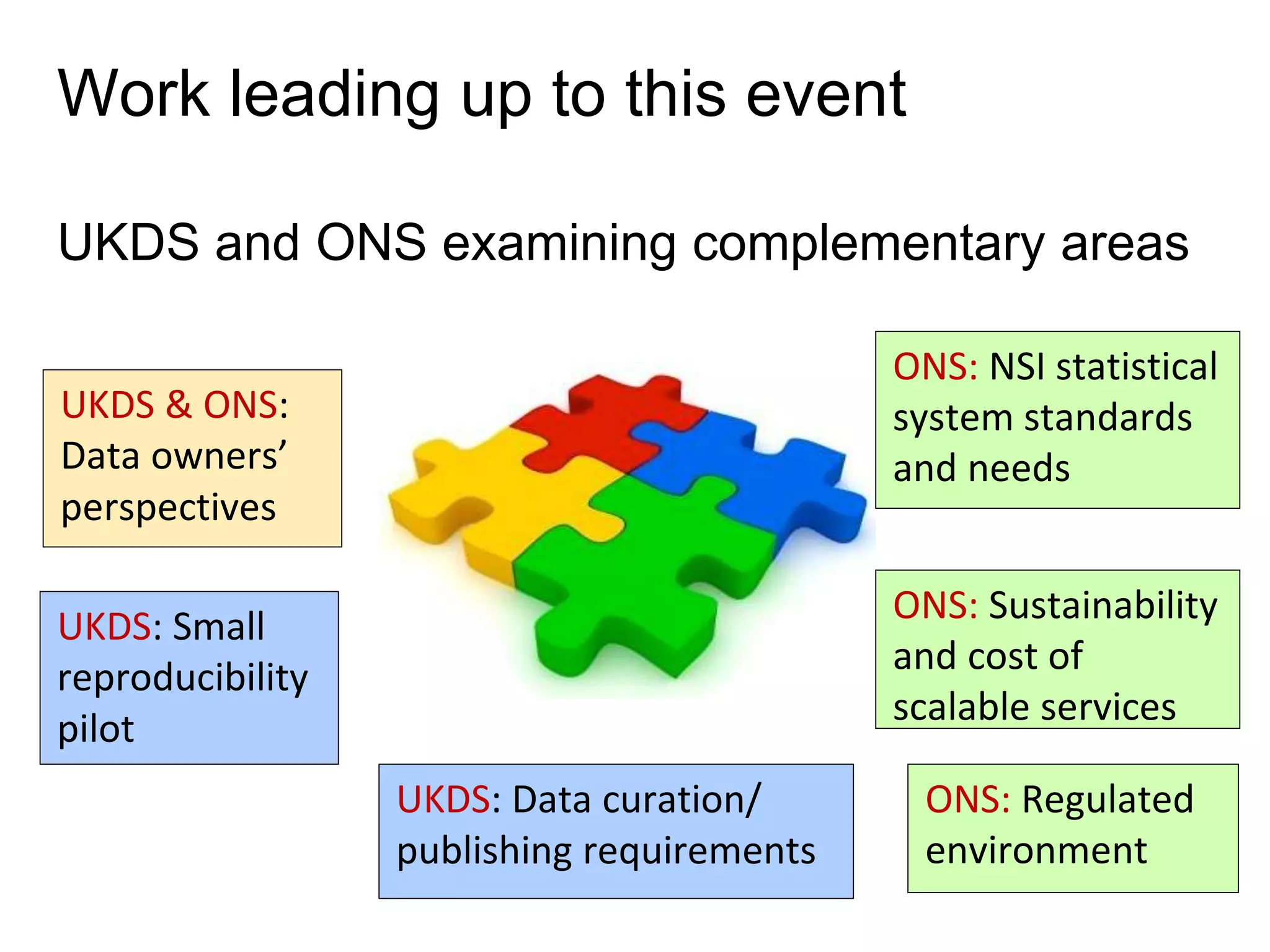
Work leading up to this event
UKDS and ONS examining complementary areas
UKDS: Small
reproducibility
pilot
ONS: Regulated
environment
UKDS & ONS:
Data owners’
perspectives
ONS: NSI statistical
system standards
and needs
UKDS: Data curation/
publishing requirements
ONS: Sustainability
and cost of
scalable services
Official /regulatory bodies
● UK Statistics Authority
○ Trustworthiness in data sources underlying national
statistics
○ Trustworthiness and transparency in the statistical
system and published national statistics
○ Role of the Office for Statistics Regulation
● Government Statistical Service (GSS) Best Practice
and Impact / Reproducible Analytical Pipeline
○ Improve government statistics
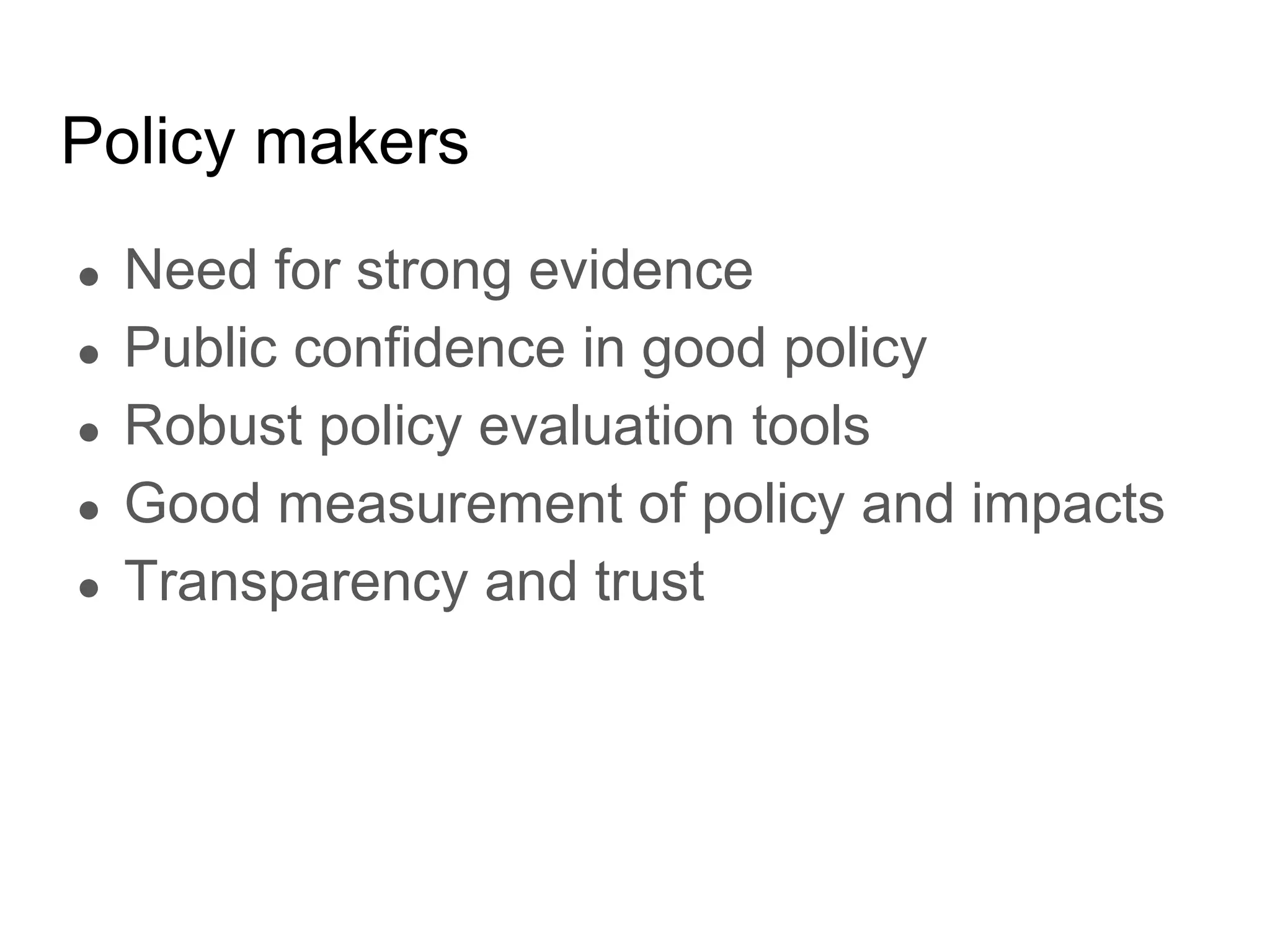
Policy makers
● Need for strong evidence
● Public confidence in good policy
● Robust policy evaluation tools
● Good measurement of policy and impacts
● Transparency and trust
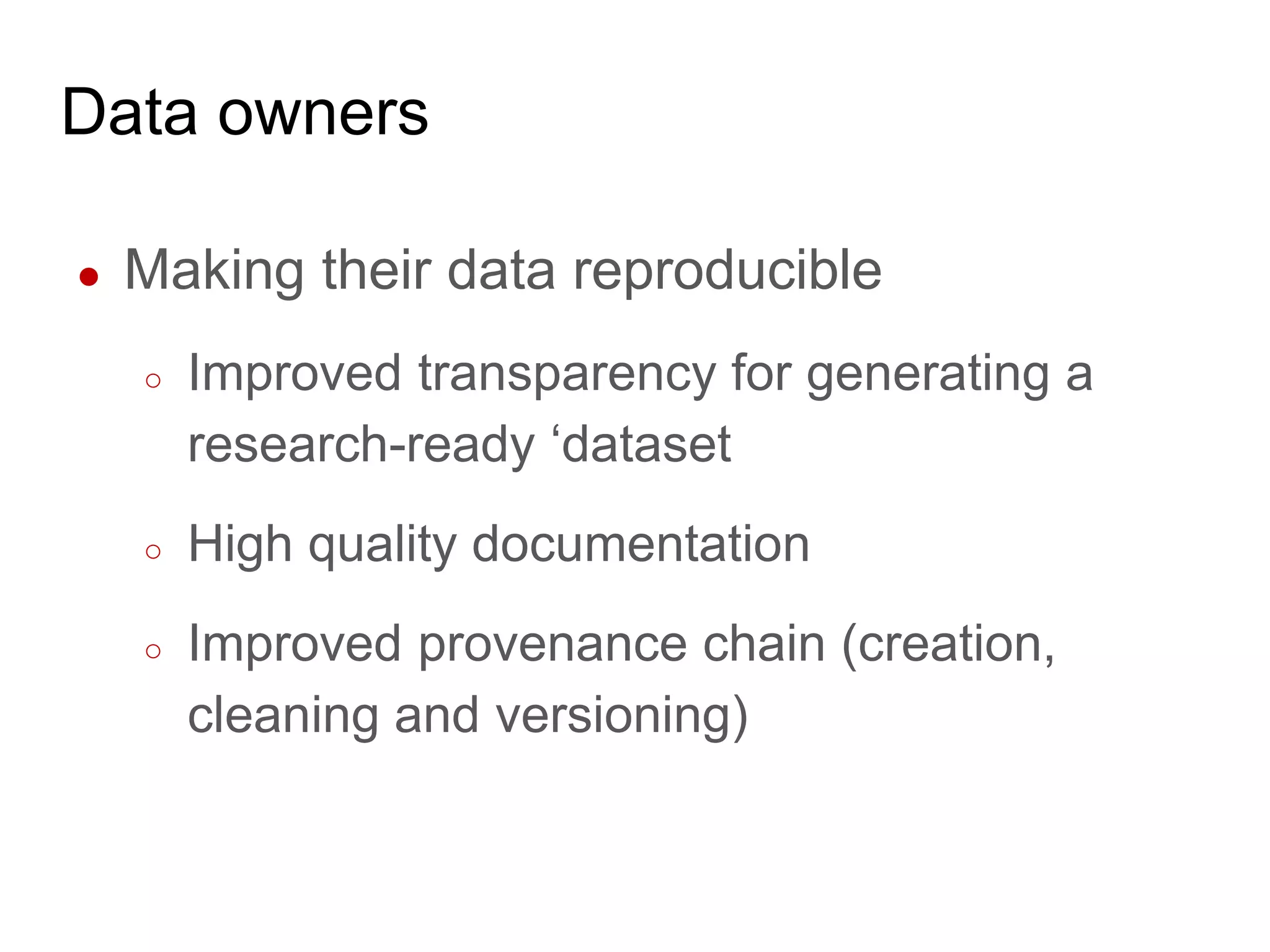
Data owners
● Making their data reproducible
○ Improved transparency for generating a
research-ready ‘dataset
○ High quality documentation
○ Improved provenance chain (creation,
cleaning and versioning)
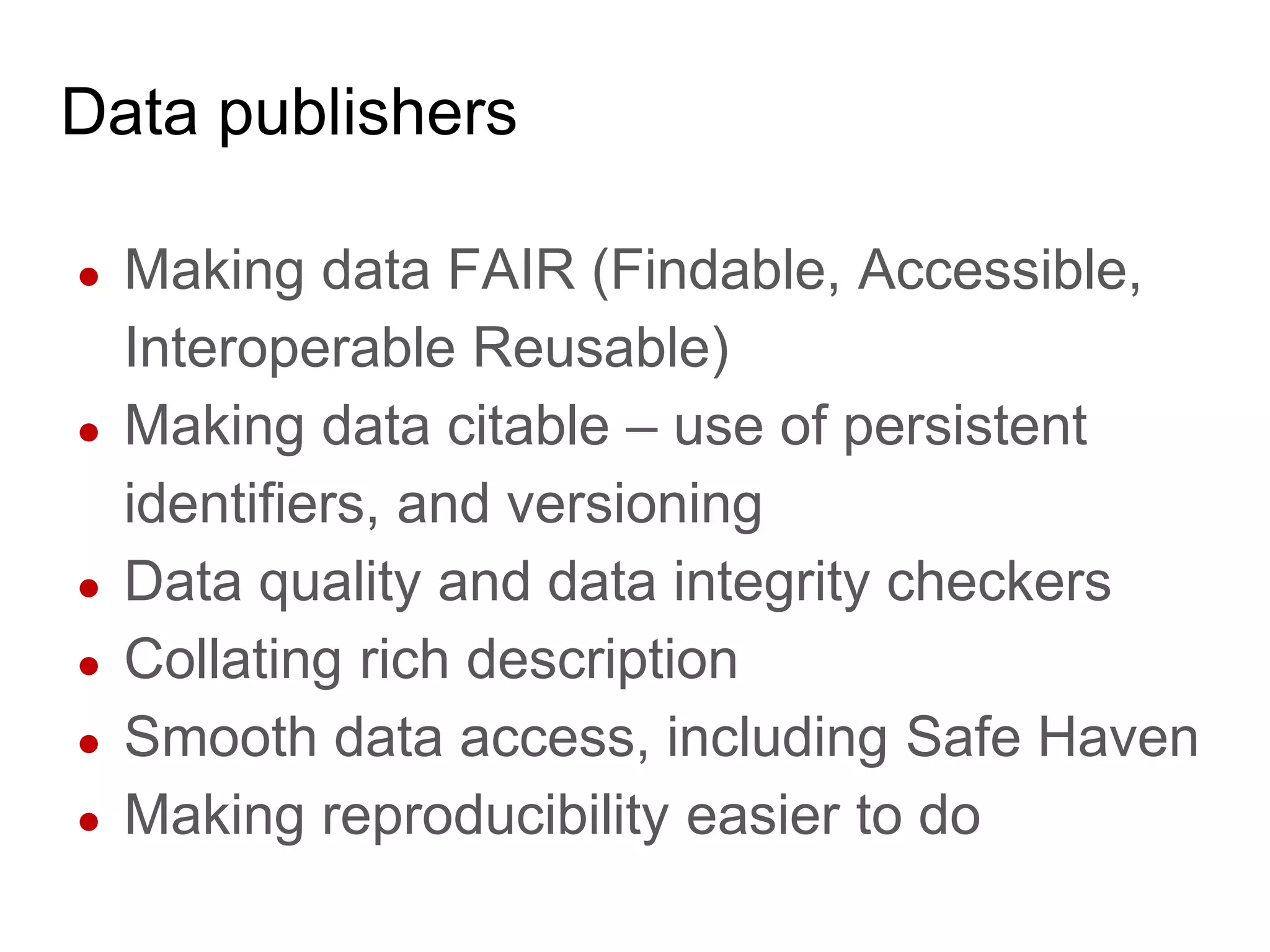
Data publishers
● Making data FAIR (Findable, Accessible,
Interoperable Reusable)
● Making data citable – use of persistent
identifiers, and versioning
● Data quality and data integrity checkers
● Collating rich description
● Smooth data access, including Safe Haven
● Making reproducibility easier to do
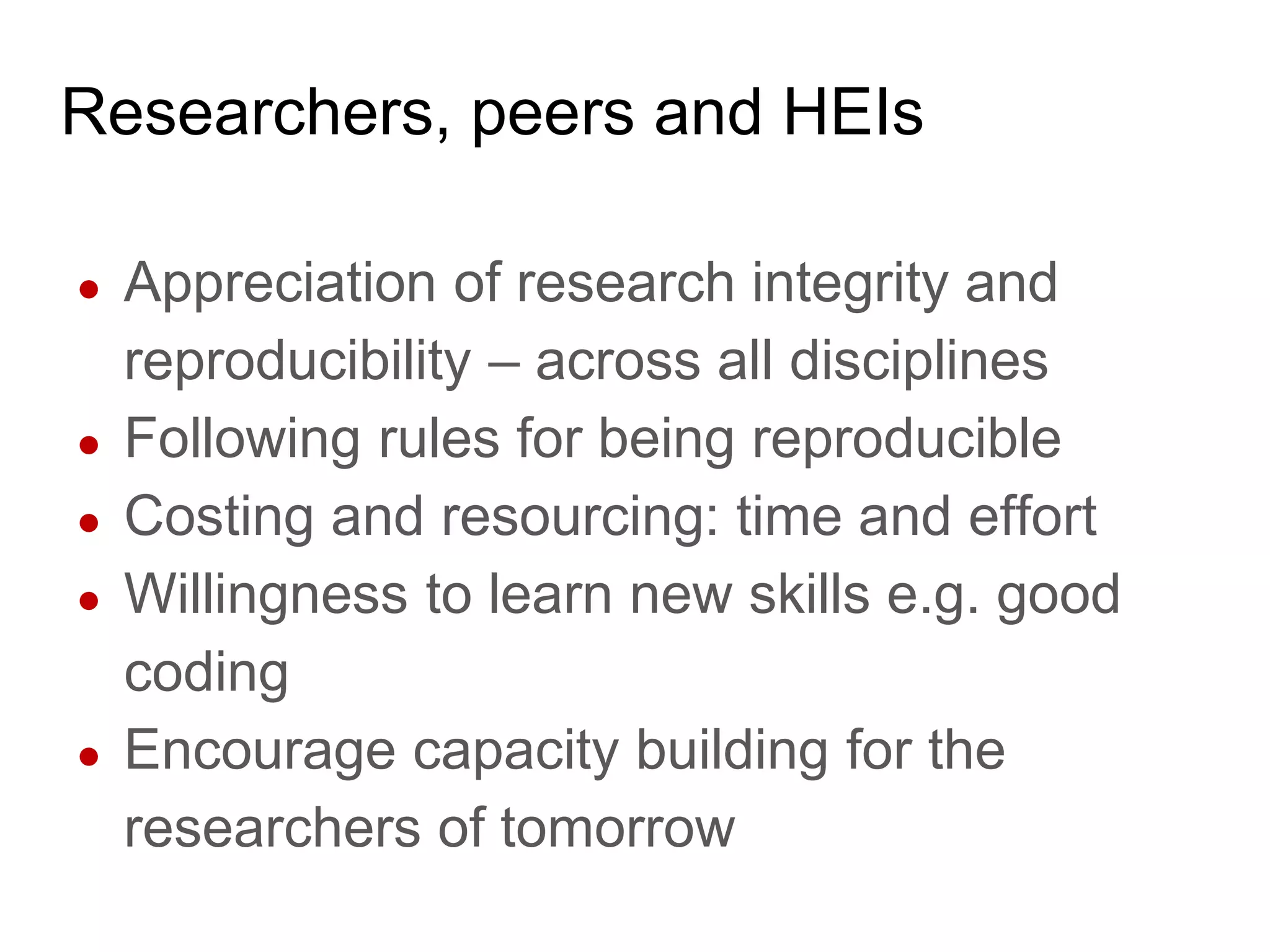
Researchers, peers and HEIs
● Appreciation of research integrity and
reproducibility – across all disciplines
● Following rules for being reproducible
● Costing and resourcing: time and effort
● Willingness to learn new skills e.g. good
coding
● Encourage capacity building for the
researchers of tomorrow
Journals
● Explicit reproducibility requirements
● Recognition and adoption by editorial
boards
● Shared gold standard e.g. AEA
● Code checking, where resources/costing
model allow
Funders
● Raising the bar for reproducibility for
research they fund
● Laying down expectations in calls and
contracts
● Support with key messaging on research
integrity
● Supporting methodological/ impact work
Today’s aim
Bring together all these perspectives
 Discuss the benefits and challenges for researchers
work to be be ‘reproducible’
 Explore the responsibilities of data owners and data
infrastructures
 Help define baseline best practice
recommendations/TCB for documenting
reproducibility
 How far Reproducibility Services can go towards
demonstrating robustness in research findings?
Social media
#LoveYourCode
@UKDataService
@statisticsONS

Love Your Code Workshop Introduction_Corti_Engeli

  • 1.
    Love Your Code 14February 2020 Welcome and introduction
  • 2.
    Actors in thereproducibility landscape ● Data owners ● Official /regulatory bodies ● Data publishers ● Journals ● Researchers and peer community ● Research /educational institutions
  • 3.
    Work leading upto this event UKDS and ONS examining complementary areas UKDS: Small reproducibility pilot ONS: Regulated environment UKDS & ONS: Data owners’ perspectives ONS: NSI statistical system standards and needs UKDS: Data curation/ publishing requirements ONS: Sustainability and cost of scalable services
  • 4.
    Official /regulatory bodies ●UK Statistics Authority ○ Trustworthiness in data sources underlying national statistics ○ Trustworthiness and transparency in the statistical system and published national statistics ○ Role of the Office for Statistics Regulation ● Government Statistical Service (GSS) Best Practice and Impact / Reproducible Analytical Pipeline ○ Improve government statistics
  • 5.
    Policy makers ● Needfor strong evidence ● Public confidence in good policy ● Robust policy evaluation tools ● Good measurement of policy and impacts ● Transparency and trust
  • 6.
    Data owners ● Makingtheir data reproducible ○ Improved transparency for generating a research-ready ‘dataset ○ High quality documentation ○ Improved provenance chain (creation, cleaning and versioning)
  • 7.
    Data publishers ● Makingdata FAIR (Findable, Accessible, Interoperable Reusable) ● Making data citable – use of persistent identifiers, and versioning ● Data quality and data integrity checkers ● Collating rich description ● Smooth data access, including Safe Haven ● Making reproducibility easier to do
  • 8.
    Researchers, peers andHEIs ● Appreciation of research integrity and reproducibility – across all disciplines ● Following rules for being reproducible ● Costing and resourcing: time and effort ● Willingness to learn new skills e.g. good coding ● Encourage capacity building for the researchers of tomorrow
  • 9.
    Journals ● Explicit reproducibilityrequirements ● Recognition and adoption by editorial boards ● Shared gold standard e.g. AEA ● Code checking, where resources/costing model allow
  • 10.
    Funders ● Raising thebar for reproducibility for research they fund ● Laying down expectations in calls and contracts ● Support with key messaging on research integrity ● Supporting methodological/ impact work
  • 11.
    Today’s aim Bring togetherall these perspectives  Discuss the benefits and challenges for researchers work to be be ‘reproducible’  Explore the responsibilities of data owners and data infrastructures  Help define baseline best practice recommendations/TCB for documenting reproducibility  How far Reproducibility Services can go towards demonstrating robustness in research findings?
  • 12.