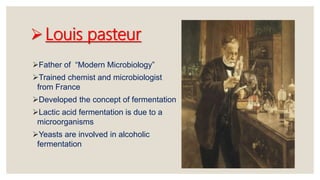
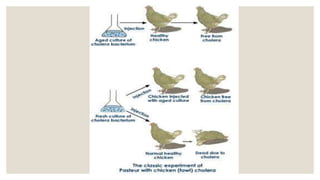
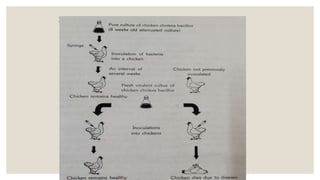
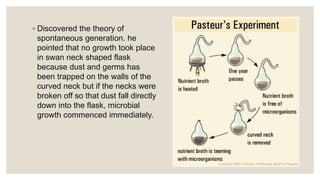
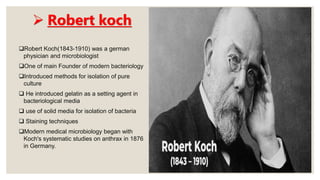
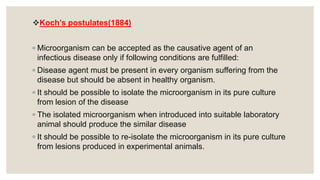
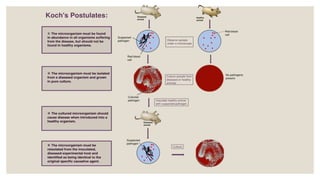
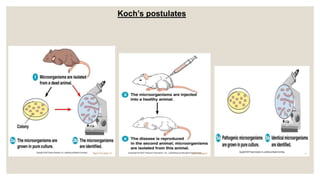
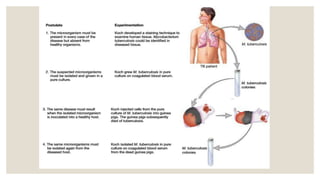
Louis Pasteur and Robert Koch made seminal contributions to microbiology in the late 19th century. Pasteur established that microorganisms are responsible for fermentation and cause disease, developed pasteurization to kill pathogens, and produced the first vaccines. Koch introduced techniques like staining and solid media isolation that allowed isolation of specific pathogens, including the anthrax bacillus, tuberculosis bacillus, and cholera vibrios. He established criteria now known as Koch's postulates to prove a microbe's role in causing disease. Together, Pasteur and Koch founded the field of medical microbiology through their pioneering studies of specific microbes.