Downloaded 201 times

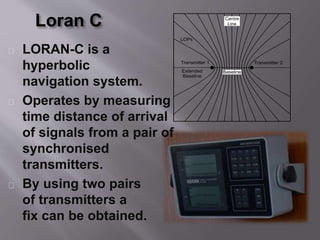


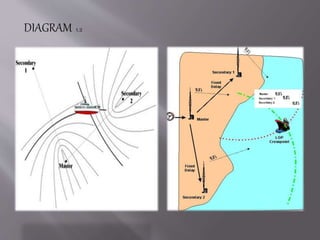




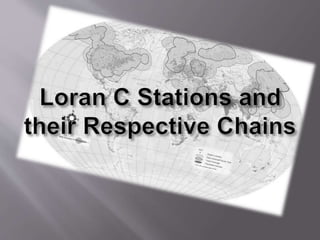
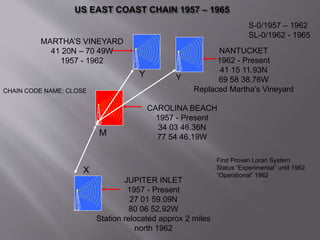

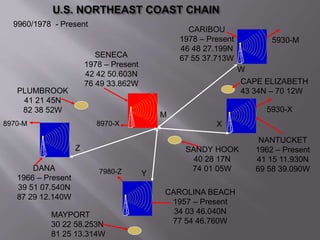


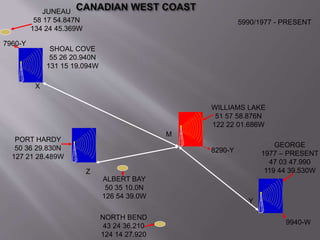


Loran-C is a hyperbolic radio navigation system developed by the US Coast Guard. It works by measuring the difference in arrival time of radio signals transmitted from two synchronized stations. By obtaining time differences from multiple station pairs, a receiver can calculate its position on the globe. The system uses a network of transmission stations around the world to broadcast low frequency radio pulses that are precisely timed using atomic clocks. Loran-C provides positioning accuracy within a few miles and was an important maritime and aviation navigation system before being replaced by GPS.


