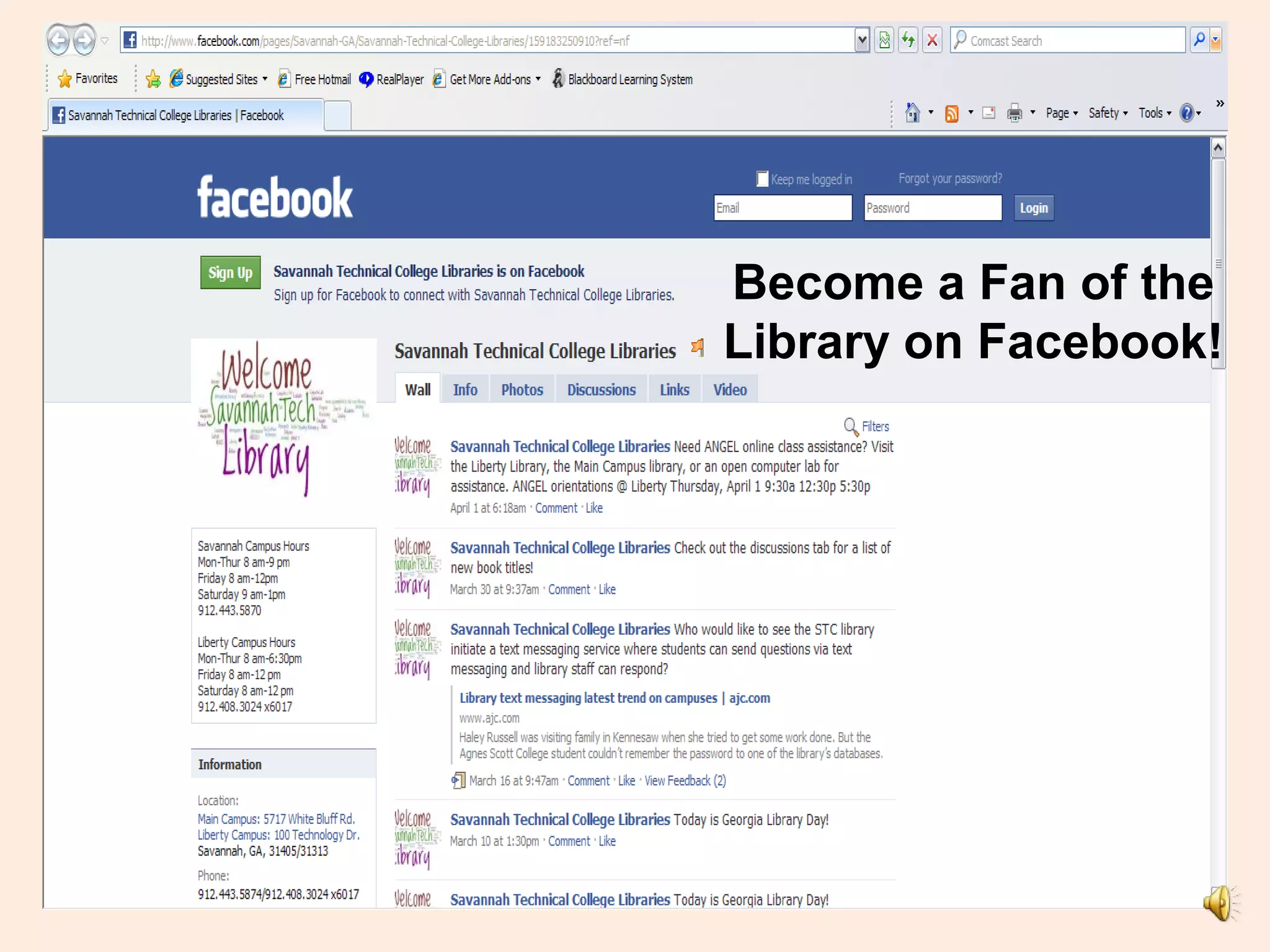
Become a Fan of the
Library on Facebook!
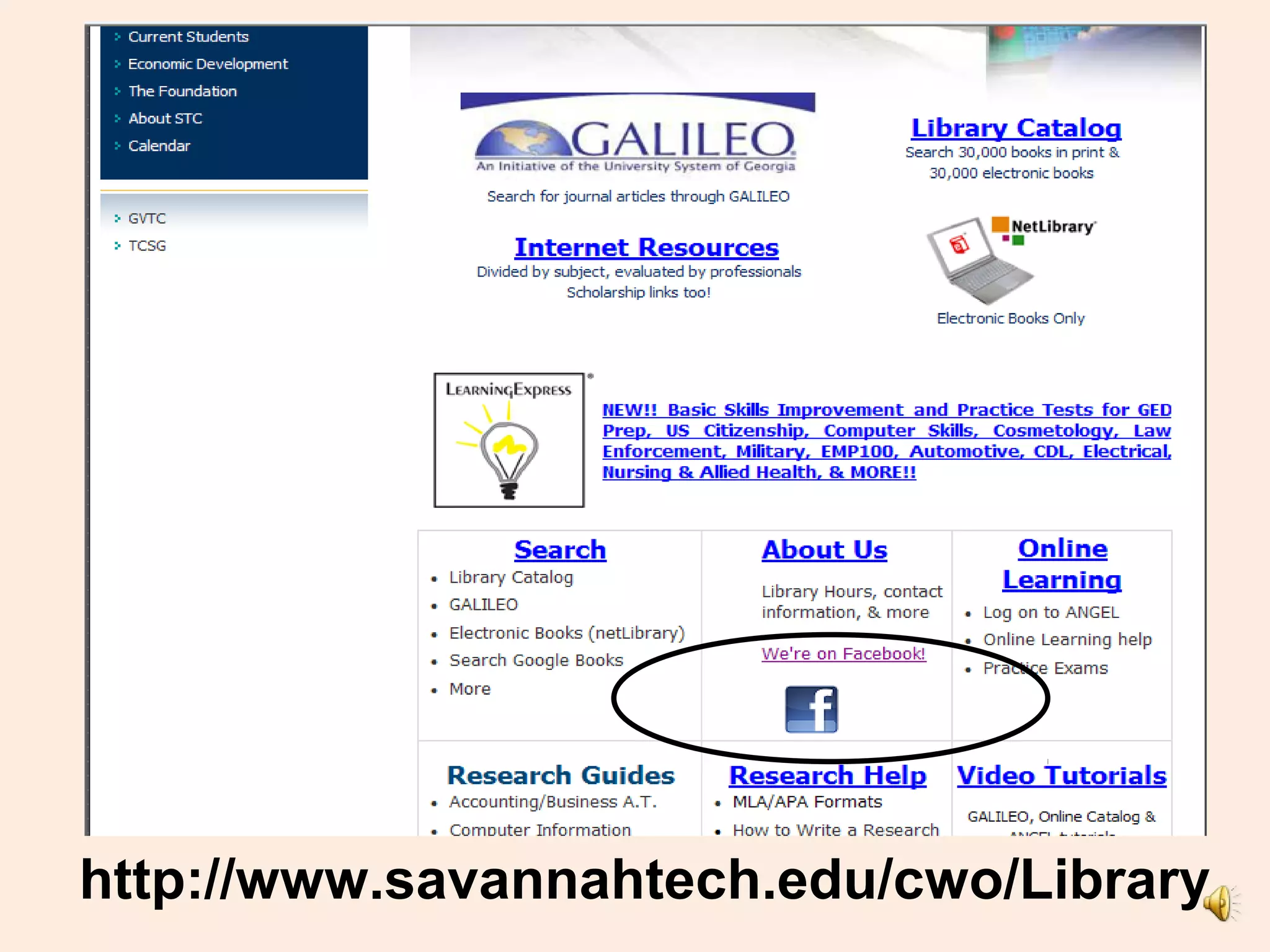
http://www.savannahtech.edu/cwo/Library
Where do you go for
information?
You are asked to write a
paper on the topic of your
choice and you need
information for your topic.
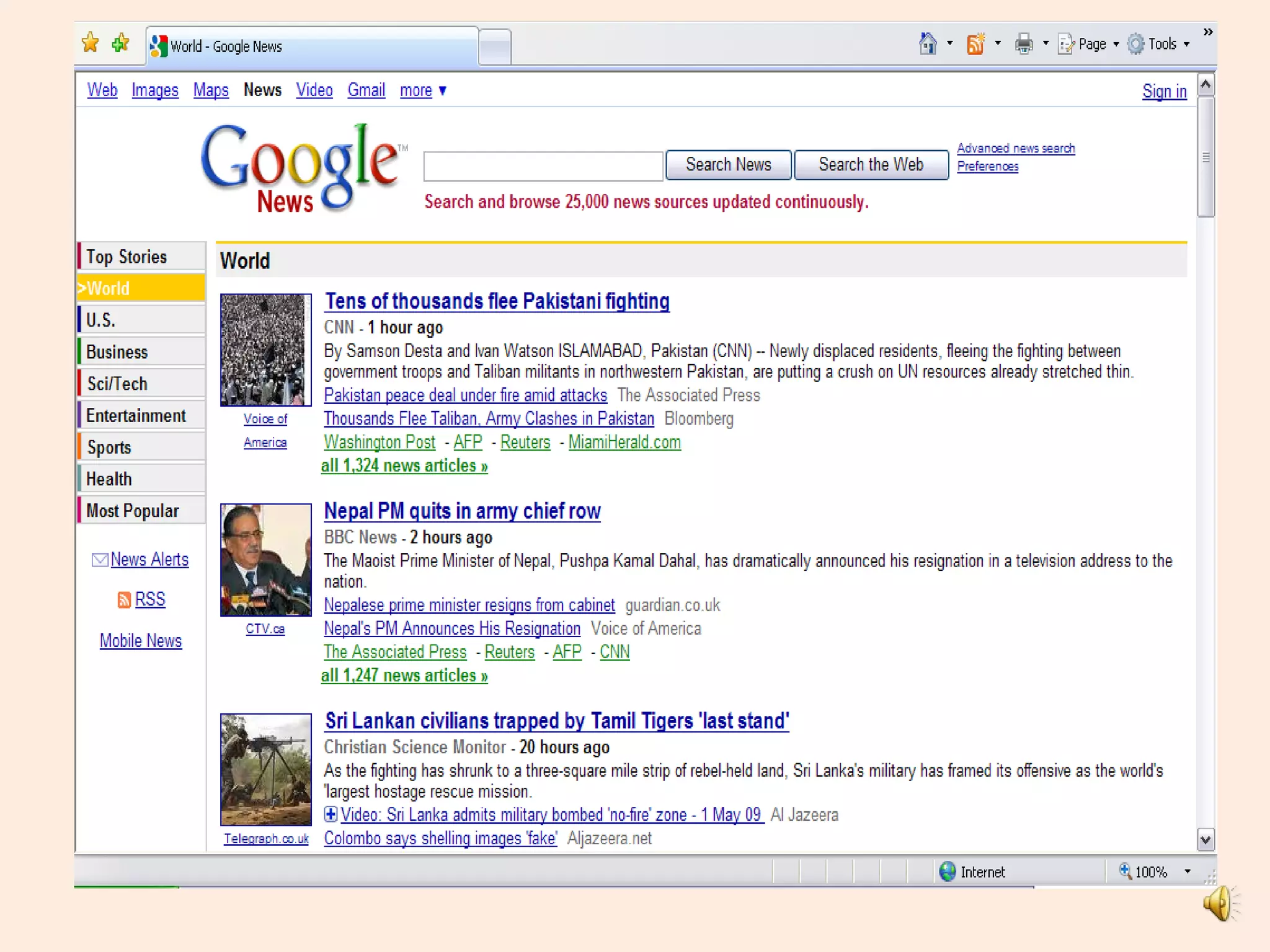
Where is the first place you
look? Why?
Search engines access a
relatively small part of the
web, know as the “free web”
A large portion of the web,
inaccessible to the search
engines, is known as the
“invisible web”
What’s not on the free web?
•Around 90% of the books on our
library’s shelves, still under the
protection of copyright
•The full-text of many magazine and
newspaper articles
•Expensive reference books, like literary
criticism, in-depth biographical and
historical works
What’s the big deal?...
Your teachers expect quality!
•Material from the subscription services
is likely to be viewed by your teachers as
more authoritative
•You may have to defend some of the
sources you find on the free Web
•You may want to dig deep on the free
Web for some harder to find sources.
Prove it!
For example:
Say you are looking for photographs of
the Battle of Gettysburg
You may find some good ones through an
image search on your favorite search
engine
BUT… did you know there is a database
DEVOTED to Civil War photographs?
Why?
Search engines cannot pick up those photos
of Gettysburg in that rich database because
the database content is not searchable
until you are actually in the database.
Selected Civil War Photographs
http://memory.loc.gov/ammem/cwphtml/cw
phome.html
Included in the Invisible Web
It includes subscription, or proprietary
databases too!
http://www.savannahtech.edu/cwo/Library
GALILEO-magazines, newspapers, journals
NetLibrary-electronic books
Library Catalog-books on the shelves
A brief look at the visible web…
http://www.library.cornell.edu/olinuris/ref/re
search/webcrit.html
Five Criteria for Evaluating Web Pages
A question is not a query
Topic:
Ayurveda-The Science of Healthy Living
Can you create an effective “one-two
word” search?
Sample List
•Alternative health
•Ayurveda
•Alternative medicine
•Complementary therapies
•Natural medicine
•Medicinal plants
•Herbs, therapeutic use
•Traditional medicine
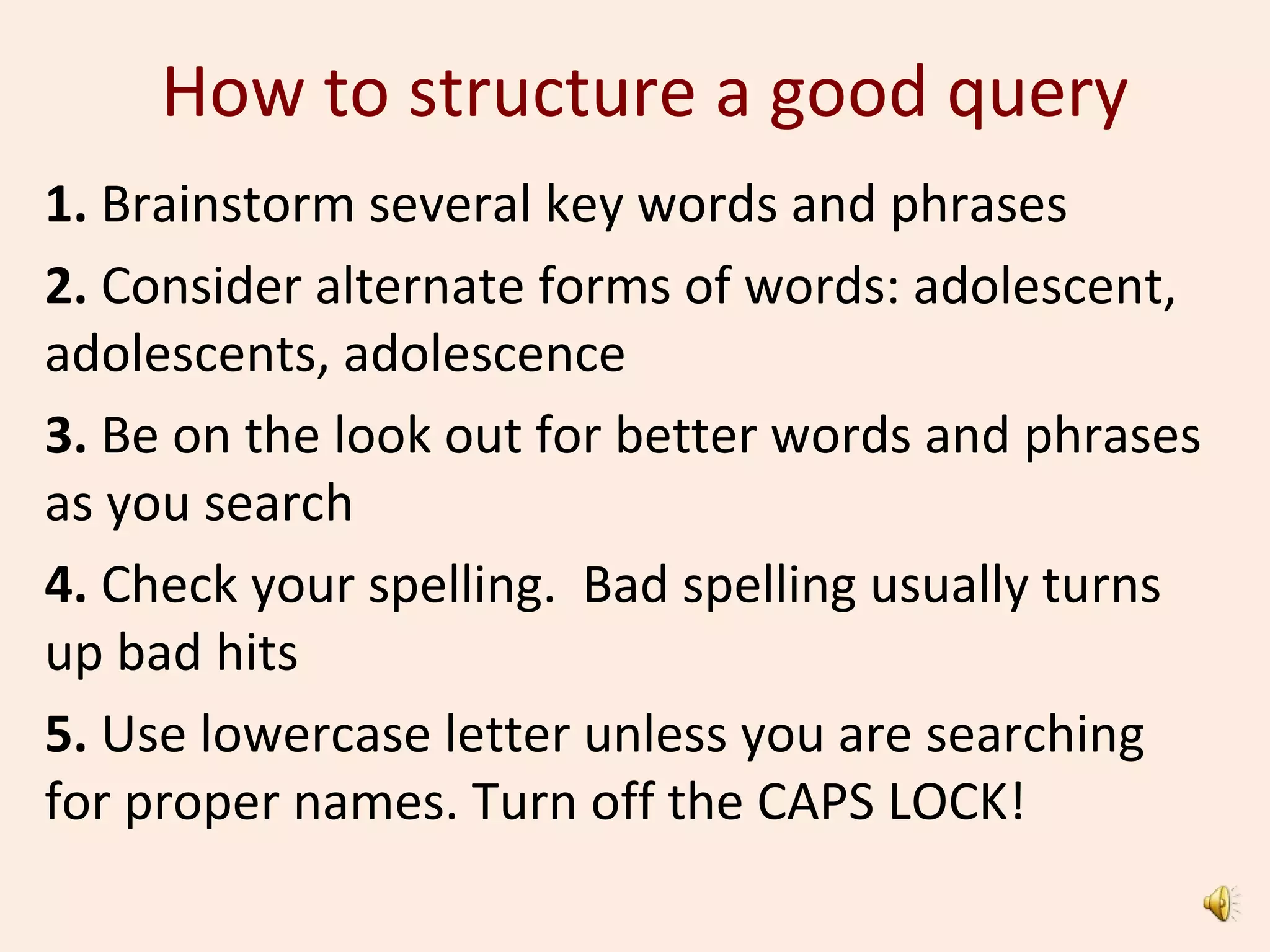
How to structure a good query
1. Brainstorm several key words and phrases
2. Consider alternate forms of words: adolescent,
adolescents, adolescence
3. Be on the look out for better words and phrases
as you search
4. Check your spelling. Bad spelling usually turns
up bad hits
5. Use lowercase letter unless you are searching
for proper names. Turn off the CAPS LOCK!
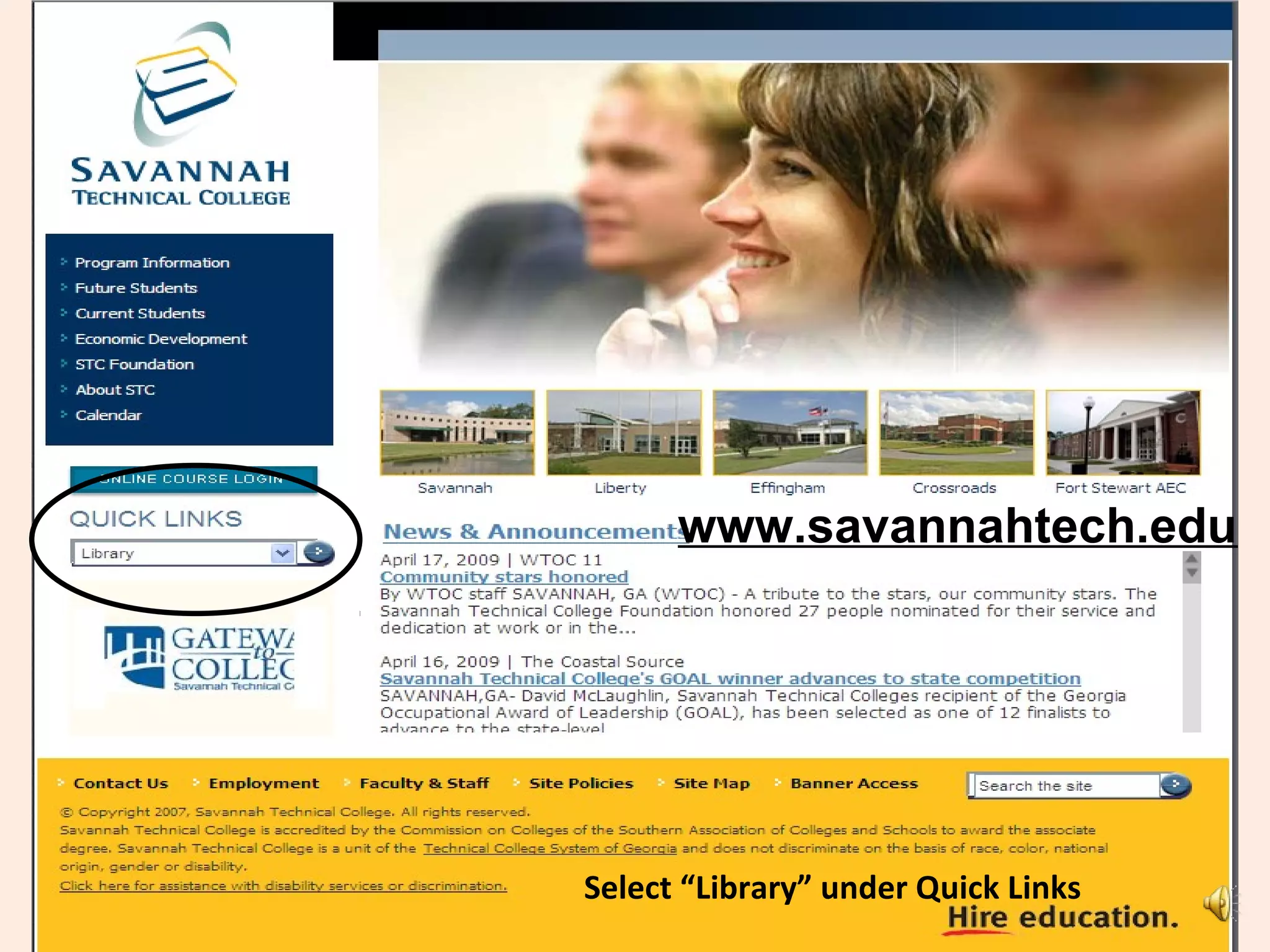
Select “Library” under Quick Links
www.savannahtech.edu
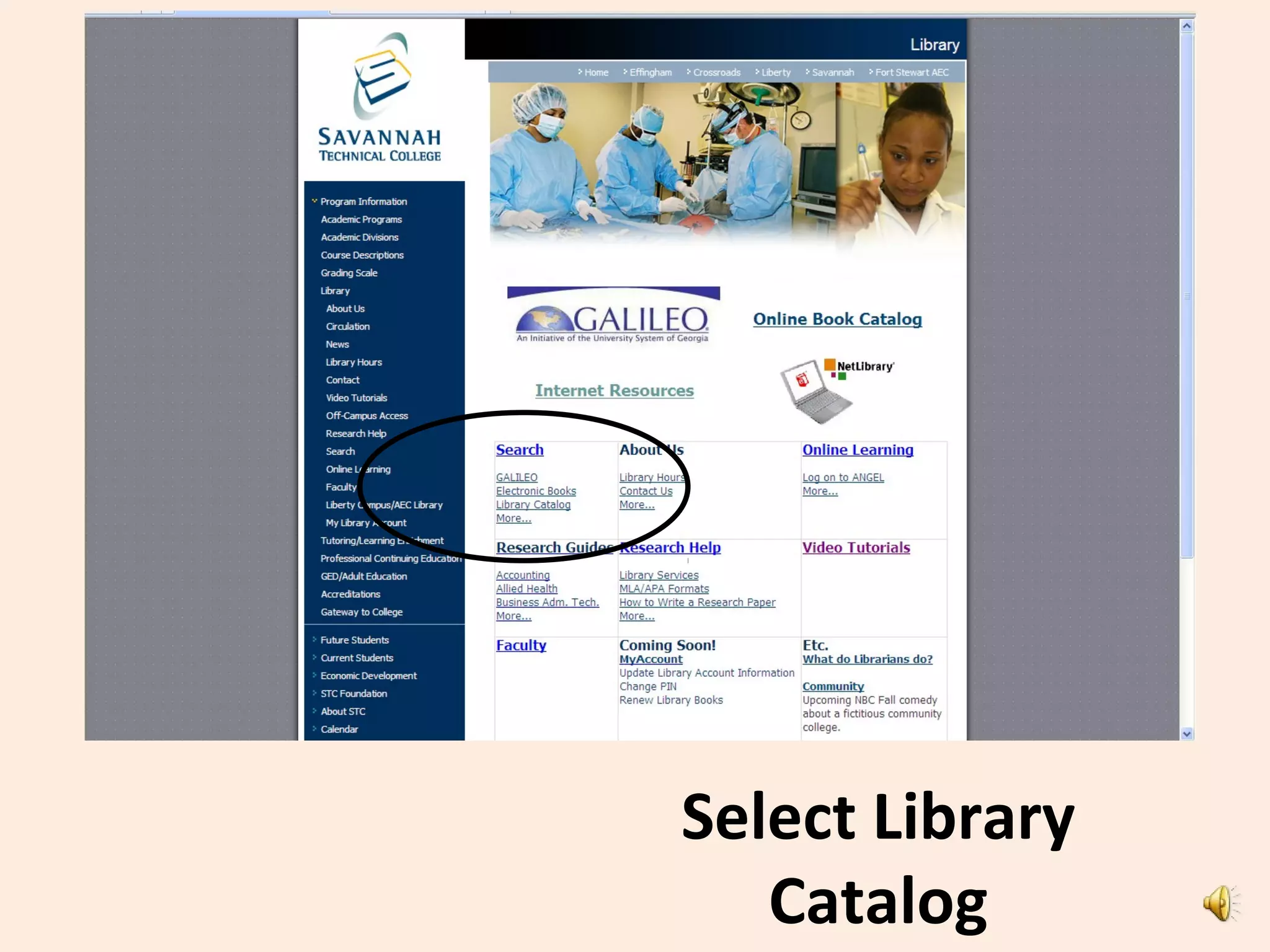
Select Library
Catalog
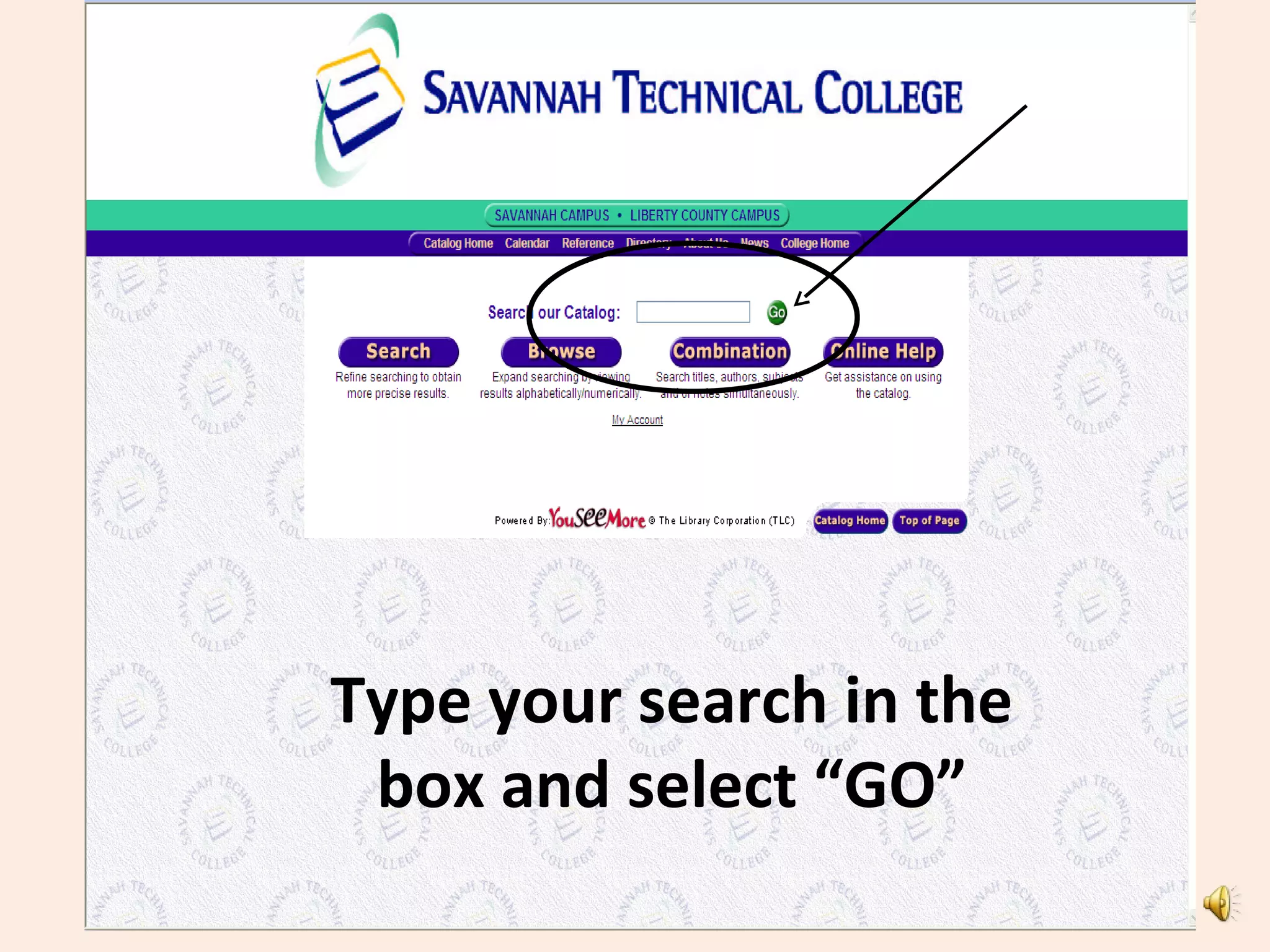
Type your search in the
box and select “GO”
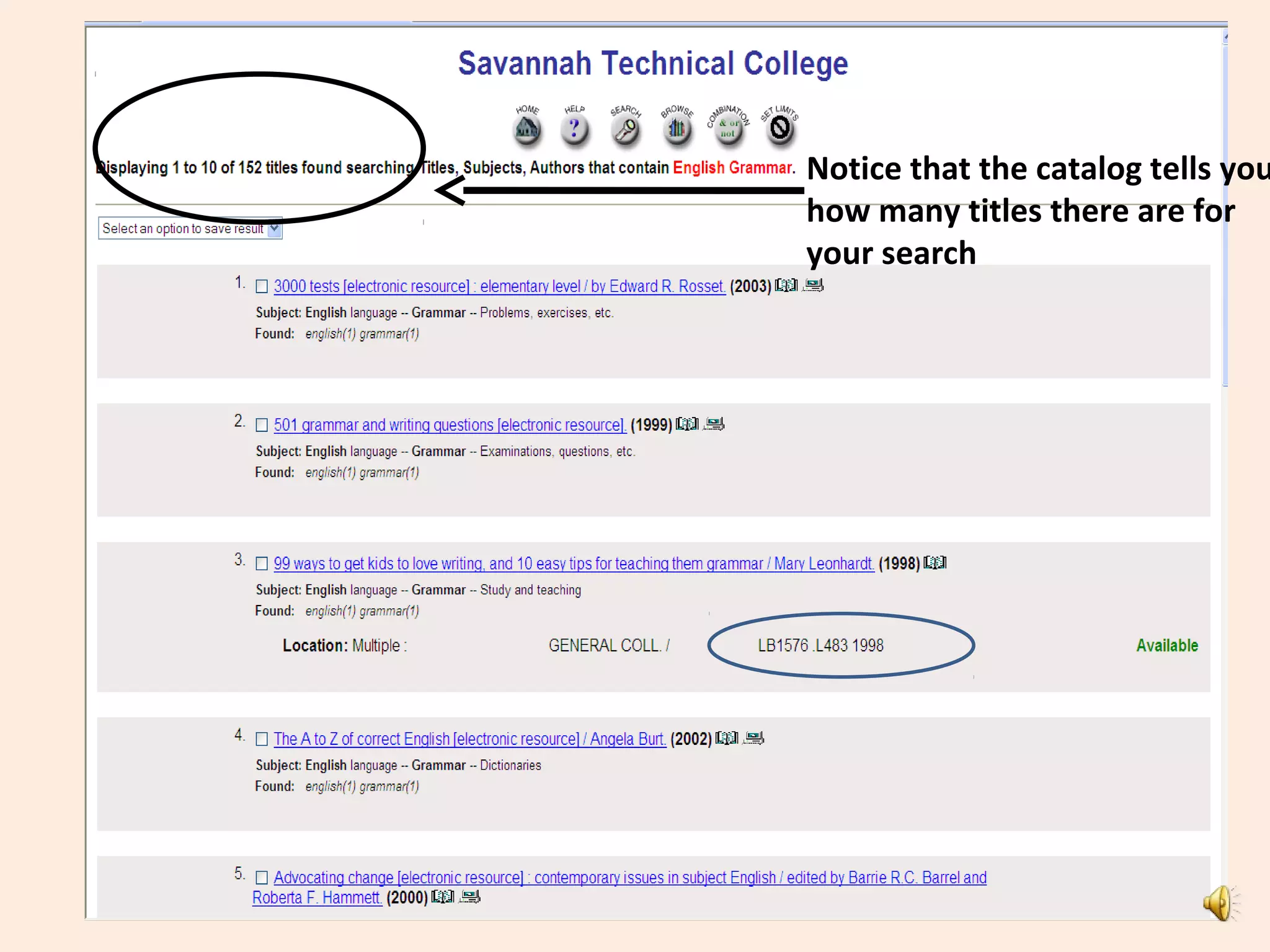
Notice that the catalog tells you
how many titles there are for
your search
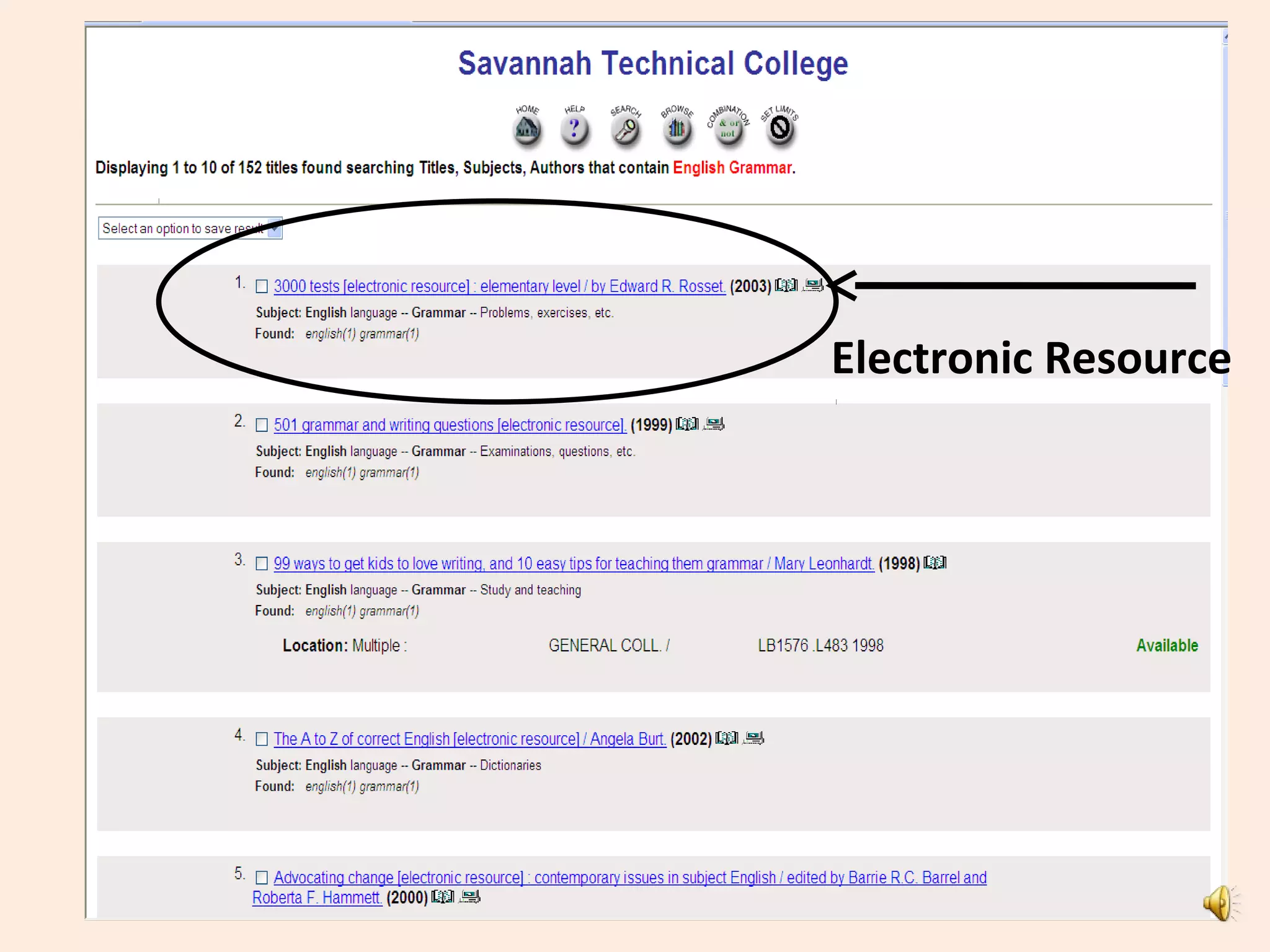
Electronic Resource
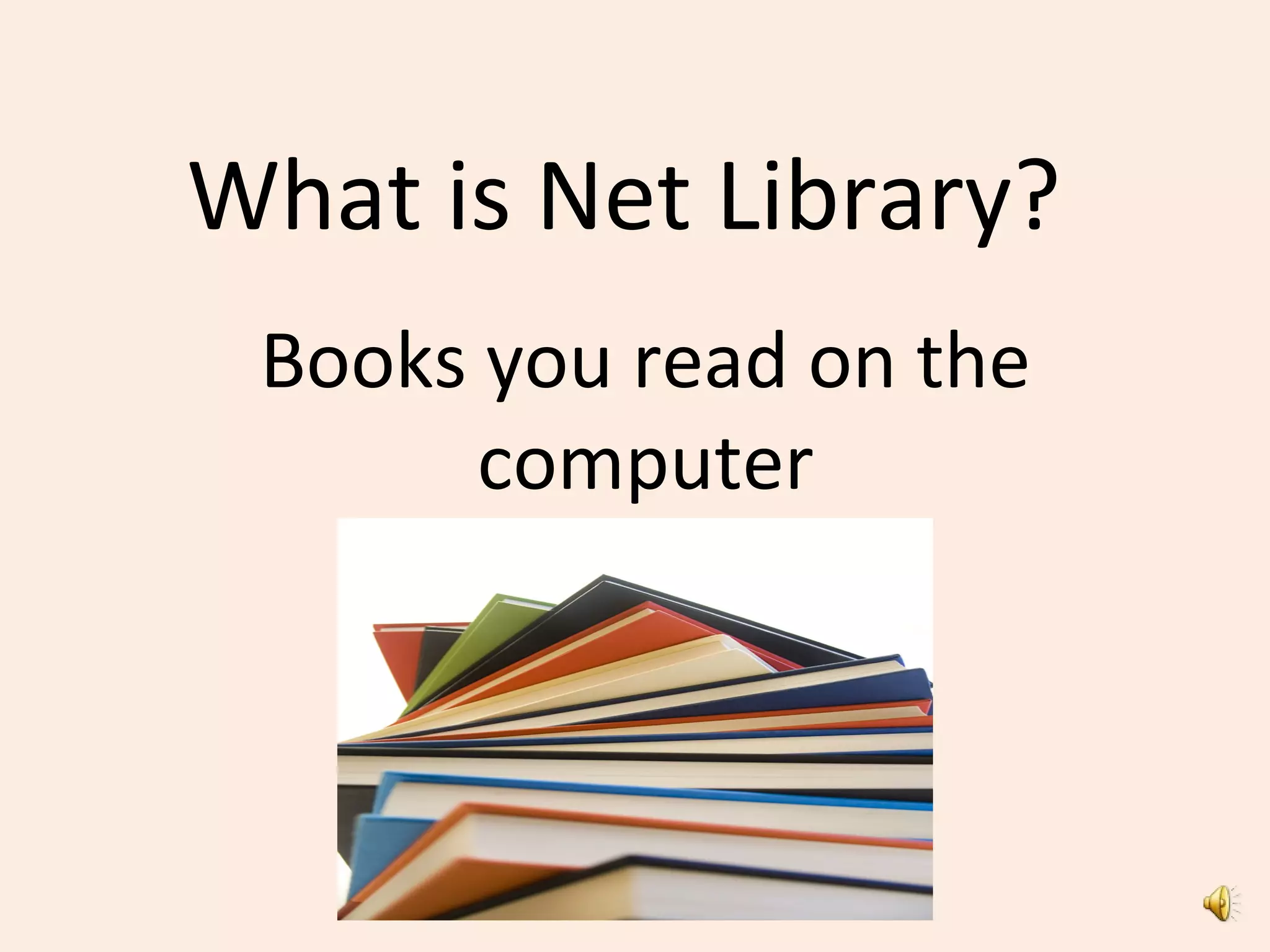
What is Net Library?
Books you read on the
computer
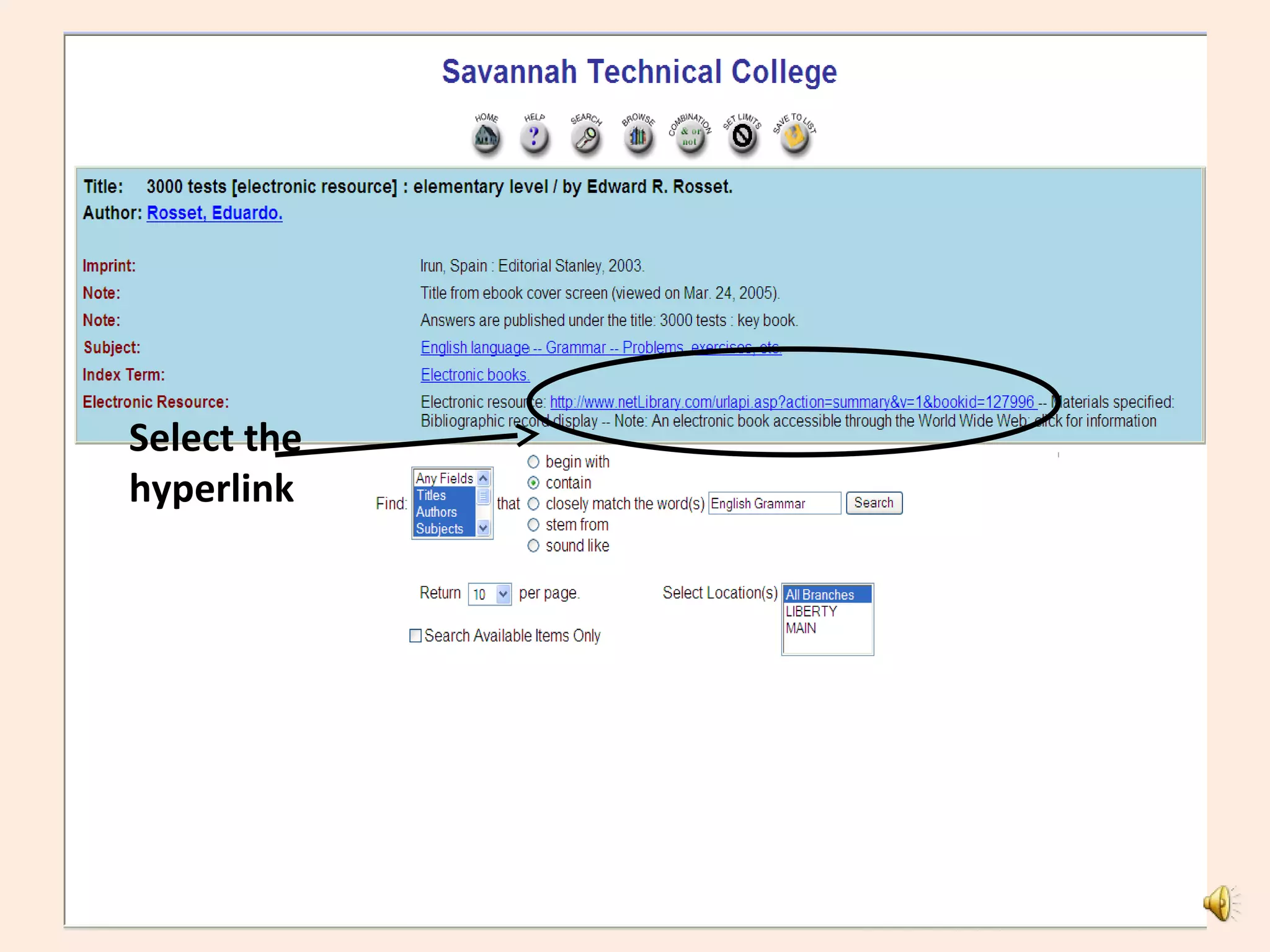
Select the
hyperlink
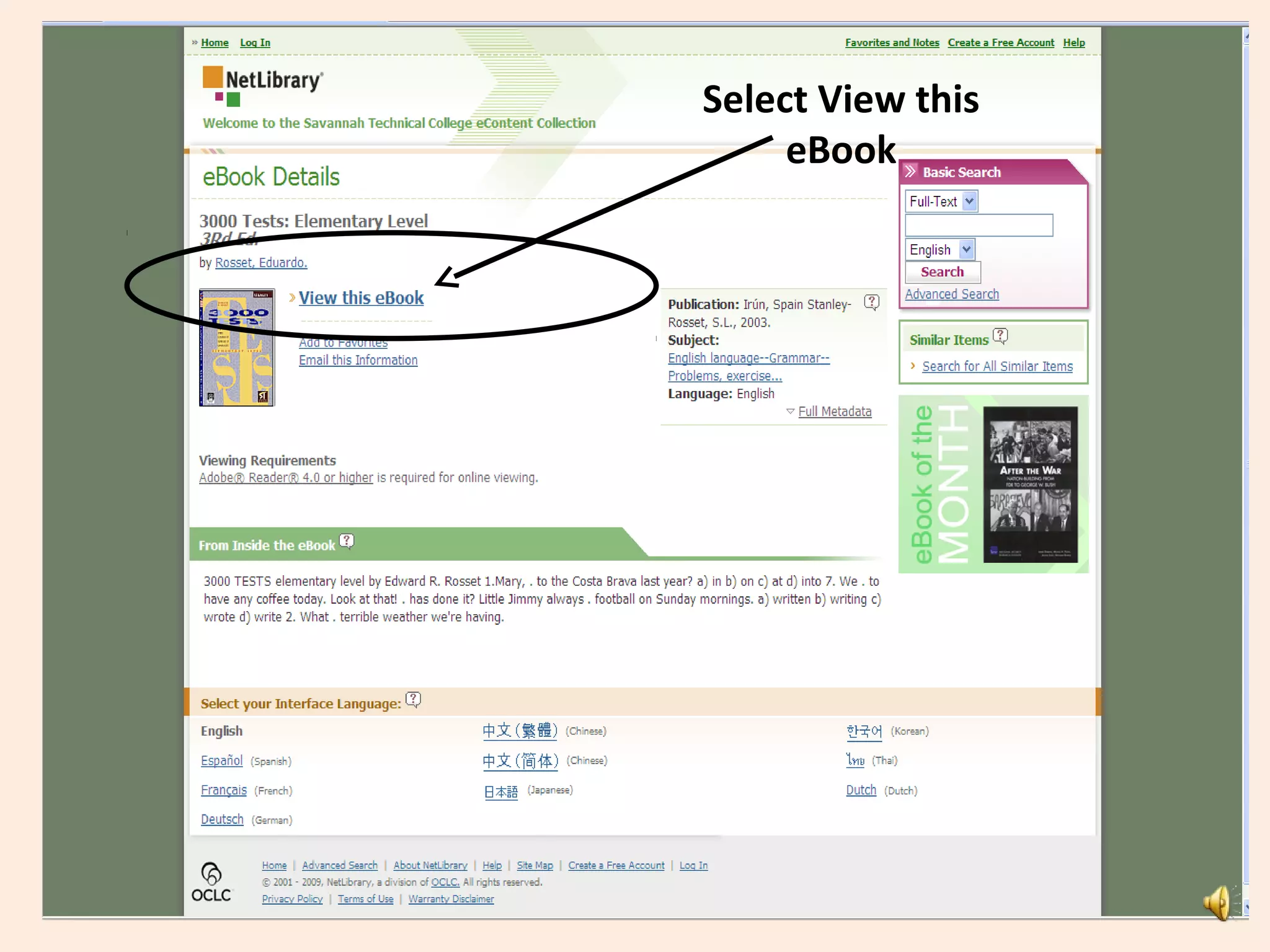
Select View this
eBook
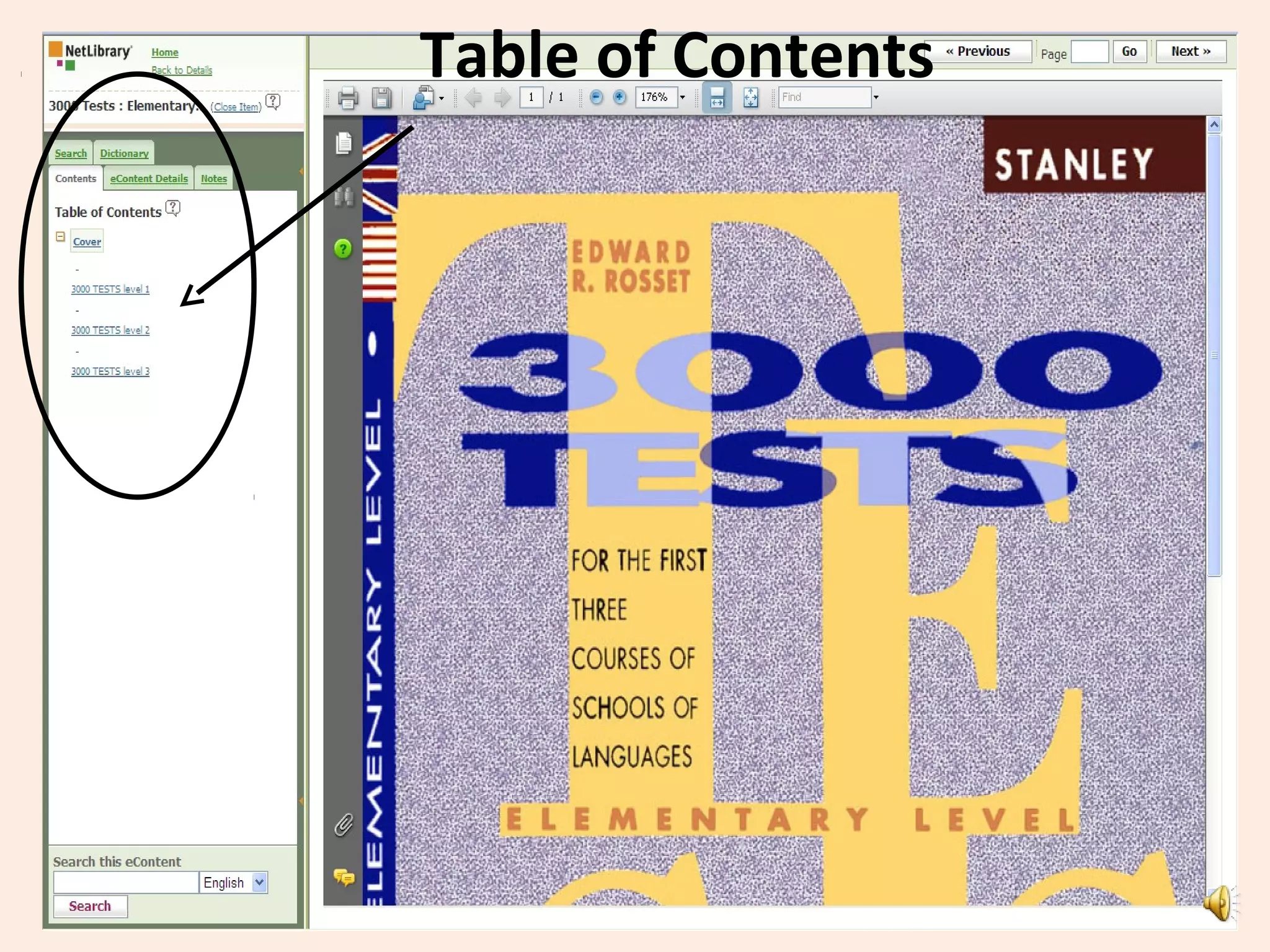
Table of Contents
When Using Net Library
Remember…..
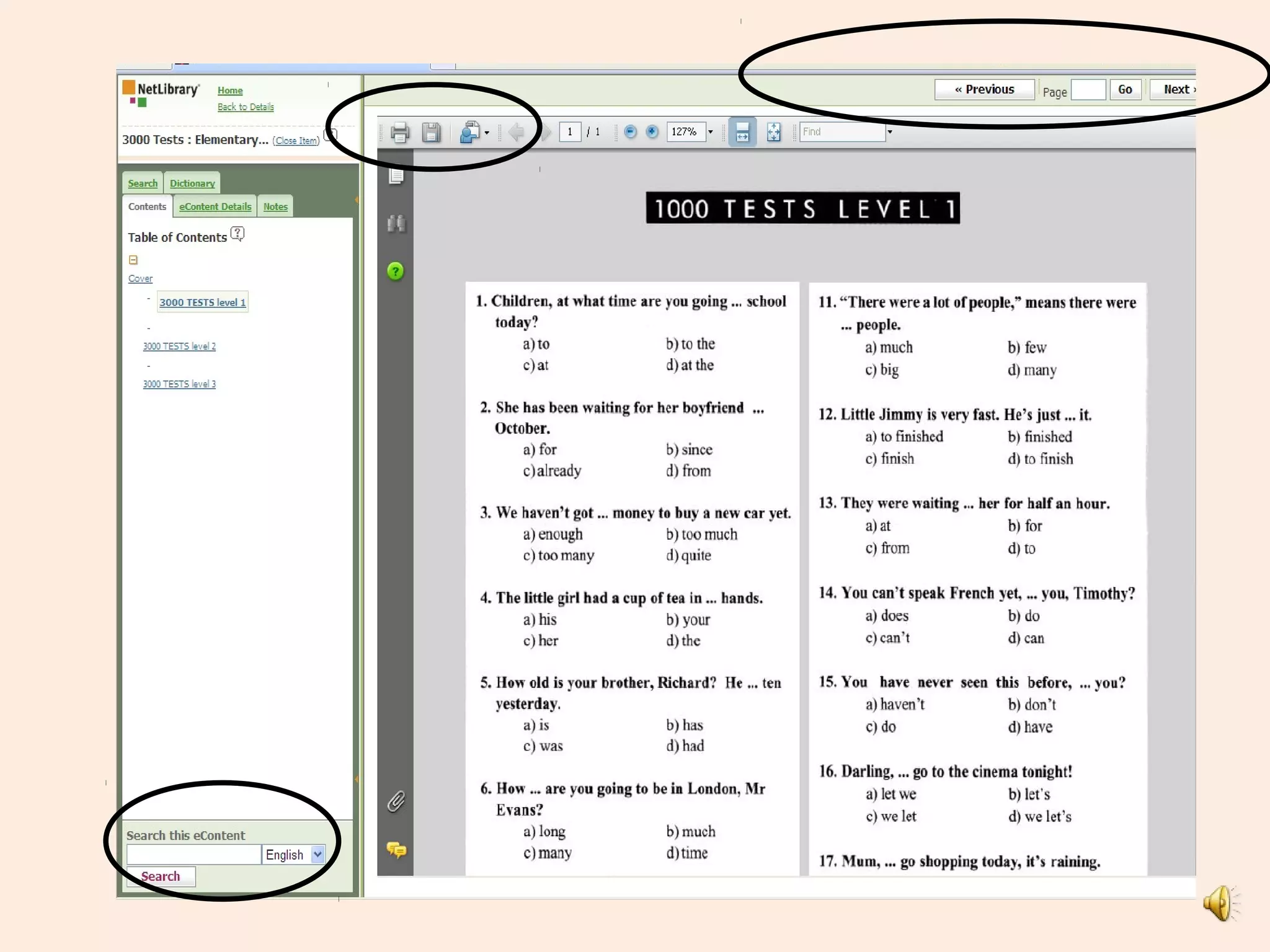
You can only print a
select number of pages
If you are at home you
need the school password
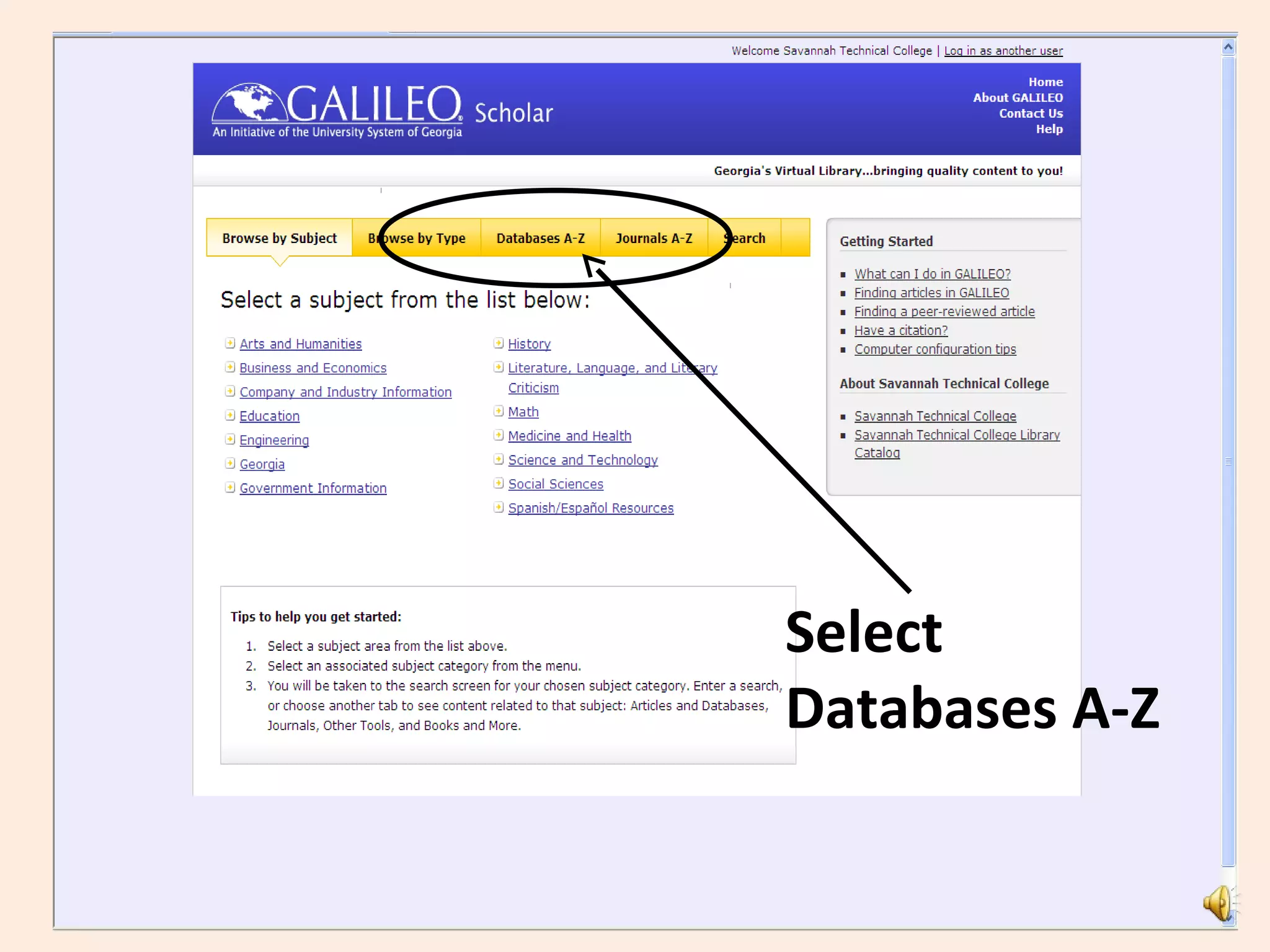
What is Galileo?
G.A.L.I.L.E.O
GALILEO stands for GeorgiA LIbrary LEarning
Online. A World Wide Web-based virtual
library, GALILEO provides access to multiple
information resources. Participating
institutions may access over 100 databases
thousands of periodicals and scholarly
journals. Over 2000 journal titles are provided
in full-text. Other resources include
encyclopedias, business directories, and
government publications.
And….
Galileo gives you access to
information that you would
have to pay for otherwise!
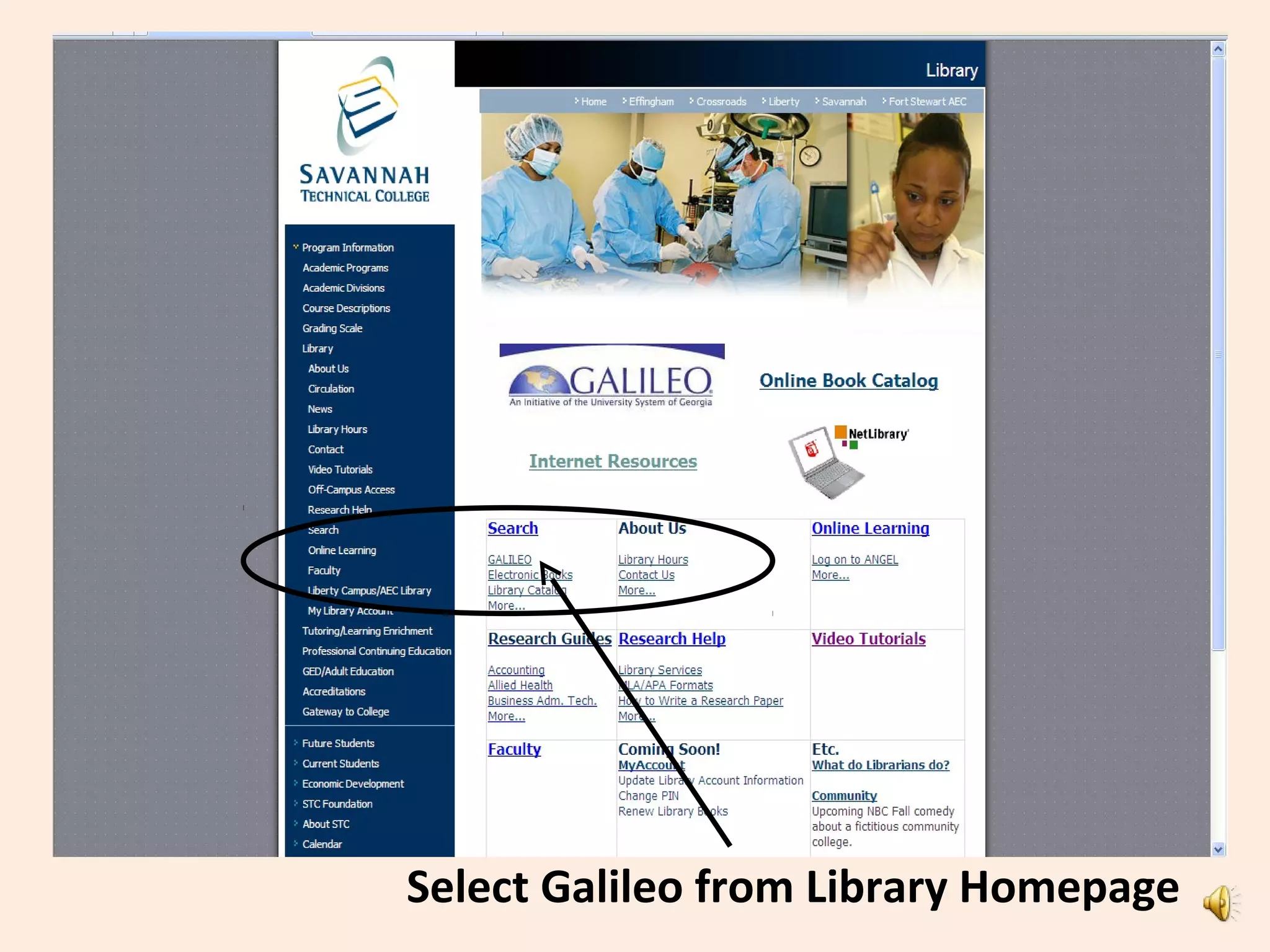
Select Galileo from Library Homepage
Select
Databases A-Z
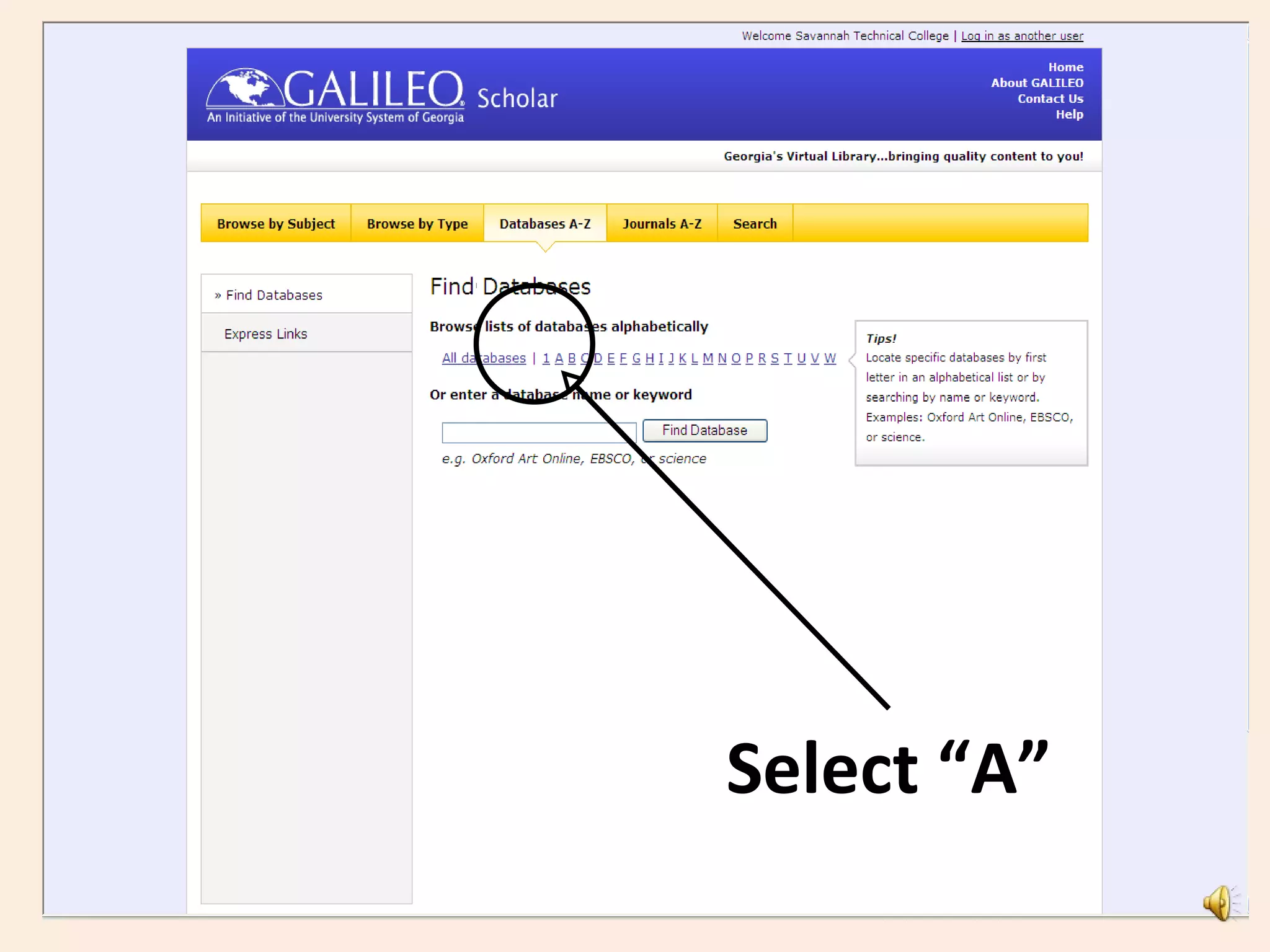
Select “A”
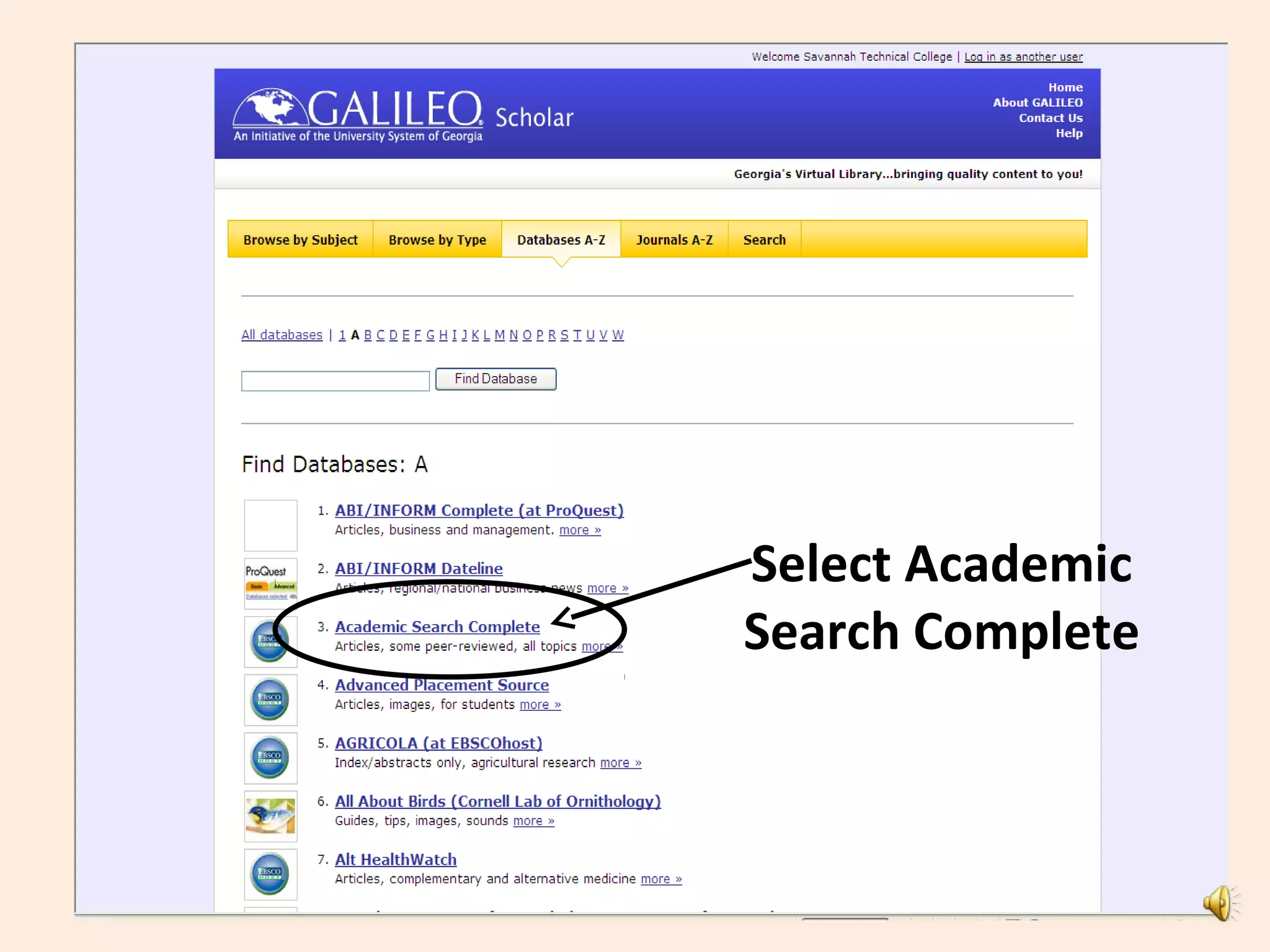
Select Academic
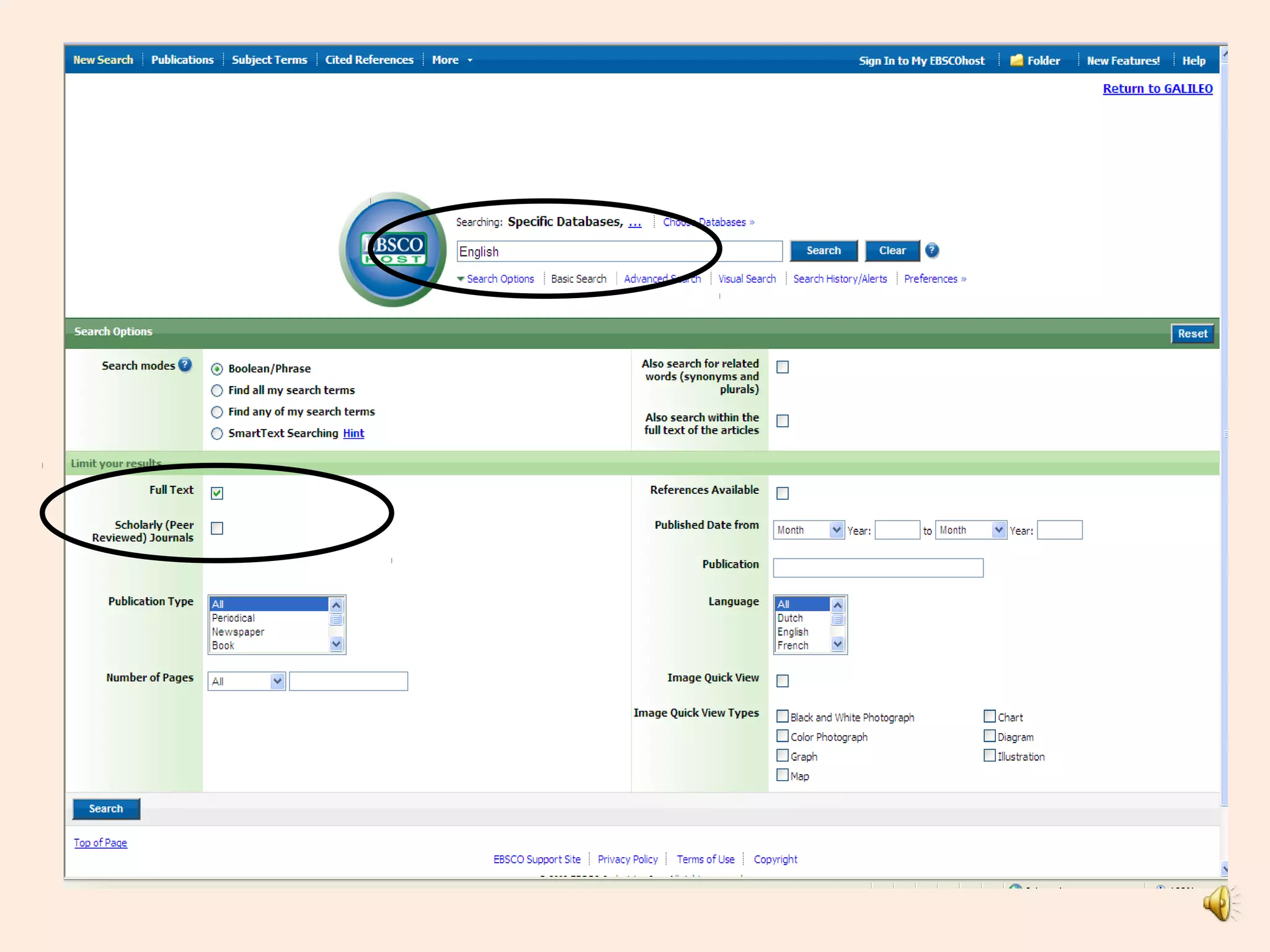
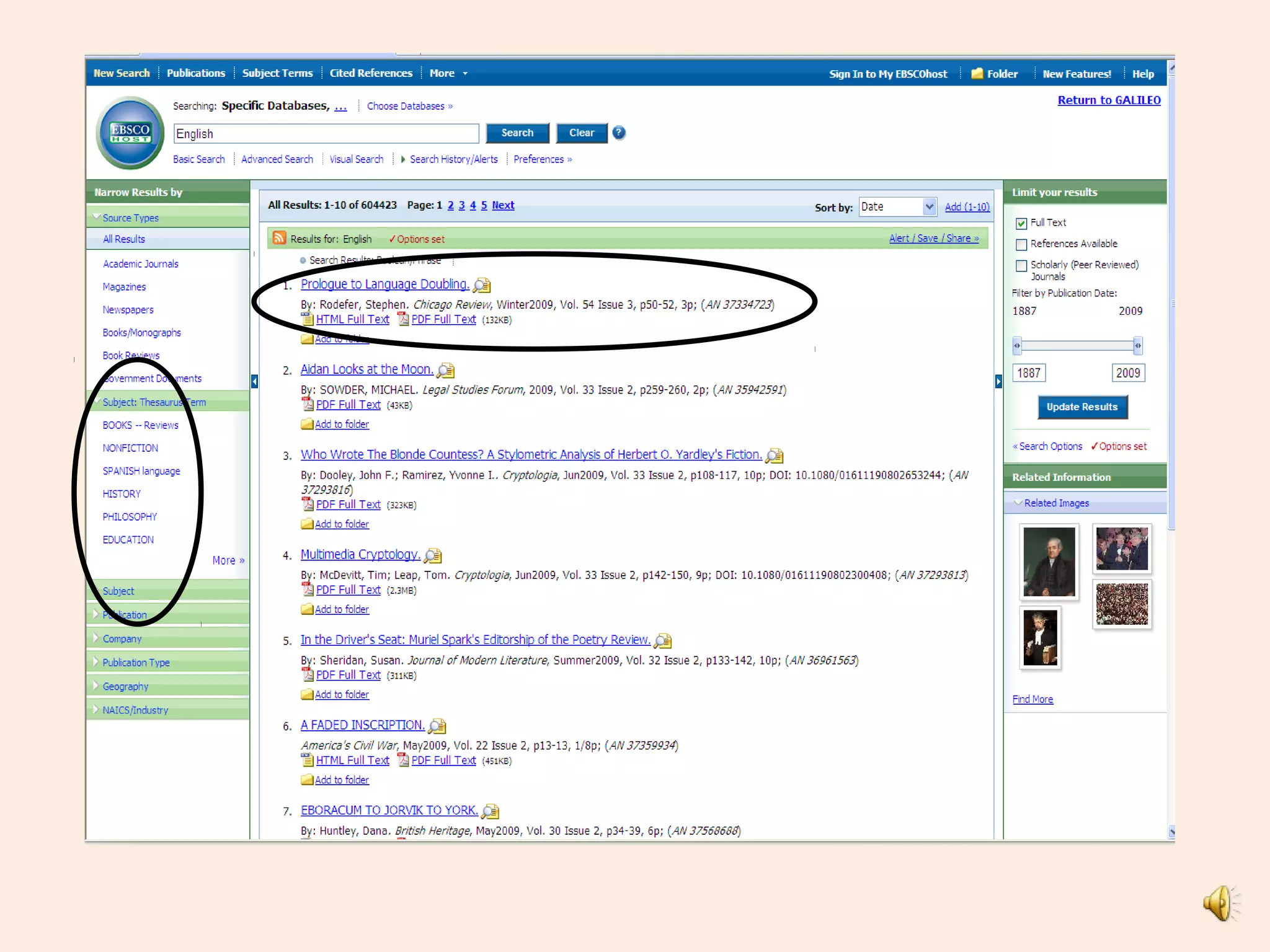
Search Complete
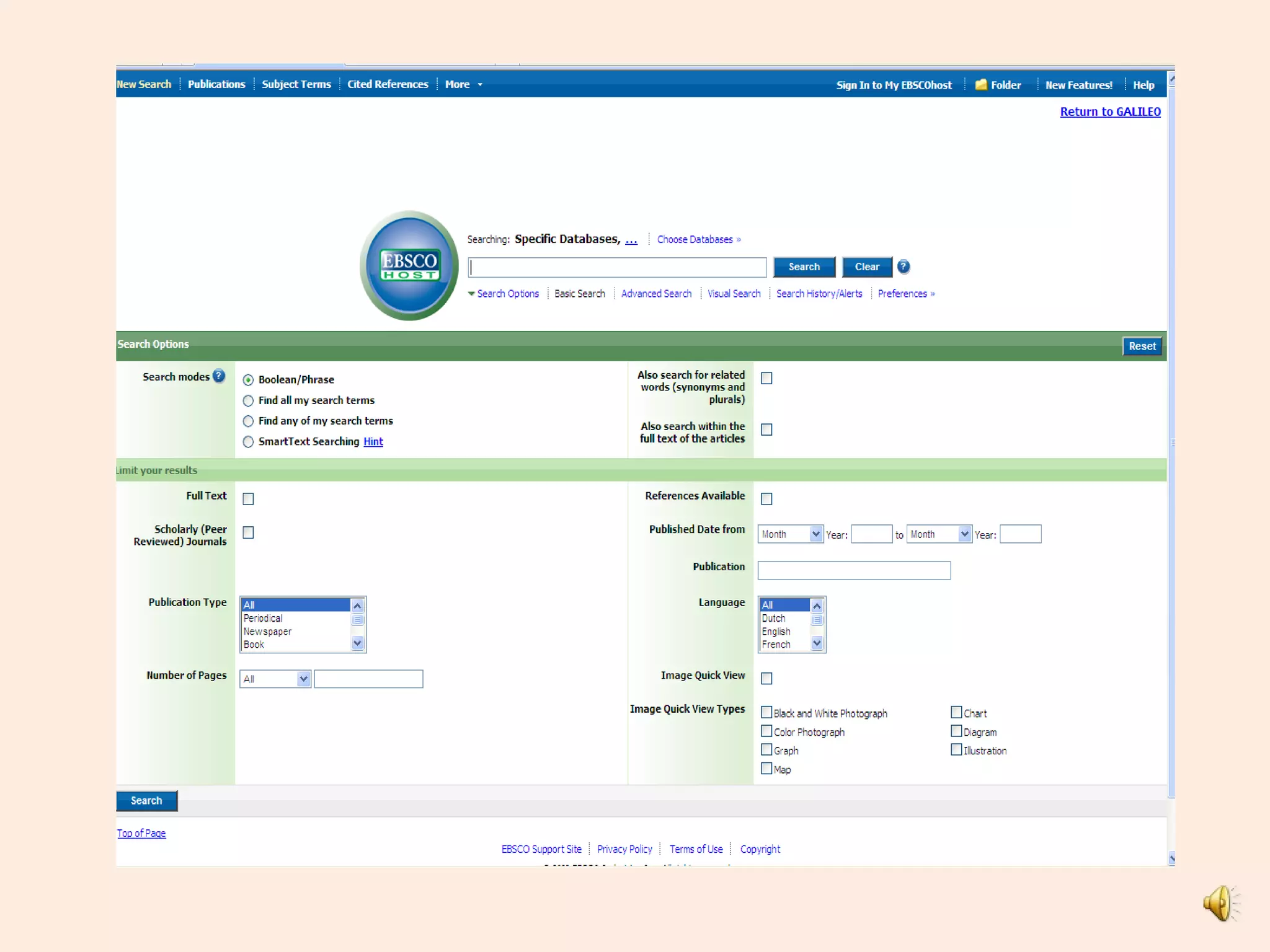
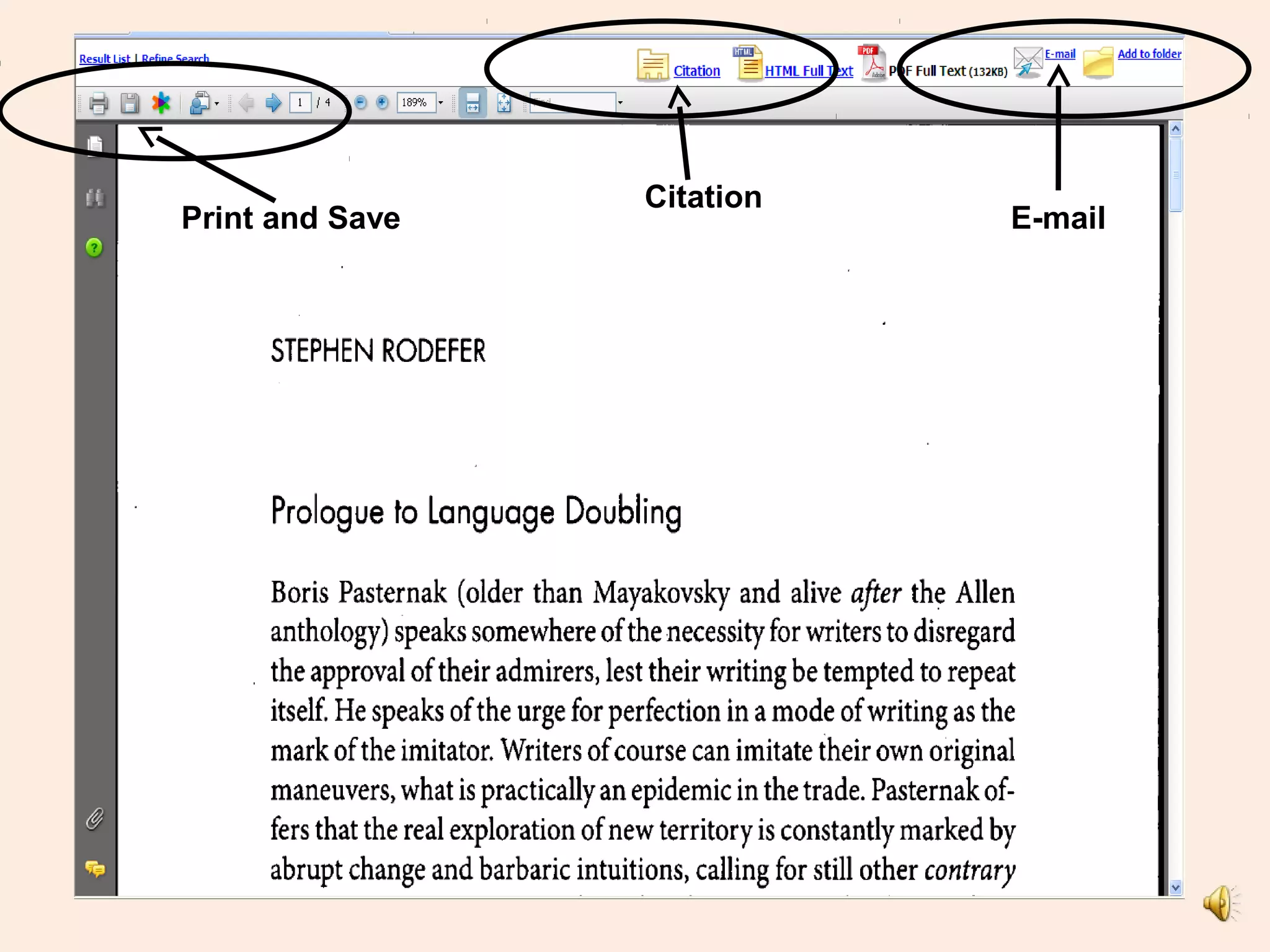
Print and Save
Citation
E-mail
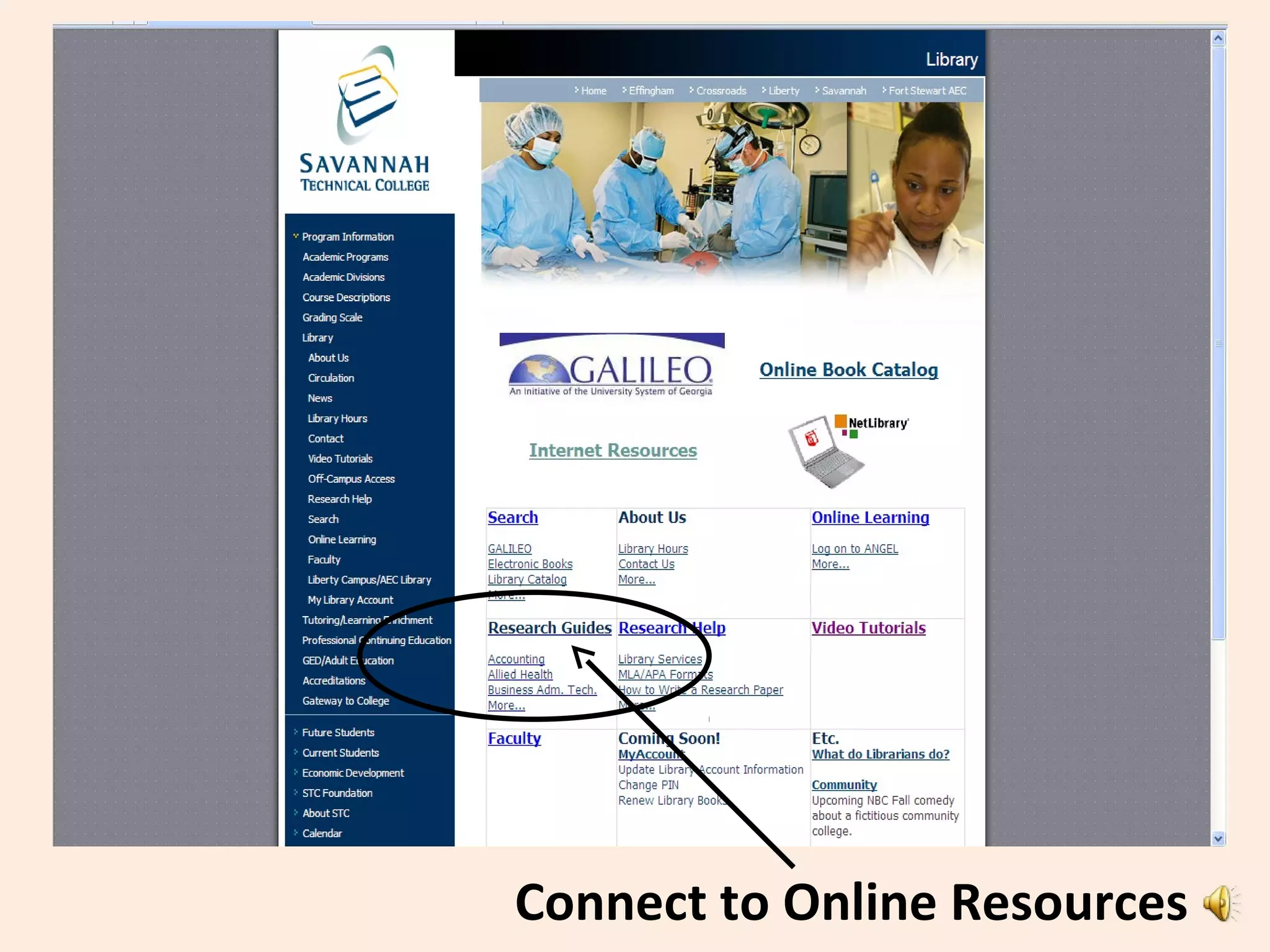
Connect to Online Resources
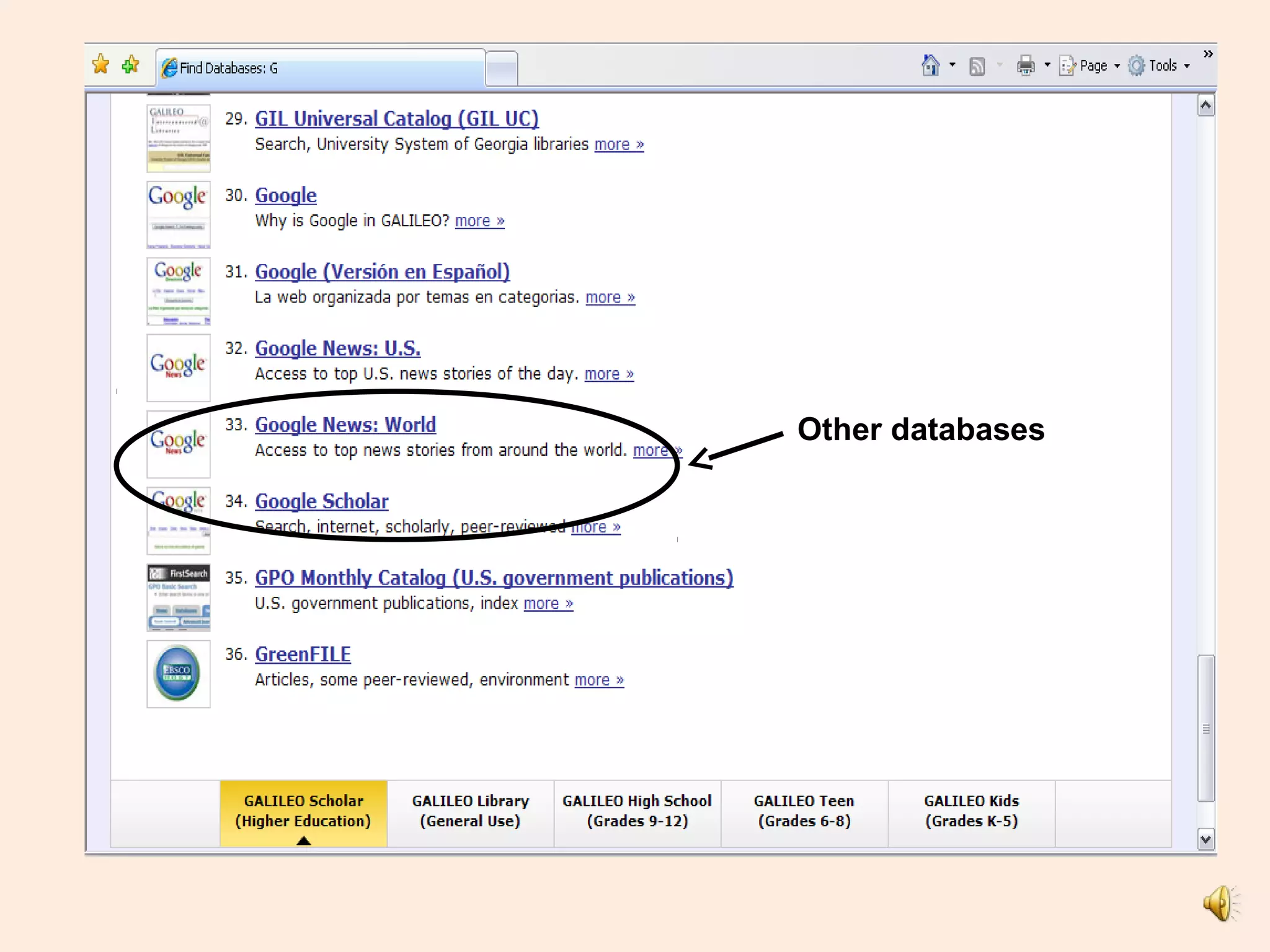
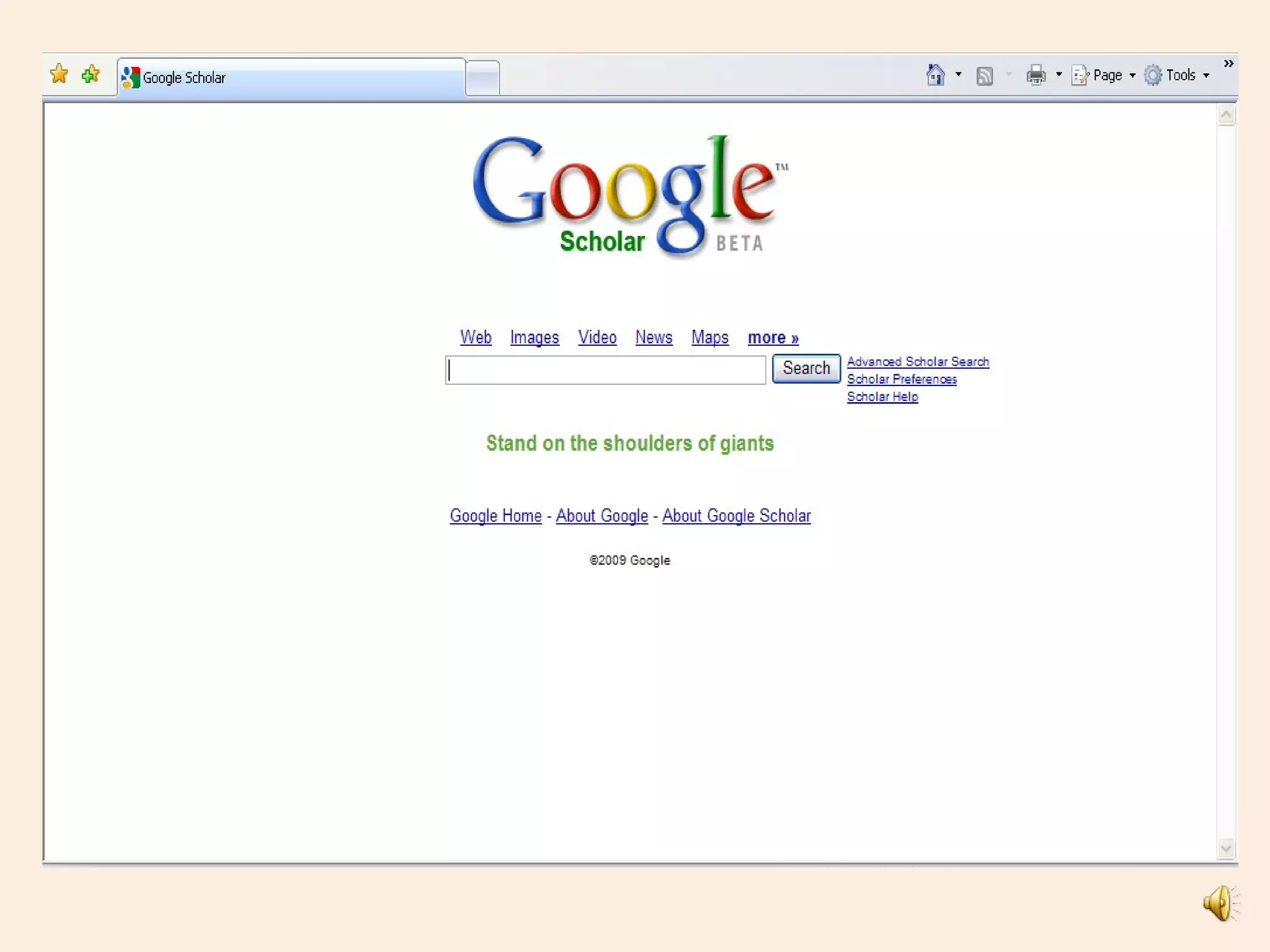
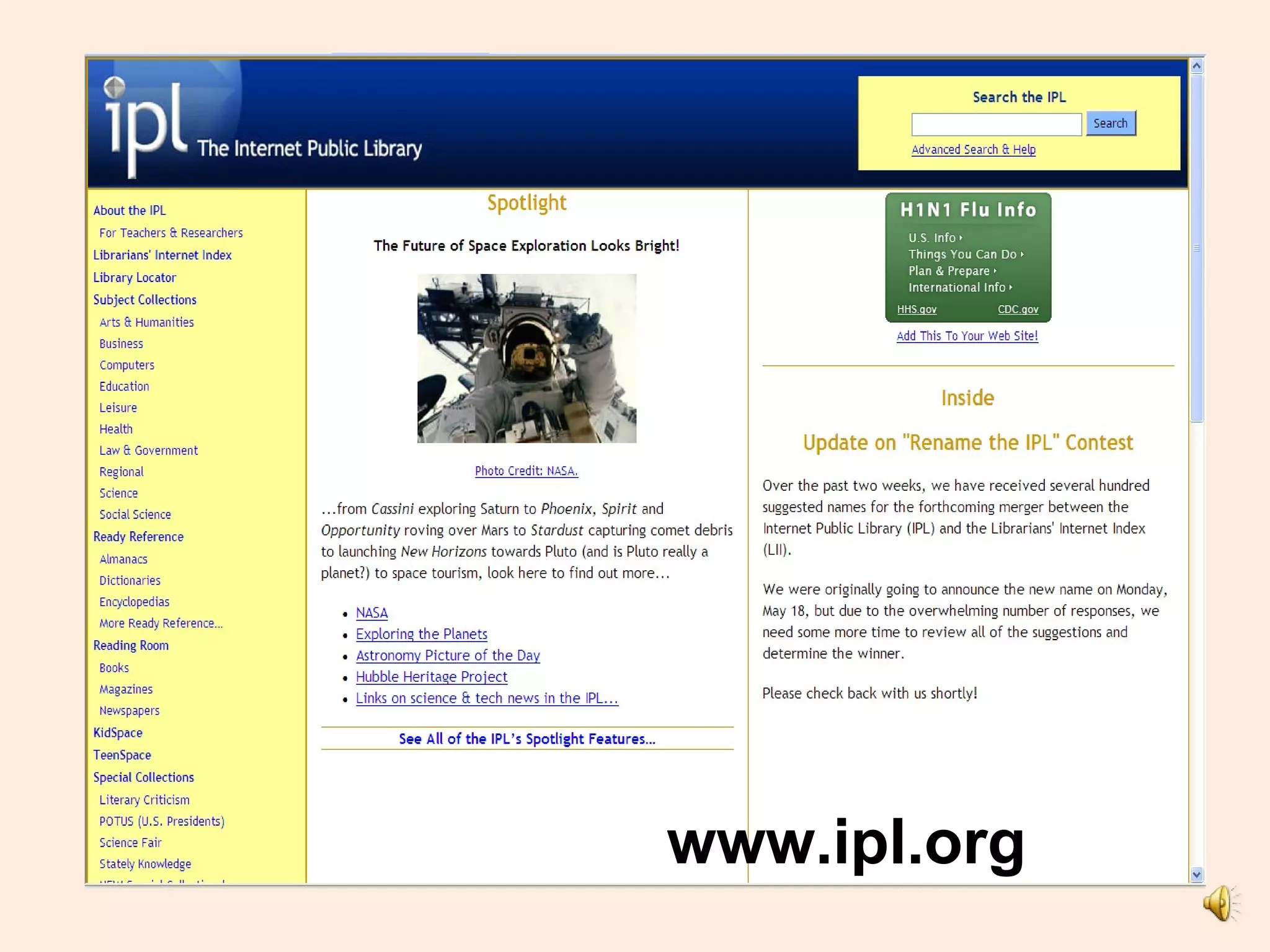
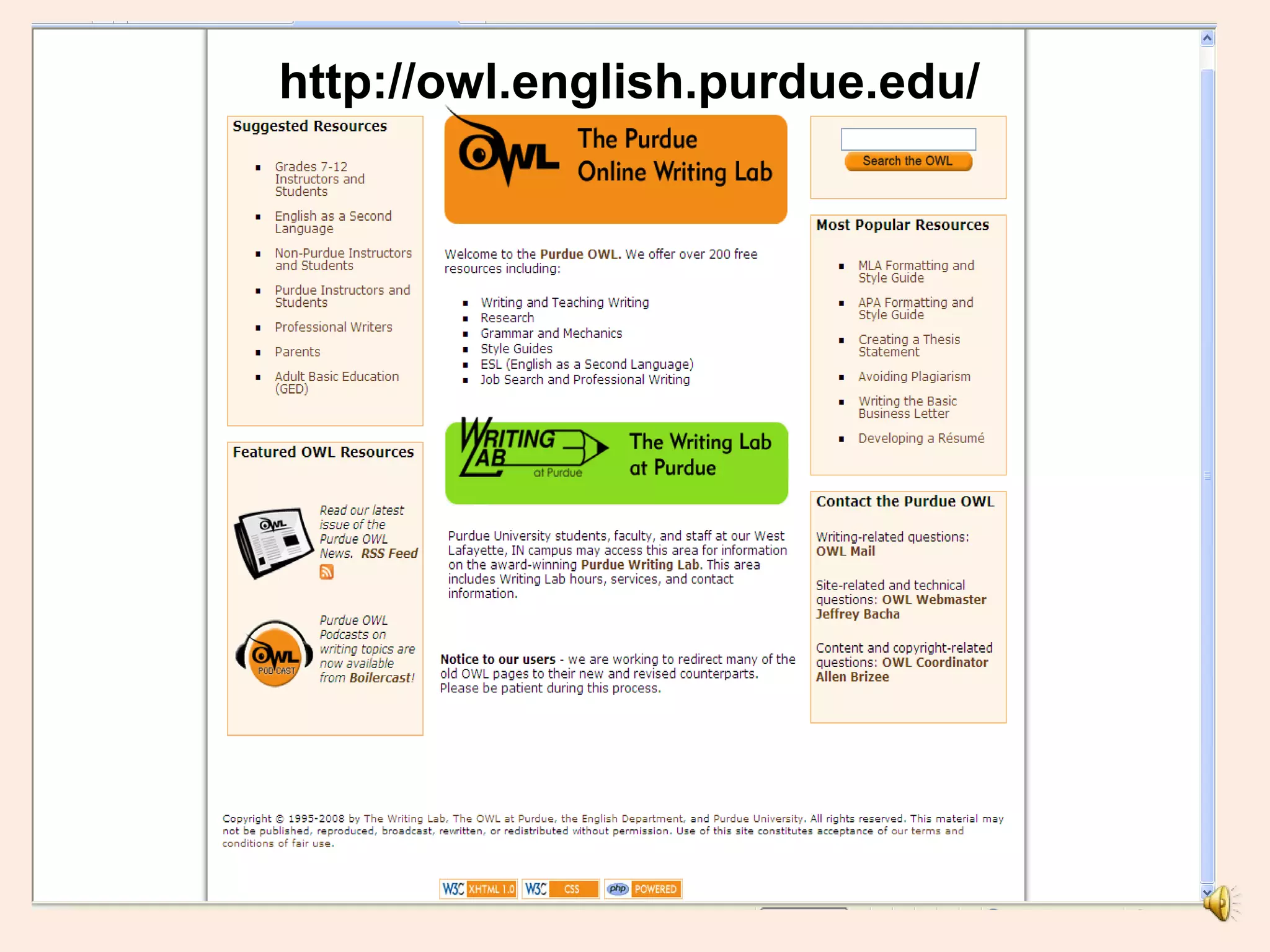
Other databases
www.ipl.org
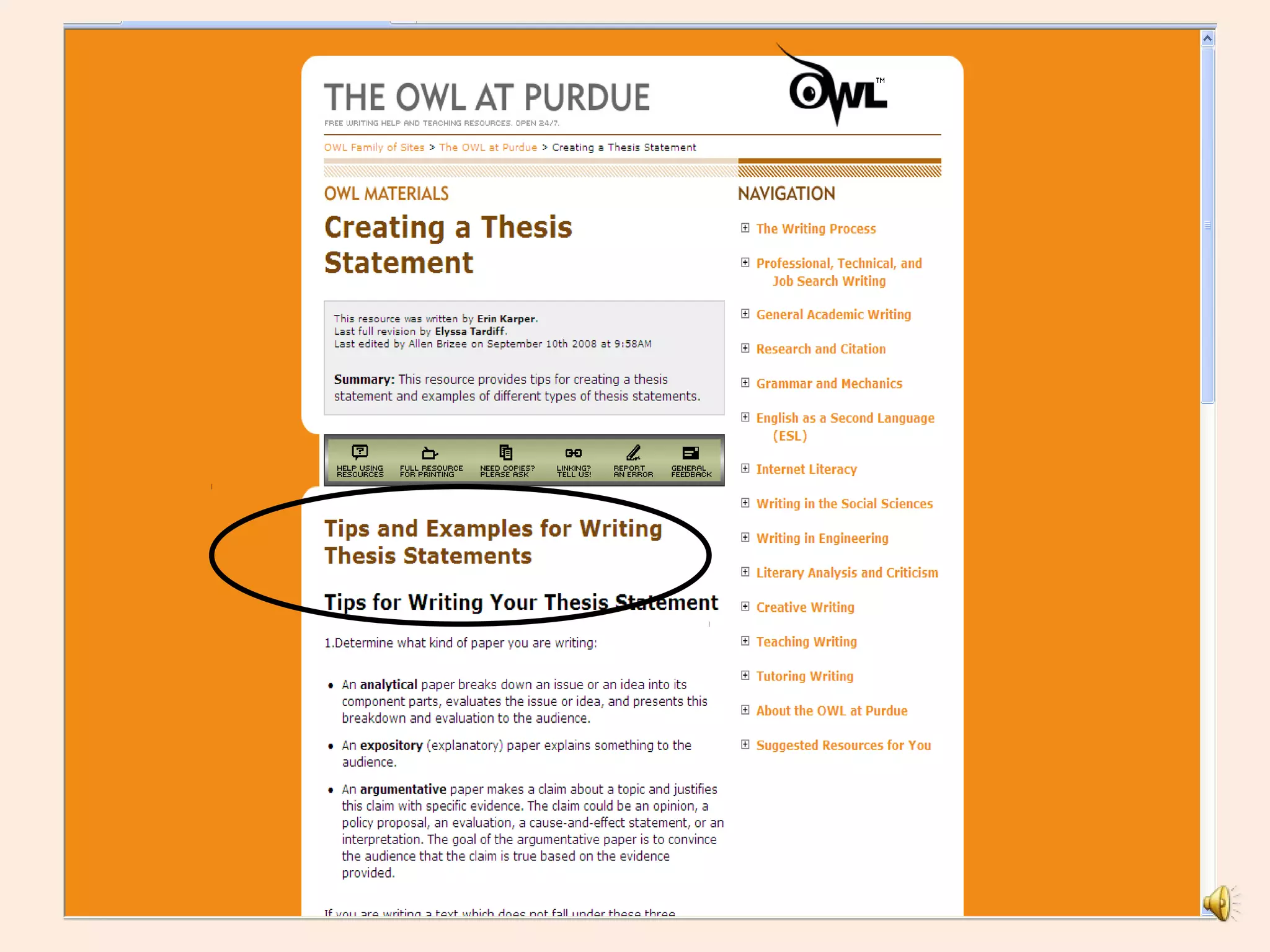
http://owl.english.purdue.edu/
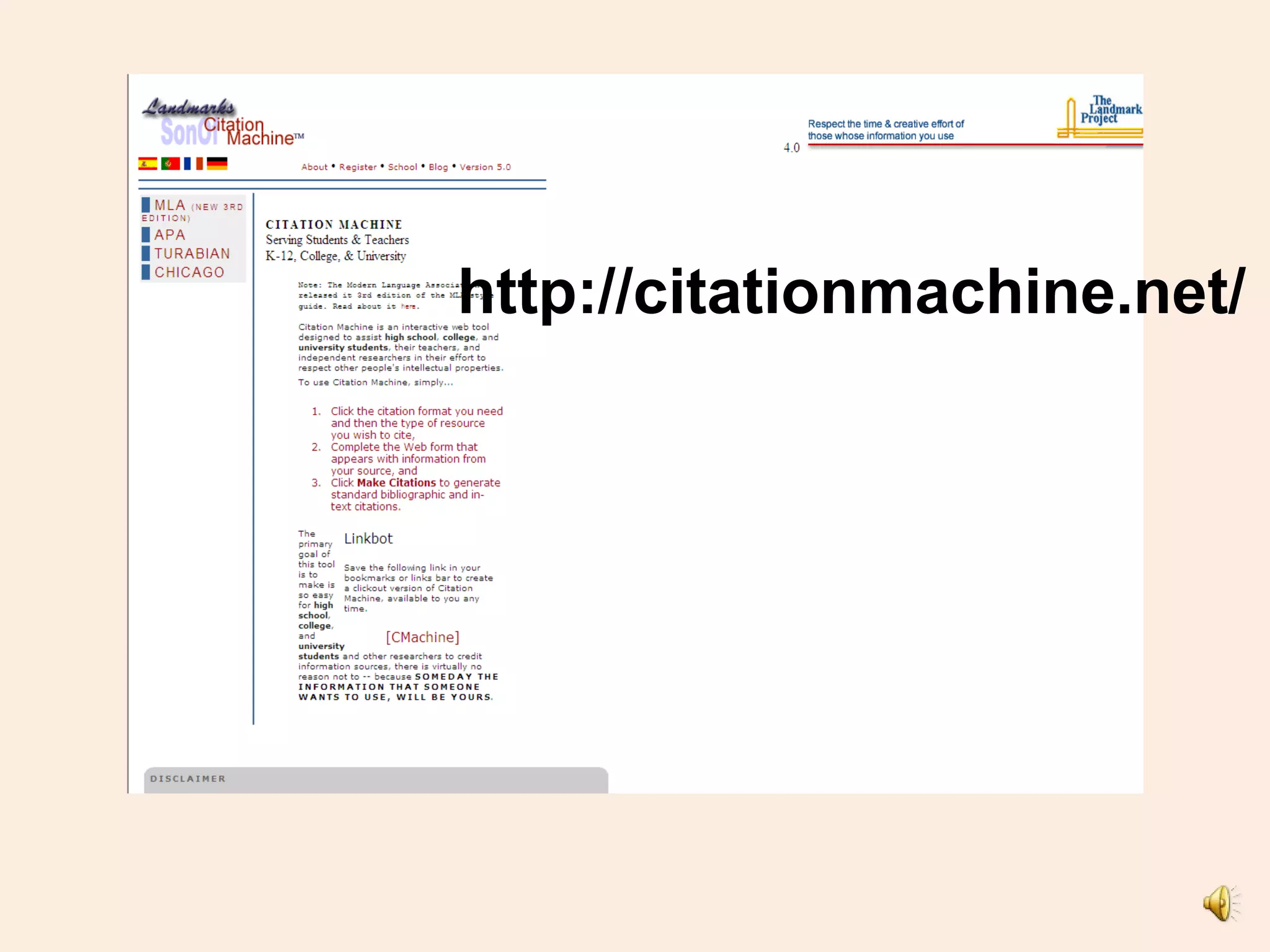
http://citationmachine.net/
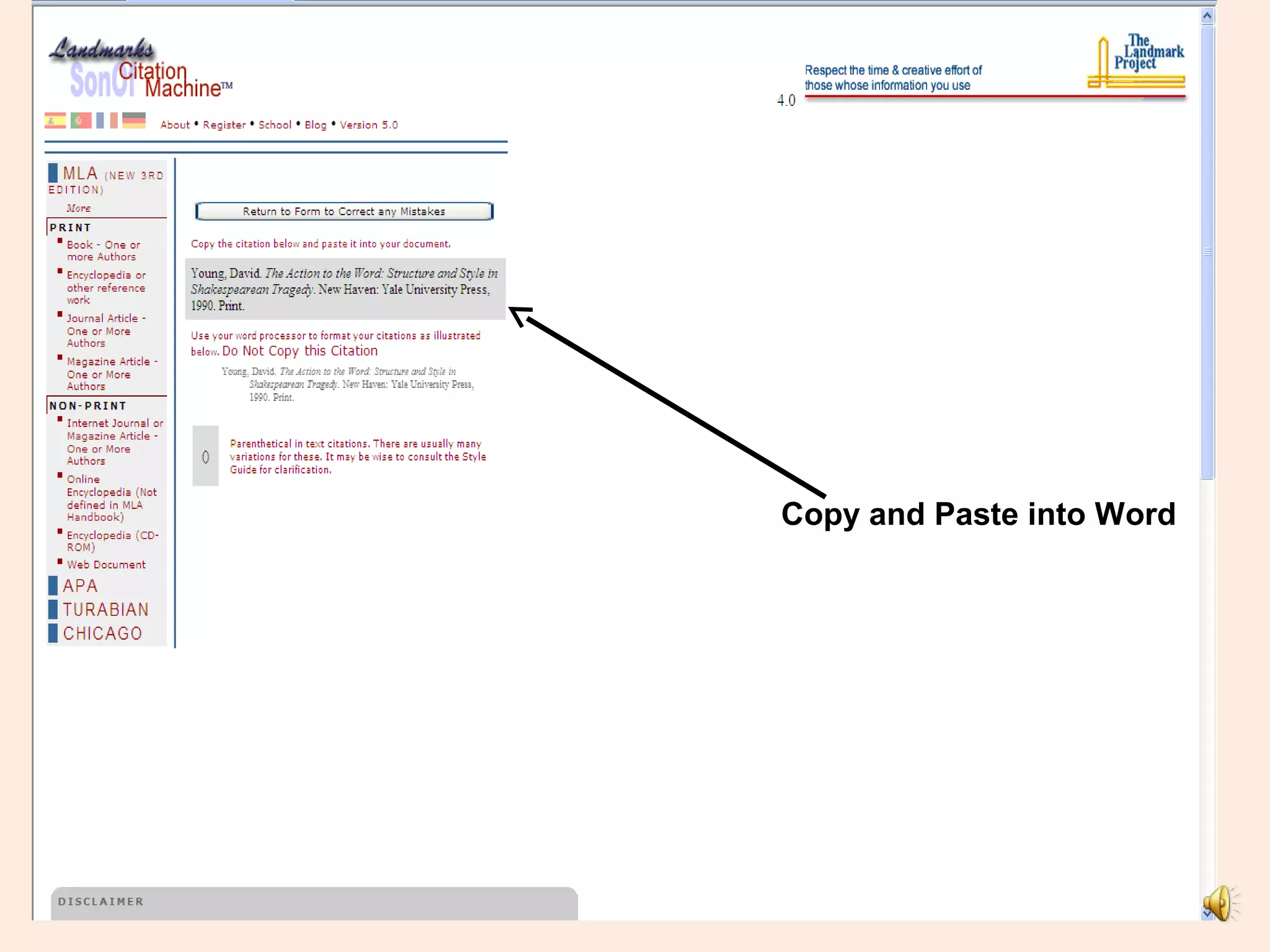
Copy and Paste into Word
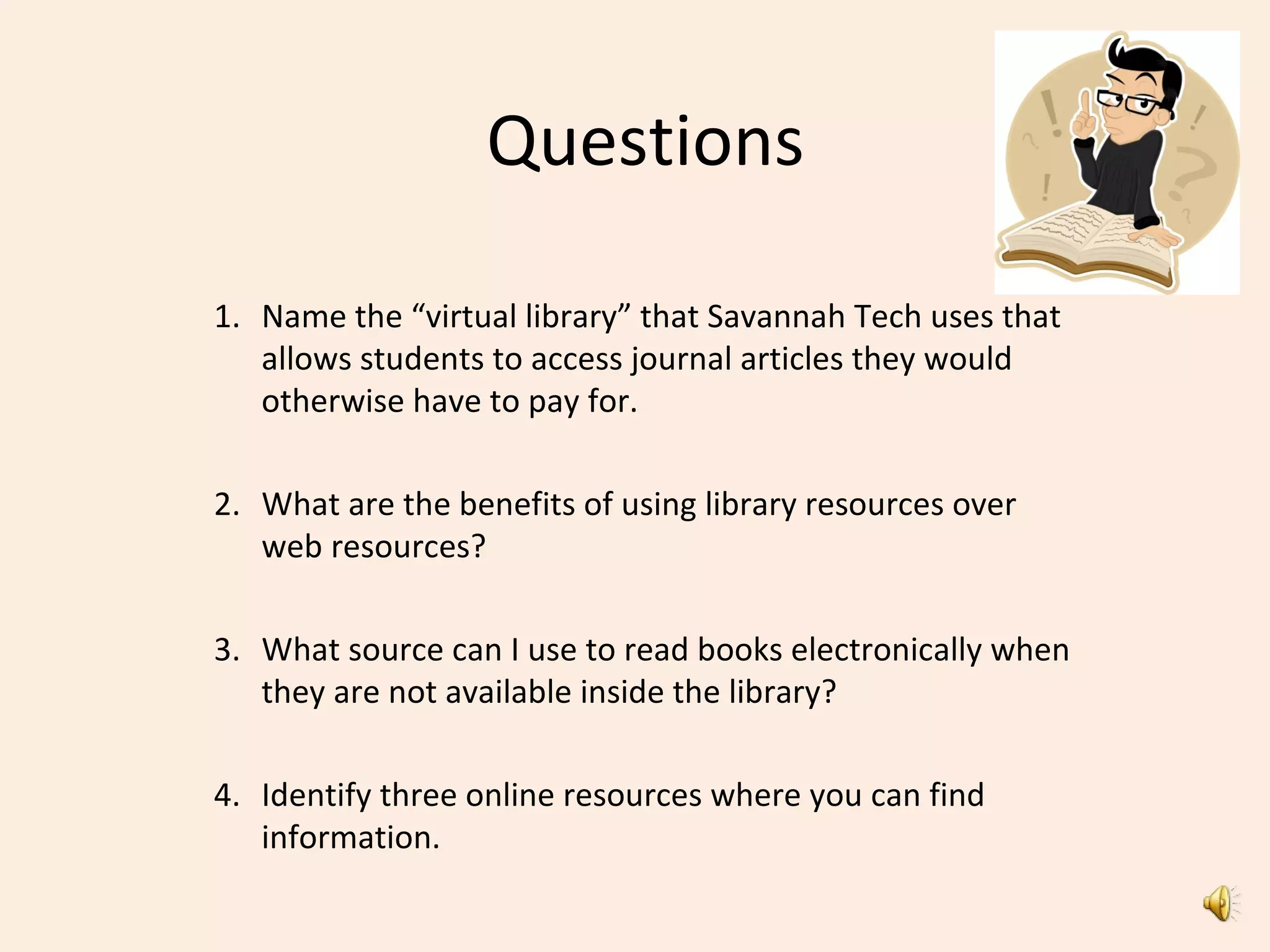
Questions
1. Name the “virtual library” that Savannah Tech uses that
allows students to access journal articles they would
otherwise have to pay for.
2. What are the benefits of using library resources over
web resources?
3. What source can I use to read books electronically when
they are not available inside the library?
4. Identify three online resources where you can find
information.
Need More Assistance?
Visit the library during operating
hours and we will be happy to help
you!

Locating Resources for Your Research

  • 1.
    Become a Fanof the Library on Facebook!
  • 2.
  • 3.
    Where do yougo for information? You are asked to write a paper on the topic of your choice and you need information for your topic. Where is the first place you look? Why?
  • 4.
    Search engines accessa relatively small part of the web, know as the “free web” A large portion of the web, inaccessible to the search engines, is known as the “invisible web”
  • 5.
    What’s not onthe free web? •Around 90% of the books on our library’s shelves, still under the protection of copyright •The full-text of many magazine and newspaper articles •Expensive reference books, like literary criticism, in-depth biographical and historical works
  • 6.
    What’s the bigdeal?... Your teachers expect quality! •Material from the subscription services is likely to be viewed by your teachers as more authoritative •You may have to defend some of the sources you find on the free Web •You may want to dig deep on the free Web for some harder to find sources.
  • 7.
    Prove it! For example: Sayyou are looking for photographs of the Battle of Gettysburg You may find some good ones through an image search on your favorite search engine BUT… did you know there is a database DEVOTED to Civil War photographs?
  • 8.
    Why? Search engines cannotpick up those photos of Gettysburg in that rich database because the database content is not searchable until you are actually in the database. Selected Civil War Photographs http://memory.loc.gov/ammem/cwphtml/cw phome.html
  • 9.
    Included in theInvisible Web It includes subscription, or proprietary databases too! http://www.savannahtech.edu/cwo/Library GALILEO-magazines, newspapers, journals NetLibrary-electronic books Library Catalog-books on the shelves
  • 10.
    A brief lookat the visible web… http://www.library.cornell.edu/olinuris/ref/re search/webcrit.html Five Criteria for Evaluating Web Pages
  • 11.
    A question isnot a query Topic: Ayurveda-The Science of Healthy Living Can you create an effective “one-two word” search?
  • 12.
    Sample List •Alternative health •Ayurveda •Alternativemedicine •Complementary therapies •Natural medicine •Medicinal plants •Herbs, therapeutic use •Traditional medicine
  • 13.
    How to structurea good query 1. Brainstorm several key words and phrases 2. Consider alternate forms of words: adolescent, adolescents, adolescence 3. Be on the look out for better words and phrases as you search 4. Check your spelling. Bad spelling usually turns up bad hits 5. Use lowercase letter unless you are searching for proper names. Turn off the CAPS LOCK!
  • 14.
    Select “Library” underQuick Links www.savannahtech.edu
  • 15.
  • 16.
    Type your searchin the box and select “GO”
  • 17.
    Notice that thecatalog tells you how many titles there are for your search
  • 18.
  • 19.
    What is NetLibrary? Books you read on the computer
  • 20.
  • 21.
  • 22.
  • 24.
    When Using NetLibrary Remember….. You can only print a select number of pages If you are at home you need the school password
  • 25.
  • 26.
    G.A.L.I.L.E.O GALILEO stands forGeorgiA LIbrary LEarning Online. A World Wide Web-based virtual library, GALILEO provides access to multiple information resources. Participating institutions may access over 100 databases thousands of periodicals and scholarly journals. Over 2000 journal titles are provided in full-text. Other resources include encyclopedias, business directories, and government publications.
  • 27.
    And…. Galileo gives youaccess to information that you would have to pay for otherwise!
  • 28.
    Select Galileo fromLibrary Homepage
  • 29.
  • 30.
  • 31.
  • 35.
  • 36.
  • 37.
  • 40.
  • 41.
  • 43.
  • 45.
    Copy and Pasteinto Word
  • 46.
    Questions 1. Name the“virtual library” that Savannah Tech uses that allows students to access journal articles they would otherwise have to pay for. 2. What are the benefits of using library resources over web resources? 3. What source can I use to read books electronically when they are not available inside the library? 4. Identify three online resources where you can find information.
  • 47.
    Need More Assistance? Visitthe library during operating hours and we will be happy to help you!