POL 240-01
Fall 2015
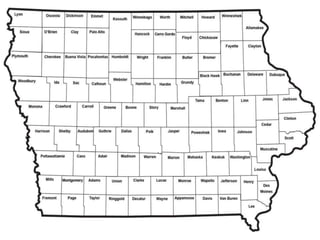
 Counties
 Largest entity of a state by territory
 Vary in population and land area
 Provide array of public services for citizens
 Cities
 Self-governance for particular place
 Police, fire, streets, sanitation, parks
 Towns andTownships
 Smaller political units within counties
 Towns andVillages;Village Governance
 Town meeting popular in New England
▪ Direct democracy unfeasible, so election of committee,
board, etc. is needed for daily operations
 School Districts
 Special Districts
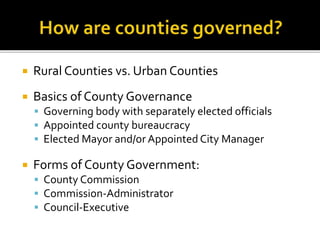
 Rural Counties vs. Urban Counties
 Basics of County Governance
 Governing body with separately elected officials
 Appointed county bureaucracy
 Elected Mayor and/or AppointedCity Manager
 Forms of County Government:
 County Commission
 Commission-Administrator
 Council-Executive
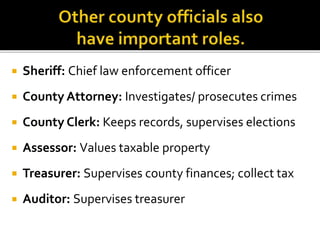
 Sheriff: Chief law enforcement officer
 County Attorney: Investigates/ prosecutes crimes
 County Clerk: Keeps records, supervises elections
 Assessor: Values taxable property
 Treasurer: Supervises county finances; collect tax
 Auditor: Supervises treasurer
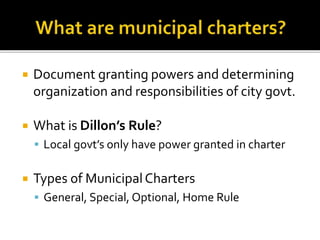
 Document granting powers and determining
organization and responsibilities of city govt.
 What is Dillon’s Rule?
 Local govt’s only have power granted in charter
 Types of MunicipalCharters
 General, Special, Optional, Home Rule
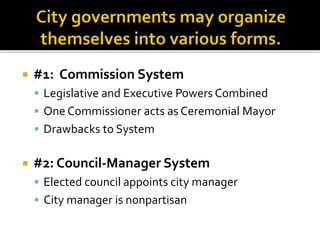
 #1: Commission System
 Legislative and Executive Powers Combined
 One Commissioner acts as Ceremonial Mayor
 Drawbacks to System
 #2: Council-Manager System
 Elected council appoints city manager
 City manager is nonpartisan
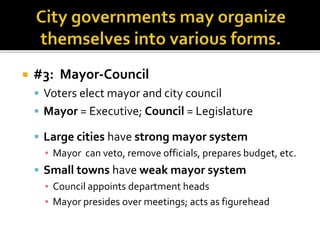
 #3: Mayor-Council
 Voters elect mayor and city council
 Mayor = Executive; Council = Legislature
 Large cities have strong mayor system
▪ Mayor can veto, remove officials, prepares budget, etc.
 Small towns have weak mayor system
▪ Council appoints department heads
▪ Mayor presides over meetings; acts as figurehead

Local Government

  • 1.
  • 6.
     Counties  Largestentity of a state by territory  Vary in population and land area  Provide array of public services for citizens  Cities  Self-governance for particular place  Police, fire, streets, sanitation, parks
  • 7.
     Towns andTownships Smaller political units within counties  Towns andVillages;Village Governance  Town meeting popular in New England ▪ Direct democracy unfeasible, so election of committee, board, etc. is needed for daily operations  School Districts  Special Districts
  • 10.
     Rural Countiesvs. Urban Counties  Basics of County Governance  Governing body with separately elected officials  Appointed county bureaucracy  Elected Mayor and/or AppointedCity Manager  Forms of County Government:  County Commission  Commission-Administrator  Council-Executive
  • 11.
     Sheriff: Chieflaw enforcement officer  County Attorney: Investigates/ prosecutes crimes  County Clerk: Keeps records, supervises elections  Assessor: Values taxable property  Treasurer: Supervises county finances; collect tax  Auditor: Supervises treasurer
  • 13.
     Document grantingpowers and determining organization and responsibilities of city govt.  What is Dillon’s Rule?  Local govt’s only have power granted in charter  Types of MunicipalCharters  General, Special, Optional, Home Rule
  • 14.
     #1: CommissionSystem  Legislative and Executive Powers Combined  One Commissioner acts as Ceremonial Mayor  Drawbacks to System  #2: Council-Manager System  Elected council appoints city manager  City manager is nonpartisan
  • 15.
     #3: Mayor-Council Voters elect mayor and city council  Mayor = Executive; Council = Legislature  Large cities have strong mayor system ▪ Mayor can veto, remove officials, prepares budget, etc.  Small towns have weak mayor system ▪ Council appoints department heads ▪ Mayor presides over meetings; acts as figurehead