POL 240-01
Fall 2015
“TopTen Issues toWatch in 2015”
INSTRUCTIONS
In small groups of 3-4,
discuss the following questions:
Are any of the issues more important than others?
Which, if any, should be handled by states and localities?
How could the issues tie into the four
distinctions made between states in Chapter 1?
1) Sociodemographics
2) Culture and History
3) Economy
4) Geography andTopography
INSTRUCTIONS:
On a separate sheet of paper,
write down the name of your home state
and answer the following questions as best you can:
1) What is your state’s political ideology?
(e.g. liberal, conservative)
2) Who is your state’s governor?
Which political party do they represent?
3) NameTWO services that local government
provides its citizens. Why are they important?
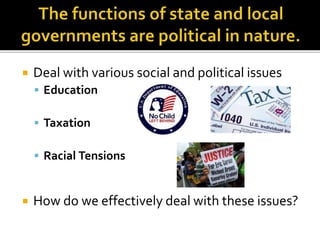
 Deal with various social and political issues
 Education
 Taxation
 Racial Tensions
 How do we effectively deal with these issues?
What words, concepts, ideas, etc. come to mind
when you see the following word?
“politics”
 Politics: “Who gets what, when and how”
 Characteristics of Politics:
 Struggle for power
 Emphasis on decision-making
 Political scientists study power as it relates
to the political community
 Political party, legislature, city, region, country
 How do states vary?
 Diversity leads to “Why?” questions
 Why do states choose to either place or not
place certain taxes on their citizens?
 Why do some states resist federal policies while
others embrace them?
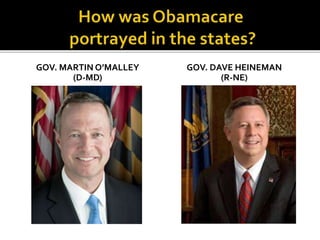
GOV. MARTIN O’MALLEY
(D-MD)
GOV. DAVE HEINEMAN
(R-NE)
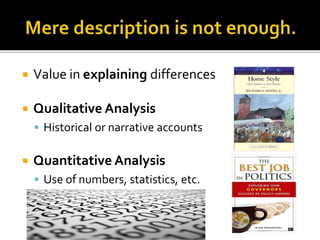
 Value in explaining differences
 Qualitative Analysis
 Historical or narrative accounts
 Quantitative Analysis
 Use of numbers, statistics, etc.
 What is variance?
 What are units of analysis?
 #1: Description
 #2: Classification
 #3: HypothesisTesting
 #4: Prediction
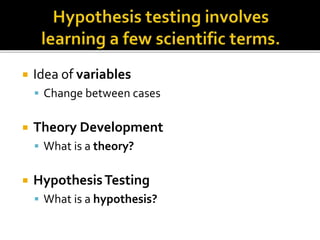
 Idea of variables
 Change between cases
 Theory Development
 What is a theory?
 HypothesisTesting
 What is a hypothesis?
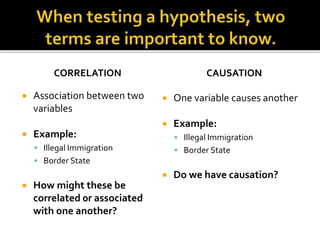
CORRELATION
 Association between two
variables
 Example:
 Illegal Immigration
 Border State
 How might these be
correlated 0r associated
with one another?
CAUSATION
 One variable causes another
 Example:
 Illegal Immigration
 Border State
 Do we have causation?
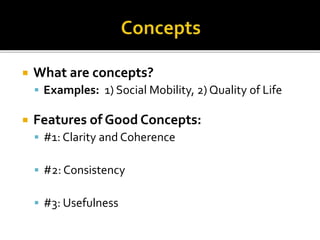
 What are concepts?
 Examples: 1) Social Mobility, 2) Quality of Life
 Features of Good Concepts:
 #1: Clarity and Coherence
 #2: Consistency
 #3: Usefulness
 Absence or presence of a concept
 How can we operationalize “social mobility”
and “quality of life?”
 Attitudes and beliefs broadly shared in a polity about
the role and responsibility of government.
 Historical styles & traditions in states’ politics that
cannot be attributed to socioeconomic factors.
 What people in a group or region generally believe
about government and politics; what they think
government ought to do and how people should act
toward it.
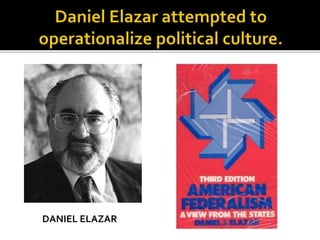
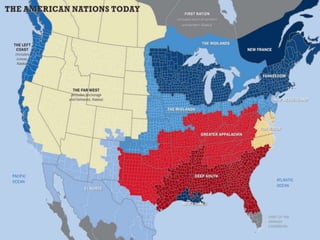
DANIEL ELAZAR
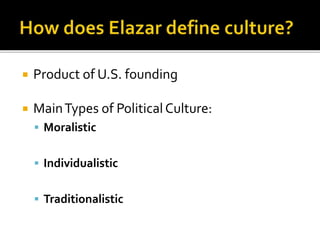
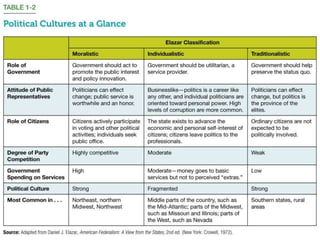
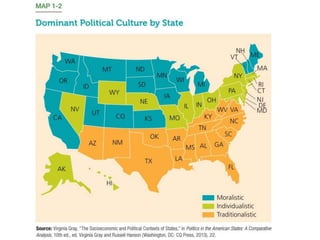
 Product of U.S. founding
 MainTypes of PoliticalCulture:
 Moralistic
 Individualistic
 Traditionalistic
Intro state and local

Intro state and local

  • 1.
  • 4.
  • 6.
    INSTRUCTIONS In small groupsof 3-4, discuss the following questions: Are any of the issues more important than others? Which, if any, should be handled by states and localities? How could the issues tie into the four distinctions made between states in Chapter 1? 1) Sociodemographics 2) Culture and History 3) Economy 4) Geography andTopography
  • 8.
    INSTRUCTIONS: On a separatesheet of paper, write down the name of your home state and answer the following questions as best you can: 1) What is your state’s political ideology? (e.g. liberal, conservative) 2) Who is your state’s governor? Which political party do they represent? 3) NameTWO services that local government provides its citizens. Why are they important?
  • 13.
     Deal withvarious social and political issues  Education  Taxation  Racial Tensions  How do we effectively deal with these issues?
  • 14.
    What words, concepts,ideas, etc. come to mind when you see the following word? “politics”
  • 15.
     Politics: “Whogets what, when and how”  Characteristics of Politics:  Struggle for power  Emphasis on decision-making  Political scientists study power as it relates to the political community  Political party, legislature, city, region, country
  • 17.
     How dostates vary?  Diversity leads to “Why?” questions  Why do states choose to either place or not place certain taxes on their citizens?  Why do some states resist federal policies while others embrace them?
  • 18.
  • 19.
     Value inexplaining differences  Qualitative Analysis  Historical or narrative accounts  Quantitative Analysis  Use of numbers, statistics, etc.
  • 20.
     What isvariance?  What are units of analysis?
  • 23.
     #1: Description #2: Classification  #3: HypothesisTesting  #4: Prediction
  • 24.
     Idea ofvariables  Change between cases  Theory Development  What is a theory?  HypothesisTesting  What is a hypothesis?
  • 25.
    CORRELATION  Association betweentwo variables  Example:  Illegal Immigration  Border State  How might these be correlated 0r associated with one another? CAUSATION  One variable causes another  Example:  Illegal Immigration  Border State  Do we have causation?
  • 27.
     What areconcepts?  Examples: 1) Social Mobility, 2) Quality of Life  Features of Good Concepts:  #1: Clarity and Coherence  #2: Consistency  #3: Usefulness
  • 29.
     Absence orpresence of a concept  How can we operationalize “social mobility” and “quality of life?”
  • 31.
     Attitudes andbeliefs broadly shared in a polity about the role and responsibility of government.  Historical styles & traditions in states’ politics that cannot be attributed to socioeconomic factors.  What people in a group or region generally believe about government and politics; what they think government ought to do and how people should act toward it.
  • 33.
  • 34.
     Product ofU.S. founding  MainTypes of PoliticalCulture:  Moralistic  Individualistic  Traditionalistic