MODULE 8: PHOTO
IMAGING AND POST
PROCESSING
Week 7-8
Lesson Objective:
 Define photography terms and the effect each adjustment
has on the image;
 Make basic photo edits and keep image quality;
 Learn the workflow of post processing.
Photography
 is an art form like drawing and painting
 use their camera to make us see life in a different way, feel emotions, and
record stories and events
 Painting with Light”
 a science, because there are basic principles of physics that govern success
and Photography is art because its beauty is subjective.
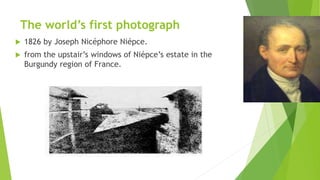
The world’s first photograph
 1826 by Joseph Nicéphore Niépce.
 from the upstair’s windows of Niépce’s estate in the
Burgundy region of France.
There are three basic types of
Photography:
Landscape
Portrait
Documentary
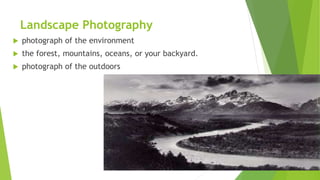
Landscape Photography
 photograph of the environment
 the forest, mountains, oceans, or your backyard.
 photograph of the outdoors
Portrait Photography
 is a picture of a person or animal that shows an emotional connection.
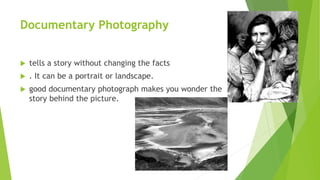
Documentary Photography
 tells a story without changing the facts
 . It can be a portrait or landscape.
 good documentary photograph makes you wonder the
story behind the picture.
Exposure
 how bright a photo is as it saved to your memory card.
 Light
 Shutter speed
 Aperture
 ISO
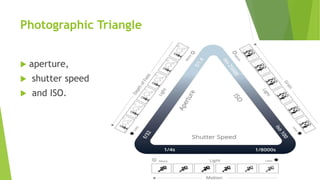
Photographic Triangle
 aperture,
 shutter speed
 and ISO.
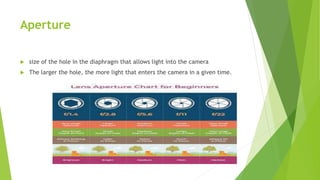
Aperture
 size of the hole in the diaphragm that allows light into the camera
 The larger the hole, the more light that enters the camera in a given time.
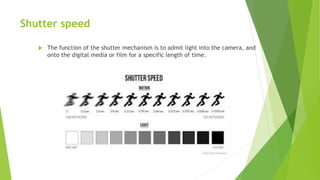
Shutter speed
 The function of the shutter mechanism is to admit light into the camera, and
onto the digital media or film for a specific length of time.
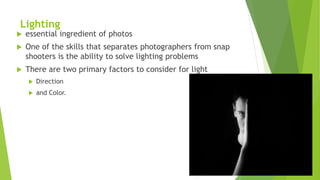
Lighting
 essential ingredient of photos
 One of the skills that separates photographers from snap
shooters is the ability to solve lighting problems
 There are two primary factors to consider for light
 Direction
 and Color.
Lighting – Colour
 measured by temperature in Kelvin (° K).
 Natural light changes through the day and humans respond
psychologically to different colours, therefore the colour
of a photo will affect emotional responses.
 Light that is in the reds, oranges and yellows is said to be
“Warm”, conversely, “Cool” light is blue in tone.
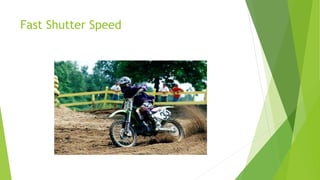
Fast Shutter Speed
Slow Shutter Speed
Lighting – Colour
 the while balance setting of a camera will affect the
colour cast of the image, balancing the lighting of the
subject.
 Typical while balance settings of a camera include
tungsten, florescent, shade sunny, cloudy, flash, auto and
manual.
 Filters can also be used to affect the colour of light in the
image
Post Processing
 is process of editing the data captured by camera while taking the photo to
enhance the image.
 data captured during clicking of photo better is the enhancement possibility
various stages of post processing based on
what is the final result that one wants to
achieve.
 Fine tuning of RAW file.
 Converting RAW file to easily readable formats like jpg/png/tiff.
 Editing of jpg to remove unwanted features.
 Mixing of various files to achieve creative result.
References
 Post processing retrieved from
 https://en.wikibooks.org/wiki/Digital_Photography/Post_Processing
 Introduction to Photography retrieved from
 https://carleton.ca/healthy-workplace/wp-content/uploads/Intro-to-Photo-presention- 20112.pdf
 Photography guide retrieved from
 https://www.creativelive.com/photography-guides/post-processing
 What is photography?
 http://163.14.73.3/~chiang/course/CG/ClassNotes/photography.ppt

 History of Photography
 https://petapixel.com/2015/05/23/20-first-photos-from-the-history-of-photography/
 Top ten tip in photography
 http://www.kodak.com

Living in the IT Era lessonMODULE-8.pptx

  • 1.
    MODULE 8: PHOTO IMAGINGAND POST PROCESSING Week 7-8
  • 2.
    Lesson Objective:  Definephotography terms and the effect each adjustment has on the image;  Make basic photo edits and keep image quality;  Learn the workflow of post processing.
  • 3.
    Photography  is anart form like drawing and painting  use their camera to make us see life in a different way, feel emotions, and record stories and events  Painting with Light”  a science, because there are basic principles of physics that govern success and Photography is art because its beauty is subjective.
  • 4.
    The world’s firstphotograph  1826 by Joseph Nicéphore Niépce.  from the upstair’s windows of Niépce’s estate in the Burgundy region of France.
  • 5.
    There are threebasic types of Photography: Landscape Portrait Documentary
  • 6.
    Landscape Photography  photographof the environment  the forest, mountains, oceans, or your backyard.  photograph of the outdoors
  • 7.
    Portrait Photography  isa picture of a person or animal that shows an emotional connection.
  • 8.
    Documentary Photography  tellsa story without changing the facts  . It can be a portrait or landscape.  good documentary photograph makes you wonder the story behind the picture.
  • 9.
    Exposure  how brighta photo is as it saved to your memory card.  Light  Shutter speed  Aperture  ISO
  • 10.
    Photographic Triangle  aperture, shutter speed  and ISO.
  • 11.
    Aperture  size ofthe hole in the diaphragm that allows light into the camera  The larger the hole, the more light that enters the camera in a given time.
  • 12.
    Shutter speed  Thefunction of the shutter mechanism is to admit light into the camera, and onto the digital media or film for a specific length of time.
  • 13.
    Lighting  essential ingredientof photos  One of the skills that separates photographers from snap shooters is the ability to solve lighting problems  There are two primary factors to consider for light  Direction  and Color.
  • 15.
    Lighting – Colour measured by temperature in Kelvin (° K).  Natural light changes through the day and humans respond psychologically to different colours, therefore the colour of a photo will affect emotional responses.  Light that is in the reds, oranges and yellows is said to be “Warm”, conversely, “Cool” light is blue in tone.
  • 16.
  • 17.
  • 19.
    Lighting – Colour the while balance setting of a camera will affect the colour cast of the image, balancing the lighting of the subject.  Typical while balance settings of a camera include tungsten, florescent, shade sunny, cloudy, flash, auto and manual.  Filters can also be used to affect the colour of light in the image
  • 21.
    Post Processing  isprocess of editing the data captured by camera while taking the photo to enhance the image.  data captured during clicking of photo better is the enhancement possibility
  • 22.
    various stages ofpost processing based on what is the final result that one wants to achieve.  Fine tuning of RAW file.  Converting RAW file to easily readable formats like jpg/png/tiff.  Editing of jpg to remove unwanted features.  Mixing of various files to achieve creative result.
  • 23.
    References  Post processingretrieved from  https://en.wikibooks.org/wiki/Digital_Photography/Post_Processing  Introduction to Photography retrieved from  https://carleton.ca/healthy-workplace/wp-content/uploads/Intro-to-Photo-presention- 20112.pdf  Photography guide retrieved from  https://www.creativelive.com/photography-guides/post-processing  What is photography?  http://163.14.73.3/~chiang/course/CG/ClassNotes/photography.ppt   History of Photography  https://petapixel.com/2015/05/23/20-first-photos-from-the-history-of-photography/  Top ten tip in photography  http://www.kodak.com