Ecologically and socially sustainable
livestock development in marginal
areas
Ilse Köhler-Rollefson
23 rd International Grasslands Conference, Delhi
Ecologically and socially sustainable
livestock development in marginal
areas
Ilse Köhler-Rollefson
23 rd International Grasslands Conference, Delhi
people are poor,
the land is overgrazed and degraded….
the livestock inefficient….
the system unproductive….
"We need to show them how to improve"
Marginal areas = problem areas
people are poor,
the land is overgrazed and degraded….
the livestock inefficient….
the system unproductive….
"We need to show them how to improve"
people are poor,
the land is overgrazed
the livestock inefficient
the system unproductive
"We need to show them how to improve"
Marginal areas = problem areas
people are poor,
the land is overgrazed
the livestock inefficient
the system unproductive
"We need to show them how to improve"
Purpose of this paper:
to reevaluate these assumptions and show that
India's pastoralists are
• amazingly efficient food producers
• do not degrade and instead enhance the land
• are usually not poor
to reevaluate these assumptions and show that
India's pastoralists are
• amazingly efficient food producers
• do not degrade and instead enhance the land
• are usually not poor
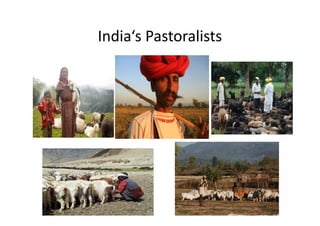
India‘s Pastoralists
Inefficient?
India is the world's largest exporter of sheep
and goat meat – 23 MT valued at almost 7000
million Indian Rupees in 2013.
Feeding UAE, Saudi Arabia, Qatar, Kuwait, and
Oman…..
India is the world's largest exporter of sheep
and goat meat – 23 MT valued at almost 7000
million Indian Rupees in 2013.
Feeding UAE, Saudi Arabia, Qatar, Kuwait, and
Oman…..
India's livestock lagging behind?
• World‘s largest milk producer
• World‘s largest exporter of buffalo meat
feeding Southeast Asia and Arab countries
Most of it produced in "traditional" systems
with hardly any resource inputs, just by
harvesting naturally available biomass.
• World‘s largest milk producer
• World‘s largest exporter of buffalo meat
feeding Southeast Asia and Arab countries
Most of it produced in "traditional" systems
with hardly any resource inputs, just by
harvesting naturally available biomass.
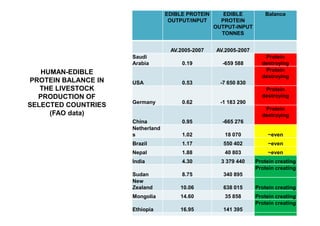
HUMAN-EDIBLE
PROTEIN BALANCE IN
THE LIVESTOCK
PRODUCTION OF
SELECTED COUNTRIES
(FAO data)
EDIBLE PROTEIN
OUTPUT/INPUT
EDIBLE
PROTEIN
OUTPUT-INPUT
TONNES
Balance
AV.2005-2007 AV.2005-2007
Saudi
Arabia 0.19 -659 588
Protein
destroying
USA 0.53 -7 650 830
Protein
destroying
Germany 0.62 -1 183 290
Protein
destroying
Protein
destroying
HUMAN-EDIBLE
PROTEIN BALANCE IN
THE LIVESTOCK
PRODUCTION OF
SELECTED COUNTRIES
(FAO data)
China 0.95 -665 276
Protein
destroying
Netherland
s 1.02 18 070 ~even
Brazil 1.17 550 402 ~even
Nepal 1.88 40 803 ~even
India 4.30 3 379 440 Protein creating
Sudan 8.75 340 895
Protein creating
New
Zealand 10.06 638 015 Protein creating
Mongolia 14.60 35 858 Protein creating
Ethiopia 16.95 141 395
Protein creating
Kenya 21.16 202 803 Protein creating
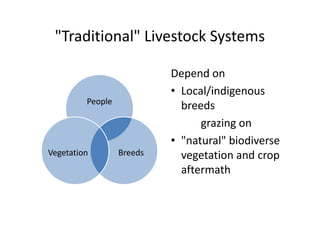
"Traditional" Livestock Systems
People
Depend on
• Local/indigenous
breeds
grazing on
• "natural" biodiverse
vegetation and crop
aftermath
BreedsVegetation
Depend on
• Local/indigenous
breeds
grazing on
• "natural" biodiverse
vegetation and crop
aftermath
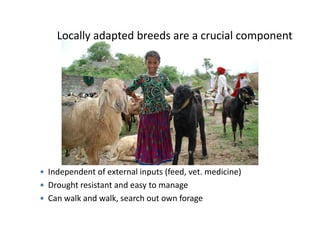
Locally adapted breeds are a crucial component
 Independent of external inputs (feed, vet. medicine)
 Drought resistant and easy to manage
 Can walk and walk, search out own forage
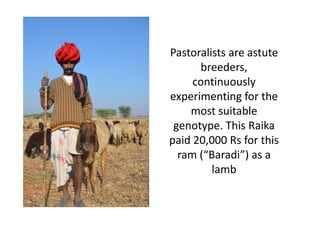
Pastoralists are astute
breeders,
continuously
experimenting for the
most suitable
genotype. This Raika
paid 20,000 Rs for this
ram (“Baradi”) as a
lamb
Pastoralists are astute
breeders,
continuously
experimenting for the
most suitable
genotype. This Raika
paid 20,000 Rs for this
ram (“Baradi”) as a
lamb
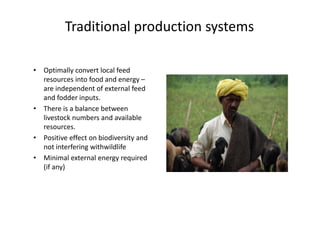
Traditional production systems
• Optimally convert local feed
resources into food and energy –
are independent of external feed
and fodder inputs.
• There is a balance between
livestock numbers and available
resources.
• Positive effect on biodiversity and
not interfering withwildlife
• Minimal external energy required
(if any)
• Optimally convert local feed
resources into food and energy –
are independent of external feed
and fodder inputs.
• There is a balance between
livestock numbers and available
resources.
• Positive effect on biodiversity and
not interfering withwildlife
• Minimal external energy required
(if any)
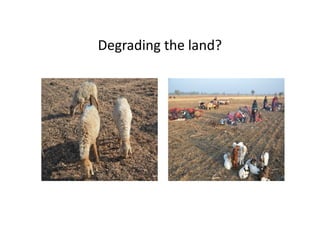
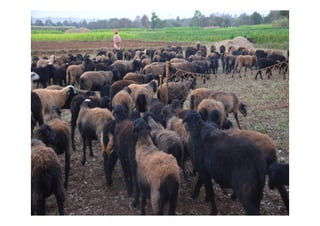
Degrading the land?
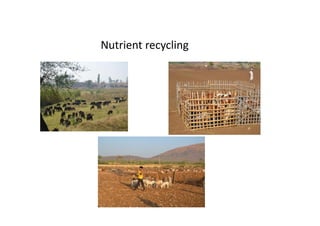
Nutrient recycling
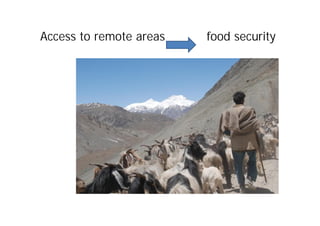
Access to remote areas food security
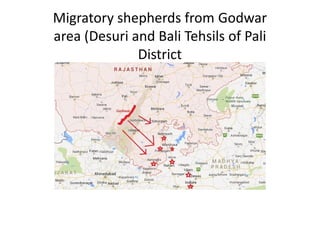
Migratory shepherds from Godwar
area (Desuri and Bali Tehsils of Pali
District
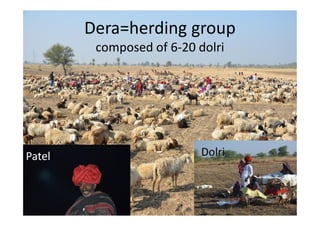
Dera=herding group
composed of 6-20 dolri
DolriPatell
Poor?
Income and meat output of sample
area• Min. 40 deras with an average of 3500 ewes= ca.
140,000 ewes.
• These produce ca. 30,000 saleable male lambs@ Rs.
2500= Rs. 75,000,000,
• 11kg liveweight for a 2-3 months old lamb= 330,000
kg live weight
• With a dressing percentage of around 50%, this
would mean 165,000 kg of meat from lambs
• All this meat would have been produced without
any use of non-renewable resources (fertilizer,
tractor fuel, transportation of feed, etc.).
• Min. 40 deras with an average of 3500 ewes= ca.
140,000 ewes.
• These produce ca. 30,000 saleable male lambs@ Rs.
2500= Rs. 75,000,000,
• 11kg liveweight for a 2-3 months old lamb= 330,000
kg live weight
• With a dressing percentage of around 50%, this
would mean 165,000 kg of meat from lambs
• All this meat would have been produced without
any use of non-renewable resources (fertilizer,
tractor fuel, transportation of feed, etc.).
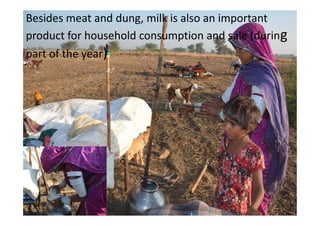
Besides meat and dung, milk is also an important
product for household consumption and sale (during
part of the year)
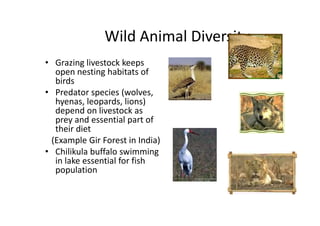
Wild Animal Diversity
• Grazing livestock keeps
open nesting habitats of
birds
• Predator species (wolves,
hyenas, leopards, lions)
depend on livestock as
prey and essential part of
their diet
(Example Gir Forest in India)
• Chilikula buffalo swimming
in lake essential for fish
population
• Grazing livestock keeps
open nesting habitats of
birds
• Predator species (wolves,
hyenas, leopards, lions)
depend on livestock as
prey and essential part of
their diet
(Example Gir Forest in India)
• Chilikula buffalo swimming
in lake essential for fish
population
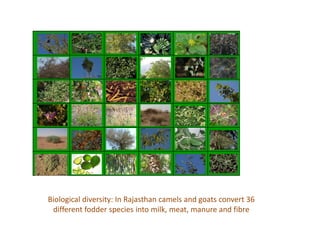
Biological diversity: In Rajasthan camels and goats convert 36
different fodder species into milk, meat, manure and fibre
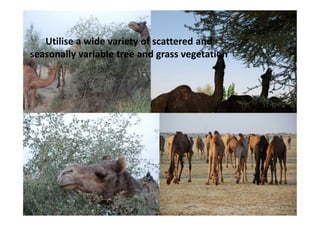
Utilise a wide variety of scattered and
seasonally variable tree and grass vegetation
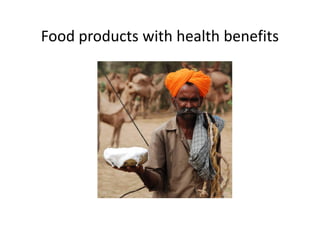
Food products with health benefits
•
The prevailing livestock developent
approach
• Encourages livestock keepers/farmers to
switch to more “productive breeds” and to
adopt “modern technologies”.
• Promotes the concept that higher yielding
animals are automatically more profitable.
• Encourages livestock keepers/farmers to
switch to more “productive breeds” and to
adopt “modern technologies”.
• Promotes the concept that higher yielding
animals are automatically more profitable.
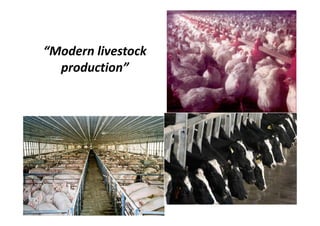
“Modern livestock
production”
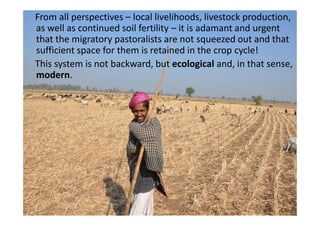
From all perspectives – local livelihoods, livestock production,
as well as continued soil fertility – it is adamant and urgent
that the migratory pastoralists are not squeezed out and that
sufficient space for them is retained in the crop cycle!
This system is not backward, but ecological and, in that sense,
modern.
Ecologically and sustainable livestock
development in marginal areas
Would
• Recognize and acknowledge the value of
the "traditional" systems
• Facilitate and support mobility
• Protect and provide services to pastoralists
• Ensure space and protect the customary
rights of pastoralists
Would
• Recognize and acknowledge the value of
the "traditional" systems
• Facilitate and support mobility
• Protect and provide services to pastoralists
• Ensure space and protect the customary
rights of pastoralists
• How do we change perceptions among policy
makers, bureaucrats and even livestock keepers
that local breeds and associated traditional
knowledge are valuable assets?
• How do we counter threats such as shrinking
grazing lands, disintegration of traditional
institutions and knowledge, lack of respect by
outsiders?
• How do we change perceptions among policy
makers, bureaucrats and even livestock keepers
that local breeds and associated traditional
knowledge are valuable assets?
• How do we counter threats such as shrinking
grazing lands, disintegration of traditional
institutions and knowledge, lack of respect by
outsiders?
Article 8j of UN Convention on
Biological Diversity
• „Contracting parties shall…subject to
national legislation, respect, preserve and
maintain knowledge innovations and
practices of indigenous and local
communities embodying traditional
lifestyles relevant for the conservation and
sustainable use of biological diversity…..“
.
• „Contracting parties shall…subject to
national legislation, respect, preserve and
maintain knowledge innovations and
practices of indigenous and local
communities embodying traditional
lifestyles relevant for the conservation and
sustainable use of biological diversity…..“
.
Article 10: Contracting parties shall..
• c. Protect and encourage customary use of biological
resources in accordance with traditional cultural practices
that are compatible with conservation and sustainable use
requirements
• d. Support local populations to develop and implement
remedial action in degraded areas where biological
diversity has been reduced
• c. Protect and encourage customary use of biological
resources in accordance with traditional cultural practices
that are compatible with conservation and sustainable use
requirements
• d. Support local populations to develop and implement
remedial action in degraded areas where biological
diversity has been reduced
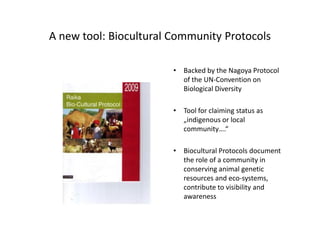
A new tool: Biocultural Community Protocols
• Backed by the Nagoya Protocol
of the UN-Convention on
Biological Diversity
• Tool for claiming status as
„indigenous or local
community….“
• Biocultural Protocols document
the role of a community in
conserving animal genetic
resources and eco-systems,
contribute to visibility and
awareness
• Backed by the Nagoya Protocol
of the UN-Convention on
Biological Diversity
• Tool for claiming status as
„indigenous or local
community….“
• Biocultural Protocols document
the role of a community in
conserving animal genetic
resources and eco-systems,
contribute to visibility and
awareness
Biocultural Protocols
• are a tool for documenting bio-assets, production
systems, products.
• give a voice to pastoralists and other small-scale
livestock keepers.
• raise awareness about culture and tradition to address
challenges, such as cross breeding and product
innovations
• Invoke rights (grazing, breeding)
• Generate information exchange and communication
with other stakeholders
• are a tool for documenting bio-assets, production
systems, products.
• give a voice to pastoralists and other small-scale
livestock keepers.
• raise awareness about culture and tradition to address
challenges, such as cross breeding and product
innovations
• Invoke rights (grazing, breeding)
• Generate information exchange and communication
with other stakeholders
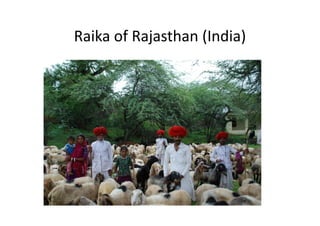
Raika of Rajasthan (India)
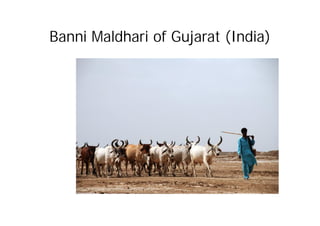
Banni Maldhari of Gujarat (India)
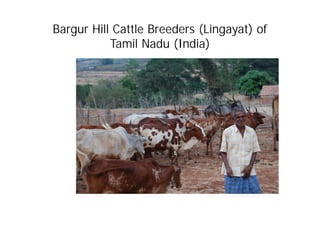
Bargur Hill Cattle Breeders (Lingayat) of
Tamil Nadu (India)
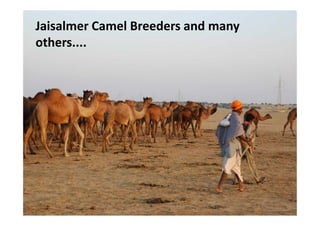
Jaisalmer Camel Breeders and many
others....
Possible benefits and incentives for
livestock keepers
• Monetary rewards at national level through
payments for environmental services, such as
carbon sequestration and biodiversity
conservation.
• Provision of an enabling environment that
supports them to continue their livelihood and
breed conservation activities (livestock
keepers rights, grazing rights, services).
• Support for developing a special label for
livestock products from bio-diversity based
production systems (“Ark of Bio-diversity”)
• Monetary rewards at national level through
payments for environmental services, such as
carbon sequestration and biodiversity
conservation.
• Provision of an enabling environment that
supports them to continue their livelihood and
breed conservation activities (livestock
keepers rights, grazing rights, services).
• Support for developing a special label for
livestock products from bio-diversity based
production systems (“Ark of Bio-diversity”)
Conclusion
Livestock mantra is "more with less"
Sustainable intensification
Pastoralists produce "everything with
nothing"
Extensification !
Livestock mantra is "more with less"
Sustainable intensification
Pastoralists produce "everything with
nothing"
Extensification !
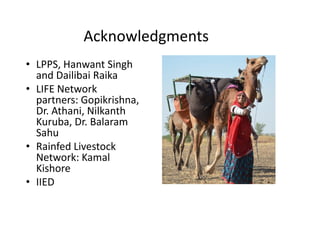
Acknowledgments
• LPPS, Hanwant Singh
and Dailibai Raika
• LIFE Network
partners: Gopikrishna,
Dr. Athani, Nilkanth
Kuruba, Dr. Balaram
Sahu
• Rainfed Livestock
Network: Kamal
Kishore
• IIED
• LPPS, Hanwant Singh
and Dailibai Raika
• LIFE Network
partners: Gopikrishna,
Dr. Athani, Nilkanth
Kuruba, Dr. Balaram
Sahu
• Rainfed Livestock
Network: Kamal
Kishore
• IIED
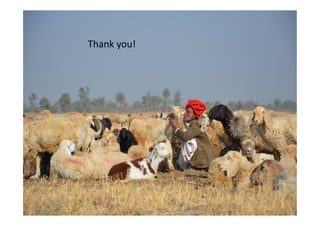
Thank you!

Livestock development in marginal areas

  • 1.
    Ecologically and sociallysustainable livestock development in marginal areas Ilse Köhler-Rollefson 23 rd International Grasslands Conference, Delhi Ecologically and socially sustainable livestock development in marginal areas Ilse Köhler-Rollefson 23 rd International Grasslands Conference, Delhi
  • 2.
    people are poor, theland is overgrazed and degraded…. the livestock inefficient…. the system unproductive…. "We need to show them how to improve" Marginal areas = problem areas people are poor, the land is overgrazed and degraded…. the livestock inefficient…. the system unproductive…. "We need to show them how to improve"
  • 3.
    people are poor, theland is overgrazed the livestock inefficient the system unproductive "We need to show them how to improve" Marginal areas = problem areas people are poor, the land is overgrazed the livestock inefficient the system unproductive "We need to show them how to improve"
  • 4.
    Purpose of thispaper: to reevaluate these assumptions and show that India's pastoralists are • amazingly efficient food producers • do not degrade and instead enhance the land • are usually not poor to reevaluate these assumptions and show that India's pastoralists are • amazingly efficient food producers • do not degrade and instead enhance the land • are usually not poor
  • 5.
  • 6.
    Inefficient? India is theworld's largest exporter of sheep and goat meat – 23 MT valued at almost 7000 million Indian Rupees in 2013. Feeding UAE, Saudi Arabia, Qatar, Kuwait, and Oman….. India is the world's largest exporter of sheep and goat meat – 23 MT valued at almost 7000 million Indian Rupees in 2013. Feeding UAE, Saudi Arabia, Qatar, Kuwait, and Oman…..
  • 7.
    India's livestock laggingbehind? • World‘s largest milk producer • World‘s largest exporter of buffalo meat feeding Southeast Asia and Arab countries Most of it produced in "traditional" systems with hardly any resource inputs, just by harvesting naturally available biomass. • World‘s largest milk producer • World‘s largest exporter of buffalo meat feeding Southeast Asia and Arab countries Most of it produced in "traditional" systems with hardly any resource inputs, just by harvesting naturally available biomass.
  • 8.
    HUMAN-EDIBLE PROTEIN BALANCE IN THELIVESTOCK PRODUCTION OF SELECTED COUNTRIES (FAO data) EDIBLE PROTEIN OUTPUT/INPUT EDIBLE PROTEIN OUTPUT-INPUT TONNES Balance AV.2005-2007 AV.2005-2007 Saudi Arabia 0.19 -659 588 Protein destroying USA 0.53 -7 650 830 Protein destroying Germany 0.62 -1 183 290 Protein destroying Protein destroying HUMAN-EDIBLE PROTEIN BALANCE IN THE LIVESTOCK PRODUCTION OF SELECTED COUNTRIES (FAO data) China 0.95 -665 276 Protein destroying Netherland s 1.02 18 070 ~even Brazil 1.17 550 402 ~even Nepal 1.88 40 803 ~even India 4.30 3 379 440 Protein creating Sudan 8.75 340 895 Protein creating New Zealand 10.06 638 015 Protein creating Mongolia 14.60 35 858 Protein creating Ethiopia 16.95 141 395 Protein creating Kenya 21.16 202 803 Protein creating
  • 9.
    "Traditional" Livestock Systems People Dependon • Local/indigenous breeds grazing on • "natural" biodiverse vegetation and crop aftermath BreedsVegetation Depend on • Local/indigenous breeds grazing on • "natural" biodiverse vegetation and crop aftermath
  • 10.
    Locally adapted breedsare a crucial component  Independent of external inputs (feed, vet. medicine)  Drought resistant and easy to manage  Can walk and walk, search out own forage
  • 11.
    Pastoralists are astute breeders, continuously experimentingfor the most suitable genotype. This Raika paid 20,000 Rs for this ram (“Baradi”) as a lamb Pastoralists are astute breeders, continuously experimenting for the most suitable genotype. This Raika paid 20,000 Rs for this ram (“Baradi”) as a lamb
  • 12.
    Traditional production systems •Optimally convert local feed resources into food and energy – are independent of external feed and fodder inputs. • There is a balance between livestock numbers and available resources. • Positive effect on biodiversity and not interfering withwildlife • Minimal external energy required (if any) • Optimally convert local feed resources into food and energy – are independent of external feed and fodder inputs. • There is a balance between livestock numbers and available resources. • Positive effect on biodiversity and not interfering withwildlife • Minimal external energy required (if any)
  • 13.
  • 15.
  • 16.
    Access to remoteareas food security
  • 17.
    Migratory shepherds fromGodwar area (Desuri and Bali Tehsils of Pali District
  • 18.
    Dera=herding group composed of6-20 dolri DolriPatell
  • 19.
    Poor? Income and meatoutput of sample area• Min. 40 deras with an average of 3500 ewes= ca. 140,000 ewes. • These produce ca. 30,000 saleable male lambs@ Rs. 2500= Rs. 75,000,000, • 11kg liveweight for a 2-3 months old lamb= 330,000 kg live weight • With a dressing percentage of around 50%, this would mean 165,000 kg of meat from lambs • All this meat would have been produced without any use of non-renewable resources (fertilizer, tractor fuel, transportation of feed, etc.). • Min. 40 deras with an average of 3500 ewes= ca. 140,000 ewes. • These produce ca. 30,000 saleable male lambs@ Rs. 2500= Rs. 75,000,000, • 11kg liveweight for a 2-3 months old lamb= 330,000 kg live weight • With a dressing percentage of around 50%, this would mean 165,000 kg of meat from lambs • All this meat would have been produced without any use of non-renewable resources (fertilizer, tractor fuel, transportation of feed, etc.).
  • 20.
    Besides meat anddung, milk is also an important product for household consumption and sale (during part of the year)
  • 21.
    Wild Animal Diversity •Grazing livestock keeps open nesting habitats of birds • Predator species (wolves, hyenas, leopards, lions) depend on livestock as prey and essential part of their diet (Example Gir Forest in India) • Chilikula buffalo swimming in lake essential for fish population • Grazing livestock keeps open nesting habitats of birds • Predator species (wolves, hyenas, leopards, lions) depend on livestock as prey and essential part of their diet (Example Gir Forest in India) • Chilikula buffalo swimming in lake essential for fish population
  • 22.
    Biological diversity: InRajasthan camels and goats convert 36 different fodder species into milk, meat, manure and fibre
  • 23.
    Utilise a widevariety of scattered and seasonally variable tree and grass vegetation
  • 24.
    Food products withhealth benefits
  • 25.
  • 26.
    The prevailing livestockdevelopent approach • Encourages livestock keepers/farmers to switch to more “productive breeds” and to adopt “modern technologies”. • Promotes the concept that higher yielding animals are automatically more profitable. • Encourages livestock keepers/farmers to switch to more “productive breeds” and to adopt “modern technologies”. • Promotes the concept that higher yielding animals are automatically more profitable.
  • 27.
  • 28.
    From all perspectives– local livelihoods, livestock production, as well as continued soil fertility – it is adamant and urgent that the migratory pastoralists are not squeezed out and that sufficient space for them is retained in the crop cycle! This system is not backward, but ecological and, in that sense, modern.
  • 29.
    Ecologically and sustainablelivestock development in marginal areas Would • Recognize and acknowledge the value of the "traditional" systems • Facilitate and support mobility • Protect and provide services to pastoralists • Ensure space and protect the customary rights of pastoralists Would • Recognize and acknowledge the value of the "traditional" systems • Facilitate and support mobility • Protect and provide services to pastoralists • Ensure space and protect the customary rights of pastoralists
  • 30.
    • How dowe change perceptions among policy makers, bureaucrats and even livestock keepers that local breeds and associated traditional knowledge are valuable assets? • How do we counter threats such as shrinking grazing lands, disintegration of traditional institutions and knowledge, lack of respect by outsiders? • How do we change perceptions among policy makers, bureaucrats and even livestock keepers that local breeds and associated traditional knowledge are valuable assets? • How do we counter threats such as shrinking grazing lands, disintegration of traditional institutions and knowledge, lack of respect by outsiders?
  • 31.
    Article 8j ofUN Convention on Biological Diversity • „Contracting parties shall…subject to national legislation, respect, preserve and maintain knowledge innovations and practices of indigenous and local communities embodying traditional lifestyles relevant for the conservation and sustainable use of biological diversity…..“ . • „Contracting parties shall…subject to national legislation, respect, preserve and maintain knowledge innovations and practices of indigenous and local communities embodying traditional lifestyles relevant for the conservation and sustainable use of biological diversity…..“ .
  • 32.
    Article 10: Contractingparties shall.. • c. Protect and encourage customary use of biological resources in accordance with traditional cultural practices that are compatible with conservation and sustainable use requirements • d. Support local populations to develop and implement remedial action in degraded areas where biological diversity has been reduced • c. Protect and encourage customary use of biological resources in accordance with traditional cultural practices that are compatible with conservation and sustainable use requirements • d. Support local populations to develop and implement remedial action in degraded areas where biological diversity has been reduced
  • 33.
    A new tool:Biocultural Community Protocols • Backed by the Nagoya Protocol of the UN-Convention on Biological Diversity • Tool for claiming status as „indigenous or local community….“ • Biocultural Protocols document the role of a community in conserving animal genetic resources and eco-systems, contribute to visibility and awareness • Backed by the Nagoya Protocol of the UN-Convention on Biological Diversity • Tool for claiming status as „indigenous or local community….“ • Biocultural Protocols document the role of a community in conserving animal genetic resources and eco-systems, contribute to visibility and awareness
  • 34.
    Biocultural Protocols • area tool for documenting bio-assets, production systems, products. • give a voice to pastoralists and other small-scale livestock keepers. • raise awareness about culture and tradition to address challenges, such as cross breeding and product innovations • Invoke rights (grazing, breeding) • Generate information exchange and communication with other stakeholders • are a tool for documenting bio-assets, production systems, products. • give a voice to pastoralists and other small-scale livestock keepers. • raise awareness about culture and tradition to address challenges, such as cross breeding and product innovations • Invoke rights (grazing, breeding) • Generate information exchange and communication with other stakeholders
  • 35.
  • 36.
    Banni Maldhari ofGujarat (India)
  • 37.
    Bargur Hill CattleBreeders (Lingayat) of Tamil Nadu (India)
  • 38.
    Jaisalmer Camel Breedersand many others....
  • 39.
    Possible benefits andincentives for livestock keepers • Monetary rewards at national level through payments for environmental services, such as carbon sequestration and biodiversity conservation. • Provision of an enabling environment that supports them to continue their livelihood and breed conservation activities (livestock keepers rights, grazing rights, services). • Support for developing a special label for livestock products from bio-diversity based production systems (“Ark of Bio-diversity”) • Monetary rewards at national level through payments for environmental services, such as carbon sequestration and biodiversity conservation. • Provision of an enabling environment that supports them to continue their livelihood and breed conservation activities (livestock keepers rights, grazing rights, services). • Support for developing a special label for livestock products from bio-diversity based production systems (“Ark of Bio-diversity”)
  • 40.
    Conclusion Livestock mantra is"more with less" Sustainable intensification Pastoralists produce "everything with nothing" Extensification ! Livestock mantra is "more with less" Sustainable intensification Pastoralists produce "everything with nothing" Extensification !
  • 41.
    Acknowledgments • LPPS, HanwantSingh and Dailibai Raika • LIFE Network partners: Gopikrishna, Dr. Athani, Nilkanth Kuruba, Dr. Balaram Sahu • Rainfed Livestock Network: Kamal Kishore • IIED • LPPS, Hanwant Singh and Dailibai Raika • LIFE Network partners: Gopikrishna, Dr. Athani, Nilkanth Kuruba, Dr. Balaram Sahu • Rainfed Livestock Network: Kamal Kishore • IIED
  • 42.