SUBMITTED TO:-
SIR AWAIS ANSARI.
SUBMITTED BY:-
 ALI RAZA
 DAWOOD SABBIR
 HAMZA
SUBJECT:-
CLINICAL BIOCHEMISTRY……
DEPARTMENT:-
BS MLT(4TH
)….
LYALLPUR INSTITUDE OF MANAGEMENT SCIENCES FSD…….
Liver function test(LFT)
AND
BILIRUBIN
LFT:
 A liver function test is a blood test that helps access the
health of your liver by measuring the levels your liver by
measuring the levels of various enzymes, proteins ,and
substances ,produces by the liver.
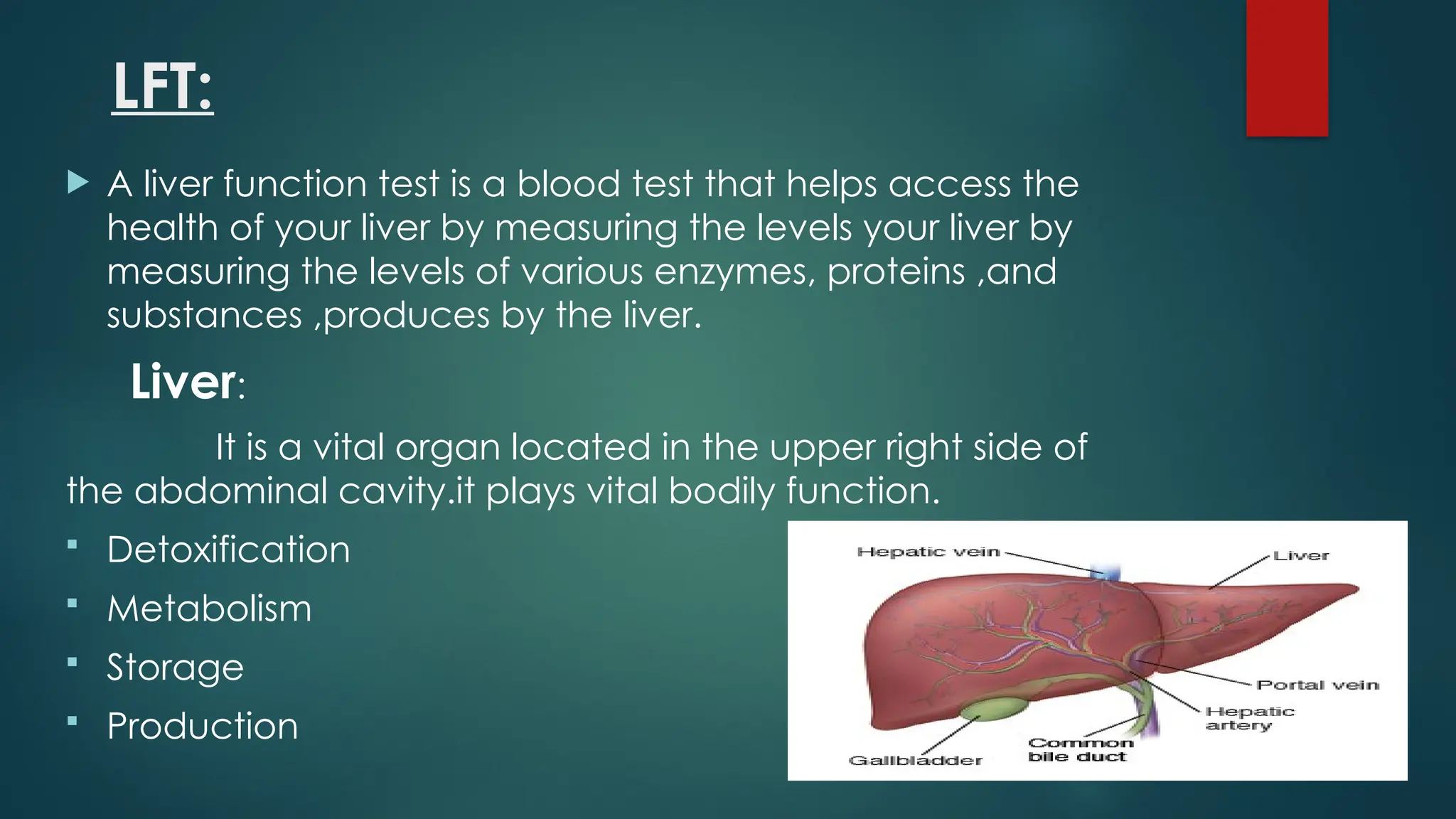
Liver:
It is a vital organ located in the upper right side of
the abdominal cavity.it plays vital bodily function.
 Detoxification
 Metabolism
 Storage
 Production
STRUCTURE:
IT has ;
 Bile ducts
 Lobes
 Hepatocytes
Diseases:
Some diseases related to liver are;
a)Hepatitis c) fatty liver diseases
b)Cirrhosis d) liver failure/cancer.
Components OF liver test:
It includes;
Alanine aminotransferase(ALT)
 Aspartate aminotransferase(AST)
 Alkaline phosphatase(ALP)
 Gamma glutamyl transferase.
 Bilirubin
Alanine Aminotransferase:
 It is an enzyme found in liver, with smaller amounts in the
kidneys heart ,and muscle.it is a sensitive indicator liver
diseases or damage it is released in blood stream when liver
is damaged.
it play crucial function as;
 Amino acid production
 Energy production
NORMAL VALUES:
Male =10-40 U/L
Female =7-35 U/L
ELEVATION IN ALT includes;
Hepatitis (A,B,C,D,E)
LIVER Cirrhosis
Muscle damage.
Aspartate Aminotransferase:
 It is an enzyme found in various tissues , it is also the
marker of tissue damage.
 Liver
 Heart
 Kidney
 Muscles
FUNCTIONS:
• Amino-acid metabolism
• Energy production
 Normal range:
Male =10-40 U/L
Female = 10-50U/L
Elevated AST LEVEL;
 LIVER damage(hepatitis, cirrhosis ,liver cancer)
 Heart damage
 Muscle damage
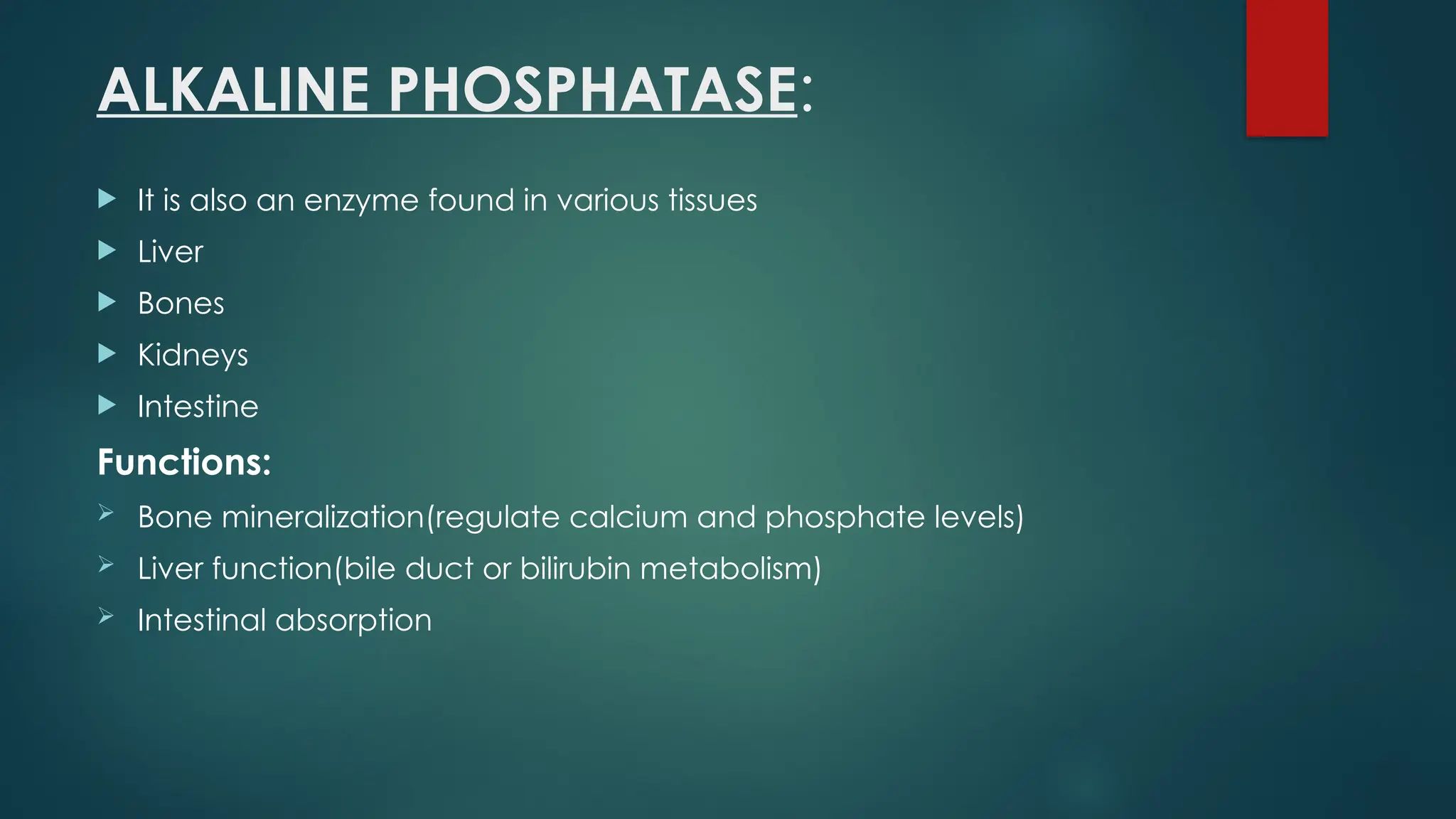
ALKALINE PHOSPHATASE:
 It is also an enzyme found in various tissues
 Liver
 Bones
 Kidneys
 Intestine
Functions:
 Bone mineralization(regulate calcium and phosphate levels)
 Liver function(bile duct or bilirubin metabolism)
 Intestinal absorption
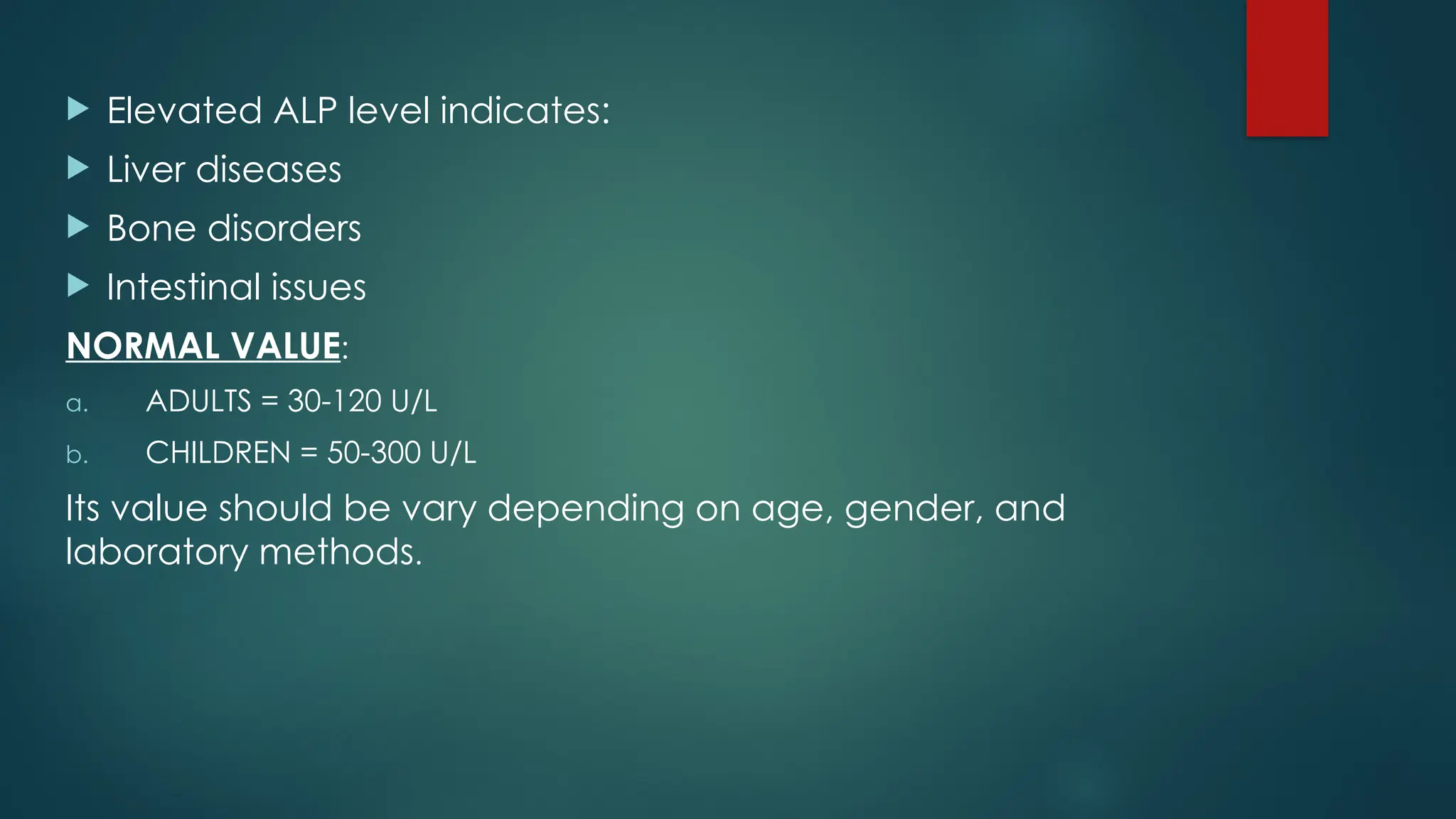
 Elevated ALP level indicates:
 Liver diseases
 Bone disorders
 Intestinal issues
NORMAL VALUE:
a. ADULTS = 30-120 U/L
b. CHILDREN = 50-300 U/L
Its value should be vary depending on age, gender, and
laboratory methods.
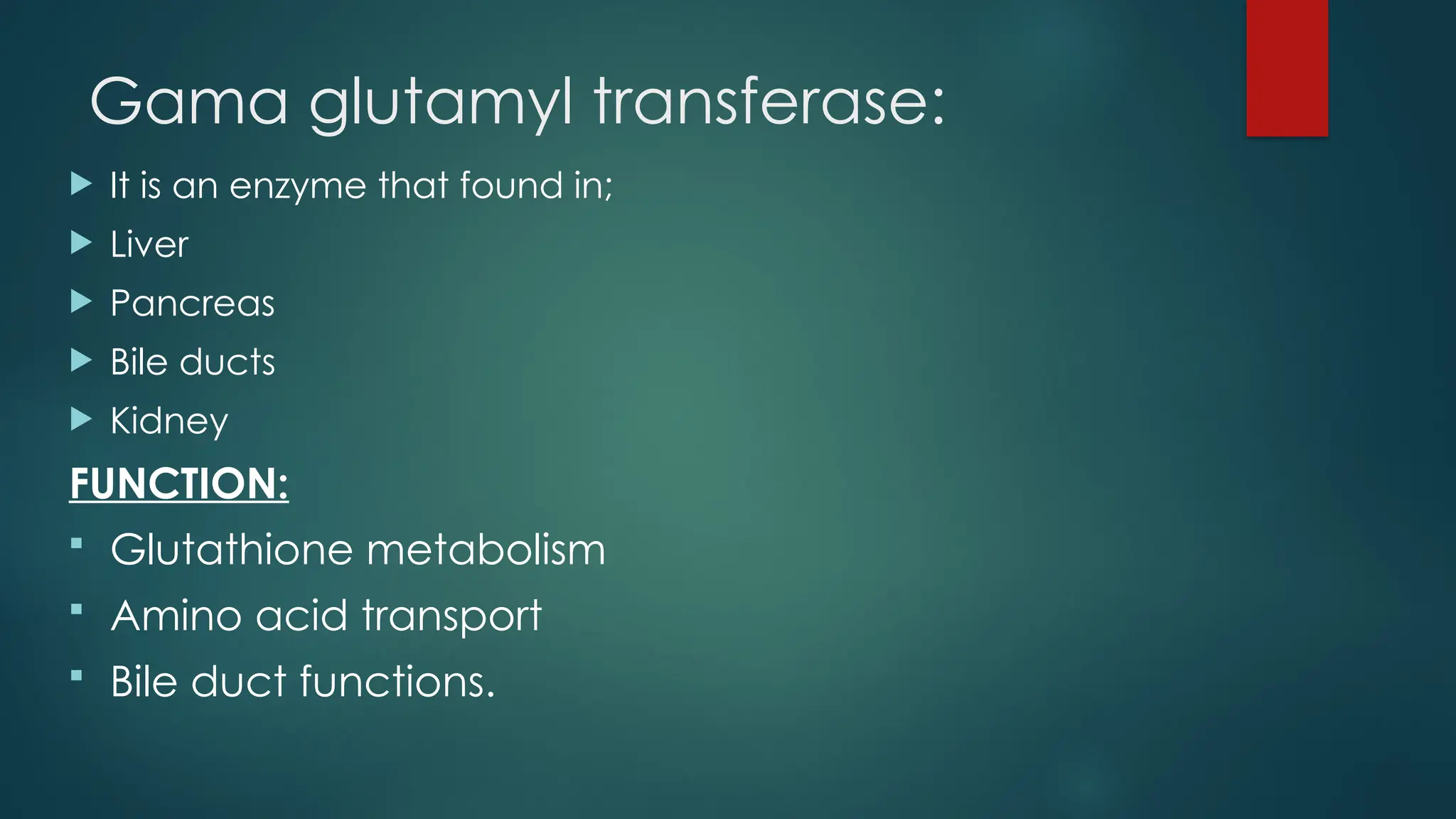
Gama glutamyl transferase:
 It is an enzyme that found in;
 Liver
 Pancreas
 Bile ducts
 Kidney
FUNCTION:
 Glutathione metabolism
 Amino acid transport
 Bile duct functions.
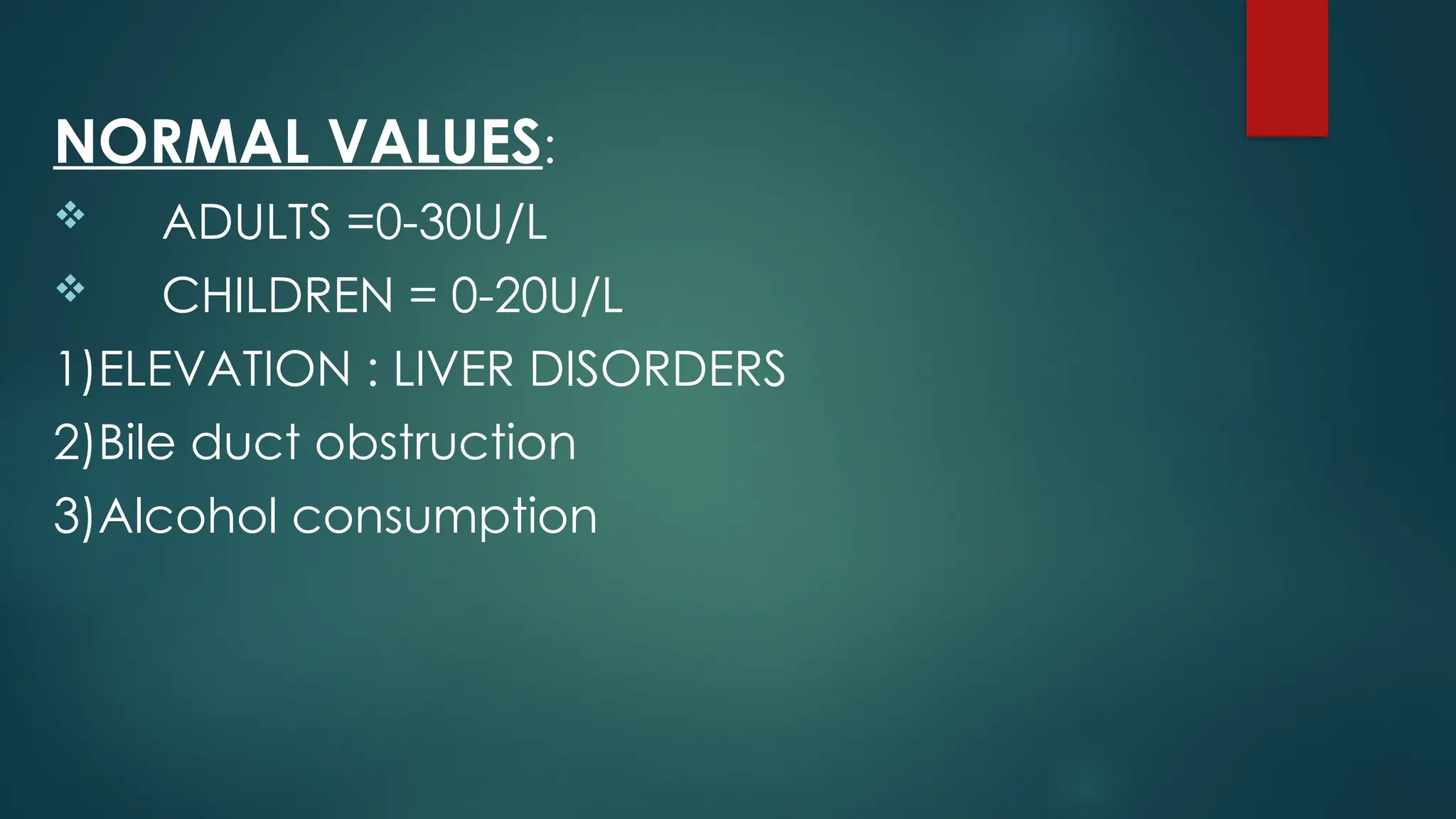
NORMAL VALUES:
 ADULTS =0-30U/L
 CHILDREN = 0-20U/L
1)ELEVATION : LIVER DISORDERS
2)Bile duct obstruction
3)Alcohol consumption
 GGT level vary depending on gender, age and laboratory
methods.
 GGT is used often used in conjunction with other liver enzymes
to;
1.Diagnose liver diseases
2.Detect alcoholic consumption.
Principle of LFT:
 IT Is to measure the;
1)Enzyme measurement:
 ALT
 AST
 ALP
 GGT
2)Bilirubin measurement;
 Measures the level of bilirubin.
 A pigment produced during the breakdown of hemoglobin,
which can accumulate in blood when liver is not function
properly.
3)Protein measurement
PROCEDURE:
 Medications: inform your doctor about your
medicine and supplements.
 Fasting : overnight fasting (8-12) hours.
Blood sample: Vein puncture
 Collect sample in appropriate tube
 Tube labeling
Laboratory analysis:
a)Centrifugation
b)Assay
c)Quality control
LFT parameters:
 ALT
 ALP
 AST
 BILIRUBIN
 GGT
 COMPLICATIONS OF LFT:
 Bleeding or brushing
 infection
 Fainting or dizziness
 Liver failure
 Cirrhosis
 Hepatic
 jaundice
Treatment for LFT:
Medications
Ditery changes
Lifestyle modifications
Surgery.
BILIRUBIN:
 Bilirubin is a yellow pigment produced during
breakdown of hemoglobin in red blood cells.
FORMATION:
 Red blood cells are broken down in spleen
 Hemoglobin is released and converted into
biliverdin
 Biliverdin is then converted into bilirubin.
Types of bilirubin:
There are two different types of bilirubin;
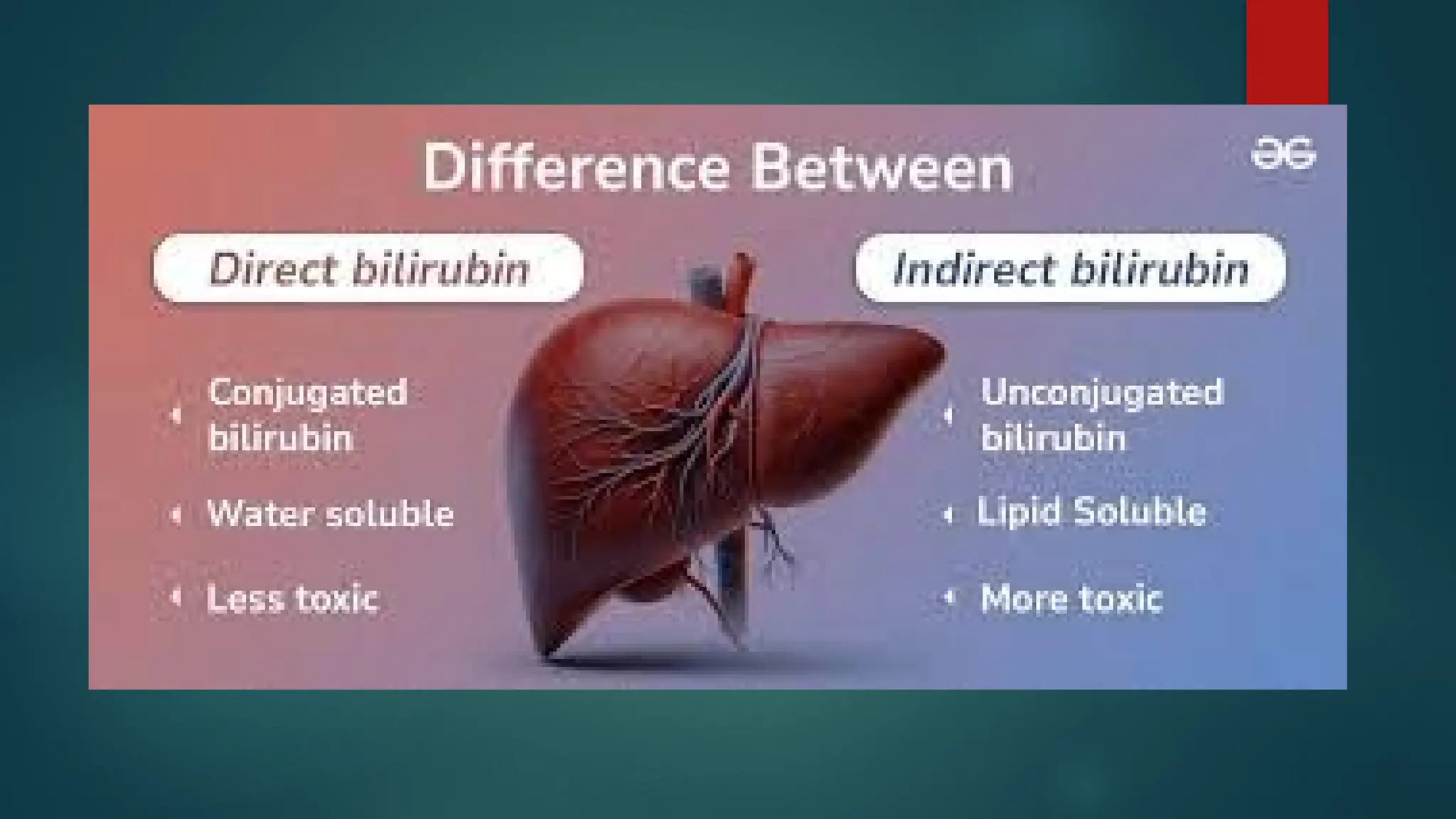
a) Direct bilirubin (conjugated)
b) Indirect bilirubin(unconjugated )
1)Unconjugated bilirubin:
 Produced from the breakdown of hemoglobin in red blood
cells.
 Fat soluble and bound to albumin in the blood.
 Cannot be excreted in urine or bile due to its insolubility in
water.
 Converted to conjugated bilirubin in the liver.
Conjugated bilirubin:
 Produced in liver from unconjugated bilirubin
 Water-soluble and can be excreted in urine
and bile
 Can be measurement directly in blood tests
 Elevated levels indicate liver dysfunction or
bile duct obstruction
Function of bilirubin:
Antioxidant properties
Immune system
Protection against infections
Endogenous molecule
Normal values:
 Total bilirubin = 0.2-1.2 mg/dl
 Direct bilirubin =0.1-0.5 mg/dl
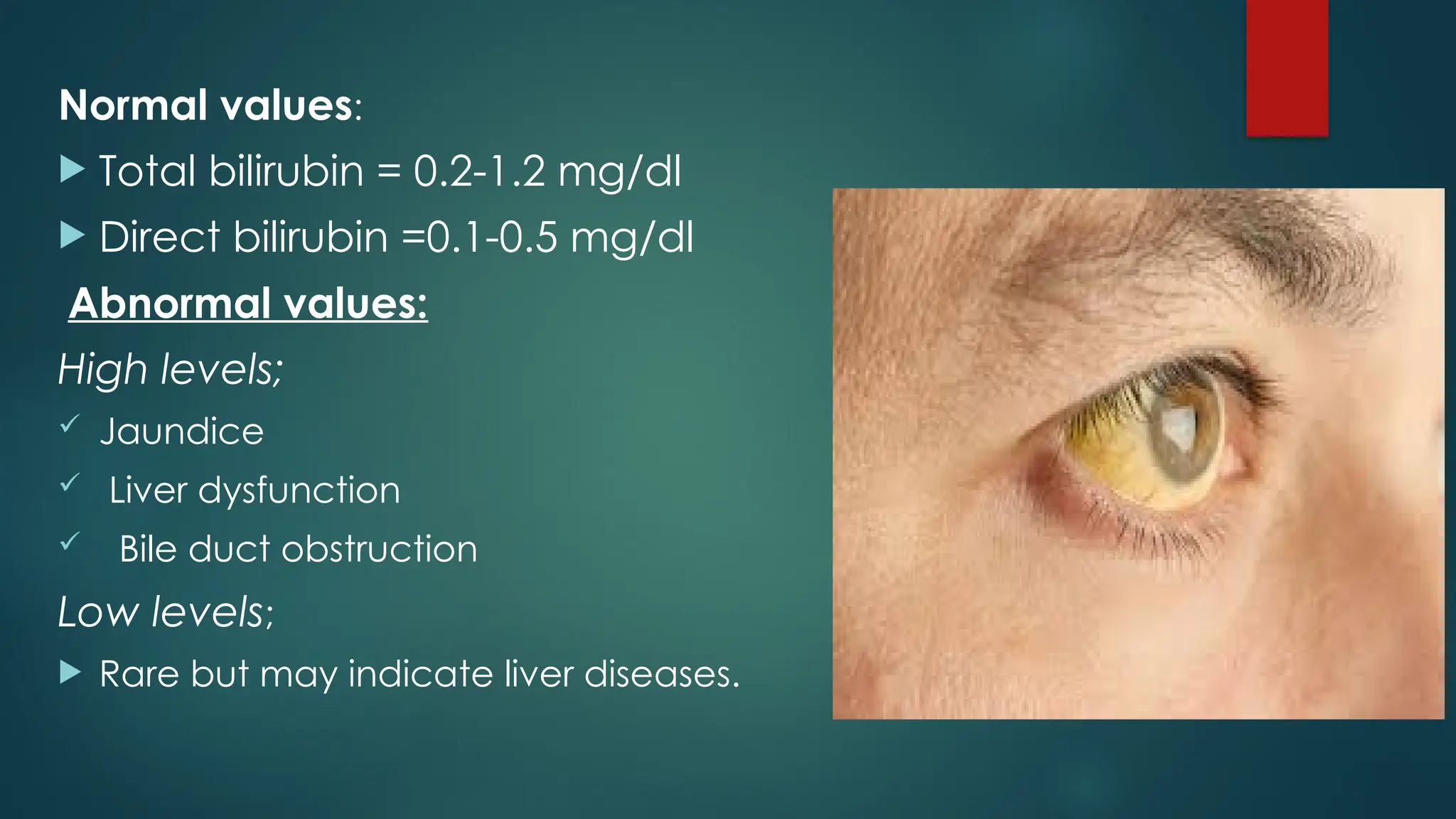
Abnormal values:
High levels;
 Jaundice
 Liver dysfunction
 Bile duct obstruction
Low levels;
 Rare but may indicate liver diseases.
Clinical significance:
Jaundice
Kernicterus
Liver diseases
Liver function test is completly explained

Liver function test is completly explained

  • 2.
    SUBMITTED TO:- SIR AWAISANSARI. SUBMITTED BY:-  ALI RAZA  DAWOOD SABBIR  HAMZA SUBJECT:- CLINICAL BIOCHEMISTRY…… DEPARTMENT:- BS MLT(4TH )…. LYALLPUR INSTITUDE OF MANAGEMENT SCIENCES FSD…….
  • 3.
  • 4.
    LFT:  A liverfunction test is a blood test that helps access the health of your liver by measuring the levels your liver by measuring the levels of various enzymes, proteins ,and substances ,produces by the liver. Liver: It is a vital organ located in the upper right side of the abdominal cavity.it plays vital bodily function.  Detoxification  Metabolism  Storage  Production
  • 5.
    STRUCTURE: IT has ; Bile ducts  Lobes  Hepatocytes Diseases: Some diseases related to liver are; a)Hepatitis c) fatty liver diseases b)Cirrhosis d) liver failure/cancer.
  • 6.
    Components OF livertest: It includes; Alanine aminotransferase(ALT)  Aspartate aminotransferase(AST)  Alkaline phosphatase(ALP)  Gamma glutamyl transferase.  Bilirubin
  • 7.
    Alanine Aminotransferase:  Itis an enzyme found in liver, with smaller amounts in the kidneys heart ,and muscle.it is a sensitive indicator liver diseases or damage it is released in blood stream when liver is damaged. it play crucial function as;  Amino acid production  Energy production NORMAL VALUES: Male =10-40 U/L Female =7-35 U/L
  • 8.
    ELEVATION IN ALTincludes; Hepatitis (A,B,C,D,E) LIVER Cirrhosis Muscle damage.
  • 9.
    Aspartate Aminotransferase:  Itis an enzyme found in various tissues , it is also the marker of tissue damage.  Liver  Heart  Kidney  Muscles FUNCTIONS: • Amino-acid metabolism • Energy production
  • 10.
     Normal range: Male=10-40 U/L Female = 10-50U/L Elevated AST LEVEL;  LIVER damage(hepatitis, cirrhosis ,liver cancer)  Heart damage  Muscle damage
  • 11.
    ALKALINE PHOSPHATASE:  Itis also an enzyme found in various tissues  Liver  Bones  Kidneys  Intestine Functions:  Bone mineralization(regulate calcium and phosphate levels)  Liver function(bile duct or bilirubin metabolism)  Intestinal absorption
  • 12.
     Elevated ALPlevel indicates:  Liver diseases  Bone disorders  Intestinal issues NORMAL VALUE: a. ADULTS = 30-120 U/L b. CHILDREN = 50-300 U/L Its value should be vary depending on age, gender, and laboratory methods.
  • 13.
    Gama glutamyl transferase: It is an enzyme that found in;  Liver  Pancreas  Bile ducts  Kidney FUNCTION:  Glutathione metabolism  Amino acid transport  Bile duct functions.
  • 14.
    NORMAL VALUES:  ADULTS=0-30U/L  CHILDREN = 0-20U/L 1)ELEVATION : LIVER DISORDERS 2)Bile duct obstruction 3)Alcohol consumption
  • 15.
     GGT levelvary depending on gender, age and laboratory methods.  GGT is used often used in conjunction with other liver enzymes to; 1.Diagnose liver diseases 2.Detect alcoholic consumption.
  • 16.
    Principle of LFT: IT Is to measure the; 1)Enzyme measurement:  ALT  AST  ALP  GGT 2)Bilirubin measurement;  Measures the level of bilirubin.  A pigment produced during the breakdown of hemoglobin, which can accumulate in blood when liver is not function properly.
  • 17.
    3)Protein measurement PROCEDURE:  Medications:inform your doctor about your medicine and supplements.  Fasting : overnight fasting (8-12) hours. Blood sample: Vein puncture  Collect sample in appropriate tube  Tube labeling
  • 18.
    Laboratory analysis: a)Centrifugation b)Assay c)Quality control LFTparameters:  ALT  ALP  AST  BILIRUBIN  GGT
  • 19.
     COMPLICATIONS OFLFT:  Bleeding or brushing  infection  Fainting or dizziness  Liver failure  Cirrhosis  Hepatic  jaundice
  • 20.
    Treatment for LFT: Medications Diterychanges Lifestyle modifications Surgery.
  • 21.
    BILIRUBIN:  Bilirubin isa yellow pigment produced during breakdown of hemoglobin in red blood cells. FORMATION:  Red blood cells are broken down in spleen  Hemoglobin is released and converted into biliverdin  Biliverdin is then converted into bilirubin.
  • 22.
    Types of bilirubin: Thereare two different types of bilirubin; a) Direct bilirubin (conjugated) b) Indirect bilirubin(unconjugated ) 1)Unconjugated bilirubin:  Produced from the breakdown of hemoglobin in red blood cells.  Fat soluble and bound to albumin in the blood.  Cannot be excreted in urine or bile due to its insolubility in water.  Converted to conjugated bilirubin in the liver.
  • 24.
    Conjugated bilirubin:  Producedin liver from unconjugated bilirubin  Water-soluble and can be excreted in urine and bile  Can be measurement directly in blood tests  Elevated levels indicate liver dysfunction or bile duct obstruction
  • 25.
    Function of bilirubin: Antioxidantproperties Immune system Protection against infections Endogenous molecule
  • 26.
    Normal values:  Totalbilirubin = 0.2-1.2 mg/dl  Direct bilirubin =0.1-0.5 mg/dl Abnormal values: High levels;  Jaundice  Liver dysfunction  Bile duct obstruction Low levels;  Rare but may indicate liver diseases.
  • 27.