• Literacy is commonly defined as “reading and
writing at a level adequate for
communication, or at a level that les one
understand and communicate ideas in a
literate society, so as to take part in that
society”.
• Give ELLs many opportunities to read, to
write, to listen to, and to discuss oral
and written English texts expressed in a variety
of ways.”
• The use of five writing/reading-facilitative e-
tools such as writeboard,wikis, webquests, and
e-books, to enhance an ELL’s literacy skills.
• It needs to be dynamic, multidimensional,
interrelated, and dialogic in nature.
• It needs to be centered on learning academic
language and becoming proficient in academic
discourses.
• It is seen as a crucial factor in increasing accessibility
to education, retention rates in schools, and
employment in the country.
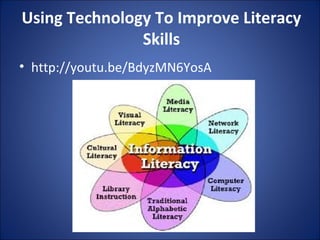
Using Technology To Improve Literacy
Skills
• http://youtu.be/BdyzMN6YosA
falling through the cracks
Many ELLs across the country
fail to reach age-appropriate
literacy levels because school
systems often fail to meet their
educational needs.
How can a teacher concentrate on
helping the one ELL in the classroom
if there are 25 other English
speaking, equally needy kids
clamoring for help?
It is a process writing e-tool.It is a web-based
space that can be shared in collaborative
projects, or edited by individual writers.
It allow ELLs to feel confortable sharing
ideas, making writing mistakes and editing
their classmates´work.
It is easy to organize writing projects with
like-level or with multiple-level student.
Basecamp
• Basecamp has become the world’s #1 project
management tool, it replaced writeboard.com
• https://basecamp.com/
EFL classroom Buzka is an online resource, it
suggests ways of using process writing e-tools
for working with ELLs.
http://eflclassroom.buzka.com/
Literacy Course acivities
• https://www.studyladder.com/learn/literacy
Literacy Course acivities
• https://www.studyladder.com/learn/literacy

Literacy skills

  • 2.
    • Literacy iscommonly defined as “reading and writing at a level adequate for communication, or at a level that les one understand and communicate ideas in a literate society, so as to take part in that society”.
  • 3.
    • Give ELLsmany opportunities to read, to write, to listen to, and to discuss oral and written English texts expressed in a variety of ways.” • The use of five writing/reading-facilitative e- tools such as writeboard,wikis, webquests, and e-books, to enhance an ELL’s literacy skills.
  • 4.
    • It needsto be dynamic, multidimensional, interrelated, and dialogic in nature. • It needs to be centered on learning academic language and becoming proficient in academic discourses. • It is seen as a crucial factor in increasing accessibility to education, retention rates in schools, and employment in the country.
  • 5.
    Using Technology ToImprove Literacy Skills • http://youtu.be/BdyzMN6YosA
  • 6.
    falling through thecracks Many ELLs across the country fail to reach age-appropriate literacy levels because school systems often fail to meet their educational needs. How can a teacher concentrate on helping the one ELL in the classroom if there are 25 other English speaking, equally needy kids clamoring for help?
  • 7.
    It is aprocess writing e-tool.It is a web-based space that can be shared in collaborative projects, or edited by individual writers. It allow ELLs to feel confortable sharing ideas, making writing mistakes and editing their classmates´work. It is easy to organize writing projects with like-level or with multiple-level student.
  • 8.
    Basecamp • Basecamp hasbecome the world’s #1 project management tool, it replaced writeboard.com • https://basecamp.com/ EFL classroom Buzka is an online resource, it suggests ways of using process writing e-tools for working with ELLs. http://eflclassroom.buzka.com/
  • 9.
    Literacy Course acivities •https://www.studyladder.com/learn/literacy
  • 10.
    Literacy Course acivities •https://www.studyladder.com/learn/literacy