BIC232: LIPID TRANSPORT.
By
EJIOFOR, C.C.
Department of Medical Biochemistry
College of Medicine,
University of Nigeria,
Enugu Campus
Email: nonso.ejiofor@unn.edu.ng
LIPID TRANSPORT
• Most of the lipids found in the body fall into the categories of fatty acids and
triacylglycerols (TAGs); glycerophospholipids and sphingolipids; eicosanoids;
cholesterol, bile salts, and steroid hormones; and fat-soluble vitamins.
• However, they are related by a common property, their relative insolubility in water. As
such, a transport system for distribution of major lipids is in place to aid in the
movement of these compounds.
• This system involves the family of lipoproteins, which have distinct roles in carrying
dietary lipids, lipids synthesized through de novo mechanism in the liver, and for
reverse cholesterol transport.
• Also, because of their low solubility in aqueous solutions such as blood plasma and
interstitial fluid, fatty acids are in need of binding proteins to increase their
concentration in vascular and interstitial compartments.
• Albumin acts as main fatty acid binding protein in extracellular fluids.
• The metabolism of lipids frequently requires that a particular lipid be transported in the
blood between different organs.
• Free fatty acids are transported by serum albumin, whereas the neutral lipids
(triacylglycerol and cholesteryl esters) are transported by lipoproteins.
LIPOPROTEINS
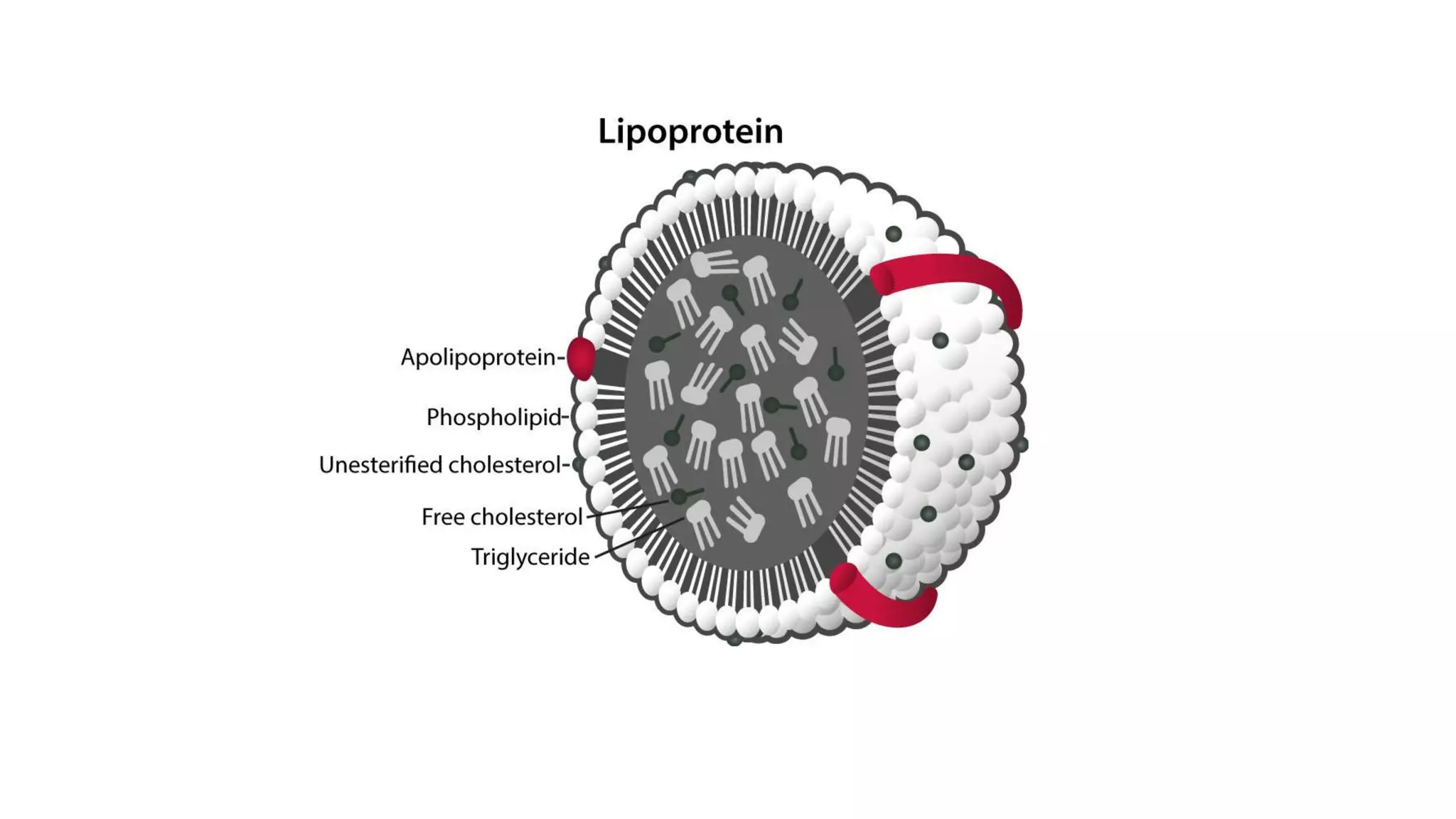
• Lipoproteins are molecular complexes of lipids and specific proteins called apolipoproteins.
• A lipoprotein is a biochemical assembly whose purpose is to transport hydrophobic lipid (a.k.a. fat)
molecules in water, as in blood or extracellular fluid. They have a single-layer phospholipid and
cholesterol outer shell, with the hydrophilic portions oriented outward toward the surrounding water and
lipophilic portions of each molecule oriented inwards toward the lipids molecules within the particles.
• Apolipoproteins are embedded in the membrane, both stabilising the complex and giving it functional identity
determining its fate. Thus the complex serves to emulsify the fats.
• All lipoproteins consist of a hydrophilic shell and a hydrophobic core.
• The hydrophilic shell contains proteins, phospholipids and unesterified cholesterol-amphipathic molecules
that interact favorably with both the aqueous environment and the inner core.
• The hydrophobic core contains the neutral lipids-triacylglycerol (TAG) and cholesterylesters (CE) which are
insoluble in water.
• Many enzymes, transporters, structural proteins, antigens, adhesions , and toxins are lipoproteins.
• Examples include the plasma lipoprotein particles classified as HDL, LDL, VLDL, and chylomicrons
lipoproteins, according to density / size (an inverse relationship), compared with the surrounding plasma
water.
• These complex protein capsules enable fats to be carried in all extracellular water, including the bloodstream.
APOLIPOPROTEINS
• Apolipoproteins are proteins that bind lipids (oil-soluble substances such as fat
and cholesterol) to form lipoproteins. They transport the lipids through
the lymphatic and circulatory systems.
• The lipid components of lipoproteins are insoluble in water.
• However, because of their detergent-like (amphipathic) properties, apolipoproteins and
other amphipathic molecules (such as phospholipids) can surround the lipids, creating
the lipoprotein particle that is itself water-soluble, and can thus be carried through
water-based circulation (i.e., blood, lymph).
Apolipoproteins have four major functions including;
• serving a structural role,
• acting as ligands(recognition sites) for lipoprotein receptors,
• guiding the formation of lipoproteins,
• serving as activators or inhibitors of enzymes involved in the metabolism of
lipoproteins.
Apolipoproteins thus play a crucial role in lipoprotein metabolism.
THE APOLIPOPROTEINS
• Apolipoprotein A-I (Apo A-I): is synthesized in the liver and intestine and is the
major structural protein of HDL accounting for approximately 70% of HDL protein.
• Apo A-I is an activator of lecithin: cholesterol acyltransferase (LCAT), an
enzyme that converts free cholesterol into cholesteryl ester in reverse cholesterol
transport.
• Apolipoprotein B-48 (Apo B-48): is synthesized in the intestine and is the major
structural protein of chylomicrons and chylomicron remnants.
• Apolipoprotein B-100 (Apo B-100) is synthesized in the liver and is the major
structural component of VLDL, IDL, and LDL. There is a single molecule of Apo
B-100 per VLDL, IDL, and LDL particle. Apo B-100 is a ligand for the LDL
receptor and therefore plays an important role in the clearance of lipoprotein
particles.
• Apo C-II is a co-factor for lipoprotein lipase (LPL) and thus stimulates triglyceride
hydrolysis.
• Apo-D: involved in reverse cholesterol transport
• Apo-E: is recognized by a receptor in the liver
CLASSES OF LIPOPROTEINS
• The four major classes of lipoprotein particles in the human serum include:
Chylomicrons:
• The initial digestive products, free fatty acids and 2-monoacylglycerol, are
reconverted to TAGs in intestinal epithelial cells, packaged in lipoproteins known as
chylomicrons, and secreted into the lymph.
• They are formed in the smooth endoplasmic reticulum of the intestinal mucosa cells
from dietary lipids, primarily triacylglycerol (TAGs),cholesteryl esters (CE) and
phospholipids.
• Chylomicrons are the largest lipoproteins, do not migrate in an electric field and
contain cholesterol and fat-soluble vitamins, in addition to their major component,
dietary TAGs.
• The major apoprotein associated with chylomicrons as they leave the intestinal cells is
ApoB-48. (The B-48 apoprotein is structurally and genetically related to the B-100
apoprotein synthesized in the liver that serves as a major protein of VLDL.).
• Apoprotein B-48 is unique to chylomicrons. It is termed B-48 because it contains only
48% of the entire apo B protein.
Chylomicrons
• Microsomal transfer protein (MTP) aids in the loading of apoB-48 protein onto the
chylomicron before the nascent chylomicron is secreted.
• Nascent chylomicrons are secreted by the intestinal epithelial cells into the chyle of
the lymphatic system and enter the blood through the thoracic duct.
• Nascent chylomicrons begin to enter the blood within one to two hours after the start
of a meal; as the meal is digested and absorbed, they continue to enter the blood for
many hours.
• Chylomicron maturation occurs in circulation as they accept additional apoproteins
from high-density lipoprotein (HDL).
• Once in the plasma, chylomicrons receive apo E (for liver recognition) and apo C-II
(for activation of lipoprotein lipase) thus making the chylomicrons functional.
• The TAGs in chylomicrons are cleaved by lipoprotein lipase, once activated by apo C-
II, predominantly in the capillaries of adipose and muscle tissues
• FFAs can directly enter adipose or muscle cells for storage or energy, or can be
transported on albumin to other parts of the body. Most cells can oxidize FFAs to
produce energy. Adipocytes can re-esterify FFAs to produce TAGs.
• Liberated glycerol is returned to the liver, where it is almost exclusively used to
produce glycerol-3-phosphate, which can enter glycolysis or gluconeogenesis.
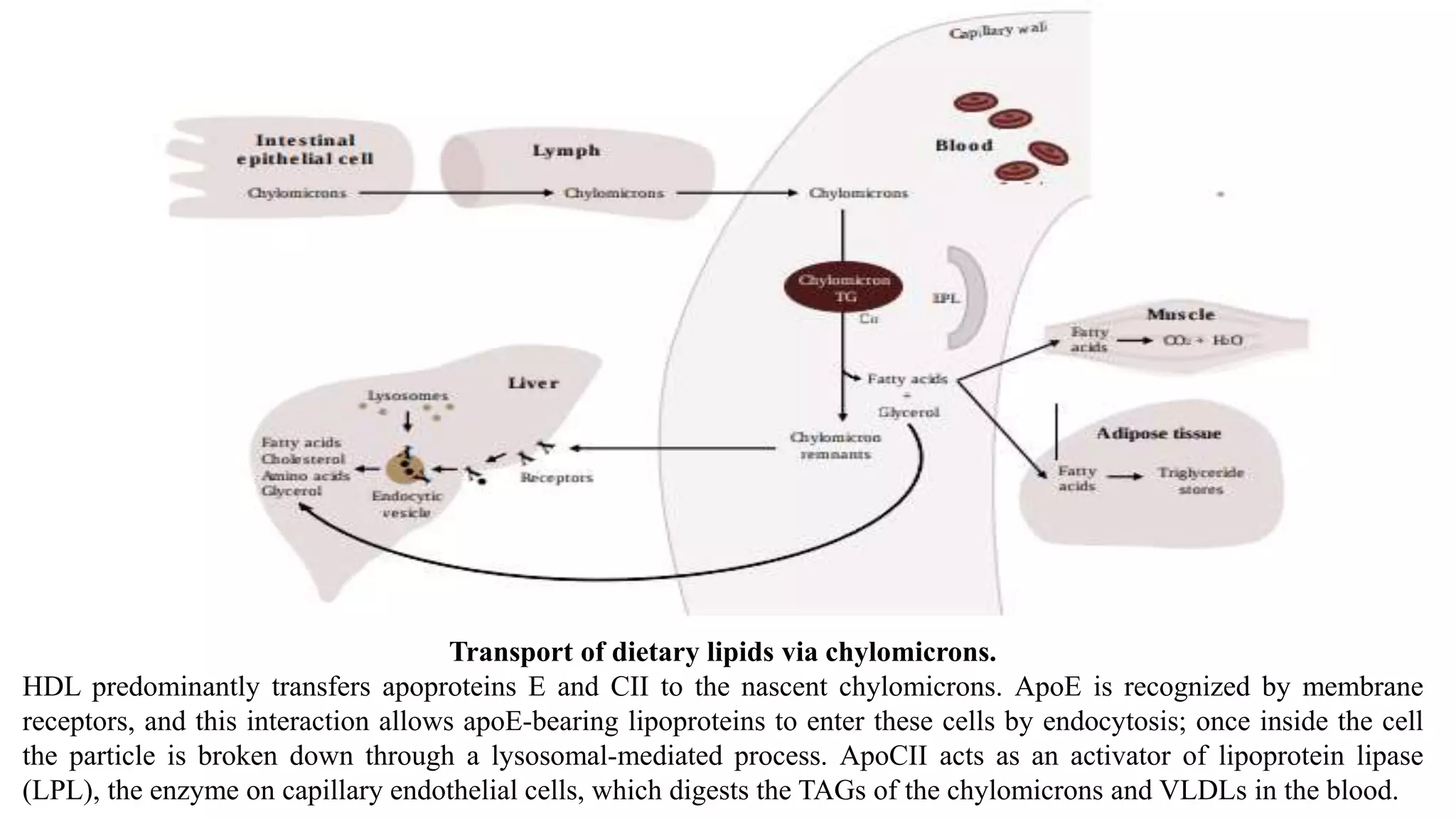
Transport of dietary lipids via chylomicrons.
HDL predominantly transfers apoproteins E and CII to the nascent chylomicrons. ApoE is recognized by membrane
receptors, and this interaction allows apoE-bearing lipoproteins to enter these cells by endocytosis; once inside the cell
the particle is broken down through a lysosomal-mediated process. ApoCII acts as an activator of lipoprotein lipase
(LPL), the enzyme on capillary endothelial cells, which digests the TAGs of the chylomicrons and VLDLs in the blood.
Fate of chylomicrons
• The TAGs transported by chylomicrons are hydrolyzed by lipoprotein lipase (LPL), an
enzyme present on endothelial cells that line the capillary walls.
• ApoCII on the chylomicron will interact with Lipoprotein Lipase (LPL) and activate the
enzyme. Insulin stimulates the synthesis and secretion of LPL so that after a meal, when
triglyceride levels increase in circulation, LPL is upregulated (through insulin release) to
facilitate the hydrolysis of fatty acids from the triglyceride.
• Therefore, adipose LPL is more active after a meal, when chylomicron levels are elevated in
the blood.
• The fatty acids released from TAGs by LPL are eventually repackaged in the adipose tissue
and stored as TAGs within the tissue.
• The portion of a chylomicron that remains in the blood after LPL action is known as a
chylomicron remnant.
• The remnant has returned (or lost) many of the apoC molecules bound to the mature
chylomicron, exposing apoE.
• The remaining remnant binds to apoE receptors on hepatocytes, and is taken up by the
process of endocytosis.
• Lysosomes fuse with the endocytic vesicles, and the chylomicron remnants are degraded by
lysosomal enzymes. The products released through this degradation process (e.g., amino
acids, fatty acids, cholesterol, etc.) can be recycled within the cell.
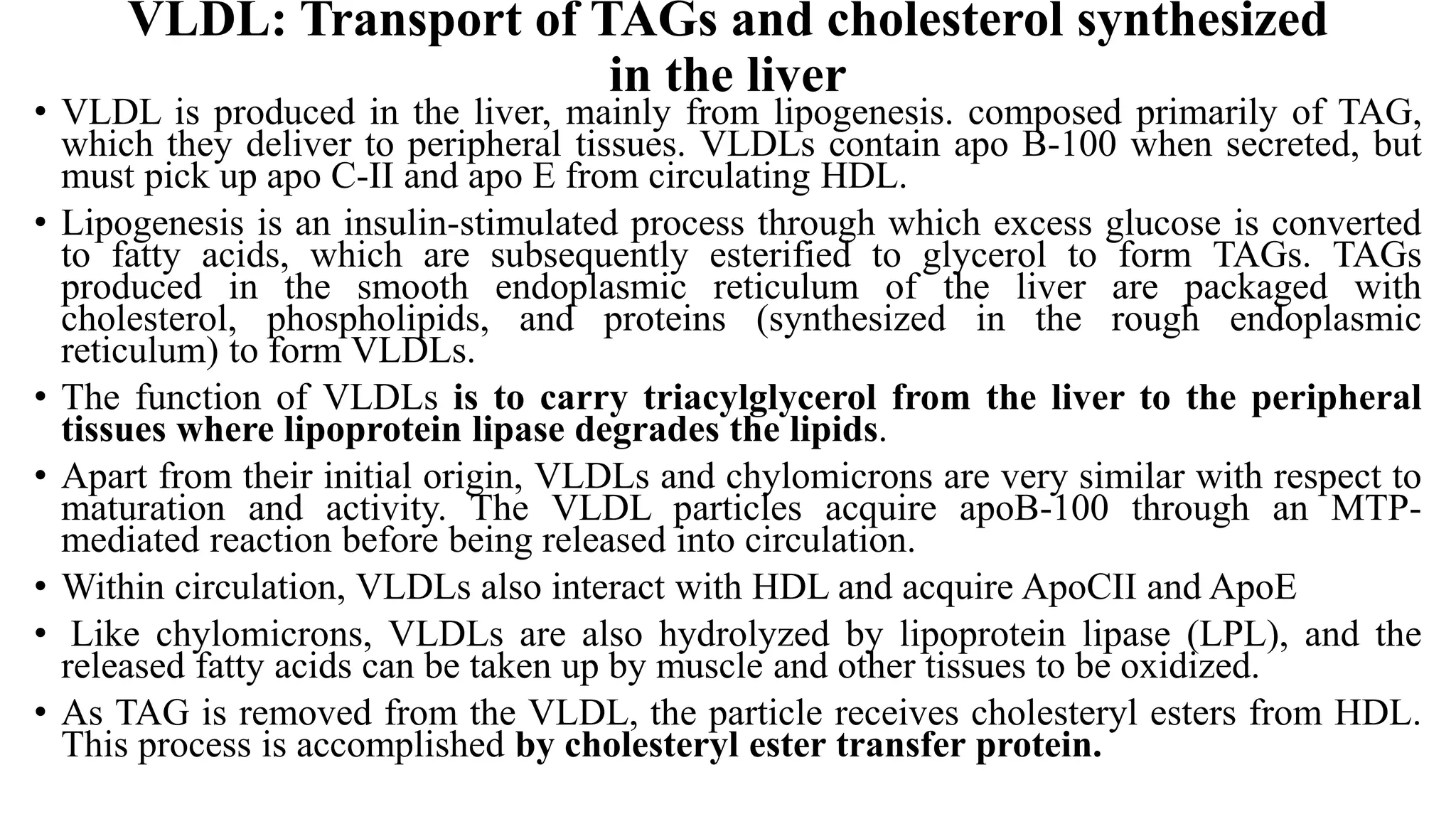
VLDL: Transport of TAGs and cholesterol synthesized
in the liver
• VLDL is produced in the liver, mainly from lipogenesis. composed primarily of TAG,
which they deliver to peripheral tissues. VLDLs contain apo B-100 when secreted, but
must pick up apo C-II and apo E from circulating HDL.
• Lipogenesis is an insulin-stimulated process through which excess glucose is converted
to fatty acids, which are subsequently esterified to glycerol to form TAGs. TAGs
produced in the smooth endoplasmic reticulum of the liver are packaged with
cholesterol, phospholipids, and proteins (synthesized in the rough endoplasmic
reticulum) to form VLDLs.
• The function of VLDLs is to carry triacylglycerol from the liver to the peripheral
tissues where lipoprotein lipase degrades the lipids.
• Apart from their initial origin, VLDLs and chylomicrons are very similar with respect to
maturation and activity. The VLDL particles acquire apoB-100 through an MTP-
mediated reaction before being released into circulation.
• Within circulation, VLDLs also interact with HDL and acquire ApoCII and ApoE
• Like chylomicrons, VLDLs are also hydrolyzed by lipoprotein lipase (LPL), and the
released fatty acids can be taken up by muscle and other tissues to be oxidized.
• As TAG is removed from the VLDL, the particle receives cholesteryl esters from HDL.
This process is accomplished by cholesteryl ester transfer protein.
VLDL: Transport of TAGs and cholesterol synthesized in the
liver
Transport of TAGs from de novo synthesis using VLDL
VLDL: Transport of TAGs and cholesterol synthesized in
the liver
• As VLDLs pass through the circulation, lipoprotein lipase liberates FFAs and
the VLDL becomes denser. apo C-II and E are returned to HDL, while apo B-
100 is retained which is recognized by receptors on peripheral tissues and the
liver. Remaining TAGs are transferred to HDL in exchange for cholesterol
esters.
• As they lose triglyceride, the proportion of cholesterol increases and they
become denser; they become a low-density lipoprotein (LDL)
• Because the fatty acids stored in adipose tissue come both from chylomicrons
and VLDL, we produce our major fat stores both from dietary fat (which is
transported by chylomicrons) and dietary sugar (which can be synthesized into
TAGs and packaged into VLDL).
• An excess of dietary protein also can be used to produce the fatty acids for
VLDL synthesis.
• Clinically, measured triacylglycerols (under fasting conditions) will largely
reflect the VLDL contribution.
Comparison of the role of chylomicrons and VLDLs in lipid transport
Fate of VLDL
• Much like the conversion of chylomicrons to chylomicron remnants, LPL
converts VLDL to an intermediate-density lipoprotein (IDL).
• IDLs, having relatively low TAG content, are taken up by the liver through
endocytosis, and degraded lysosomes as discussed above.
• IDL may also be converted to low-density lipoprotein (LDL) by further
digestion of TAGs.
• Endocytosis of LDL occurs in peripheral tissues (and the liver) and is the major
means of cholesterol transport and delivery to peripheral tissues.
• LDLs taken up by peripheral tissues will help increase the amount of
intracellular cholesterol and therefore influence the regulation of HMG-CoA
reductase (the rate limiting enzyme of that mevalonate pathway- a necessary
step in the biosynthesis of cholesterol).
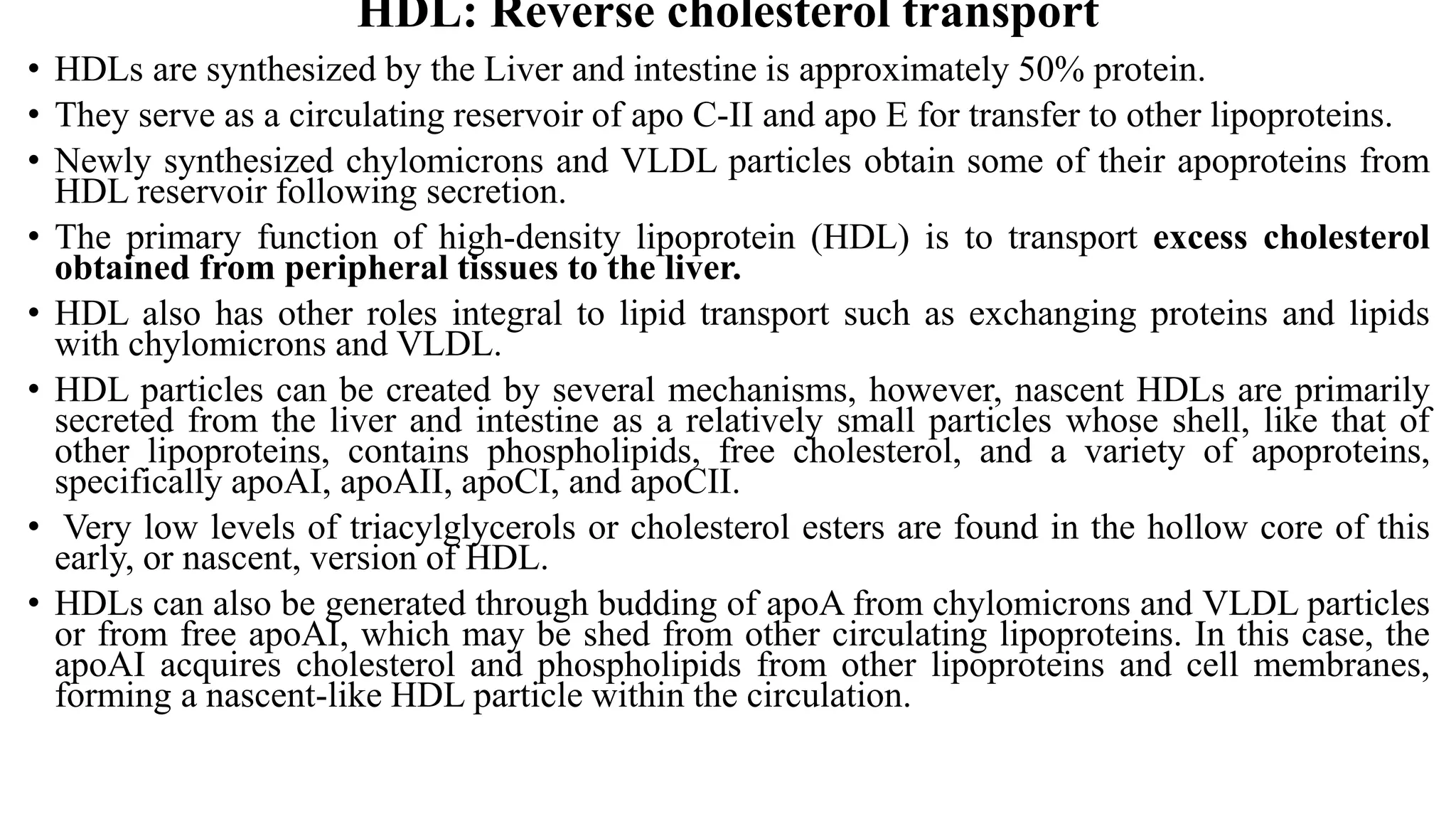
HDL: Reverse cholesterol transport
• HDLs are synthesized by the Liver and intestine is approximately 50% protein.
• They serve as a circulating reservoir of apo C-II and apo E for transfer to other lipoproteins.
• Newly synthesized chylomicrons and VLDL particles obtain some of their apoproteins from
HDL reservoir following secretion.
• The primary function of high-density lipoprotein (HDL) is to transport excess cholesterol
obtained from peripheral tissues to the liver.
• HDL also has other roles integral to lipid transport such as exchanging proteins and lipids
with chylomicrons and VLDL.
• HDL particles can be created by several mechanisms, however, nascent HDLs are primarily
secreted from the liver and intestine as a relatively small particles whose shell, like that of
other lipoproteins, contains phospholipids, free cholesterol, and a variety of apoproteins,
specifically apoAI, apoAII, apoCI, and apoCII.
• Very low levels of triacylglycerols or cholesterol esters are found in the hollow core of this
early, or nascent, version of HDL.
• HDLs can also be generated through budding of apoA from chylomicrons and VLDL particles
or from free apoAI, which may be shed from other circulating lipoproteins. In this case, the
apoAI acquires cholesterol and phospholipids from other lipoproteins and cell membranes,
forming a nascent-like HDL particle within the circulation.
HDL: Reverse cholesterol transport
Interaction of chylomicrons and VLDL with HDL in circulation.
HDL: Reverse cholesterol transport
• Elevated plasma levels of HDL are associated with decreased incidence of coronary
atherosclerosis.
• Cholesterol is taken up from the surface of cells by HDL, esterified to cholesterol
esters and ultimately returned to the liver either by uptake of HDL particles by the
liver or by the transfer of cholesterol esters to VLDL and chylomicron remnants,
followed by remnant uptake.
• This makes them candidate molecules to mop up cholesterol from developing or
existing atheromas on vessel walls.
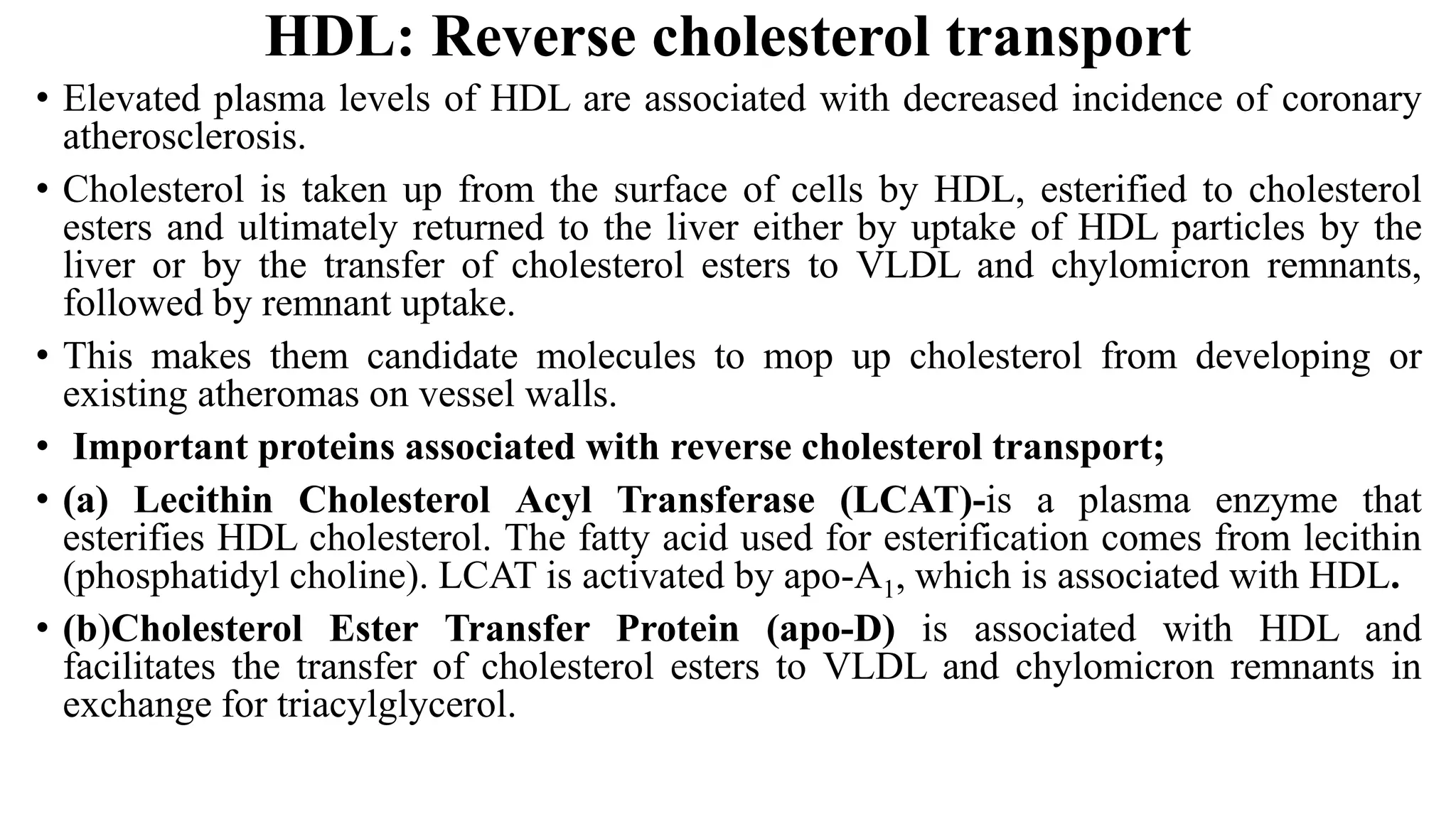
• Important proteins associated with reverse cholesterol transport;
• (a) Lecithin Cholesterol Acyl Transferase (LCAT)-is a plasma enzyme that
esterifies HDL cholesterol. The fatty acid used for esterification comes from lecithin
(phosphatidyl choline). LCAT is activated by apo-A1, which is associated with HDL.
• (b)Cholesterol Ester Transfer Protein (apo-D) is associated with HDL and
facilitates the transfer of cholesterol esters to VLDL and chylomicron remnants in
exchange for triacylglycerol.
Fate of HDL
• In the process of maturation, the nascent HDL particles accumulate phospholipids and
cholesterol from cells lining the blood vessels.
• As the central hollow core of nascent HDL progressively fills with cholesterol esters, HDL
takes on a more globular shape to eventually form the mature HDL particle. A major benefit
of HDL particles derives from their ability to remove cholesterol from cholesterol-laden cells
and to return the cholesterol to the liver, a process known as reverse cholesterol transport.
• This is particularly beneficial in vascular tissue; by reducing cellular cholesterol levels in the
subintimal space, the likelihood that foam cells (lipid-laden macrophages that engulf
oxidized LDL cholesterol) will form within the blood vessel wall is reduced.
• Reverse cholesterol transport requires a movement of cholesterol from cellular stores to the
lipoprotein particle. Cells contain the protein ABCA1 (ATP-binding cassette protein 1) that
uses ATP hydrolysis to move cholesterol from the inner leaflet of the membrane to the outer
leaflet.
• Once the cholesterol has reached the outer membrane leaflet, the HDL particle can accept it.
• To trap the cholesterol within the HDL core, the HDL particle acquires the enzyme lecithin-
cholesterol acyltransferase (LCAT) from the circulation. LCAT catalyzes the transfer of a
fatty acid from the 2-position of lecithin (phosphatidylcholine) in the phospholipid shell of
the particle to the 3-hydroxyl group of cholesterol, forming a cholesterol ester. The
cholesterol esters form the core of the HDL particle and are no longer free to return to the cell
Fate of HDL
• Mature HDL particles can bind to specific receptors on hepatocytes (such
as the apoE receptor), but the primary means of clearance of HDL from the
blood is through its uptake by the scavenger receptor SR-B1.
• This receptor is present on many cell types, and once the HDL particle is
bound to the receptor, its cholesterol and cholesterol esters are transferred
into the cells.
• When depleted of cholesterol and its esters, the HDL particle dissociates
from the SR-B1 receptor and reenters the circulation.
HDL interactions with other particles
• As previously mentioned, HDL plays a key role in the maturation of both chylomicrons and VLDL.
• First, HDL transfers apoE and apoCII to chylomicrons and to VLDL.
• The apoCII stimulates the degradation of the TAGs of chylomicrons and VLDL by activating LPL.
• After digestion of the chylomicrons and the VLDL TAGs, apoE and apoCII are transferred back to
HDL.
• Another key interaction HDL has with VLDL allows for the redistribution of cholesterol between the
two lipoproteins.
• When HDL obtains free cholesterol from cell membranes, HDL either transports the free cholesterol
and cholesterol esters directly to the liver or it can exchange its cholesterol for TAGs in an interaction
with VLDL.
• The cholesterol esterase transfer protein (CETP) resides in circulation and exchanges TAGs from
VLDLs with cholesterol-esters from HDL.
• The greater the concentration of triacylglycerol-rich lipoproteins in the blood, the greater the rate of
these exchanges.
• The CETP exchange pathway may partially explain the observation that whenever triacylglycerol-
rich lipoproteins are present in the blood in high concentrations, the amount of cholesterol reaching
the liver via cholesterol-enriched VLDL and VLDL remnants increases, and is consistent with a
proportional reduction in the total amount of cholesterol and cholesterol esters that are transferred
directly to the liver via HDL.
Lipoprotein (a)
• Lp(a), is nearly identical to LDL but is larger and denser than LDL, and
when present in large quantities is a risk factor for heart disease.
• In addition,Lp (a) contains one molecule of Apo (a) for every molecule of
Apo-B100
• -Levels appear to be predominantly mediated by genetics, though lifestyle
is also involved.
• Lp(a) is similar to plasminogen, and it is possible that it contributes to
heart attacks by binding to plasminogen activators and slowing down the
breakdown of blood clots.
BEST WISHES

LIPID TRANSPORT.pptx

  • 1.
    BIC232: LIPID TRANSPORT. By EJIOFOR,C.C. Department of Medical Biochemistry College of Medicine, University of Nigeria, Enugu Campus Email: nonso.ejiofor@unn.edu.ng
  • 2.
    LIPID TRANSPORT • Mostof the lipids found in the body fall into the categories of fatty acids and triacylglycerols (TAGs); glycerophospholipids and sphingolipids; eicosanoids; cholesterol, bile salts, and steroid hormones; and fat-soluble vitamins. • However, they are related by a common property, their relative insolubility in water. As such, a transport system for distribution of major lipids is in place to aid in the movement of these compounds. • This system involves the family of lipoproteins, which have distinct roles in carrying dietary lipids, lipids synthesized through de novo mechanism in the liver, and for reverse cholesterol transport. • Also, because of their low solubility in aqueous solutions such as blood plasma and interstitial fluid, fatty acids are in need of binding proteins to increase their concentration in vascular and interstitial compartments. • Albumin acts as main fatty acid binding protein in extracellular fluids. • The metabolism of lipids frequently requires that a particular lipid be transported in the blood between different organs. • Free fatty acids are transported by serum albumin, whereas the neutral lipids (triacylglycerol and cholesteryl esters) are transported by lipoproteins.
  • 3.
    LIPOPROTEINS • Lipoproteins aremolecular complexes of lipids and specific proteins called apolipoproteins. • A lipoprotein is a biochemical assembly whose purpose is to transport hydrophobic lipid (a.k.a. fat) molecules in water, as in blood or extracellular fluid. They have a single-layer phospholipid and cholesterol outer shell, with the hydrophilic portions oriented outward toward the surrounding water and lipophilic portions of each molecule oriented inwards toward the lipids molecules within the particles. • Apolipoproteins are embedded in the membrane, both stabilising the complex and giving it functional identity determining its fate. Thus the complex serves to emulsify the fats. • All lipoproteins consist of a hydrophilic shell and a hydrophobic core. • The hydrophilic shell contains proteins, phospholipids and unesterified cholesterol-amphipathic molecules that interact favorably with both the aqueous environment and the inner core. • The hydrophobic core contains the neutral lipids-triacylglycerol (TAG) and cholesterylesters (CE) which are insoluble in water. • Many enzymes, transporters, structural proteins, antigens, adhesions , and toxins are lipoproteins. • Examples include the plasma lipoprotein particles classified as HDL, LDL, VLDL, and chylomicrons lipoproteins, according to density / size (an inverse relationship), compared with the surrounding plasma water. • These complex protein capsules enable fats to be carried in all extracellular water, including the bloodstream.
  • 5.
    APOLIPOPROTEINS • Apolipoproteins areproteins that bind lipids (oil-soluble substances such as fat and cholesterol) to form lipoproteins. They transport the lipids through the lymphatic and circulatory systems. • The lipid components of lipoproteins are insoluble in water. • However, because of their detergent-like (amphipathic) properties, apolipoproteins and other amphipathic molecules (such as phospholipids) can surround the lipids, creating the lipoprotein particle that is itself water-soluble, and can thus be carried through water-based circulation (i.e., blood, lymph). Apolipoproteins have four major functions including; • serving a structural role, • acting as ligands(recognition sites) for lipoprotein receptors, • guiding the formation of lipoproteins, • serving as activators or inhibitors of enzymes involved in the metabolism of lipoproteins. Apolipoproteins thus play a crucial role in lipoprotein metabolism.
  • 6.
    THE APOLIPOPROTEINS • ApolipoproteinA-I (Apo A-I): is synthesized in the liver and intestine and is the major structural protein of HDL accounting for approximately 70% of HDL protein. • Apo A-I is an activator of lecithin: cholesterol acyltransferase (LCAT), an enzyme that converts free cholesterol into cholesteryl ester in reverse cholesterol transport. • Apolipoprotein B-48 (Apo B-48): is synthesized in the intestine and is the major structural protein of chylomicrons and chylomicron remnants. • Apolipoprotein B-100 (Apo B-100) is synthesized in the liver and is the major structural component of VLDL, IDL, and LDL. There is a single molecule of Apo B-100 per VLDL, IDL, and LDL particle. Apo B-100 is a ligand for the LDL receptor and therefore plays an important role in the clearance of lipoprotein particles. • Apo C-II is a co-factor for lipoprotein lipase (LPL) and thus stimulates triglyceride hydrolysis. • Apo-D: involved in reverse cholesterol transport • Apo-E: is recognized by a receptor in the liver
  • 7.
    CLASSES OF LIPOPROTEINS •The four major classes of lipoprotein particles in the human serum include: Chylomicrons: • The initial digestive products, free fatty acids and 2-monoacylglycerol, are reconverted to TAGs in intestinal epithelial cells, packaged in lipoproteins known as chylomicrons, and secreted into the lymph. • They are formed in the smooth endoplasmic reticulum of the intestinal mucosa cells from dietary lipids, primarily triacylglycerol (TAGs),cholesteryl esters (CE) and phospholipids. • Chylomicrons are the largest lipoproteins, do not migrate in an electric field and contain cholesterol and fat-soluble vitamins, in addition to their major component, dietary TAGs. • The major apoprotein associated with chylomicrons as they leave the intestinal cells is ApoB-48. (The B-48 apoprotein is structurally and genetically related to the B-100 apoprotein synthesized in the liver that serves as a major protein of VLDL.). • Apoprotein B-48 is unique to chylomicrons. It is termed B-48 because it contains only 48% of the entire apo B protein.
  • 8.
    Chylomicrons • Microsomal transferprotein (MTP) aids in the loading of apoB-48 protein onto the chylomicron before the nascent chylomicron is secreted. • Nascent chylomicrons are secreted by the intestinal epithelial cells into the chyle of the lymphatic system and enter the blood through the thoracic duct. • Nascent chylomicrons begin to enter the blood within one to two hours after the start of a meal; as the meal is digested and absorbed, they continue to enter the blood for many hours. • Chylomicron maturation occurs in circulation as they accept additional apoproteins from high-density lipoprotein (HDL). • Once in the plasma, chylomicrons receive apo E (for liver recognition) and apo C-II (for activation of lipoprotein lipase) thus making the chylomicrons functional. • The TAGs in chylomicrons are cleaved by lipoprotein lipase, once activated by apo C- II, predominantly in the capillaries of adipose and muscle tissues • FFAs can directly enter adipose or muscle cells for storage or energy, or can be transported on albumin to other parts of the body. Most cells can oxidize FFAs to produce energy. Adipocytes can re-esterify FFAs to produce TAGs. • Liberated glycerol is returned to the liver, where it is almost exclusively used to produce glycerol-3-phosphate, which can enter glycolysis or gluconeogenesis.
  • 9.
    Transport of dietarylipids via chylomicrons. HDL predominantly transfers apoproteins E and CII to the nascent chylomicrons. ApoE is recognized by membrane receptors, and this interaction allows apoE-bearing lipoproteins to enter these cells by endocytosis; once inside the cell the particle is broken down through a lysosomal-mediated process. ApoCII acts as an activator of lipoprotein lipase (LPL), the enzyme on capillary endothelial cells, which digests the TAGs of the chylomicrons and VLDLs in the blood.
  • 10.
    Fate of chylomicrons •The TAGs transported by chylomicrons are hydrolyzed by lipoprotein lipase (LPL), an enzyme present on endothelial cells that line the capillary walls. • ApoCII on the chylomicron will interact with Lipoprotein Lipase (LPL) and activate the enzyme. Insulin stimulates the synthesis and secretion of LPL so that after a meal, when triglyceride levels increase in circulation, LPL is upregulated (through insulin release) to facilitate the hydrolysis of fatty acids from the triglyceride. • Therefore, adipose LPL is more active after a meal, when chylomicron levels are elevated in the blood. • The fatty acids released from TAGs by LPL are eventually repackaged in the adipose tissue and stored as TAGs within the tissue. • The portion of a chylomicron that remains in the blood after LPL action is known as a chylomicron remnant. • The remnant has returned (or lost) many of the apoC molecules bound to the mature chylomicron, exposing apoE. • The remaining remnant binds to apoE receptors on hepatocytes, and is taken up by the process of endocytosis. • Lysosomes fuse with the endocytic vesicles, and the chylomicron remnants are degraded by lysosomal enzymes. The products released through this degradation process (e.g., amino acids, fatty acids, cholesterol, etc.) can be recycled within the cell.
  • 11.
    VLDL: Transport ofTAGs and cholesterol synthesized in the liver • VLDL is produced in the liver, mainly from lipogenesis. composed primarily of TAG, which they deliver to peripheral tissues. VLDLs contain apo B-100 when secreted, but must pick up apo C-II and apo E from circulating HDL. • Lipogenesis is an insulin-stimulated process through which excess glucose is converted to fatty acids, which are subsequently esterified to glycerol to form TAGs. TAGs produced in the smooth endoplasmic reticulum of the liver are packaged with cholesterol, phospholipids, and proteins (synthesized in the rough endoplasmic reticulum) to form VLDLs. • The function of VLDLs is to carry triacylglycerol from the liver to the peripheral tissues where lipoprotein lipase degrades the lipids. • Apart from their initial origin, VLDLs and chylomicrons are very similar with respect to maturation and activity. The VLDL particles acquire apoB-100 through an MTP- mediated reaction before being released into circulation. • Within circulation, VLDLs also interact with HDL and acquire ApoCII and ApoE • Like chylomicrons, VLDLs are also hydrolyzed by lipoprotein lipase (LPL), and the released fatty acids can be taken up by muscle and other tissues to be oxidized. • As TAG is removed from the VLDL, the particle receives cholesteryl esters from HDL. This process is accomplished by cholesteryl ester transfer protein.
  • 12.
    VLDL: Transport ofTAGs and cholesterol synthesized in the liver Transport of TAGs from de novo synthesis using VLDL
  • 13.
    VLDL: Transport ofTAGs and cholesterol synthesized in the liver • As VLDLs pass through the circulation, lipoprotein lipase liberates FFAs and the VLDL becomes denser. apo C-II and E are returned to HDL, while apo B- 100 is retained which is recognized by receptors on peripheral tissues and the liver. Remaining TAGs are transferred to HDL in exchange for cholesterol esters. • As they lose triglyceride, the proportion of cholesterol increases and they become denser; they become a low-density lipoprotein (LDL) • Because the fatty acids stored in adipose tissue come both from chylomicrons and VLDL, we produce our major fat stores both from dietary fat (which is transported by chylomicrons) and dietary sugar (which can be synthesized into TAGs and packaged into VLDL). • An excess of dietary protein also can be used to produce the fatty acids for VLDL synthesis. • Clinically, measured triacylglycerols (under fasting conditions) will largely reflect the VLDL contribution.
  • 14.
    Comparison of therole of chylomicrons and VLDLs in lipid transport
  • 15.
    Fate of VLDL •Much like the conversion of chylomicrons to chylomicron remnants, LPL converts VLDL to an intermediate-density lipoprotein (IDL). • IDLs, having relatively low TAG content, are taken up by the liver through endocytosis, and degraded lysosomes as discussed above. • IDL may also be converted to low-density lipoprotein (LDL) by further digestion of TAGs. • Endocytosis of LDL occurs in peripheral tissues (and the liver) and is the major means of cholesterol transport and delivery to peripheral tissues. • LDLs taken up by peripheral tissues will help increase the amount of intracellular cholesterol and therefore influence the regulation of HMG-CoA reductase (the rate limiting enzyme of that mevalonate pathway- a necessary step in the biosynthesis of cholesterol).
  • 16.
    HDL: Reverse cholesteroltransport • HDLs are synthesized by the Liver and intestine is approximately 50% protein. • They serve as a circulating reservoir of apo C-II and apo E for transfer to other lipoproteins. • Newly synthesized chylomicrons and VLDL particles obtain some of their apoproteins from HDL reservoir following secretion. • The primary function of high-density lipoprotein (HDL) is to transport excess cholesterol obtained from peripheral tissues to the liver. • HDL also has other roles integral to lipid transport such as exchanging proteins and lipids with chylomicrons and VLDL. • HDL particles can be created by several mechanisms, however, nascent HDLs are primarily secreted from the liver and intestine as a relatively small particles whose shell, like that of other lipoproteins, contains phospholipids, free cholesterol, and a variety of apoproteins, specifically apoAI, apoAII, apoCI, and apoCII. • Very low levels of triacylglycerols or cholesterol esters are found in the hollow core of this early, or nascent, version of HDL. • HDLs can also be generated through budding of apoA from chylomicrons and VLDL particles or from free apoAI, which may be shed from other circulating lipoproteins. In this case, the apoAI acquires cholesterol and phospholipids from other lipoproteins and cell membranes, forming a nascent-like HDL particle within the circulation.
  • 17.
    HDL: Reverse cholesteroltransport Interaction of chylomicrons and VLDL with HDL in circulation.
  • 18.
    HDL: Reverse cholesteroltransport • Elevated plasma levels of HDL are associated with decreased incidence of coronary atherosclerosis. • Cholesterol is taken up from the surface of cells by HDL, esterified to cholesterol esters and ultimately returned to the liver either by uptake of HDL particles by the liver or by the transfer of cholesterol esters to VLDL and chylomicron remnants, followed by remnant uptake. • This makes them candidate molecules to mop up cholesterol from developing or existing atheromas on vessel walls. • Important proteins associated with reverse cholesterol transport; • (a) Lecithin Cholesterol Acyl Transferase (LCAT)-is a plasma enzyme that esterifies HDL cholesterol. The fatty acid used for esterification comes from lecithin (phosphatidyl choline). LCAT is activated by apo-A1, which is associated with HDL. • (b)Cholesterol Ester Transfer Protein (apo-D) is associated with HDL and facilitates the transfer of cholesterol esters to VLDL and chylomicron remnants in exchange for triacylglycerol.
  • 19.
    Fate of HDL •In the process of maturation, the nascent HDL particles accumulate phospholipids and cholesterol from cells lining the blood vessels. • As the central hollow core of nascent HDL progressively fills with cholesterol esters, HDL takes on a more globular shape to eventually form the mature HDL particle. A major benefit of HDL particles derives from their ability to remove cholesterol from cholesterol-laden cells and to return the cholesterol to the liver, a process known as reverse cholesterol transport. • This is particularly beneficial in vascular tissue; by reducing cellular cholesterol levels in the subintimal space, the likelihood that foam cells (lipid-laden macrophages that engulf oxidized LDL cholesterol) will form within the blood vessel wall is reduced. • Reverse cholesterol transport requires a movement of cholesterol from cellular stores to the lipoprotein particle. Cells contain the protein ABCA1 (ATP-binding cassette protein 1) that uses ATP hydrolysis to move cholesterol from the inner leaflet of the membrane to the outer leaflet. • Once the cholesterol has reached the outer membrane leaflet, the HDL particle can accept it. • To trap the cholesterol within the HDL core, the HDL particle acquires the enzyme lecithin- cholesterol acyltransferase (LCAT) from the circulation. LCAT catalyzes the transfer of a fatty acid from the 2-position of lecithin (phosphatidylcholine) in the phospholipid shell of the particle to the 3-hydroxyl group of cholesterol, forming a cholesterol ester. The cholesterol esters form the core of the HDL particle and are no longer free to return to the cell
  • 20.
    Fate of HDL •Mature HDL particles can bind to specific receptors on hepatocytes (such as the apoE receptor), but the primary means of clearance of HDL from the blood is through its uptake by the scavenger receptor SR-B1. • This receptor is present on many cell types, and once the HDL particle is bound to the receptor, its cholesterol and cholesterol esters are transferred into the cells. • When depleted of cholesterol and its esters, the HDL particle dissociates from the SR-B1 receptor and reenters the circulation.
  • 21.
    HDL interactions withother particles • As previously mentioned, HDL plays a key role in the maturation of both chylomicrons and VLDL. • First, HDL transfers apoE and apoCII to chylomicrons and to VLDL. • The apoCII stimulates the degradation of the TAGs of chylomicrons and VLDL by activating LPL. • After digestion of the chylomicrons and the VLDL TAGs, apoE and apoCII are transferred back to HDL. • Another key interaction HDL has with VLDL allows for the redistribution of cholesterol between the two lipoproteins. • When HDL obtains free cholesterol from cell membranes, HDL either transports the free cholesterol and cholesterol esters directly to the liver or it can exchange its cholesterol for TAGs in an interaction with VLDL. • The cholesterol esterase transfer protein (CETP) resides in circulation and exchanges TAGs from VLDLs with cholesterol-esters from HDL. • The greater the concentration of triacylglycerol-rich lipoproteins in the blood, the greater the rate of these exchanges. • The CETP exchange pathway may partially explain the observation that whenever triacylglycerol- rich lipoproteins are present in the blood in high concentrations, the amount of cholesterol reaching the liver via cholesterol-enriched VLDL and VLDL remnants increases, and is consistent with a proportional reduction in the total amount of cholesterol and cholesterol esters that are transferred directly to the liver via HDL.
  • 22.
    Lipoprotein (a) • Lp(a),is nearly identical to LDL but is larger and denser than LDL, and when present in large quantities is a risk factor for heart disease. • In addition,Lp (a) contains one molecule of Apo (a) for every molecule of Apo-B100 • -Levels appear to be predominantly mediated by genetics, though lifestyle is also involved. • Lp(a) is similar to plasminogen, and it is possible that it contributes to heart attacks by binding to plasminogen activators and slowing down the breakdown of blood clots.
  • 23.