By- Sukhdeep Singh   Univ.Roll no. - 1144460   CSE-N1-115301
Introduction to Linux & Windows
Fundamental Difference
Technical Comparison
Graphical user Interface
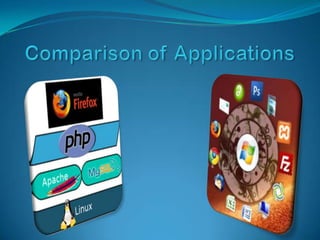
Comparison of Applications
Distributors
Price Comparison
Security
CONCLUSION
 Linux was originally built by Linus Torvalds at the
 University of Helsinki in 1991.

 Linux is a Unix-like, Kernel-based, fully memory-
 protected, multitasking operating system.

 It runs on a wide range of hardware from PCs to Macs.
 First version of Windows – Windows 3.1 released in
 1992 by Microsoft.

 Windows is a GUI(Graphical User Interface) based
 operating system.

 It has powerful networking capabilities, is
 multitasking, and extremely user friendly.
One fundamental difference between the two systems is
 the fact that Linux is "open source".


Open source means any PC can be booted with USB
 support with the system and therefore we will have
 every administration and analysis applications that we
 have selected, so we will need not install it.

Unlike Windows which has to be installed on the system
 to only get access to run compiled programs on it.
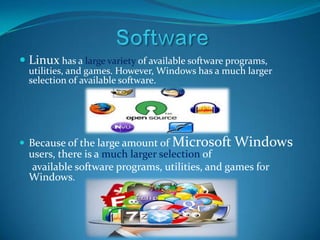
 Linux has a large variety of available software programs,
  utilities, and games. However, Windows has a much larger
  selection of available software.


 Because of the large amount of Microsoft Windows
  users, there is a much larger selection of
   available software programs, utilities, and games for
  Windows.
 Linux companies and hardware manufacturers have made
 great advancements in hardware support for Linux and
 today Linux will support most hardware devices. However,
 many companies still do not offer drivers or support for
 their hardware in Linux.

 Because of the amount of Microsoft Windows users and
 the broader driver support, Windows has a much larger
 support for hardware devices and a good majority of
 hardware manufacturers will support their products in
 Microsoft Windows.
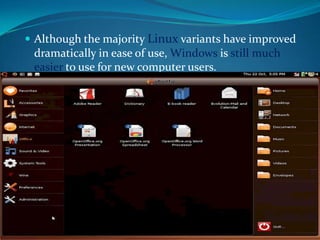
 Although the majority Linux variants have improved
 dramatically in ease of use, Windows is still much
 easier to use for new computer users.
Microsoft has made several advancements and changes
that have made it a much easier to use operating
system, and although arguably it may not be the easiest
operating system, it is still Easier than Linux.
 Linux falls short in the number of different
 applications available for it.


 There are much more various applications available for
 Microsoft since the population of Window’s users is
 greater than Linux’s.


 Since Microsoft is more popular, the Hardware
 products are aimed at the biggest market – Windows,
 such that the product would be sold and used widely.
 Linux programs are distribute freely since they are not
 developed by commercial software companies, but
 instead are created under the GNU Public License,
 which makes the software free


 Linux software lacks the GUI and is therefore not
 “liked” by many users.

 Windows has its own share of problems – the fact that
 some software is not compliant for different versions of
 windows (i.e. Windows 95/98) and that many times
 the GUI concept is overused such that command
 arguments cannot be passed to the program.
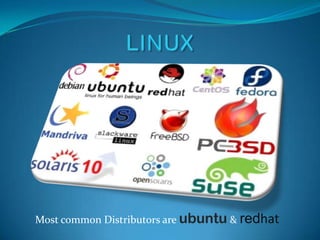
Most common Distributors are ubuntu & redhat
Microsoft has Authorized Embedded Distributors in countries.

           is the sole authorized Microsoft distributor in INDIA
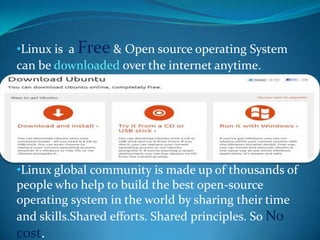
•Linux is a Free & Open source operating System
can be downloaded over the internet anytime.


•Linux global community is made up of thousands of
people who help to build the best open-source
operating system in the world by sharing their time
and skills.Shared efforts. Shared principles. So No
cost.
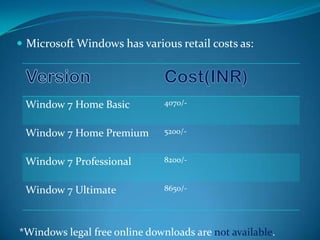
 Microsoft Windows has various retail costs as:


 Window 7 Home Basic           4070/-


 Window 7 Home Premium         5200/-


 Window 7 Professional         8200/-


 Window 7 Ultimate             8650/-


*Windows legal free online downloads are not available.
Linux is "virus-free"


All the technical glitches can be overwritten by a clever
programmer. If at all any virus is spread, since things are
open and people have access to all the source ..
immediately a cure will be available because there is a
huge developer base in the bazaar .. so it is not worth
spending time in writing a virus .. and another point is
people will be more interested in some thing which are
hidden .. other wise there is no challenge in breaking an
open box .. !!!
"Virus free" is not true at all.
However, virus (writers) have a harder time in a Linux
environment.


1) Linux distros don't run as admin/root by default (and you
really don't need to run as admin to be productive in Linux)

2) Linux distros have secure file permissions by default. That
means an "infected user" will not disrupt other users or "the
system".

3) Linux approach to security is to make it the highest priority,
even above usability.

4) Open source and full disclosure lead to quick patches/fixes
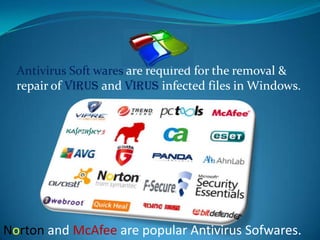
Antivirus Soft wares are required for the removal &
  repair of VIRUS and VIRUS infected files in Windows.


Norton and McAfee are popular Antivirus Sofwares.
Conclusion
Well that’s all ,I have presented my findings on the
topic of Linux v/s Windows, although it is by no
means an easy topic to research, it is a very interesting
one to look into and there is a seemingly infinite
amount of published material out there about the
subject which will always leave you wanting to know
more.
Broadly Concluding Linux & Windows have head
to head rivalries both being Best on their own basis
& REAL CONCLUSION can be made by coming time only.
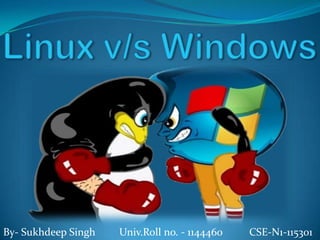
Linux v/s Windows

Linux v/s Windows

  • 1.
    By- Sukhdeep Singh Univ.Roll no. - 1144460 CSE-N1-115301
  • 2.
    Introduction to Linux& Windows Fundamental Difference Technical Comparison Graphical user Interface Comparison of Applications Distributors Price Comparison Security CONCLUSION
  • 5.
     Linux wasoriginally built by Linus Torvalds at the University of Helsinki in 1991.  Linux is a Unix-like, Kernel-based, fully memory- protected, multitasking operating system.  It runs on a wide range of hardware from PCs to Macs.
  • 7.
     First versionof Windows – Windows 3.1 released in 1992 by Microsoft.  Windows is a GUI(Graphical User Interface) based operating system.  It has powerful networking capabilities, is multitasking, and extremely user friendly.
  • 9.
    One fundamental differencebetween the two systems is the fact that Linux is "open source". Open source means any PC can be booted with USB support with the system and therefore we will have every administration and analysis applications that we have selected, so we will need not install it. Unlike Windows which has to be installed on the system to only get access to run compiled programs on it.
  • 11.
     Linux hasa large variety of available software programs, utilities, and games. However, Windows has a much larger selection of available software.  Because of the large amount of Microsoft Windows users, there is a much larger selection of available software programs, utilities, and games for Windows.
  • 12.
     Linux companiesand hardware manufacturers have made great advancements in hardware support for Linux and today Linux will support most hardware devices. However, many companies still do not offer drivers or support for their hardware in Linux.  Because of the amount of Microsoft Windows users and the broader driver support, Windows has a much larger support for hardware devices and a good majority of hardware manufacturers will support their products in Microsoft Windows.
  • 14.
     Although themajority Linux variants have improved dramatically in ease of use, Windows is still much easier to use for new computer users.
  • 15.
    Microsoft has madeseveral advancements and changes that have made it a much easier to use operating system, and although arguably it may not be the easiest operating system, it is still Easier than Linux.
  • 17.
     Linux fallsshort in the number of different applications available for it.  There are much more various applications available for Microsoft since the population of Window’s users is greater than Linux’s.  Since Microsoft is more popular, the Hardware products are aimed at the biggest market – Windows, such that the product would be sold and used widely.
  • 18.
     Linux programsare distribute freely since they are not developed by commercial software companies, but instead are created under the GNU Public License, which makes the software free  Linux software lacks the GUI and is therefore not “liked” by many users.  Windows has its own share of problems – the fact that some software is not compliant for different versions of windows (i.e. Windows 95/98) and that many times the GUI concept is overused such that command arguments cannot be passed to the program.
  • 20.
    Most common Distributorsare ubuntu & redhat
  • 21.
    Microsoft has AuthorizedEmbedded Distributors in countries. is the sole authorized Microsoft distributor in INDIA
  • 23.
    •Linux is aFree & Open source operating System can be downloaded over the internet anytime. •Linux global community is made up of thousands of people who help to build the best open-source operating system in the world by sharing their time and skills.Shared efforts. Shared principles. So No cost.
  • 24.
     Microsoft Windowshas various retail costs as: Window 7 Home Basic 4070/- Window 7 Home Premium 5200/- Window 7 Professional 8200/- Window 7 Ultimate 8650/- *Windows legal free online downloads are not available.
  • 26.
    Linux is "virus-free" Allthe technical glitches can be overwritten by a clever programmer. If at all any virus is spread, since things are open and people have access to all the source .. immediately a cure will be available because there is a huge developer base in the bazaar .. so it is not worth spending time in writing a virus .. and another point is people will be more interested in some thing which are hidden .. other wise there is no challenge in breaking an open box .. !!!
  • 27.
    "Virus free" isnot true at all. However, virus (writers) have a harder time in a Linux environment. 1) Linux distros don't run as admin/root by default (and you really don't need to run as admin to be productive in Linux) 2) Linux distros have secure file permissions by default. That means an "infected user" will not disrupt other users or "the system". 3) Linux approach to security is to make it the highest priority, even above usability. 4) Open source and full disclosure lead to quick patches/fixes
  • 28.
    Antivirus Soft waresare required for the removal & repair of VIRUS and VIRUS infected files in Windows. Norton and McAfee are popular Antivirus Sofwares.
  • 29.
    Conclusion Well that’s all,I have presented my findings on the topic of Linux v/s Windows, although it is by no means an easy topic to research, it is a very interesting one to look into and there is a seemingly infinite amount of published material out there about the subject which will always leave you wanting to know more. Broadly Concluding Linux & Windows have head to head rivalries both being Best on their own basis & REAL CONCLUSION can be made by coming time only.