UNIT 18 LO2:
LIGHTING
IN THIS POWEPOINT I WILL BE
EXPLAINING HOW TO USE
LIGHTING EQUIPMENT AND
DIFFERENT SETTINGS TO
RECORD CINEMATIC QUALITY
FOOTAGE
THE THREE-POINT LIGHTING
SYSTEM
WHAT IS IT?
Three-point lighting is a traditional
method for illuminating a subject in a
scene with light sources from three
distinct positions. The three types of
lights are key light, fill light, and
backlight. By playing with the size,
distance, intensity, and position of
these light sources, including their
degree angle, it is possible to control
how light and shadow fall on a subject,
creating different moods
KEY LIGHT
This is the primary and brightest
light source in the three-point
lighting setup. It gives a scene its
overall exposure.
Cinematographers typically
position this main light slightly off
to the side of the camera and the
front of the subject The primary
light creates the mood of a scene.
Depending upon its position, it
can create a high-key image
(evenly, softly lit and
atmospherically upbeat) or a low-
key image (high contrasts, deep
shadows, and very moody)
FILL LIGHT
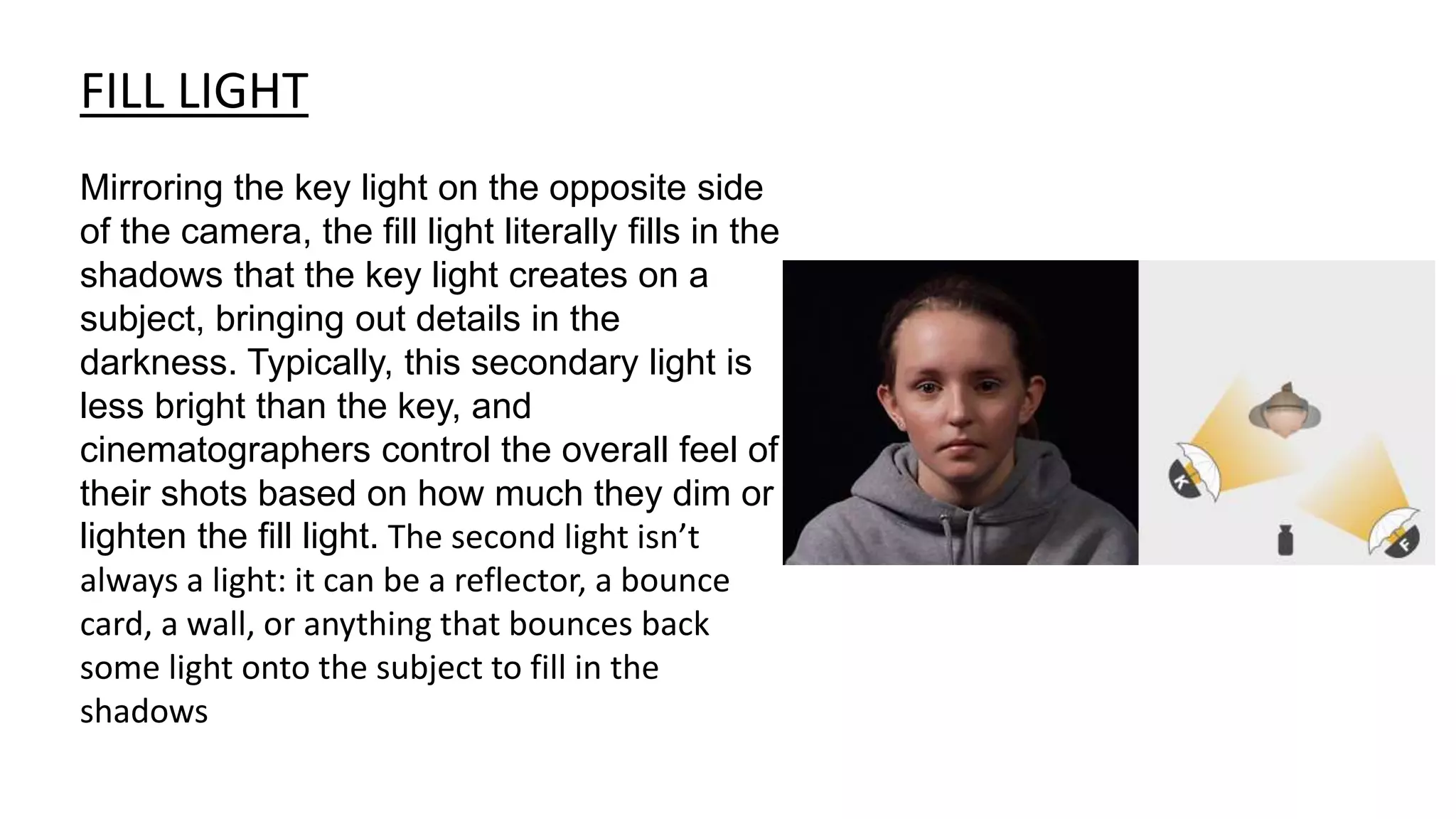
Mirroring the key light on the opposite side
of the camera, the fill light literally fills in the
shadows that the key light creates on a
subject, bringing out details in the
darkness. Typically, this secondary light is
less bright than the key, and
cinematographers control the overall feel of
their shots based on how much they dim or
lighten the fill light. The second light isn’t
always a light: it can be a reflector, a bounce
card, a wall, or anything that bounces back
some light onto the subject to fill in the
shadows
BACK LIGHT
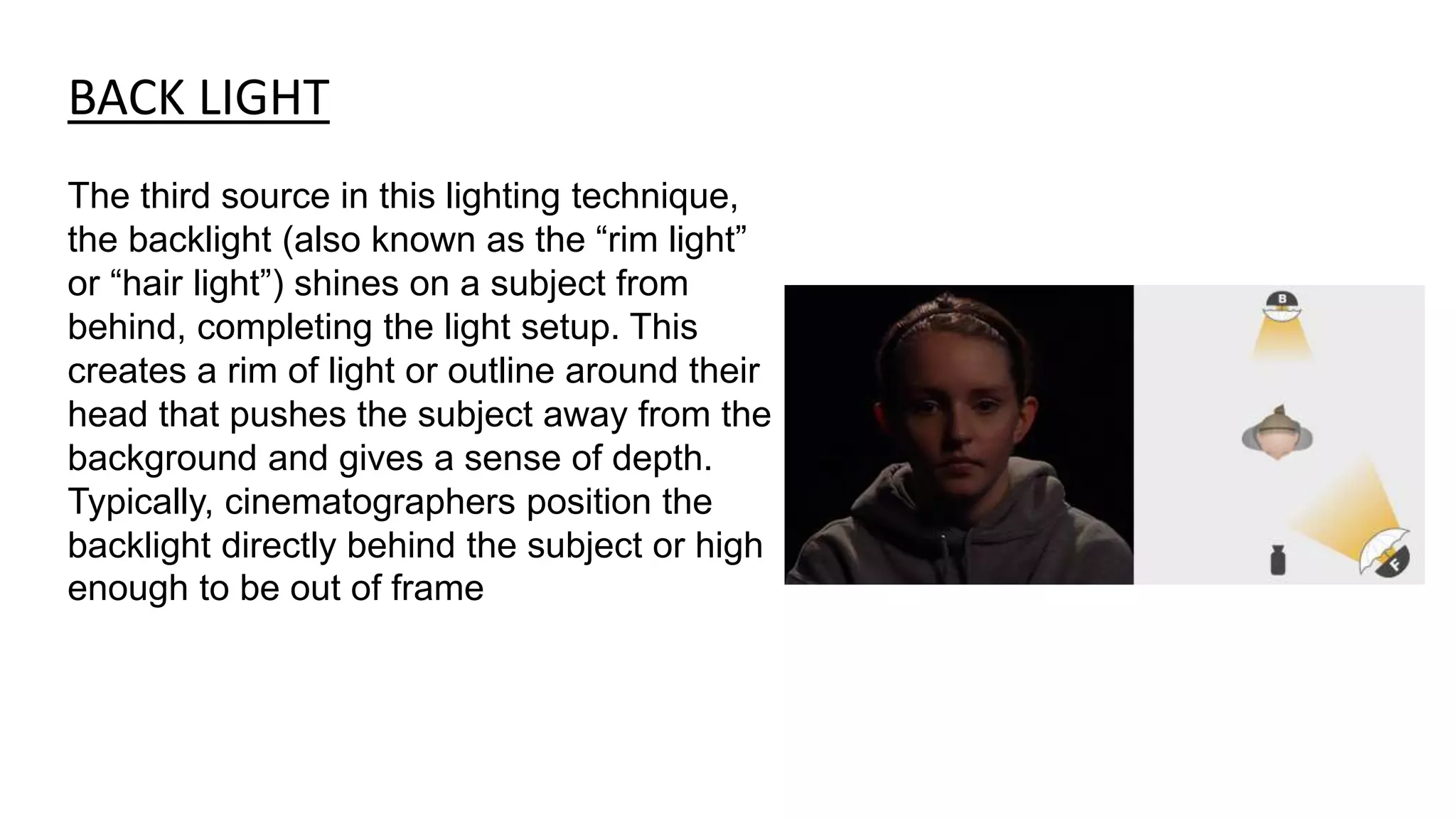
The third source in this lighting technique,
the backlight (also known as the “rim light”
or “hair light”) shines on a subject from
behind, completing the light setup. This
creates a rim of light or outline around their
head that pushes the subject away from the
background and gives a sense of depth.
Typically, cinematographers position the
backlight directly behind the subject or high
enough to be out of frame
LED LIGHTS
ED stands for light emitting diode. LED
lighting products produce light up to 90%
more efficiently than incandescent light
bulbs. ... An electrical current passes
through a microchip, which illuminates the
tiny light sources we call LEDs, and the
result is visible light.
WHY ARE THEY USED IN
FILM MAKING
Compared with conventional light sources
that first convert electrical energy into heat,
and then into light, LEDs (Light Emitting
Diodes) convert electrical energy directly
into light, delivering efficient light
generation with little-wasted electricity
TYPES OF PRODUCTON LIGHTS
TUNGSTON LIGHTS
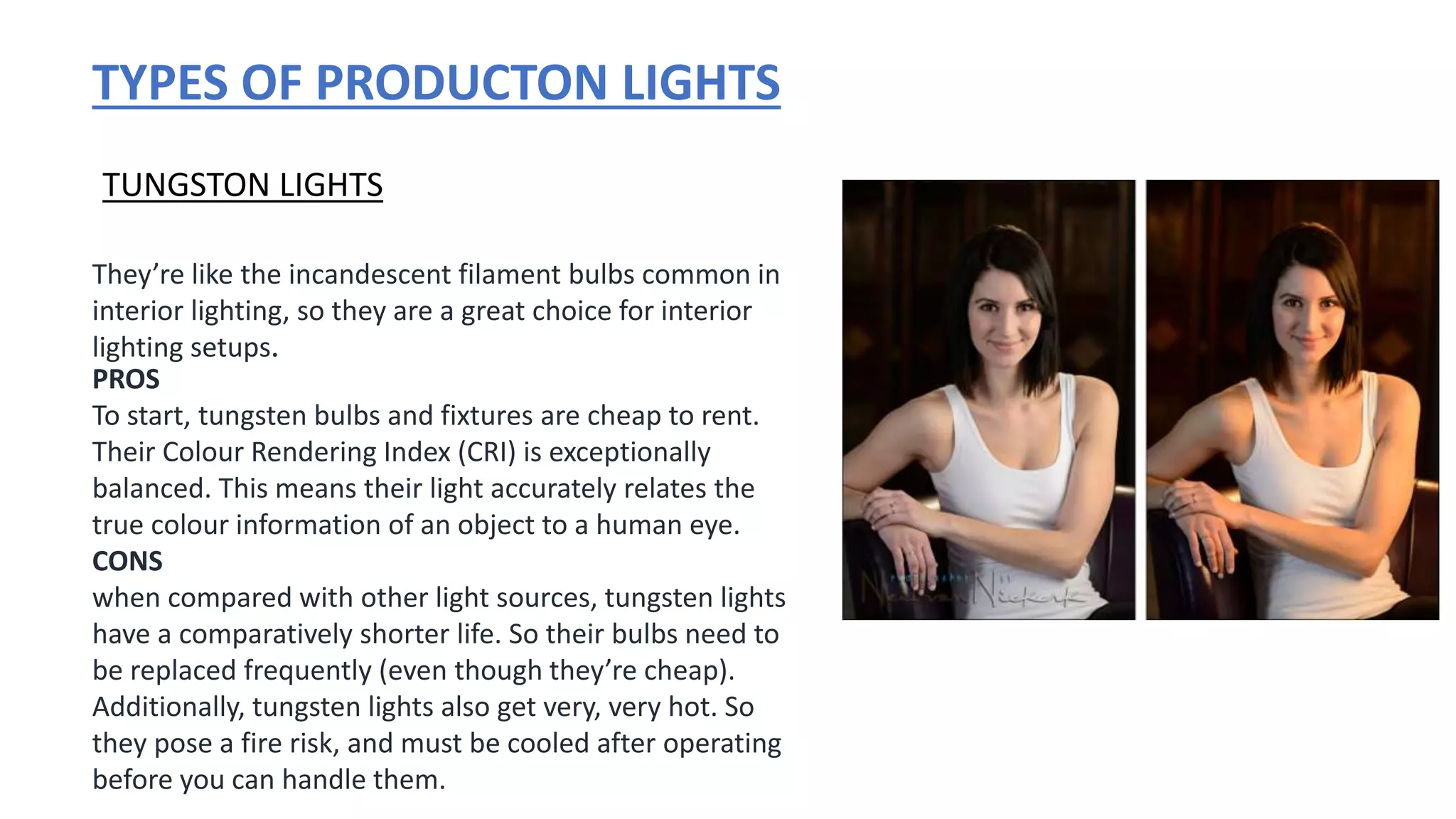
They’re like the incandescent filament bulbs common in
interior lighting, so they are a great choice for interior
lighting setups.
PROS
To start, tungsten bulbs and fixtures are cheap to rent.
Their Colour Rendering Index (CRI) is exceptionally
balanced. This means their light accurately relates the
true colour information of an object to a human eye.
CONS
when compared with other light sources, tungsten lights
have a comparatively shorter life. So their bulbs need to
be replaced frequently (even though they’re cheap).
Additionally, tungsten lights also get very, very hot. So
they pose a fire risk, and must be cooled after operating
before you can handle them.
HMI LIGHTS
An HMI is a powerhouse arc lamp lighting source that is
crucial for lighting outdoors (or replicating outdoor light
shining into interiors). Because they are so powerful,
they are also good resource for lighting large sets.
PROS
As mentioned above, the sheer brightness of an HMI
makes it a necessity for strong light sources. They aren’t
the power hogs that tungsten's are, and don’t create as
much heat on set.
CONS
HMI lights are highly expensive so you must have a
budget that allows for them.
These require more set-up and take-down than other
forms of lighting, simply because each HMI requires an
attached ballast that regulates the arc lamp
FLUORECENT VIDEO LIGHTS
If you’ve ever spotted a lighting fixture on set with a row
of light tubes, then you’ve seen fluorescent film or video
lighting kits at work. These lights emit ultraviolet light
from mercury vapor and can be balanced for both indoor
and outdoor use.
PROS
Fluorescent lights offer a naturally soft light that are
common in everyday interiors. And they are also
affordable, easily transported, and adaptable to different
shooting environments.
CONS
While external ballasts aren’t required for Fluorescent
lights, they can help fight flickering issues the lights may
have. Like HMIs, that means extra assembly and tear-
down.
Chiaroscuro
lighting
• chiaroscuro, (from Italian chiaro, “light,” and scuro,
“dark”), technique employed in the visual arts to
represent light and shadow as they define three-
dimensional objects. ... Caravaggio and his followers
used a harsh, dramatic light to isolate their figures
and heighten their emotional tension.
HOW IT IS USED
IN CINEMA
• Chiaroscuro balances high-contrast
light and shade to give the appearance of
depth, creating an enhanced or more
dramatic effect. Chiaroscuro creates
three-dimensionality on a two-
dimensional plane, darkening the
background and highlighting the subject
in the foreground, drawing the viewer's
focus and attention This style is often
seen in thrillers and horror genres, as the
manipulation of darkness helps create
suspense.

Lighting techniques

  • 1.
    UNIT 18 LO2: LIGHTING INTHIS POWEPOINT I WILL BE EXPLAINING HOW TO USE LIGHTING EQUIPMENT AND DIFFERENT SETTINGS TO RECORD CINEMATIC QUALITY FOOTAGE
  • 2.
    THE THREE-POINT LIGHTING SYSTEM WHATIS IT? Three-point lighting is a traditional method for illuminating a subject in a scene with light sources from three distinct positions. The three types of lights are key light, fill light, and backlight. By playing with the size, distance, intensity, and position of these light sources, including their degree angle, it is possible to control how light and shadow fall on a subject, creating different moods
  • 3.
    KEY LIGHT This isthe primary and brightest light source in the three-point lighting setup. It gives a scene its overall exposure. Cinematographers typically position this main light slightly off to the side of the camera and the front of the subject The primary light creates the mood of a scene. Depending upon its position, it can create a high-key image (evenly, softly lit and atmospherically upbeat) or a low- key image (high contrasts, deep shadows, and very moody)
  • 4.
    FILL LIGHT Mirroring thekey light on the opposite side of the camera, the fill light literally fills in the shadows that the key light creates on a subject, bringing out details in the darkness. Typically, this secondary light is less bright than the key, and cinematographers control the overall feel of their shots based on how much they dim or lighten the fill light. The second light isn’t always a light: it can be a reflector, a bounce card, a wall, or anything that bounces back some light onto the subject to fill in the shadows
  • 5.
    BACK LIGHT The thirdsource in this lighting technique, the backlight (also known as the “rim light” or “hair light”) shines on a subject from behind, completing the light setup. This creates a rim of light or outline around their head that pushes the subject away from the background and gives a sense of depth. Typically, cinematographers position the backlight directly behind the subject or high enough to be out of frame
  • 6.
    LED LIGHTS ED standsfor light emitting diode. LED lighting products produce light up to 90% more efficiently than incandescent light bulbs. ... An electrical current passes through a microchip, which illuminates the tiny light sources we call LEDs, and the result is visible light.
  • 7.
    WHY ARE THEYUSED IN FILM MAKING Compared with conventional light sources that first convert electrical energy into heat, and then into light, LEDs (Light Emitting Diodes) convert electrical energy directly into light, delivering efficient light generation with little-wasted electricity
  • 8.
    TYPES OF PRODUCTONLIGHTS TUNGSTON LIGHTS They’re like the incandescent filament bulbs common in interior lighting, so they are a great choice for interior lighting setups. PROS To start, tungsten bulbs and fixtures are cheap to rent. Their Colour Rendering Index (CRI) is exceptionally balanced. This means their light accurately relates the true colour information of an object to a human eye. CONS when compared with other light sources, tungsten lights have a comparatively shorter life. So their bulbs need to be replaced frequently (even though they’re cheap). Additionally, tungsten lights also get very, very hot. So they pose a fire risk, and must be cooled after operating before you can handle them.
  • 9.
    HMI LIGHTS An HMIis a powerhouse arc lamp lighting source that is crucial for lighting outdoors (or replicating outdoor light shining into interiors). Because they are so powerful, they are also good resource for lighting large sets. PROS As mentioned above, the sheer brightness of an HMI makes it a necessity for strong light sources. They aren’t the power hogs that tungsten's are, and don’t create as much heat on set. CONS HMI lights are highly expensive so you must have a budget that allows for them. These require more set-up and take-down than other forms of lighting, simply because each HMI requires an attached ballast that regulates the arc lamp
  • 10.
    FLUORECENT VIDEO LIGHTS Ifyou’ve ever spotted a lighting fixture on set with a row of light tubes, then you’ve seen fluorescent film or video lighting kits at work. These lights emit ultraviolet light from mercury vapor and can be balanced for both indoor and outdoor use. PROS Fluorescent lights offer a naturally soft light that are common in everyday interiors. And they are also affordable, easily transported, and adaptable to different shooting environments. CONS While external ballasts aren’t required for Fluorescent lights, they can help fight flickering issues the lights may have. Like HMIs, that means extra assembly and tear- down.
  • 11.
    Chiaroscuro lighting • chiaroscuro, (fromItalian chiaro, “light,” and scuro, “dark”), technique employed in the visual arts to represent light and shadow as they define three- dimensional objects. ... Caravaggio and his followers used a harsh, dramatic light to isolate their figures and heighten their emotional tension.
  • 12.
    HOW IT ISUSED IN CINEMA • Chiaroscuro balances high-contrast light and shade to give the appearance of depth, creating an enhanced or more dramatic effect. Chiaroscuro creates three-dimensionality on a two- dimensional plane, darkening the background and highlighting the subject in the foreground, drawing the viewer's focus and attention This style is often seen in thrillers and horror genres, as the manipulation of darkness helps create suspense.