



When we're very young, we have a very simple
idea about light: the world is either light or dark
and we can change from one to the other just by
flicking a switch on the wall. But we soon learn
that light is more complex than this.
Light arrives on our planet after a speedy trip
from the Sun, 149 million km (93 million miles
away). Light travels at 186,000 miles (300,000 km)
per second, so the light you're seeing now was
still tucked away in the Sun about eight minutes
ago. Put it another way, light takes roughly twice
as long to get from the Sun to Earth as it does to
make a cup of coffee!


Light waves (let's assume they are indeed
waves for now) behave in four particularly
interesting and useful ways that we describe as
reflection, refraction, diffraction, and
interference.


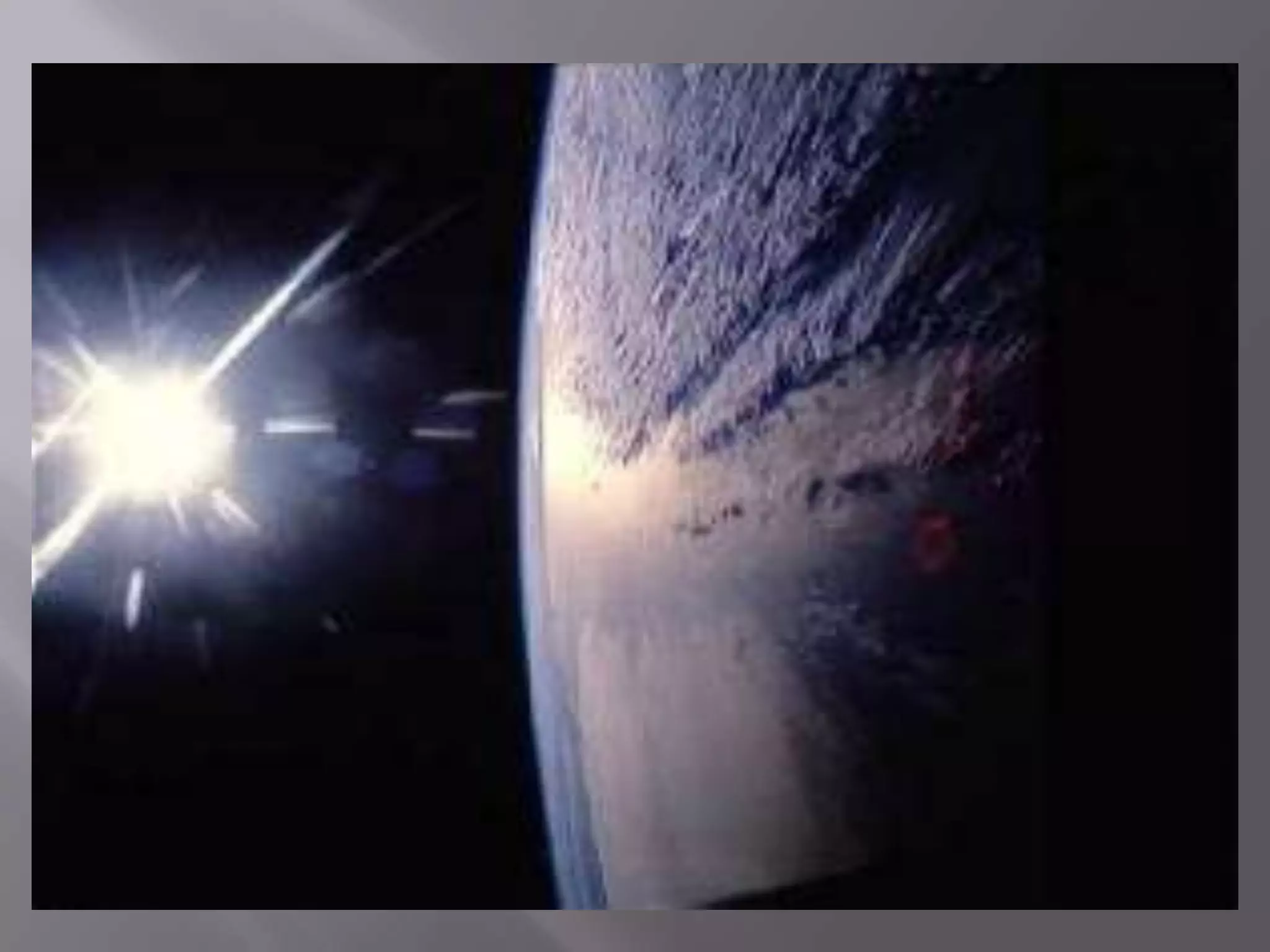
The most obvious thing about light is that it
will reflect off things. The only reason we can
see the things around us is that light, either
from the Sun or from something like an electric
lamp here on Earth, reflects off them into our
eyes. Cut off the source of the light or stop it
from reaching your eyes and those objects
disappear. They don't cease to exist, but you
can no longer see them.




Light waves travel in straight lines through empty
space (a vacuum), but more interesting things happen
to them when they travel through other materials—
especially when they move from one material to
another. That's not unusual: we do the same thing
ourselves.
Have you noticed how your body slows down when
you try to walk through water? You go racing down
the beach at top speed but, as soon as you hit the
sea, you slow right down. No matter how hard you
try, you cannot run as quickly through water as
through air. The dense liquid is harder to push out of
the way, so it slows you down. Exactly the same thing
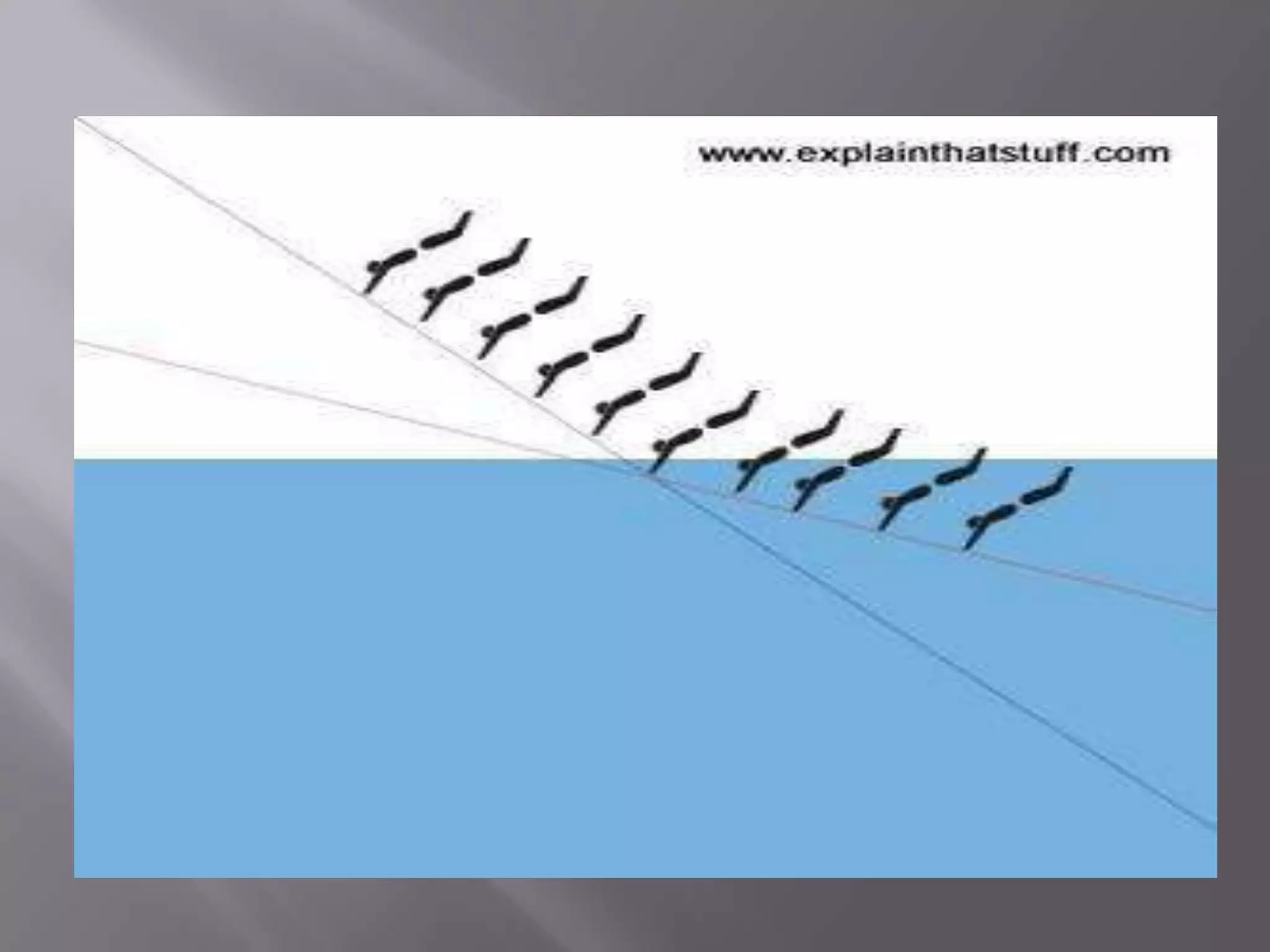
happens to light if you shine it into
water, glass, plastic or another more dense material: it
slows down quite dramatically. This tends to make
light waves bend—something we usually
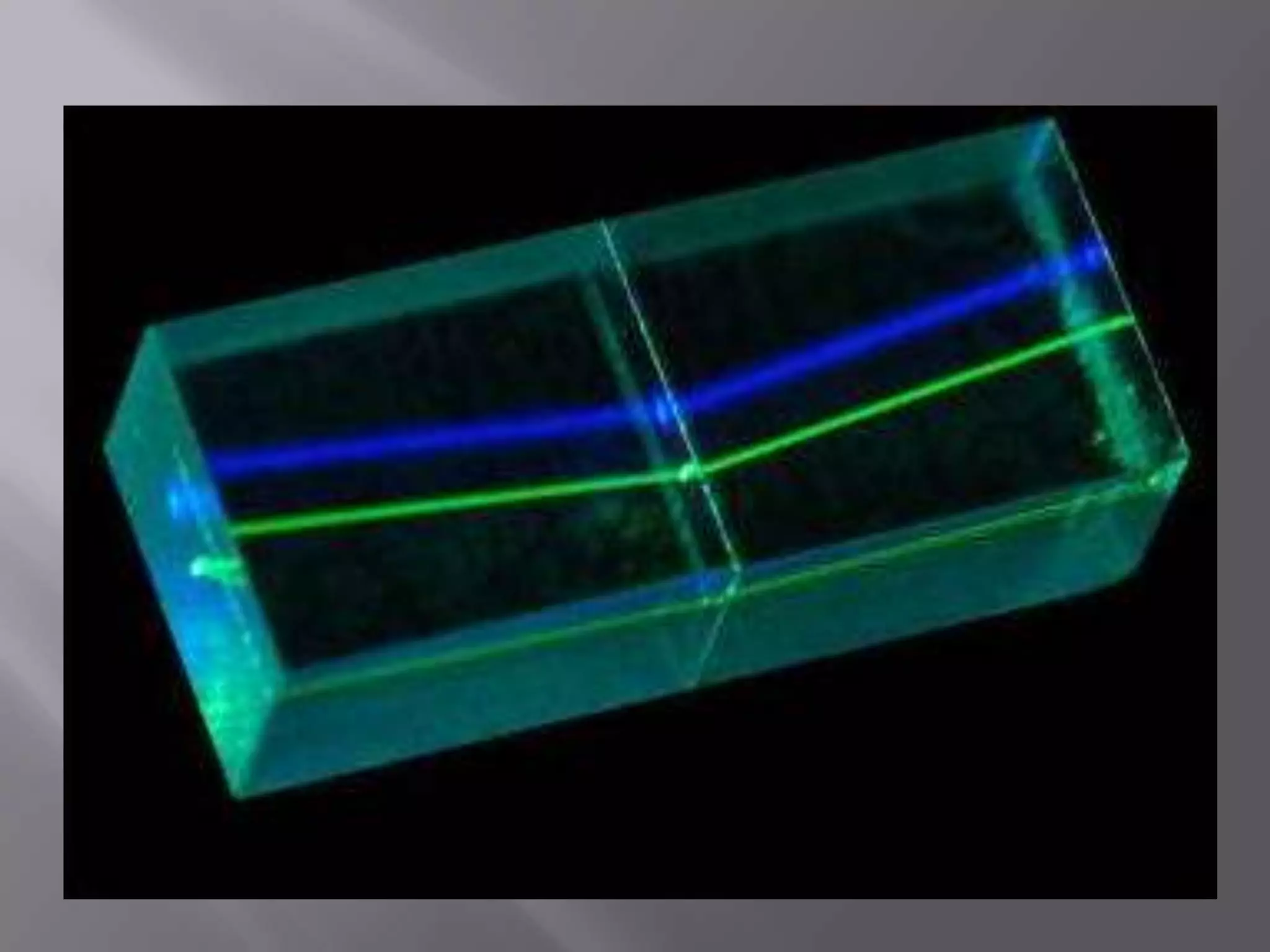
You've probably noticed that water can
bend light. You can see this for yourself by
putting a straw in a glass of water. Notice
how the straw appears to kink at the point
where the water meets the air above it. The
bending happens not in the water itself but
at the junction of the air and the water. You
can see the same thing happening in this
photo of laser light beams shining between
two crystals. As the beams cross the
junction, they bend quite noticeably


You may have learned that the speed of light is
always the same, but that's only true when light
travels in a vacuum. In fact, light travels more
slowly in some materials than others. It goes more
slowly in water than in air. Or, to put it another
way, light slows down when it moves from air to
water and it speeds up when it moves from water
to air. This is what causes the straw to look bent.


Refraction is amazingly useful. If you wear
eyeglasses, you probably know that the lenses they
contain are curved-shape pieces of glass or plastic
that bend (refract) the light from the things you're
looking at. Bending the light makes it seem to
come from nearer or further away (depending on
the type of lenses you have), which corrects the
problem with your sight. To put it another way,
your eyeglasses fix your vision by slowing down
incoming light so it shifts direction
slightly. Binoculars, telescopes, cameras,camcorder
s, night vision goggles, and many other things
with lenses work in exactly the same way
(collectively we call these thingsoptical
equipment).
We can hear sounds bending round doorways, but
we can't see round corners—why is that? Like
light, sound travels in the form of waves (they're
very different kinds of waves, but the idea of
energy traveling in a wave pattern is broadly the
same). Sound waves tend to range in size from a
few centimeters to a few meters, and they will
spread out when they come to an opening that is
roughly the same size as they are—something like
a doorway, for example. If sound is rushing down
a corridor in your general direction and there's a
doorway opening onto the room where you're
sitting, the sound waves will spread in through the
doorway and travel to your ears


. The same thing does not happen with light. But
light will spread out in an identical way if you
shine it on a tiny opening that's of roughly similar
size to its wavelength. You may have noticed this
effect, which is called diffraction, if you screw
your eyes up and look at a streetlight in the dark.
As your eyes close, the light seems to spread out
in strange stripes as it squeezes through the
narrow gaps between your eyelashes. The tighter
you close your eyes, the more the light spreads
(until it disappears when you close your eyes
completely).


If you stand above a calm pond (or a bath full of
water) and dip your finger in (or allow a single
drop to drip down to the water surface from a
height), you'll see ripples of energy spreading
outwards from the point of the impact. If you do
this in two different places, the two sets of ripples
will move toward one another, crash together, and
form a new pattern of ripples called an
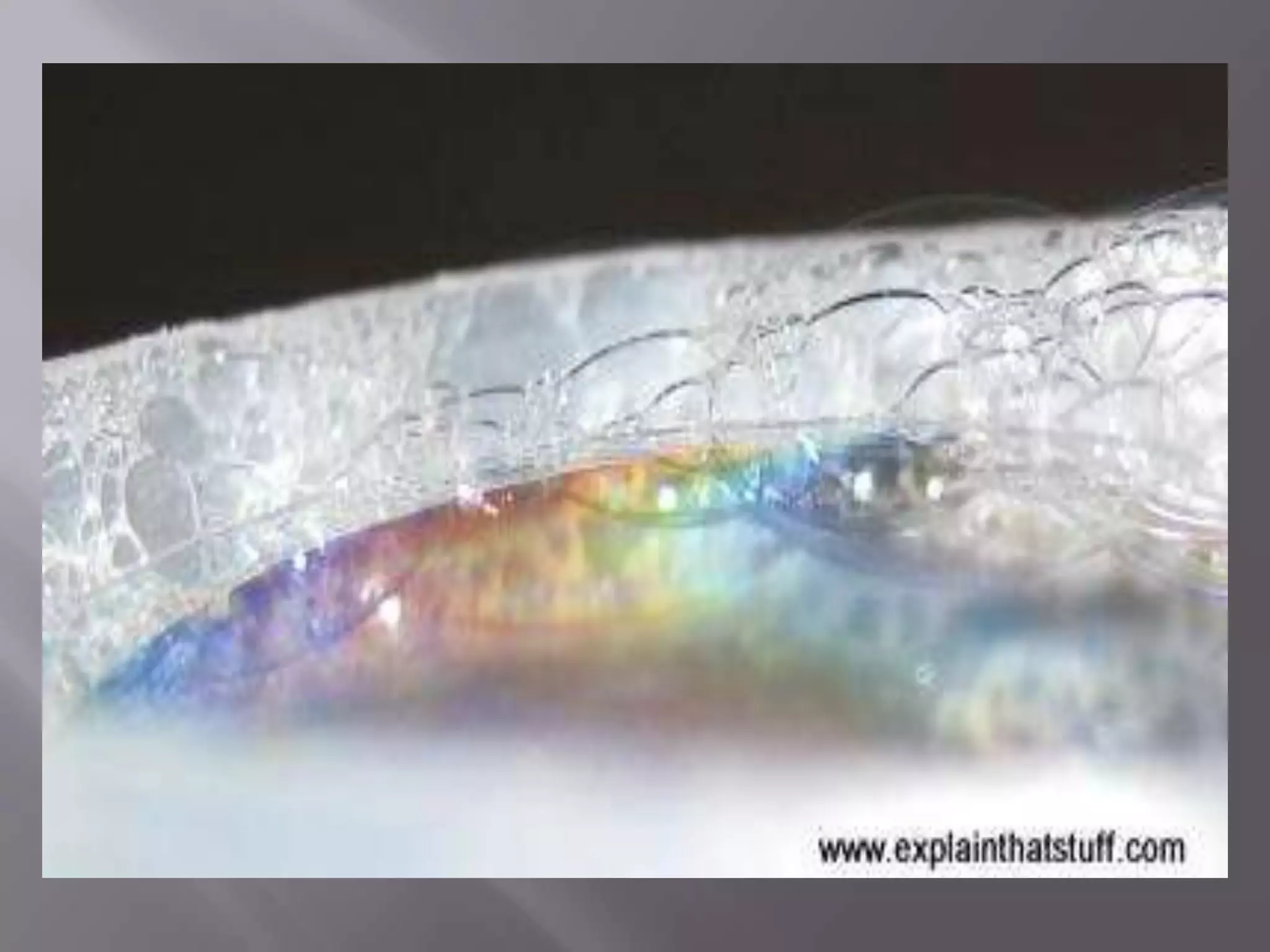
interference pattern. Light behaves in exactly the
same way. If two light sources produce waves of
light that travel together and meet up, the waves
will interfere with one another where they cross.


If you've read our article on energy, you'll know
that energy is something that doesn't just turn up
out of the blue: it has to come from somewhere.
There is a fixed amount of energy in the Universe
and no process ever creates or destroys energy—it
simply turns some of the existing energy into one
or more other forms. This idea is a basic law of
physics called the conservation of energyand it
applies to light as much as anything else. So where
then does light comes from? How exactly do you
"make" light?


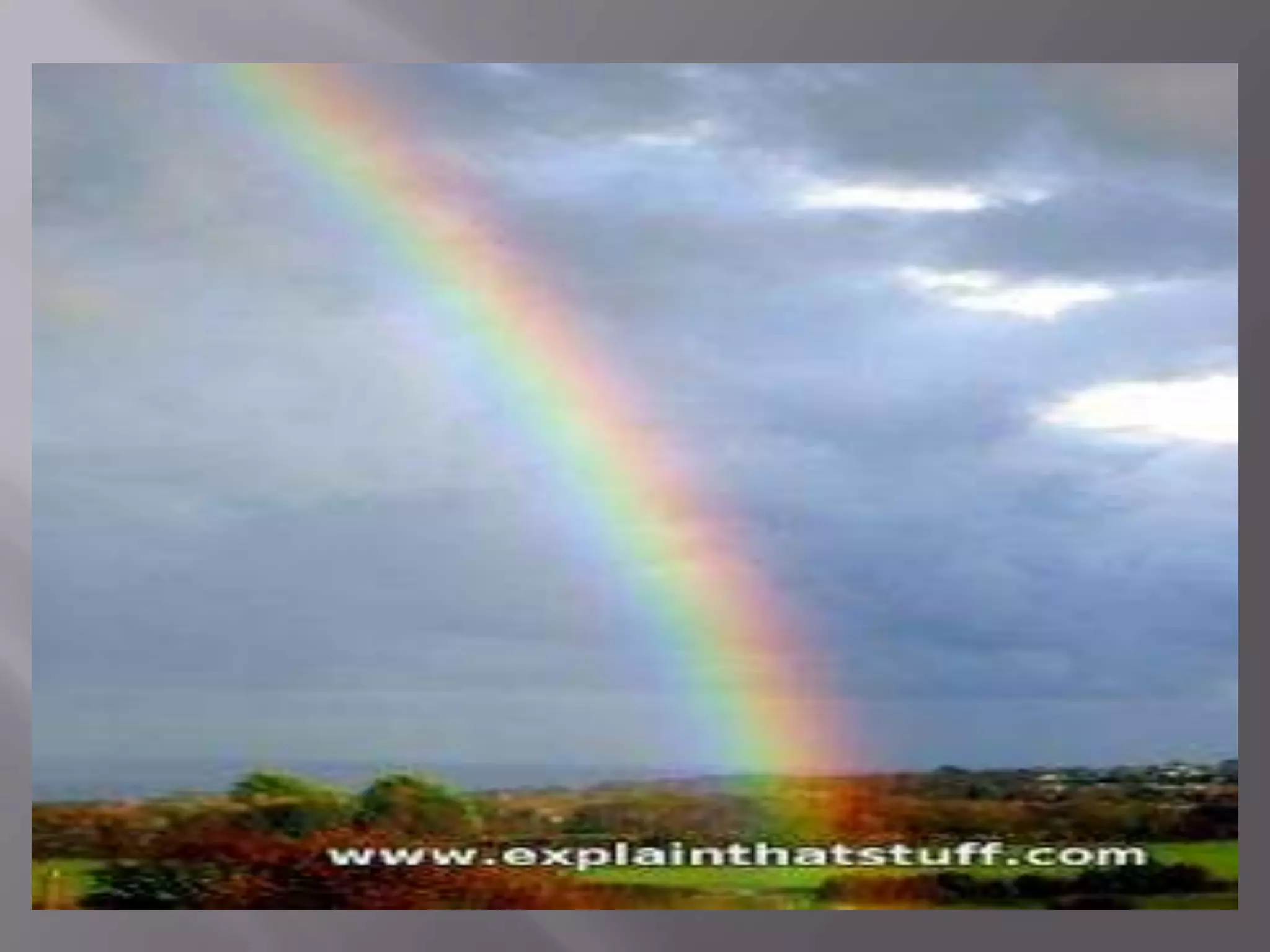
Color (spelled "colour" in the UK) is one of the
strangest things about light. Here's one obvious
riddle: if we see things because sunlight is
reflected off them, how come everything isn't the
same color? Why isn't everything the color of
sunlight? You probably know the answer to this
already. Sunlight isn't light of just one color—it's
what we call white light, made up of all the
different colors mixed together. We know this
because we can see rainbows, those colorful
curves that appear in the sky when droplets of
water split sunlight into its component colors by
refracting (bending) different colors of light by
different amounts.


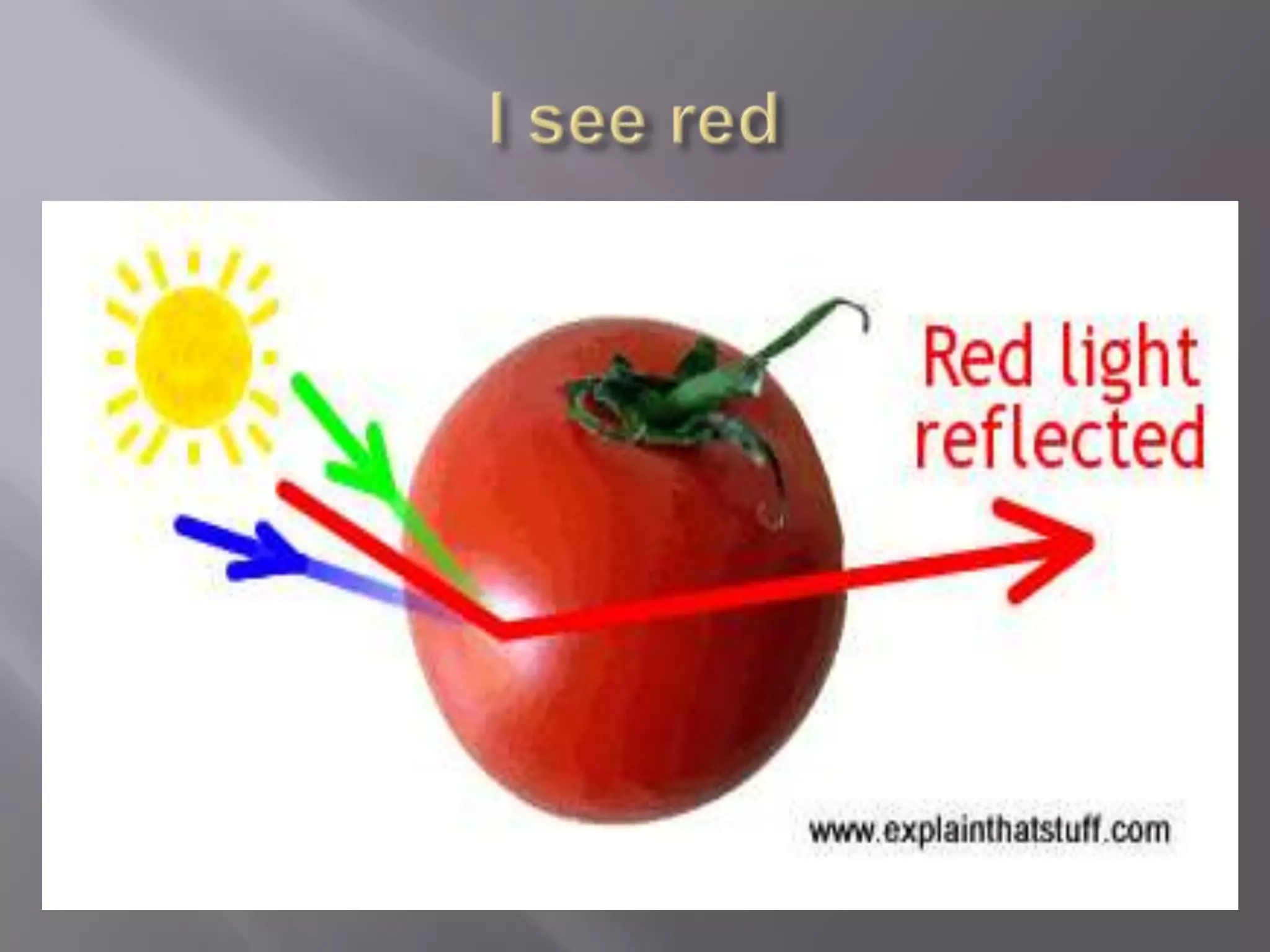
Why does a tomato look red? When sunlight
shines on a tomato, the red part of the sunlight
is reflected back again off the tomato's
skin, while all the other colors of lights are
absorbed (soaked into) the tomato, so you don't
see them. That's just as true of a blue
book, which reflects only the blue part of
sunlight but absorbs light of other colors.
Light

Light

  • 2.
      When we're veryyoung, we have a very simple idea about light: the world is either light or dark and we can change from one to the other just by flicking a switch on the wall. But we soon learn that light is more complex than this. Light arrives on our planet after a speedy trip from the Sun, 149 million km (93 million miles away). Light travels at 186,000 miles (300,000 km) per second, so the light you're seeing now was still tucked away in the Sun about eight minutes ago. Put it another way, light takes roughly twice as long to get from the Sun to Earth as it does to make a cup of coffee!
  • 3.
     Light waves (let'sassume they are indeed waves for now) behave in four particularly interesting and useful ways that we describe as reflection, refraction, diffraction, and interference.
  • 5.
     The most obviousthing about light is that it will reflect off things. The only reason we can see the things around us is that light, either from the Sun or from something like an electric lamp here on Earth, reflects off them into our eyes. Cut off the source of the light or stop it from reaching your eyes and those objects disappear. They don't cease to exist, but you can no longer see them.
  • 7.
      Light waves travelin straight lines through empty space (a vacuum), but more interesting things happen to them when they travel through other materials— especially when they move from one material to another. That's not unusual: we do the same thing ourselves. Have you noticed how your body slows down when you try to walk through water? You go racing down the beach at top speed but, as soon as you hit the sea, you slow right down. No matter how hard you try, you cannot run as quickly through water as through air. The dense liquid is harder to push out of the way, so it slows you down. Exactly the same thing happens to light if you shine it into water, glass, plastic or another more dense material: it slows down quite dramatically. This tends to make light waves bend—something we usually
  • 10.
    You've probably noticedthat water can bend light. You can see this for yourself by putting a straw in a glass of water. Notice how the straw appears to kink at the point where the water meets the air above it. The bending happens not in the water itself but at the junction of the air and the water. You can see the same thing happening in this photo of laser light beams shining between two crystals. As the beams cross the junction, they bend quite noticeably
  • 11.
     You may havelearned that the speed of light is always the same, but that's only true when light travels in a vacuum. In fact, light travels more slowly in some materials than others. It goes more slowly in water than in air. Or, to put it another way, light slows down when it moves from air to water and it speeds up when it moves from water to air. This is what causes the straw to look bent.
  • 12.
     Refraction is amazinglyuseful. If you wear eyeglasses, you probably know that the lenses they contain are curved-shape pieces of glass or plastic that bend (refract) the light from the things you're looking at. Bending the light makes it seem to come from nearer or further away (depending on the type of lenses you have), which corrects the problem with your sight. To put it another way, your eyeglasses fix your vision by slowing down incoming light so it shifts direction slightly. Binoculars, telescopes, cameras,camcorder s, night vision goggles, and many other things with lenses work in exactly the same way (collectively we call these thingsoptical equipment).
  • 13.
    We can hearsounds bending round doorways, but we can't see round corners—why is that? Like light, sound travels in the form of waves (they're very different kinds of waves, but the idea of energy traveling in a wave pattern is broadly the same). Sound waves tend to range in size from a few centimeters to a few meters, and they will spread out when they come to an opening that is roughly the same size as they are—something like a doorway, for example. If sound is rushing down a corridor in your general direction and there's a doorway opening onto the room where you're sitting, the sound waves will spread in through the doorway and travel to your ears
  • 14.
     . The samething does not happen with light. But light will spread out in an identical way if you shine it on a tiny opening that's of roughly similar size to its wavelength. You may have noticed this effect, which is called diffraction, if you screw your eyes up and look at a streetlight in the dark. As your eyes close, the light seems to spread out in strange stripes as it squeezes through the narrow gaps between your eyelashes. The tighter you close your eyes, the more the light spreads (until it disappears when you close your eyes completely).
  • 15.
     If you standabove a calm pond (or a bath full of water) and dip your finger in (or allow a single drop to drip down to the water surface from a height), you'll see ripples of energy spreading outwards from the point of the impact. If you do this in two different places, the two sets of ripples will move toward one another, crash together, and form a new pattern of ripples called an interference pattern. Light behaves in exactly the same way. If two light sources produce waves of light that travel together and meet up, the waves will interfere with one another where they cross.
  • 17.
     If you've readour article on energy, you'll know that energy is something that doesn't just turn up out of the blue: it has to come from somewhere. There is a fixed amount of energy in the Universe and no process ever creates or destroys energy—it simply turns some of the existing energy into one or more other forms. This idea is a basic law of physics called the conservation of energyand it applies to light as much as anything else. So where then does light comes from? How exactly do you "make" light?
  • 18.
     Color (spelled "colour"in the UK) is one of the strangest things about light. Here's one obvious riddle: if we see things because sunlight is reflected off them, how come everything isn't the same color? Why isn't everything the color of sunlight? You probably know the answer to this already. Sunlight isn't light of just one color—it's what we call white light, made up of all the different colors mixed together. We know this because we can see rainbows, those colorful curves that appear in the sky when droplets of water split sunlight into its component colors by refracting (bending) different colors of light by different amounts.
  • 20.
     Why does atomato look red? When sunlight shines on a tomato, the red part of the sunlight is reflected back again off the tomato's skin, while all the other colors of lights are absorbed (soaked into) the tomato, so you don't see them. That's just as true of a blue book, which reflects only the blue part of sunlight but absorbs light of other colors.