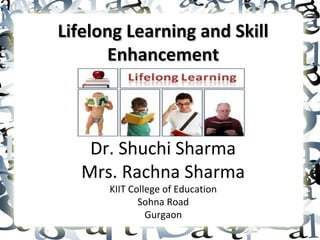
LLiiffeelloonngg LLeeaarrnniinngg aanndd SSkkiillll 
EEnnhhaanncceemmeenntt 
Dr. Shuchi Sharma 
Mrs. Rachna Sharma 
KIIT College of Education 
Sohna Road 
Gurgaon
Education 
“Education is not preparation for 
life; education is life itself” 
John Dewey 
Education in its general sense is a 
form of learning, in which 
knowledge, skills, and habits of a 
group of people are transferred 
from one generation to the next 
through teaching, training, or 
research
Dellor’s Four Pillars of Education
Lifelong learning is the "ongoing, voluntary, and 
self-motivated” pursuit of knowledge for either 
personal or professional reasons.
• Skill is the ability, coming from one's 
knowledge, practice, aptitude, etc., to do 
something well. 
• Skills can be classified into general-domain 
and specific- domain skills. 
• Specific domain skills would be useful only for 
a certain job. In general domain,time 
management, teamwork, self motivation and 
other skills will be included.
• Skill is the ability, coming from one's 
knowledge, practice, aptitude, etc., to do 
something well. 
• Skills can be classified into general-domain 
and specific- domain skills. 
• Specific domain skills would be useful only for 
a certain job. In general domain,time 
management, teamwork, self motivation and 
other skills will be included.
• Most important life skill is the ability to learn. 
• Life skills are not always directly learned but 
often learned indirectly through experience 
and practice. 
• There is no definite list of life skills; certain 
skills may be more or less relevant depending 
on one’s life circumstances, culture, beliefs, 
age, geographic location etc
•Learning is skill enhancement and skill 
enhancement will help in empowering us to take 
positive actions, to protect ourselves and to 
promote health and positive social relationships. 
•Skill enhancement typically uses a combination 
of cognitive and behavior problem solving 
approaches, both of which are used to strengthen 
a persons’ positive skill development.
Conclusion 
Skills can be developed effectively in students if 
these are fostered in a consistent way from early 
childhood to the end of second-level education 
continuing through life. 
Early experiences support the development of 
various skills in individuals. The knowledge, skills, 
attitudes and dispositions developed in the early 
years have a significant impact upon their later 
learning experiences.
Suggestions 
• Set challenging targets for improving the core skills during 
all stages 
• Clarify what we expect children to learn and develop at 
various stages. 
• Create a culture of continuous improvement in various 
settings and schools and in the education system by 
improving radically the assessment and reporting of progress 
at different places.
Contd… 
• Improve the professional skills of teachers in planning 
and delivering rich learning activities, in assessing and 
monitoring progress, and in using assessment information 
to inform the next steps for learners 
• Continue to target available resources on enhancing 
provisions designed to improve the learning opportunities 
and achievement of children who come from diverse 
backgrounds and those with additional learning needs. 
• Help parents and communities to support their child’s 
development.
Contd… 
• Raise public awareness of the 
role that the family, community, 
the education system, libraries 
and other bodies can play 
together in promoting successful 
enhancement of skills. 
• Monitor progress towards 
achieving the demanding targets 
in the process of lifelong 
learning.
“Being ignorant is not so 
much a shame, as being 
unwilling to learn”- 
Benjamin Franklin

Lifelong learning (1)

  • 1.
    LLiiffeelloonngg LLeeaarrnniinngg aannddSSkkiillll EEnnhhaanncceemmeenntt Dr. Shuchi Sharma Mrs. Rachna Sharma KIIT College of Education Sohna Road Gurgaon
  • 2.
    Education “Education isnot preparation for life; education is life itself” John Dewey Education in its general sense is a form of learning, in which knowledge, skills, and habits of a group of people are transferred from one generation to the next through teaching, training, or research
  • 3.
  • 4.
    Lifelong learning isthe "ongoing, voluntary, and self-motivated” pursuit of knowledge for either personal or professional reasons.
  • 6.
    • Skill isthe ability, coming from one's knowledge, practice, aptitude, etc., to do something well. • Skills can be classified into general-domain and specific- domain skills. • Specific domain skills would be useful only for a certain job. In general domain,time management, teamwork, self motivation and other skills will be included.
  • 7.
    • Skill isthe ability, coming from one's knowledge, practice, aptitude, etc., to do something well. • Skills can be classified into general-domain and specific- domain skills. • Specific domain skills would be useful only for a certain job. In general domain,time management, teamwork, self motivation and other skills will be included.
  • 8.
    • Most importantlife skill is the ability to learn. • Life skills are not always directly learned but often learned indirectly through experience and practice. • There is no definite list of life skills; certain skills may be more or less relevant depending on one’s life circumstances, culture, beliefs, age, geographic location etc
  • 9.
    •Learning is skillenhancement and skill enhancement will help in empowering us to take positive actions, to protect ourselves and to promote health and positive social relationships. •Skill enhancement typically uses a combination of cognitive and behavior problem solving approaches, both of which are used to strengthen a persons’ positive skill development.
  • 10.
    Conclusion Skills canbe developed effectively in students if these are fostered in a consistent way from early childhood to the end of second-level education continuing through life. Early experiences support the development of various skills in individuals. The knowledge, skills, attitudes and dispositions developed in the early years have a significant impact upon their later learning experiences.
  • 11.
    Suggestions • Setchallenging targets for improving the core skills during all stages • Clarify what we expect children to learn and develop at various stages. • Create a culture of continuous improvement in various settings and schools and in the education system by improving radically the assessment and reporting of progress at different places.
  • 12.
    Contd… • Improvethe professional skills of teachers in planning and delivering rich learning activities, in assessing and monitoring progress, and in using assessment information to inform the next steps for learners • Continue to target available resources on enhancing provisions designed to improve the learning opportunities and achievement of children who come from diverse backgrounds and those with additional learning needs. • Help parents and communities to support their child’s development.
  • 13.
    Contd… • Raisepublic awareness of the role that the family, community, the education system, libraries and other bodies can play together in promoting successful enhancement of skills. • Monitor progress towards achieving the demanding targets in the process of lifelong learning.
  • 14.
    “Being ignorant isnot so much a shame, as being unwilling to learn”- Benjamin Franklin