Libraries – Strategic learning institutions
Explore
Hands on
Connect the dots
Round 1:
Learning as strategy and core task for libraries
Required skills for the information professional
The shortest version of library history you ever heard
… a bit about Global Librarianship – and Philosophy
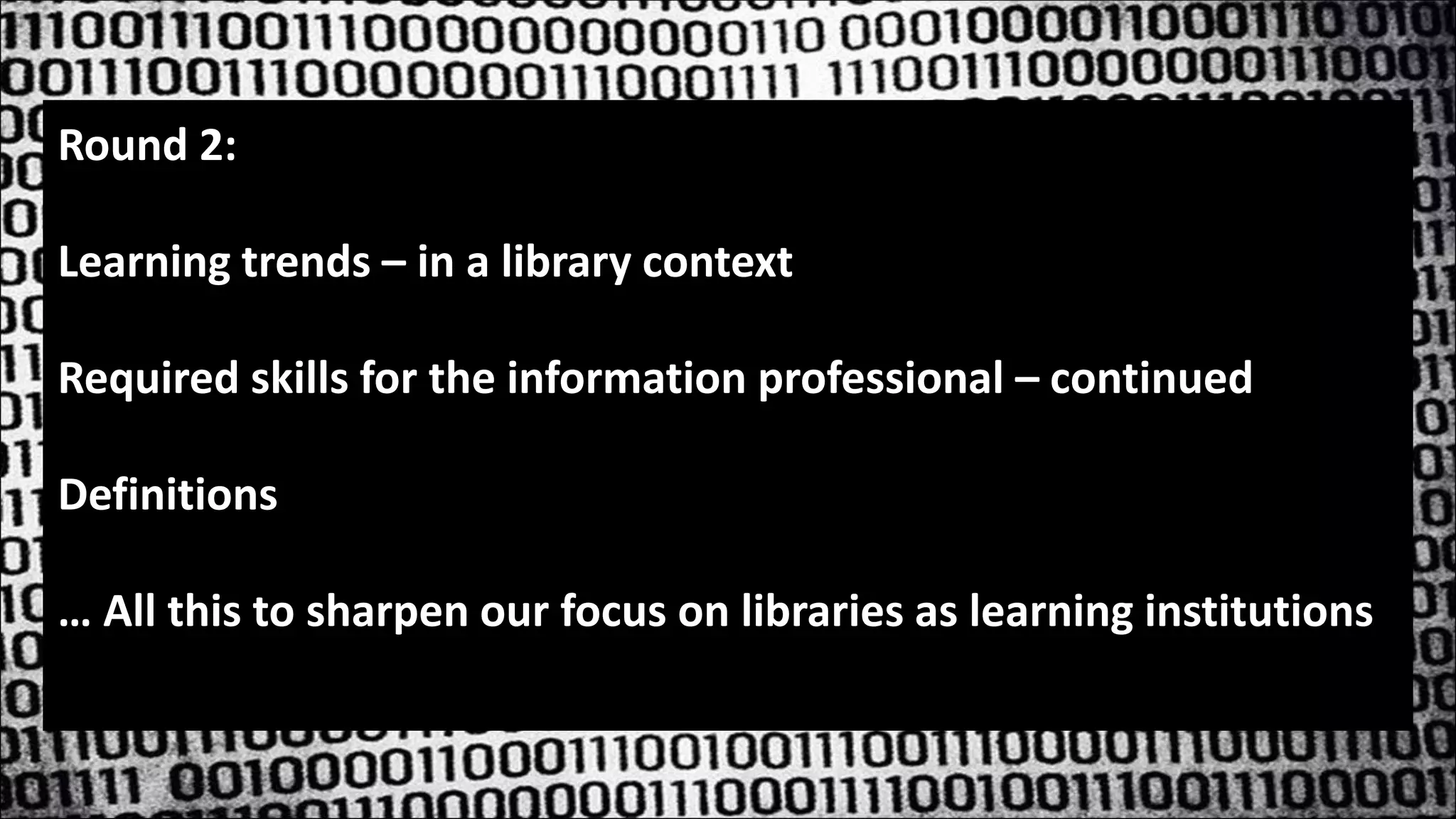
Round 2:
Learning trends – in a library context
Required skills for the information professional – continued
Definitions
… All this to sharpen our focus on libraries as learning institutions
Round 3:
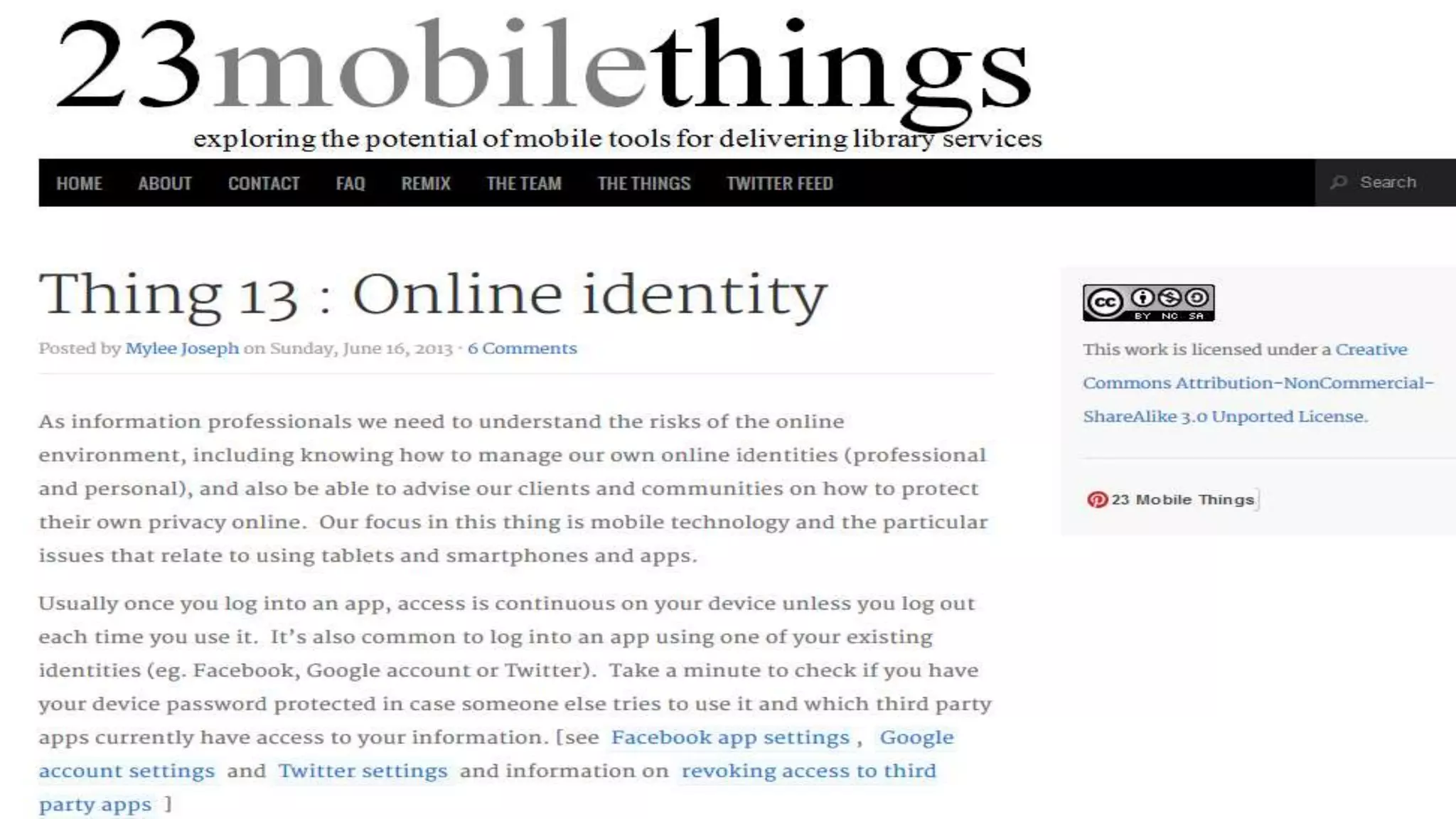
23 Mobile Things – From local to global and back again
What is the anatomy of a (23) thing
Pssst: 23 news – What is the next step
… Prepare you to work with your own 23 program
Round 1:
Learning as strategy and core task for libraries
Required skills for the information professional
The shortest version of library history you ever heard
… a bit about Global Librarianship – and Philosophy
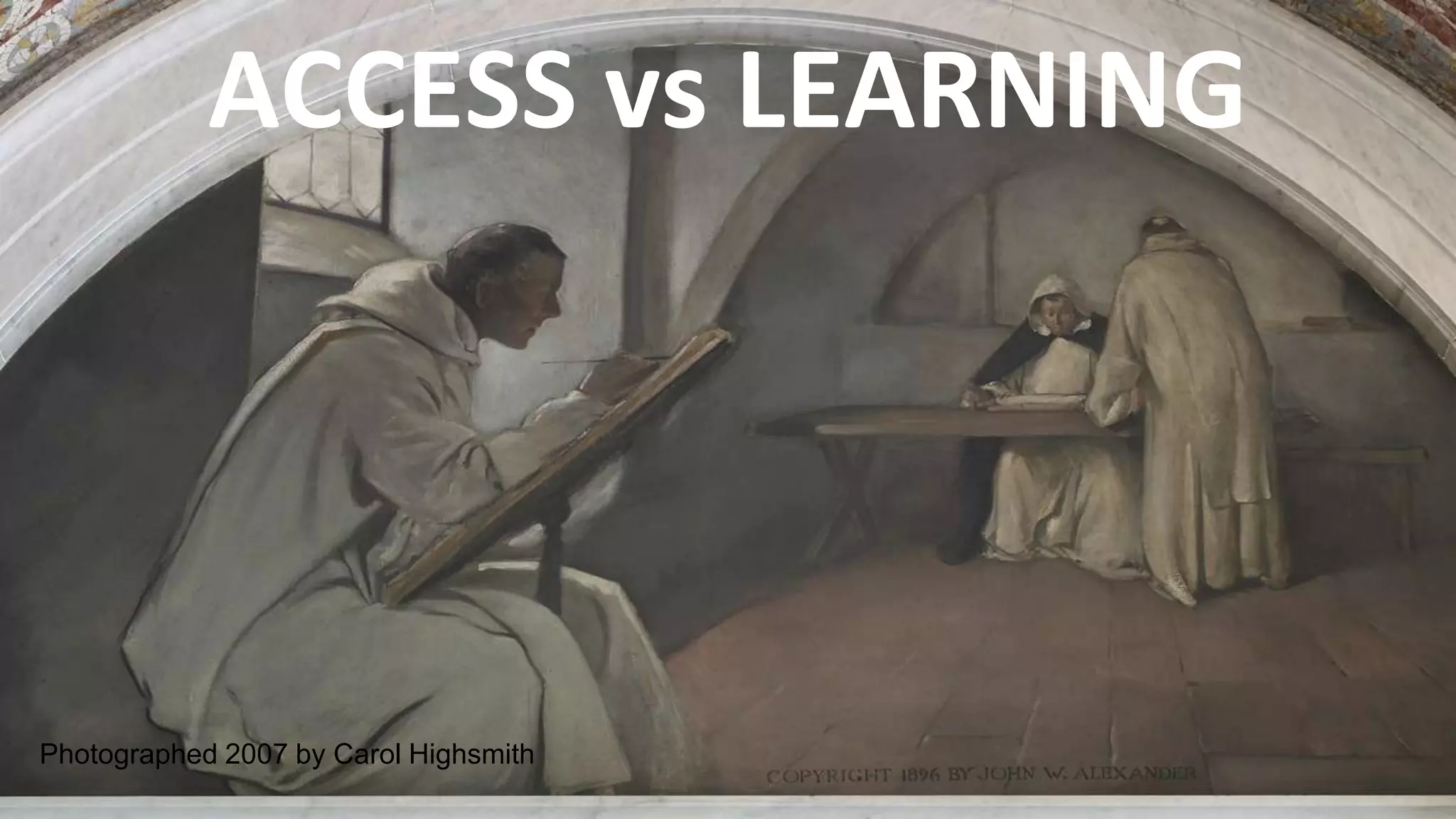
ACCESS vs LEARNING
Photographed 2007 by Carol Highsmith
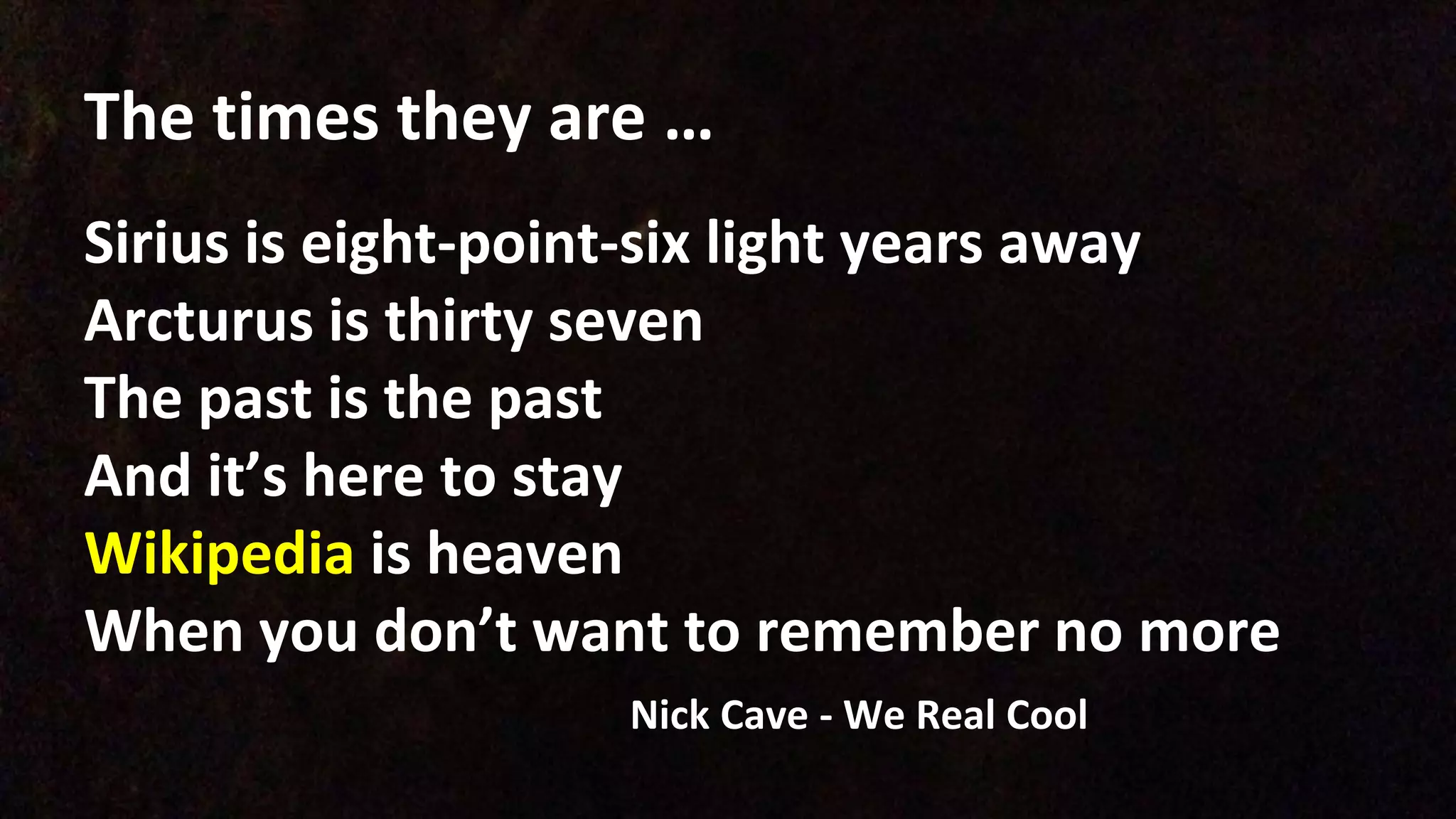
The times they are …
Sirius is eight-point-six light years away
Arcturus is thirty seven
The past is the past
And it’s here to stay
Wikipedia is heaven
When you don’t want to remember no more
Nick Cave - We Real Cool
Unlearn
H A C K
Learn
Perspective
Learning as strategy
The mission of librarians is to
improve society through
facilitating knowledge creation
in their communities
Library learning strategy…
Learning empowers people…
Education for the young and life long learning for all.
The library supports learning on all levels - and for people
of all ages.
Libraries have the skills to support transformation of
information to knowledge.
Basic library skill
To be aware of and be able to
adapt to changes in society
surrounding the library
Basic library skill
Have a strategy to make the
community smarter – and work
with partners to make it happen
Reflection
Do you agree that supporting
learning is a core task for libraries
today?
How can the library best support
learning in new ways in your area or
institution?
Round 2:
Learning trends – in a library context
Required skills for the information professional – continued
Definitions
… All this to sharpen our focus on libraries as learning institutions
MOOCS
Participatory Learning
Connected Learning
23 mobile things
Hacker spaces *Fablabs *Hands on
Lifelong learning
digital divide
Basic library skill
Knowledge about how people
learn, unlearn and relearn...
Participatory librarianship recasts library and
library practice using the fundamental concept
that knowledge is created through conversation.
Libraries are in the knowledge business,
therefore libraries are in the conversation
business. Participatory librarians approach their
work as facilitators of conversation.
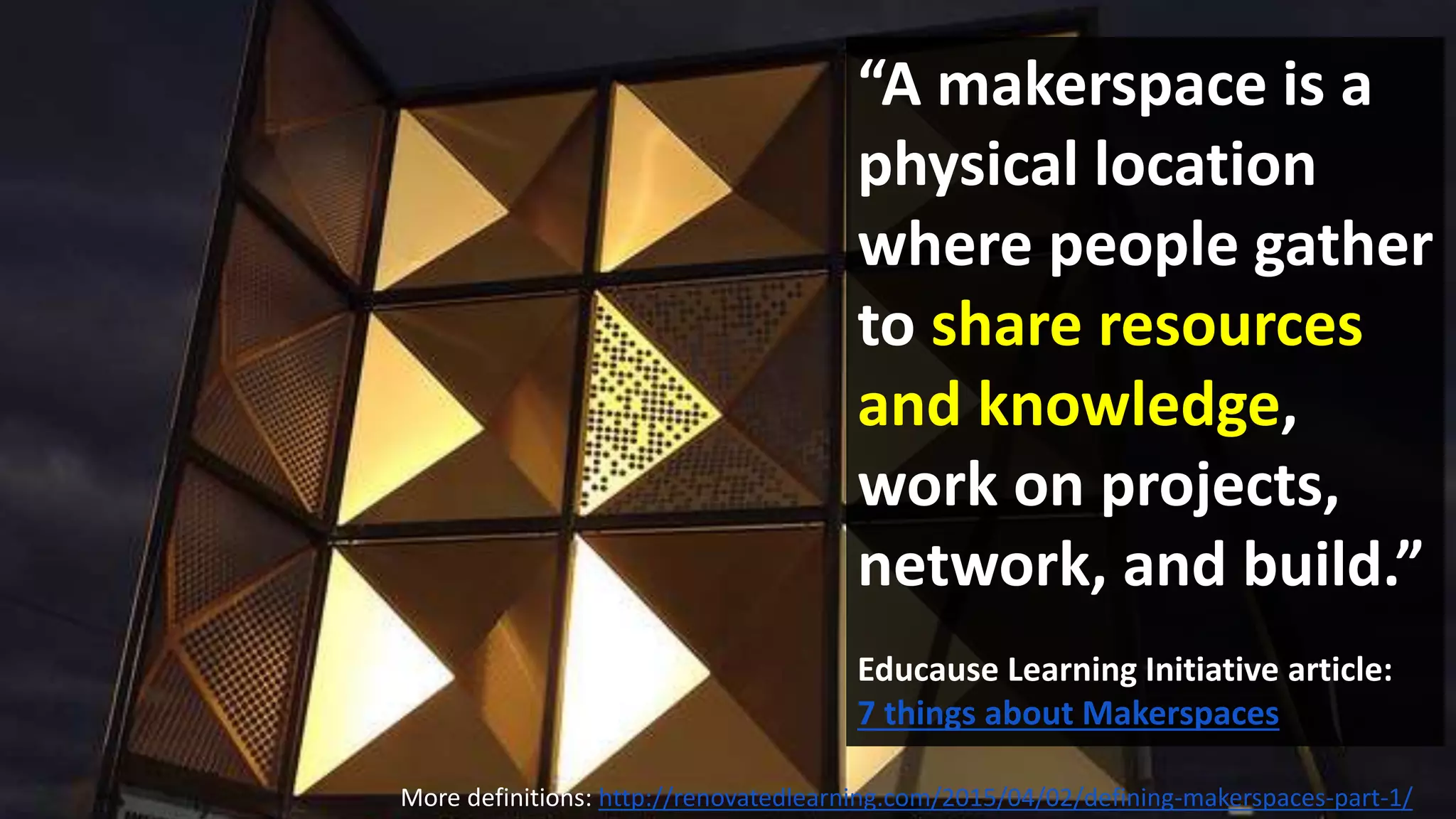
“A makerspace is a
physical location
where people gather
to share resources
and knowledge,
work on projects,
network, and build.”
Educause Learning Initiative article:
7 things about Makerspaces
More definitions: http://renovatedlearning.com/2015/04/02/defining-makerspaces-part-1/
“Makerspaces are collaborative
learning environments where
people come together to share
materials and learn new skills…
makerspaces are not necessarily
born out of a specific set of
materials or spaces, but rather a
mindset of community partnership,
collaboration, and creation.”
Library as incubator project
More definitions: http://renovatedlearning.com/2015/04/02/defining-makerspaces-part-1/
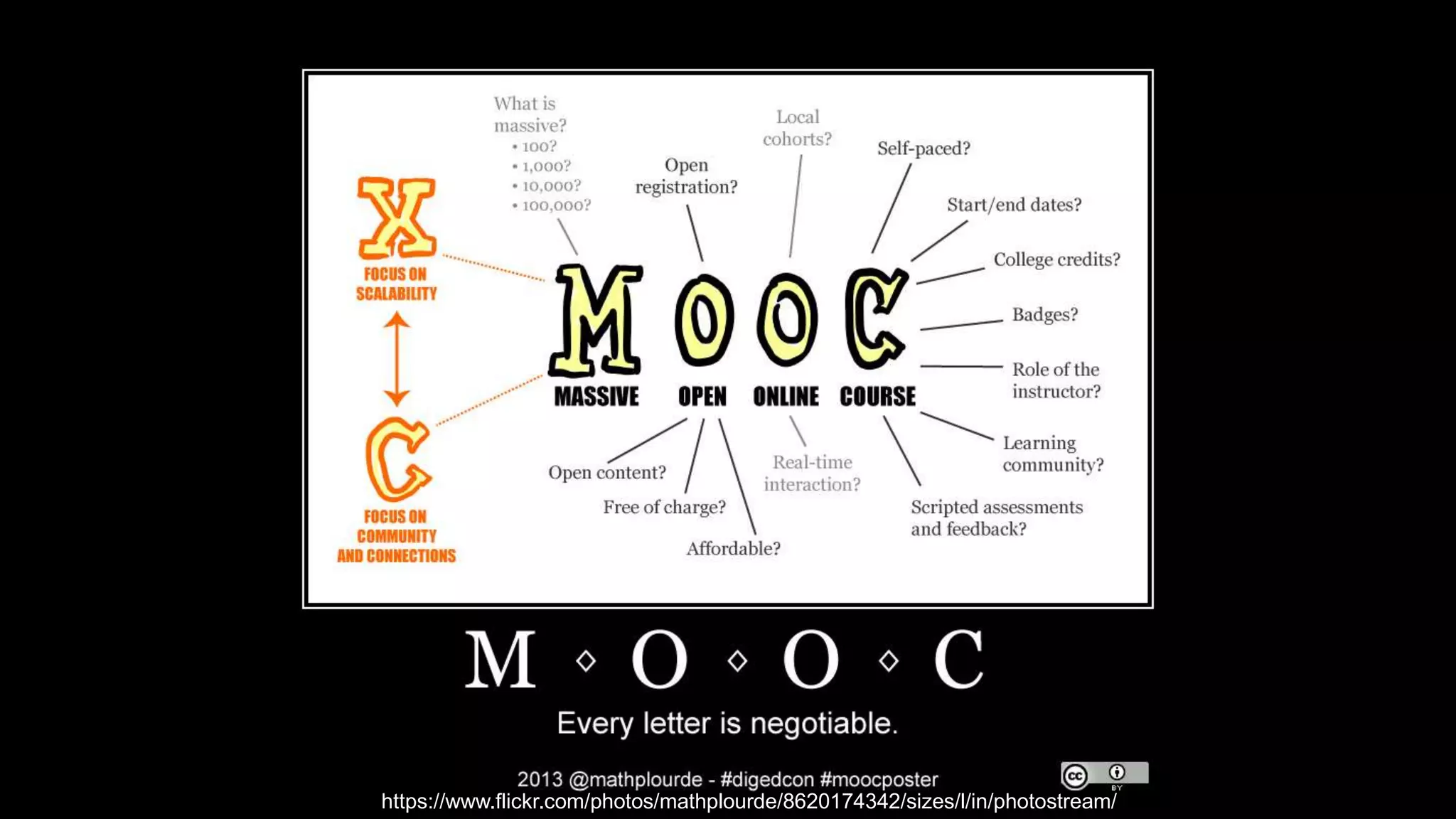
https://www.flickr.com/photos/mathplourde/8620174342/sizes/l/in/photostream/
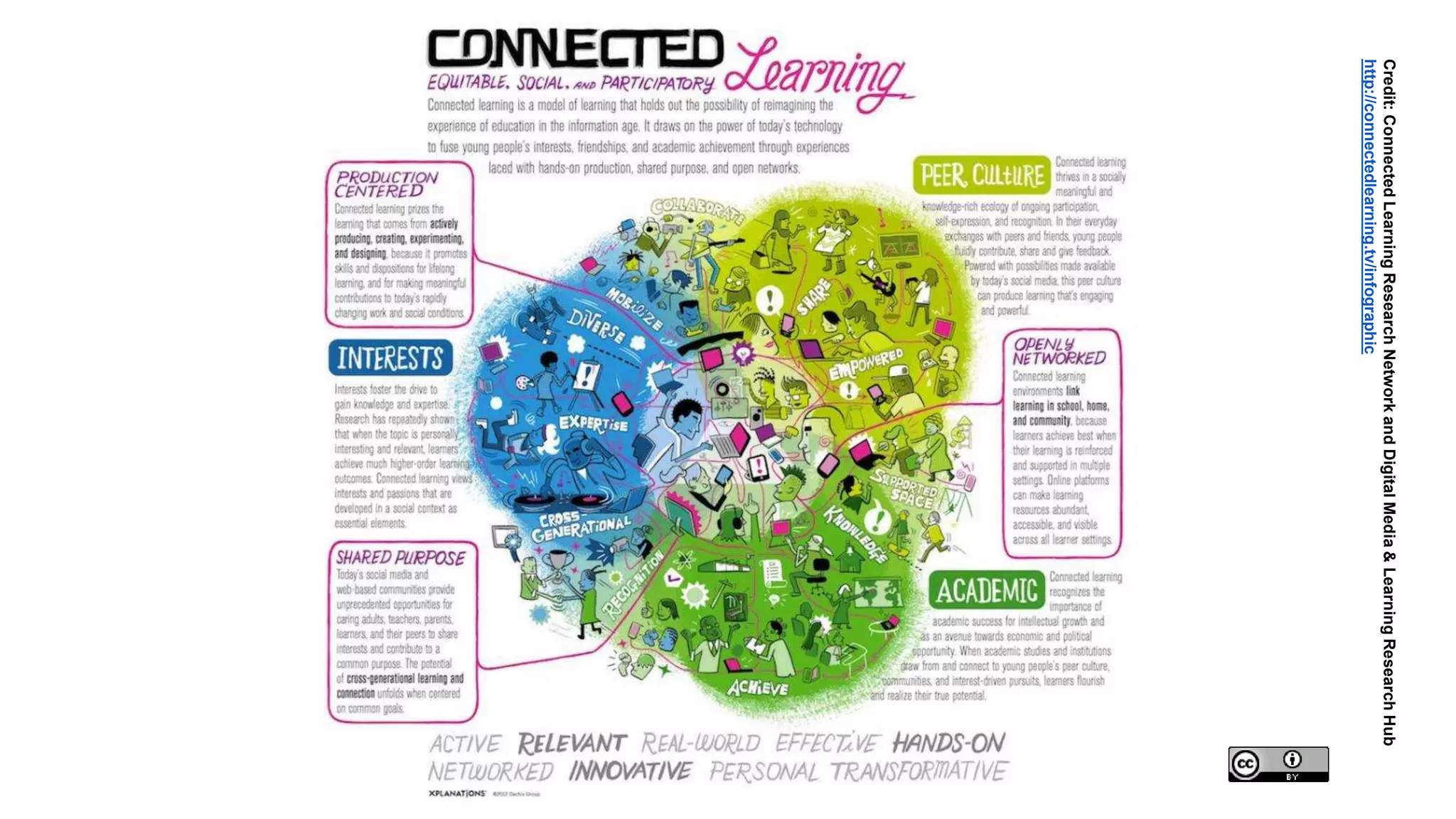
Connected
Learning
“In the ‘connected learning’ approach,
learning is accelerated when it is powered
by an individual’s interests and passions,
supported by peers, and in spaces where
an individual feels valued and safe.”
Åke Nygren
http://library.ifla.org/1014/1/167-nygren-en.pdf
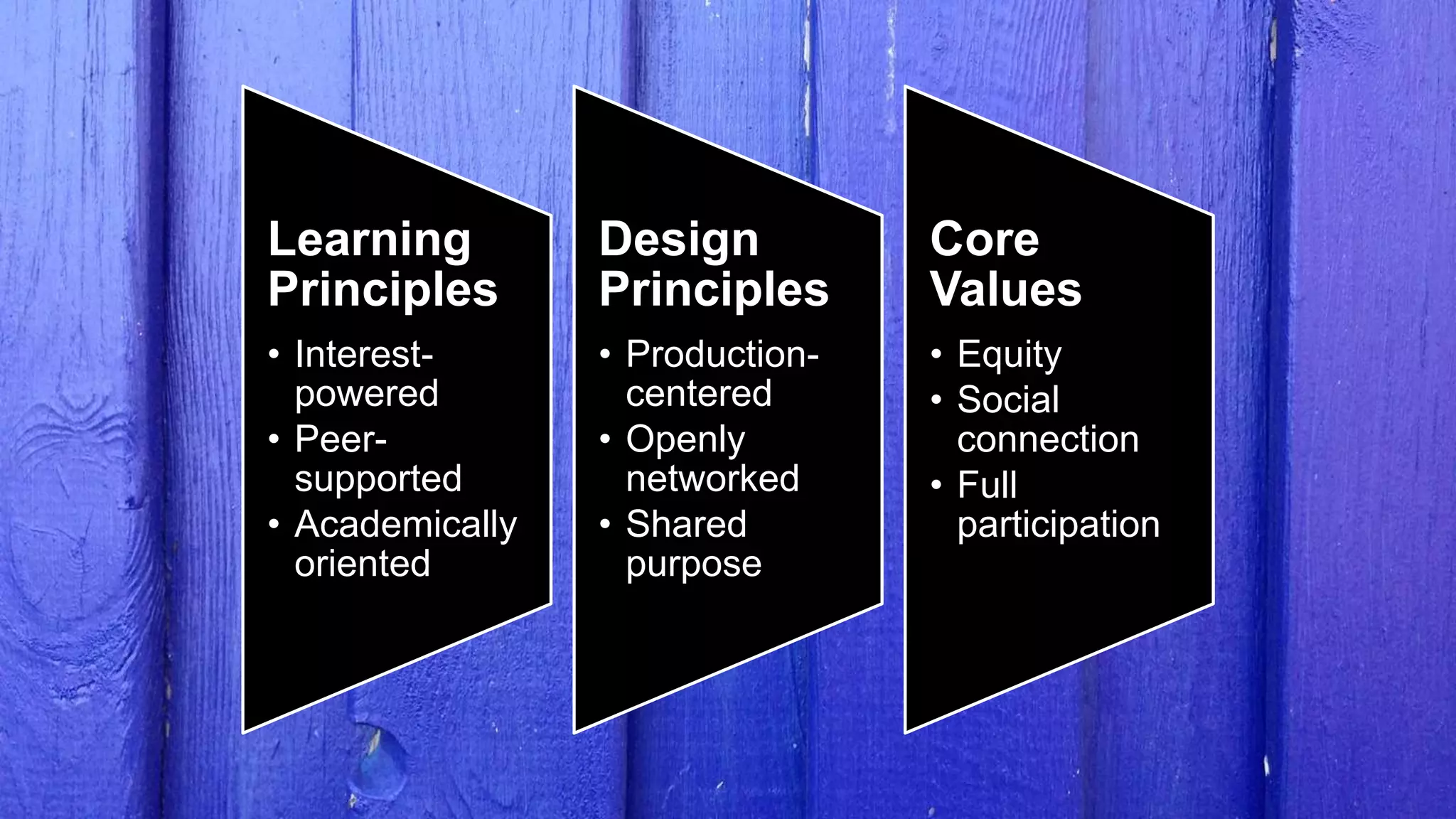
Learning
Principles
• Interest-
powered
• Peer-
supported
• Academically
oriented
Design
Principles
• Production-
centered
• Openly
networked
• Shared
purpose
Core
Values
• Equity
• Social
connection
• Full
participation
Credit:ConnectedLearningResearchNetworkandDigitalMedia&LearningResearchHub
http://connectedlearning.tv/infographic
Do you see new opportunities for
libraries in some of the learning
approaches just mentioned?
What skills do we need in the
profession to support learning / and
unlearning in our communities?
Reflection
Round 3:
23 Mobile Things – From local to global and back again
What is the anatomy of a (23) thing
Pssst: 23 news – What is the next step
… Prepare you to work with your own 23 program
23mobilethings.net
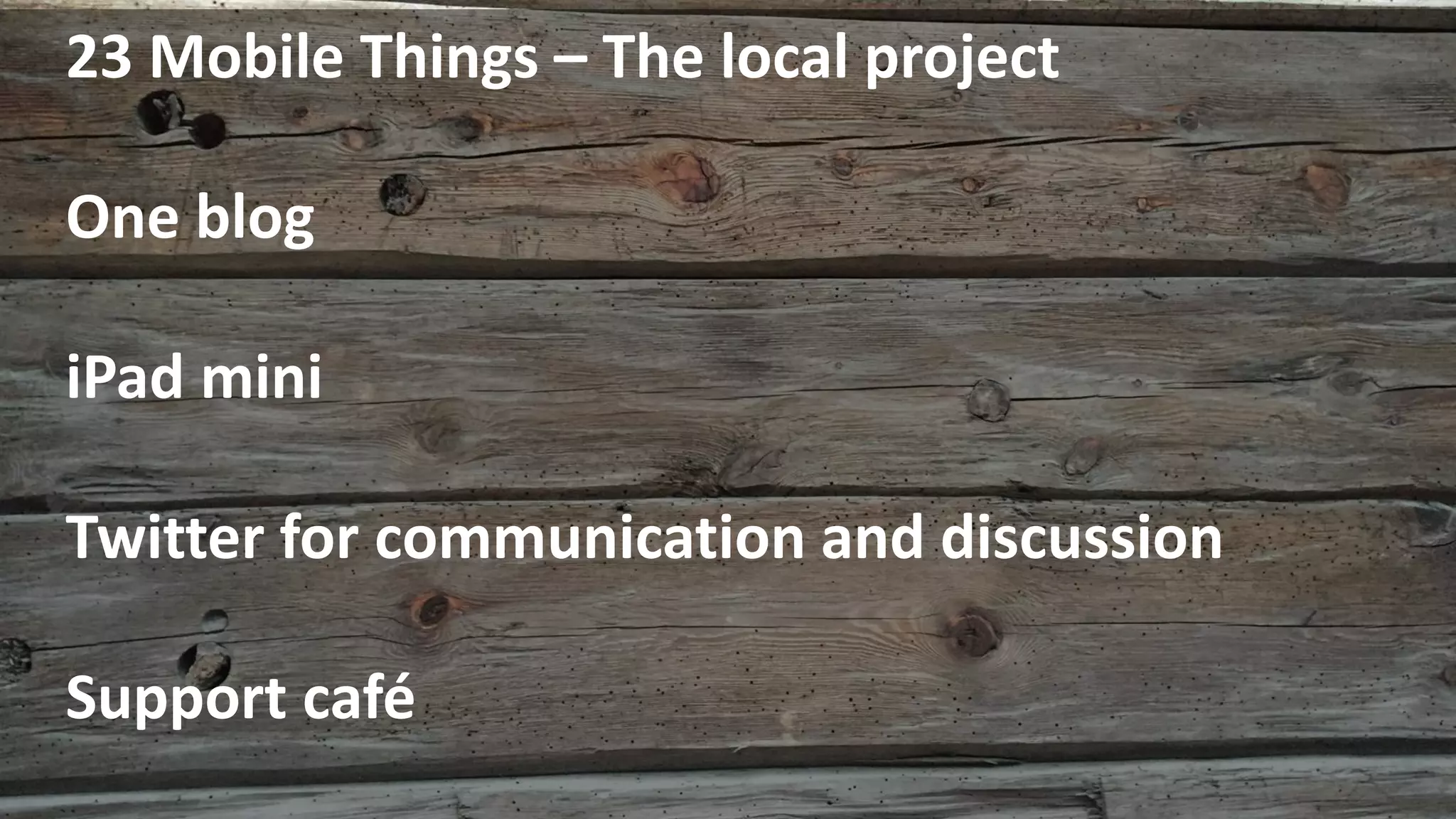
23 Mobile Things – The local project
One blog
iPad mini
Twitter for communication and discussion
Support café
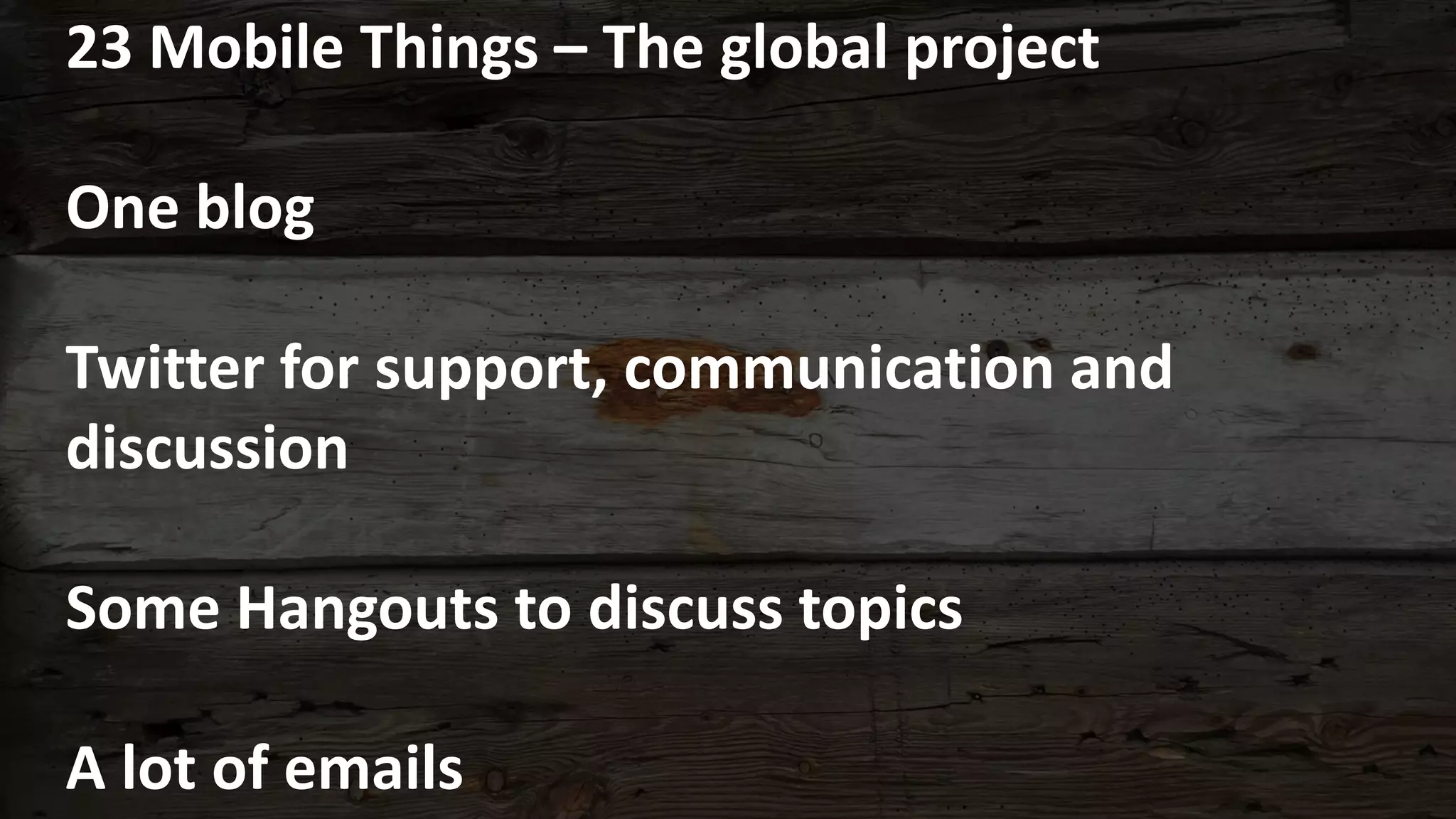
23 Mobile Things – The global project
One blog
Twitter for support, communication and
discussion
Some Hangouts to discuss topics
A lot of emails
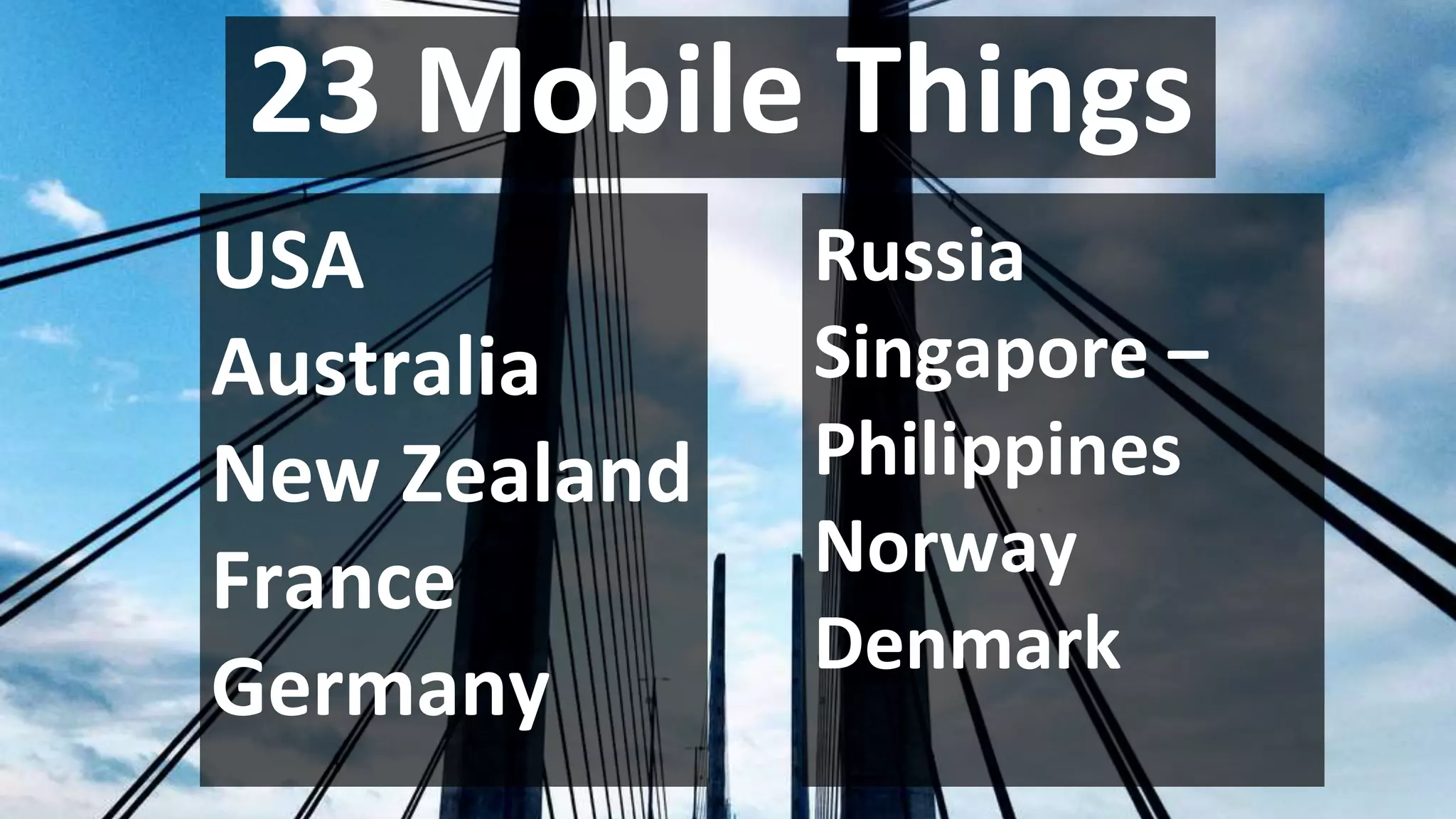
23 Mobile Things
USA
Australia
New Zealand
France
Germany
Russia
Singapore –
Philippines
Norway
Denmark
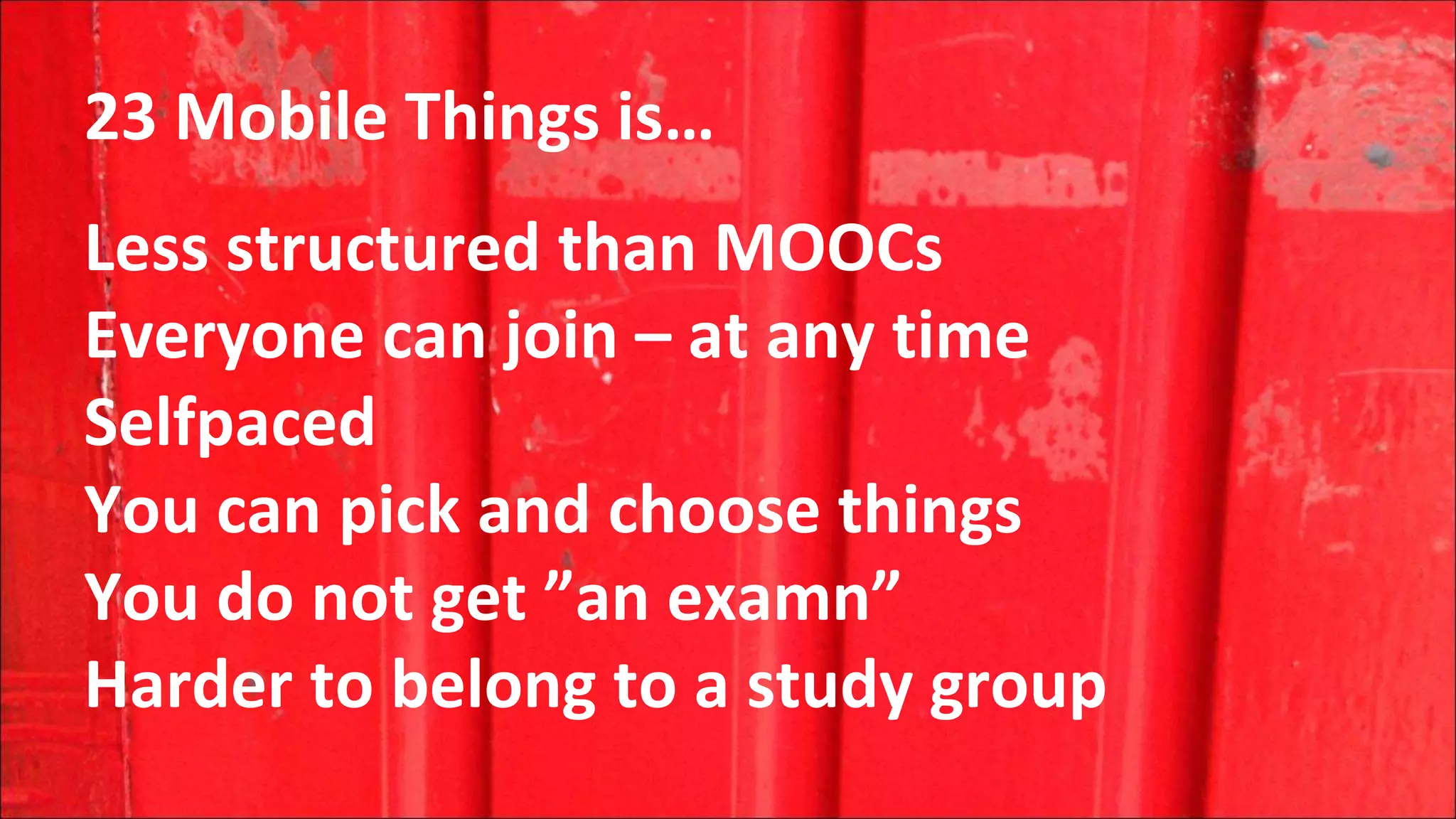
23 Mobile Things is…
Less structured than MOOCs
Everyone can join – at any time
Selfpaced
You can pick and choose things
You do not get ”an examn”
Harder to belong to a study group
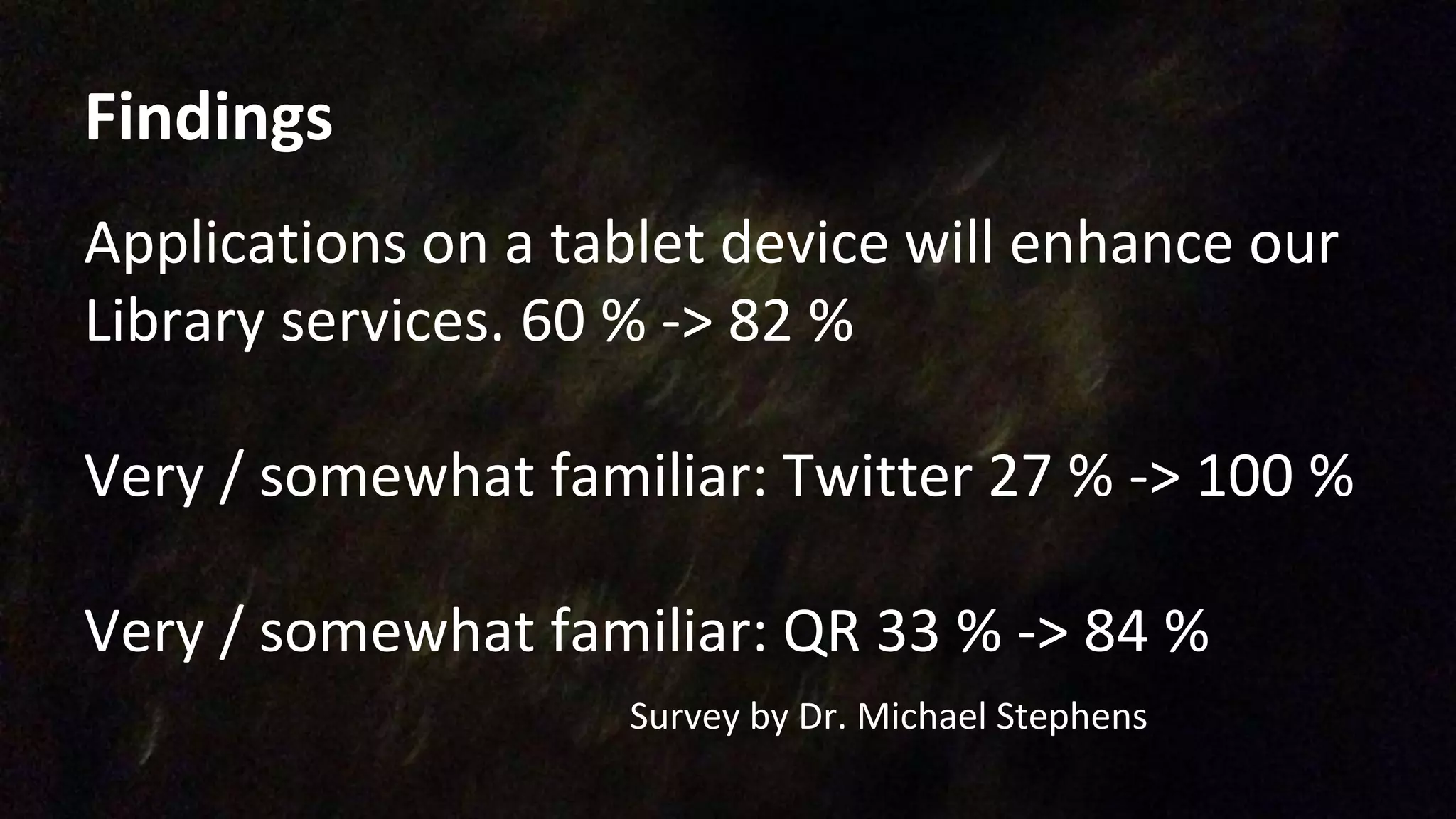
Findings
Applications on a tablet device will enhance our
Library services. 60 % -> 82 %
Very / somewhat familiar: Twitter 27 % -> 100 %
Very / somewhat familiar: QR 33 % -> 84 %
Survey by Dr. Michael Stephens
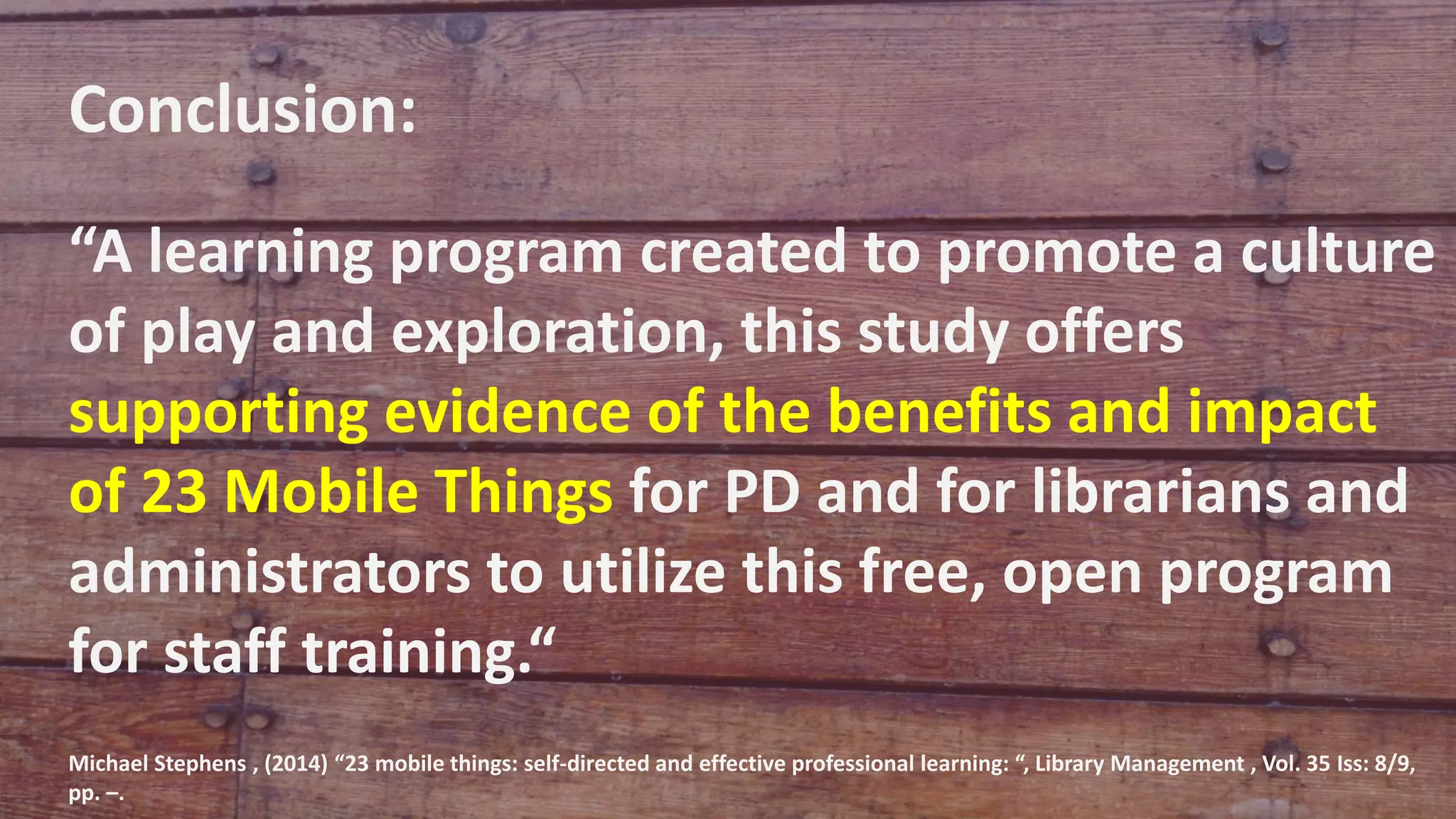
Conclusion:
“A learning program created to promote a culture
of play and exploration, this study offers
supporting evidence of the benefits and impact
of 23 Mobile Things for PD and for librarians and
administrators to utilize this free, open program
for staff training.“
Michael Stephens , (2014) “23 mobile things: self-directed and effective professional learning: “, Library Management , Vol. 35 Iss: 8/9,
pp. –.
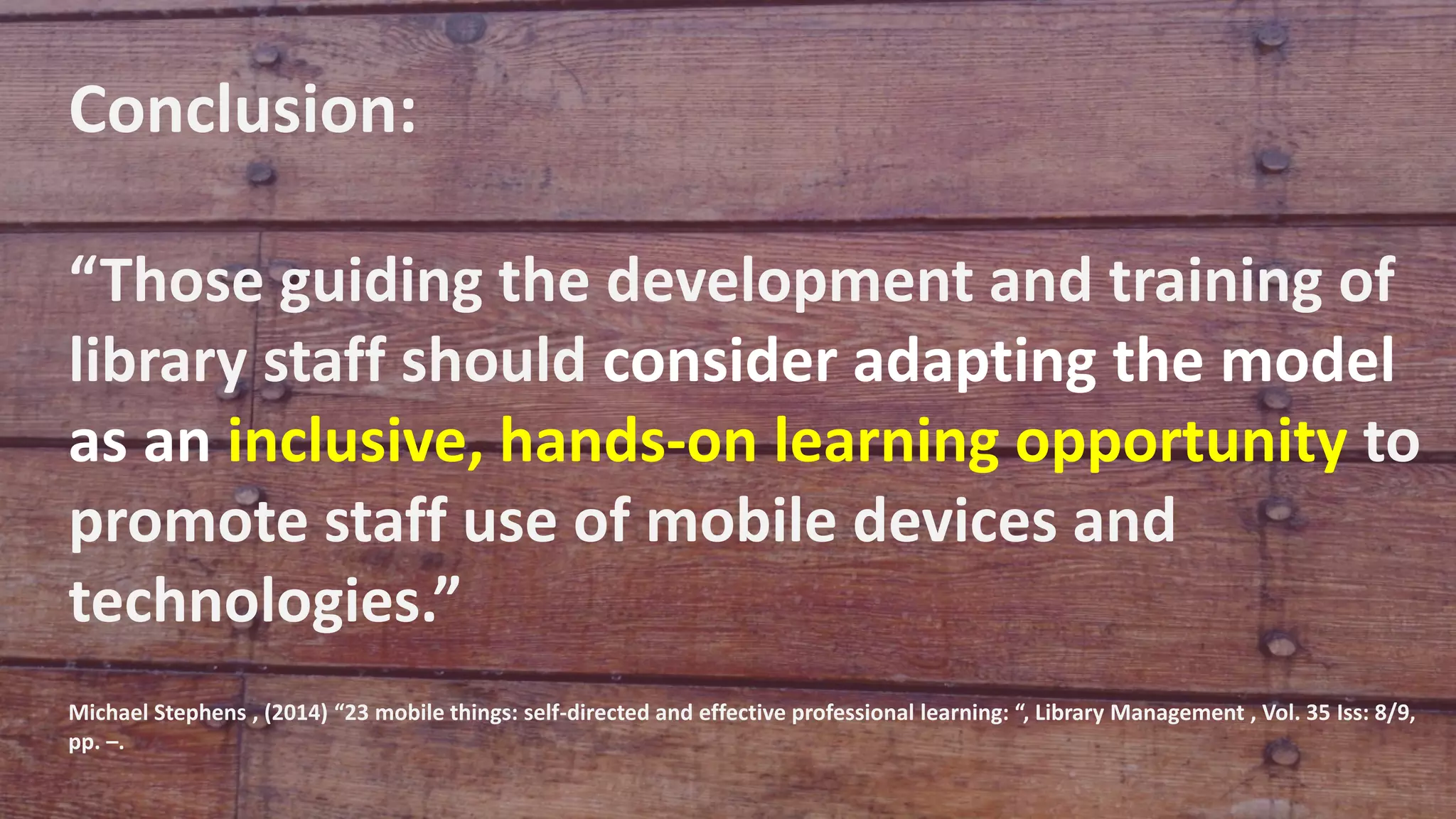
Conclusion:
“Those guiding the development and training of
library staff should consider adapting the model
as an inclusive, hands-on learning opportunity to
promote staff use of mobile devices and
technologies.”
Michael Stephens , (2014) “23 mobile things: self-directed and effective professional learning: “, Library Management , Vol. 35 Iss: 8/9,
pp. –.
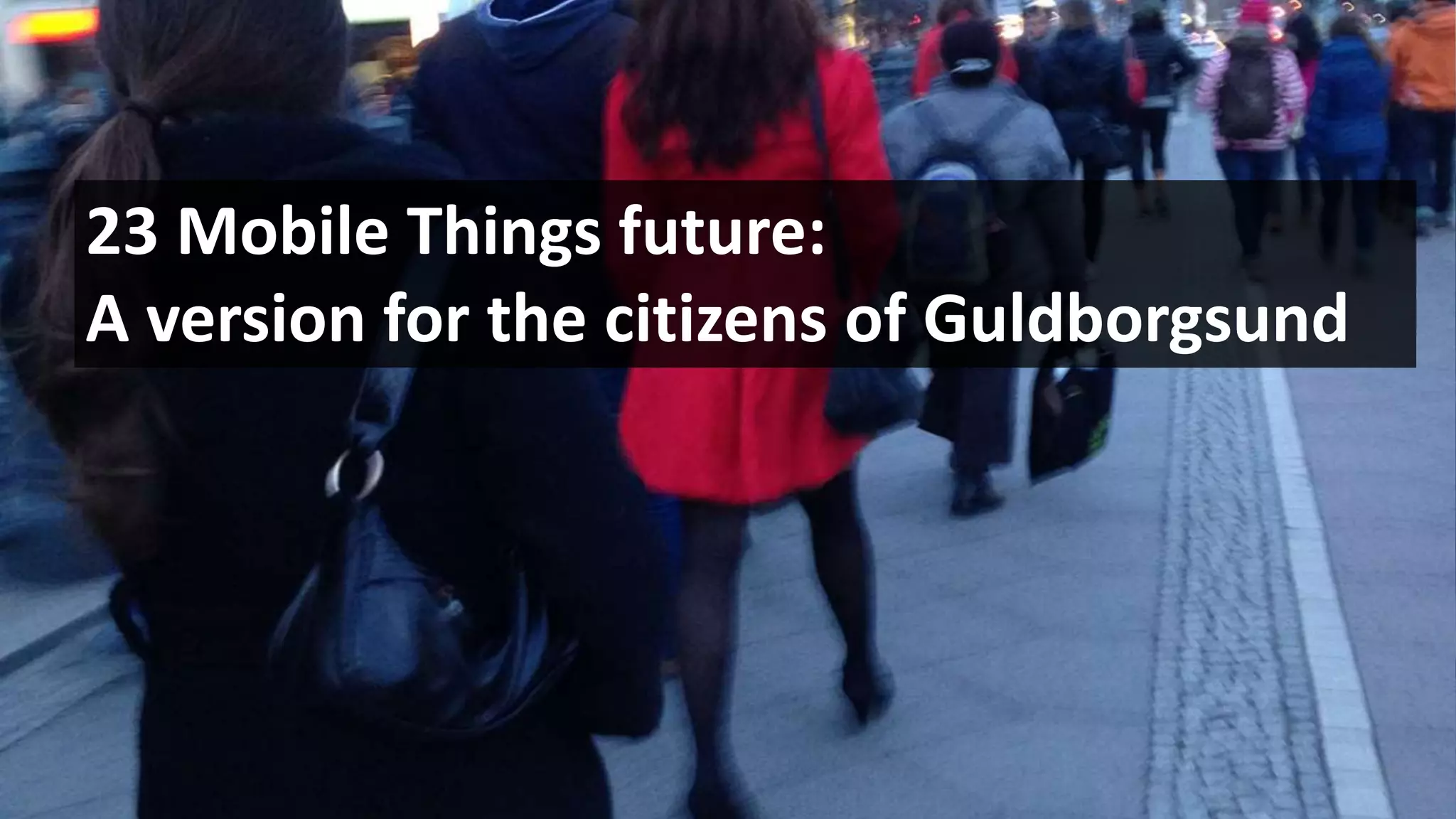
23 Mobile Things future:
A version for the citizens of Guldborgsund
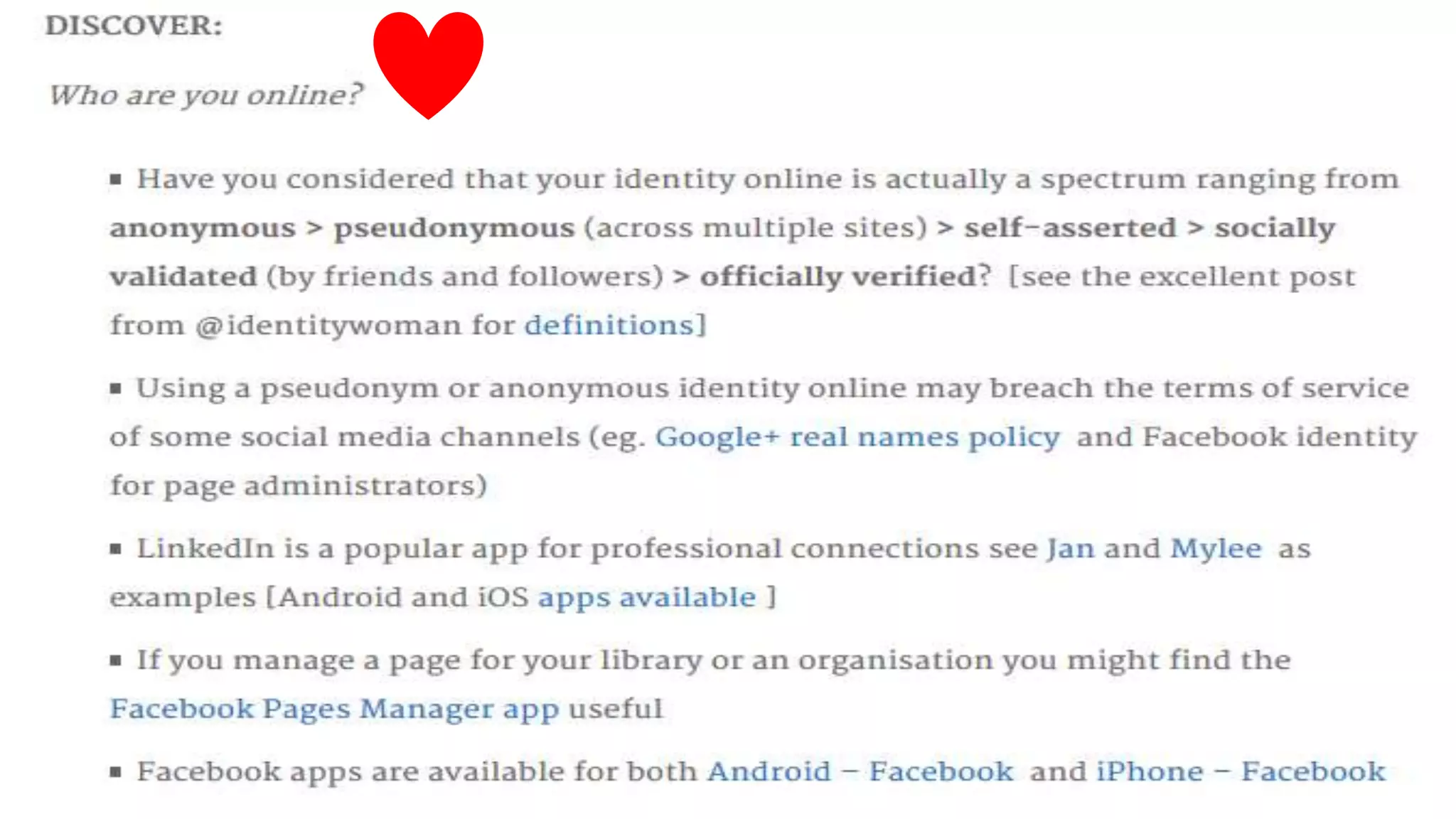
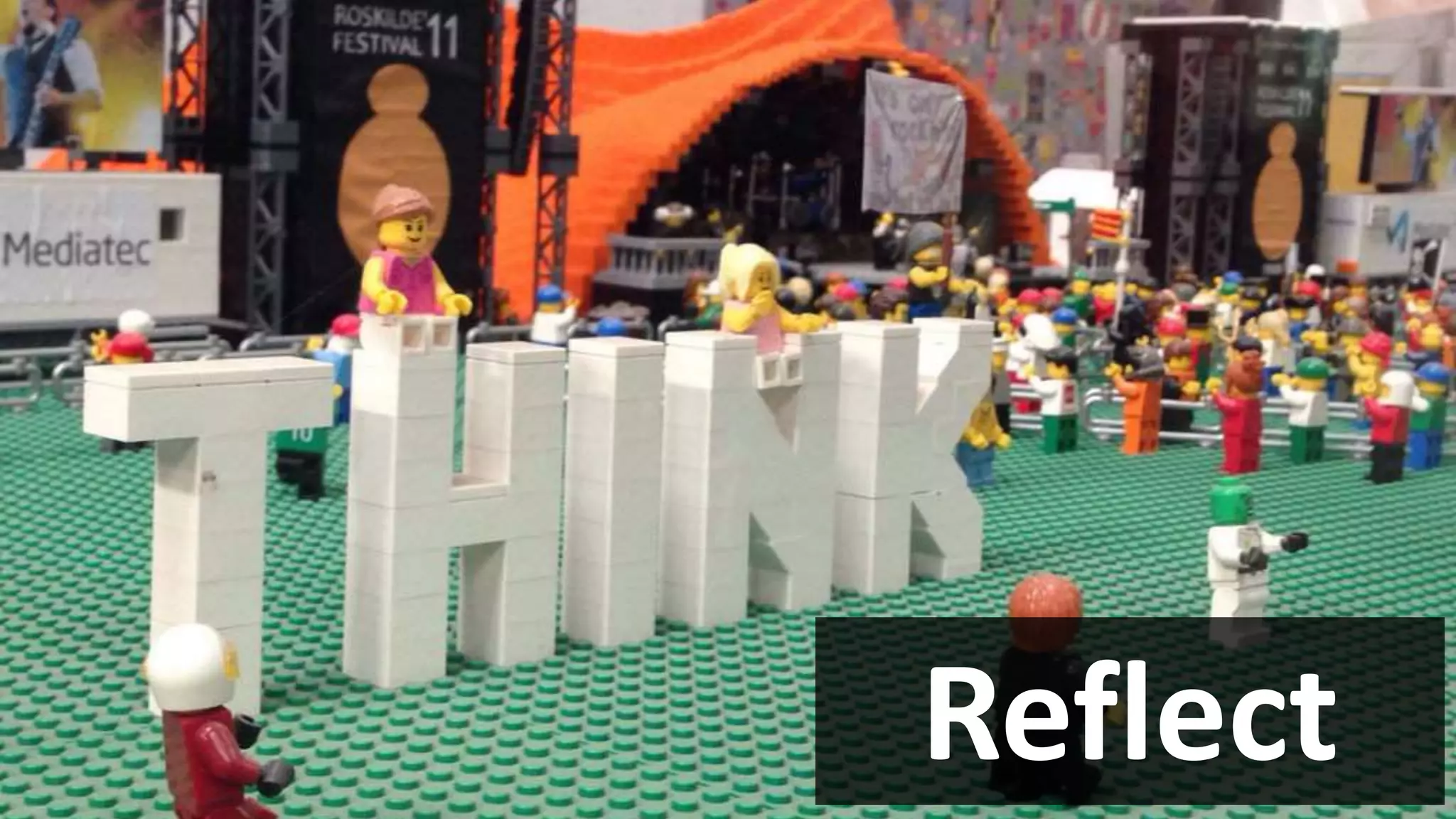
Discover
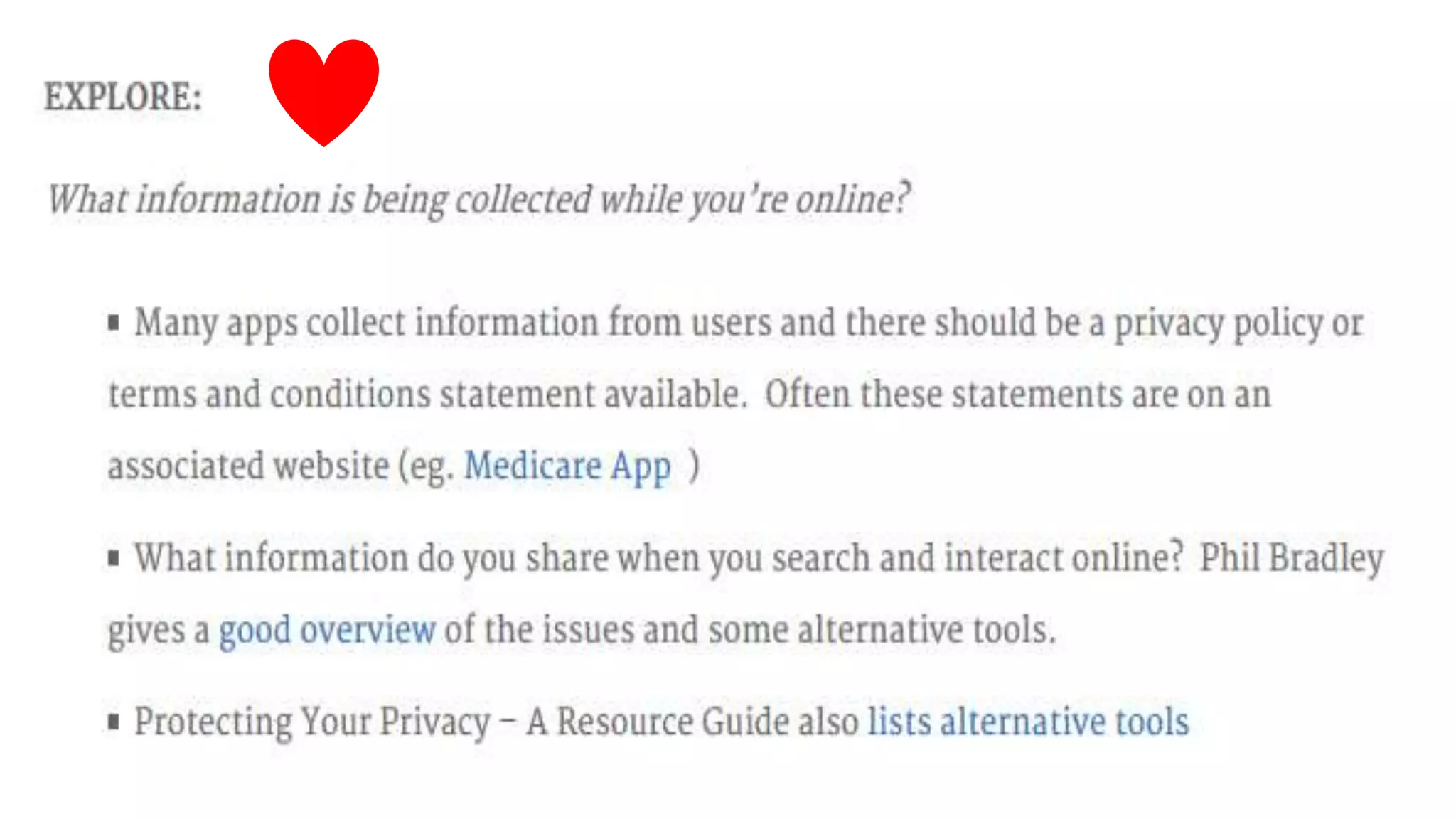
Explore
Reflect
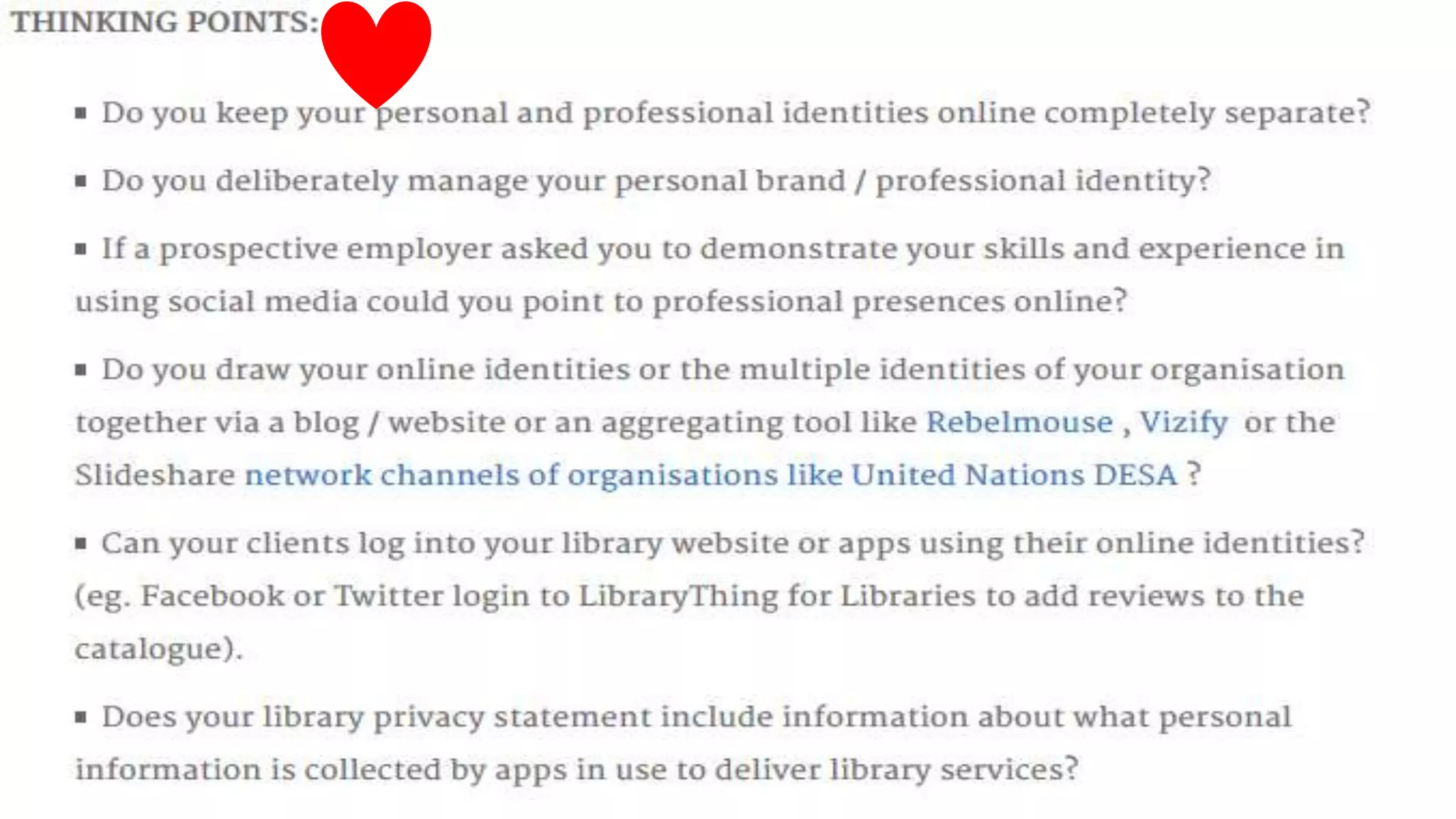
Reflection
Share your reflections with
each other in groups of two
Can 23 be a way to add value
to your organisation or
community?
How would you design a thing for
your own 23 project?
What would you want staff /
community to learn and reflect on?
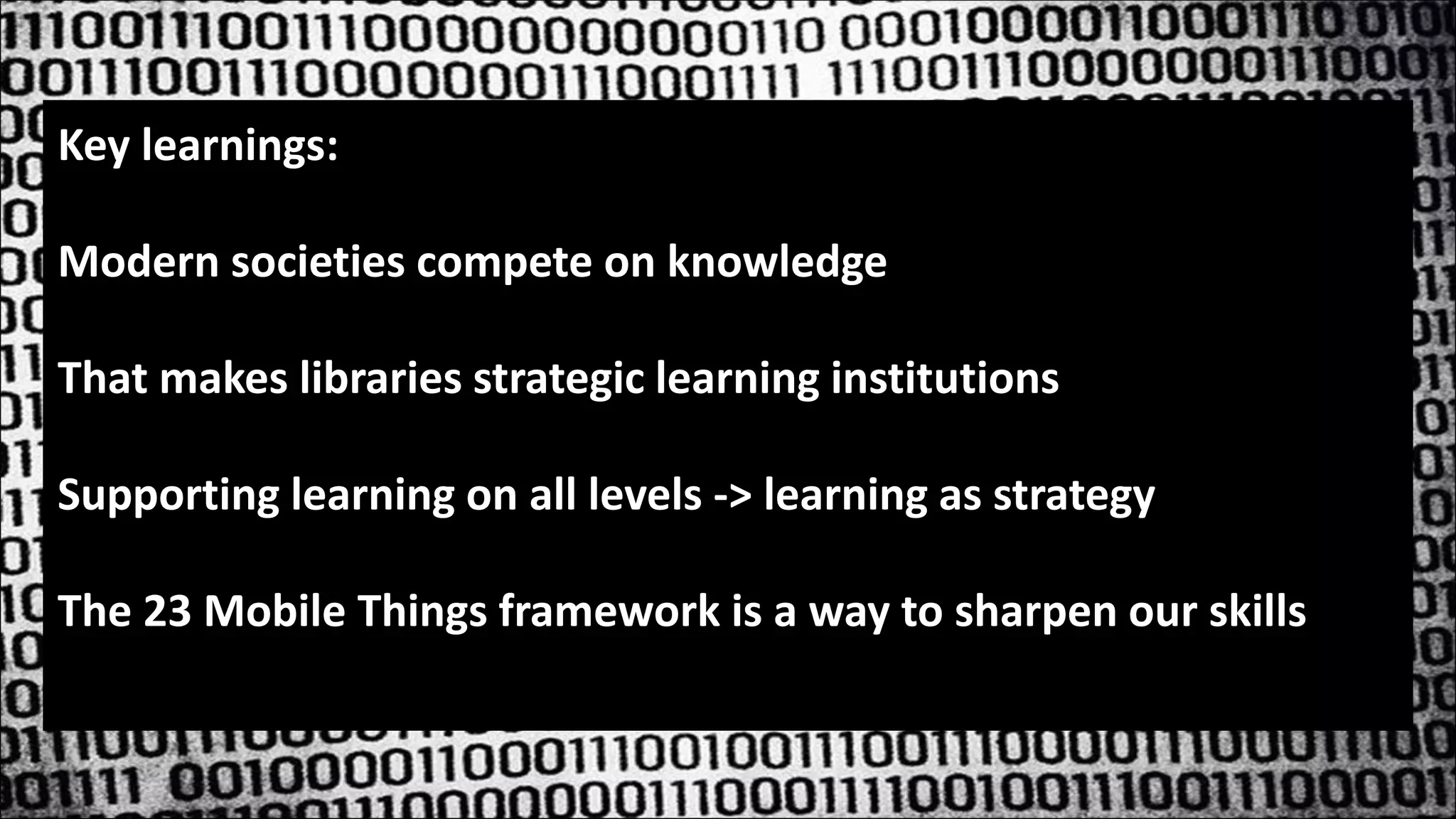
Key learnings:
Modern societies compete on knowledge
That makes libraries strategic learning institutions
Supporting learning on all levels -> learning as strategy
The 23 Mobile Things framework is a way to sharpen our skills
janholmquist.net
Jan Holmquist
janholmquist.net
Twitter: @janholmquist
janholmquist@gmail.com
about.me/janholmquist
Keep in touch…

Libraries strategic learning institutions - #CILDC 2015

  • 1.
    Libraries – Strategiclearning institutions
  • 5.
  • 6.
  • 7.
  • 9.
    Round 1: Learning asstrategy and core task for libraries Required skills for the information professional The shortest version of library history you ever heard … a bit about Global Librarianship – and Philosophy
  • 10.
    Round 2: Learning trends– in a library context Required skills for the information professional – continued Definitions … All this to sharpen our focus on libraries as learning institutions
  • 11.
    Round 3: 23 MobileThings – From local to global and back again What is the anatomy of a (23) thing Pssst: 23 news – What is the next step … Prepare you to work with your own 23 program
  • 12.
    Round 1: Learning asstrategy and core task for libraries Required skills for the information professional The shortest version of library history you ever heard … a bit about Global Librarianship – and Philosophy
  • 13.
    ACCESS vs LEARNING Photographed2007 by Carol Highsmith
  • 15.
    The times theyare … Sirius is eight-point-six light years away Arcturus is thirty seven The past is the past And it’s here to stay Wikipedia is heaven When you don’t want to remember no more Nick Cave - We Real Cool
  • 16.
  • 17.
  • 18.
  • 19.
    The mission oflibrarians is to improve society through facilitating knowledge creation in their communities
  • 20.
    Library learning strategy… Learningempowers people… Education for the young and life long learning for all. The library supports learning on all levels - and for people of all ages. Libraries have the skills to support transformation of information to knowledge.
  • 21.
    Basic library skill Tobe aware of and be able to adapt to changes in society surrounding the library
  • 23.
    Basic library skill Havea strategy to make the community smarter – and work with partners to make it happen
  • 25.
  • 26.
    Do you agreethat supporting learning is a core task for libraries today? How can the library best support learning in new ways in your area or institution?
  • 28.
    Round 2: Learning trends– in a library context Required skills for the information professional – continued Definitions … All this to sharpen our focus on libraries as learning institutions
  • 29.
    MOOCS Participatory Learning Connected Learning 23mobile things Hacker spaces *Fablabs *Hands on Lifelong learning digital divide
  • 30.
    Basic library skill Knowledgeabout how people learn, unlearn and relearn...
  • 31.
    Participatory librarianship recastslibrary and library practice using the fundamental concept that knowledge is created through conversation. Libraries are in the knowledge business, therefore libraries are in the conversation business. Participatory librarians approach their work as facilitators of conversation.
  • 32.
    “A makerspace isa physical location where people gather to share resources and knowledge, work on projects, network, and build.” Educause Learning Initiative article: 7 things about Makerspaces More definitions: http://renovatedlearning.com/2015/04/02/defining-makerspaces-part-1/
  • 33.
    “Makerspaces are collaborative learningenvironments where people come together to share materials and learn new skills… makerspaces are not necessarily born out of a specific set of materials or spaces, but rather a mindset of community partnership, collaboration, and creation.” Library as incubator project More definitions: http://renovatedlearning.com/2015/04/02/defining-makerspaces-part-1/
  • 34.
  • 35.
  • 36.
    “In the ‘connectedlearning’ approach, learning is accelerated when it is powered by an individual’s interests and passions, supported by peers, and in spaces where an individual feels valued and safe.” Åke Nygren http://library.ifla.org/1014/1/167-nygren-en.pdf
  • 37.
    Learning Principles • Interest- powered • Peer- supported •Academically oriented Design Principles • Production- centered • Openly networked • Shared purpose Core Values • Equity • Social connection • Full participation
  • 38.
  • 39.
    Do you seenew opportunities for libraries in some of the learning approaches just mentioned? What skills do we need in the profession to support learning / and unlearning in our communities?
  • 40.
  • 41.
    Round 3: 23 MobileThings – From local to global and back again What is the anatomy of a (23) thing Pssst: 23 news – What is the next step … Prepare you to work with your own 23 program
  • 43.
  • 44.
    23 Mobile Things– The local project One blog iPad mini Twitter for communication and discussion Support café
  • 45.
    23 Mobile Things– The global project One blog Twitter for support, communication and discussion Some Hangouts to discuss topics A lot of emails
  • 46.
    23 Mobile Things USA Australia NewZealand France Germany Russia Singapore – Philippines Norway Denmark
  • 47.
    23 Mobile Thingsis… Less structured than MOOCs Everyone can join – at any time Selfpaced You can pick and choose things You do not get ”an examn” Harder to belong to a study group
  • 48.
    Findings Applications on atablet device will enhance our Library services. 60 % -> 82 % Very / somewhat familiar: Twitter 27 % -> 100 % Very / somewhat familiar: QR 33 % -> 84 % Survey by Dr. Michael Stephens
  • 49.
    Conclusion: “A learning programcreated to promote a culture of play and exploration, this study offers supporting evidence of the benefits and impact of 23 Mobile Things for PD and for librarians and administrators to utilize this free, open program for staff training.“ Michael Stephens , (2014) “23 mobile things: self-directed and effective professional learning: “, Library Management , Vol. 35 Iss: 8/9, pp. –.
  • 50.
    Conclusion: “Those guiding thedevelopment and training of library staff should consider adapting the model as an inclusive, hands-on learning opportunity to promote staff use of mobile devices and technologies.” Michael Stephens , (2014) “23 mobile things: self-directed and effective professional learning: “, Library Management , Vol. 35 Iss: 8/9, pp. –.
  • 51.
    23 Mobile Thingsfuture: A version for the citizens of Guldborgsund
  • 53.
  • 55.
  • 57.
  • 59.
  • 60.
    Share your reflectionswith each other in groups of two Can 23 be a way to add value to your organisation or community?
  • 61.
    How would youdesign a thing for your own 23 project? What would you want staff / community to learn and reflect on?
  • 62.
    Key learnings: Modern societiescompete on knowledge That makes libraries strategic learning institutions Supporting learning on all levels -> learning as strategy The 23 Mobile Things framework is a way to sharpen our skills
  • 66.
  • 67.

Editor's Notes

  • #49 Agree & strongly agree