
Lorcan
Dempsey, OCLC
@LorcanD
Libraries,
library
users, and
collections
Jack E. & Debbie T.
Thomas Endowed
Lecture Series
Washington University in St
Louis
October 9 2017
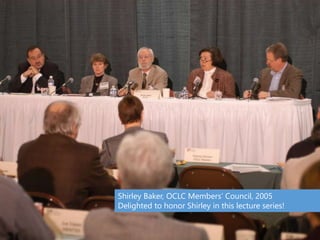
Shirley Baker, OCLC Members’ Council, 2005
Delighted to honor Shirley in this lecture series!
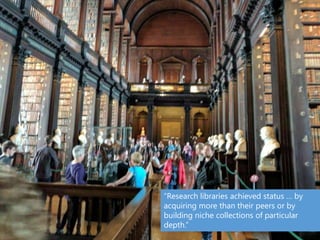
“Research libraries achieved status … by
acquiring more than their peers or by
building niche collections of particular
depth.”
Research libraries achieved status in this
environment by acquiring more than their peers or
by building niche collections of particular depth.
…
Collections no longer lie at the center of research
library operations and goals, even as academic
communities focus ever more inclusively on
knowledge and information.
Hazen. Lost in the cloud. 2011
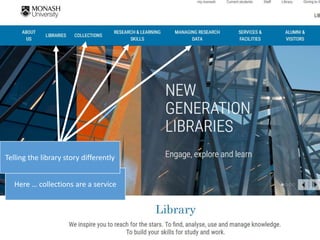
Here … collections are a service
Telling the library story differently
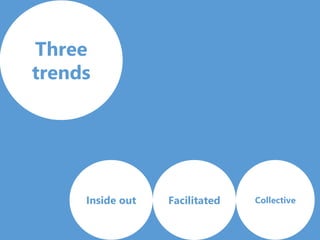
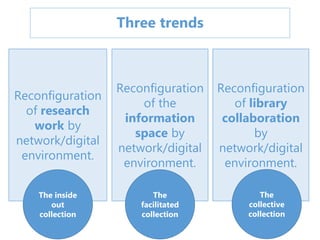
Three
trends
Inside out Facilitated Collective
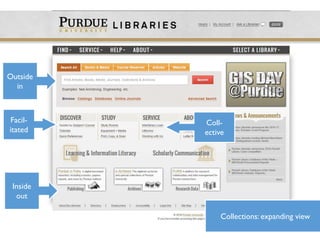
Collections: expanding view
Outside
in
Inside
out
Coll-
ective
Facil-
itated
Reconfiguration
of research
work by
network/digital
environment.
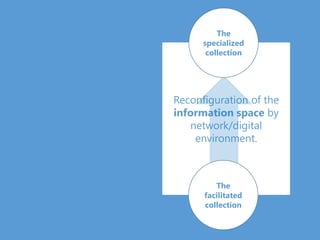
Reconfiguration
of the
information
space by
network/digital
environment.
The inside
out
collection
The
facilitated
collection
Three trends
Reconfiguration
of library
collaboration
by
network/digital
environment.
The
collective
collection
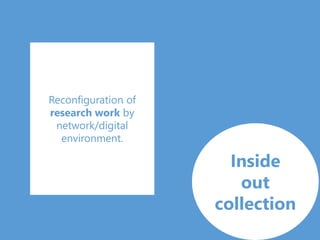
Reconfiguration of
research work by
network/digital
environment.
Inside
out
collection
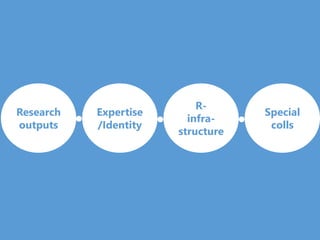
Research
outputs
Expertise
/Identity
R-
infra-
structure
Special
colls
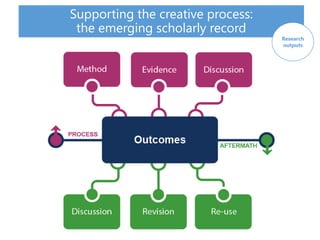
Supporting the creative process:
the emerging scholarly record
Research
outputs
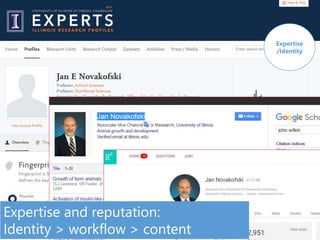
Expertise and reputation:
Identity > workflow > content
Expertise
/Identity
Office of
undergraduate
research
Disciplines &
departmentsGraduate school
Vice president for
research
Provost
Institutional
Reporting
CIO
Campus center for
teaching & learning
Medical
center
Tech Transfer Office
LIBRARY
Advancement
& corporate
relations
Data Warehouse
News Bureau
Colleges & depts
Adapted from a pic by Rebecca Bryant, OCLC
Research
Research Data
Management
Digital
scholarship
User
education
& training
RIM/Profiling
system
Institutional
Repository
Creation, management and
disclosure:
Researcher
Research manager
Research support
R-
infra-
structure
Her view is that publishers are
here to make the scientific
research process more
effective by helping them keep
up to date, find colleagues, plan
experiments, and then share
their results. After they have
published, the processes
continues with gaining a
reputation, obtaining funds,
finding collaborators, and even
finding a new job. What can we
as publishers do to address
some of scientists’ pain
points?
Annette Thomas,
Then CEO of Macmillan
Publishers
A
publisher’s
new job
description
http://www.against-the-grain.com/2012/11/a-publishers-new-job-description/
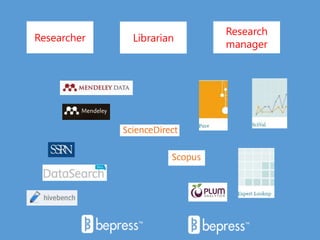
Researcher Librarian
Research
manager
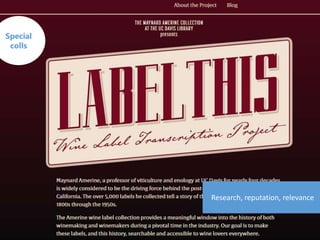
Research, reputation, relevance
Special
colls
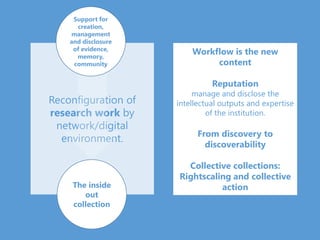
Reconfiguration of
research work by
network/digital
environment.
Support for
creation,
management
and disclosure
of evidence,
memory,
community
The inside
out
collection
Workflow is the new
content
Reputation
manage and disclose the
intellectual outputs and expertise
of the institution.
From discovery to
discoverability
Collective collections:
Rightscaling and collective
action
Reconfiguration of the
information space by
network/digital
environment.
Facilitated
Collection
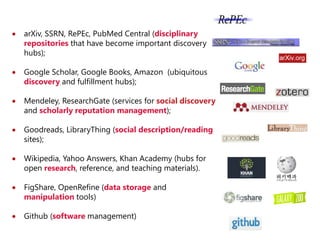
 arXiv, SSRN, RePEc, PubMed Central (disciplinary
repositories that have become important discovery
hubs);
 Google Scholar, Google Books, Amazon (ubiquitous
discovery and fulfillment hubs);
 Mendeley, ResearchGate (services for social discovery
and scholarly reputation management);
 Goodreads, LibraryThing (social description/reading
sites);
 Wikipedia, Yahoo Answers, Khan Academy (hubs for
open research, reference, and teaching materials).
 FigShare, OpenRefine (data storage and
manipulation tools)
 Github (software management)
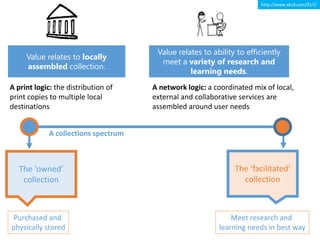
The ‘owned’
collection
The ‘facilitated’
collection
A collections spectrum
Purchased and
physically stored
Meet research and
learning needs in best way
A network logic: a coordinated mix of local,
external and collaborative services are
assembled around user needs
A print logic: the distribution of
print copies to multiple local
destinations
Value relates to locally
assembled collection.
Value relates to ability to efficiently
meet a variety of research and
learning needs.
http://www.xkcd.com/917/
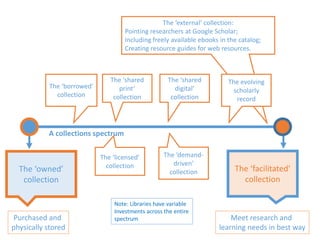
The ‘external’ collection:
Pointing researchers at Google Scholar;
Including freely available ebooks in the catalog;
Creating resource guides for web resources.
The ‘owned’
collection
The ‘facilitated’
collection
The ‘borrowed’
collection
A collections spectrum
The ‘shared
print’
collection
The ‘shared
digital’
collection
The evolving
scholarly
record
Purchased and
physically stored
Meet research and
learning needs in best way
The ‘licensed’
collection
The ‘demand-
driven’
collection
Note: Libraries have variable
Investments across the entire
spectrum
Reconfiguration of the
information space by
network/digital
environment.
The
specialized
collection
The
facilitated
collection
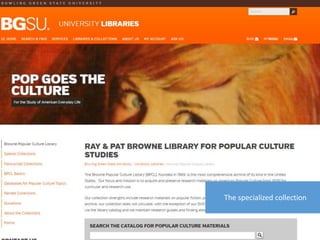
The specialized collection
Reconfiguration of the
information space by
network/digital
environment.
The
specialized
collection
The
facilitated
collection
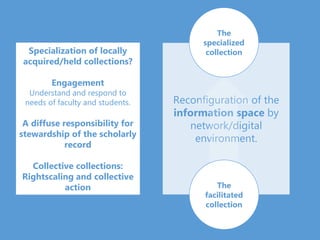
Specialization of locally
acquired/held collections?
Engagement
Understand and respond to
needs of faculty and students.
A diffuse responsibility for
stewardship of the scholarly
record
Collective collections:
Rightscaling and collective
action
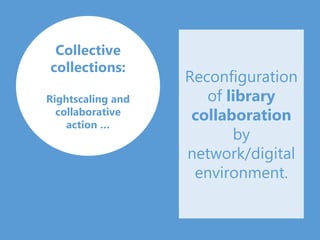
Collective
collections:
Rightscaling and
collaborative
action …
Reconfiguration
of library
collaboration
by
network/digital
environment.
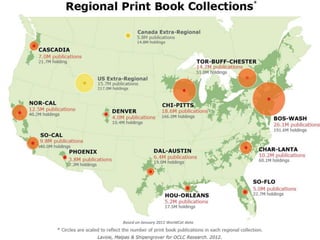
Based on January 2011 WorldCat data
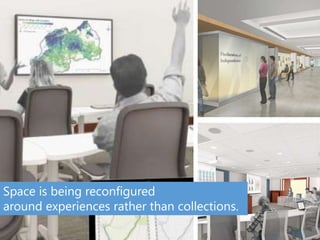
Space is being reconfigured
around experiences rather than collections.
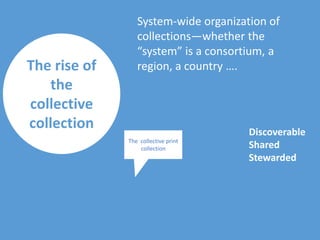
The rise of
the
collective
collection
System-wide organization of
collections—whether the
“system” is a consortium, a
region, a country ….
The collective print
collection
Discoverable
Shared
Stewarded
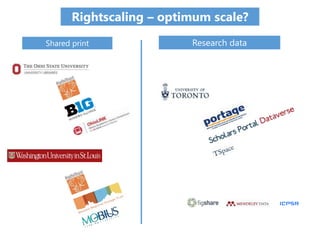
Shared Print Management
Rightscaling – optimum scale?
Research dataShared print
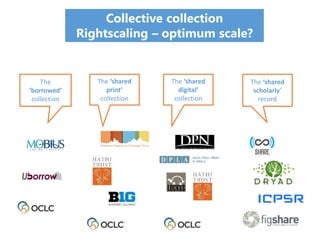
Collective collection
Rightscaling – optimum scale?
The
‘borrowed’
collection
The ‘shared
print’
collection
The ‘shared
digital’
collection
The ‘shared
scholarly’
record
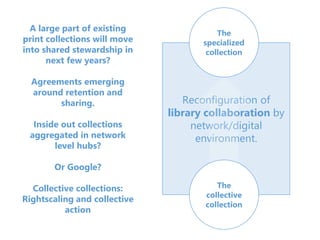
Reconfiguration of
library collaboration by
network/digital
environment.
The
specialized
collection
The
collective
collection
A large part of existing
print collections will move
into shared stewardship in
next few years?
Agreements emerging
around retention and
sharing.
Inside out collections
aggregated in network
level hubs?
Or Google?
Collective collections:
Rightscaling and collective
action
Reconfiguration
of research
work by
network/digital
environment.
Reconfiguration
of the
information
space by
network/digital
environment.
The inside
out
collection
The
facilitated
collection
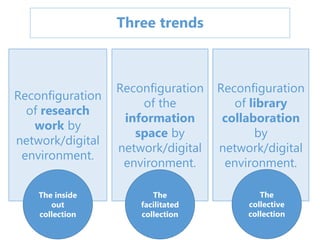
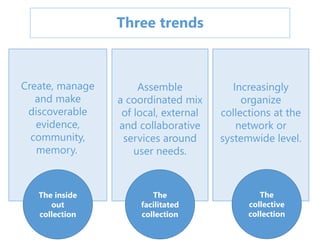
Three trends
Reconfiguration
of library
collaboration
by
network/digital
environment.
The
collective
collection
Create, manage
and make
discoverable
evidence,
community,
memory..
Assemble
a coordinated mix
of local, external
and collaborative
services around
user needs.
The inside
out
collection
The
facilitated
collection
Three trends
Increasingly
organize
collections at the
network or
systemwide level.
The
collective
collection
Thank you, @LorcanD
Citations and fuller details are included in slide notes where relevant.
Thanks to my colleagues Brian Lavoie, Constance Malpas and Rebecca
Bryant for assistance as I prepared this presentation.
The presentation follows the outline of:
Dempsey, L., (2016). Library collections in the life of the user:
two directions. LIBER Quarterly. 26(4), pp.338–359.
DOI:http://doi.org/10.18352/lq.10170
@LorcanD

Libraries, library users and collections

  • 1.
    Lorcan Dempsey, OCLC @LorcanD Libraries, library users, and collections JackE. & Debbie T. Thomas Endowed Lecture Series Washington University in St Louis October 9 2017
  • 2.
    Shirley Baker, OCLCMembers’ Council, 2005 Delighted to honor Shirley in this lecture series!
  • 3.
    “Research libraries achievedstatus … by acquiring more than their peers or by building niche collections of particular depth.”
  • 4.
    Research libraries achievedstatus in this environment by acquiring more than their peers or by building niche collections of particular depth. … Collections no longer lie at the center of research library operations and goals, even as academic communities focus ever more inclusively on knowledge and information. Hazen. Lost in the cloud. 2011
  • 5.
    Here … collectionsare a service Telling the library story differently
  • 6.
  • 7.
  • 8.
    Reconfiguration of research work by network/digital environment. Reconfiguration ofthe information space by network/digital environment. The inside out collection The facilitated collection Three trends Reconfiguration of library collaboration by network/digital environment. The collective collection
  • 9.
    Reconfiguration of research workby network/digital environment. Inside out collection
  • 10.
  • 11.
    Supporting the creativeprocess: the emerging scholarly record Research outputs
  • 13.
    Expertise and reputation: Identity> workflow > content Expertise /Identity
  • 14.
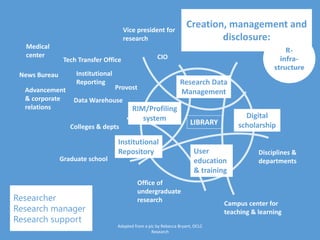
    Office of undergraduate research Disciplines & departmentsGraduateschool Vice president for research Provost Institutional Reporting CIO Campus center for teaching & learning Medical center Tech Transfer Office LIBRARY Advancement & corporate relations Data Warehouse News Bureau Colleges & depts Adapted from a pic by Rebecca Bryant, OCLC Research Research Data Management Digital scholarship User education & training RIM/Profiling system Institutional Repository Creation, management and disclosure: Researcher Research manager Research support R- infra- structure
  • 15.
    Her view isthat publishers are here to make the scientific research process more effective by helping them keep up to date, find colleagues, plan experiments, and then share their results. After they have published, the processes continues with gaining a reputation, obtaining funds, finding collaborators, and even finding a new job. What can we as publishers do to address some of scientists’ pain points? Annette Thomas, Then CEO of Macmillan Publishers A publisher’s new job description http://www.against-the-grain.com/2012/11/a-publishers-new-job-description/
  • 16.
  • 17.
  • 19.
    Reconfiguration of research workby network/digital environment. Support for creation, management and disclosure of evidence, memory, community The inside out collection Workflow is the new content Reputation manage and disclose the intellectual outputs and expertise of the institution. From discovery to discoverability Collective collections: Rightscaling and collective action
  • 20.
    Reconfiguration of the informationspace by network/digital environment. Facilitated Collection
  • 21.
     arXiv, SSRN,RePEc, PubMed Central (disciplinary repositories that have become important discovery hubs);  Google Scholar, Google Books, Amazon (ubiquitous discovery and fulfillment hubs);  Mendeley, ResearchGate (services for social discovery and scholarly reputation management);  Goodreads, LibraryThing (social description/reading sites);  Wikipedia, Yahoo Answers, Khan Academy (hubs for open research, reference, and teaching materials).  FigShare, OpenRefine (data storage and manipulation tools)  Github (software management)
  • 23.
    The ‘owned’ collection The ‘facilitated’ collection Acollections spectrum Purchased and physically stored Meet research and learning needs in best way A network logic: a coordinated mix of local, external and collaborative services are assembled around user needs A print logic: the distribution of print copies to multiple local destinations Value relates to locally assembled collection. Value relates to ability to efficiently meet a variety of research and learning needs. http://www.xkcd.com/917/
  • 24.
    The ‘external’ collection: Pointingresearchers at Google Scholar; Including freely available ebooks in the catalog; Creating resource guides for web resources. The ‘owned’ collection The ‘facilitated’ collection The ‘borrowed’ collection A collections spectrum The ‘shared print’ collection The ‘shared digital’ collection The evolving scholarly record Purchased and physically stored Meet research and learning needs in best way The ‘licensed’ collection The ‘demand- driven’ collection Note: Libraries have variable Investments across the entire spectrum
  • 25.
    Reconfiguration of the informationspace by network/digital environment. The specialized collection The facilitated collection
  • 26.
  • 27.
    Reconfiguration of the informationspace by network/digital environment. The specialized collection The facilitated collection Specialization of locally acquired/held collections? Engagement Understand and respond to needs of faculty and students. A diffuse responsibility for stewardship of the scholarly record Collective collections: Rightscaling and collective action
  • 28.
  • 29.
    Based on January2011 WorldCat data
  • 31.
    Space is beingreconfigured around experiences rather than collections.
  • 32.
    The rise of the collective collection System-wideorganization of collections—whether the “system” is a consortium, a region, a country …. The collective print collection Discoverable Shared Stewarded
  • 33.
    Shared Print Management Rightscaling– optimum scale? Research dataShared print
  • 34.
    Collective collection Rightscaling –optimum scale? The ‘borrowed’ collection The ‘shared print’ collection The ‘shared digital’ collection The ‘shared scholarly’ record
  • 35.
    Reconfiguration of library collaborationby network/digital environment. The specialized collection The collective collection A large part of existing print collections will move into shared stewardship in next few years? Agreements emerging around retention and sharing. Inside out collections aggregated in network level hubs? Or Google? Collective collections: Rightscaling and collective action
  • 36.
    Reconfiguration of research work by network/digital environment. Reconfiguration ofthe information space by network/digital environment. The inside out collection The facilitated collection Three trends Reconfiguration of library collaboration by network/digital environment. The collective collection
  • 37.
    Create, manage and make discoverable evidence, community, memory.. Assemble acoordinated mix of local, external and collaborative services around user needs. The inside out collection The facilitated collection Three trends Increasingly organize collections at the network or systemwide level. The collective collection
  • 38.
  • 39.
    Citations and fullerdetails are included in slide notes where relevant. Thanks to my colleagues Brian Lavoie, Constance Malpas and Rebecca Bryant for assistance as I prepared this presentation. The presentation follows the outline of: Dempsey, L., (2016). Library collections in the life of the user: two directions. LIBER Quarterly. 26(4), pp.338–359. DOI:http://doi.org/10.18352/lq.10170 @LorcanD

Editor's Notes

  • #5 Hazen, D. (January 01, 2011). Lost in the Cloud Research Library Collections and Community in the Digital Age. Library Resources and Technical Services, 55, 4, 195-204. https://journals.ala.org/lrts/article/view/5302
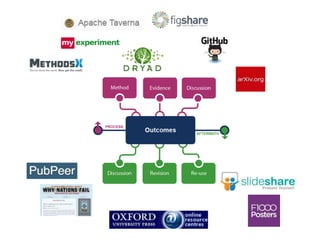
  • #12 This is how we framed out the scholarly record in terms of nature and scope of what it might contain.   Start with published outcomes: the reporting of results, conclusions, ideas and so forth from a particular scholarly inquiry. These outcomes are still the coin of the realm for scholarly activities, so they are privileged here at the center of the picture; A lot of these outcomes take the form of text-based materials like books and journal articles, but often supplemented by additional materials such as video, graphics, and interactive programs.   Rest of scholarly record divided into two broad areas: process and aftermath   Process: process of scholarly inquiry; process by which outcomes are produced. Identified three categories of materials generated in this phase in which there is interest in including them as part of the scholarly record: Method materials related to the methodology of scholarly inquiry (e.g., software, computer models, digital lab notebooks, sampling frames, experimental protocols, instrument calibrations) Evidence raw materials/inputs to scholarly work (e.g., data sets, survey results, new or enhanced primary source documents, links to findings from other scholarly works); Discussion refining and improving ideas, methods, conclusions (e.g., pre-prints, listserv/blog discussions, conference presentations, annotated commentary, grant proposals).   Anchoring outcomes directly to the methods employed, evidence used, and formative discussions conducted during the process of scholarly inquiry helps contextualize and deepen our understanding of these outcomes, facilitate replicability, and leverage results into new research.   Once the outcomes from a research project have been formally published or otherwise made available, scholarly activities surrounding that piece of work may still continue in the “aftermath” phase. Activities in the aftermath phase may include Discussion (through similar channels as those in the process phase, but also post-publication formal reviews and commentary); Revision published work can be revised in various ways (the work may be enhanced with additional findings; errors may be corrected or clarifications made, etc.) Re-use (the work may be edited or re-packaged into new forms, such as conference presentations, summaries, blog posts, versions for the “popular media”, etc.).   Not saying that everything discussed here will end up in the scholarly record. But picture represents the maximal scope and depth of materials regarding which there is increasing interest in systematic collection and curation.   Note that some of the materials in the outlying components are becoming or might become outcomes in their own right. Data sets are a good example: in some disciplines the publication of an important data set is now considered a first-class scientific outcome. More on the evolving scholarly record: Lavoie, Brian, Eric Childress, Ricky Erway, Ixchel Faniel, Constance Malpas, Jennifer Schaffner, and Titia van der Werf. 2014. The Evolving Scholarly Record. Dublin, Ohio: OCLC Research. http://www.oclc.org/content/dam/research/publications/library/2014/oclcresearch-evolving-scholarly-record-2014.pdf.
  • #13 http://global.oup.com/uk/orc/busecon/economics/carlin/
  • #16 A Publisher's New Job Description November 8, 2012 Donald Hawkins Charleston Conference Blog http://www.against-the-grain.com/2012/11/a-publishers-new-job-description/
  • #24 More on facilitated collections: Dempsey, L., (2016). Library collections in the life of the user: two directions. LIBER Quarterly. 26(4). DOI: http://doi.org/10.18352/lq.10170
  • #34 For shared print management, we see a variety of group-scale efforts that leverage existing consortial partnerships, as well as built-to-purpose groups. For research data management, there is a mix of institution-scale infrastructure and a growing range of group-scale options. Is the scale the same for each? Can we expect a single group to support the whole range of shared stewardship objectives?
  • #35 Various group-scale arrangements have emerged to support collective collection management across the spectrum from owned to facilitated collections. Significantly, there is not a single group-scale arrangement that can solve for all of these problems. What is the optimum scale for group action? It appears to vary…