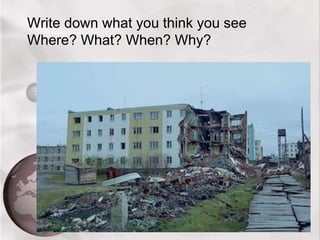
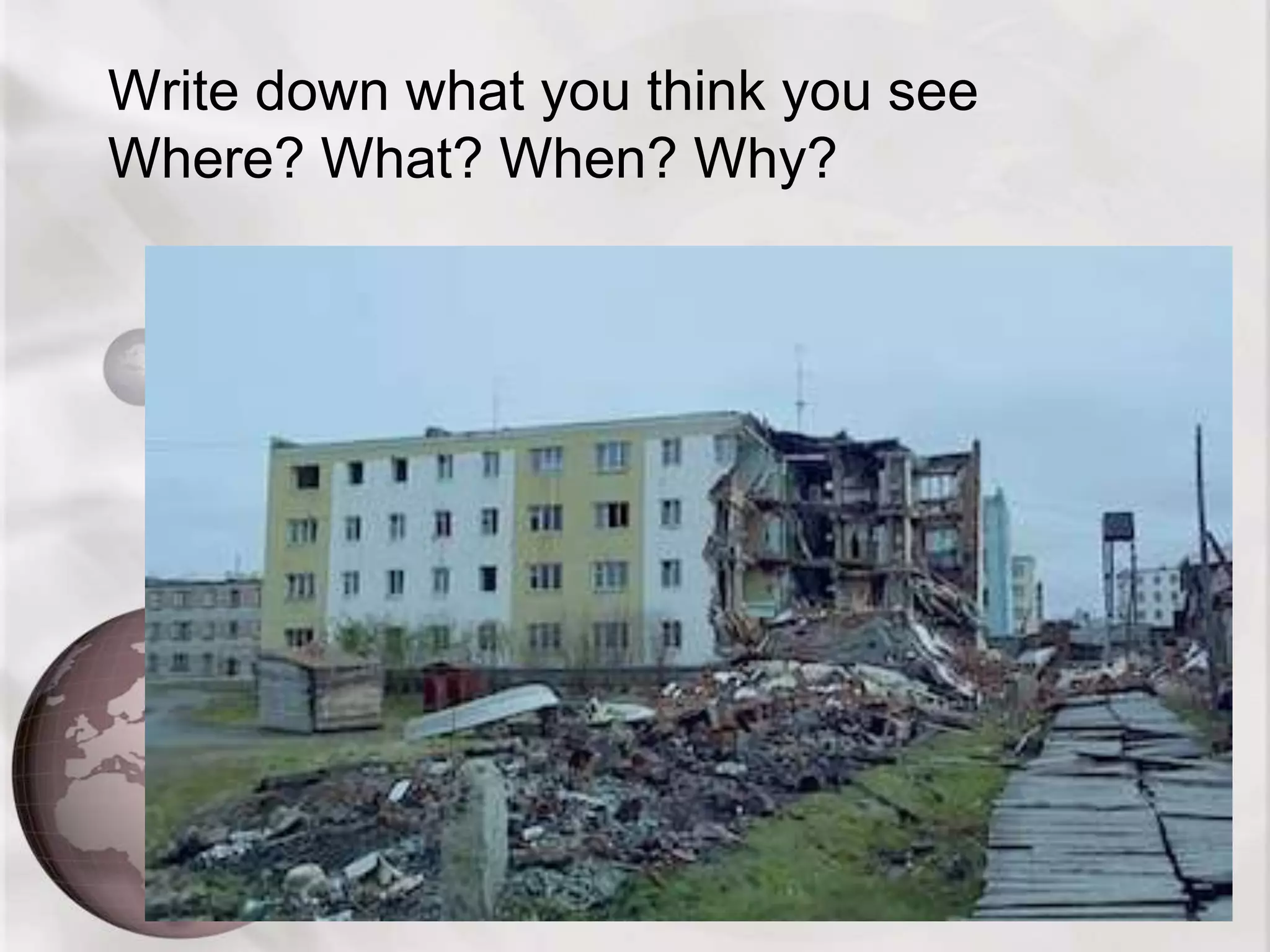
Write down what you think you see
Where? What? When? Why?
Canada – A periglacial
Region
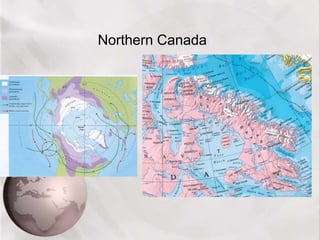
Northern Canada
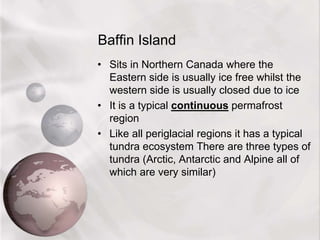
Baffin Island
• Sits in Northern Canada where the
Eastern side is usually ice free whilst the
western side is usually closed due to ice
• It is a typical continuous permafrost
region
• Like all periglacial regions it has a typical
tundra ecosystem There are three types of
tundra (Arctic, Antarctic and Alpine all of
which are very similar)
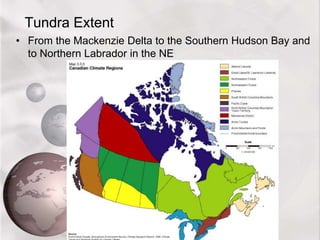
Tundra Extent
• From the Mackenzie Delta to the Southern Hudson Bay and
to Northern Labrador in the NE
Climate
• Winters are long dark and cold sunsets at
around 3pm
• During the short summers the snow and
soil layers above the permafrost melt
• This feeds vast wetlands, streams and
rivers.
• This along with 24hr sunshine creates
rapid growth for small compact plants
>>WATCH<<
Impact of Climate Change on
Tundra
• The Arctic tundra is changing dramatically
due to global warming.
• Animals that are typically found further
south, like the red fox, are moving onto the
tundra and is now competing with the
Arctic fox for food and territory, and the
long-term impact on the sensitive Arctic
fox is unknown
• It is the Arctic's permafrost that is the
foundation for much of the region's unique
ecosystem, and it is the permafrost that is
deteriorating with the warmer global
climate.
Climate Change
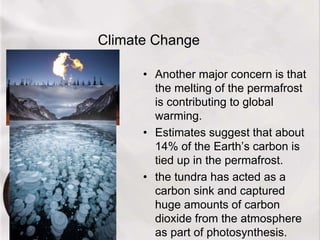
• Another major concern is that
the melting of the permafrost
is contributing to global
warming.
• Estimates suggest that about
14% of the Earth’s carbon is
tied up in the permafrost.
• the tundra has acted as a
carbon sink and captured
huge amounts of carbon
dioxide from the atmosphere
as part of photosynthesis.
Climate Change
• This process has helped keep the amount
of this greenhouse gas from accumulating
in the atmosphere.
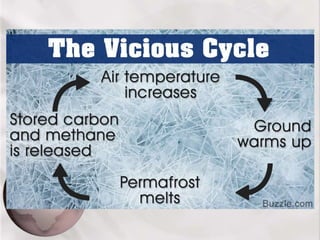
• However, as the permafrost melts and
dead plant material decomposes it
releases CO2 and methane,
• the tundra has flipped from being a carbon
sink to a carbon contributor. This means
not only is the planet less capable of
preventing greenhouse gases from
accumulating, but the tundra is also
beginning to contribute to their build-up.
Impact on Humans
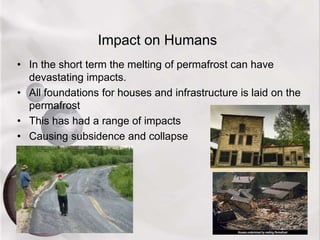
• In the short term the melting of permafrost can have
devastating impacts.
• All foundations for houses and infrastructure is laid on the
permafrost
• This has had a range of impacts
• Causing subsidence and collapse
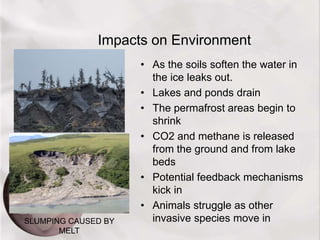
Impacts on Environment
• As the soils soften the water in
the ice leaks out.
• Lakes and ponds drain
• The permafrost areas begin to
shrink
• CO2 and methane is released
from the ground and from lake
beds
• Potential feedback mechanisms
kick in
• Animals struggle as other
invasive species move inSLUMPING CAUSED BY
MELT
Which will suffer more from climate change,
glacial or periglacial regions? Discuss
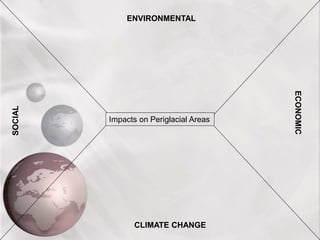
Impacts on Periglacial Areas
ENVIRONMENTALSOCIAL
ECONOMIC
CLIMATE CHANGE

Lesson 9 canada a periglacial region

  • 1.
    Write down whatyou think you see Where? What? When? Why?
  • 2.
    Canada – Aperiglacial Region
  • 3.
  • 4.
    Baffin Island • Sitsin Northern Canada where the Eastern side is usually ice free whilst the western side is usually closed due to ice • It is a typical continuous permafrost region • Like all periglacial regions it has a typical tundra ecosystem There are three types of tundra (Arctic, Antarctic and Alpine all of which are very similar)
  • 5.
    Tundra Extent • Fromthe Mackenzie Delta to the Southern Hudson Bay and to Northern Labrador in the NE
  • 6.
    Climate • Winters arelong dark and cold sunsets at around 3pm • During the short summers the snow and soil layers above the permafrost melt • This feeds vast wetlands, streams and rivers. • This along with 24hr sunshine creates rapid growth for small compact plants
  • 7.
  • 8.
    Impact of ClimateChange on Tundra • The Arctic tundra is changing dramatically due to global warming. • Animals that are typically found further south, like the red fox, are moving onto the tundra and is now competing with the Arctic fox for food and territory, and the long-term impact on the sensitive Arctic fox is unknown
  • 9.
    • It isthe Arctic's permafrost that is the foundation for much of the region's unique ecosystem, and it is the permafrost that is deteriorating with the warmer global climate.
  • 10.
    Climate Change • Anothermajor concern is that the melting of the permafrost is contributing to global warming. • Estimates suggest that about 14% of the Earth’s carbon is tied up in the permafrost. • the tundra has acted as a carbon sink and captured huge amounts of carbon dioxide from the atmosphere as part of photosynthesis.
  • 11.
    Climate Change • Thisprocess has helped keep the amount of this greenhouse gas from accumulating in the atmosphere. • However, as the permafrost melts and dead plant material decomposes it releases CO2 and methane, • the tundra has flipped from being a carbon sink to a carbon contributor. This means not only is the planet less capable of preventing greenhouse gases from accumulating, but the tundra is also beginning to contribute to their build-up.
  • 12.
    Impact on Humans •In the short term the melting of permafrost can have devastating impacts. • All foundations for houses and infrastructure is laid on the permafrost • This has had a range of impacts • Causing subsidence and collapse
  • 13.
    Impacts on Environment •As the soils soften the water in the ice leaks out. • Lakes and ponds drain • The permafrost areas begin to shrink • CO2 and methane is released from the ground and from lake beds • Potential feedback mechanisms kick in • Animals struggle as other invasive species move inSLUMPING CAUSED BY MELT
  • 15.
    Which will suffermore from climate change, glacial or periglacial regions? Discuss
  • 16.
    Impacts on PeriglacialAreas ENVIRONMENTALSOCIAL ECONOMIC CLIMATE CHANGE