By: Clairese Dulay
A term used to describe a gradual increase
in the average temperature of the Earth's
atmosphere and its oceans, a change that
is believed to be permanently changing the
Earth's climate
CAUSES
Global warming occurs when carbon dioxide
(CO2) and other air pollutants and greenhouse
gasses collect in the atmosphere and absorb
sunlight and solar radiation that have bounced
off the earth’s surface. Normally, this radiation
would escape into space—but these pollutants,
which can last for years to centuries in the
atmosphere, trap the heat and cause the planet
to get hotter. That's what's known as the
greenhouse effect.
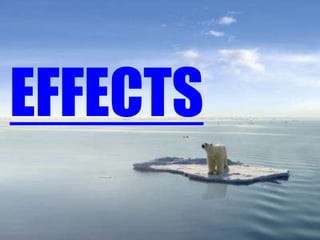
EFFECTS
• Melting glaciers, early snowmelt, and severe
droughts will cause more dramatic water shortages
and increase the risk of wildfires in the American
West.
• Rising sea levels will lead to coastal flooding on the
Eastern Seaboard, especially in Florida, and in
other areas such as the Gulf of Mexico.
• Forests, farms, and cities will face troublesome new
pests, heat waves, heavy downpours, and
increased flooding. All those factors will damage or
destroy agriculture and fisheries.
• Disruption of habitats such as coral reefs and Alpine
meadows could drive many plant and animal
species to extinction.
• Allergies, asthma, and infectious disease outbreaks
will become more common due to increased growth
of pollen-producing ragweed, higher levels of air
pollution, and the spread of conditions favorable to
pathogens and mosquitoes.
THANK YOU! 

Global warming clairese

  • 1.
  • 3.
    A term usedto describe a gradual increase in the average temperature of the Earth's atmosphere and its oceans, a change that is believed to be permanently changing the Earth's climate
  • 4.
  • 5.
    Global warming occurswhen carbon dioxide (CO2) and other air pollutants and greenhouse gasses collect in the atmosphere and absorb sunlight and solar radiation that have bounced off the earth’s surface. Normally, this radiation would escape into space—but these pollutants, which can last for years to centuries in the atmosphere, trap the heat and cause the planet to get hotter. That's what's known as the greenhouse effect.
  • 6.
  • 7.
    • Melting glaciers,early snowmelt, and severe droughts will cause more dramatic water shortages and increase the risk of wildfires in the American West. • Rising sea levels will lead to coastal flooding on the Eastern Seaboard, especially in Florida, and in other areas such as the Gulf of Mexico. • Forests, farms, and cities will face troublesome new pests, heat waves, heavy downpours, and increased flooding. All those factors will damage or destroy agriculture and fisheries.
  • 8.
    • Disruption ofhabitats such as coral reefs and Alpine meadows could drive many plant and animal species to extinction. • Allergies, asthma, and infectious disease outbreaks will become more common due to increased growth of pollen-producing ragweed, higher levels of air pollution, and the spread of conditions favorable to pathogens and mosquitoes.
  • 9.