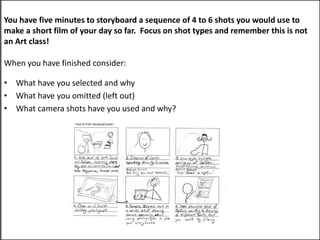
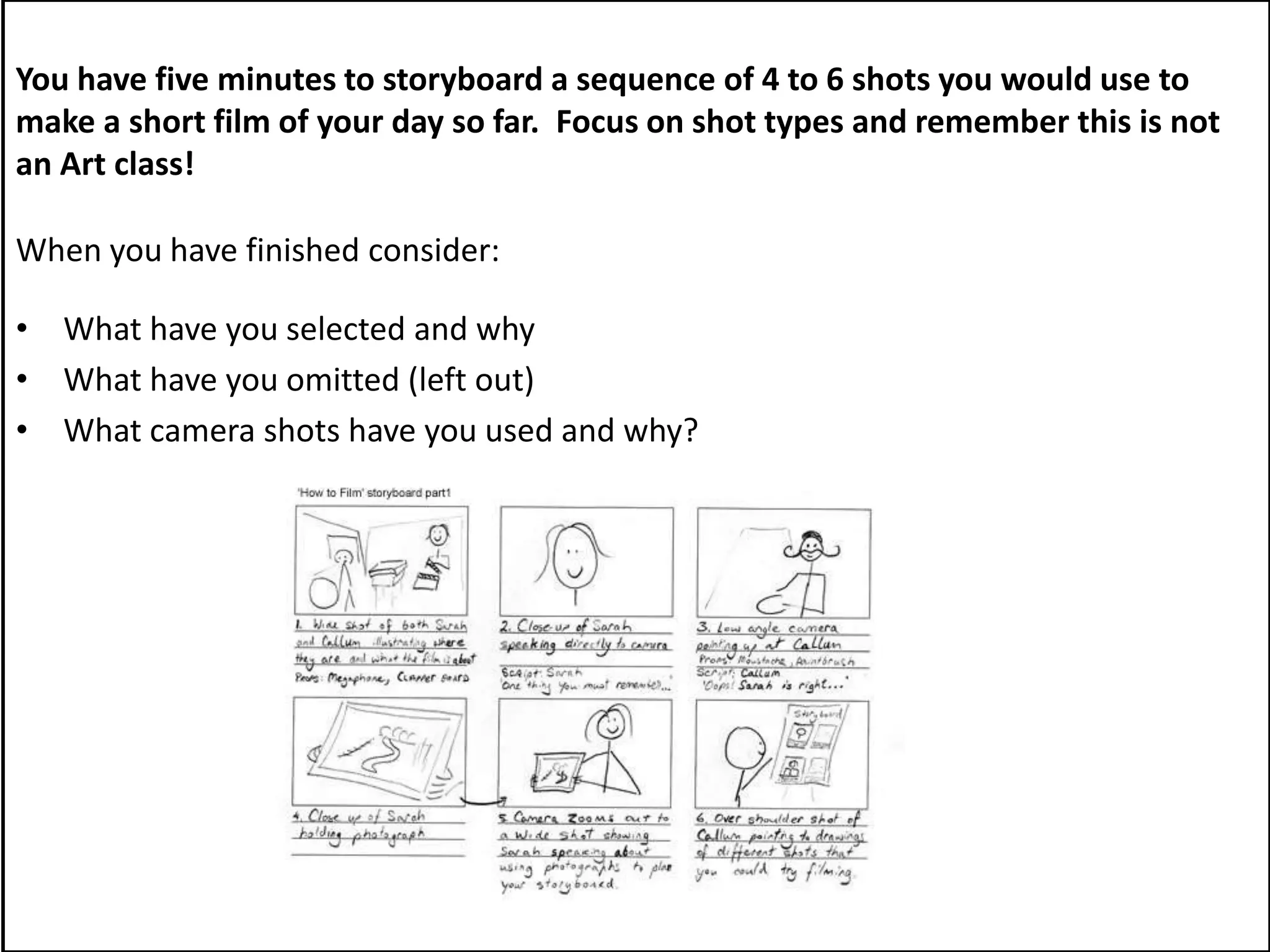
You have five minutes to storyboard a sequence of 4 to 6 shots you would use to
make a short film of your day so far. Focus on shot types and remember this is not
an Art class!
When you have finished consider:
• What have you selected and why
• What have you omitted (left out)
• What camera shots have you used and why?
Introduction to Media Language
Lesson 8: Narrative & Binary
Opposition
Learning Questions
• What is narrative? What is the difference
between story and plot?
• What is ‘binary opposition’?
• What is Syd Field’s Three Act Structure?
What is Narrative?
• Narrative refers to the process of storytelling.
• Stories have long been an important part of human existence,
for example, in folk tales. We often turn our own experiences
into stories to entertain our friends.
• Narratives have the capacity to entertain and generate
emotions.
• Narratives can allow us to identify and empathise with
characters and so experience the world in a different way.
• Narrative plays with our expectations and is used as a device
by which we are able to maintain an interest in what is
happening.
Story and Plot
The STORY is the basic chronological order of events. This
includes the events we are actually shown, and the events
that are inferred.
The PLOT is the arrangement of these events into a particular
order. This usually creates a sense of enigma and of
resolution, therefore creating audience pleasure – there is a
sense of achievement in recognising the shape and form of
the narrative.
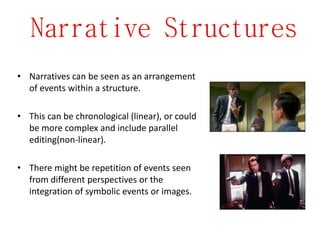
Narrative Structures
• Narratives can be seen as an arrangement
of events within a structure.
• This can be chronological (linear), or could
be more complex and include parallel
editing(non-linear).
• There might be repetition of events seen
from different perspectives or the
integration of symbolic events or images.
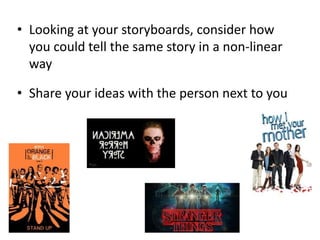
• Looking at your storyboards, consider how
you could tell the same story in a non-linear
way
• Share your ideas with the person next to you
Claude
LĂŠvi-Strauss
Media Studies: Key Theory
Media Language
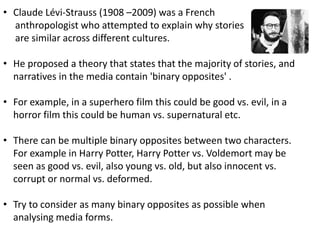
• Claude Lévi-Strauss (1908 –2009) was a French
anthropologist who attempted to explain why stories
are similar across different cultures.
• He proposed a theory that states that the majority of stories, and
narratives in the media contain 'binary opposites' .
• For example, in a superhero film this could be good vs. evil, in a
horror film this could be human vs. supernatural etc.
• There can be multiple binary opposites between two characters.
For example in Harry Potter, Harry Potter vs. Voldemort may be
seen as good vs. evil, also young vs. old, but also innocent vs.
corrupt or normal vs. deformed.
• Try to consider as many binary opposites as possible when
analysing media forms.
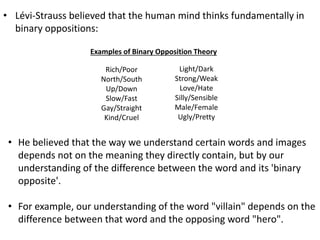
• Lévi-Strauss believed that the human mind thinks fundamentally in
binary oppositions:
Rich/Poor
North/South
Up/Down
Slow/Fast
Gay/Straight
Kind/Cruel
Light/Dark
Strong/Weak
Love/Hate
Silly/Sensible
Male/Female
Ugly/Pretty
• He believed that the way we understand certain words and images
depends not on the meaning they directly contain, but by our
understanding of the difference between the word and its 'binary
opposite'.
• For example, our understanding of the word "villain" depends on the
difference between that word and the opposing word "hero".
Examples of Binary Opposition Theory
Claude LĂŠvi-Strauss
• Media texts can best be understood by
understanding their underlying structure (how
different elements relate to each other).
• Meaning is produced in texts through ‘binary
oppositions’.
• The way in which oppositions are defined and
resolved can have ideological significance.
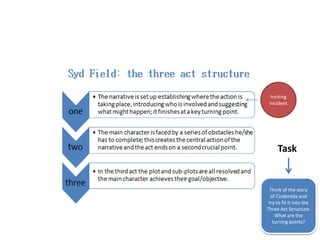
Syd Field’s Three Act Structure
Think of the story
of Cinderella and
try to fit it into the
Three Act Structure.
What are the
turning points?
Task
Inciting
Incident
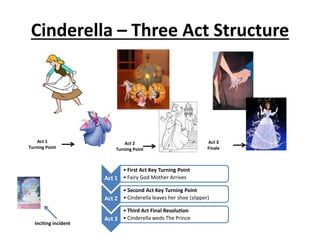
Cinderella – Three Act Structure
Act 1
• First Act Key Turning Point
• Fairy God Mother Arrives
Act 2
• Second Act Key Turning Point
• Cinderella leaves her shoe (slipper)
Act 3
• Third Act Final Resolution
• Cinderella weds The Prince
Act 1
Turning Point
Act 2
Turning Point
Act 3
Finale
Inciting incident
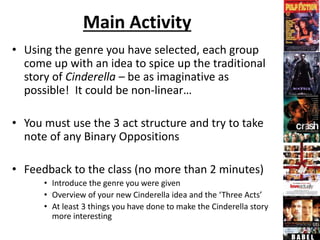
Main Activity
• Using the genre you have selected, each group
come up with an idea to spice up the traditional
story of Cinderella – be as imaginative as
possible! It could be non-linear…
• You must use the 3 act structure and try to take
note of any Binary Oppositions
• Feedback to the class (no more than 2 minutes)
• Introduce the genre you were given
• Overview of your new Cinderella idea and the ‘Three Acts’
• At least 3 things you have done to make the Cinderella story
more interesting

Lesson 8 - Narrative

  • 1.
    You have fiveminutes to storyboard a sequence of 4 to 6 shots you would use to make a short film of your day so far. Focus on shot types and remember this is not an Art class! When you have finished consider: • What have you selected and why • What have you omitted (left out) • What camera shots have you used and why?
  • 2.
    Introduction to MediaLanguage Lesson 8: Narrative & Binary Opposition
  • 3.
    Learning Questions • Whatis narrative? What is the difference between story and plot? • What is ‘binary opposition’? • What is Syd Field’s Three Act Structure?
  • 4.
    What is Narrative? •Narrative refers to the process of storytelling. • Stories have long been an important part of human existence, for example, in folk tales. We often turn our own experiences into stories to entertain our friends. • Narratives have the capacity to entertain and generate emotions. • Narratives can allow us to identify and empathise with characters and so experience the world in a different way. • Narrative plays with our expectations and is used as a device by which we are able to maintain an interest in what is happening.
  • 5.
    Story and Plot TheSTORY is the basic chronological order of events. This includes the events we are actually shown, and the events that are inferred. The PLOT is the arrangement of these events into a particular order. This usually creates a sense of enigma and of resolution, therefore creating audience pleasure – there is a sense of achievement in recognising the shape and form of the narrative.
  • 6.
    Narrative Structures • Narrativescan be seen as an arrangement of events within a structure. • This can be chronological (linear), or could be more complex and include parallel editing(non-linear). • There might be repetition of events seen from different perspectives or the integration of symbolic events or images.
  • 7.
    • Looking atyour storyboards, consider how you could tell the same story in a non-linear way • Share your ideas with the person next to you
  • 8.
  • 9.
    • Claude Lévi-Strauss(1908 –2009) was a French anthropologist who attempted to explain why stories are similar across different cultures. • He proposed a theory that states that the majority of stories, and narratives in the media contain 'binary opposites' . • For example, in a superhero film this could be good vs. evil, in a horror film this could be human vs. supernatural etc. • There can be multiple binary opposites between two characters. For example in Harry Potter, Harry Potter vs. Voldemort may be seen as good vs. evil, also young vs. old, but also innocent vs. corrupt or normal vs. deformed. • Try to consider as many binary opposites as possible when analysing media forms.
  • 10.
    • Lévi-Strauss believedthat the human mind thinks fundamentally in binary oppositions: Rich/Poor North/South Up/Down Slow/Fast Gay/Straight Kind/Cruel Light/Dark Strong/Weak Love/Hate Silly/Sensible Male/Female Ugly/Pretty • He believed that the way we understand certain words and images depends not on the meaning they directly contain, but by our understanding of the difference between the word and its 'binary opposite'. • For example, our understanding of the word "villain" depends on the difference between that word and the opposing word "hero". Examples of Binary Opposition Theory
  • 11.
    Claude Lévi-Strauss • Mediatexts can best be understood by understanding their underlying structure (how different elements relate to each other). • Meaning is produced in texts through ‘binary oppositions’. • The way in which oppositions are defined and resolved can have ideological significance.
  • 12.
  • 13.
    Think of thestory of Cinderella and try to fit it into the Three Act Structure. What are the turning points? Task Inciting Incident
  • 14.
    Cinderella – ThreeAct Structure Act 1 • First Act Key Turning Point • Fairy God Mother Arrives Act 2 • Second Act Key Turning Point • Cinderella leaves her shoe (slipper) Act 3 • Third Act Final Resolution • Cinderella weds The Prince Act 1 Turning Point Act 2 Turning Point Act 3 Finale Inciting incident
  • 15.
    Main Activity • Usingthe genre you have selected, each group come up with an idea to spice up the traditional story of Cinderella – be as imaginative as possible! It could be non-linear… • You must use the 3 act structure and try to take note of any Binary Oppositions • Feedback to the class (no more than 2 minutes) • Introduce the genre you were given • Overview of your new Cinderella idea and the ‘Three Acts’ • At least 3 things you have done to make the Cinderella story more interesting