Narrative structure
What is Narrative structure 
• In the most simplest terms the narrative structure is 
about two things: the content of a story and the form 
used to tell the story. Two common ways to describe 
these two parts of narrative structure are story and 
plot. Story refers to the raw materials of dramatic 
action as they might be described in chronological 
order. 
• http://www.google.co.uk/search?safe=active&site=&so 
urce=hp&q=what+is+narrative+structure&oq=what+is+ 
narrative+s&gs_l=hp.3.0.0l10.349.8228.0.9702.28.21.5 
.2.3.0.196.1807.20j1.21.0....0...1c.1.58.hp..0.28.1915.x 
cr49zOa0h0
Narrative codes 
• The narrative structure is made up of codes: 
• Hermeneutic code = Enigma codes 
• Paraenetic code = Action codes
Action Codes Enigma codes 
Roland Barthes came up with 
this idea of action codes; that 
in films and narratives one 
action will lead to another 
and this is how the story is 
created and is where it comes 
from. For example a man is 
shot and then the police 
investigate this. The audience 
therefore know why these 
things are happening. 
However on the flip side there 
is another theory. Enigma 
codes. That its mysteries and 
signs that move the plot 
along, its up to the audience 
to watch and suss out what is 
going on. An example is facial 
expressions that people make 
the music that players, this 
carries the plot forward but 
the audience are required to 
figure out what is going to 
happen based on this signals.
Tzvetan Todorov 
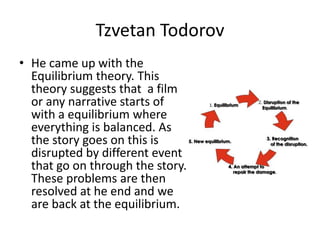
• He came up with the 
Equilibrium theory. This 
theory suggests that a film 
or any narrative starts of 
with a equilibrium where 
everything is balanced. As 
the story goes on this is 
disrupted by different event 
that go on through the story. 
These problems are then 
resolved at he end and we 
are back at the equilibrium.
Binary oppositions 
• Levi-Strauss brought about this theory of 
Binary oppositions. A good way to help 
understand the meanings within a narrative. 
• For example: -Male - Female 
-Hero/Heroin - Villain 
-Light - Dark 
He said that the construction or existence of 
these meanings were dependant, to a certain 
extent, on there oppositions.
Vladimir Propp 
• Propp looked at the relationship between the narrative and characters. 
• He argued that plots are driven by the characters and that the story develops 
around the characters. he analysed the function of characters in within the story. 
• The hero/heroin – has a mission to complete something. He carries the events 
through the story. (James Bond) 
• The villain – Driven by evil motives and tried to prevent the hero from saving the 
day. (Jaws from the James Bond films) 
• The donor- aids the hero by helping him. (Q from the James Bond films) 
• The dispatcher – sent the hero on a mission. (M from the James Bond films) 
• The false hero – pretends to be good but tricks the hero my giving them false help. 
(Bond girls) 
• The helper – Sidekick who helps the hero along the way (Money penny in Skyfall) 
• The princess - stereotypical person in distress. (Bond girl about to be eaten by a 
shark)

Narrative structure

  • 1.
  • 2.
    What is Narrativestructure • In the most simplest terms the narrative structure is about two things: the content of a story and the form used to tell the story. Two common ways to describe these two parts of narrative structure are story and plot. Story refers to the raw materials of dramatic action as they might be described in chronological order. • http://www.google.co.uk/search?safe=active&site=&so urce=hp&q=what+is+narrative+structure&oq=what+is+ narrative+s&gs_l=hp.3.0.0l10.349.8228.0.9702.28.21.5 .2.3.0.196.1807.20j1.21.0....0...1c.1.58.hp..0.28.1915.x cr49zOa0h0
  • 3.
    Narrative codes •The narrative structure is made up of codes: • Hermeneutic code = Enigma codes • Paraenetic code = Action codes
  • 4.
    Action Codes Enigmacodes Roland Barthes came up with this idea of action codes; that in films and narratives one action will lead to another and this is how the story is created and is where it comes from. For example a man is shot and then the police investigate this. The audience therefore know why these things are happening. However on the flip side there is another theory. Enigma codes. That its mysteries and signs that move the plot along, its up to the audience to watch and suss out what is going on. An example is facial expressions that people make the music that players, this carries the plot forward but the audience are required to figure out what is going to happen based on this signals.
  • 5.
    Tzvetan Todorov •He came up with the Equilibrium theory. This theory suggests that a film or any narrative starts of with a equilibrium where everything is balanced. As the story goes on this is disrupted by different event that go on through the story. These problems are then resolved at he end and we are back at the equilibrium.
  • 6.
    Binary oppositions •Levi-Strauss brought about this theory of Binary oppositions. A good way to help understand the meanings within a narrative. • For example: -Male - Female -Hero/Heroin - Villain -Light - Dark He said that the construction or existence of these meanings were dependant, to a certain extent, on there oppositions.
  • 7.
    Vladimir Propp •Propp looked at the relationship between the narrative and characters. • He argued that plots are driven by the characters and that the story develops around the characters. he analysed the function of characters in within the story. • The hero/heroin – has a mission to complete something. He carries the events through the story. (James Bond) • The villain – Driven by evil motives and tried to prevent the hero from saving the day. (Jaws from the James Bond films) • The donor- aids the hero by helping him. (Q from the James Bond films) • The dispatcher – sent the hero on a mission. (M from the James Bond films) • The false hero – pretends to be good but tricks the hero my giving them false help. (Bond girls) • The helper – Sidekick who helps the hero along the way (Money penny in Skyfall) • The princess - stereotypical person in distress. (Bond girl about to be eaten by a shark)