Free Automotive Classes 
Lesson 6: The Cooling 
System 
Jeff Crawford 
Crawfords Auto Repair 
www.CrawfordsAutoService.com
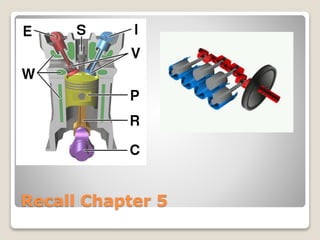
Recall Chapter 5
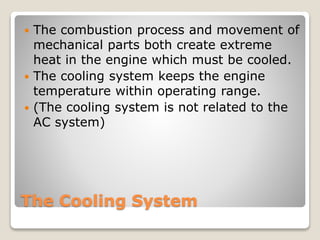
 The combustion process and movement of 
mechanical parts both create extreme 
heat in the engine which must be cooled. 
 The cooling system keeps the engine 
temperature within operating range. 
 (The cooling system is not related to the 
AC system) 
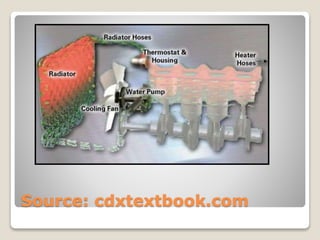
The Cooling System
Source: cdxtextbook.com
 Radiator 
 Thermostat and Housing 
 Water Pump 
 Cooling Fan 
 Radiator Hoses 
 Heater Hoses 
 Coolant 
Major Components of the Cooling 
System
 “Ooh, I’m gonna have to go get myself 
some coolant!” 
Disney/Pixar’s Cars 2
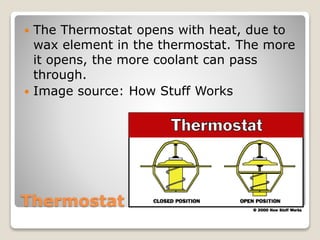
 The Thermostat opens with heat, due to 
wax element in the thermostat. The more 
it opens, the more coolant can pass 
through. 
 Image source: How Stuff Works 
Thermostat
 The coolant passes through designated 
passages throughout the engine (coolant 
does not mix with other fluids) 
 Heat transfers to the coolant 
 The coolant runs to the radiator where 
heat is released into the air. 
How the Cooling System Cools
 Preventative Maintenance 
 Avoid overheating 
 Avoid electrolysis (microscopic breakdown 
of metals in the engine block) 
 May be needed even sooner than 
indicated by the manufacturer 
 Low coolant level may indicate a leak 
Cooling System Maintenance
Cooling System Flush
 Refer to the owner’s manual for locations 
of each part of the cooling system. 
 Open the radiator drain to drain the 
system, collect the drainage in a 
container. 
 Remove the thermostat. 
 Disconnect the lower radiator hose 
 Force coolant through the thermostat 
housing, upper hose and engine block 
with garden hose until water runs clear. 
Steps for Cooling System Flush
 Connect the garden hose to the radiator, 
flush until the water runs clear. 
 Completely drain the cooling system of all 
water 
 Reinstall the thermostat 
 Disconnect the reservoir and flush with 
garden hose until water runs clear. 
 Completely drain reservoir. 
 Connect the hoses and close the drains. 
Flush Steps Continued
 Perform a pressure test (next slide) 
 Fill the cooling system with new coolant to 
manufacturer’s specification and distilled 
water. Use 50/50 mixture of coolant and 
distilled water or pre-mixed coolant 
 (Distilled water is necessary so you don’t 
have impurities in the cooling system) 
Flush Steps Continued
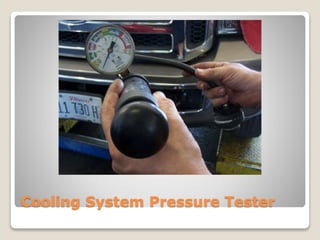
 Connect pressure tester where the 
radiator cap goes. 
 Pump pressure to amount specified on the 
radiator cap. 
 Leave pressure on for 20-30 min 
 Inspect the cooling system for leaks 
 Disconnect pressure tester and connect it 
to the radiator cap and pump to specified 
amount to test the cap 
Pressure Test
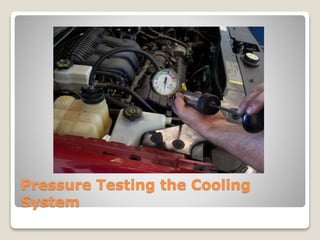
Pressure Testing the Cooling 
System
Cooling System Pressure Tester
The steps to a cooling system 
flush and pressure test will all 
make more sense with our 
video on YouTube.
Questions?
 http://crawfordsautoservice.com/crawford 
s-auto-repair-guide-free-ebook/ 
 Also available for print-on-demand and 
Kindle 
Download the ebook free
 Certified technicians 
 Over 35 years of combined 
experience 
 We treat your vehicle as if 
it belonged to our own 
mother 
 High customer satisfaction 
(read our reviews online) 
 No service writers! We 
never try to sell 
unnecessary repairs. 
 Free Quotes and a Price 
Match Guarantee 
Crawford’s Auto Repair

Lesson 6 the cooling system

  • 1.
    Free Automotive Classes Lesson 6: The Cooling System Jeff Crawford Crawfords Auto Repair www.CrawfordsAutoService.com
  • 2.
  • 3.
     The combustionprocess and movement of mechanical parts both create extreme heat in the engine which must be cooled.  The cooling system keeps the engine temperature within operating range.  (The cooling system is not related to the AC system) The Cooling System
  • 4.
  • 5.
     Radiator Thermostat and Housing  Water Pump  Cooling Fan  Radiator Hoses  Heater Hoses  Coolant Major Components of the Cooling System
  • 6.
     “Ooh, I’mgonna have to go get myself some coolant!” Disney/Pixar’s Cars 2
  • 7.
     The Thermostatopens with heat, due to wax element in the thermostat. The more it opens, the more coolant can pass through.  Image source: How Stuff Works Thermostat
  • 8.
     The coolantpasses through designated passages throughout the engine (coolant does not mix with other fluids)  Heat transfers to the coolant  The coolant runs to the radiator where heat is released into the air. How the Cooling System Cools
  • 9.
     Preventative Maintenance  Avoid overheating  Avoid electrolysis (microscopic breakdown of metals in the engine block)  May be needed even sooner than indicated by the manufacturer  Low coolant level may indicate a leak Cooling System Maintenance
  • 10.
  • 11.
     Refer tothe owner’s manual for locations of each part of the cooling system.  Open the radiator drain to drain the system, collect the drainage in a container.  Remove the thermostat.  Disconnect the lower radiator hose  Force coolant through the thermostat housing, upper hose and engine block with garden hose until water runs clear. Steps for Cooling System Flush
  • 12.
     Connect thegarden hose to the radiator, flush until the water runs clear.  Completely drain the cooling system of all water  Reinstall the thermostat  Disconnect the reservoir and flush with garden hose until water runs clear.  Completely drain reservoir.  Connect the hoses and close the drains. Flush Steps Continued
  • 13.
     Perform apressure test (next slide)  Fill the cooling system with new coolant to manufacturer’s specification and distilled water. Use 50/50 mixture of coolant and distilled water or pre-mixed coolant  (Distilled water is necessary so you don’t have impurities in the cooling system) Flush Steps Continued
  • 14.
     Connect pressuretester where the radiator cap goes.  Pump pressure to amount specified on the radiator cap.  Leave pressure on for 20-30 min  Inspect the cooling system for leaks  Disconnect pressure tester and connect it to the radiator cap and pump to specified amount to test the cap Pressure Test
  • 15.
    Pressure Testing theCooling System
  • 16.
  • 17.
    The steps toa cooling system flush and pressure test will all make more sense with our video on YouTube.
  • 18.
  • 19.
     http://crawfordsautoservice.com/crawford s-auto-repair-guide-free-ebook/  Also available for print-on-demand and Kindle Download the ebook free
  • 20.
     Certified technicians  Over 35 years of combined experience  We treat your vehicle as if it belonged to our own mother  High customer satisfaction (read our reviews online)  No service writers! We never try to sell unnecessary repairs.  Free Quotes and a Price Match Guarantee Crawford’s Auto Repair