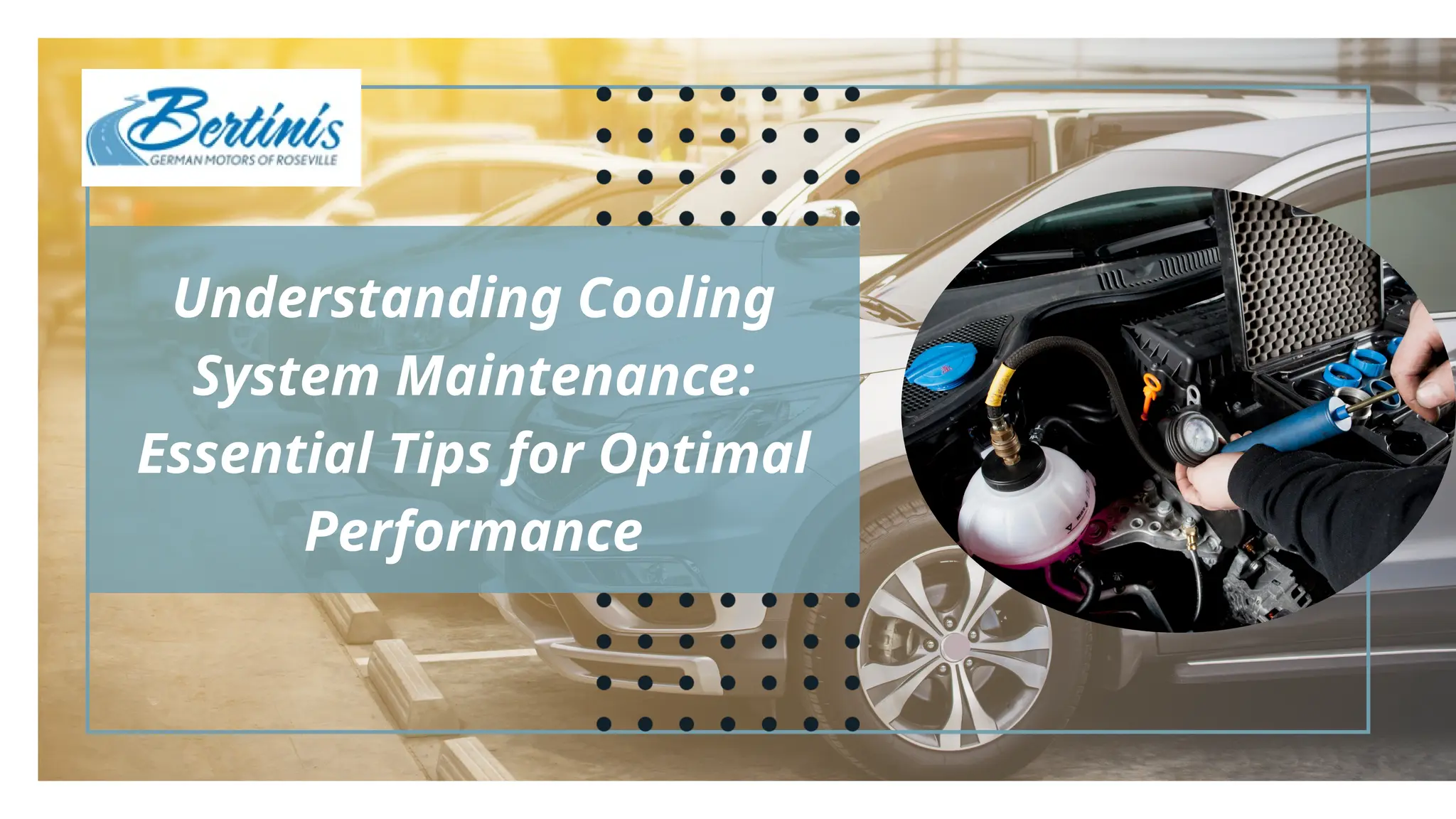
Understanding Cooling
System Maintenance:
Essential Tips for Optimal
Performance
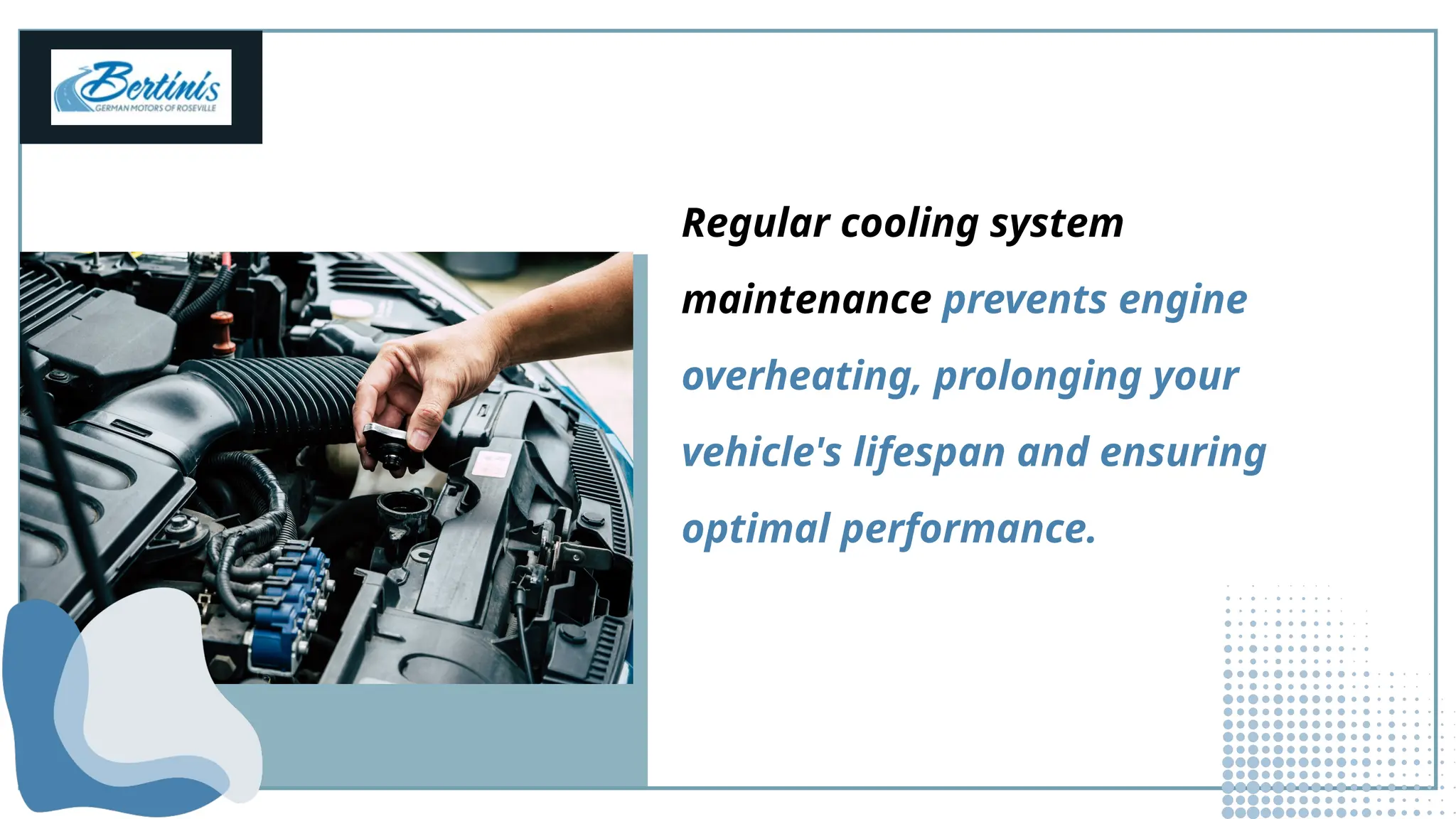
Regular cooling system
maintenance prevents engine
overheating, prolonging your
vehicle's lifespan and ensuring
optimal performance.
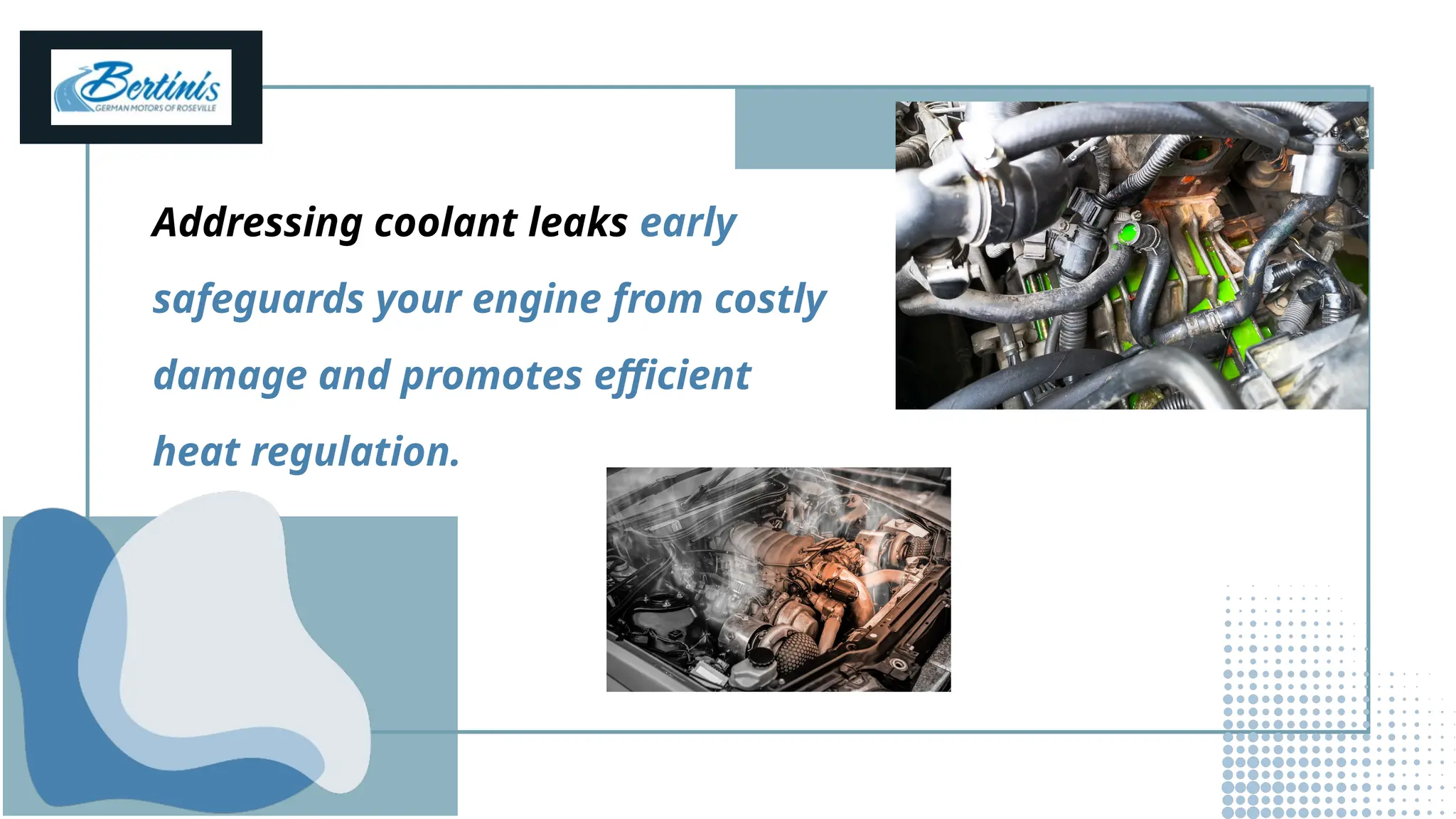
Addressing coolant leaks early
safeguards your engine from costly
damage and promotes efficient
heat regulation.
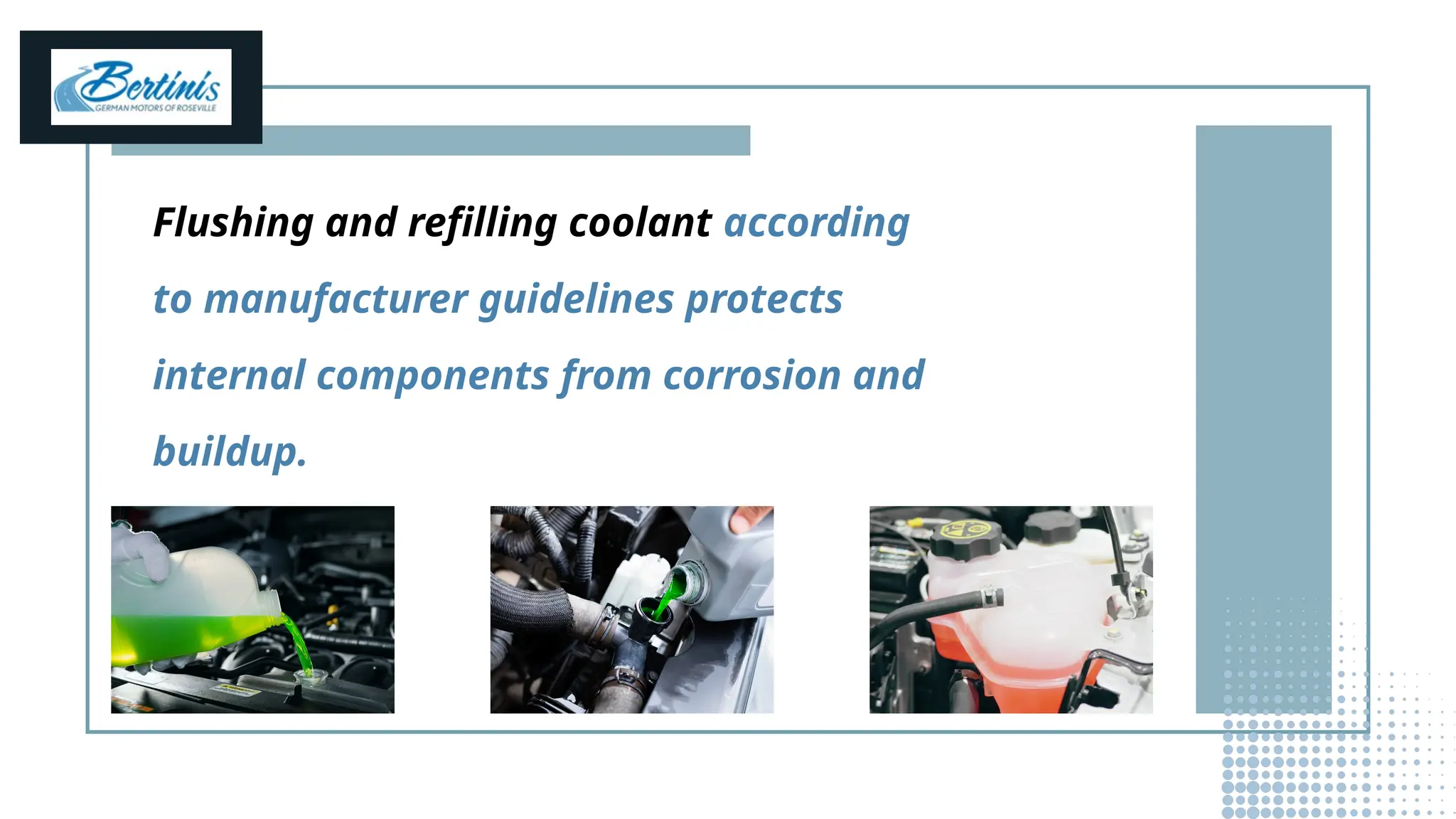
Flushing and refilling coolant according
to manufacturer guidelines protects
internal components from corrosion and
buildup.
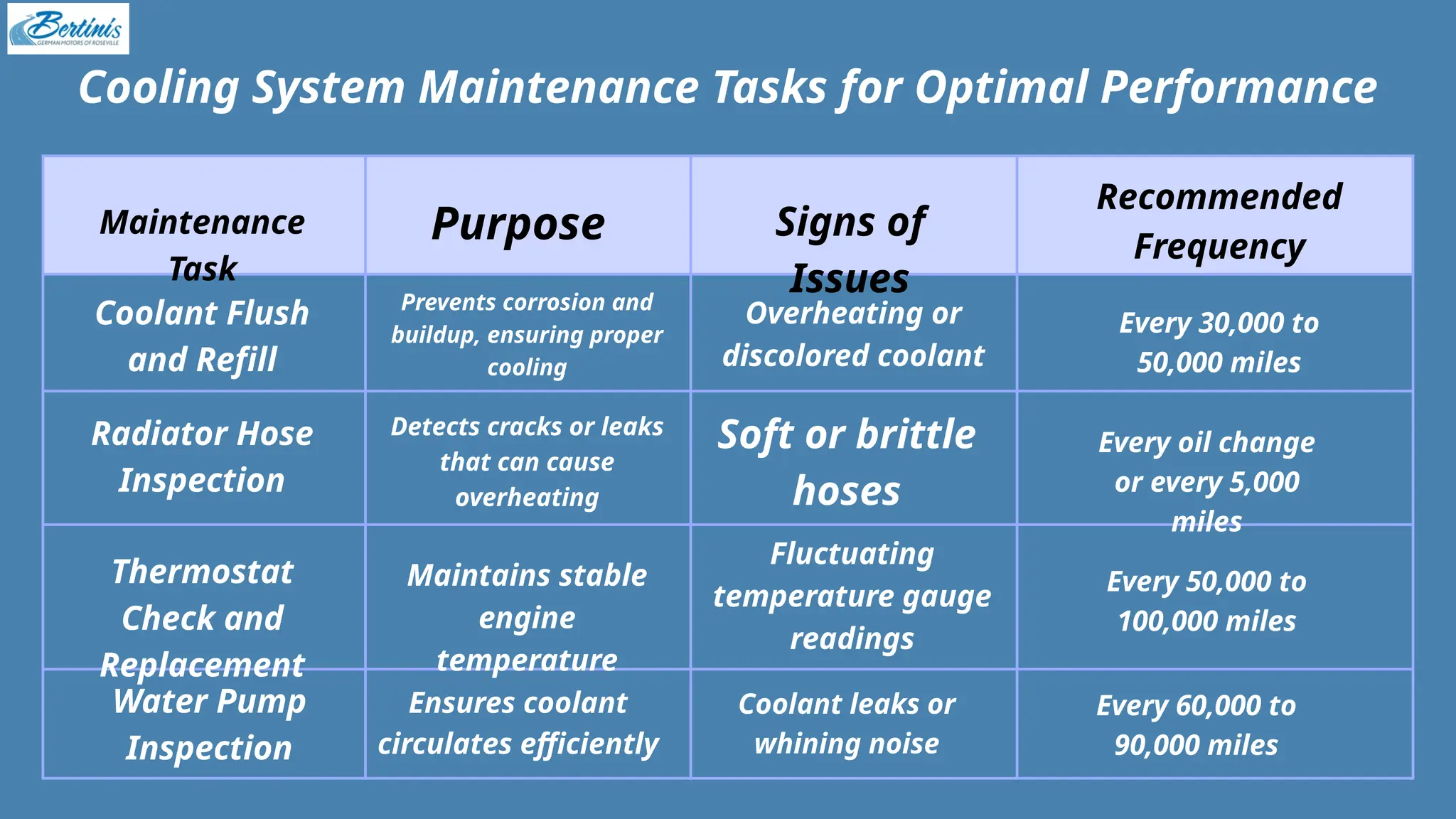
Cooling System Maintenance Tasks for Optimal Performance
Maintenance
Task
Purpose Signs of
Issues
Recommended
Frequency
Coolant Flush
and Refill
Radiator Hose
Inspection
Thermostat
Check and
Replacement
Water Pump
Inspection
Prevents corrosion and
buildup, ensuring proper
cooling
Detects cracks or leaks
that can cause
overheating
Maintains stable
engine
temperature
Ensures coolant
circulates efficiently
Overheating or
discolored coolant
Soft or brittle
hoses
Fluctuating
temperature gauge
readings
Coolant leaks or
whining noise
Every 30,000 to
50,000 miles
Every oil change
or every 5,000
miles
Every 50,000 to
100,000 miles
Every 60,000 to
90,000 miles
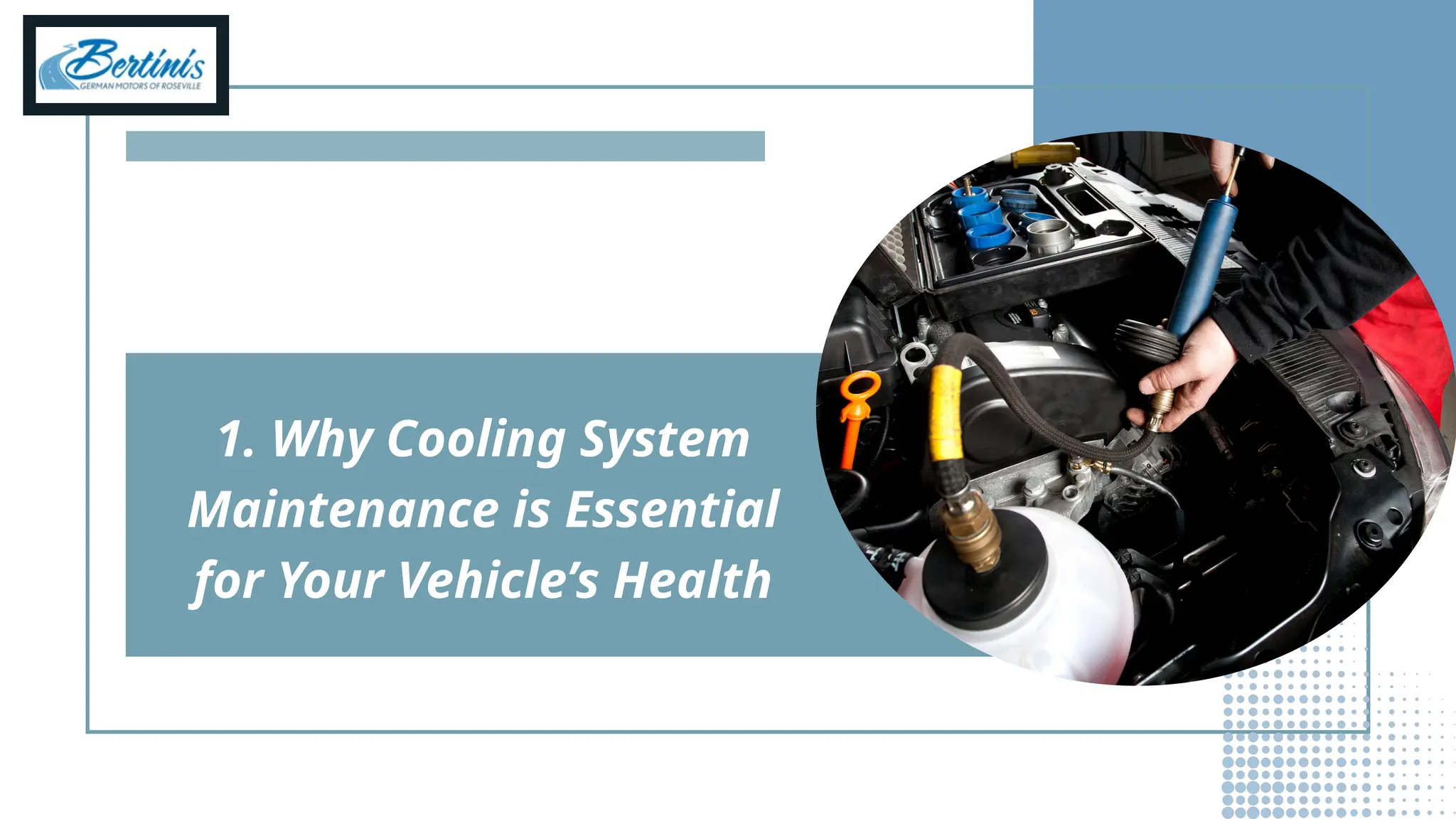
1. Why Cooling System
Maintenance is Essential
for Your Vehicle’s Health
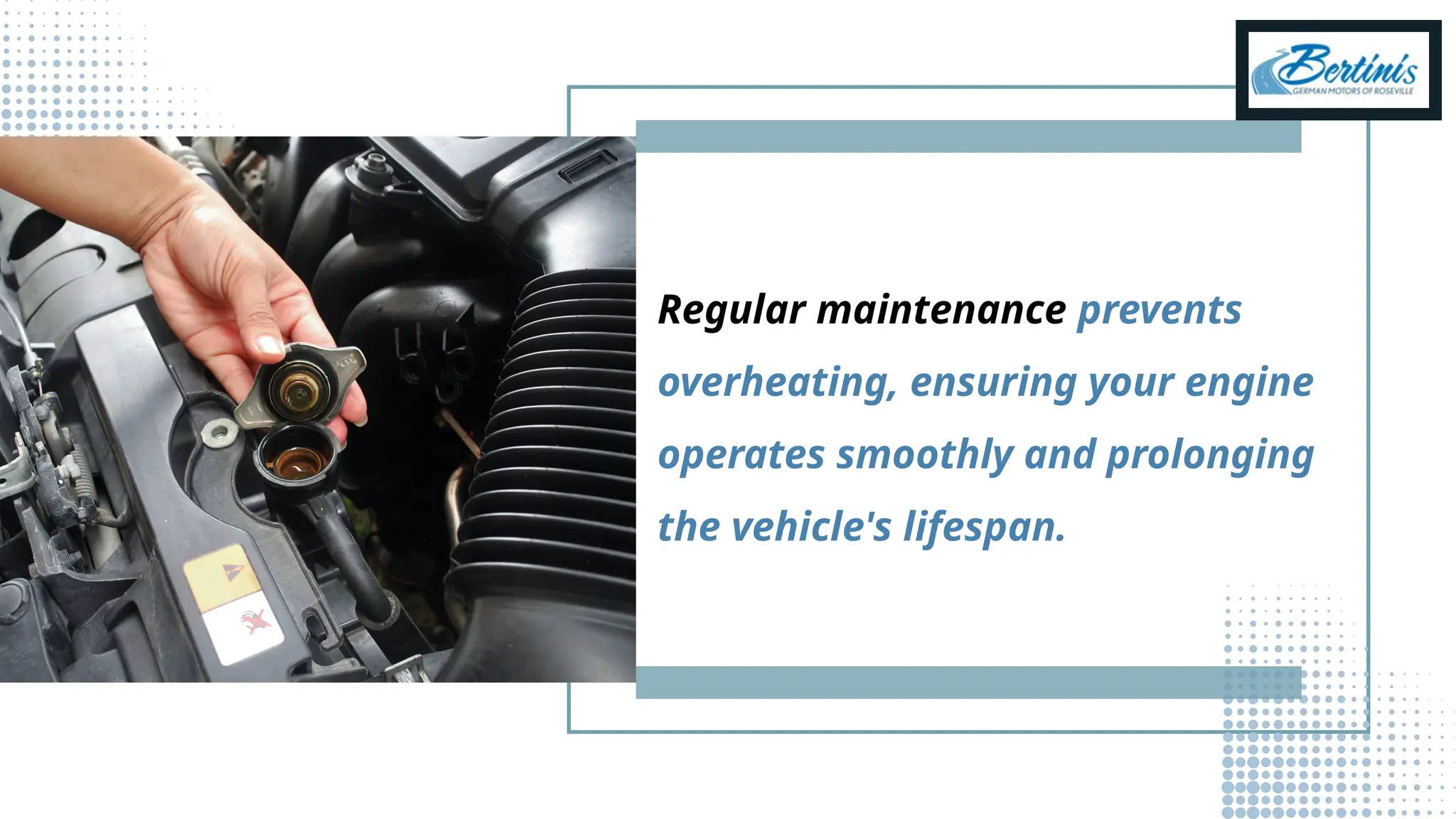
Regular maintenance prevents
overheating, ensuring your engine
operates smoothly and prolonging
the vehicle's lifespan.
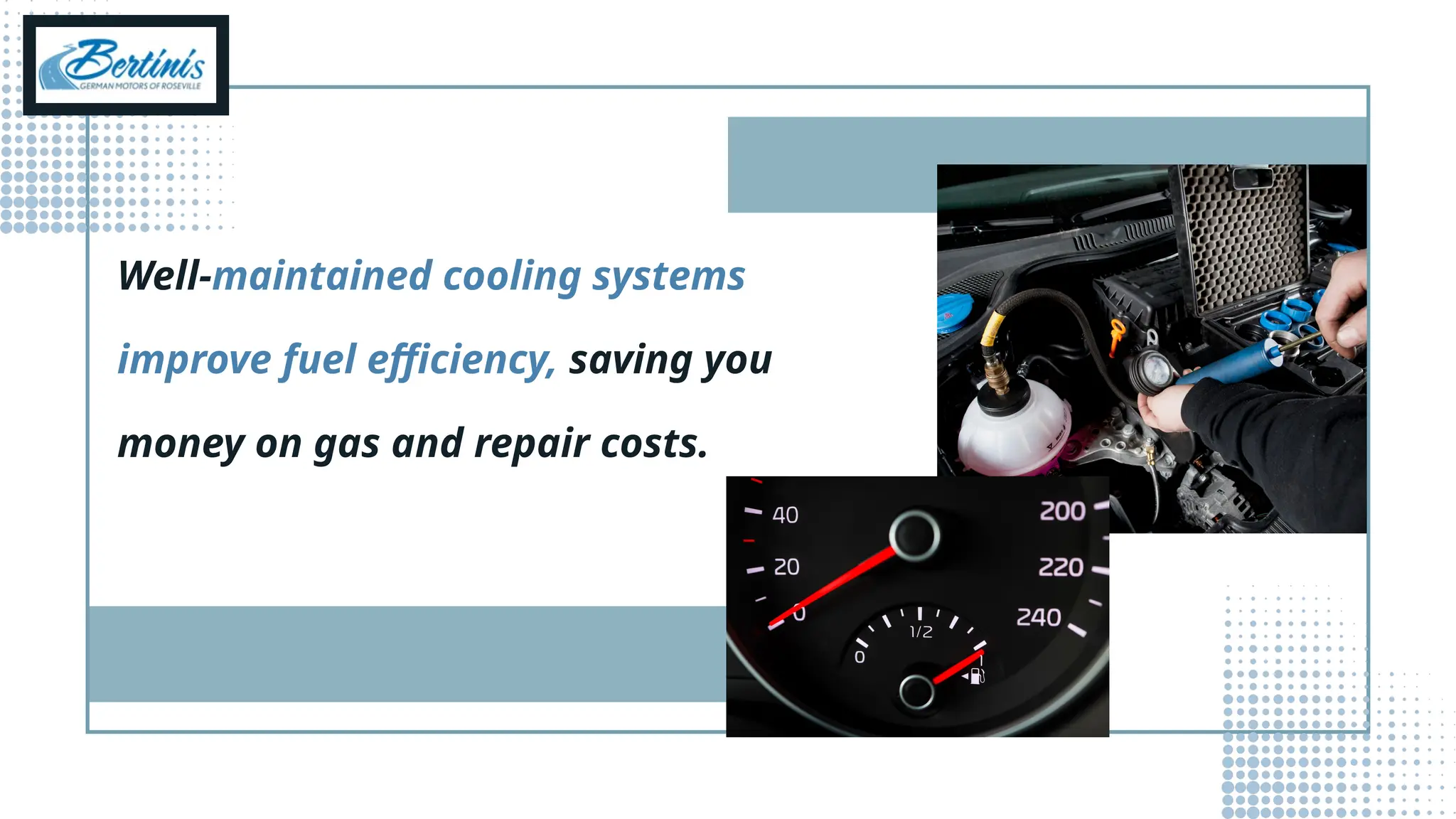
Well-maintained cooling systems
improve fuel efficiency, saving you
money on gas and repair costs.
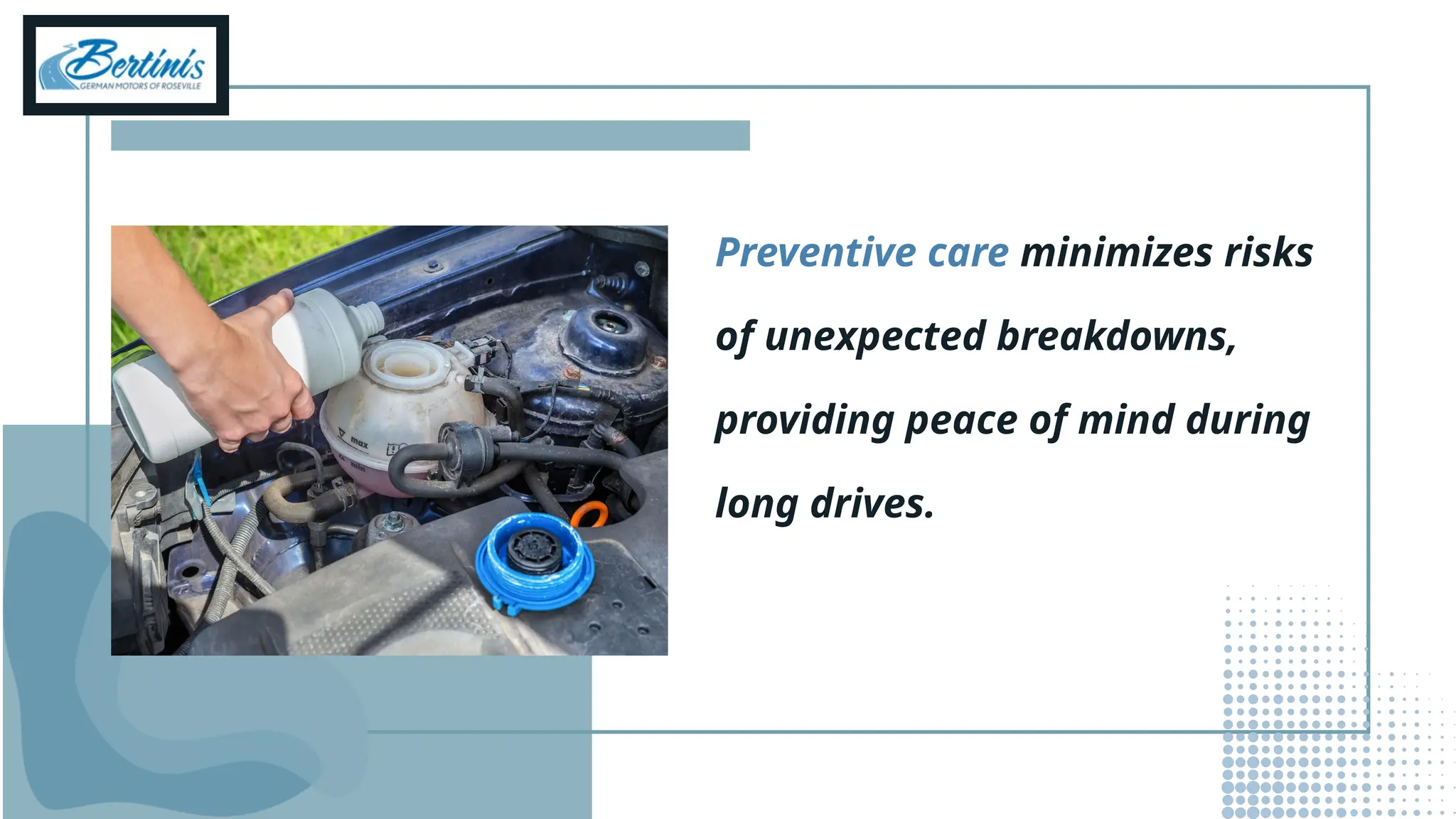
Preventive care minimizes risks
of unexpected breakdowns,
providing peace of mind during
long drives.
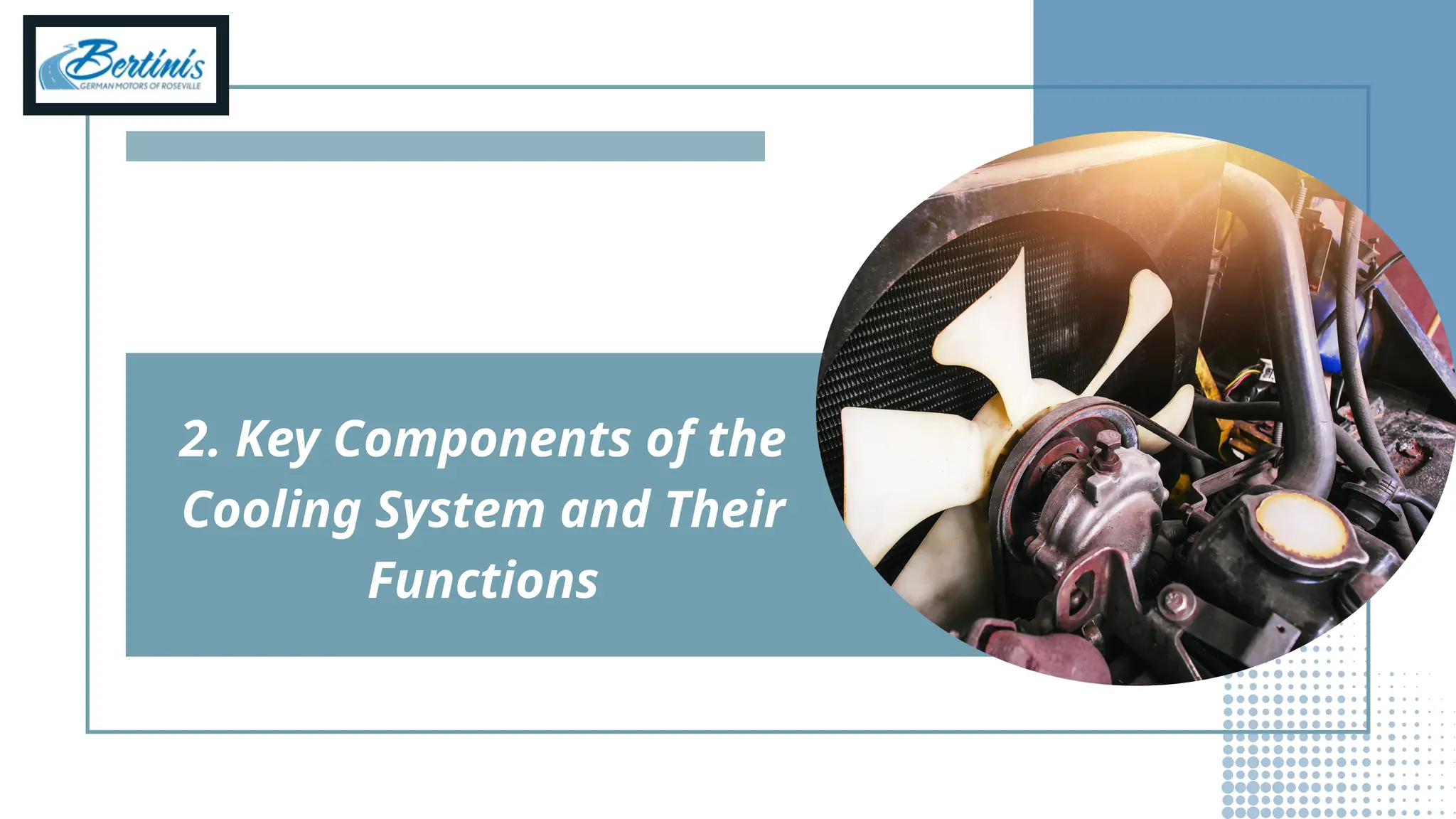
2. Key Components of the
Cooling System and Their
Functions
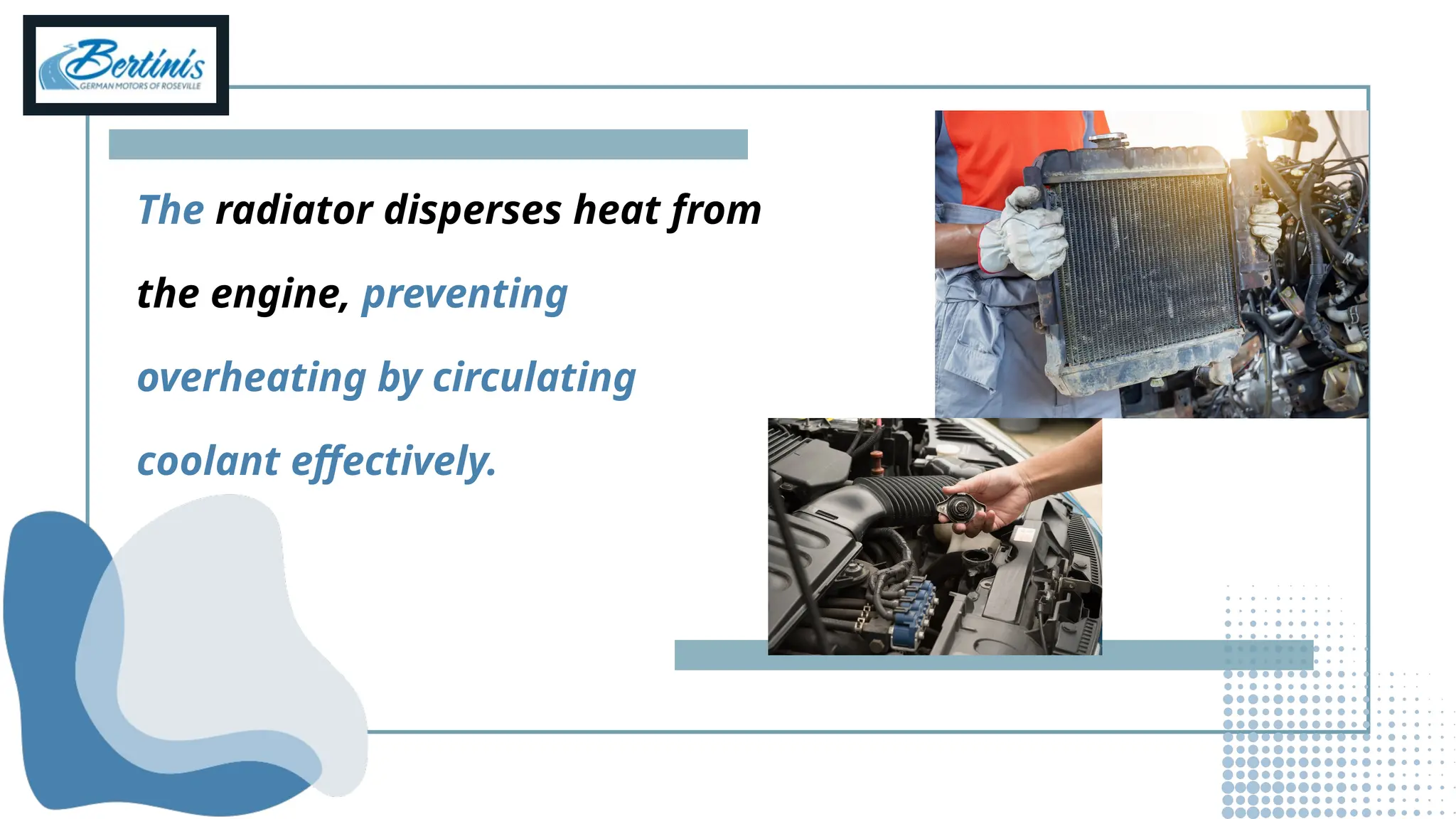
The radiator disperses heat from
the engine, preventing
overheating by circulating
coolant effectively.
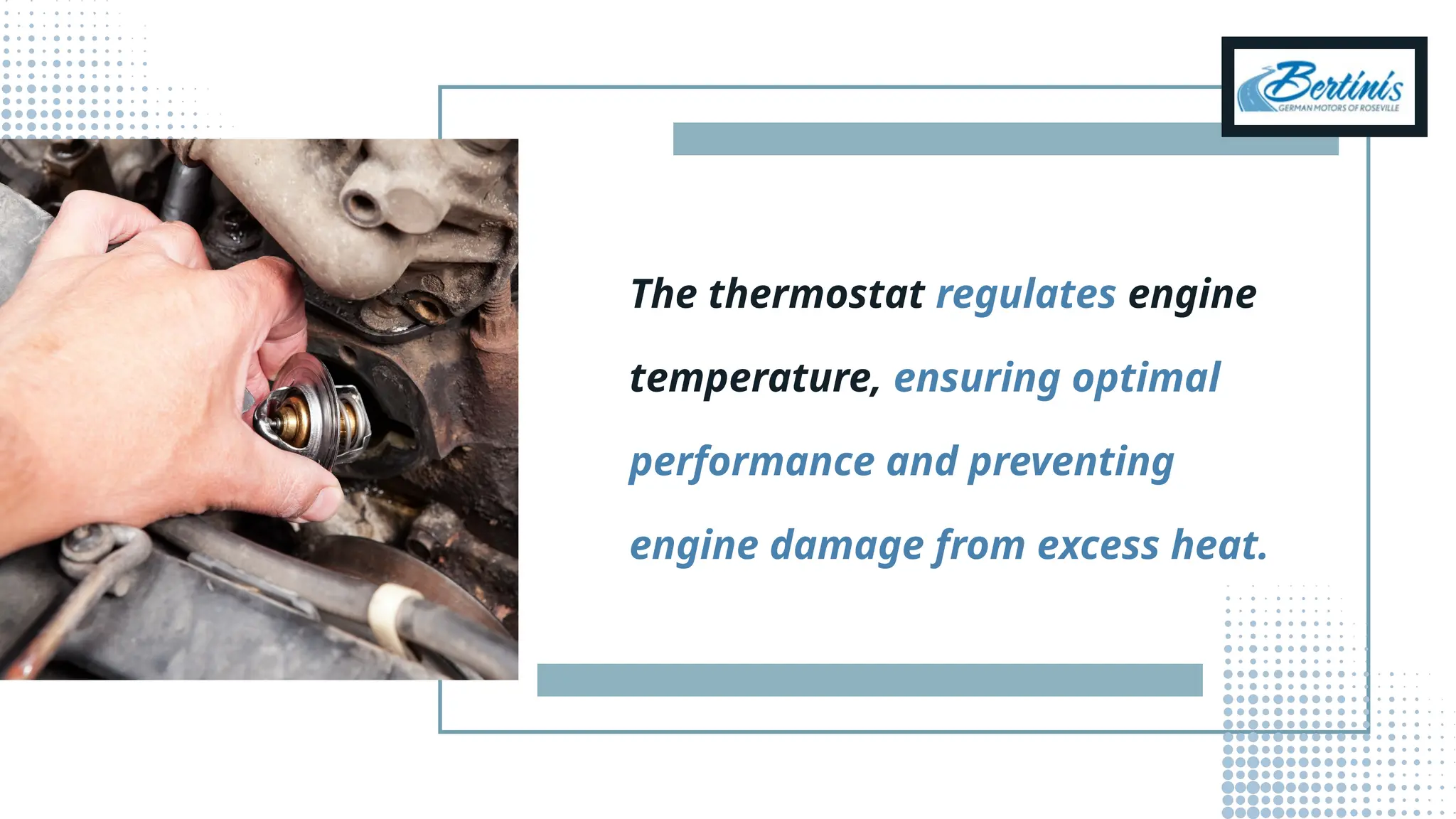
The thermostat regulates engine
temperature, ensuring optimal
performance and preventing
engine damage from excess heat.
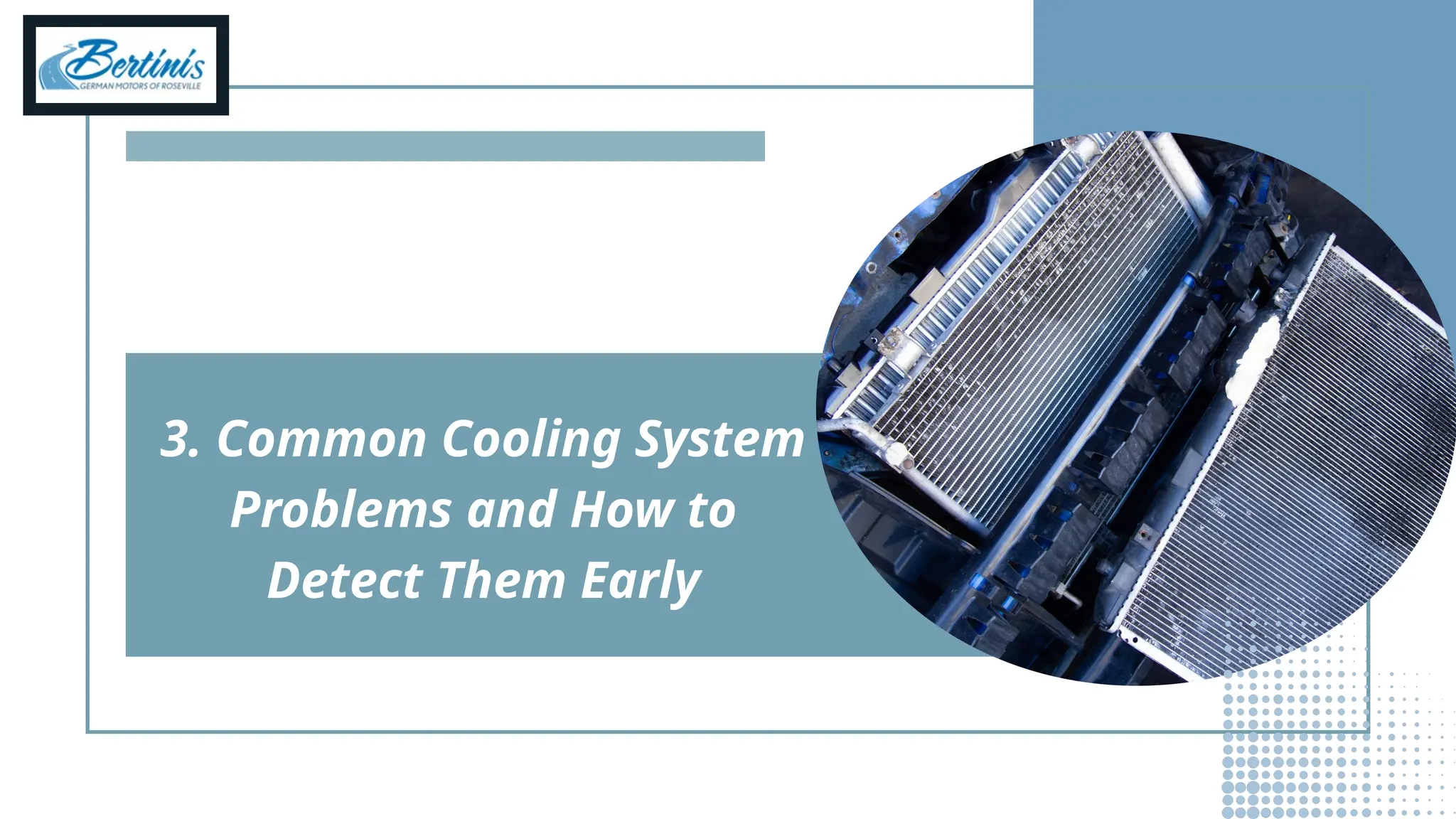
3. Common Cooling System
Problems and How to
Detect Them Early
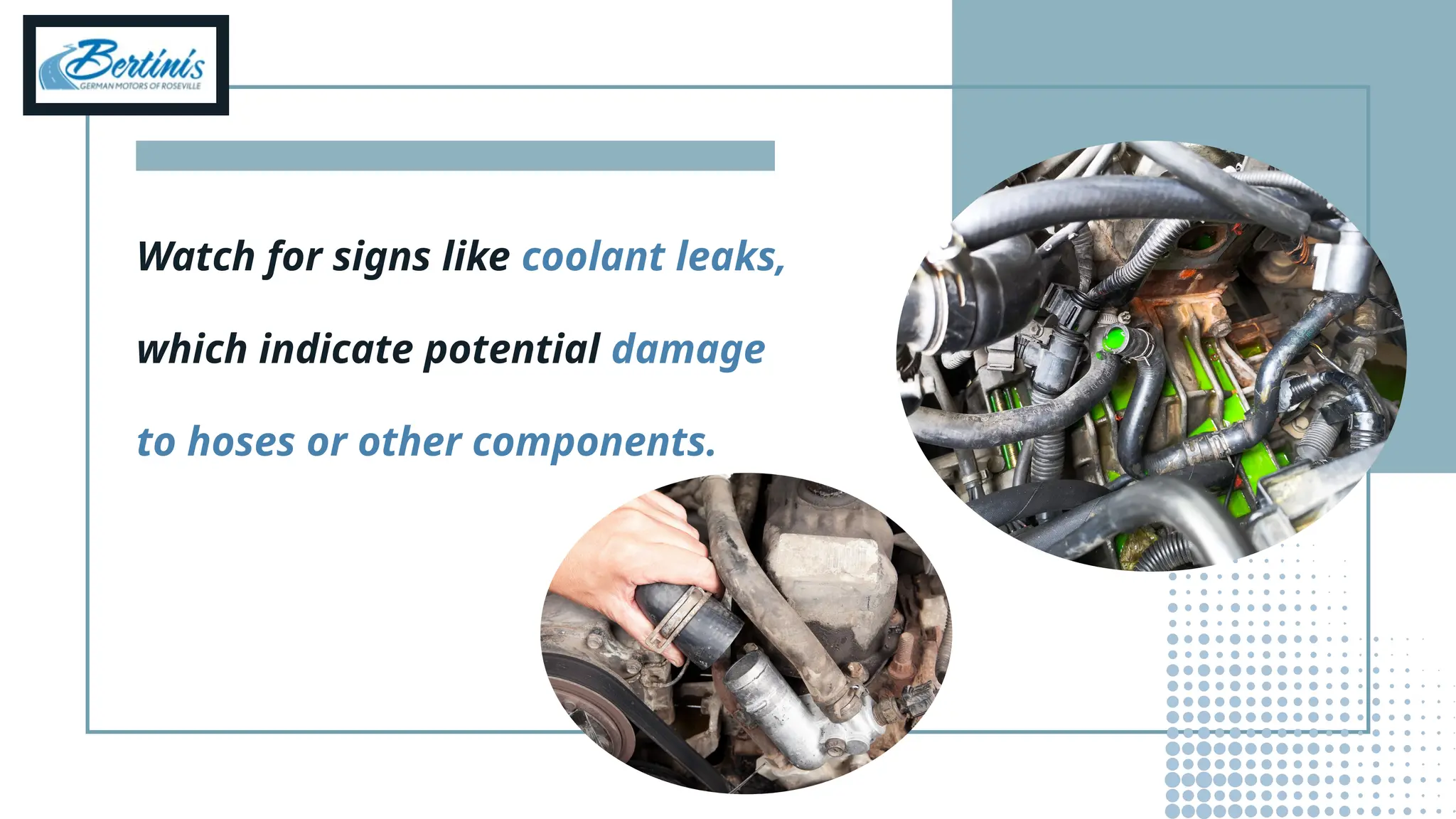
Watch for signs like coolant leaks,
which indicate potential damage
to hoses or other components.
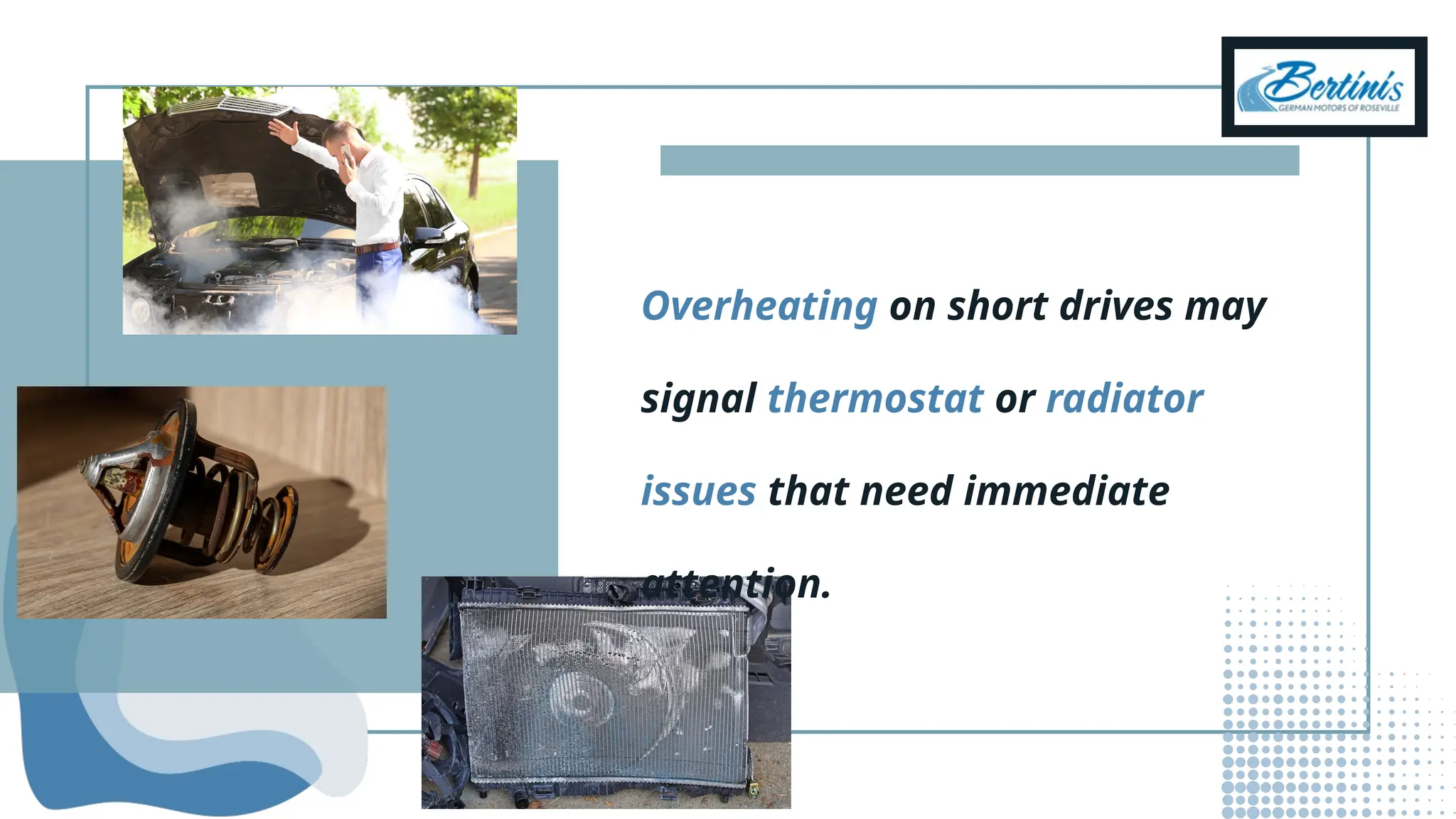
Overheating on short drives may
signal thermostat or radiator
issues that need immediate
attention.
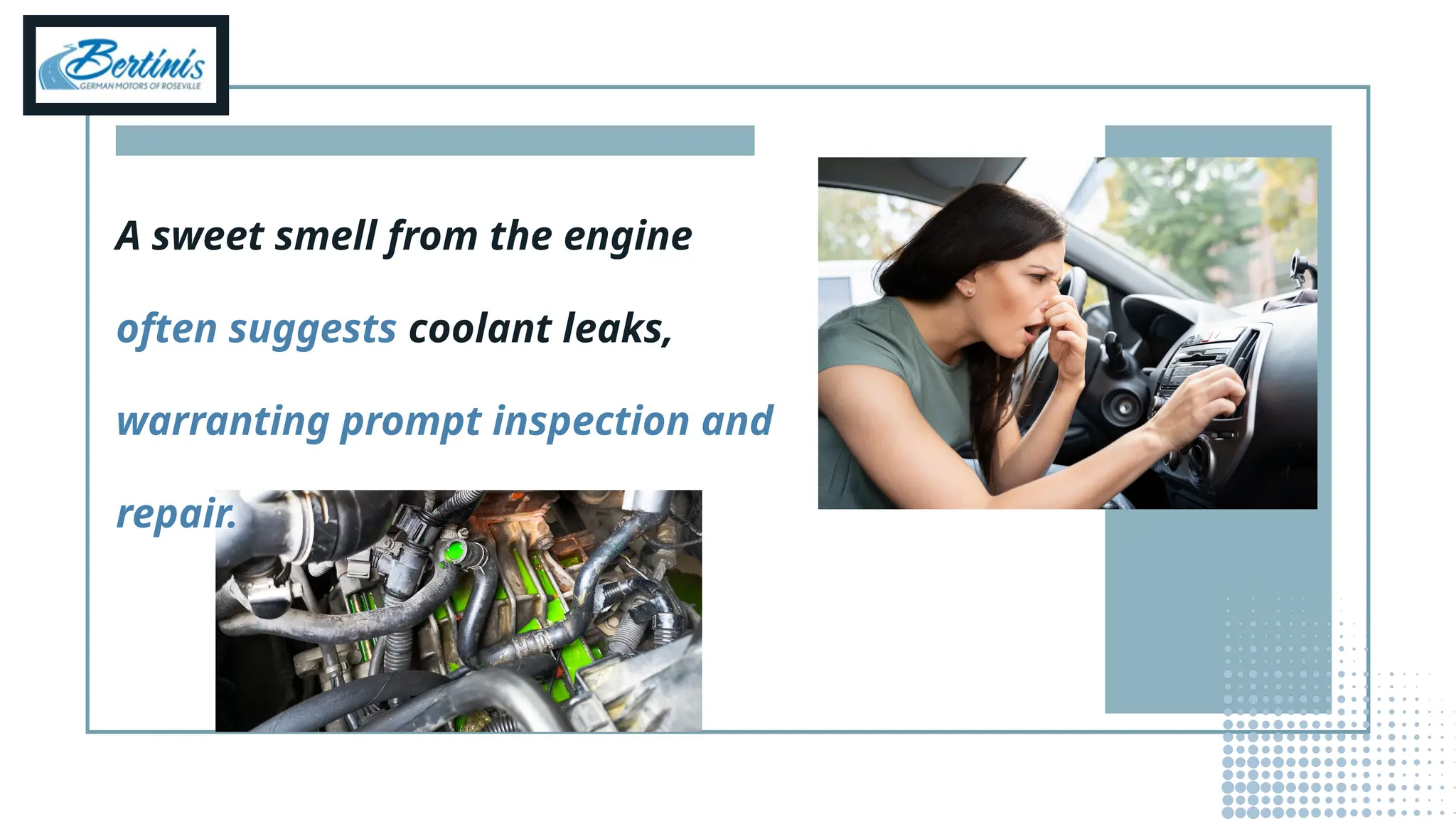
A sweet smell from the engine
often suggests coolant leaks,
warranting prompt inspection and
repair.
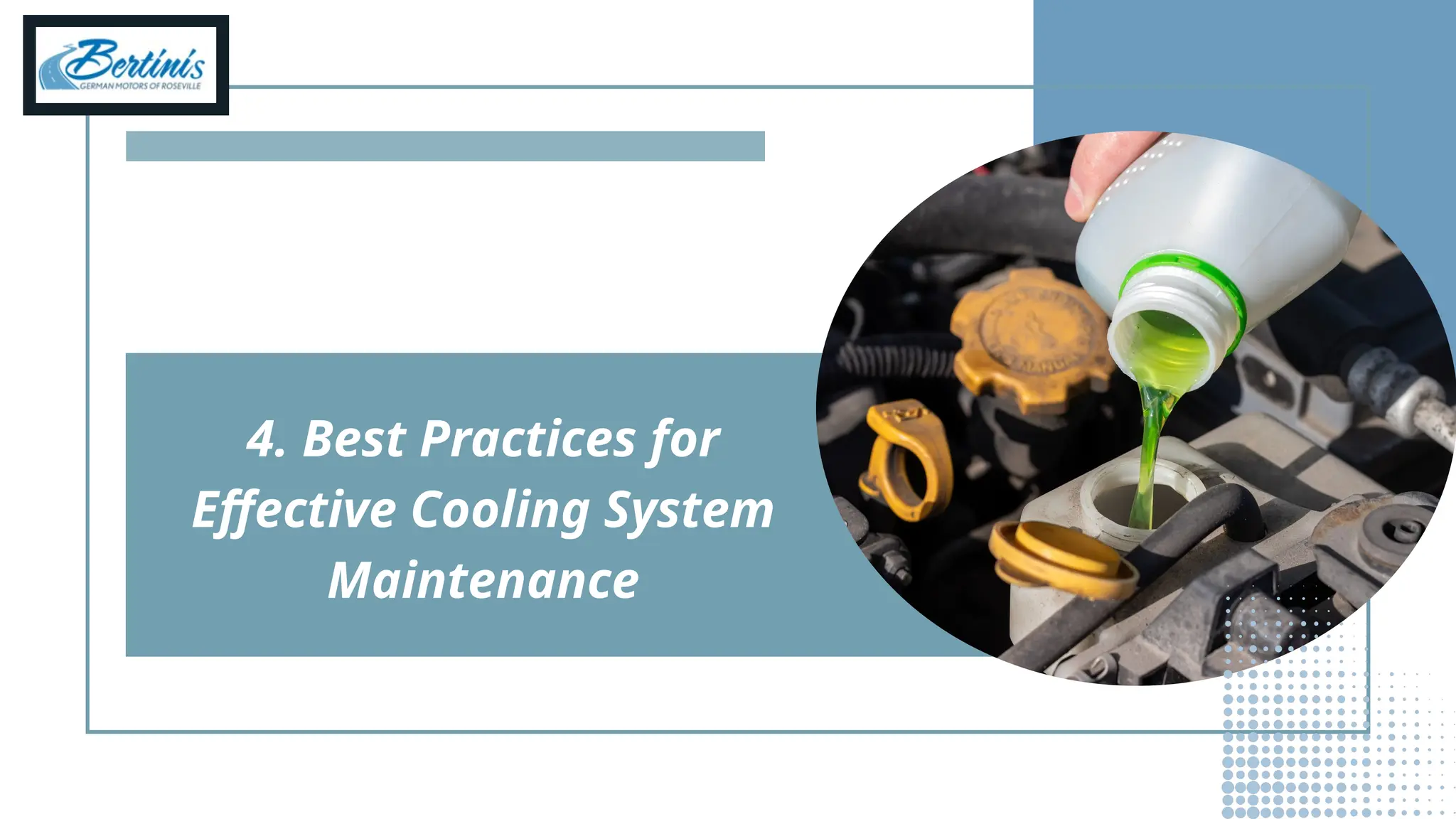
4. Best Practices for
Effective Cooling System
Maintenance
October 30, 2030
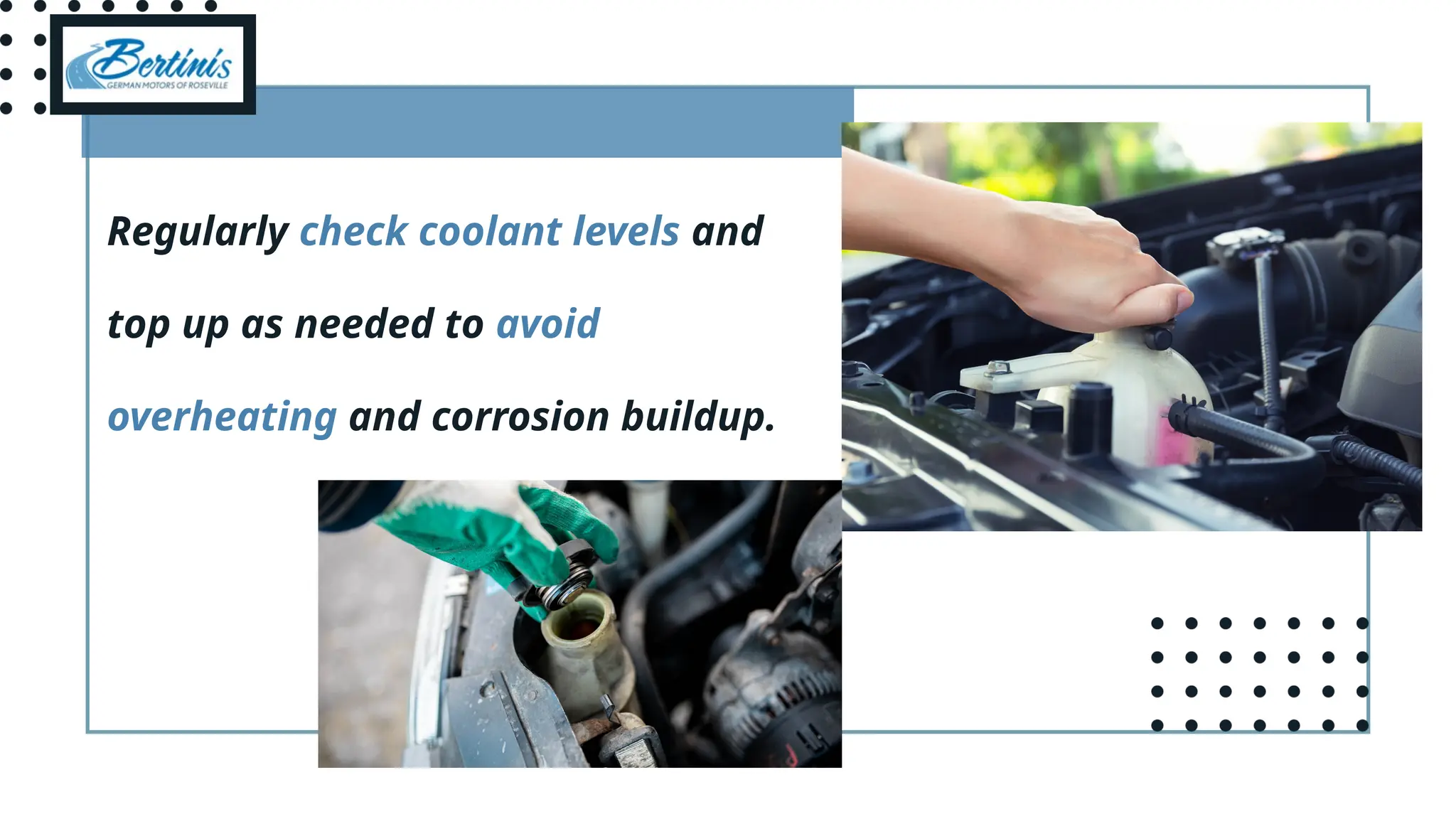
Regularly check coolant levels and
top up as needed to avoid
overheating and corrosion buildup.
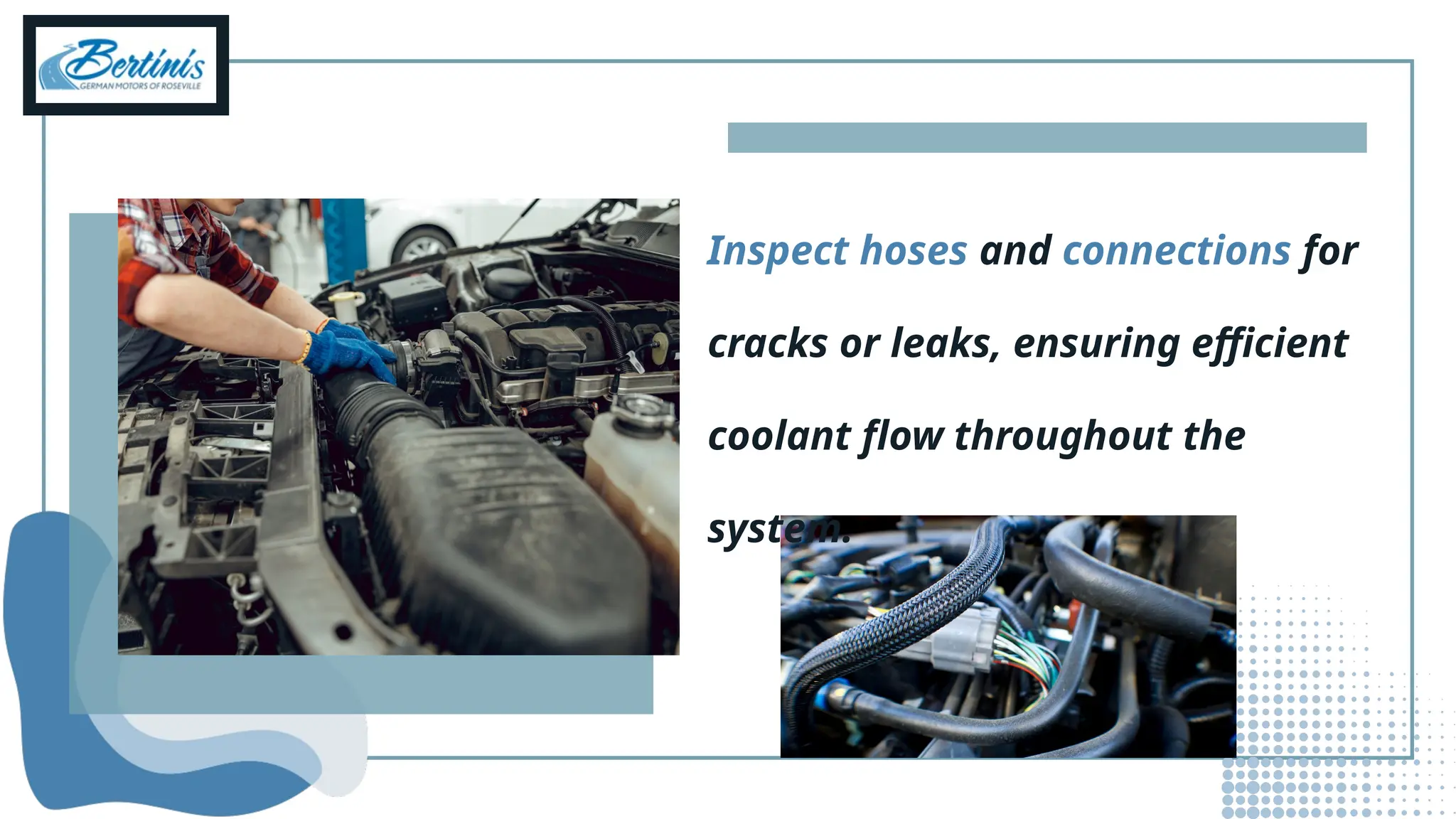
Inspect hoses and connections for
cracks or leaks, ensuring efficient
coolant flow throughout the
system.
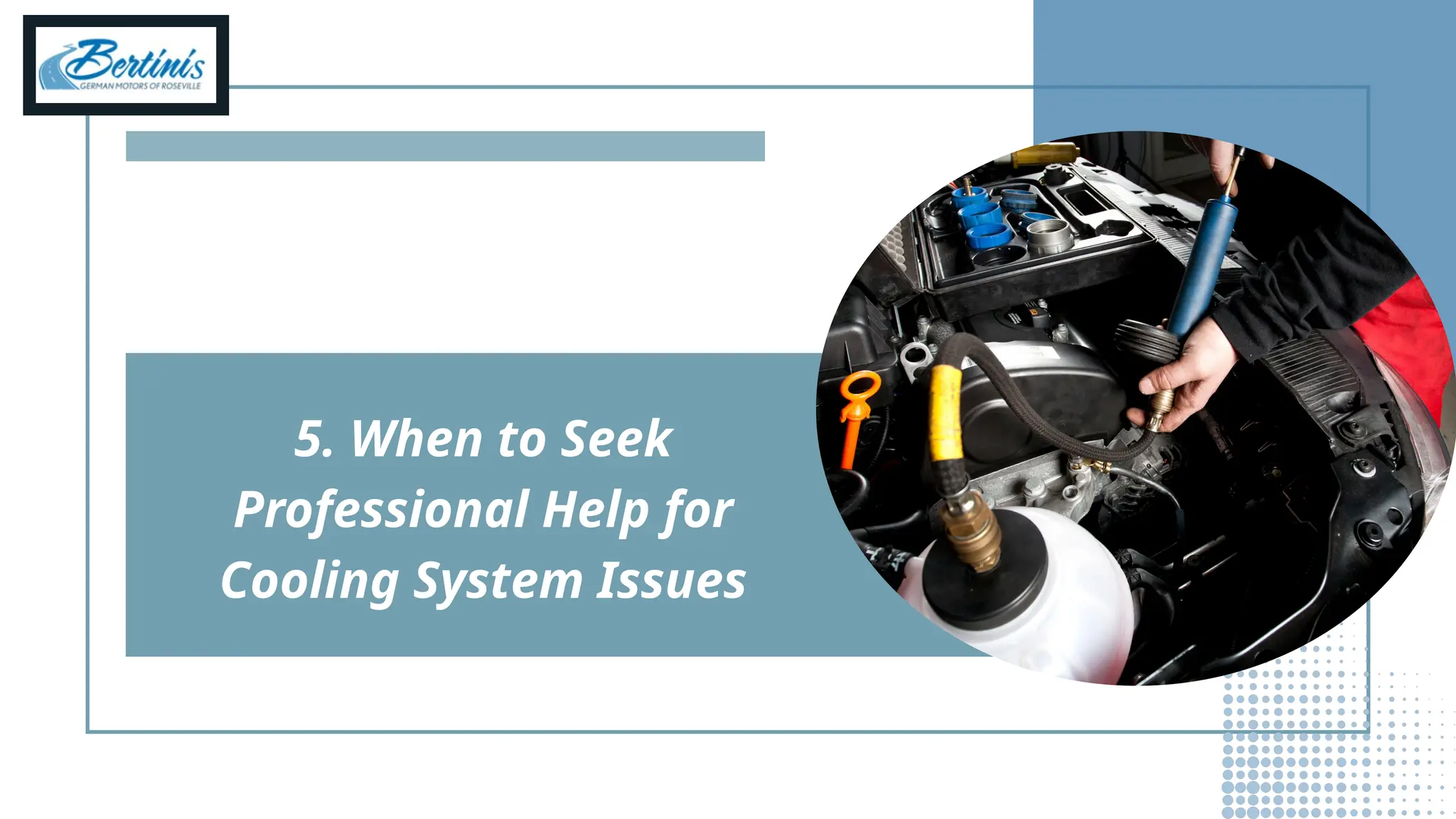
5. When to Seek
Professional Help for
Cooling System Issues
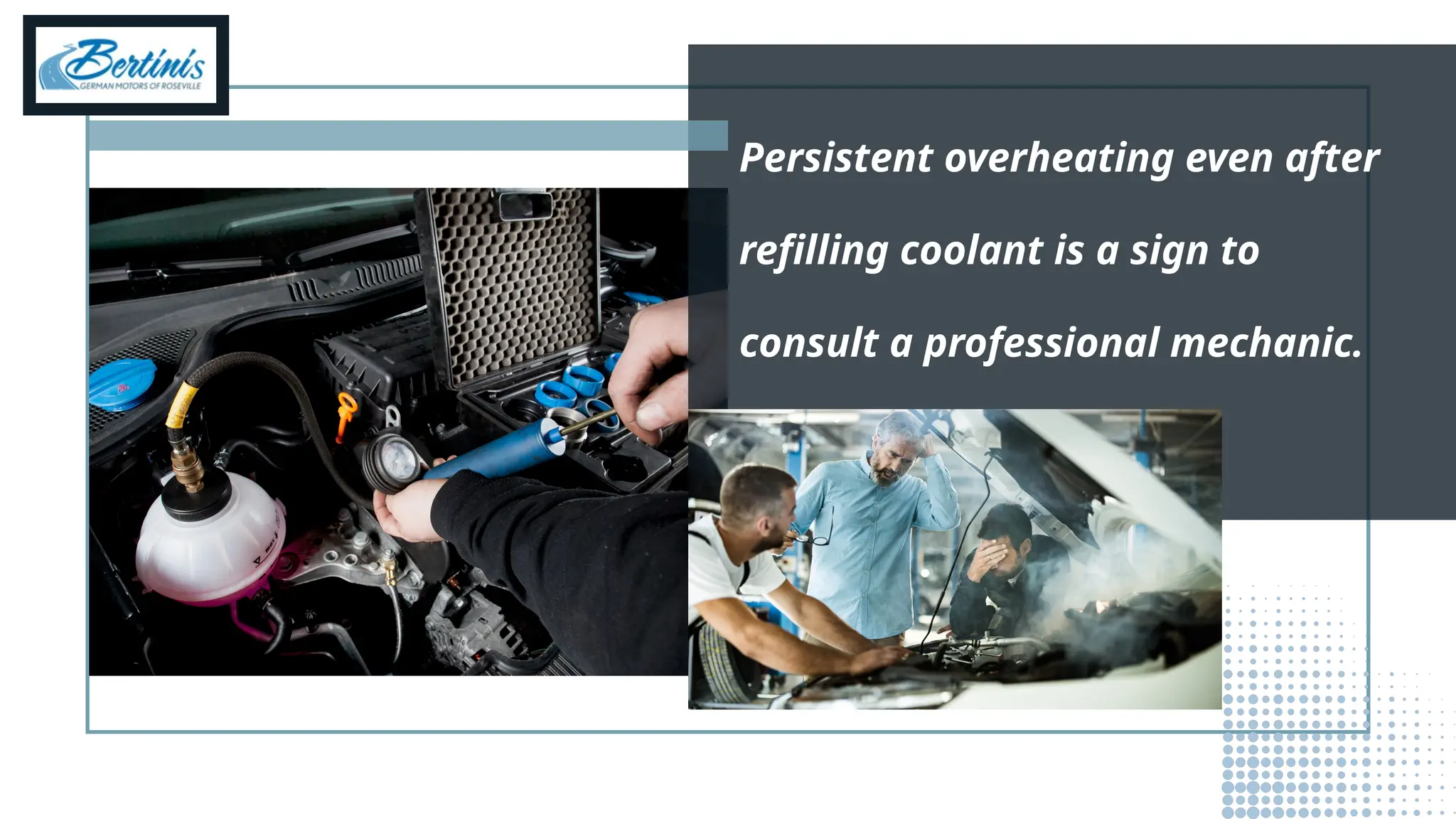
Persistent overheating even after
refilling coolant is a sign to
consult a professional mechanic.
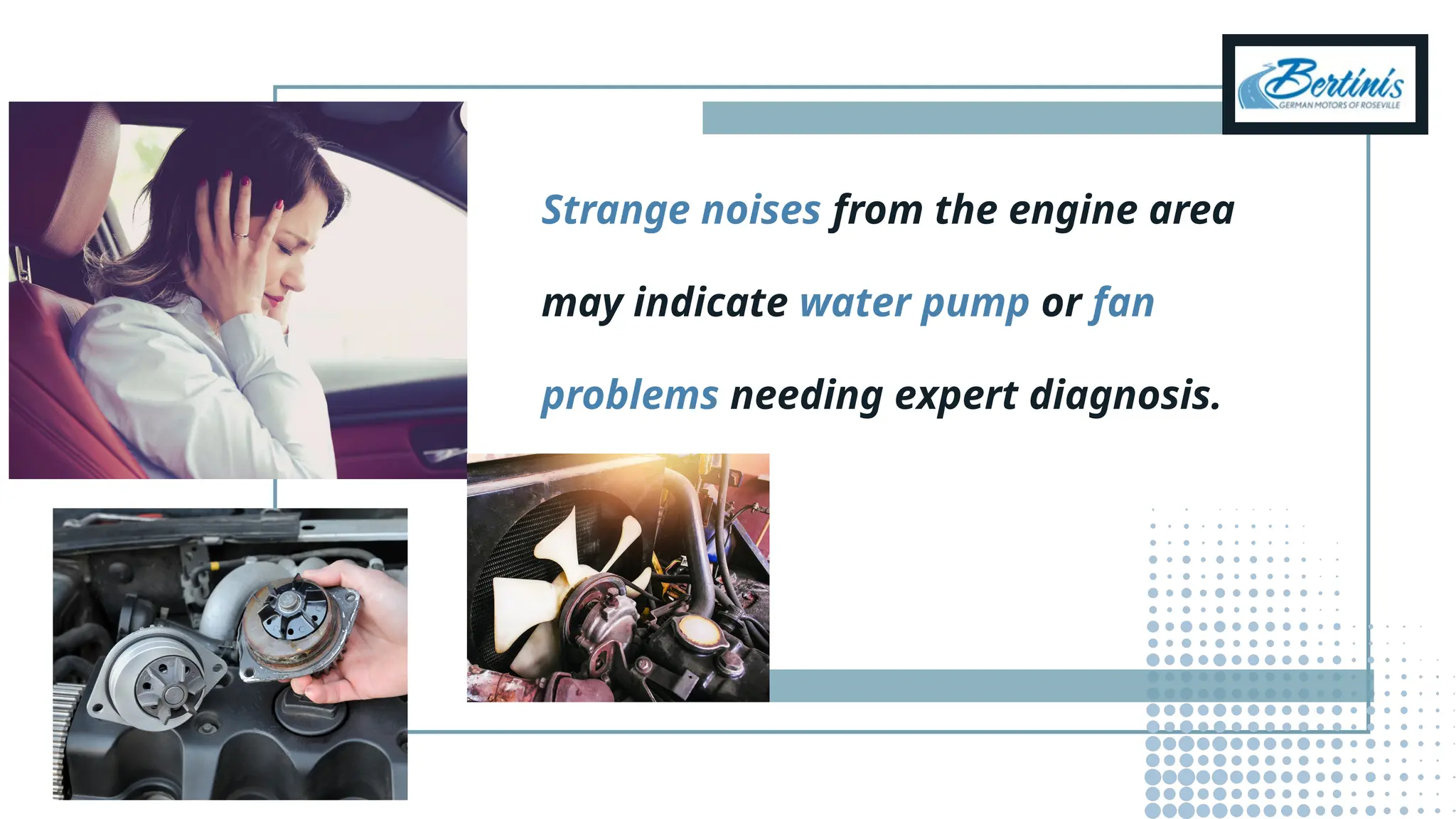
Strange noises from the engine area
may indicate water pump or fan
problems needing expert diagnosis.
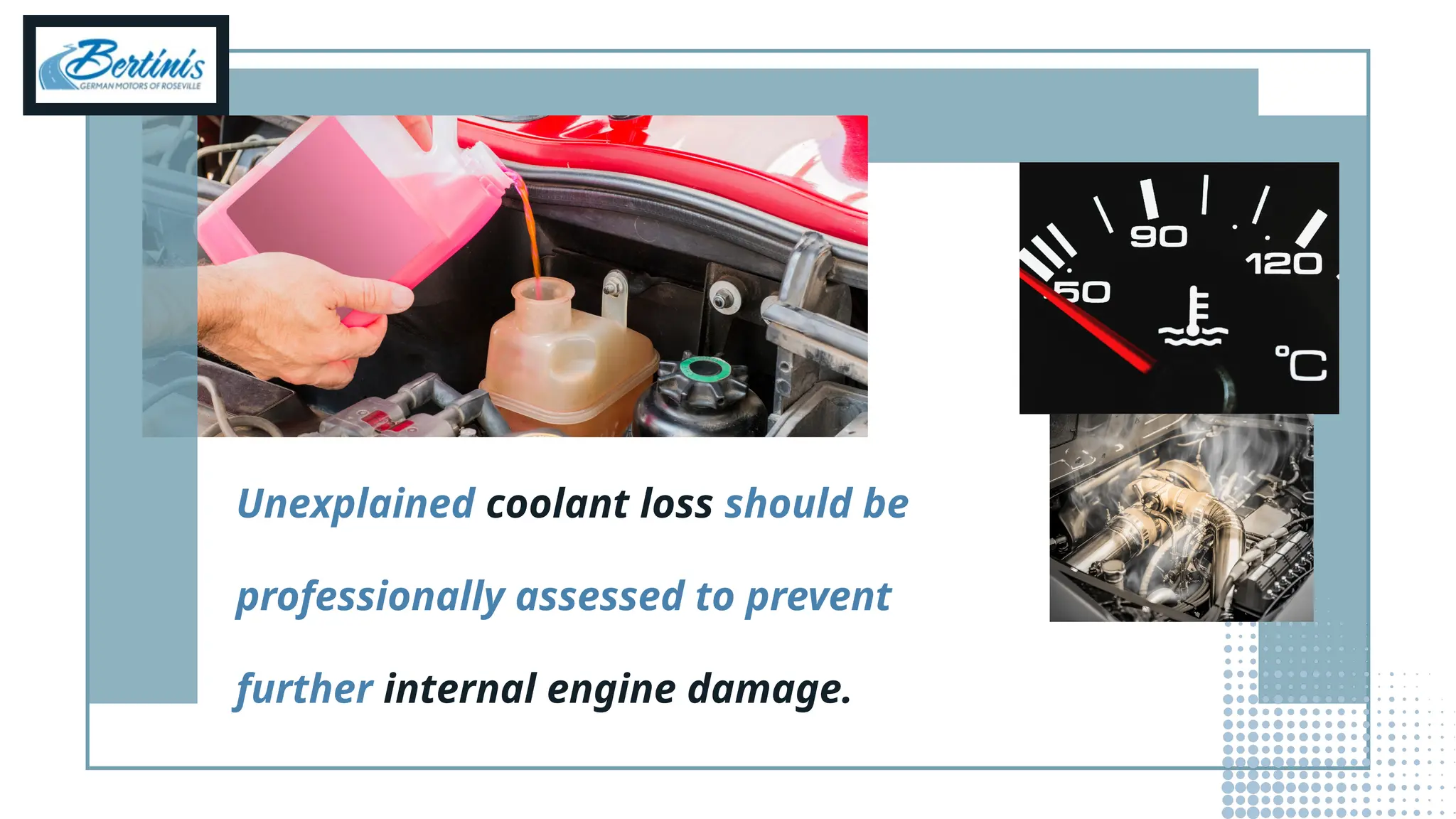
Unexplained coolant loss should be
professionally assessed to prevent
further internal engine damage.
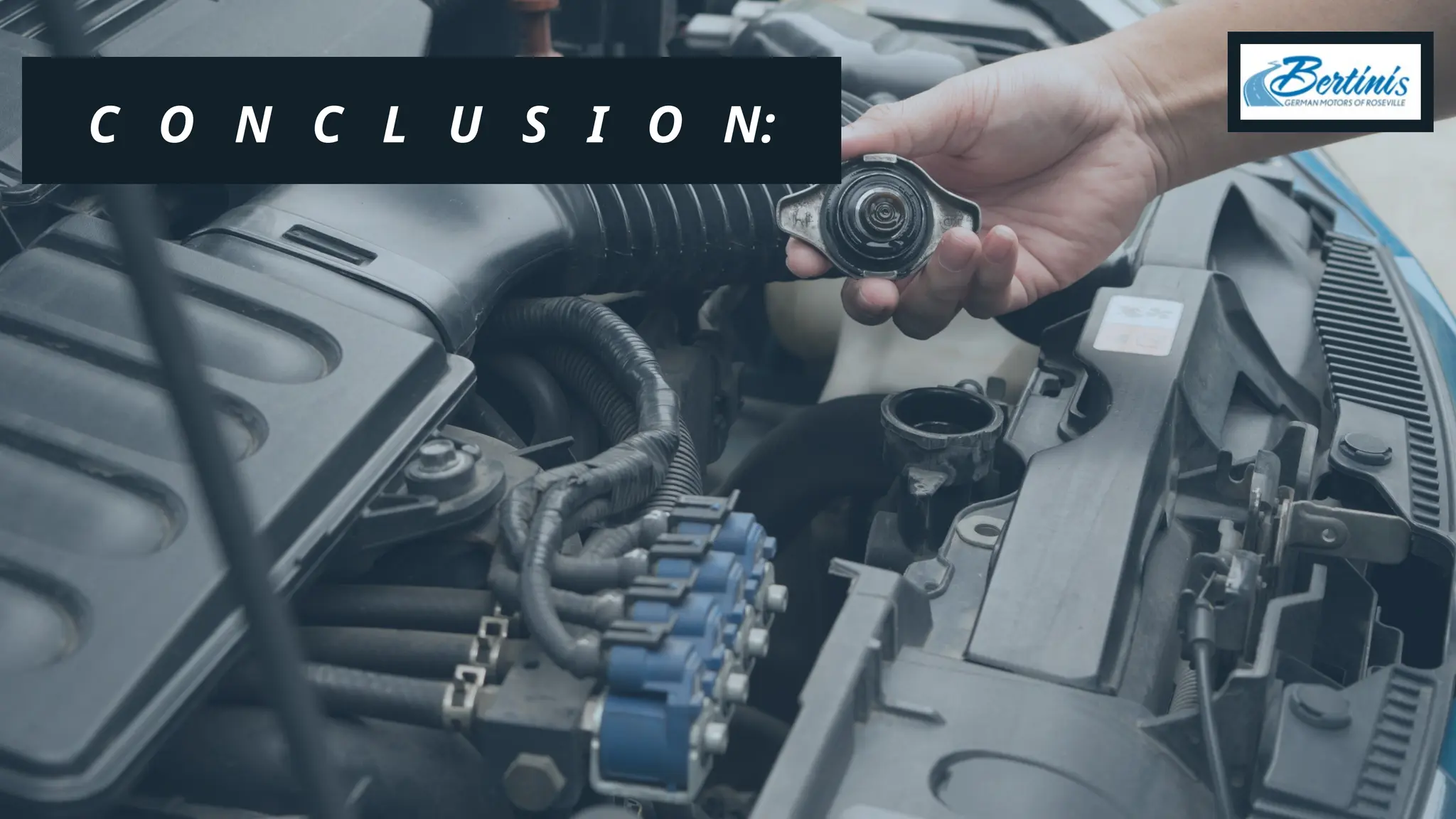
C O N C L U S I O N:
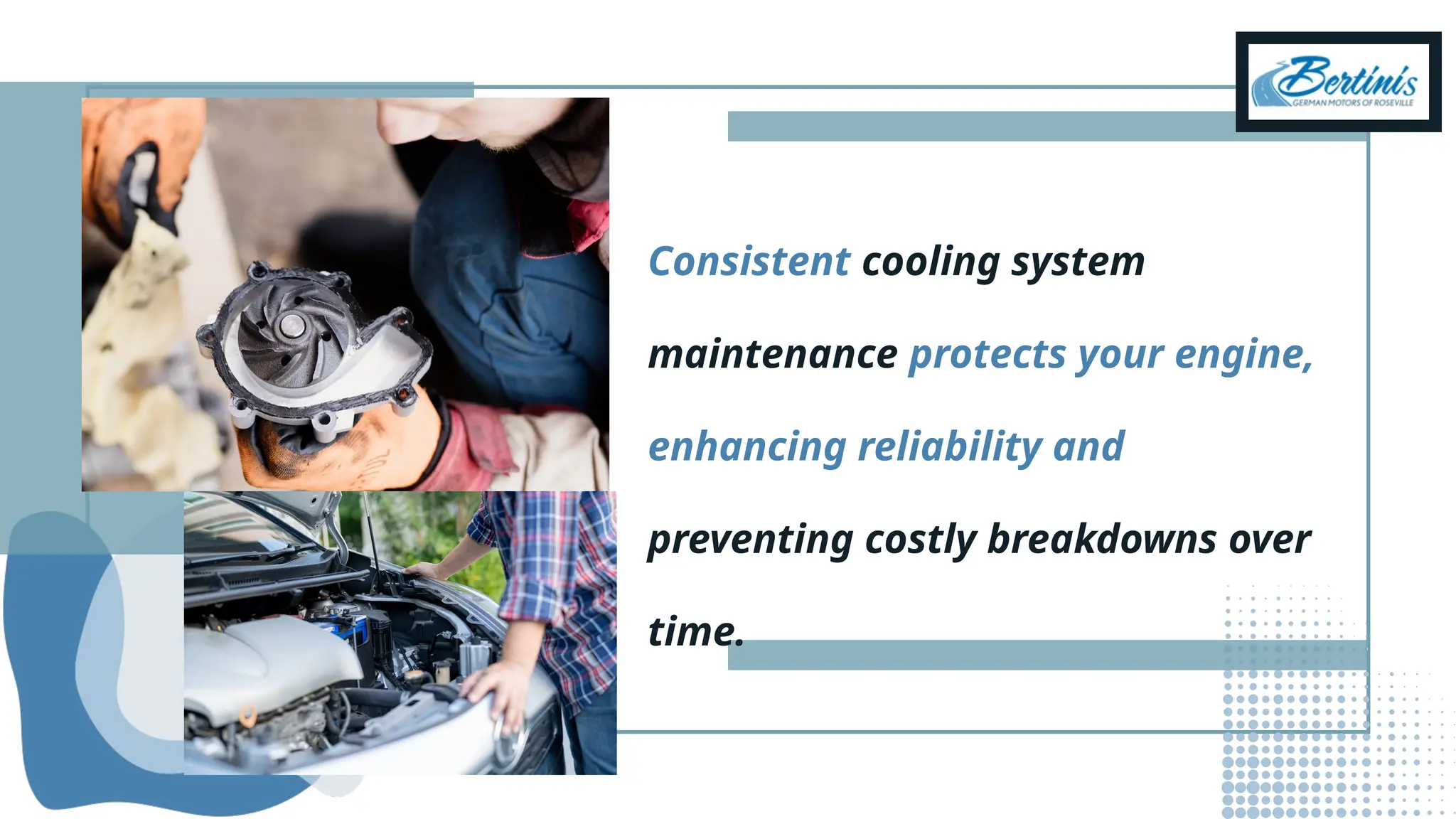
Consistent cooling system
maintenance protects your engine,
enhancing reliability and
preventing costly breakdowns over
time.
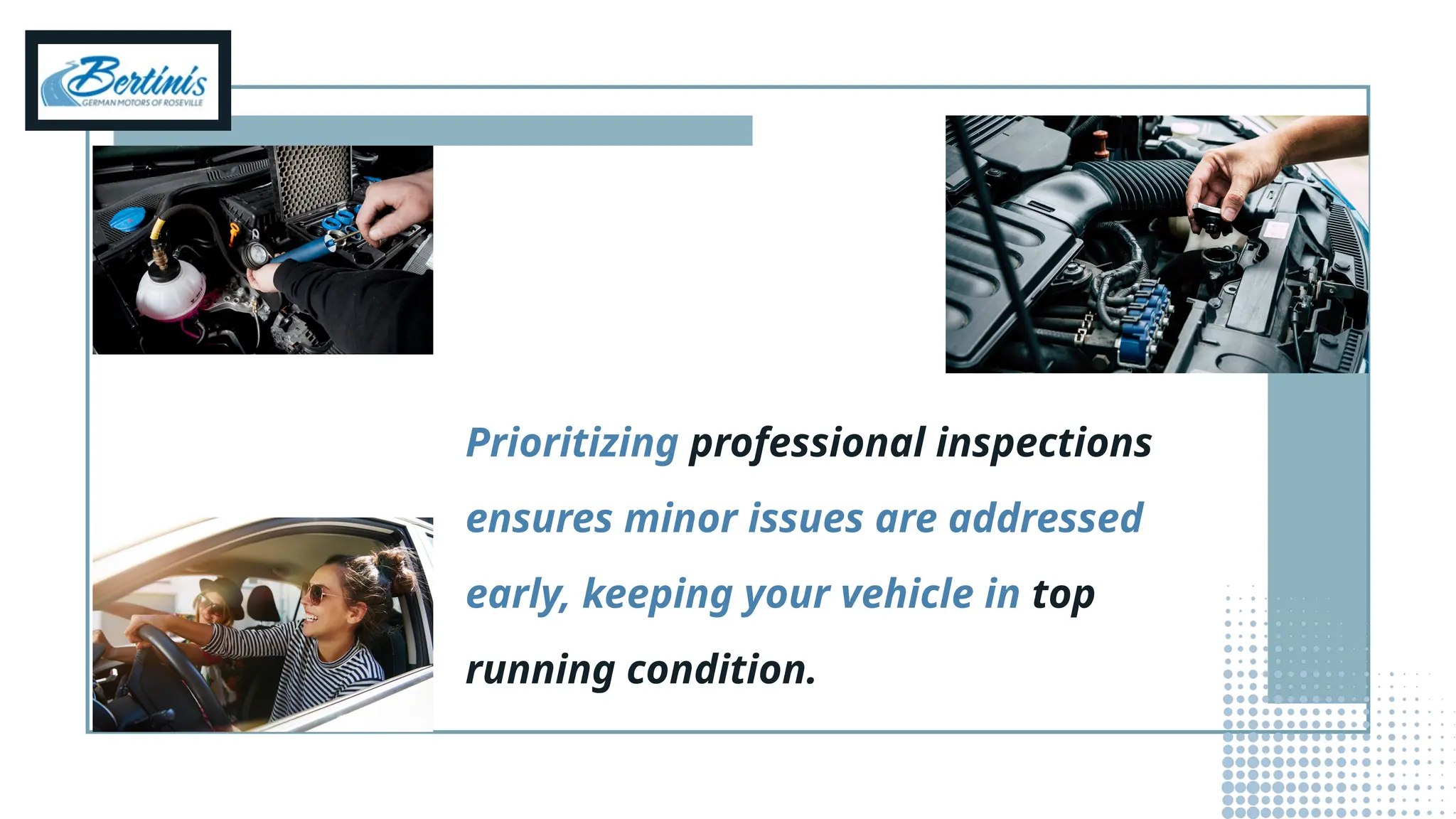
Prioritizing professional inspections
ensures minor issues are addressed
early, keeping your vehicle in top
running condition.
https://www.bertinis.com/
https://www.yelp.com/biz/bertinis-german-
motors-of-roseville-roseville
THANK YOU

Understanding Cooling System Maintenance Essential Tips for Optimal Performance