This document discusses several key ethical issues in counseling practice including:
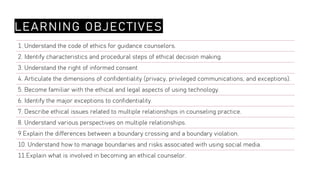
1. The importance of informed consent and confidentiality. Informed consent involves clients' right to information about therapy while confidentiality protects private information, with exceptions for danger or abuse.
2. Dual relationships which can compromise objectivity and harm the client and therapy.
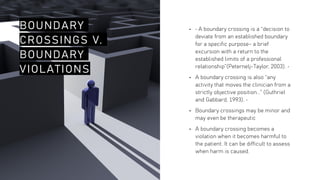
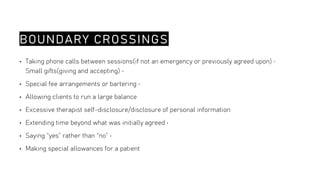
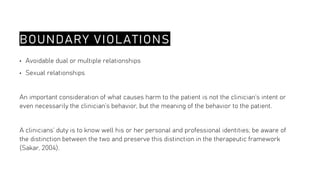
3. Establishing boundaries to maintain professionalism, with boundary crossings being minor deviations and boundary violations harming clients.
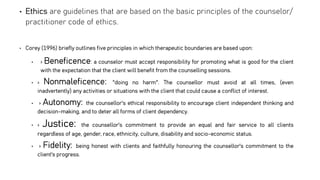
4. The role of ethics codes in educating practitioners, ensuring accountability, and improving practice through self-reflection. Becoming an ethical counselor requires understanding these issues.