Downloaded 65 times



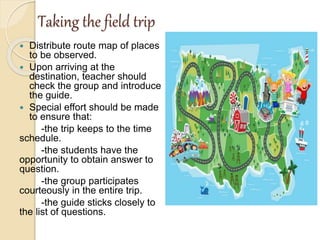




This document discusses planning and conducting effective field trips. It notes that field trips offer an excellent bridge between classroom learning and the real world. Key steps in planning a field trip include preliminary planning by the teacher, pre-planning with students, taking the field trip, and follow-up activities. Effective planning involves setting objectives, safety guidelines, documentation methods, and follow-up questions. Field trips provide memorable, concrete experiences that foster lasting learning and changes in attitudes. They allow students to broaden their learning beyond textbooks. While field trips require logistical effort, their educational benefits outweigh these disadvantages.


