LEON BATTISTA ALBERTI
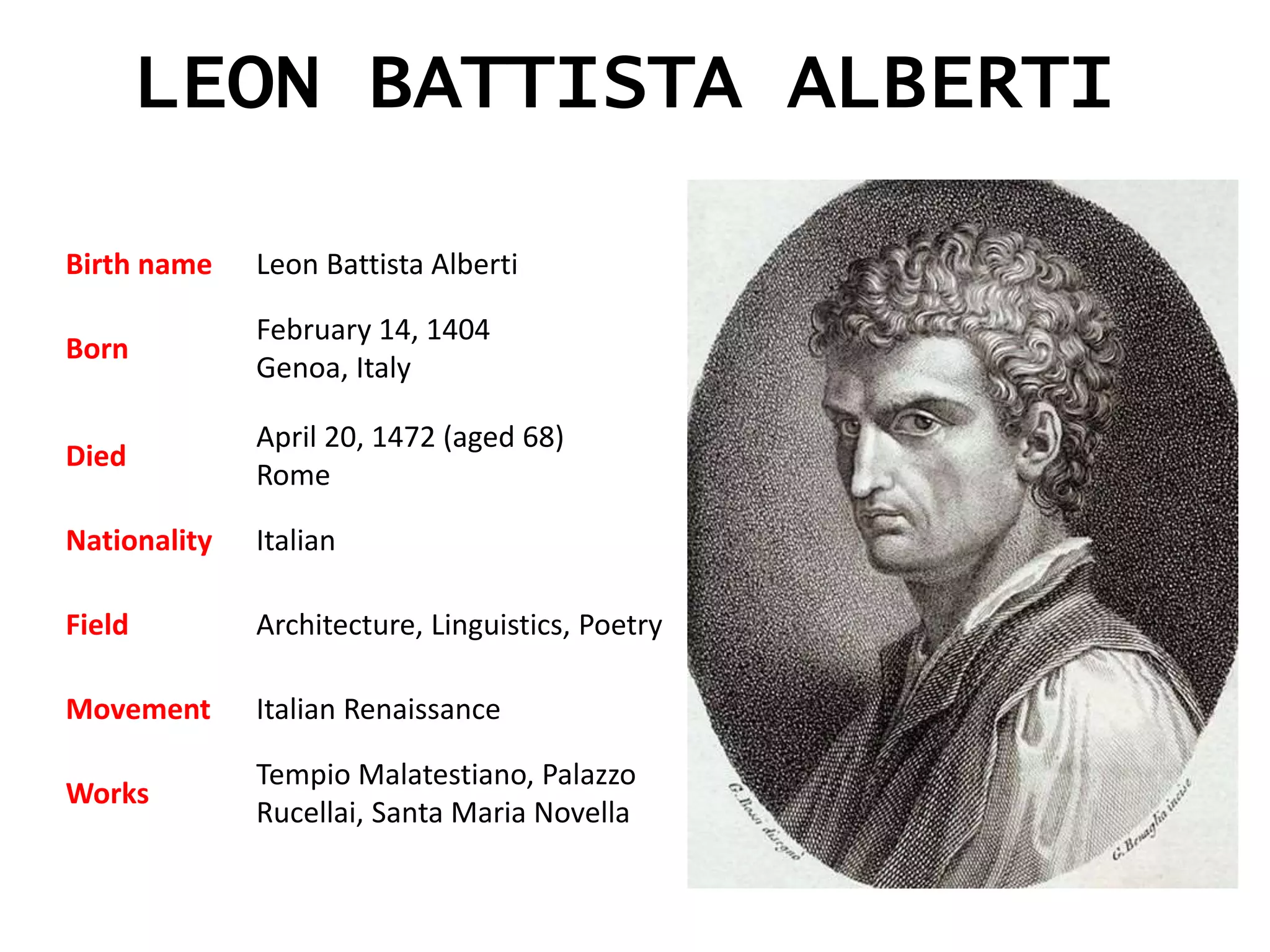
Birth name Leon Battista Alberti
Born
February 14, 1404
Genoa, Italy
Died
April 20, 1472 (aged 68)
Rome
Nationality Italian
Field Architecture, Linguistics, Poetry
Movement Italian Renaissance
Works
Tempio Malatestiano, Palazzo
Rucellai, Santa Maria Novella
EARLY LIFE
His father's family were wealthy and had been involved in
banking and commercial business in Florence during the
14th century
As a child Leone Battista received his mathematical
education from his father Lorenzo and continued it After
coming in Venice
He then completed his education at the University of
Bologna, where he studied law. In his youth
According to stories, Alberti could—with his feet together—
jump over a man's head, he was a superb horseman, and he
"learned music without a master, and yet his compositions
were admired by professional judges
In his twenties Alberti wrote On the Advantages and
Disadvantages of Letters
and, Latin comedy, Philodoxus
Alberti loved classics, but he compared continual reading and
rereading in libraries
Other early works- Amator (ca. 1429), Ecatonfilea (ca.
1429), and Deiphira (ca. 1429–1434), dealt with love,
virtues, and failed relationships.
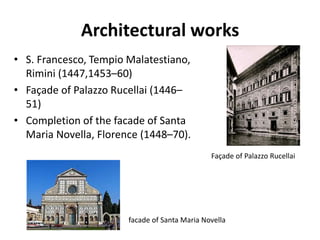
Architectural works
• S. Francesco, Tempio Malatestiano,
Rimini (1447,1453–60)
• Façade of Palazzo Rucellai (1446–
51)
• Completion of the facade of Santa
Maria Novella, Florence (1448–70).
Façade of Palazzo Rucellai
facade of Santa Maria Novella
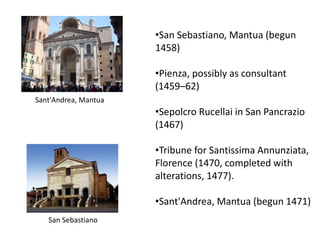
•San Sebastiano, Mantua (begun
1458)
•Pienza, possibly as consultant
(1459–62)
•Sepolcro Rucellai in San Pancrazio
(1467)
•Tribune for Santissima Annunziata,
Florence (1470, completed with
alterations, 1477).
•Sant'Andrea, Mantua (begun 1471)
Sant'Andrea, Mantua
San Sebastiano

Leon battista alberti

  • 1.
    LEON BATTISTA ALBERTI Birthname Leon Battista Alberti Born February 14, 1404 Genoa, Italy Died April 20, 1472 (aged 68) Rome Nationality Italian Field Architecture, Linguistics, Poetry Movement Italian Renaissance Works Tempio Malatestiano, Palazzo Rucellai, Santa Maria Novella
  • 2.
    EARLY LIFE His father'sfamily were wealthy and had been involved in banking and commercial business in Florence during the 14th century As a child Leone Battista received his mathematical education from his father Lorenzo and continued it After coming in Venice He then completed his education at the University of Bologna, where he studied law. In his youth According to stories, Alberti could—with his feet together— jump over a man's head, he was a superb horseman, and he "learned music without a master, and yet his compositions were admired by professional judges
  • 3.
    In his twentiesAlberti wrote On the Advantages and Disadvantages of Letters and, Latin comedy, Philodoxus Alberti loved classics, but he compared continual reading and rereading in libraries Other early works- Amator (ca. 1429), Ecatonfilea (ca. 1429), and Deiphira (ca. 1429–1434), dealt with love, virtues, and failed relationships.
  • 4.
    Architectural works • S.Francesco, Tempio Malatestiano, Rimini (1447,1453–60) • Façade of Palazzo Rucellai (1446– 51) • Completion of the facade of Santa Maria Novella, Florence (1448–70). Façade of Palazzo Rucellai facade of Santa Maria Novella
  • 5.
    •San Sebastiano, Mantua(begun 1458) •Pienza, possibly as consultant (1459–62) •Sepolcro Rucellai in San Pancrazio (1467) •Tribune for Santissima Annunziata, Florence (1470, completed with alterations, 1477). •Sant'Andrea, Mantua (begun 1471) Sant'Andrea, Mantua San Sebastiano