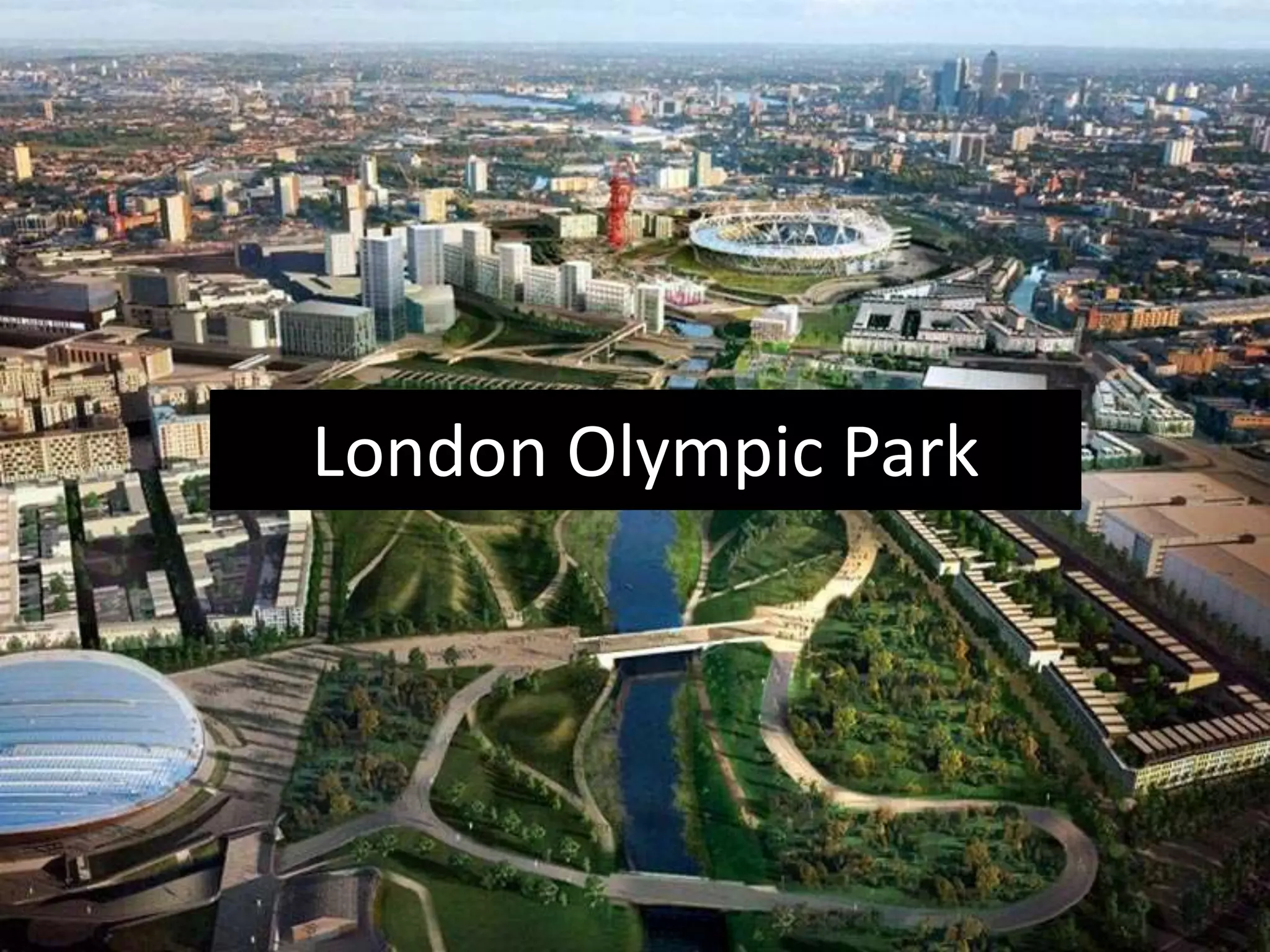
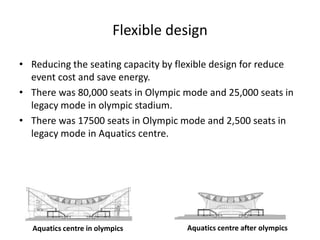
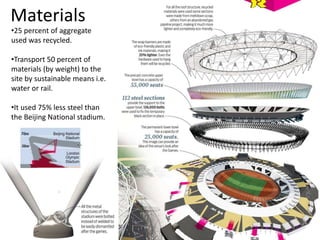
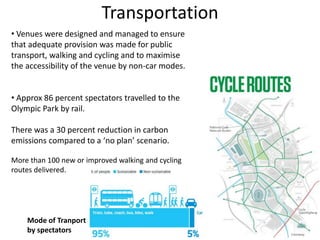
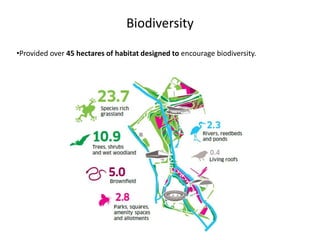
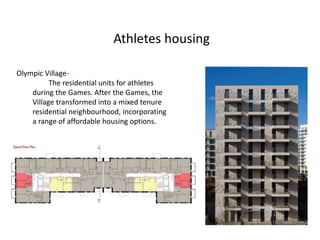
The London Olympic Park utilized flexible designs that reduced seating capacity for venues after the Olympics to lower costs and conserve energy. Materials for construction emphasized sustainability with 25% recycled aggregate, 50% of materials transported by water or rail, and 75% less steel than Beijing. Transportation focused on public transit, walking, and cycling with 86% of spectators using rail and a 30% reduction in carbon emissions. The Park also included 45 hectares of habitat and transformed the Olympic Village into affordable housing after the Games.