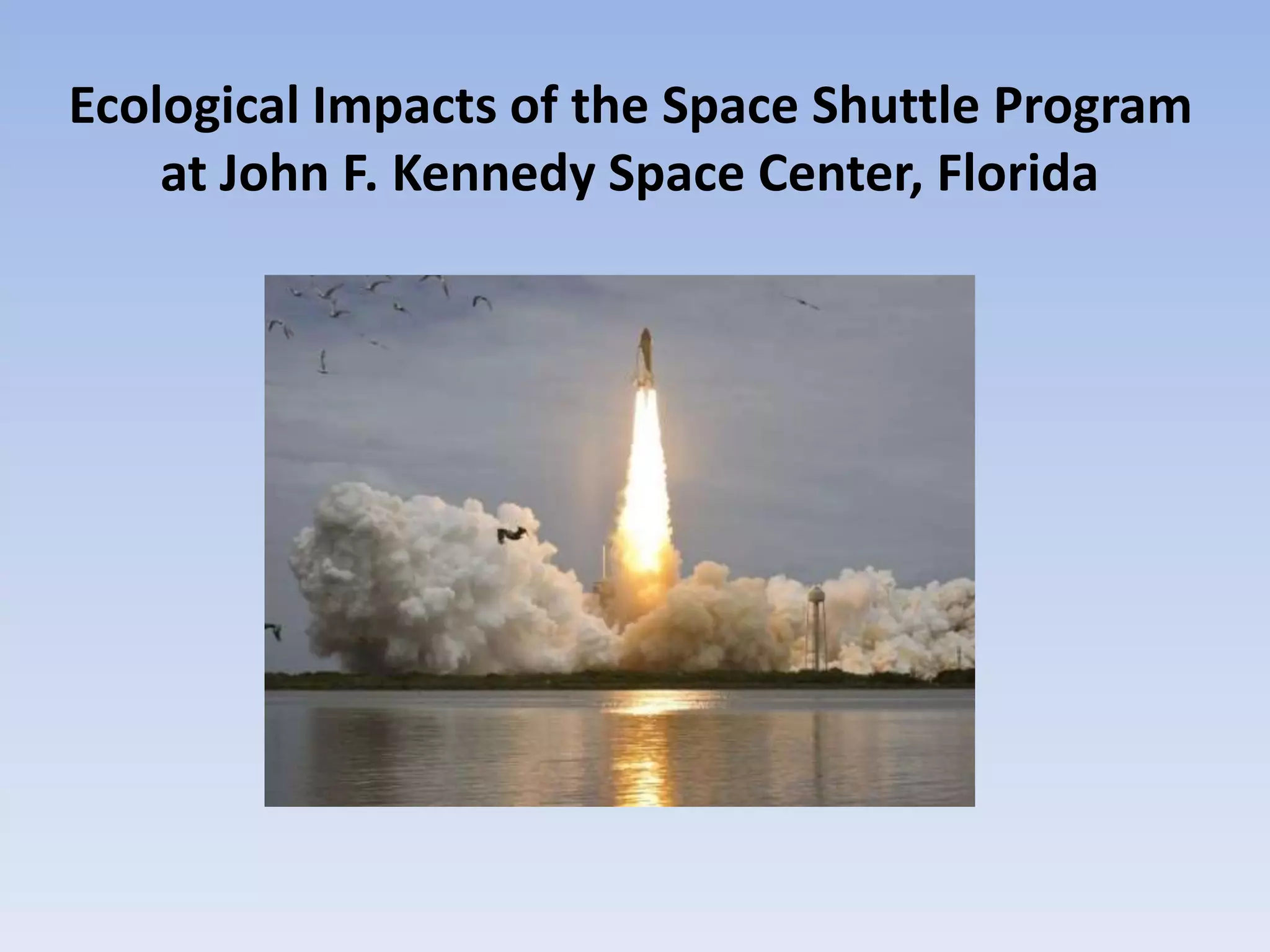
Ecological Impacts of the Space Shuttle Program
at John F. Kennedy Space Center, Florida
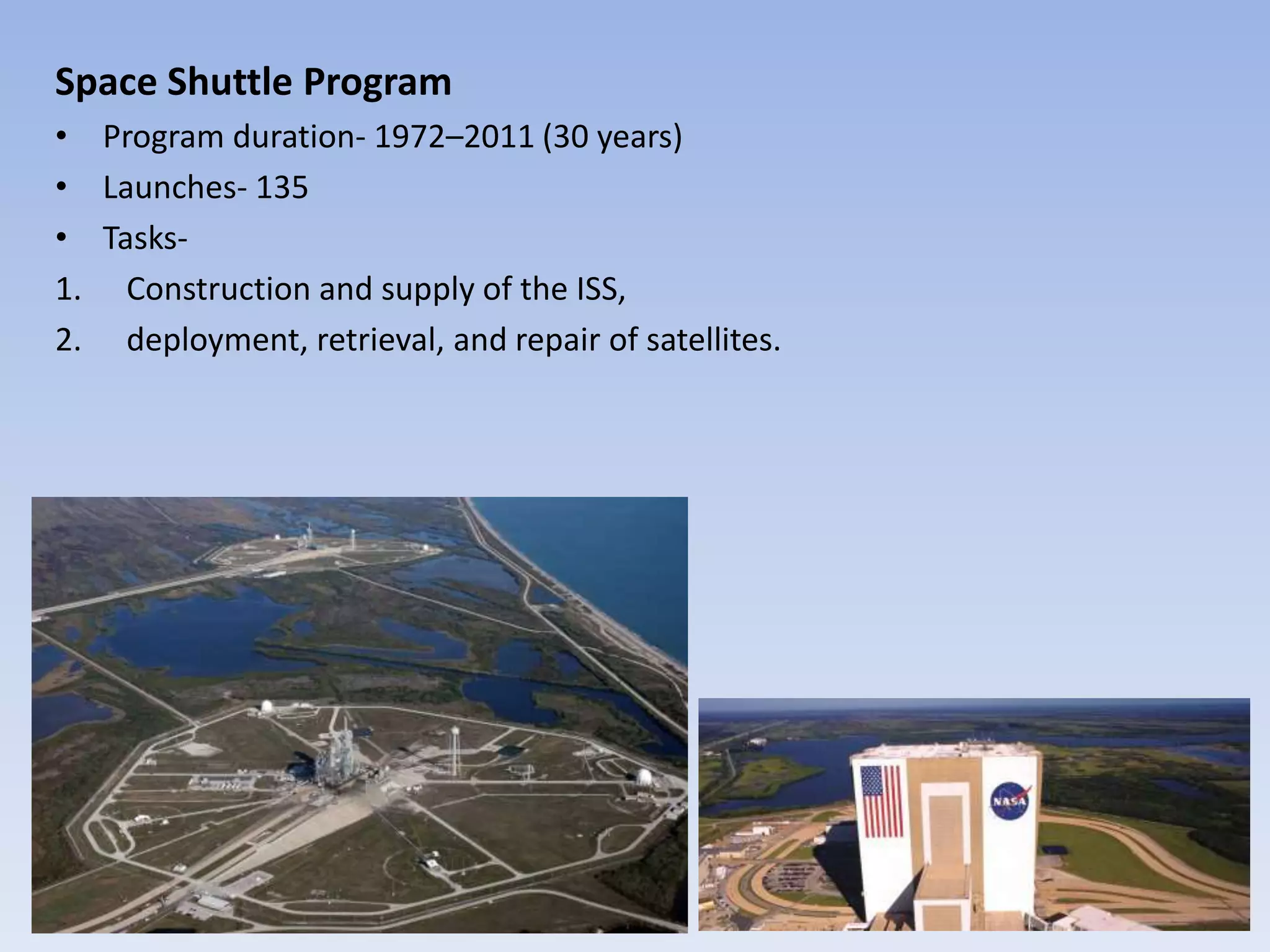
Space Shuttle Program
• Program duration- 1972–2011 (30 years)
• Launches- 135
• Tasks-
1. Construction and supply of the ISS,
2. deployment, retrieval, and repair of satellites.
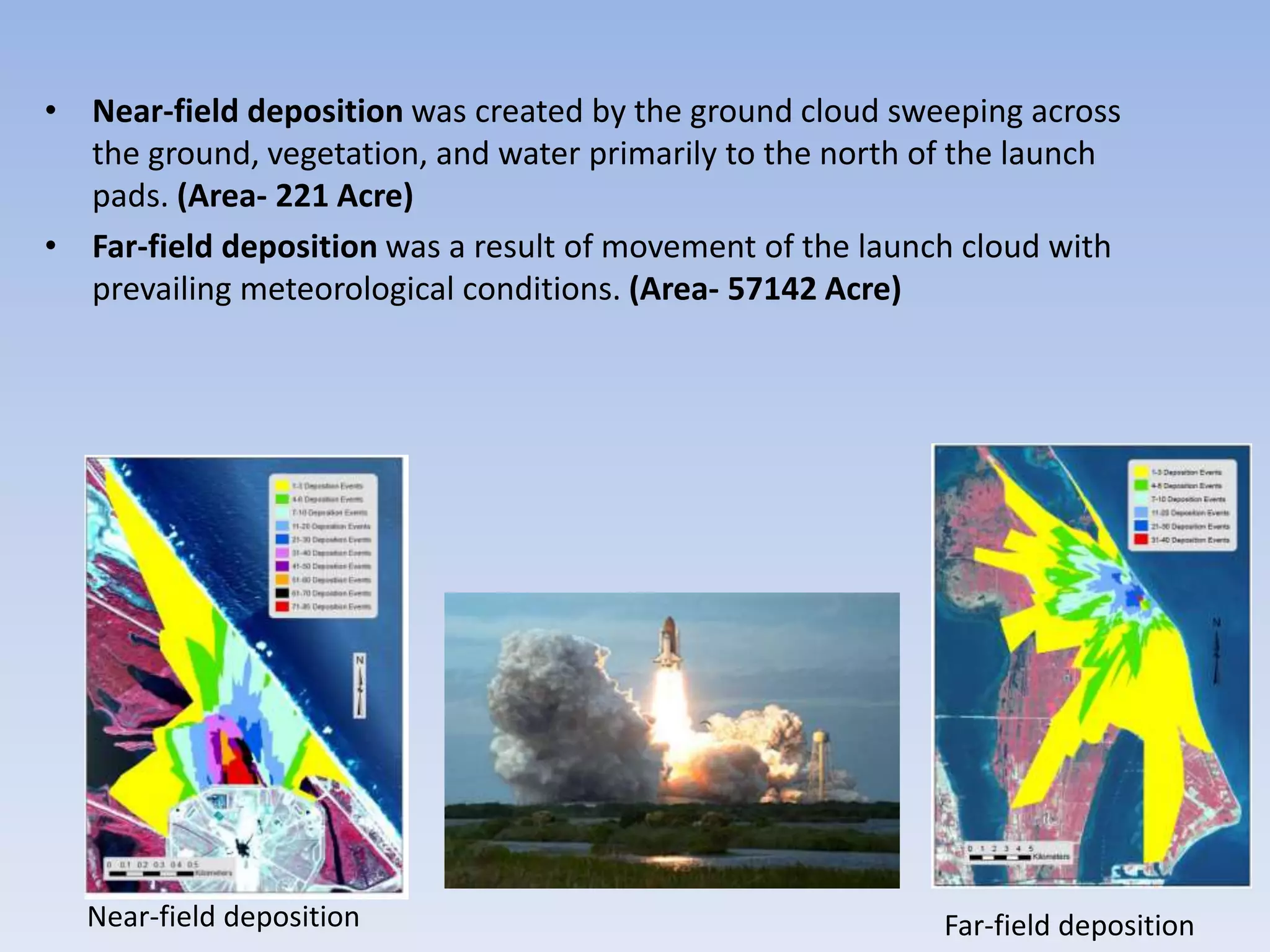
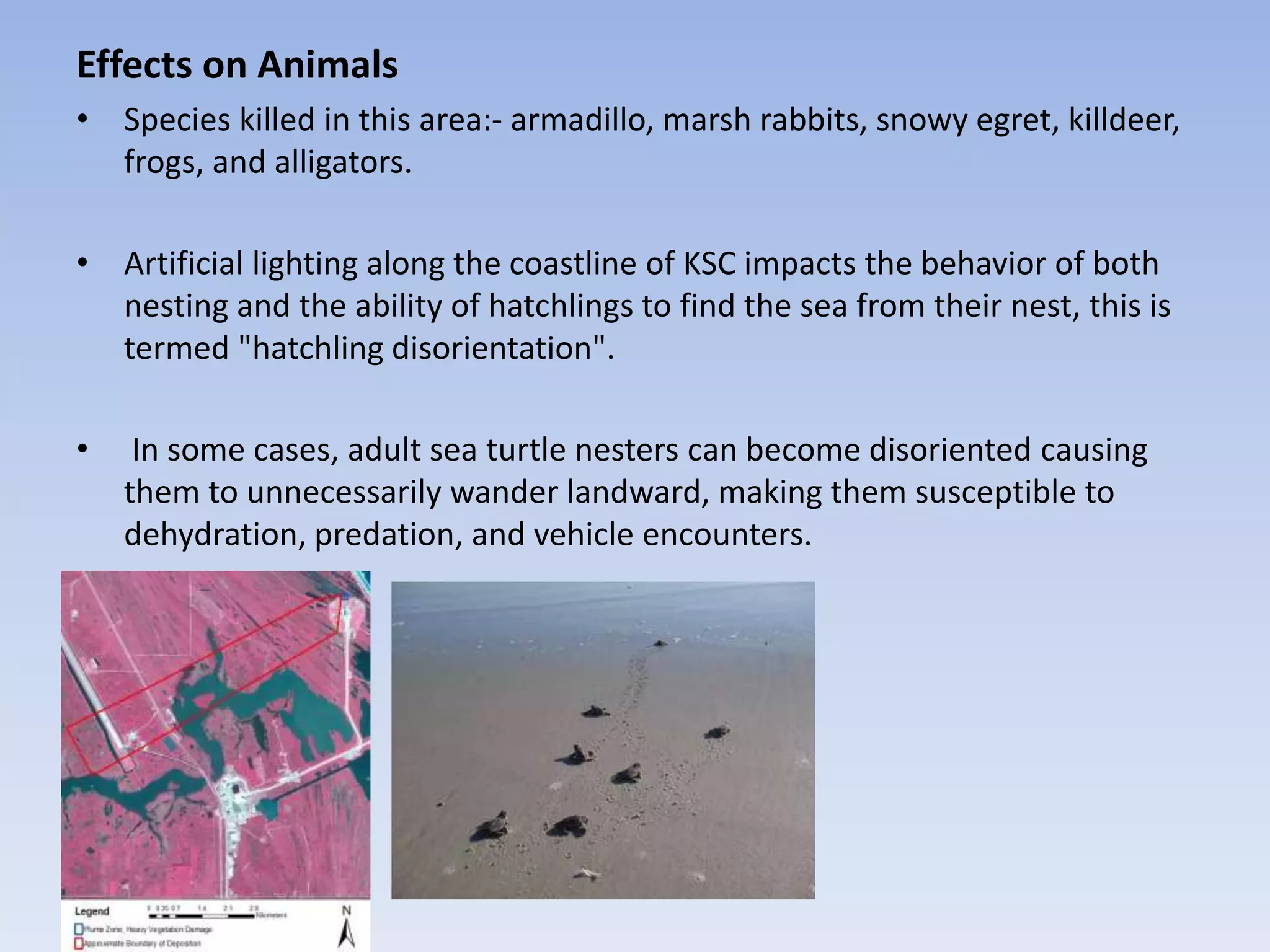
• Near-field deposition was created by the ground cloud sweeping across
the ground, vegetation, and water primarily to the north of the launch
pads. (Area- 221 Acre)
• Far-field deposition was a result of movement of the launch cloud with
prevailing meteorological conditions. (Area- 57142 Acre)
Near-field deposition Far-field deposition
Effects
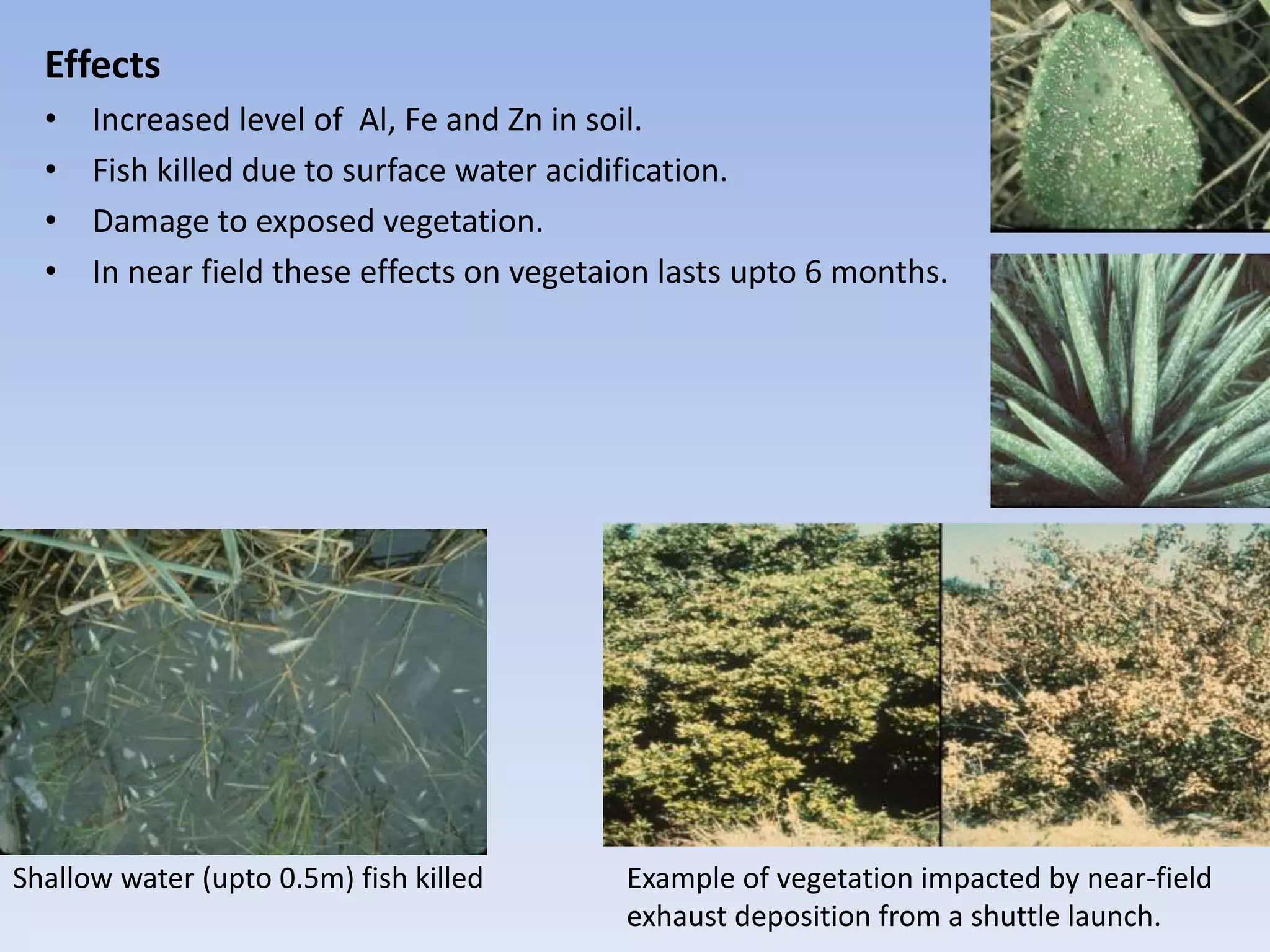
• Increased level of Al, Fe and Zn in soil.
• Fish killed due to surface water acidification.
• Damage to exposed vegetation.
• In near field these effects on vegetaion lasts upto 6 months.
Example of vegetation impacted by near-field
exhaust deposition from a shuttle launch.
Shallow water (upto 0.5m) fish killed
Effects on Animals
• Species killed in this area:- armadillo, marsh rabbits, snowy egret, killdeer,
frogs, and alligators.
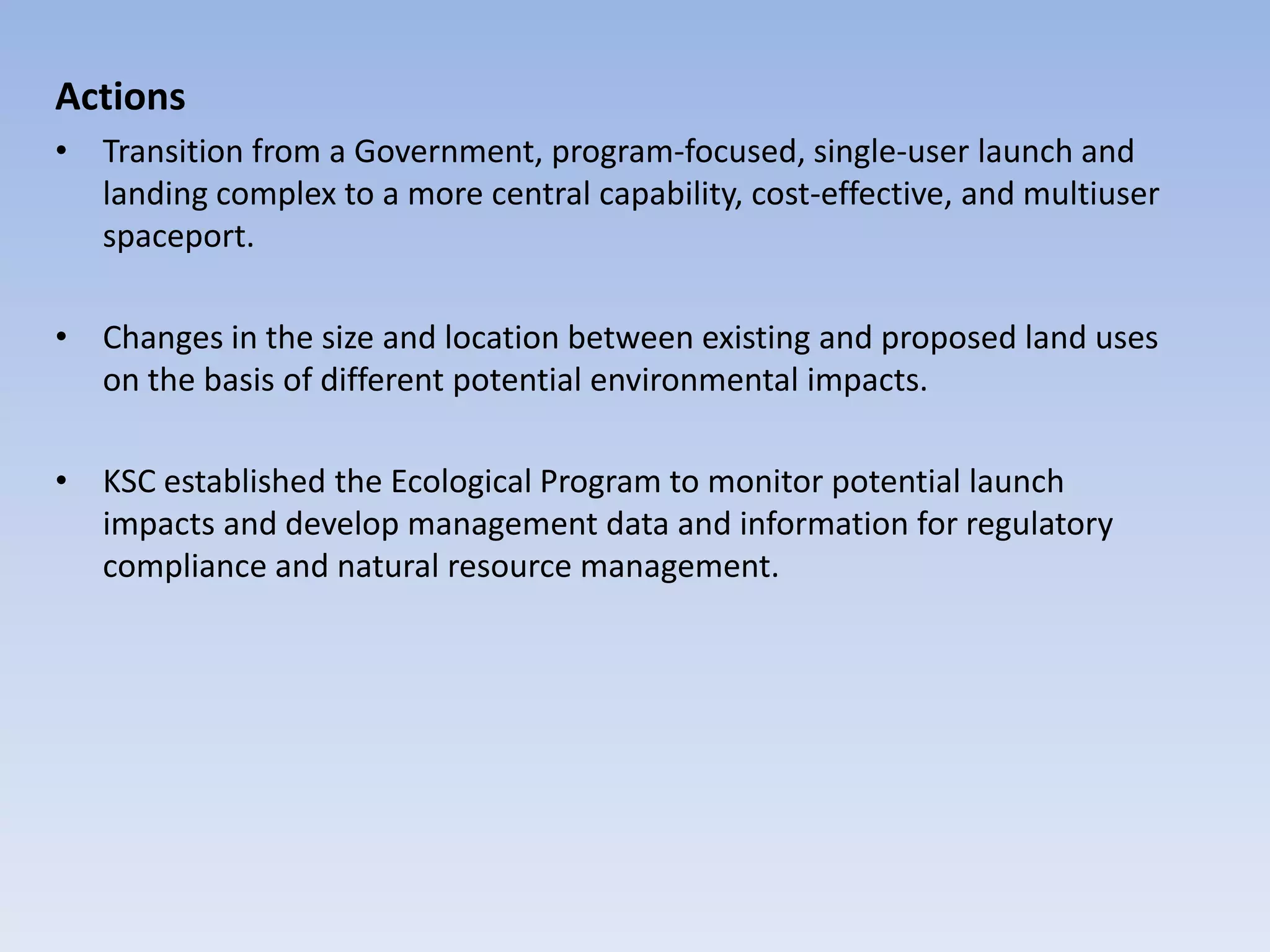
• Artificial lighting along the coastline of KSC impacts the behavior of both
nesting and the ability of hatchlings to find the sea from their nest, this is
termed "hatchling disorientation".
• In some cases, adult sea turtle nesters can become disoriented causing
them to unnecessarily wander landward, making them susceptible to
dehydration, predation, and vehicle encounters.
Actions
• Transition from a Government, program-focused, single-user launch and
landing complex to a more central capability, cost-effective, and multiuser
spaceport.
• Changes in the size and location between existing and proposed land uses
on the basis of different potential environmental impacts.
• KSC established the Ecological Program to monitor potential launch
impacts and develop management data and information for regulatory
compliance and natural resource management.

Ecological impacts of the space shuttle program

  • 1.
    Ecological Impacts ofthe Space Shuttle Program at John F. Kennedy Space Center, Florida
  • 2.
    Space Shuttle Program •Program duration- 1972–2011 (30 years) • Launches- 135 • Tasks- 1. Construction and supply of the ISS, 2. deployment, retrieval, and repair of satellites.
  • 3.
    • Near-field depositionwas created by the ground cloud sweeping across the ground, vegetation, and water primarily to the north of the launch pads. (Area- 221 Acre) • Far-field deposition was a result of movement of the launch cloud with prevailing meteorological conditions. (Area- 57142 Acre) Near-field deposition Far-field deposition
  • 4.
    Effects • Increased levelof Al, Fe and Zn in soil. • Fish killed due to surface water acidification. • Damage to exposed vegetation. • In near field these effects on vegetaion lasts upto 6 months. Example of vegetation impacted by near-field exhaust deposition from a shuttle launch. Shallow water (upto 0.5m) fish killed
  • 5.
    Effects on Animals •Species killed in this area:- armadillo, marsh rabbits, snowy egret, killdeer, frogs, and alligators. • Artificial lighting along the coastline of KSC impacts the behavior of both nesting and the ability of hatchlings to find the sea from their nest, this is termed "hatchling disorientation". • In some cases, adult sea turtle nesters can become disoriented causing them to unnecessarily wander landward, making them susceptible to dehydration, predation, and vehicle encounters.
  • 6.
    Actions • Transition froma Government, program-focused, single-user launch and landing complex to a more central capability, cost-effective, and multiuser spaceport. • Changes in the size and location between existing and proposed land uses on the basis of different potential environmental impacts. • KSC established the Ecological Program to monitor potential launch impacts and develop management data and information for regulatory compliance and natural resource management.