Speech
events
Conversation anlaysis
What could be en example of speech events?
• Debate
• Interview
• discussions
• Etc.
Conversation
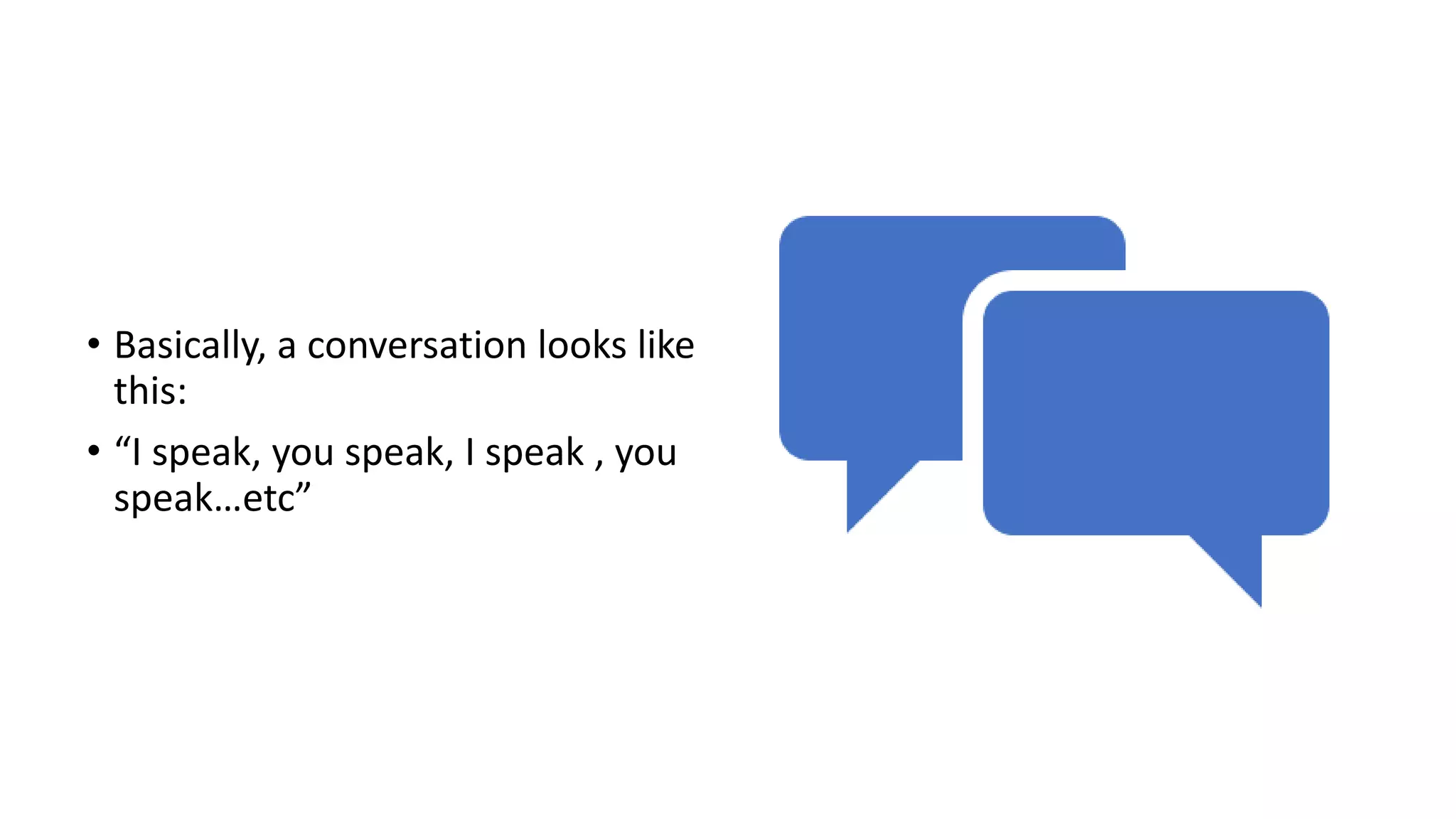
• Basically, a conversation looks like
this:
• “I speak, you speak, I speak , you
speak…etc”
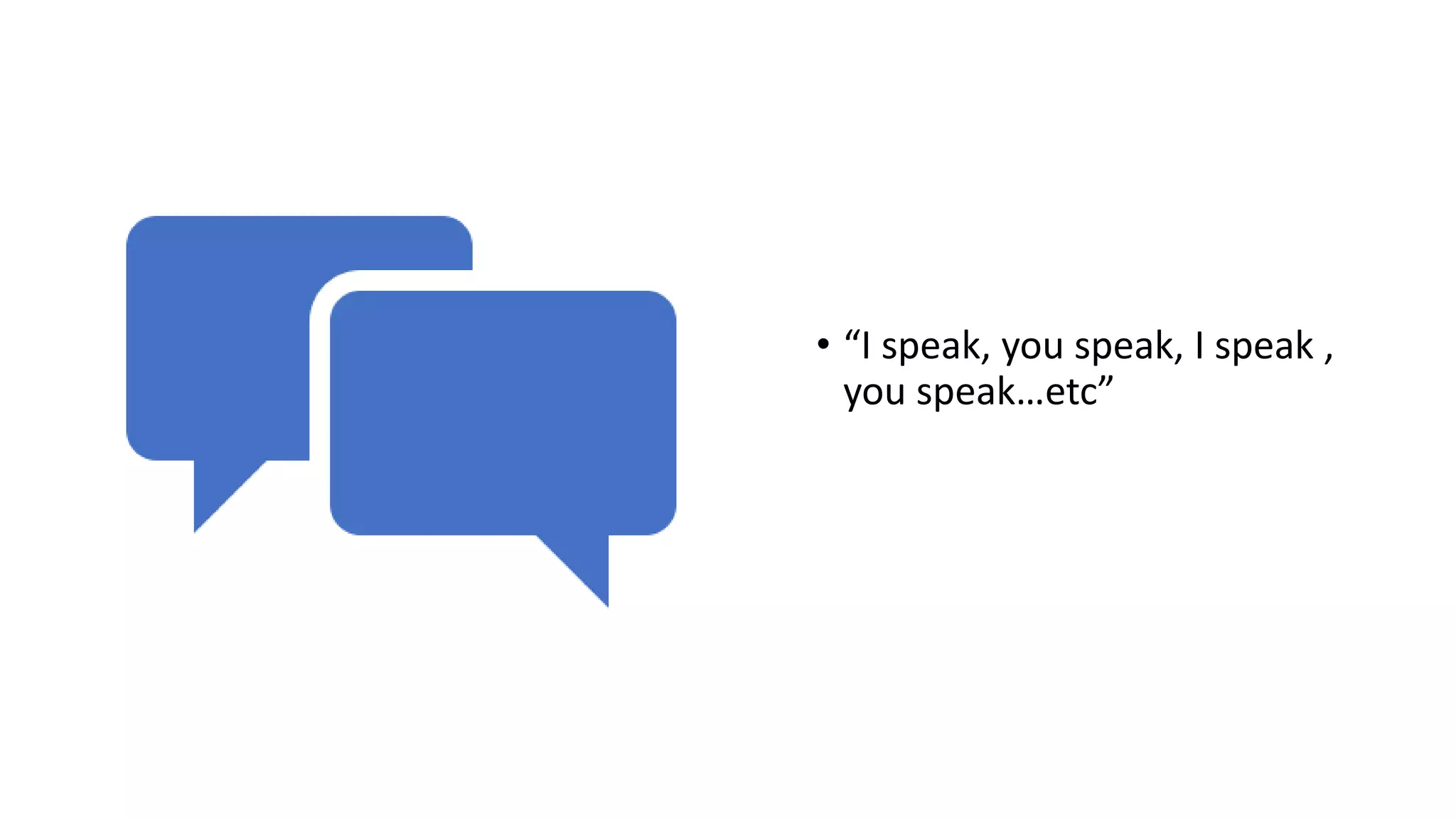
• It two people speak at the same time, one usually
stops. Right?
• “I speak, you speak, I speak ,
you speak…etc”
• People differ in what they do and say
in different circumstances (i.e.,
speech events)
• Q/ What is the source of that
difference?
A/ a number of criteria:
• We need to specify:
• The roles of the speakers and hearers and their relationsips—
friends, strangers, men, women, young, old, qual status, etc.
Conversation
Analysis
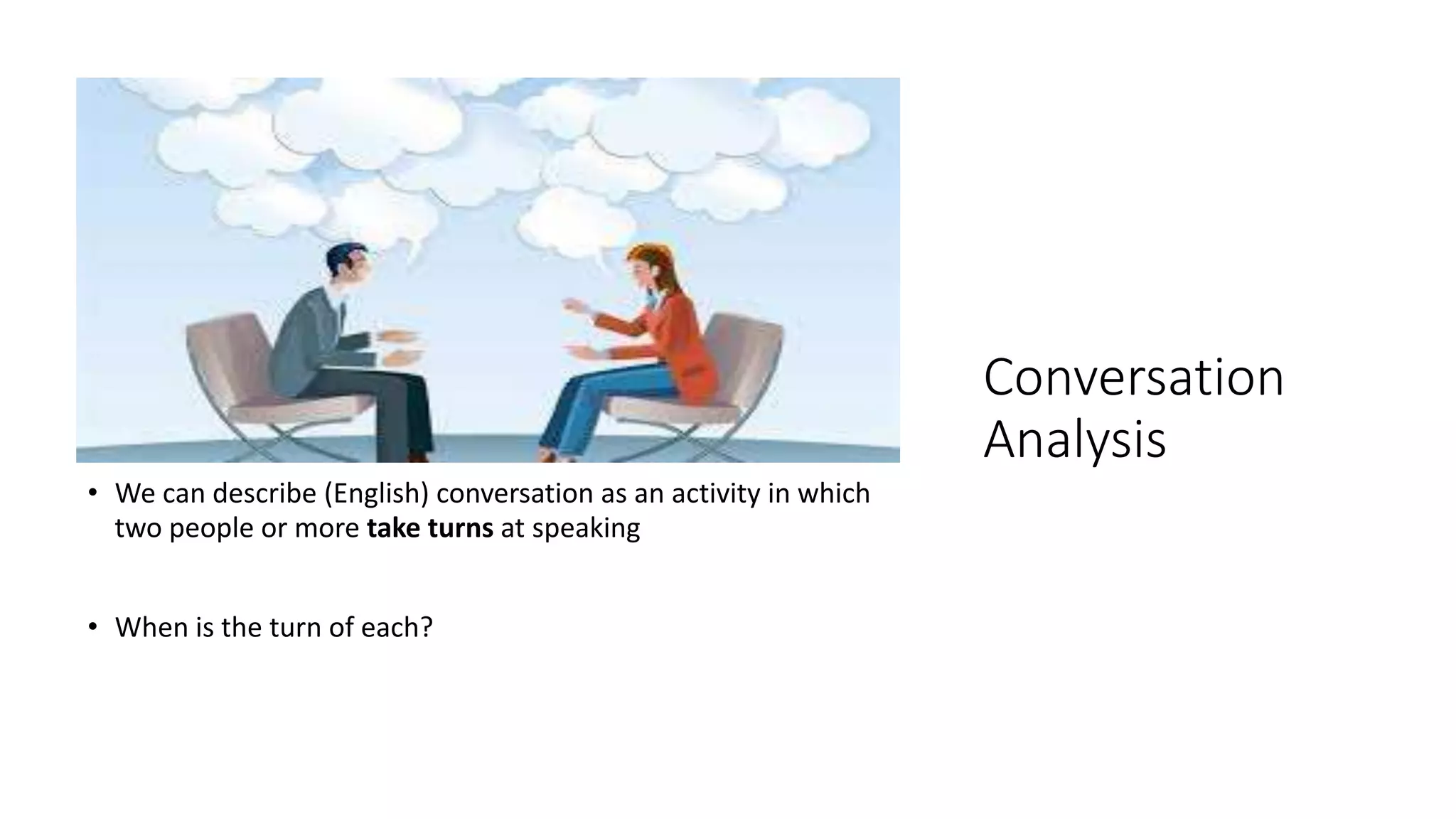
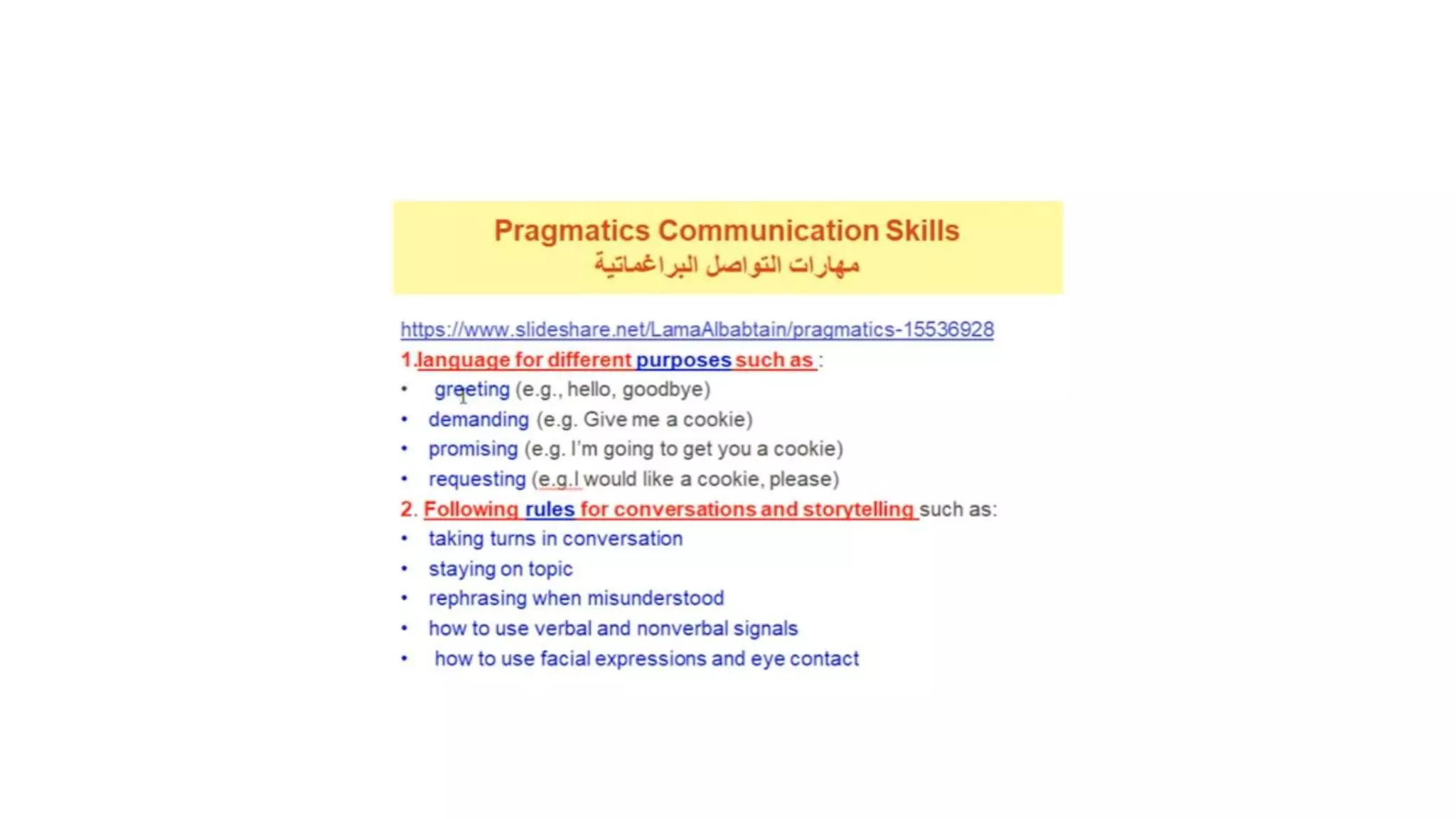
• We can describe (English) conversation as an activity in which
two people or more take turns at speaking
• When is the turn of each?
Listeners:
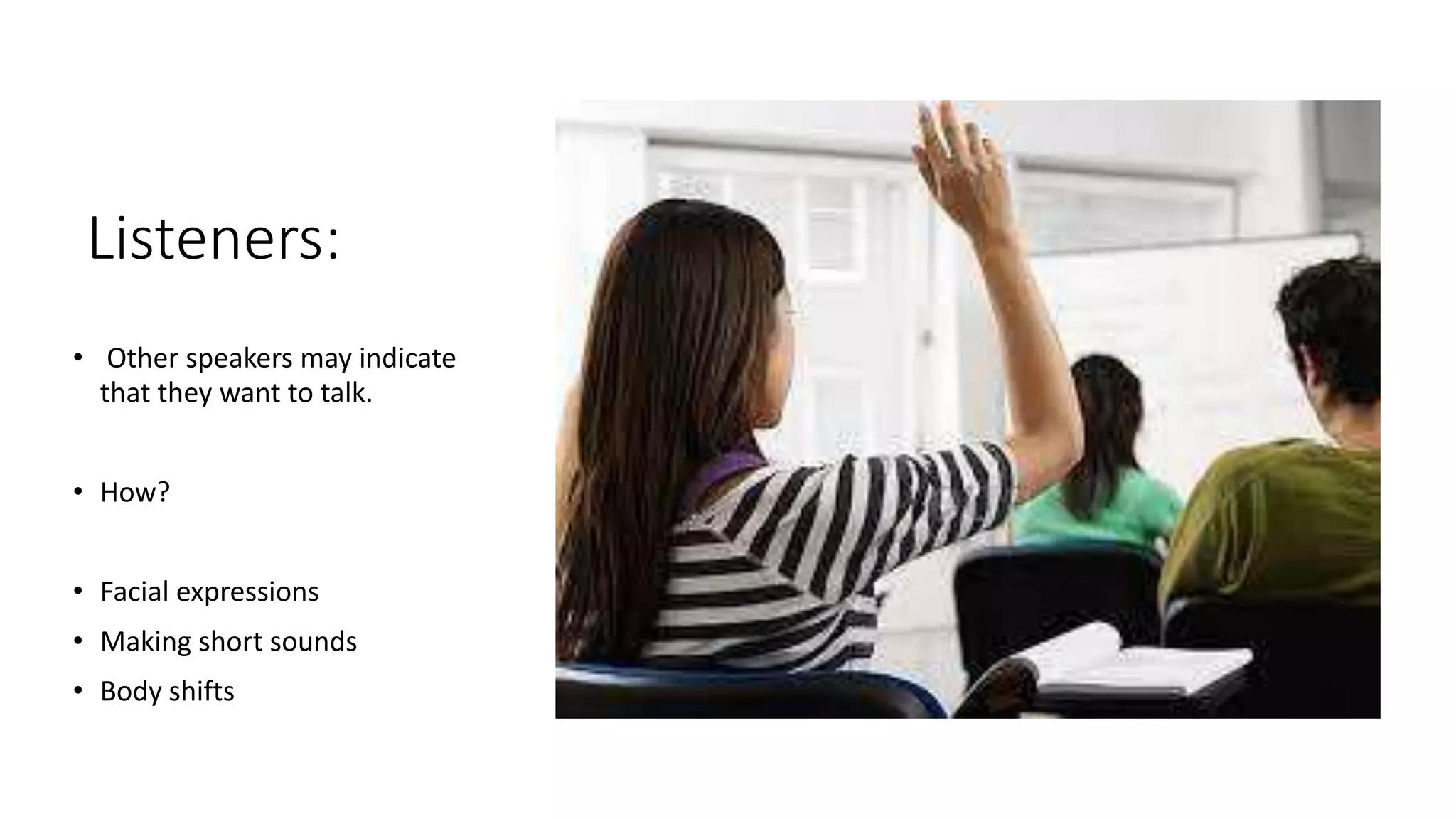
• Other speakers may indicate
that they want to talk.
• How?
• Facial expressions
• Making short sounds
• Body shifts
Speakers:
• Generally speaking, participants wait until a speaker makes an
indication that they have finished by signaling a completion
point:
• asking a question
• Pausing
Turn taking
• Research has shown different expectations of conversational style and
different strategies of participation in conversation.
• those strategies are the source of what participants describe as:
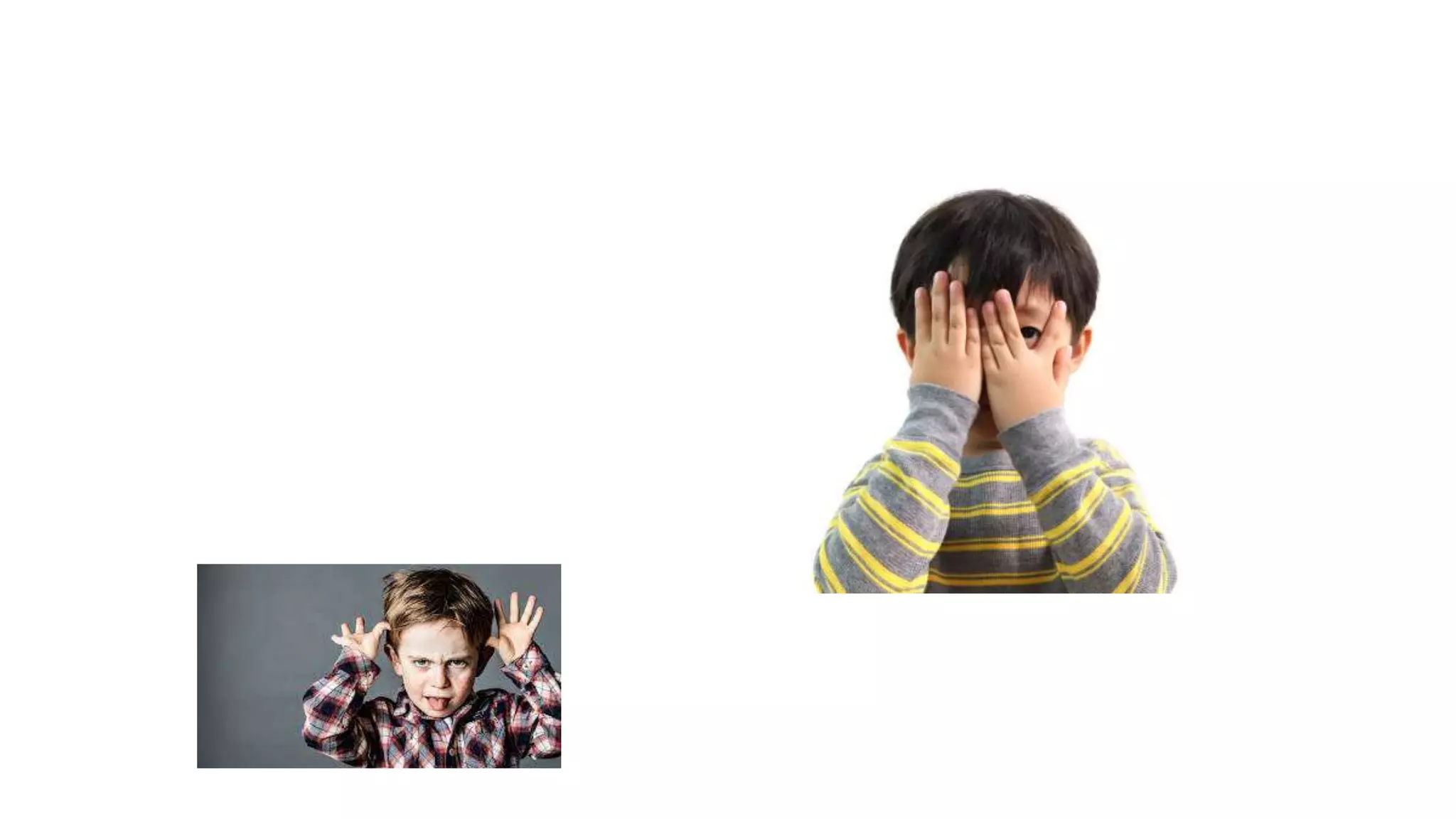
• Rudeness – If one speaker cuts in on another speaker
• Shyness – If one speaker keeps waiting for an opportunity to take a
turn and none seems to occur.
• The participants characterized as „rude‟ or „shy‟ in this way may
simply be adhering to slightly different conventions of turn-taking.
„Long-winded’ speakers or those used to „holding the floor‟ avoid
having normal completion points by: Avoiding the use of pauses at
the end of a sentence. Making their sentences run on by using
connectors such as and, and then, so, but …etc. Placing pauses at
points where the message is clearly incomplete. Preferably filling
the pause with hesitation markers such as er, um, uh, ah Avoiding
eye contact
• The previous slide is an example of a bad slide!
“The participants
characterized as “rude” or
“shy” in this way may simply
be adhering to slightly
different conventions of turn-
taking.”
“Long-winded” speakers or
those used to “holding the
floor”avoid having normal
completion points by“keeping
the turn”
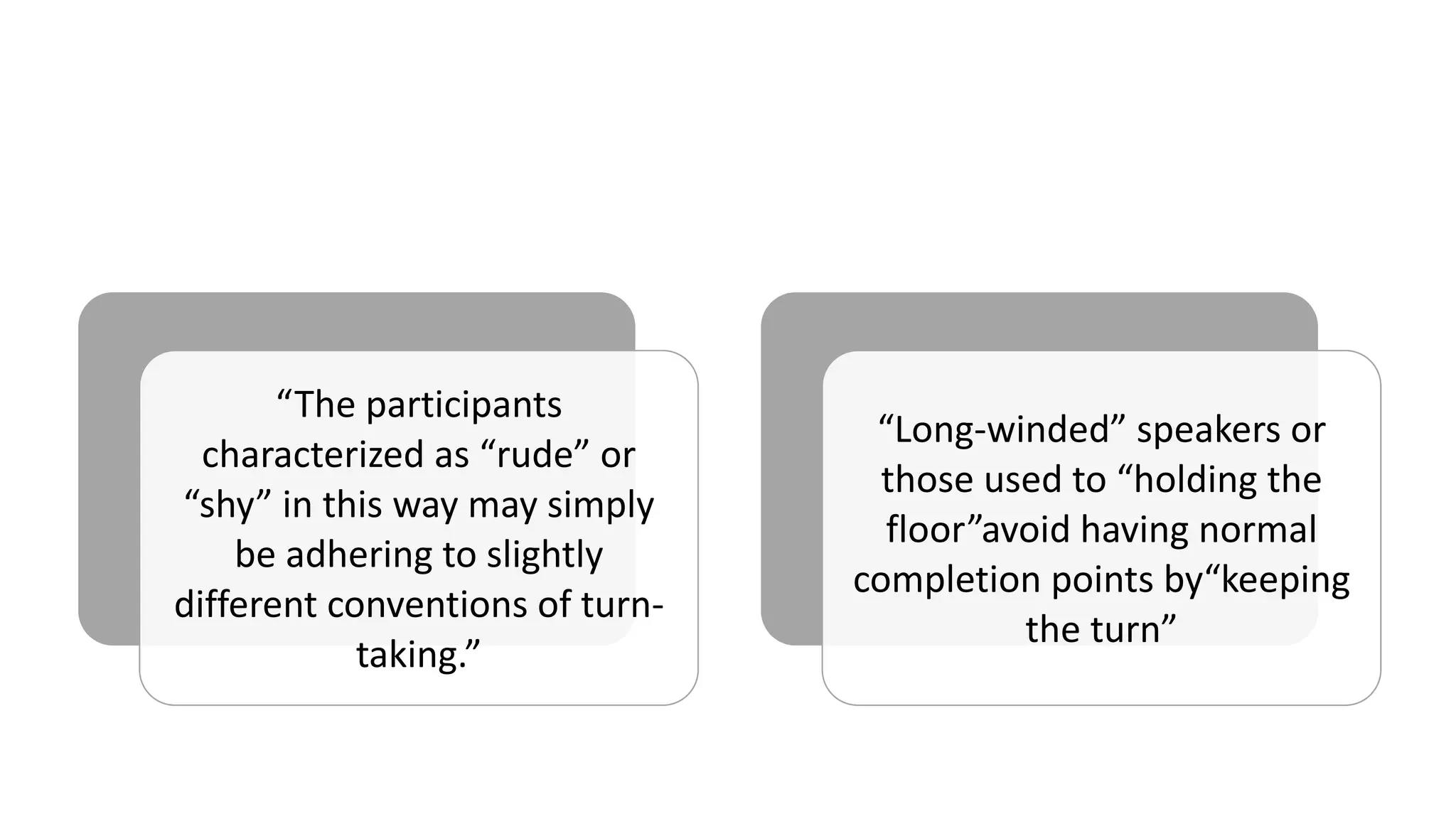
1-Avoiding the use of pauses at the
end of a sentence.
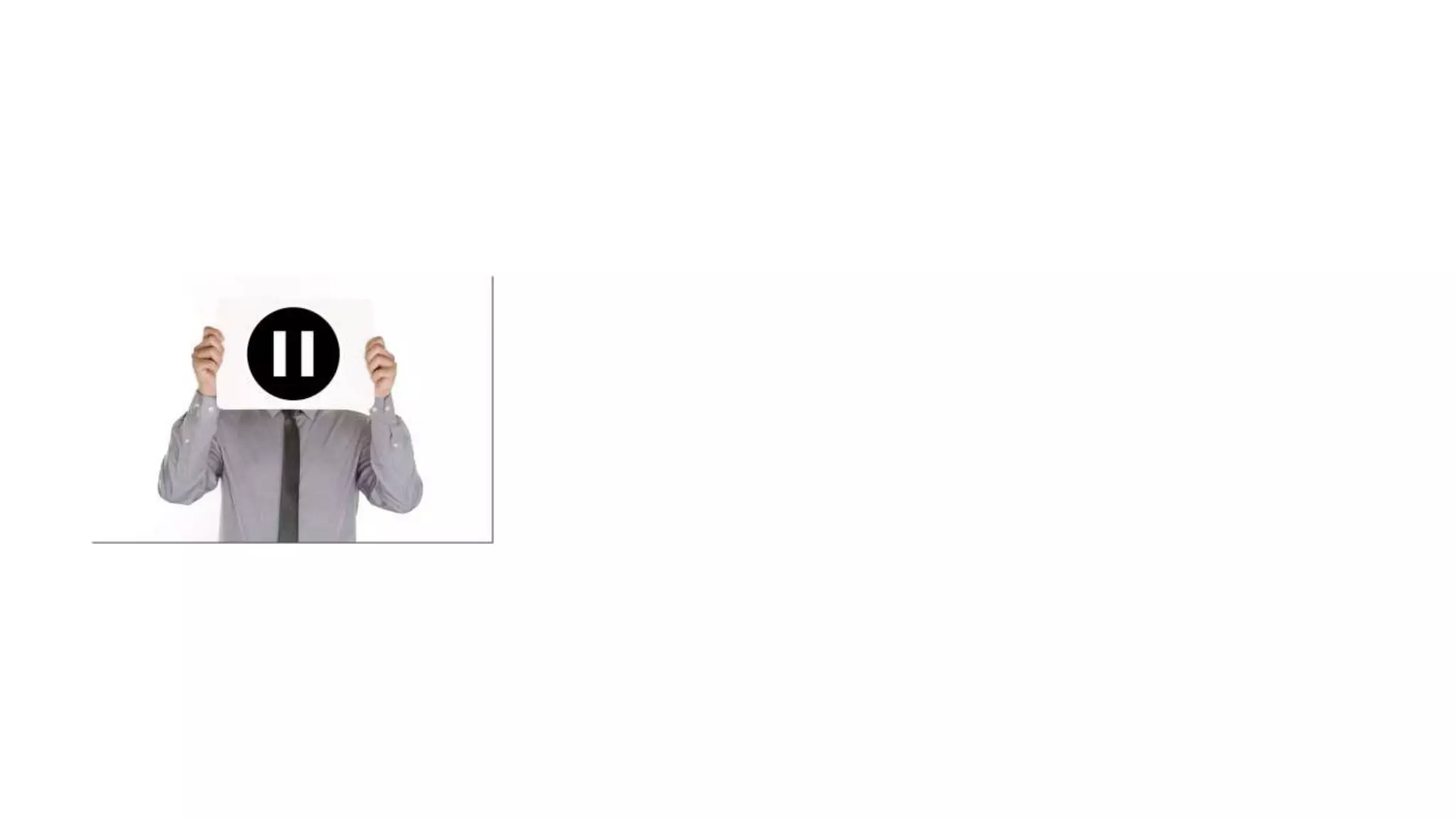
2-Making their sentences run on by using
connectors such as and, and then, so, but …etc.
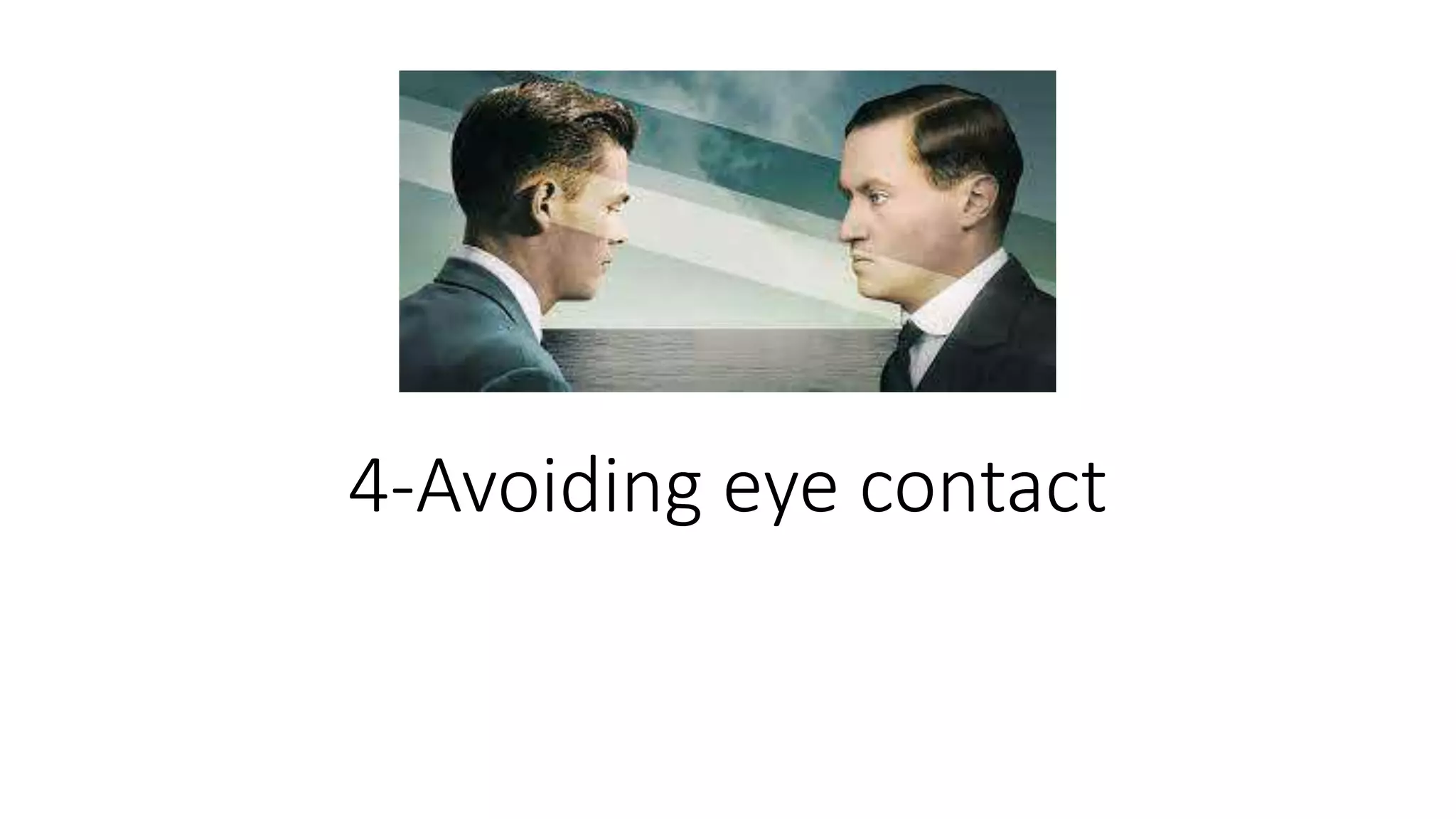
4-Avoiding eye contact
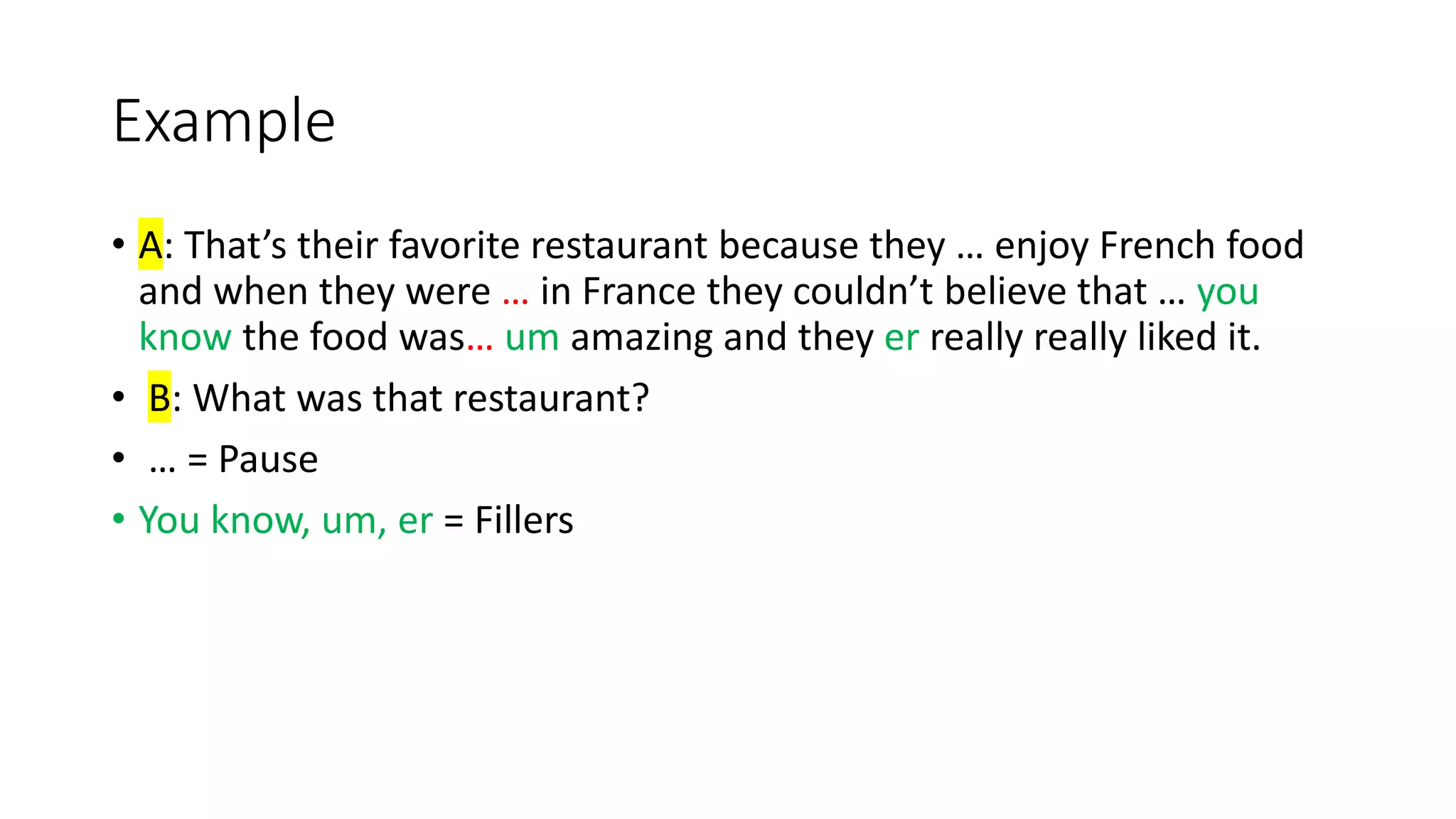
Example
• A: That’s their favorite restaurant because they … enjoy French food
and when they were … in France they couldn’t believe that … you
know the food was… um amazing and they er really really liked it.
• B: What was that restaurant?
• … = Pause
• You know, um, er = Fillers
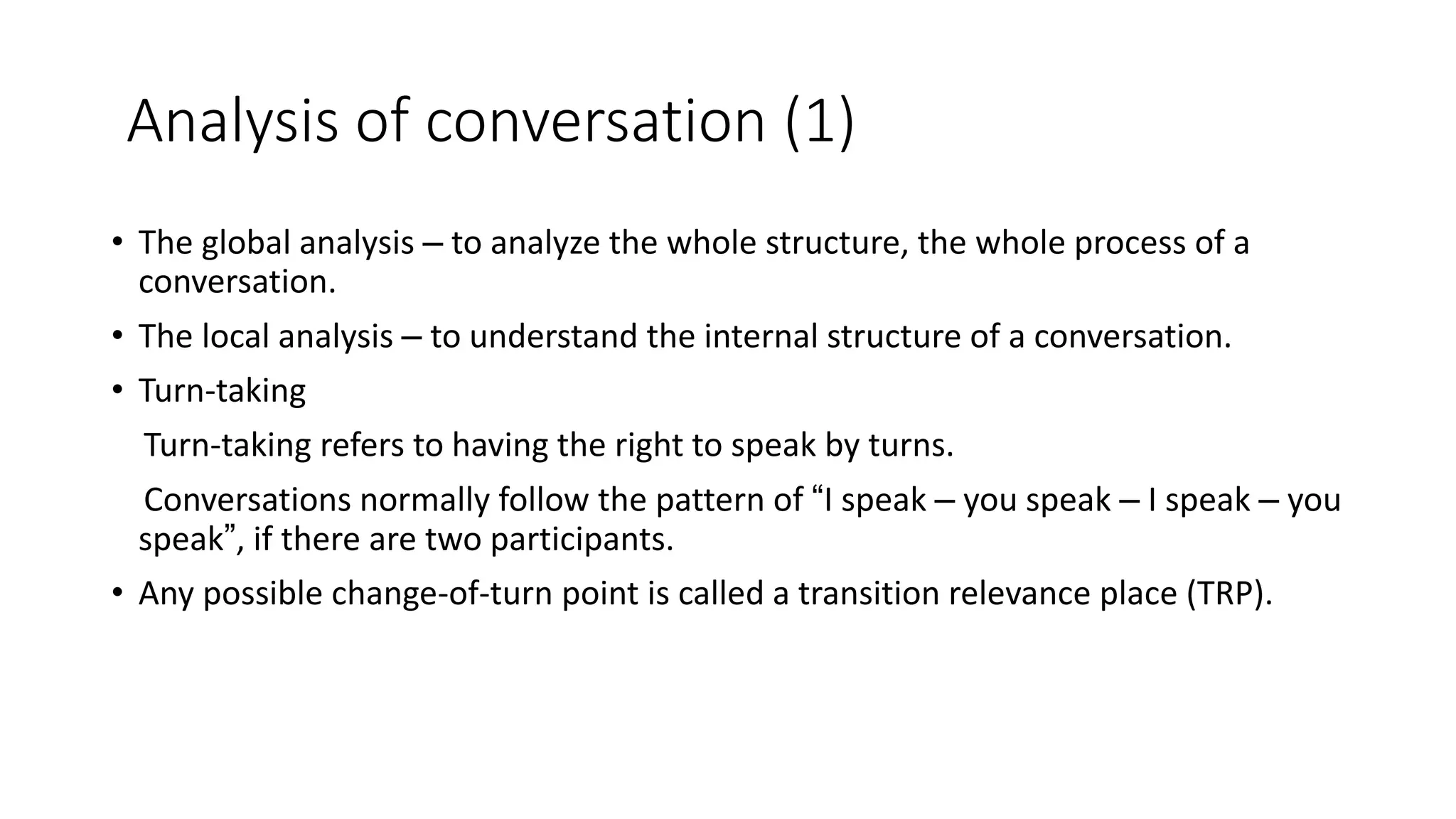
Analysis of conversation (1)
• The global analysis – to analyze the whole structure, the whole process of a
conversation.
• The local analysis – to understand the internal structure of a conversation.
• Turn-taking
Turn-taking refers to having the right to speak by turns.
Conversations normally follow the pattern of “I speak – you speak – I speak – you
speak”, if there are two participants.
• Any possible change-of-turn point is called a transition relevance place (TRP).
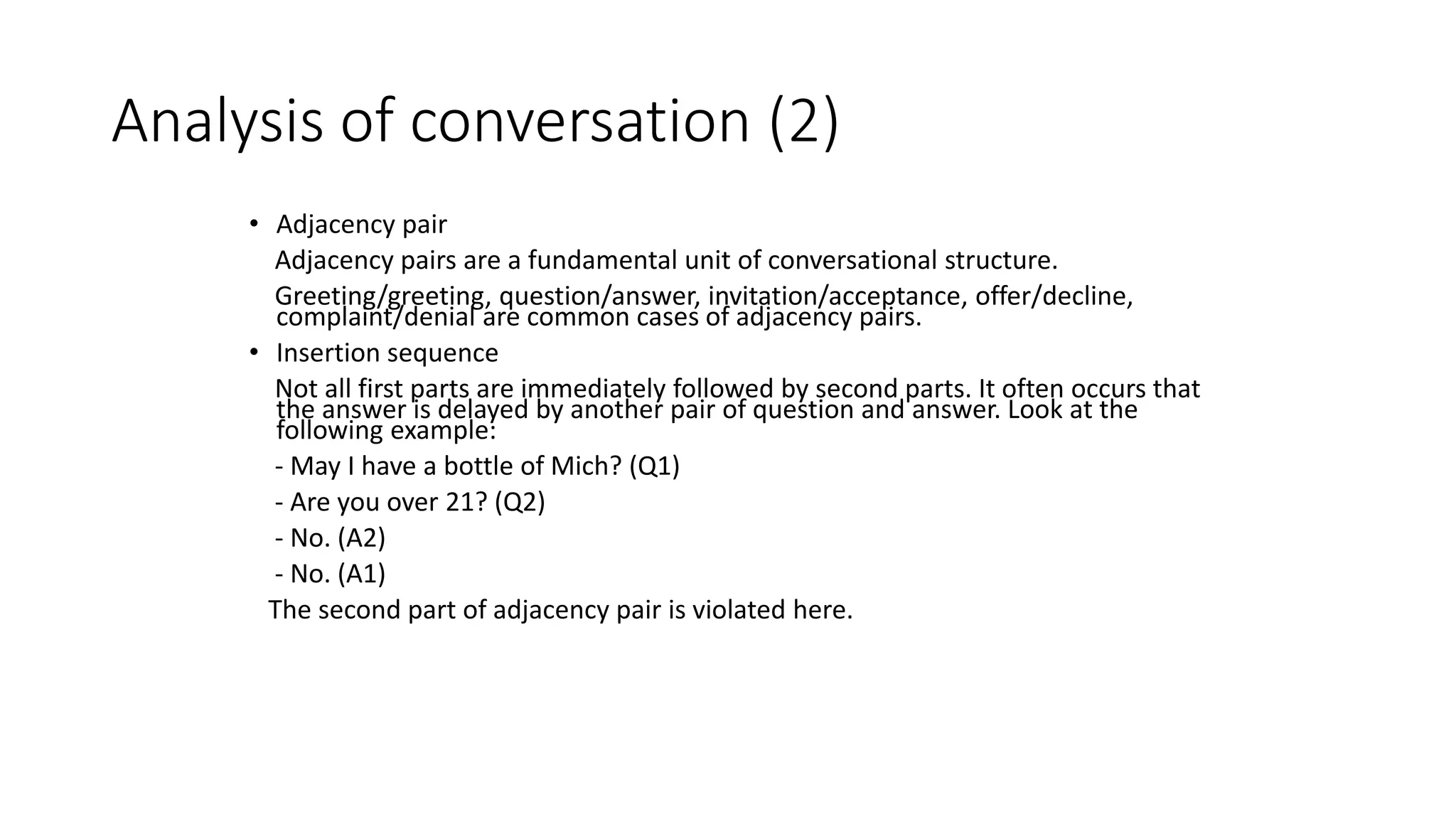
Analysis of conversation (2)
• Adjacency pair
Adjacency pairs are a fundamental unit of conversational structure.
Greeting/greeting, question/answer, invitation/acceptance, offer/decline,
complaint/denial are common cases of adjacency pairs.
• Insertion sequence
Not all first parts are immediately followed by second parts. It often occurs that
the answer is delayed by another pair of question and answer. Look at the
following example:
- May I have a bottle of Mich? (Q1)
- Are you over 21? (Q2)
- No. (A2)
- No. (A1)
The second part of adjacency pair is violated here.
Analysis of conversation (3)
• A conversation sometimes is organized in a preferential way.
• Pre-sequence
• Pre-invitation
• Pre-request
• Pre-announcement
• Post-sequence
• Explanation
Conversation & Preference Structure
•
Conversation is a form of interactive, spontaneous
communication between two or more people.
•
preference: a feeling of liking or wanting one person or
thing more than another person or thing.
Pauses, Overlaps & Backchannels
• Pauses: silence between turns (simple
hesitations or Silences).
• Overlaps: both speakers trying to speak
at the same time.
• With pauses and overlaps: no flow, no
smooth rhythm to their transitions,
sense of distance, absence of familiarity
or ease.
Pauses, Overlaps & Backchannels
• Backchannels: they are ways of indicating we are listening to what the
speaker says.
• By using, head nods, smiles, other facial expressions, gestures.
• For example,
(uh-uh, yeah, mmm)
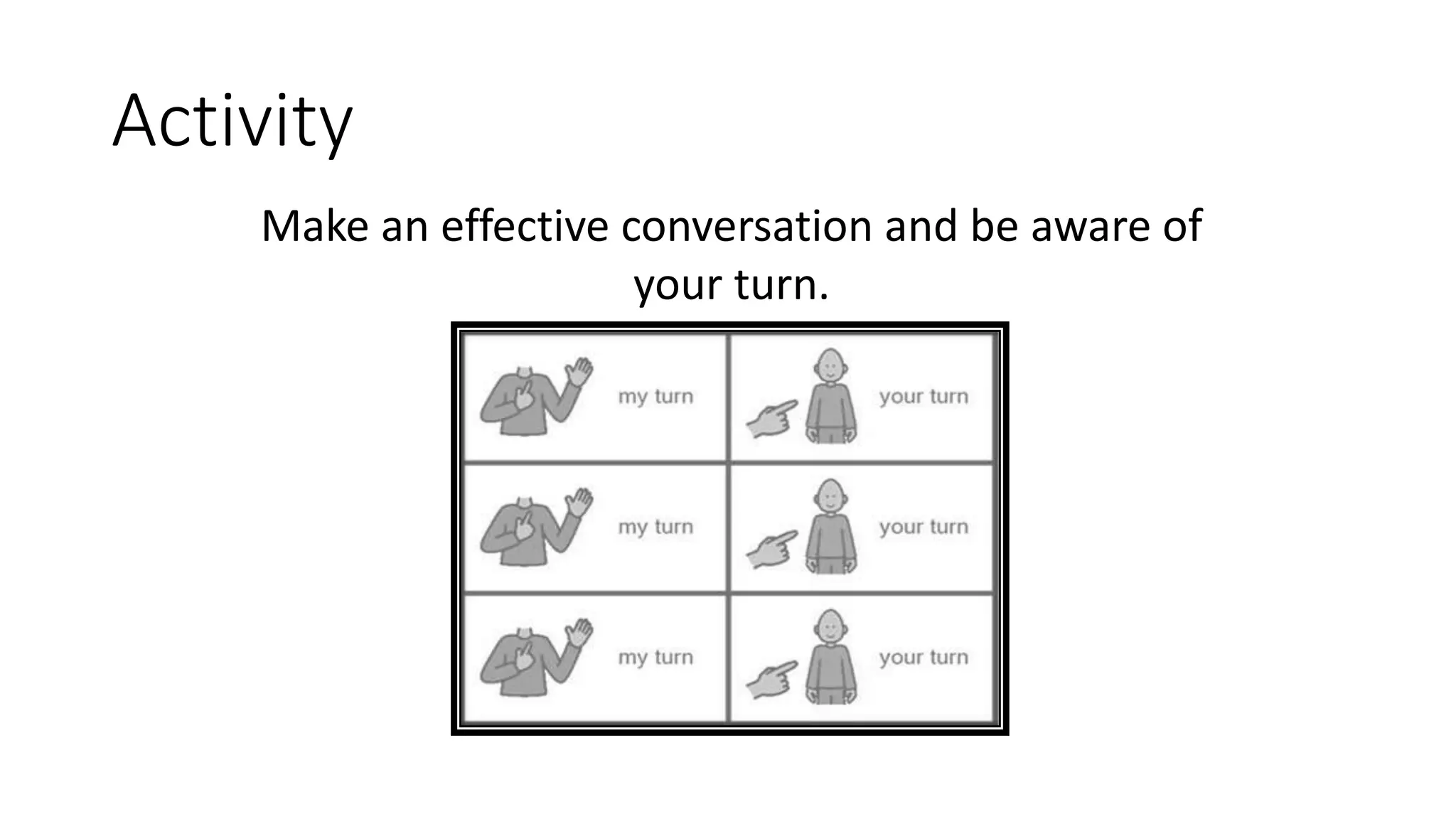
Activity
Make an effective conversation and be aware of
your turn.
Conversational Style
• Conversational + Style
• Of using, or in the manner of conversation + Design

lecture8 Conversation turn taking.pptx

  • 1.
  • 2.
    What could been example of speech events? • Debate • Interview • discussions • Etc.
  • 3.
  • 4.
    • Basically, aconversation looks like this: • “I speak, you speak, I speak , you speak…etc”
  • 5.
    • It twopeople speak at the same time, one usually stops. Right?
  • 6.
    • “I speak,you speak, I speak , you speak…etc”
  • 7.
    • People differin what they do and say in different circumstances (i.e., speech events) • Q/ What is the source of that difference?
  • 8.
    A/ a numberof criteria: • We need to specify: • The roles of the speakers and hearers and their relationsips— friends, strangers, men, women, young, old, qual status, etc.
  • 9.
    Conversation Analysis • We candescribe (English) conversation as an activity in which two people or more take turns at speaking • When is the turn of each?
  • 10.
    Listeners: • Other speakersmay indicate that they want to talk. • How? • Facial expressions • Making short sounds • Body shifts
  • 11.
    Speakers: • Generally speaking,participants wait until a speaker makes an indication that they have finished by signaling a completion point: • asking a question • Pausing
  • 12.
  • 13.
    • Research hasshown different expectations of conversational style and different strategies of participation in conversation. • those strategies are the source of what participants describe as: • Rudeness – If one speaker cuts in on another speaker • Shyness – If one speaker keeps waiting for an opportunity to take a turn and none seems to occur.
  • 15.
    • The participantscharacterized as „rude‟ or „shy‟ in this way may simply be adhering to slightly different conventions of turn-taking. „Long-winded’ speakers or those used to „holding the floor‟ avoid having normal completion points by: Avoiding the use of pauses at the end of a sentence. Making their sentences run on by using connectors such as and, and then, so, but …etc. Placing pauses at points where the message is clearly incomplete. Preferably filling the pause with hesitation markers such as er, um, uh, ah Avoiding eye contact
  • 16.
    • The previousslide is an example of a bad slide!
  • 17.
    “The participants characterized as“rude” or “shy” in this way may simply be adhering to slightly different conventions of turn- taking.” “Long-winded” speakers or those used to “holding the floor”avoid having normal completion points by“keeping the turn”
  • 18.
    1-Avoiding the useof pauses at the end of a sentence.
  • 19.
    2-Making their sentencesrun on by using connectors such as and, and then, so, but …etc.
  • 20.
  • 21.
    Example • A: That’stheir favorite restaurant because they … enjoy French food and when they were … in France they couldn’t believe that … you know the food was… um amazing and they er really really liked it. • B: What was that restaurant? • … = Pause • You know, um, er = Fillers
  • 23.
    Analysis of conversation(1) • The global analysis – to analyze the whole structure, the whole process of a conversation. • The local analysis – to understand the internal structure of a conversation. • Turn-taking Turn-taking refers to having the right to speak by turns. Conversations normally follow the pattern of “I speak – you speak – I speak – you speak”, if there are two participants. • Any possible change-of-turn point is called a transition relevance place (TRP).
  • 24.
    Analysis of conversation(2) • Adjacency pair Adjacency pairs are a fundamental unit of conversational structure. Greeting/greeting, question/answer, invitation/acceptance, offer/decline, complaint/denial are common cases of adjacency pairs. • Insertion sequence Not all first parts are immediately followed by second parts. It often occurs that the answer is delayed by another pair of question and answer. Look at the following example: - May I have a bottle of Mich? (Q1) - Are you over 21? (Q2) - No. (A2) - No. (A1) The second part of adjacency pair is violated here.
  • 25.
    Analysis of conversation(3) • A conversation sometimes is organized in a preferential way. • Pre-sequence • Pre-invitation • Pre-request • Pre-announcement • Post-sequence • Explanation
  • 26.
    Conversation & PreferenceStructure • Conversation is a form of interactive, spontaneous communication between two or more people. • preference: a feeling of liking or wanting one person or thing more than another person or thing.
  • 27.
    Pauses, Overlaps &Backchannels • Pauses: silence between turns (simple hesitations or Silences). • Overlaps: both speakers trying to speak at the same time. • With pauses and overlaps: no flow, no smooth rhythm to their transitions, sense of distance, absence of familiarity or ease.
  • 28.
    Pauses, Overlaps &Backchannels • Backchannels: they are ways of indicating we are listening to what the speaker says. • By using, head nods, smiles, other facial expressions, gestures. • For example, (uh-uh, yeah, mmm)
  • 29.
    Activity Make an effectiveconversation and be aware of your turn.
  • 30.
    Conversational Style • Conversational+ Style • Of using, or in the manner of conversation + Design