
SQU

Educational technology leadership in
LRTC environment

Dr. Abdelrahman Mohamed Ahmed
Department of Instructional & Learning Technologies
abdoelhaj@squ.edu.om
Fall 2013
Objectives
• Purpose of an organizational chart
• Describe the elements of organizational
chart
• Differentiate between rules, procedures &
policies
• Describe five steps of decision making
• List five qualities of effective decision makers
Organizational Structure
• Necessary if objectives are to be achieved
• Simple chart shows how an organization
operates
• Shows flow of authority
Elements of Organizational Charts
1.
2.
3.
4.
5.
6.
7.

Vertical and horizontal dimensions
Chain of command
Line and staff
Authority levels
Power
Responsibility and accountability
Departmentalization
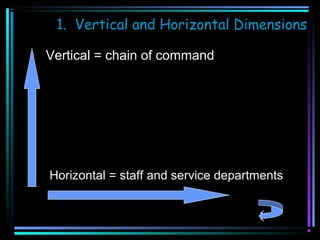
1. Vertical and Horizontal Dimensions
Vertical = chain of command

Horizontal = staff and service departments
2. Chain of Command
• Who reports to whom
• Shows flow of authority in vertical format
• Top positions represent highest level of
decision-making authority
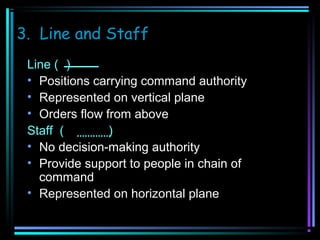
3. Line and Staff
Line ( )
• Positions carrying command authority
• Represented on vertical plane
• Orders flow from above
Staff (
)
• No decision-making authority
• Provide support to people in chain of
command
• Represented on horizontal plane
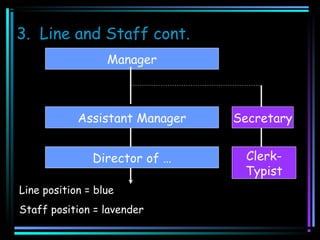
3. Line and Staff cont.
Manager

Assistant Manager

Secretary

Director of …

ClerkTypist

Line position = blue
Staff position = lavender
4. Authority Levels
• Makes decisions
Decision must be made (who will do the work,
when the work will be done, who will make
cost estimates, and the defining and
monitoring of quality control)
• Delegates
• Amount of authority depends on level in chain
of command
5. Power
• Authority and power are not synonymous
• Refers to the ability to lead or to influence
attitudes
• Often it is found in informal leaders
• Not depicted on organizational chart
• Alert manager recognizes those with power
6. Responsibility and Accountability
• Responsibility refers to what you have to do
in your position
• Accountability refers to how well assigned
tasks are performed
7. Departmentalization
• Division of an organization into smaller units
• Accomplished along lines of location,
function, process or product
• Depicted on organizational chart in the
horizontal plane
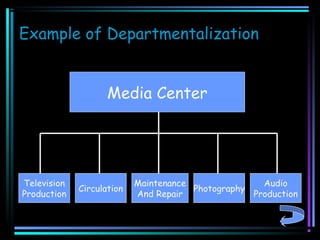
Example of Departmentalization
Media Center

Television
Production

Circulation

Maintenance
Audio
Photography
And Repair
Production
Rules, Procedures, & Policies
• Rules tell what to do in a specific situation
• Procedures detail how something should be
done
• Policies provide guidelines and identify goals
Making Decisions
• Programmed Decisions
– Routine and repetitive in nature

– Problem is well structured
– Solution can be found in policies,
procedures or rules

• Non-programmed Decisions
Made only by upper management
Guidelines may not apply
Steps for Making Nonprogrammed
Decisions
• Identify the problem
• Analyze the problem
• Review the alternatives
• Implement the decision
• Evaluate
Types of Decision Makers
• Structured
– Gather all pertinent information
– Information is organized
– Analyzed
• Intuitive
– Absorb information from variety of sources
– Nonsystematic
– Information is internalized
Effective Decision Making
• Good judgment
• Experience
• Creativity
• Analytic skills
• Insight
• Outside input

Lecture7

  • 1.
    SQU Educational technology leadershipin LRTC environment Dr. Abdelrahman Mohamed Ahmed Department of Instructional & Learning Technologies abdoelhaj@squ.edu.om Fall 2013
  • 2.
    Objectives • Purpose ofan organizational chart • Describe the elements of organizational chart • Differentiate between rules, procedures & policies • Describe five steps of decision making • List five qualities of effective decision makers
  • 3.
    Organizational Structure • Necessaryif objectives are to be achieved • Simple chart shows how an organization operates • Shows flow of authority
  • 4.
    Elements of OrganizationalCharts 1. 2. 3. 4. 5. 6. 7. Vertical and horizontal dimensions Chain of command Line and staff Authority levels Power Responsibility and accountability Departmentalization
  • 5.
    1. Vertical andHorizontal Dimensions Vertical = chain of command Horizontal = staff and service departments
  • 6.
    2. Chain ofCommand • Who reports to whom • Shows flow of authority in vertical format • Top positions represent highest level of decision-making authority
  • 7.
    3. Line andStaff Line ( ) • Positions carrying command authority • Represented on vertical plane • Orders flow from above Staff ( ) • No decision-making authority • Provide support to people in chain of command • Represented on horizontal plane
  • 8.
    3. Line andStaff cont. Manager Assistant Manager Secretary Director of … ClerkTypist Line position = blue Staff position = lavender
  • 9.
    4. Authority Levels •Makes decisions Decision must be made (who will do the work, when the work will be done, who will make cost estimates, and the defining and monitoring of quality control) • Delegates • Amount of authority depends on level in chain of command
  • 10.
    5. Power • Authorityand power are not synonymous • Refers to the ability to lead or to influence attitudes • Often it is found in informal leaders • Not depicted on organizational chart • Alert manager recognizes those with power
  • 11.
    6. Responsibility andAccountability • Responsibility refers to what you have to do in your position • Accountability refers to how well assigned tasks are performed
  • 12.
    7. Departmentalization • Divisionof an organization into smaller units • Accomplished along lines of location, function, process or product • Depicted on organizational chart in the horizontal plane
  • 13.
    Example of Departmentalization MediaCenter Television Production Circulation Maintenance Audio Photography And Repair Production
  • 14.
    Rules, Procedures, &Policies • Rules tell what to do in a specific situation • Procedures detail how something should be done • Policies provide guidelines and identify goals
  • 15.
    Making Decisions • ProgrammedDecisions – Routine and repetitive in nature – Problem is well structured – Solution can be found in policies, procedures or rules • Non-programmed Decisions Made only by upper management Guidelines may not apply
  • 16.
    Steps for MakingNonprogrammed Decisions • Identify the problem • Analyze the problem • Review the alternatives • Implement the decision • Evaluate
  • 17.
    Types of DecisionMakers • Structured – Gather all pertinent information – Information is organized – Analyzed • Intuitive – Absorb information from variety of sources – Nonsystematic – Information is internalized
  • 18.
    Effective Decision Making •Good judgment • Experience • Creativity • Analytic skills • Insight • Outside input