Effective Communication Skills
at LRTC Setting
Dr. Abdelrahman Elhaj
Fall 2013
Dep. of: Teaching & Learning Technologies
abdoelhaj@squ.edu.om
Objectives:
• Describe the best methods for communicating with
employees and patrons.

• List and describe four communication vehicles to
communicate with employees.
• List and describe four communication vehicles used to

communicate with patrons.
• Describe three types of in-service activities that can be used
effectively by a media manager.

• Describe the before, during, and after activities for conducting
effective meetings.
Effective communicating
• Successful managers must be specialists in many types of
communication – public-relations.

• Staff members perform better when they know that they are integral
to the service program.
• If patrons are to use the program services, they must know what is
available and how to obtain the services.
• Financial support is likely to be greater when administrators know

what services the program provides and their value to the institution.
Communication lessons
(from American Best-Run Companies)
• Petes and Robert (1982).
• The excellent companies in the United State have “a vast network of
informal, open communication.” (technology keeping in touch).
▫ refers to an extraordinary amount of communication throughout the
institution.
Communication lessons
(from American Best-Run Companies) cont.
• Five attributes of communication systems :
1. communication systems are informal (everyone is free to discuss any problem)
2. Communication intensity extraordinary (people are not afraid

to talk because

they talk together all the time)

3. Communication is given support (related departments are located physically
closed to each other to encourage informal communication)

4. Forcing devices are created

(to expect managers to use a minimum time

experimenting with new technologies)

5. Intense, informal communication systems act as a control system
(project

that do not work are quickly identified before millions of dollars are expended).
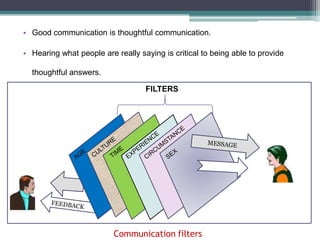
• Good communication is thoughtful communication.
• Hearing what people are really saying is critical to being able to provide
thoughtful answers.
FILTERS

Communication filters
Communication within the media service organization
(communicating with employees)
• Personal communication
▫ The manager does the following:
 He sets One Minute Goals.
 He gives One Minute Praising.
 He gives One Minute Reprimands.
 He asks brief, important questions, speaks the truth, laughs, and

enjoys.

▫ A smart media manager will employ personal communication
daily or whenever possible.
Communication within the media service organization
cont.

• Memos or Memorandums
▫ A memo is a sort written statements. It should be used to provide
information only.
▫ A memorandum is a stronger document. It states what or how
something is to be done.
▫ They should be short and limited to one page.
Communication within the media service organization
cont.

• Reports
▫ Reports are written or oral summaries of activities. Written report is used
to present very detailed information (e.g., project status/ budget).

• Staff meetings
▫ Staff meetings are a good way of keeping employees informed,
maintaining high morale, and keeping communication open.
 Establish and schedule a minimum of one meeting per month for the staff.
 Prepared and distribute a short agenda before the meeting.
 Allow time for discussion.
 Make refreshment available
Communication within the media service organization
cont.

• Informal Activities
▫ Use many informal opportunities for communicating with others.
 Break times,
 Lunch in the lounge,
 External activities like picnics, social organizations
Communicating with Patrons
• The media manager must communicate with patrons and potential
patrons. (the manager could be: visualiser, writer, speaker, and advertiser)
▫ Identify the media services programs that are available.
▫ Determine who the potential patrons are and where they are.

• What communication vehicles are available to the manager to
present his/her messages to those patrons?
▫ Short memos, reports, and informal activities.
▫ Publications (newsletters, brochures, and catalogs).
▫ Displays and media presentations can be used for promotional purpose.
▫ Electronic communications (e.g., voice mail, e-mail, a web site, and Internet
discussion groups)
What communication vehicles are available to the manager to present
his/her messages to those patrons?
Cont.
• Evaluation
▫ Periodic evaluation of communication is important. It gives the manager
adequate feedback from his patrons.

• In-service activities
▫ Tours of the media center, open house, workshops, and staff meetings.

• Open house
▫ It provides patrons with an opportunity to see the media facilities and
learn what services are available.

• Workshops
▫ Workshops are effective for presenting, demonstrating, and providing an
opportunity for participants to learn and practice media application and
presentation skills.
What communication vehicles are available to the manager to present
his/her messages to those patrons?
Cont.
• Faculty/trainer development

• Meetings

• Conducting meetings
▫ Before the meeting
▫ During the meeting
▫ After the meeting

Lecture6

  • 1.
    Effective Communication Skills atLRTC Setting Dr. Abdelrahman Elhaj Fall 2013 Dep. of: Teaching & Learning Technologies abdoelhaj@squ.edu.om
  • 2.
    Objectives: • Describe thebest methods for communicating with employees and patrons. • List and describe four communication vehicles to communicate with employees. • List and describe four communication vehicles used to communicate with patrons. • Describe three types of in-service activities that can be used effectively by a media manager. • Describe the before, during, and after activities for conducting effective meetings.
  • 3.
    Effective communicating • Successfulmanagers must be specialists in many types of communication – public-relations. • Staff members perform better when they know that they are integral to the service program. • If patrons are to use the program services, they must know what is available and how to obtain the services. • Financial support is likely to be greater when administrators know what services the program provides and their value to the institution.
  • 4.
    Communication lessons (from AmericanBest-Run Companies) • Petes and Robert (1982). • The excellent companies in the United State have “a vast network of informal, open communication.” (technology keeping in touch). ▫ refers to an extraordinary amount of communication throughout the institution.
  • 5.
    Communication lessons (from AmericanBest-Run Companies) cont. • Five attributes of communication systems : 1. communication systems are informal (everyone is free to discuss any problem) 2. Communication intensity extraordinary (people are not afraid to talk because they talk together all the time) 3. Communication is given support (related departments are located physically closed to each other to encourage informal communication) 4. Forcing devices are created (to expect managers to use a minimum time experimenting with new technologies) 5. Intense, informal communication systems act as a control system (project that do not work are quickly identified before millions of dollars are expended).
  • 6.
    • Good communicationis thoughtful communication. • Hearing what people are really saying is critical to being able to provide thoughtful answers. FILTERS Communication filters
  • 7.
    Communication within themedia service organization (communicating with employees) • Personal communication ▫ The manager does the following:  He sets One Minute Goals.  He gives One Minute Praising.  He gives One Minute Reprimands.  He asks brief, important questions, speaks the truth, laughs, and enjoys. ▫ A smart media manager will employ personal communication daily or whenever possible.
  • 8.
    Communication within themedia service organization cont. • Memos or Memorandums ▫ A memo is a sort written statements. It should be used to provide information only. ▫ A memorandum is a stronger document. It states what or how something is to be done. ▫ They should be short and limited to one page.
  • 9.
    Communication within themedia service organization cont. • Reports ▫ Reports are written or oral summaries of activities. Written report is used to present very detailed information (e.g., project status/ budget). • Staff meetings ▫ Staff meetings are a good way of keeping employees informed, maintaining high morale, and keeping communication open.  Establish and schedule a minimum of one meeting per month for the staff.  Prepared and distribute a short agenda before the meeting.  Allow time for discussion.  Make refreshment available
  • 10.
    Communication within themedia service organization cont. • Informal Activities ▫ Use many informal opportunities for communicating with others.  Break times,  Lunch in the lounge,  External activities like picnics, social organizations
  • 11.
    Communicating with Patrons •The media manager must communicate with patrons and potential patrons. (the manager could be: visualiser, writer, speaker, and advertiser) ▫ Identify the media services programs that are available. ▫ Determine who the potential patrons are and where they are. • What communication vehicles are available to the manager to present his/her messages to those patrons? ▫ Short memos, reports, and informal activities. ▫ Publications (newsletters, brochures, and catalogs). ▫ Displays and media presentations can be used for promotional purpose. ▫ Electronic communications (e.g., voice mail, e-mail, a web site, and Internet discussion groups)
  • 12.
    What communication vehiclesare available to the manager to present his/her messages to those patrons? Cont. • Evaluation ▫ Periodic evaluation of communication is important. It gives the manager adequate feedback from his patrons. • In-service activities ▫ Tours of the media center, open house, workshops, and staff meetings. • Open house ▫ It provides patrons with an opportunity to see the media facilities and learn what services are available. • Workshops ▫ Workshops are effective for presenting, demonstrating, and providing an opportunity for participants to learn and practice media application and presentation skills.
  • 13.
    What communication vehiclesare available to the manager to present his/her messages to those patrons? Cont. • Faculty/trainer development • Meetings • Conducting meetings ▫ Before the meeting ▫ During the meeting ▫ After the meeting