Dead End System:
It is suitable for old towns and cities which have
developed in a haphazard manner having no definite
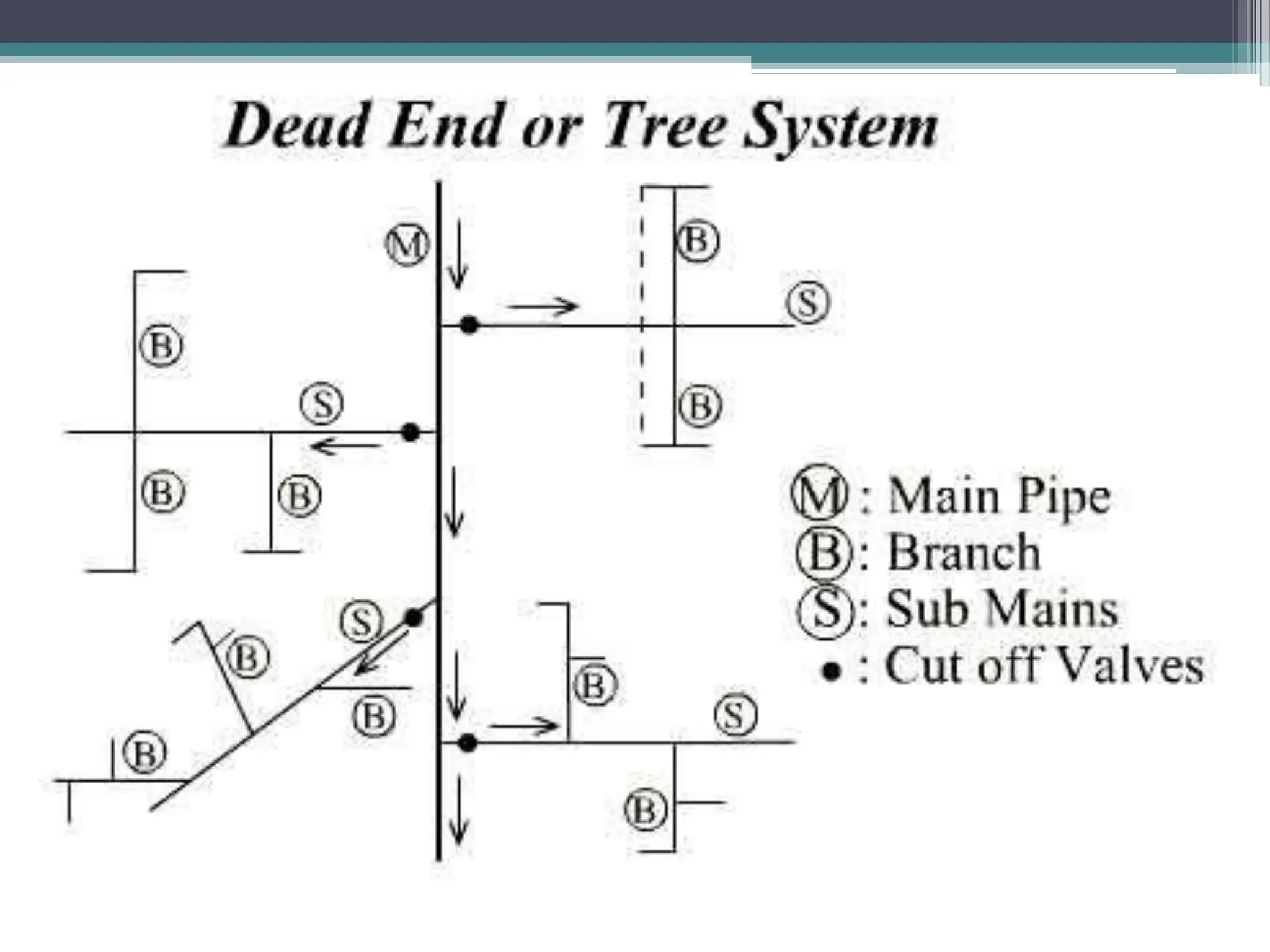
pattern of roads. This system consists of a main pipe laid
along the main road. A number of sub-mains originate
(generally at right angles) from main pipe. Each sub-main,
then divides into several branch pipes, called laterals.
From the laterals, service connections are given to the
consumers.
Dead End System ..contd
Disadvantages
• Due to many dead ends,
stagnation of water occurs in
pipes. Bacterial growths and
sedimentation may occur in
branch ends
• Difficult to maintain chlorine
residual at the dead ends of the
pipe
• During repairs to individual
line, service connections beyond
the point of repair will be
without water until the repairs
are made
• Pressure at the end of the line
may become undesirably low as
additional extensions are made
Advantages:
• Distribution network can be
easily solved
• Discharges and pressures can be
accurately calculated at different
points in the system
• Lesser number of valves
required
• Shorter pipe lengths needed
• Relatively cheap and can be
extended or expanded easily
• Determination of discharges and
pressure easier due to less
number of valves
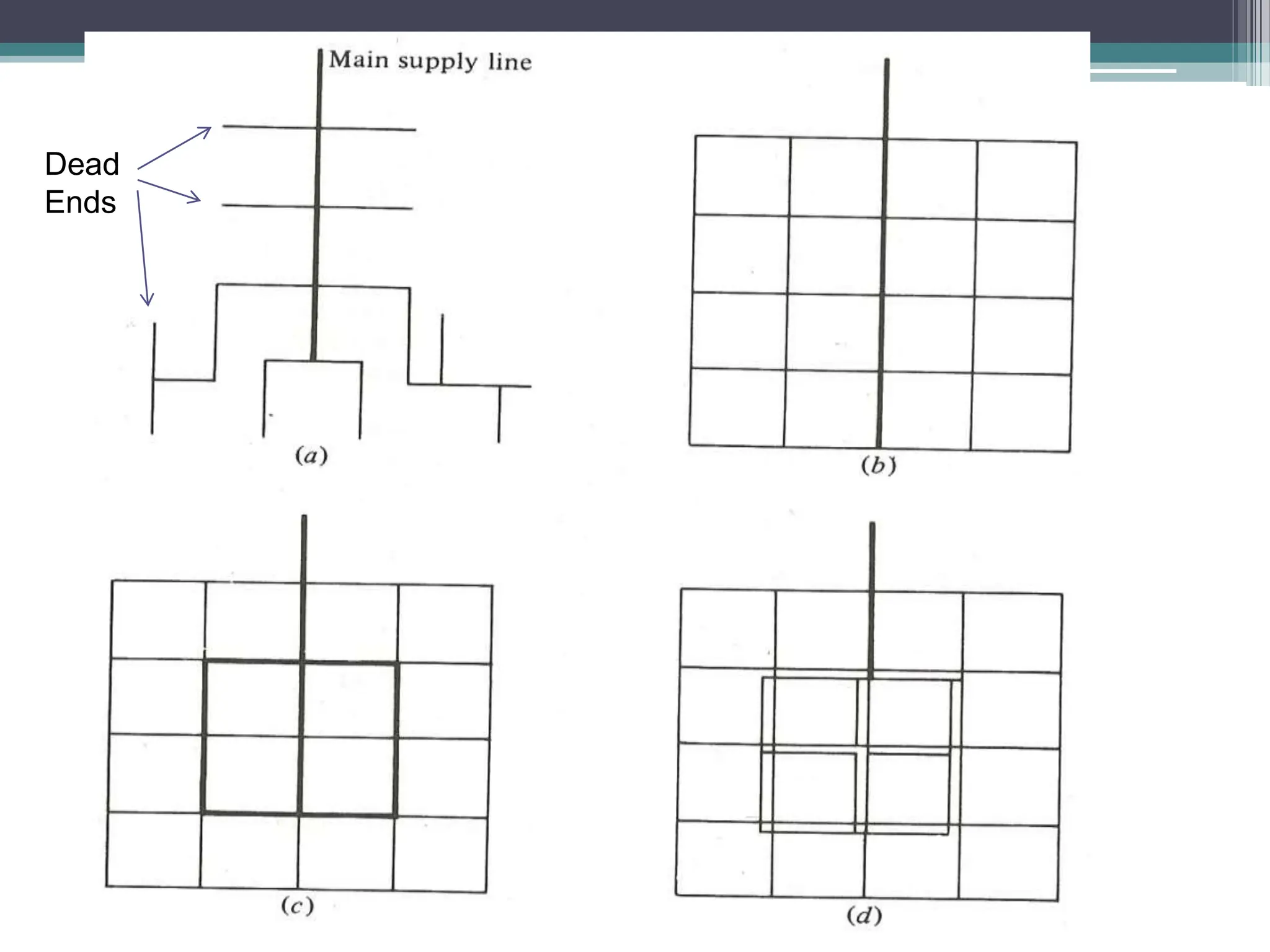
Dead
Ends
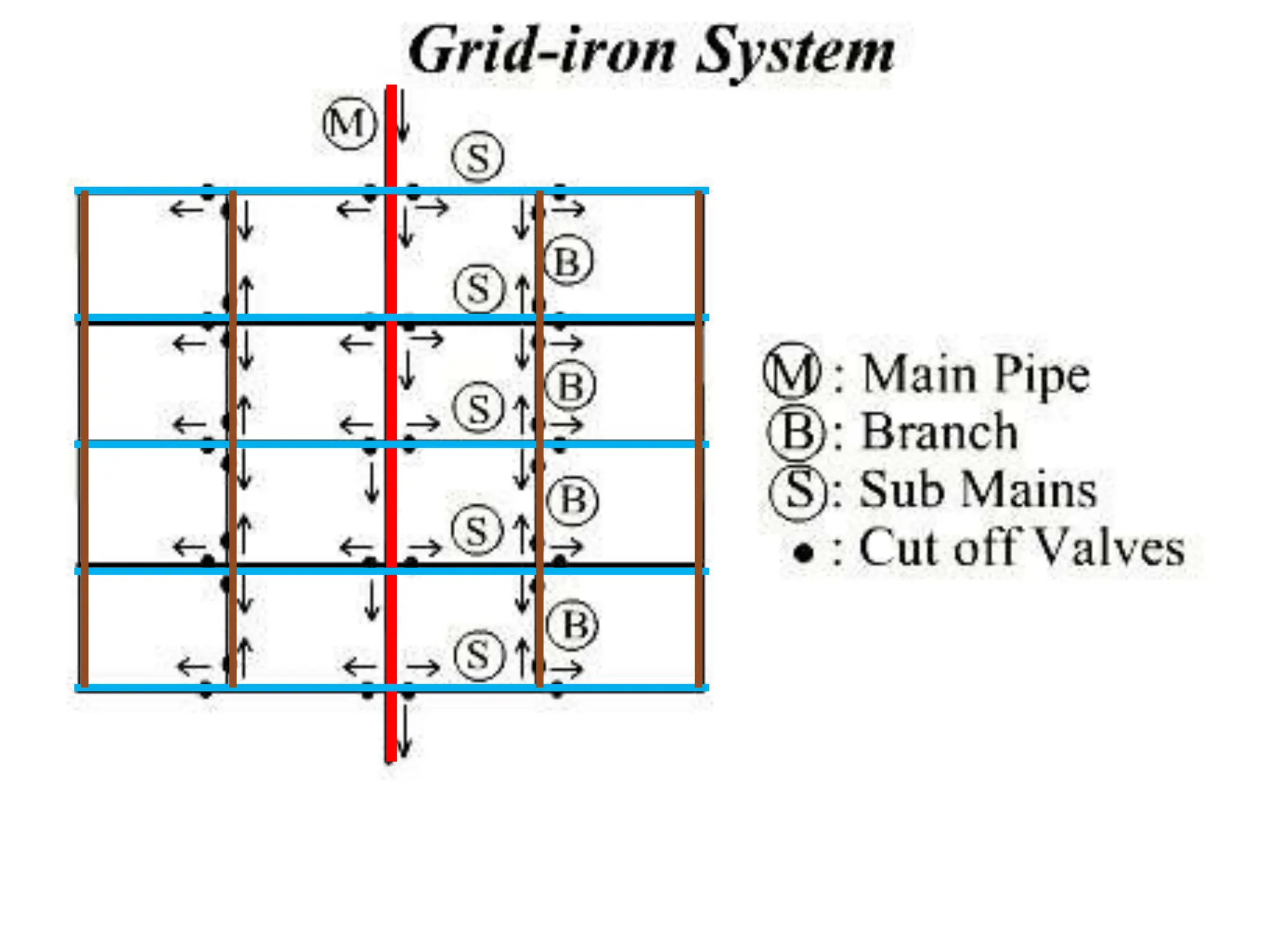
Grid Iron System:
Also known as Reticulation or Interlaced system. It is suitable for
cities with rectangular layout, where the water mains and
branches are laid in rectangles. Example : Chandigarh
Advantages:
 Water is kept in good circulation due to the absence of
dead ends.
 In the cases of a breakdown in some section, water is
available from some other direction.
Disadvantages
 Requires more length of pipe lines and a larger number of
sluice valves (i.e. cut-valves)
 Construction is costlier
 Design is difficult and costlier.
 Exact calculation of sizes of pipes is not possible due to
provision of valves on all branches.
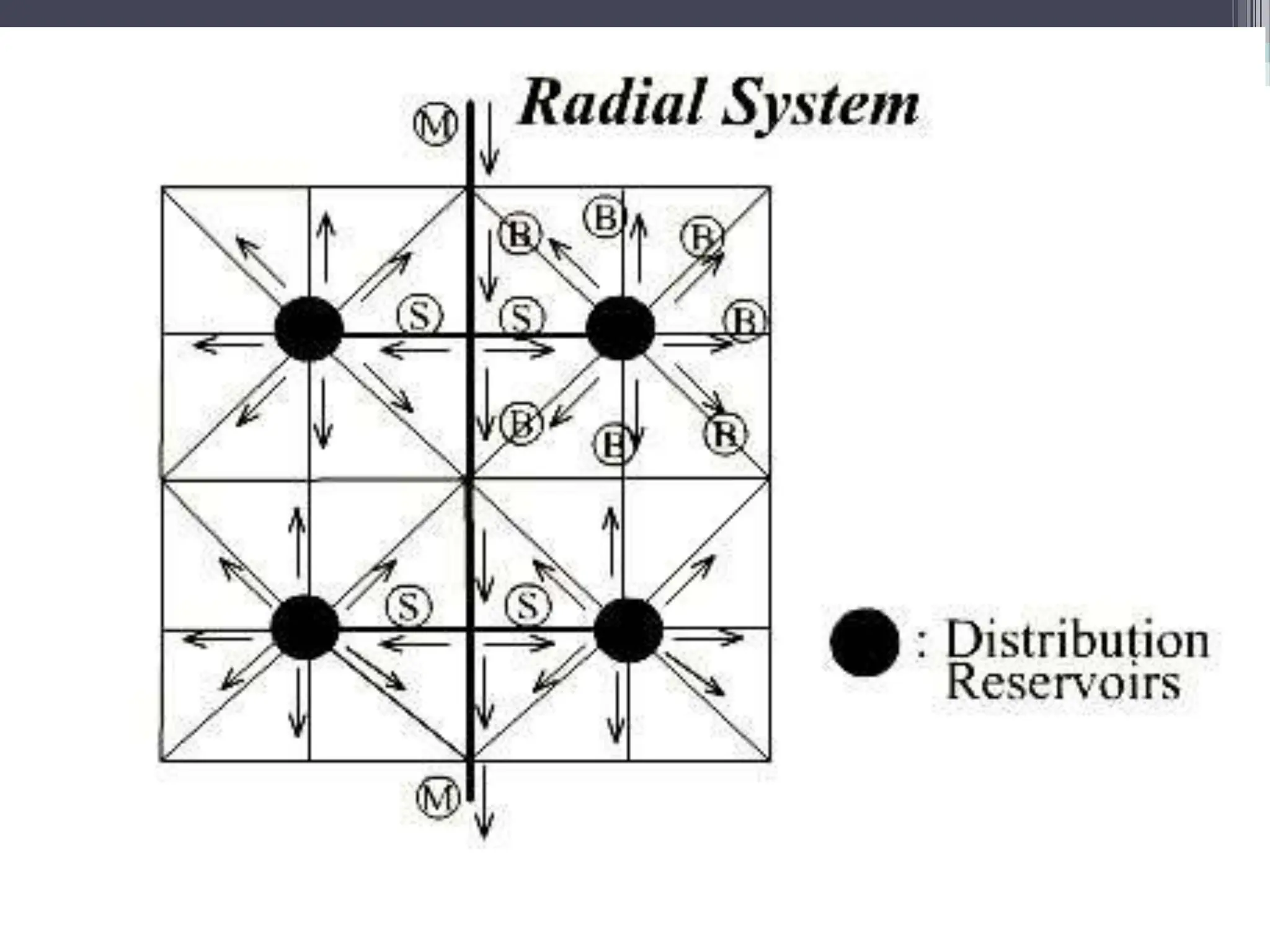
Radial System:
The area is divided into different zones.
The water is pumped into the distribution
reservoir kept in the middle of each zone
and the supply pipes are laid radially
ending towards the periphery.
Advantages:
It gives quick service.
Calculation of pipe sizes is easy.
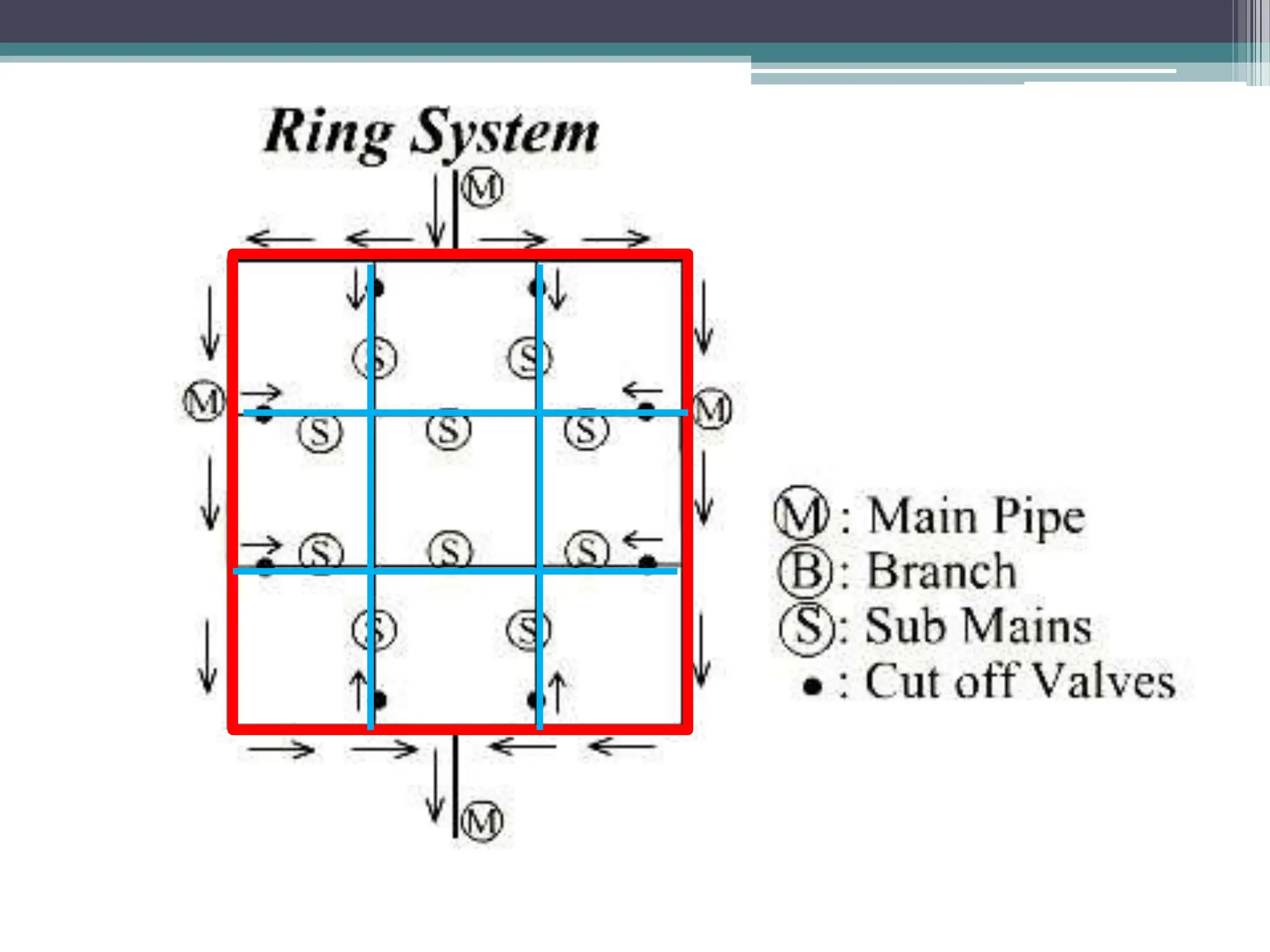
Ring System:
This system is also sometimes called Circular
System. The supply main is laid all along the
peripheral roads and sub mains branch out from the
mains. Thus, this system also follows the grid iron
system with the flow pattern similar in character to
that of dead end system. So, determination of the
size of pipes is easy.
Advantages:
Water can be supplied to any point from at least two
directions.
Lecture Note 26_WT.ppt for the better understanding

Lecture Note 26_WT.ppt for the better understanding

  • 1.
    Dead End System: Itis suitable for old towns and cities which have developed in a haphazard manner having no definite pattern of roads. This system consists of a main pipe laid along the main road. A number of sub-mains originate (generally at right angles) from main pipe. Each sub-main, then divides into several branch pipes, called laterals. From the laterals, service connections are given to the consumers.
  • 2.
    Dead End System..contd Disadvantages • Due to many dead ends, stagnation of water occurs in pipes. Bacterial growths and sedimentation may occur in branch ends • Difficult to maintain chlorine residual at the dead ends of the pipe • During repairs to individual line, service connections beyond the point of repair will be without water until the repairs are made • Pressure at the end of the line may become undesirably low as additional extensions are made Advantages: • Distribution network can be easily solved • Discharges and pressures can be accurately calculated at different points in the system • Lesser number of valves required • Shorter pipe lengths needed • Relatively cheap and can be extended or expanded easily • Determination of discharges and pressure easier due to less number of valves
  • 4.
  • 5.
    Grid Iron System: Alsoknown as Reticulation or Interlaced system. It is suitable for cities with rectangular layout, where the water mains and branches are laid in rectangles. Example : Chandigarh Advantages:  Water is kept in good circulation due to the absence of dead ends.  In the cases of a breakdown in some section, water is available from some other direction. Disadvantages  Requires more length of pipe lines and a larger number of sluice valves (i.e. cut-valves)  Construction is costlier  Design is difficult and costlier.  Exact calculation of sizes of pipes is not possible due to provision of valves on all branches.
  • 7.
    Radial System: The areais divided into different zones. The water is pumped into the distribution reservoir kept in the middle of each zone and the supply pipes are laid radially ending towards the periphery. Advantages: It gives quick service. Calculation of pipe sizes is easy.
  • 9.
    Ring System: This systemis also sometimes called Circular System. The supply main is laid all along the peripheral roads and sub mains branch out from the mains. Thus, this system also follows the grid iron system with the flow pattern similar in character to that of dead end system. So, determination of the size of pipes is easy. Advantages: Water can be supplied to any point from at least two directions.