Course No. Chem. 433H ½ Unit, 2 Credit
Topics in Biochemistry 35 + 10 + 5 = 50 Marks
Suggested Readings
1.Biochemistry, Lehninger, Kalyani Publishers.
2.Biochemistry, Styer, W. H. Freeman &
Company.
3.Biochemistry, U. Satyanarayana, New Central
Book Agency (p) Ltd.
Course Content
1. Biochemical aspects of Enzymes: Characterization and classification; coenzyme and prosthetic group; chemical
kinetics, michaelis-menten equation, factors affecting the enzymatic reaction, brief treatment on enzymatic reaction
mechanism, substrate specificity of enzymes, catalytic efficiency of enzymes, enzyme inhibition: reversible and
irreversible, regulatory enzymes, allosteric enzymes, covalent modification.
2. Digestive system, digestion and absorption of protein, fat and carbohydrate.
3. Vitamins: Physiological action and sources of vitamin A.D.E.K. and Thiamine, Riboflavin, Niacin, Pantothenic acid,
Folic Acid and Ascorbic acid.
4. Metabolism:
(a) Carbohydrate: Glycolytic pathway: glycolysis and its regulation, feeder pathways,
fate of pyruvate, TCA cycle and its regulation, oxidative phosphorylation,
(b) Lipid: Beta oxidation of even, odd, saturated and unsaturated fatty acid, biosynthesis of fatty
acid.
(c) Protein: Transamination, deamination, decarboxylation, transport of ammonia in the blood
stream, glucose- alanine cycle, urea cycle, link between TCA and urea cycle.
(d) Protein biosynthesis; different types of RNA; simple treatment on protein biosynthesis, genetic
code.
5. Hormones: Classification of hormones, insulin, thyroxine and glucocorticoids: Structure, biochemical aspects and
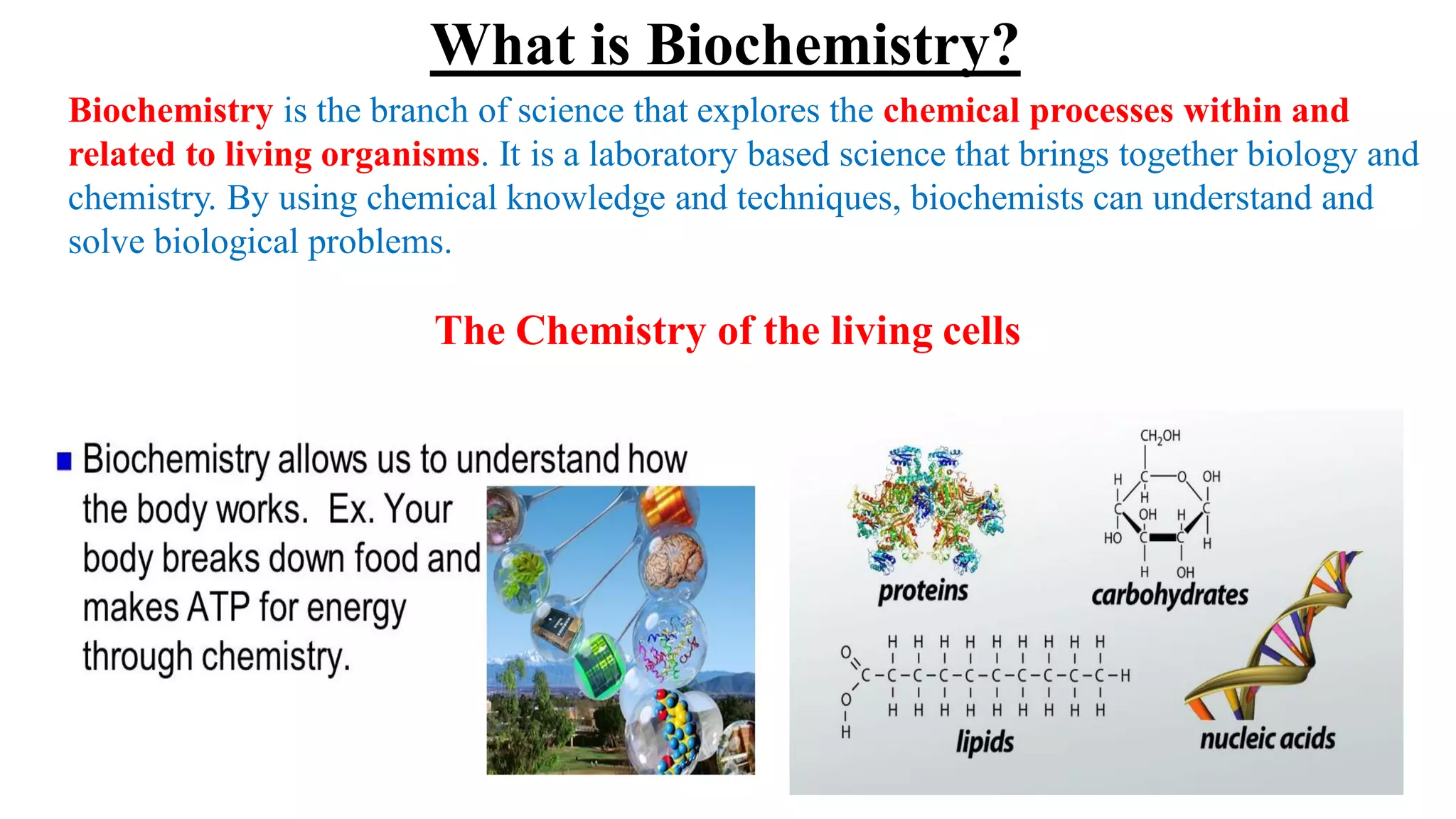
Biochemistry is the branch of science that explores the chemical processes within and
related to living organisms. It is a laboratory based science that brings together biology and
chemistry. By using chemical knowledge and techniques, biochemists can understand and
solve biological problems.
The Chemistry of the living cells
What is Biochemistry?
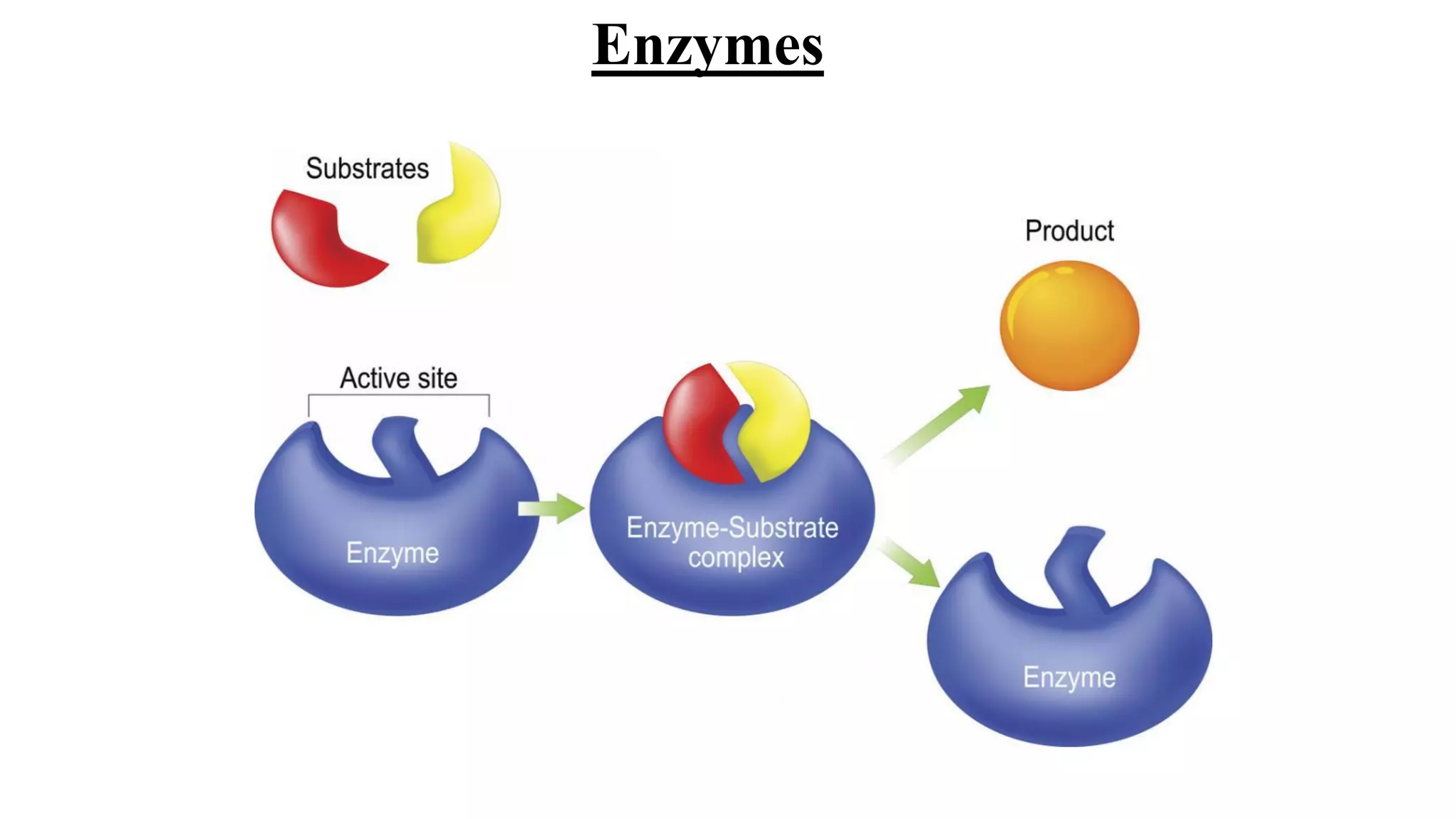
Enzymes
Enzymes are macromolecular biological catalysts that accelerate biochemical reactions.
They are highly specialized protein[exception-RNA acting as ribozyme] having
extraordinary catalytic power(greater than any organic or inorganic catalyst) and high
degree of specificity for their substrate.
Enzyme MW= 12000 to 1 million
Protein Amino acids
Amino acids
2-3 hrs, Enzyme HCl,37C
100 ̊C,Strong acid
2-3 days
Enzymes
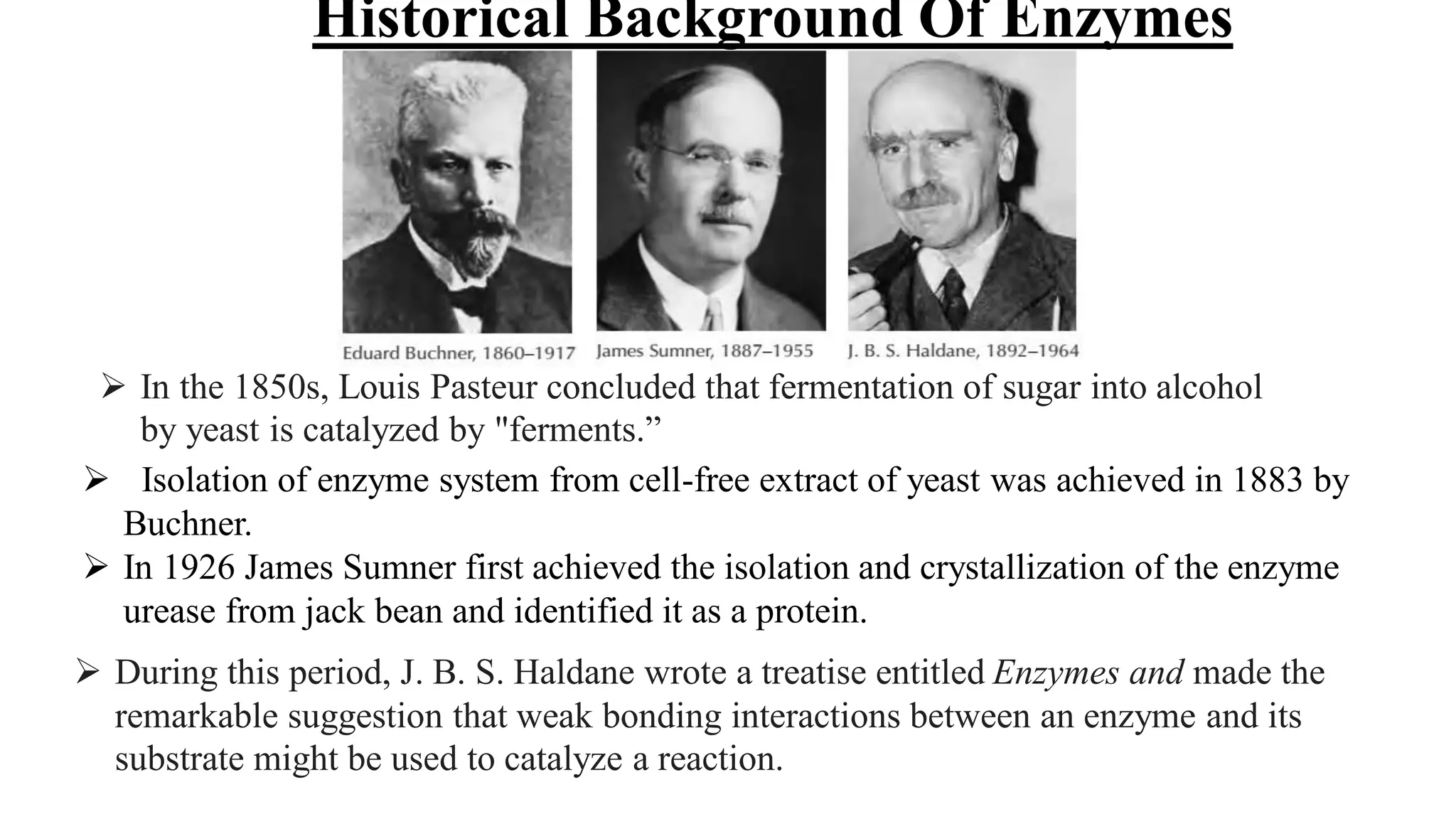
 Isolation of enzyme system from cell-free extract of yeast was achieved in 1883 by
Buchner.
 In 1926 James Sumner first achieved the isolation and crystallization of the enzyme
urease from jack bean and identified it as a protein.
 During this period, J. B. S. Haldane wrote a treatise entitled Enzymes and made the
remarkable suggestion that weak bonding interactions between an enzyme and its
substrate might be used to catalyze a reaction.
 In the 1850s, Louis Pasteur concluded that fermentation of sugar into alcohol
by yeast is catalyzed by "ferments.”
Historical Background Of Enzymes
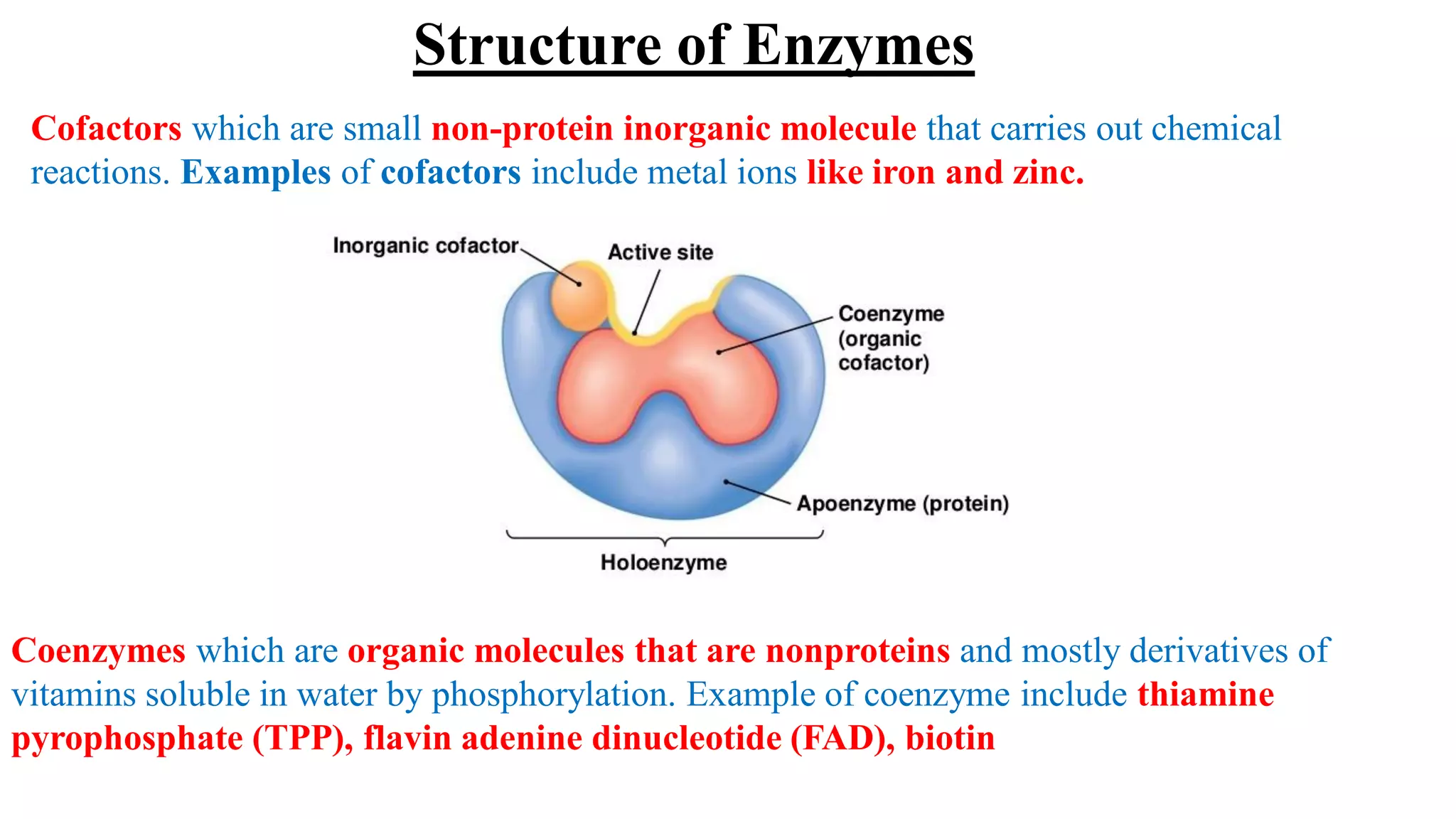
Structure of Enzymes
Cofactors which are small non-protein inorganic molecule that carries out chemical
reactions. Examples of cofactors include metal ions like iron and zinc.
Coenzymes which are organic molecules that are nonproteins and mostly derivatives of
vitamins soluble in water by phosphorylation. Example of coenzyme include thiamine
pyrophosphate (TPP), flavin adenine dinucleotide (FAD), biotin
Apoenzyme is an inactive form of enzyme lacking the association of coenzyme and/or
cofactors. Activation of the enzyme occurs upon binding of an organic or inorganic
cofactor.
Holoenzyme is a complete and catalytically active form of enzyme. An apoenzyme
together with its cofactor is holoenzyme. Examples of holoenzymes include DNA
polymerase and RNA polymerase which contain multiple protein subunits
The active site of an enzyme represents as the small region at which the substrates binds
and participates in the catalysis.
Structure of Enzymes
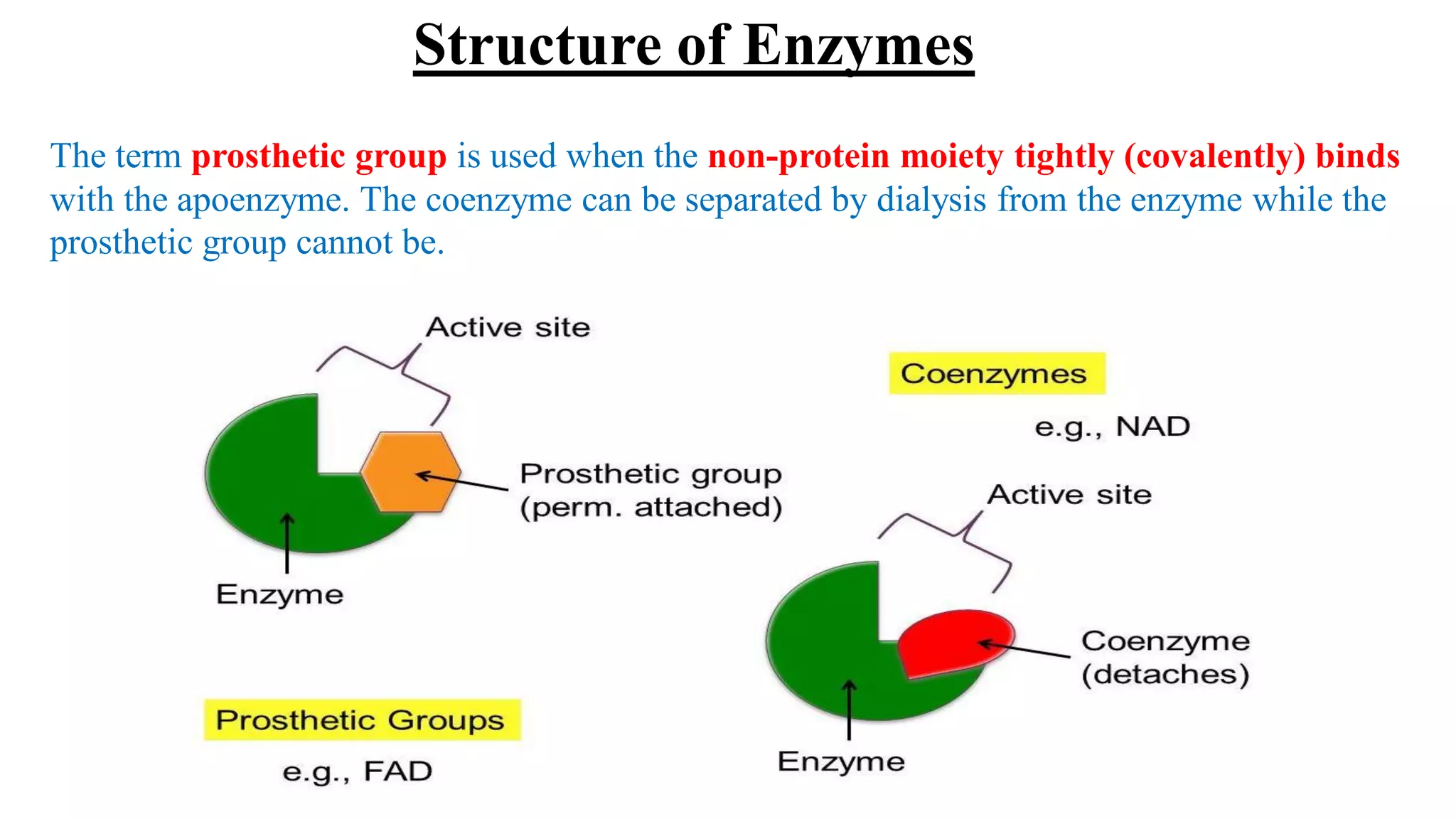
The term prosthetic group is used when the non-protein moiety tightly (covalently) binds
with the apoenzyme. The coenzyme can be separated by dialysis from the enzyme while the
prosthetic group cannot be.
Structure of Enzymes

Lecture No.1 - 01_02_21.pdf

  • 1.
    Course No. Chem.433H ½ Unit, 2 Credit Topics in Biochemistry 35 + 10 + 5 = 50 Marks Suggested Readings 1.Biochemistry, Lehninger, Kalyani Publishers. 2.Biochemistry, Styer, W. H. Freeman & Company. 3.Biochemistry, U. Satyanarayana, New Central Book Agency (p) Ltd.
  • 2.
    Course Content 1. Biochemicalaspects of Enzymes: Characterization and classification; coenzyme and prosthetic group; chemical kinetics, michaelis-menten equation, factors affecting the enzymatic reaction, brief treatment on enzymatic reaction mechanism, substrate specificity of enzymes, catalytic efficiency of enzymes, enzyme inhibition: reversible and irreversible, regulatory enzymes, allosteric enzymes, covalent modification. 2. Digestive system, digestion and absorption of protein, fat and carbohydrate. 3. Vitamins: Physiological action and sources of vitamin A.D.E.K. and Thiamine, Riboflavin, Niacin, Pantothenic acid, Folic Acid and Ascorbic acid. 4. Metabolism: (a) Carbohydrate: Glycolytic pathway: glycolysis and its regulation, feeder pathways, fate of pyruvate, TCA cycle and its regulation, oxidative phosphorylation, (b) Lipid: Beta oxidation of even, odd, saturated and unsaturated fatty acid, biosynthesis of fatty acid. (c) Protein: Transamination, deamination, decarboxylation, transport of ammonia in the blood stream, glucose- alanine cycle, urea cycle, link between TCA and urea cycle. (d) Protein biosynthesis; different types of RNA; simple treatment on protein biosynthesis, genetic code. 5. Hormones: Classification of hormones, insulin, thyroxine and glucocorticoids: Structure, biochemical aspects and
  • 3.
    Biochemistry is thebranch of science that explores the chemical processes within and related to living organisms. It is a laboratory based science that brings together biology and chemistry. By using chemical knowledge and techniques, biochemists can understand and solve biological problems. The Chemistry of the living cells What is Biochemistry?
  • 4.
    Enzymes Enzymes are macromolecularbiological catalysts that accelerate biochemical reactions. They are highly specialized protein[exception-RNA acting as ribozyme] having extraordinary catalytic power(greater than any organic or inorganic catalyst) and high degree of specificity for their substrate. Enzyme MW= 12000 to 1 million Protein Amino acids Amino acids 2-3 hrs, Enzyme HCl,37C 100 ̊C,Strong acid 2-3 days
  • 5.
  • 6.
     Isolation ofenzyme system from cell-free extract of yeast was achieved in 1883 by Buchner.  In 1926 James Sumner first achieved the isolation and crystallization of the enzyme urease from jack bean and identified it as a protein.  During this period, J. B. S. Haldane wrote a treatise entitled Enzymes and made the remarkable suggestion that weak bonding interactions between an enzyme and its substrate might be used to catalyze a reaction.  In the 1850s, Louis Pasteur concluded that fermentation of sugar into alcohol by yeast is catalyzed by "ferments.” Historical Background Of Enzymes
  • 7.
    Structure of Enzymes Cofactorswhich are small non-protein inorganic molecule that carries out chemical reactions. Examples of cofactors include metal ions like iron and zinc. Coenzymes which are organic molecules that are nonproteins and mostly derivatives of vitamins soluble in water by phosphorylation. Example of coenzyme include thiamine pyrophosphate (TPP), flavin adenine dinucleotide (FAD), biotin
  • 8.
    Apoenzyme is aninactive form of enzyme lacking the association of coenzyme and/or cofactors. Activation of the enzyme occurs upon binding of an organic or inorganic cofactor. Holoenzyme is a complete and catalytically active form of enzyme. An apoenzyme together with its cofactor is holoenzyme. Examples of holoenzymes include DNA polymerase and RNA polymerase which contain multiple protein subunits The active site of an enzyme represents as the small region at which the substrates binds and participates in the catalysis. Structure of Enzymes
  • 9.
    The term prostheticgroup is used when the non-protein moiety tightly (covalently) binds with the apoenzyme. The coenzyme can be separated by dialysis from the enzyme while the prosthetic group cannot be. Structure of Enzymes