 Most of the enzymes in each metabolic pathway follow the kinetic patterns we have
already described.
 Each pathway, however, includes one or more enzymes that have a greater effect on
the rate of the overall sequence.
 These regulatory enzymes exhibit increased or decreased catalytic activity in response
to certain signals
Regulatory enzymes
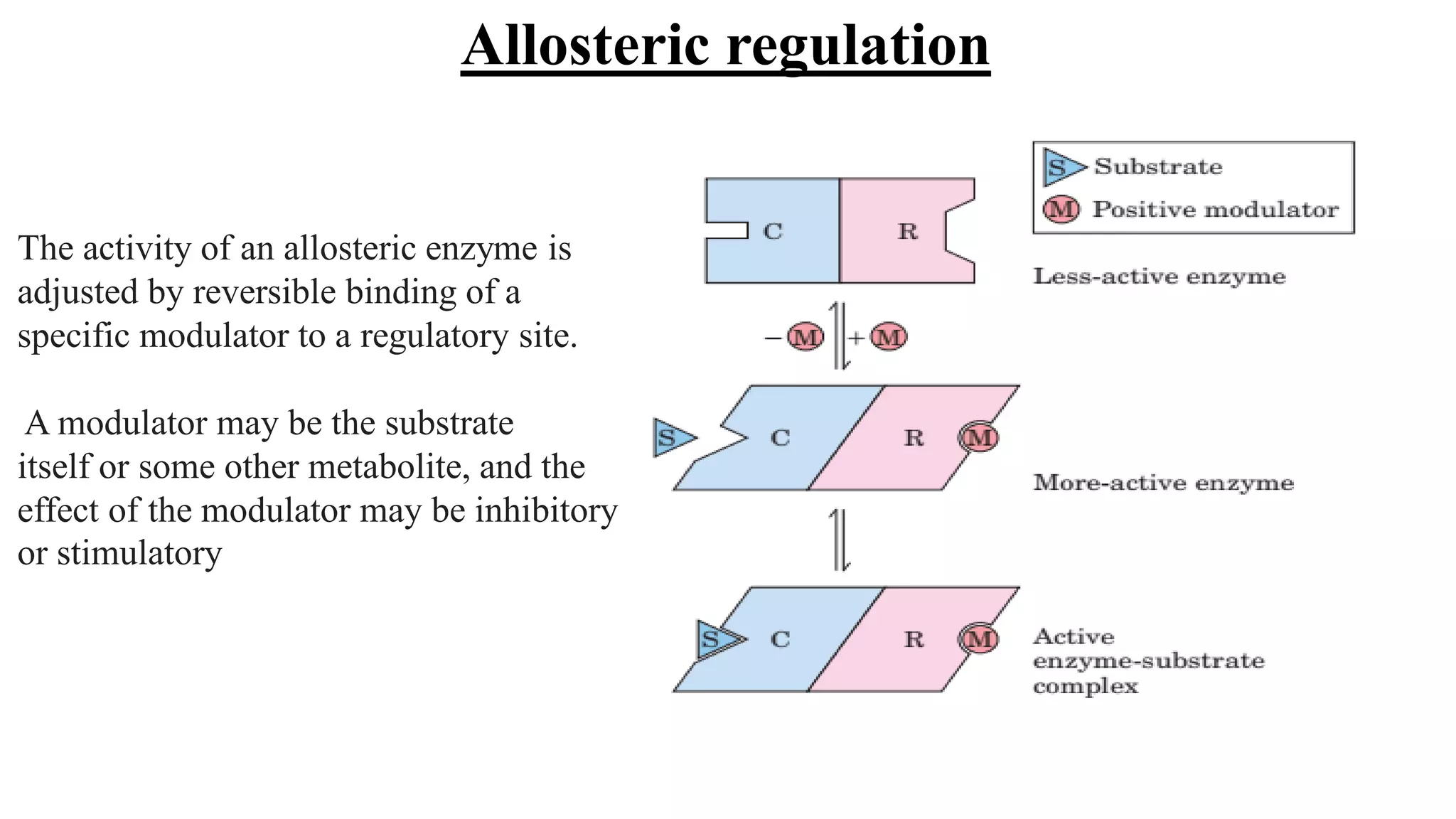
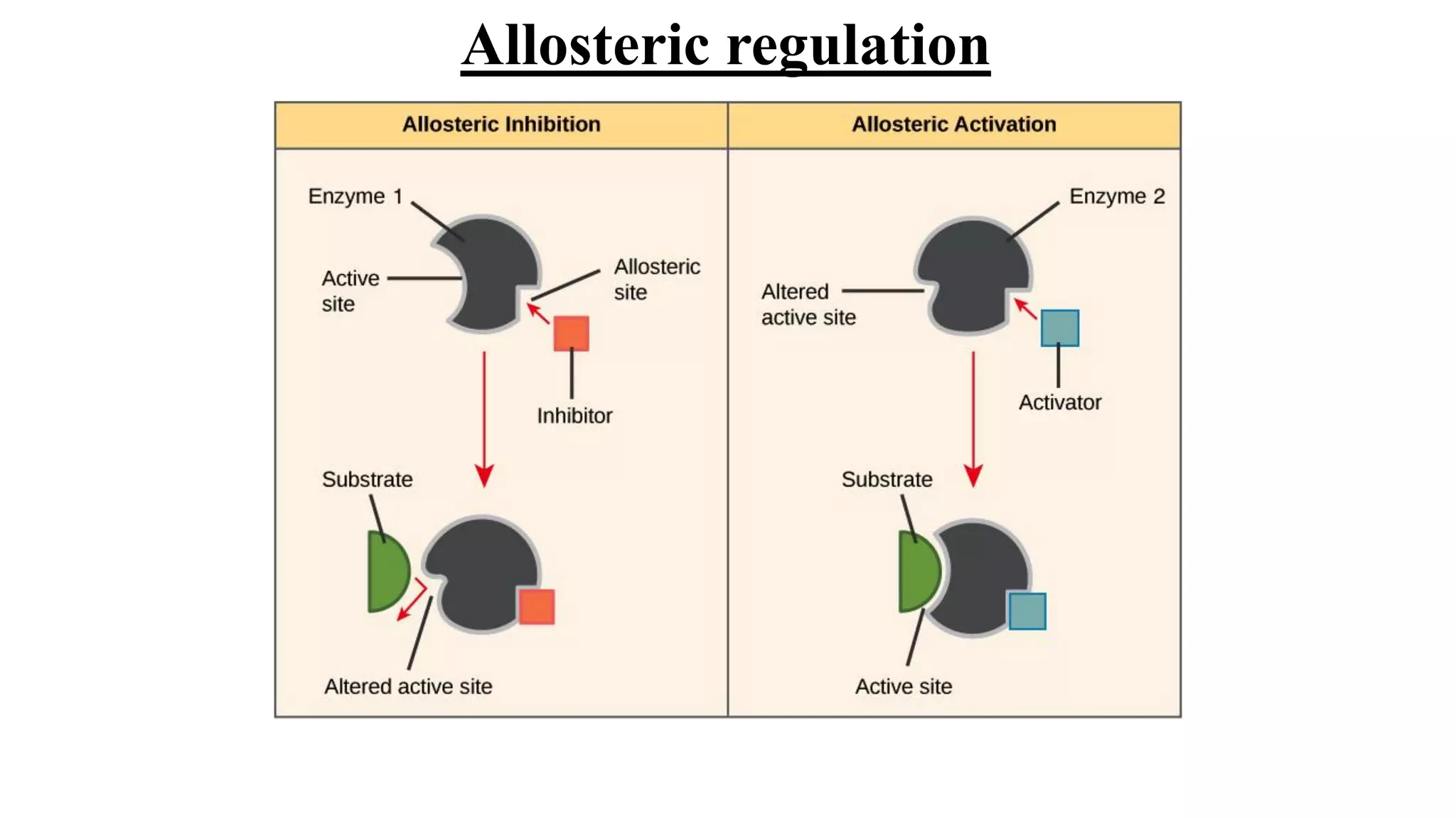
The activity of an allosteric enzyme is
adjusted by reversible binding of a
specific modulator to a regulatory site.
A modulator may be the substrate
itself or some other metabolite, and the
effect of the modulator may be inhibitory
or stimulatory
Allosteric regulation
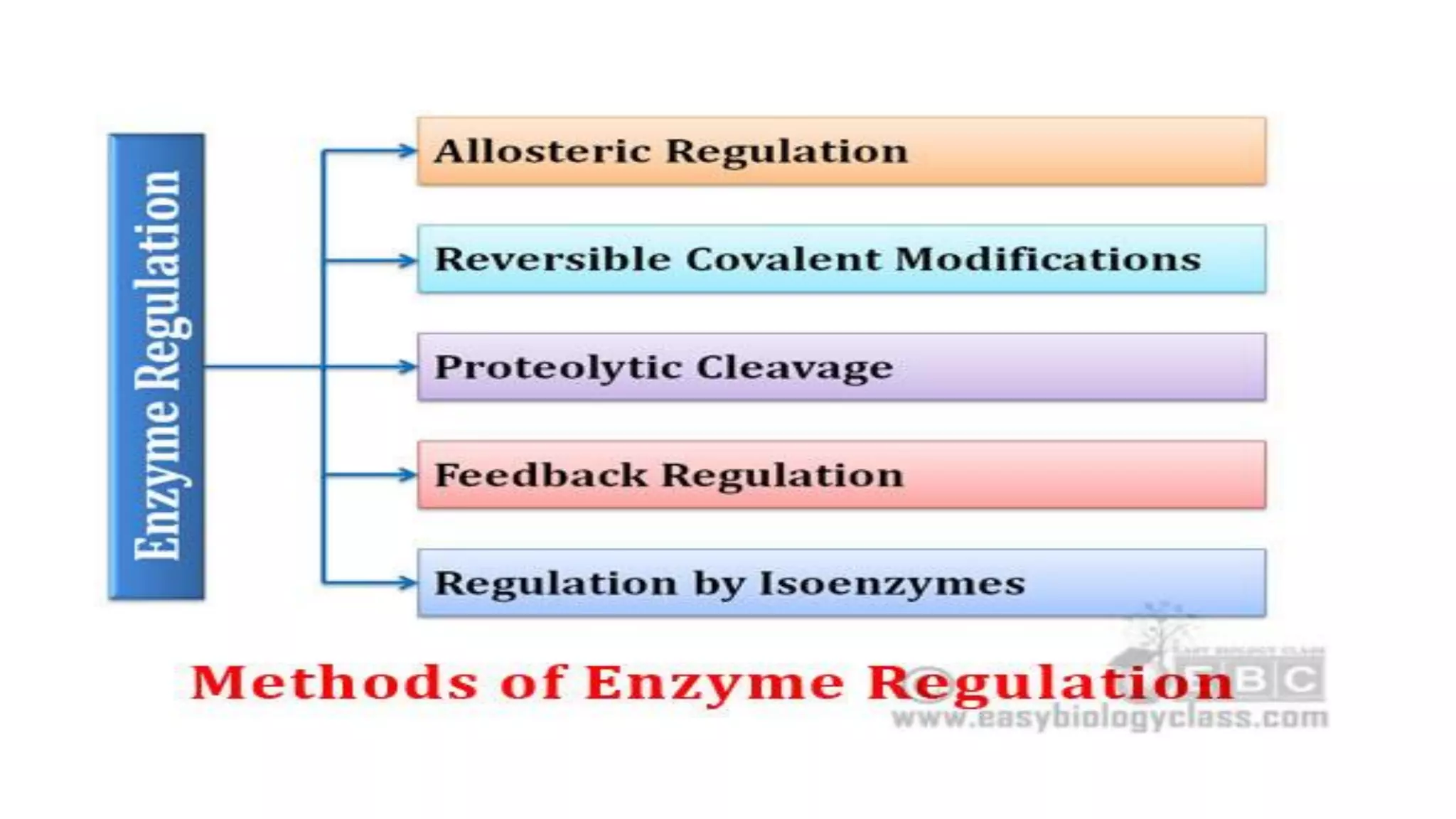
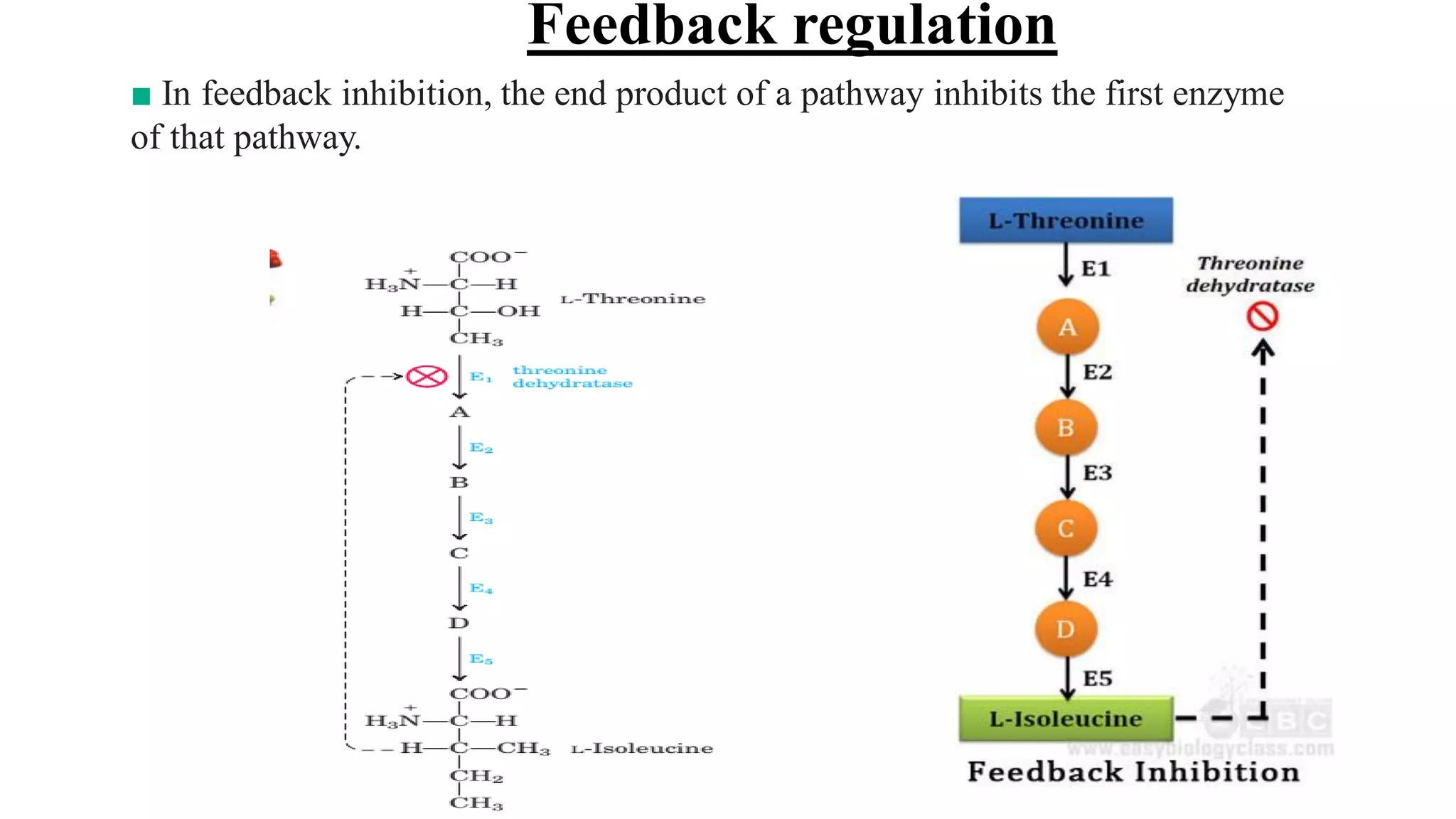
Feedback regulation
■ In feedback inhibition, the end product of a pathway inhibits the first enzyme
of that pathway.
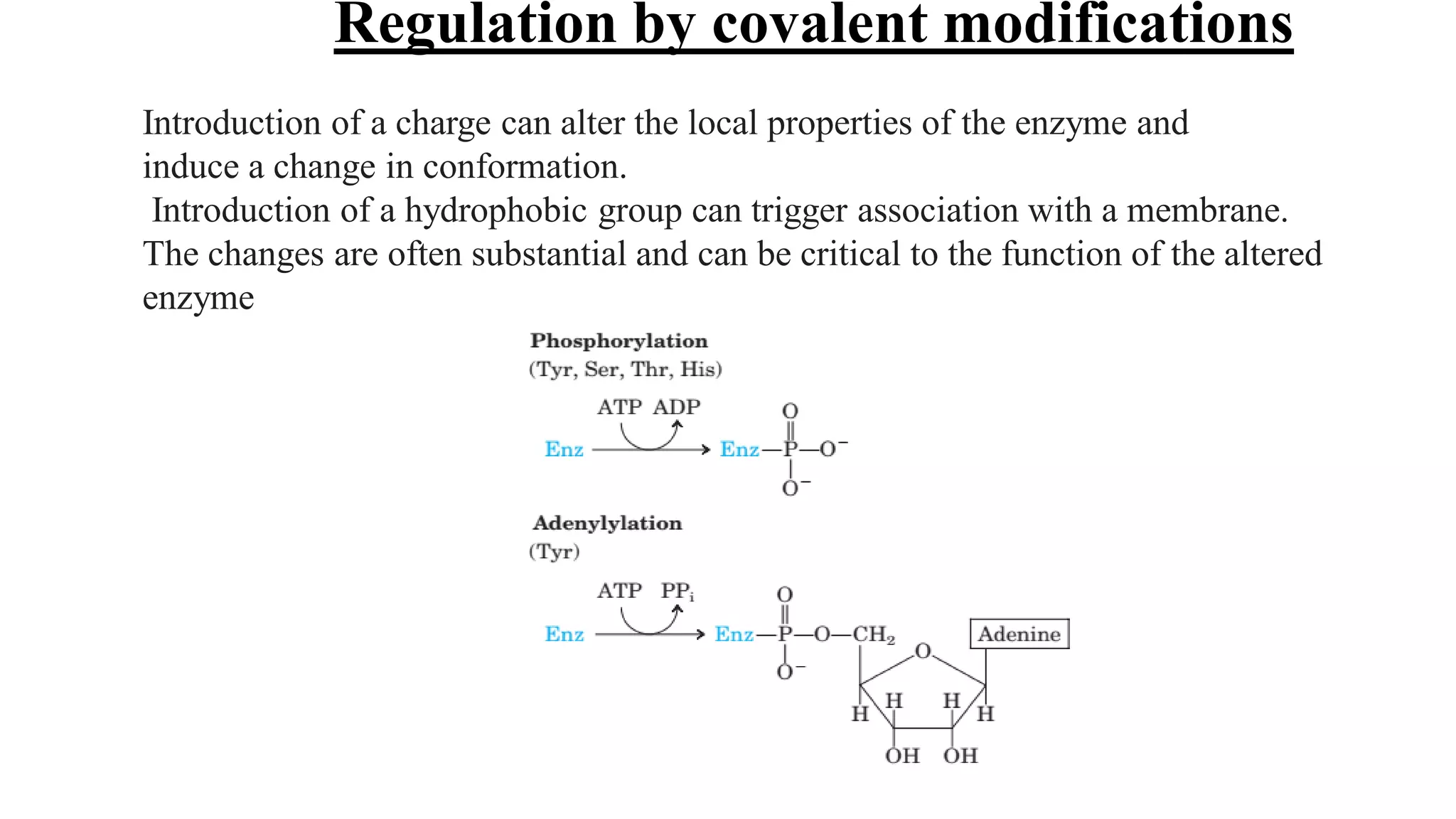
Introduction of a charge can alter the local properties of the enzyme and
induce a change in conformation.
Introduction of a hydrophobic group can trigger association with a membrane.
The changes are often substantial and can be critical to the function of the altered
enzyme
Regulation by covalent modifications
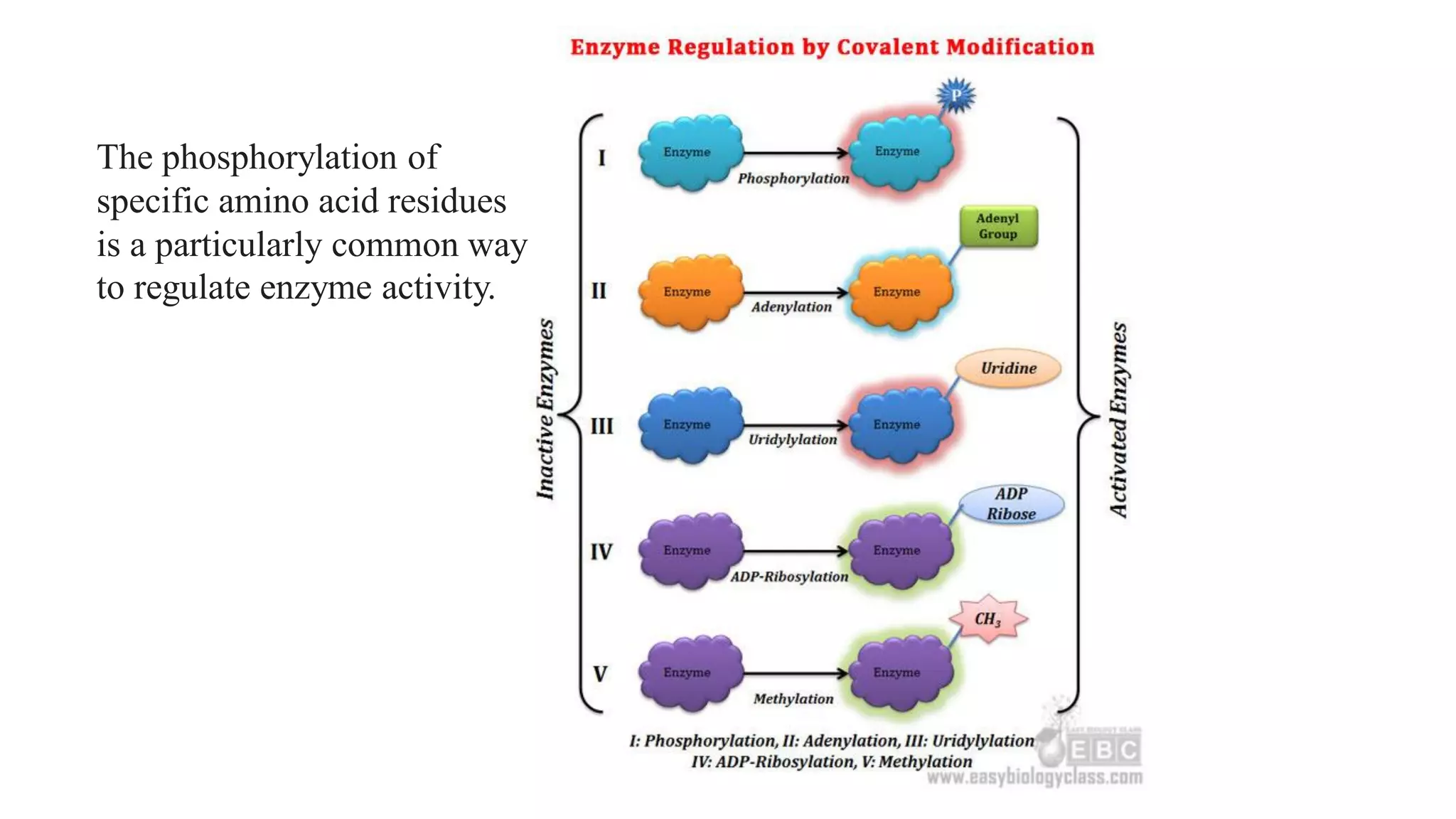
The phosphorylation of
specific amino acid residues
is a particularly common way
to regulate enzyme activity.
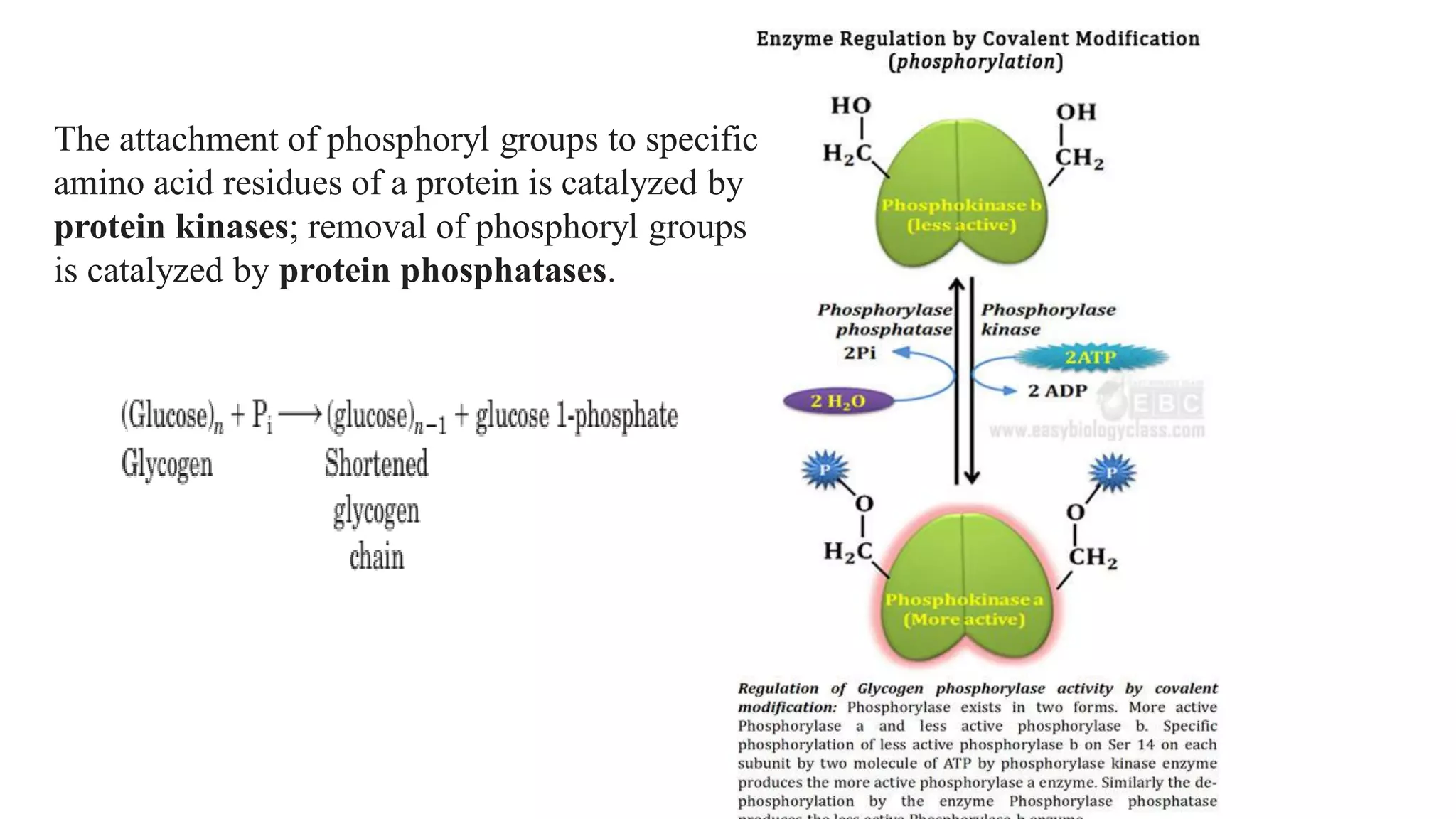
The attachment of phosphoryl groups to specific
amino acid residues of a protein is catalyzed by
protein kinases; removal of phosphoryl groups
is catalyzed by protein phosphatases.
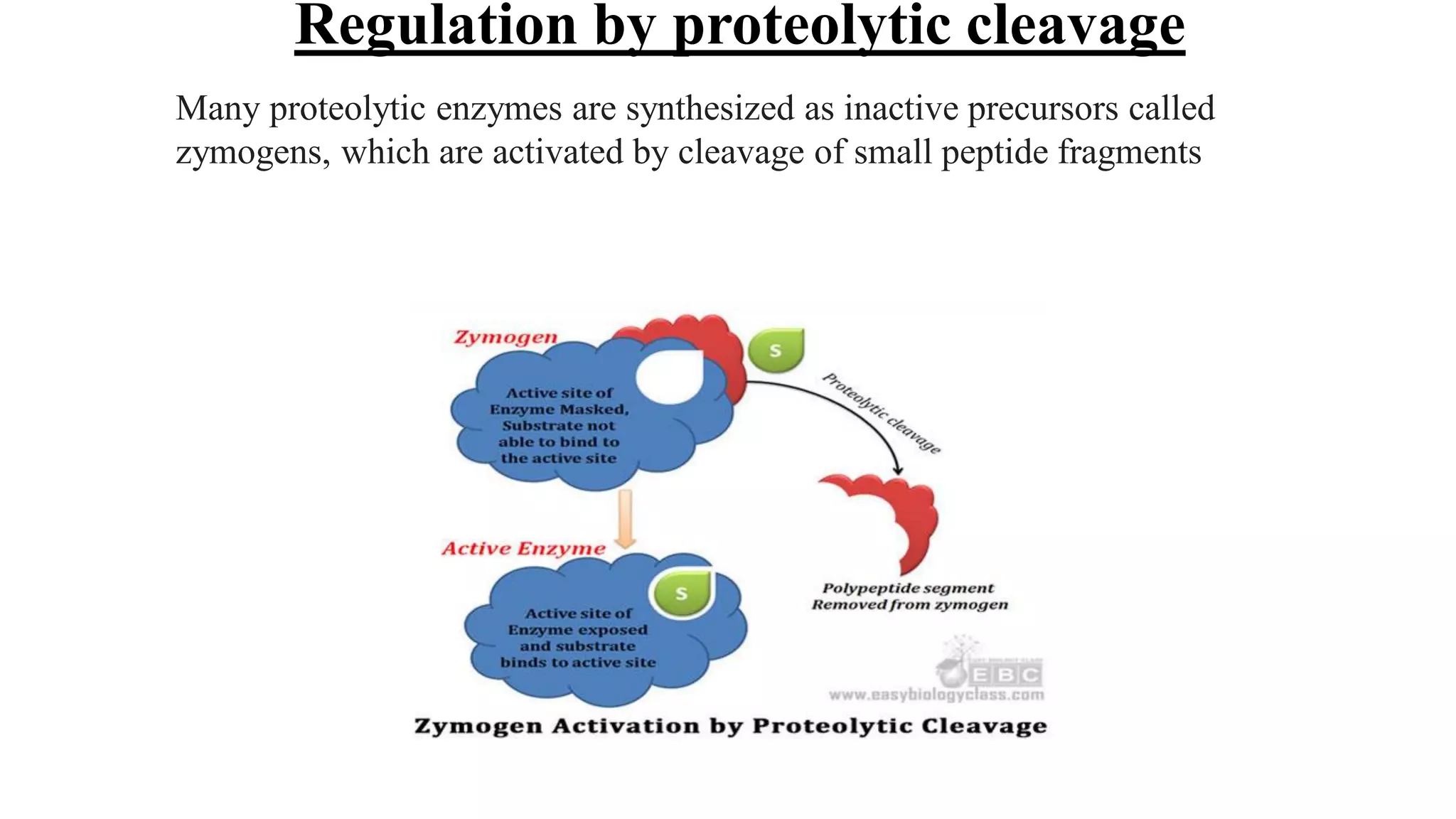
Many proteolytic enzymes are synthesized as inactive precursors called
zymogens, which are activated by cleavage of small peptide fragments
Regulation by proteolytic cleavage
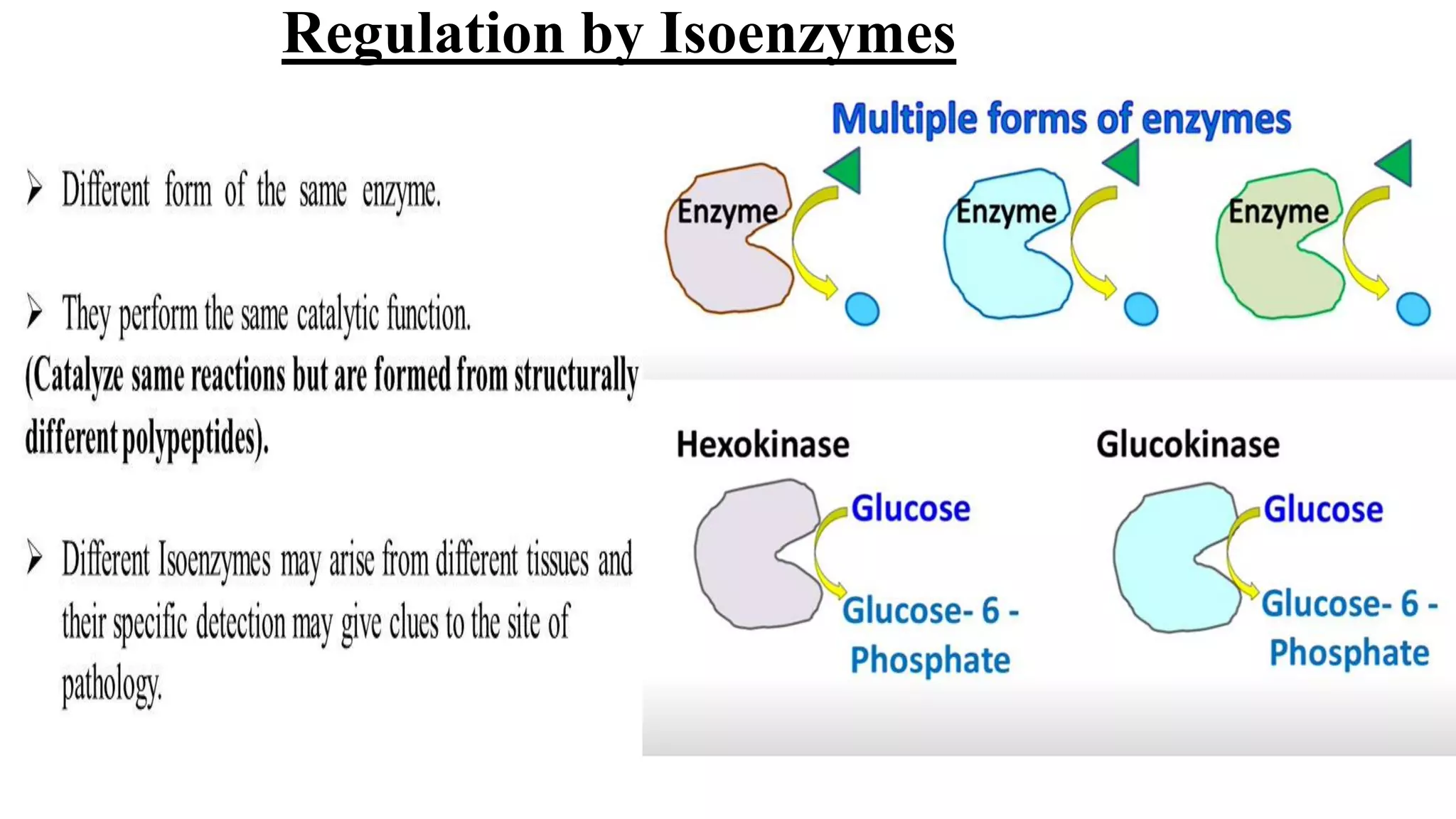
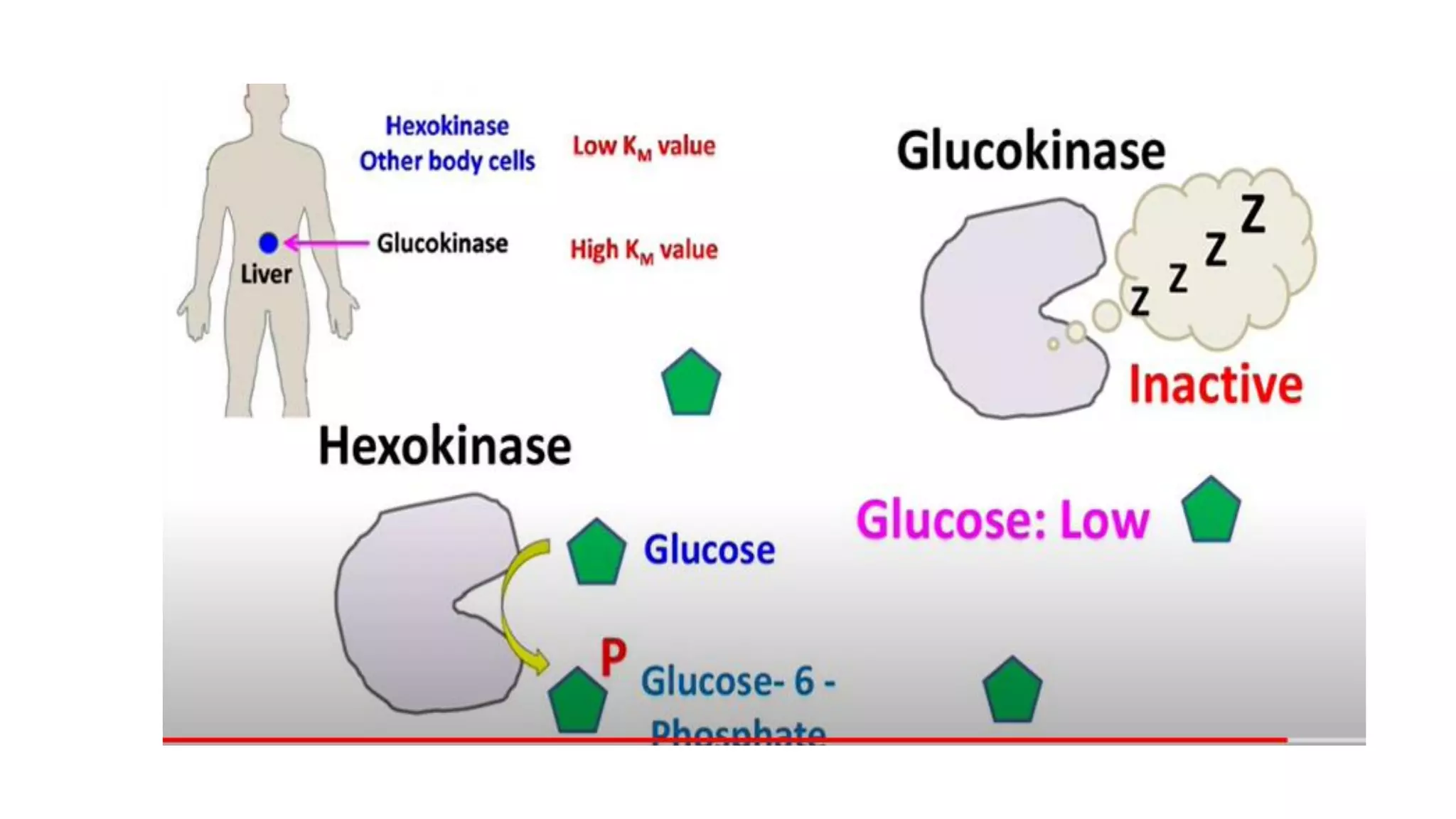
Regulation by Isoenzymes
Lecture _07_08_03_21.pdf

Lecture _07_08_03_21.pdf

  • 1.
     Most ofthe enzymes in each metabolic pathway follow the kinetic patterns we have already described.  Each pathway, however, includes one or more enzymes that have a greater effect on the rate of the overall sequence.  These regulatory enzymes exhibit increased or decreased catalytic activity in response to certain signals Regulatory enzymes
  • 3.
    The activity ofan allosteric enzyme is adjusted by reversible binding of a specific modulator to a regulatory site. A modulator may be the substrate itself or some other metabolite, and the effect of the modulator may be inhibitory or stimulatory Allosteric regulation
  • 4.
  • 5.
    Feedback regulation ■ Infeedback inhibition, the end product of a pathway inhibits the first enzyme of that pathway.
  • 6.
    Introduction of acharge can alter the local properties of the enzyme and induce a change in conformation. Introduction of a hydrophobic group can trigger association with a membrane. The changes are often substantial and can be critical to the function of the altered enzyme Regulation by covalent modifications
  • 7.
    The phosphorylation of specificamino acid residues is a particularly common way to regulate enzyme activity.
  • 8.
    The attachment ofphosphoryl groups to specific amino acid residues of a protein is catalyzed by protein kinases; removal of phosphoryl groups is catalyzed by protein phosphatases.
  • 9.
    Many proteolytic enzymesare synthesized as inactive precursors called zymogens, which are activated by cleavage of small peptide fragments Regulation by proteolytic cleavage
  • 10.