Lecture No 6
Covered Call
Rohan Sharma (Coach)
Basics Concepts
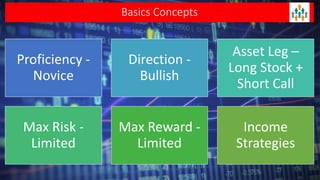
Proficiency -
Novice
Direction -
Bullish
Asset Leg –
Long Stock +
Short Call
Max Risk -
Limited
Max Reward -
Limited
Income
Strategies
Description
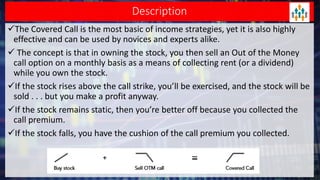
The Covered Call is the most basic of income strategies, yet it is also highly
effective and can be used by novices and experts alike.
 The concept is that in owning the stock, you then sell an Out of the Money
call option on a monthly basis as a means of collecting rent (or a dividend)
while you own the stock.
If the stock rises above the call strike, you’ll be exercised, and the stock will be
sold . . . but you make a profit anyway.
If the stock remains static, then you’re better off because you collected the
call premium.
If the stock falls, you have the cushion of the call premium you collected.
Context
Outlook
 With a Covered Call, your outlook is neutral to bullish. You expect a steady rise.
Rationale
 To buy (or own) a stock for the medium or long term with the aim of capturing
monthly income by selling calls every month.
This is like collecting rent for holding the stock and will have the effect of
lowering your cost basis of holding the stock.
Net Position
This is a net debit transaction because you are paying for the stock and only
taking in a small premium for the sold call options. You can increase your yield by
purchasing the stock on margin, thereby doubling your yield if you use 50%
margin.
Your maximum risk is the price you paid for the stock less the premium you
received for the call.
Context
Effect of Time Decay
 Time decay is helpful to your trade here because it should erode
the value of the call you sold.
Provided that the stock does not hit the strike price at expiration,
you will be able to retain the entire option premium for the trade,
thus reducing your original cost of buying the share.
Time Period to Trade
 Sell the calls on a monthly basis.
Breakeven = (Stock price paid - call premium)
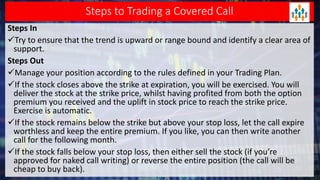
Steps to Trading a Covered Call
Steps In
Try to ensure that the trend is upward or range bound and identify a clear area of
support.
Steps Out
Manage your position according to the rules defined in your Trading Plan.
If the stock closes above the strike at expiration, you will be exercised. You will
deliver the stock at the strike price, whilst having profited from both the option
premium you received and the uplift in stock price to reach the strike price.
Exercise is automatic.
If the stock remains below the strike but above your stop loss, let the call expire
worthless and keep the entire premium. If you like, you can then write another
call for the following month.
If the stock falls below your stop loss, then either sell the stock (if you’re
approved for naked call writing) or reverse the entire position (the call will be
cheap to buy back).
Exiting the Trade
Exiting the Position
 If the share rises above the strike price, you will be exercised and
therefore make a profit.
 If the share stays below the strike price, you will have successfully
reduced your cost of entry because the premium you took in will
offset the price you paid for the stock.
Mitigating a Loss
 Either sell the share or sell the share and buy back the option you
sold.
Advantages and Disadvantages
Advantages
 Generate monthly income.
 Lower risk than simply owning the stock.
 Can profit from range bound stocks.
Disadvantages
 Some traders consider this to be an expensive strategy in
terms of cash outlay.
Capped upside if the stock rises.
Uncapped downside if the stock falls, cushioned only by the
call premium received.
Real Time Example
Covered Call
Rohan Sharma (Coach)
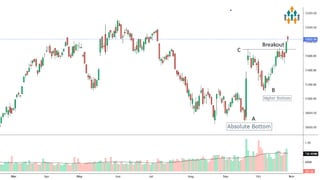
Price Movement
Position on Charts
Rohan Sharma (Coach)
Breakout
A
B
C
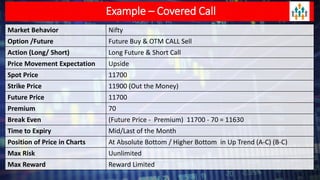
Example – Covered Call
Market Behavior Nifty
Option /Future Future Buy & OTM CALL Sell
Action (Long/ Short) Long Future & Short Call
Price Movement Expectation Upside
Spot Price 11700
Strike Price 11900 (Out the Money)
Future Price 11700
Premium 70
Break Even (Future Price - Premium) 11700 - 70 = 11630
Time to Expiry Mid/Last of the Month
Position of Price in Charts At Absolute Bottom / Higher Bottom in Up Trend (A-C) (B-C)
Max Risk Uunlimited
Max Reward Reward Limited
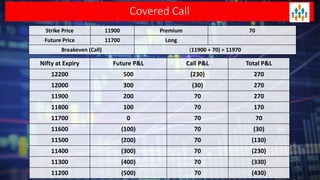
Covered Call
Strike Price 11900 Premium 70
Future Price 11700 Long
Breakeven (Call) (11900 + 70) = 11970
Nifty at Expiry Future P&L Call P&L Total P&L
12200 500 (230) 270
12000 300 (30) 270
11900 200 70 270
11800 100 70 170
11700 0 70 70
11600 (100) 70 (30)
11500 (200) 70 (130)
11400 (300) 70 (230)
11300 (400) 70 (330)
11200 (500) 70 (430)

Lecture no 6 covered call

  • 1.
    Lecture No 6 CoveredCall Rohan Sharma (Coach)
  • 2.
    Basics Concepts Proficiency - Novice Direction- Bullish Asset Leg – Long Stock + Short Call Max Risk - Limited Max Reward - Limited Income Strategies
  • 3.
    Description The Covered Callis the most basic of income strategies, yet it is also highly effective and can be used by novices and experts alike.  The concept is that in owning the stock, you then sell an Out of the Money call option on a monthly basis as a means of collecting rent (or a dividend) while you own the stock. If the stock rises above the call strike, you’ll be exercised, and the stock will be sold . . . but you make a profit anyway. If the stock remains static, then you’re better off because you collected the call premium. If the stock falls, you have the cushion of the call premium you collected.
  • 4.
    Context Outlook  With aCovered Call, your outlook is neutral to bullish. You expect a steady rise. Rationale  To buy (or own) a stock for the medium or long term with the aim of capturing monthly income by selling calls every month. This is like collecting rent for holding the stock and will have the effect of lowering your cost basis of holding the stock. Net Position This is a net debit transaction because you are paying for the stock and only taking in a small premium for the sold call options. You can increase your yield by purchasing the stock on margin, thereby doubling your yield if you use 50% margin. Your maximum risk is the price you paid for the stock less the premium you received for the call.
  • 5.
    Context Effect of TimeDecay  Time decay is helpful to your trade here because it should erode the value of the call you sold. Provided that the stock does not hit the strike price at expiration, you will be able to retain the entire option premium for the trade, thus reducing your original cost of buying the share. Time Period to Trade  Sell the calls on a monthly basis. Breakeven = (Stock price paid - call premium)
  • 6.
    Steps to Tradinga Covered Call Steps In Try to ensure that the trend is upward or range bound and identify a clear area of support. Steps Out Manage your position according to the rules defined in your Trading Plan. If the stock closes above the strike at expiration, you will be exercised. You will deliver the stock at the strike price, whilst having profited from both the option premium you received and the uplift in stock price to reach the strike price. Exercise is automatic. If the stock remains below the strike but above your stop loss, let the call expire worthless and keep the entire premium. If you like, you can then write another call for the following month. If the stock falls below your stop loss, then either sell the stock (if you’re approved for naked call writing) or reverse the entire position (the call will be cheap to buy back).
  • 7.
    Exiting the Trade Exitingthe Position  If the share rises above the strike price, you will be exercised and therefore make a profit.  If the share stays below the strike price, you will have successfully reduced your cost of entry because the premium you took in will offset the price you paid for the stock. Mitigating a Loss  Either sell the share or sell the share and buy back the option you sold.
  • 8.
    Advantages and Disadvantages Advantages Generate monthly income.  Lower risk than simply owning the stock.  Can profit from range bound stocks. Disadvantages  Some traders consider this to be an expensive strategy in terms of cash outlay. Capped upside if the stock rises. Uncapped downside if the stock falls, cushioned only by the call premium received.
  • 9.
    Real Time Example CoveredCall Rohan Sharma (Coach)
  • 10.
    Price Movement Position onCharts Rohan Sharma (Coach)
  • 11.
  • 12.
    Example – CoveredCall Market Behavior Nifty Option /Future Future Buy & OTM CALL Sell Action (Long/ Short) Long Future & Short Call Price Movement Expectation Upside Spot Price 11700 Strike Price 11900 (Out the Money) Future Price 11700 Premium 70 Break Even (Future Price - Premium) 11700 - 70 = 11630 Time to Expiry Mid/Last of the Month Position of Price in Charts At Absolute Bottom / Higher Bottom in Up Trend (A-C) (B-C) Max Risk Uunlimited Max Reward Reward Limited
  • 13.
    Covered Call Strike Price11900 Premium 70 Future Price 11700 Long Breakeven (Call) (11900 + 70) = 11970 Nifty at Expiry Future P&L Call P&L Total P&L 12200 500 (230) 270 12000 300 (30) 270 11900 200 70 270 11800 100 70 170 11700 0 70 70 11600 (100) 70 (30) 11500 (200) 70 (130) 11400 (300) 70 (230) 11300 (400) 70 (330) 11200 (500) 70 (430)