Industry Studies: Consumer Goods Industry 
Topic: Innovation and Change in the 
Consumer Goods Industry 
Topic Number:8
Overview 
Innovation and change play a fundamental role in an organisations 
ability to keep pace with a market, drive it forward and get ahead of 
the competition. In addition, it is important for firms operating in 
the CGI to innovate around process to reduce costs and become 
more socially conscious and effective. 
In this lecture, we will learn all about how innovation and change is 
done in organisations operating in the CGI. We will initially look to 
understand what innovation is and the different kinds of innovation 
that firms can adopt. We will also look at emerging forms of 
innovation from emerging markets. 
Thereafter, we will look at some of the challenges to making 
innovation and change happen in organisations and how we can 
overcome these. Finally, we will look at a number of different 
approaches to change management organisations can use. 
2
Learning Outcomes 
3 
• Determine and describe what innovation is in an 
organisation 
• Articulate the different models of innovation used 
in the East and West 
• Be able to discuss the challenges faced in 
implementing innovation and change 
• Critically evaluate a number of change models to 
determine the optimal way to create change in 
organisations
Innovation 
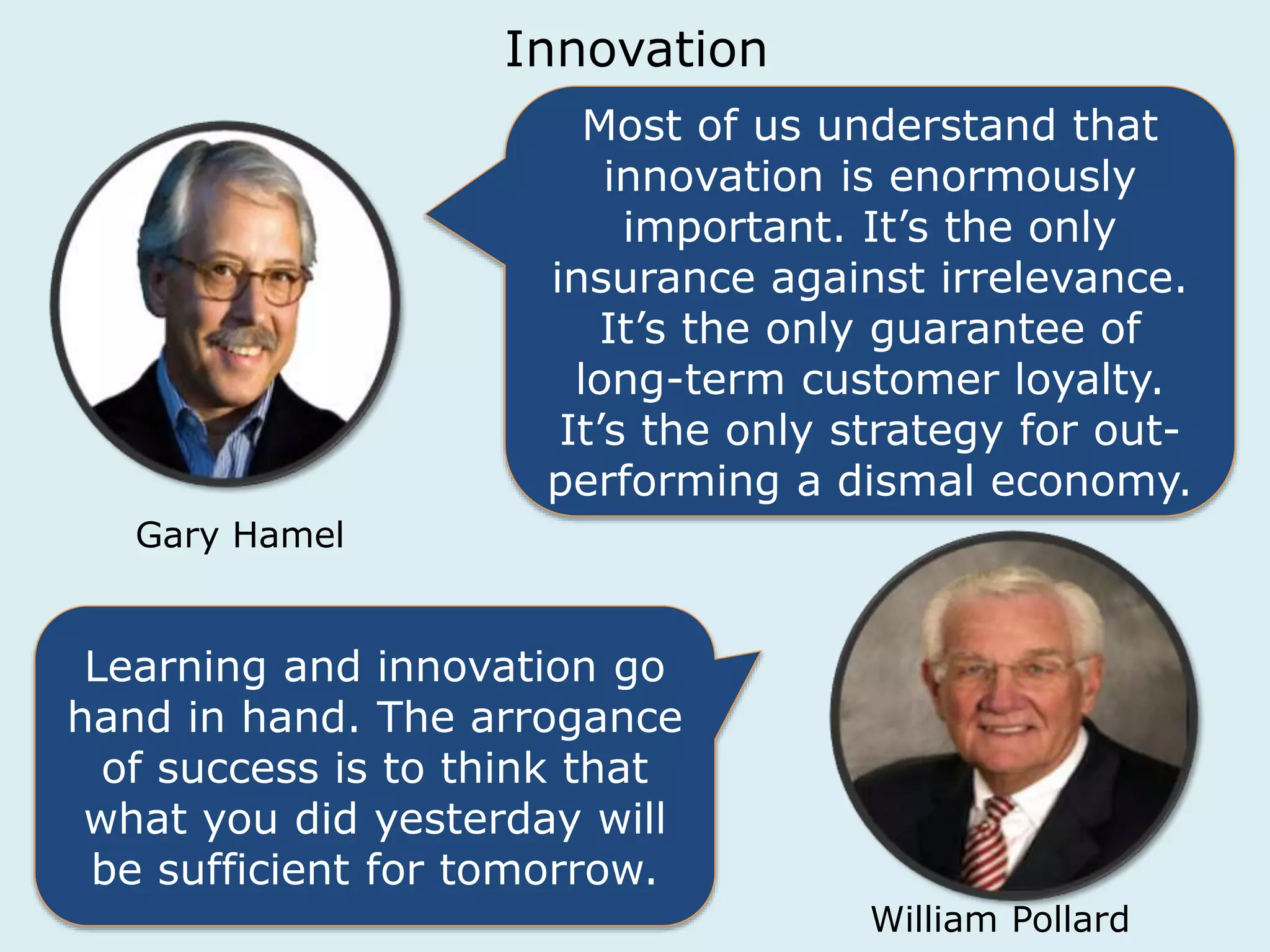
Most of us understand that 
innovation is enormously 
important. It’s the only 
insurance against irrelevance. 
It’s the only guarantee of 
long-term customer loyalty. 
It’s the only strategy for out-performing 
a dismal economy. 
Gary Hamel 
Learning and innovation go 
hand in hand. The arrogance 
of success is to think that 
what you did yesterday will 
be sufficient for tomorrow. 
William Pollard
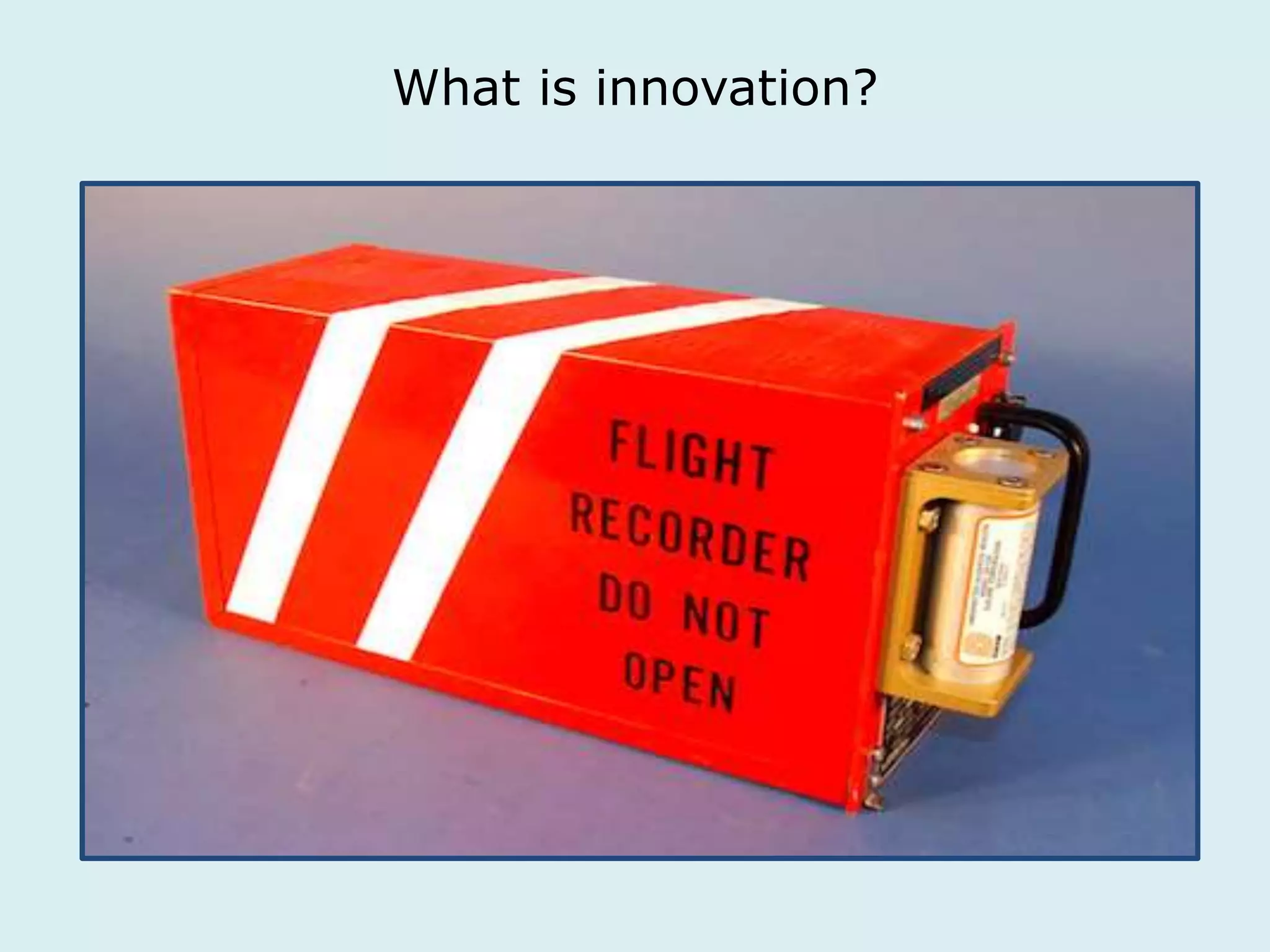
What is innovation?
What is innovation? 
Innovation can be defined 
as the application of new 
ideas to the products, 
processes, or other 
aspects of the activities of 
a firm that lead to 
increased “value.” 
This “value” is defined in a 
broad way to include 
higher value added for the 
firm and also benefits to 
consumers or other firms.
Characteristics of innovation 
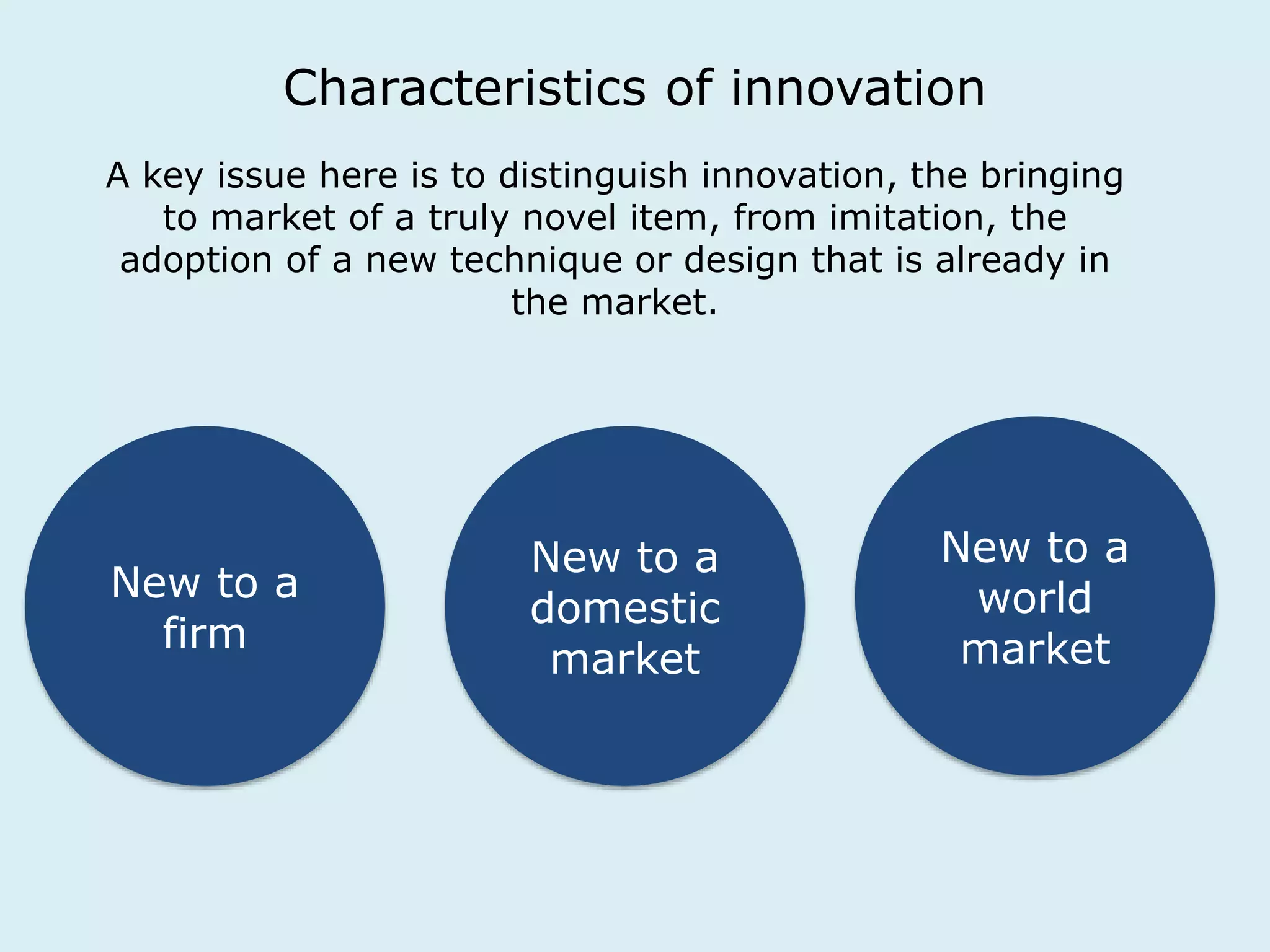
A key issue here is to distinguish innovation, the bringing 
to market of a truly novel item, from imitation, the 
adoption of a new technique or design that is already in 
the market. 
New to a 
firm 
New to a 
domestic 
market 
New to a 
world 
market
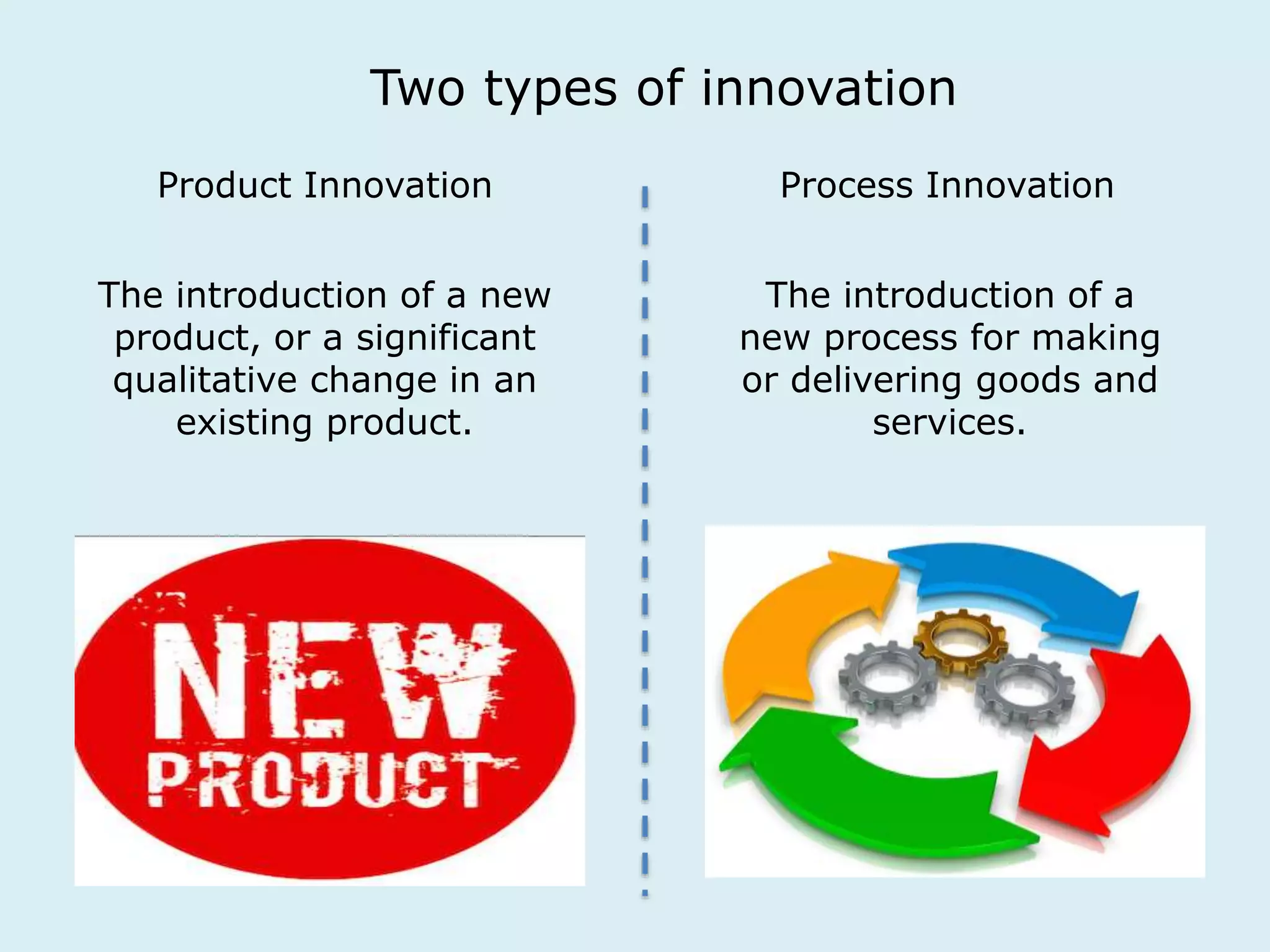
Two types of innovation 
Product Innovation Process Innovation 
The introduction of a new 
product, or a significant 
qualitative change in an 
existing product. 
The introduction of a 
new process for making 
or delivering goods and 
services.
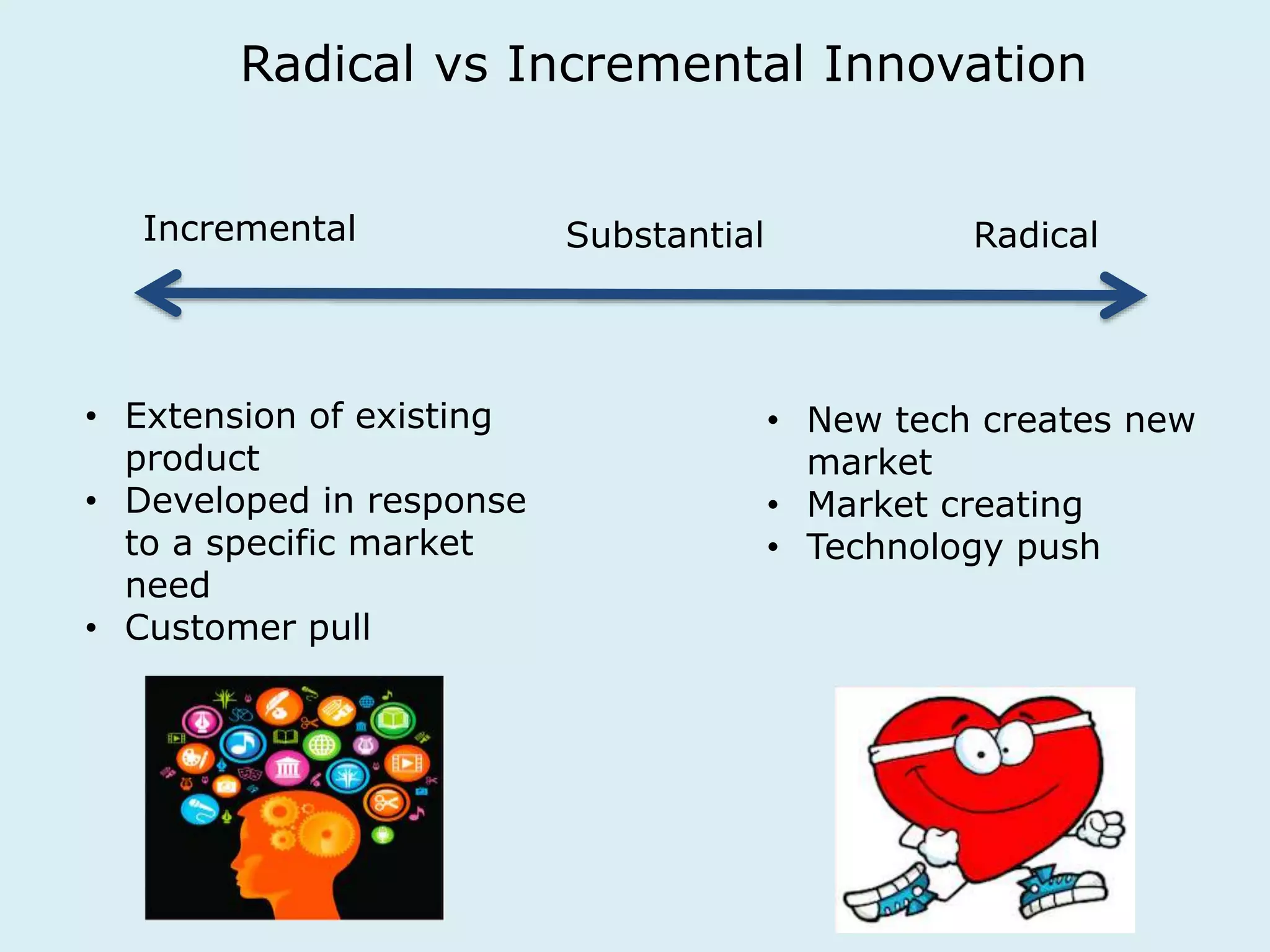
Radical vs Incremental Innovation 
Incremental Radical 
• Extension of existing 
product 
• Developed in response 
to a specific market 
need 
• Customer pull 
• New tech creates new 
market 
• Market creating 
• Technology push 
Substantial
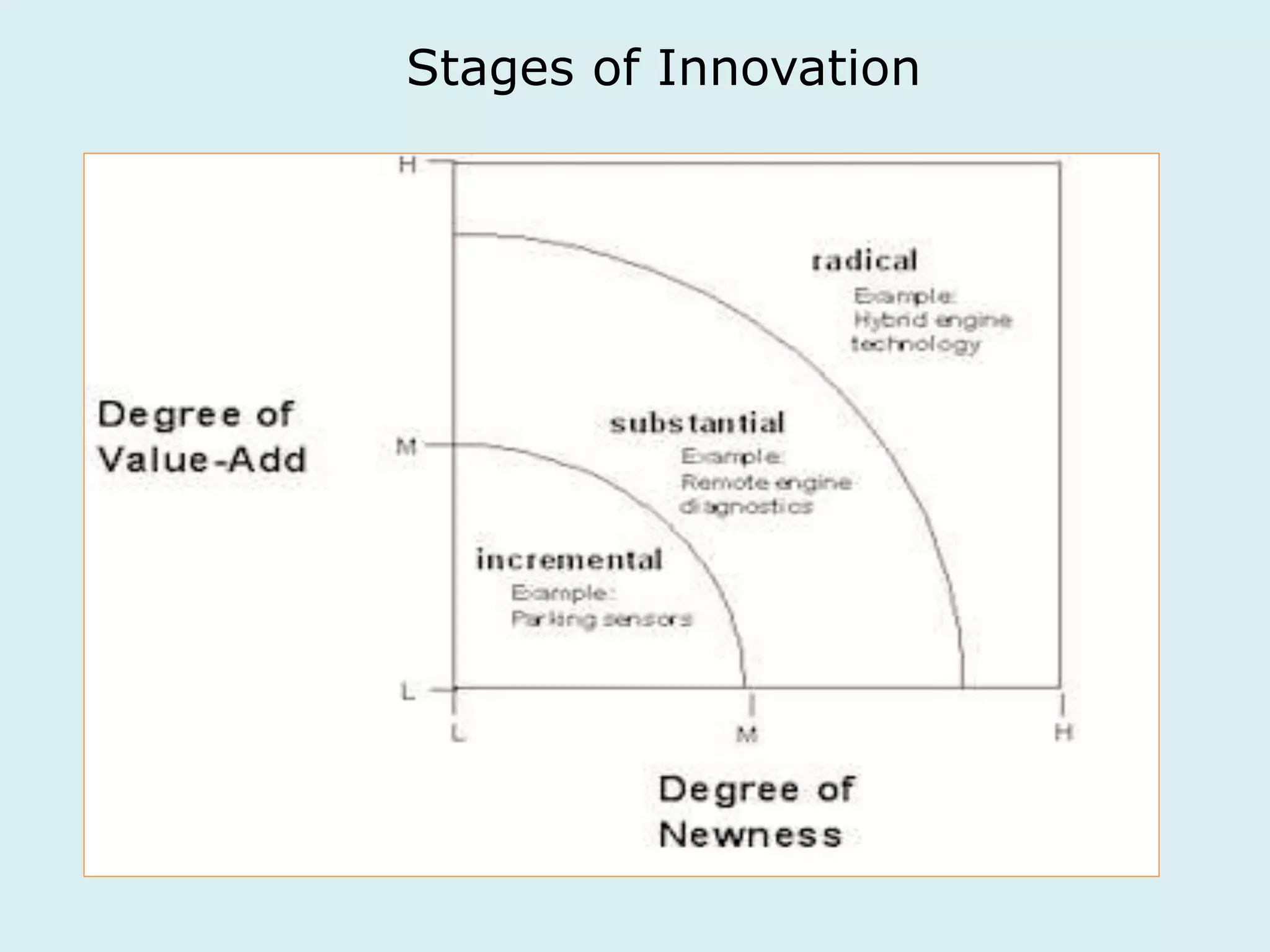
Stages of Innovation
Where does this sit on the spectrum? 
https://www.youtube.com/watch?v=dG0vLFFtZDs
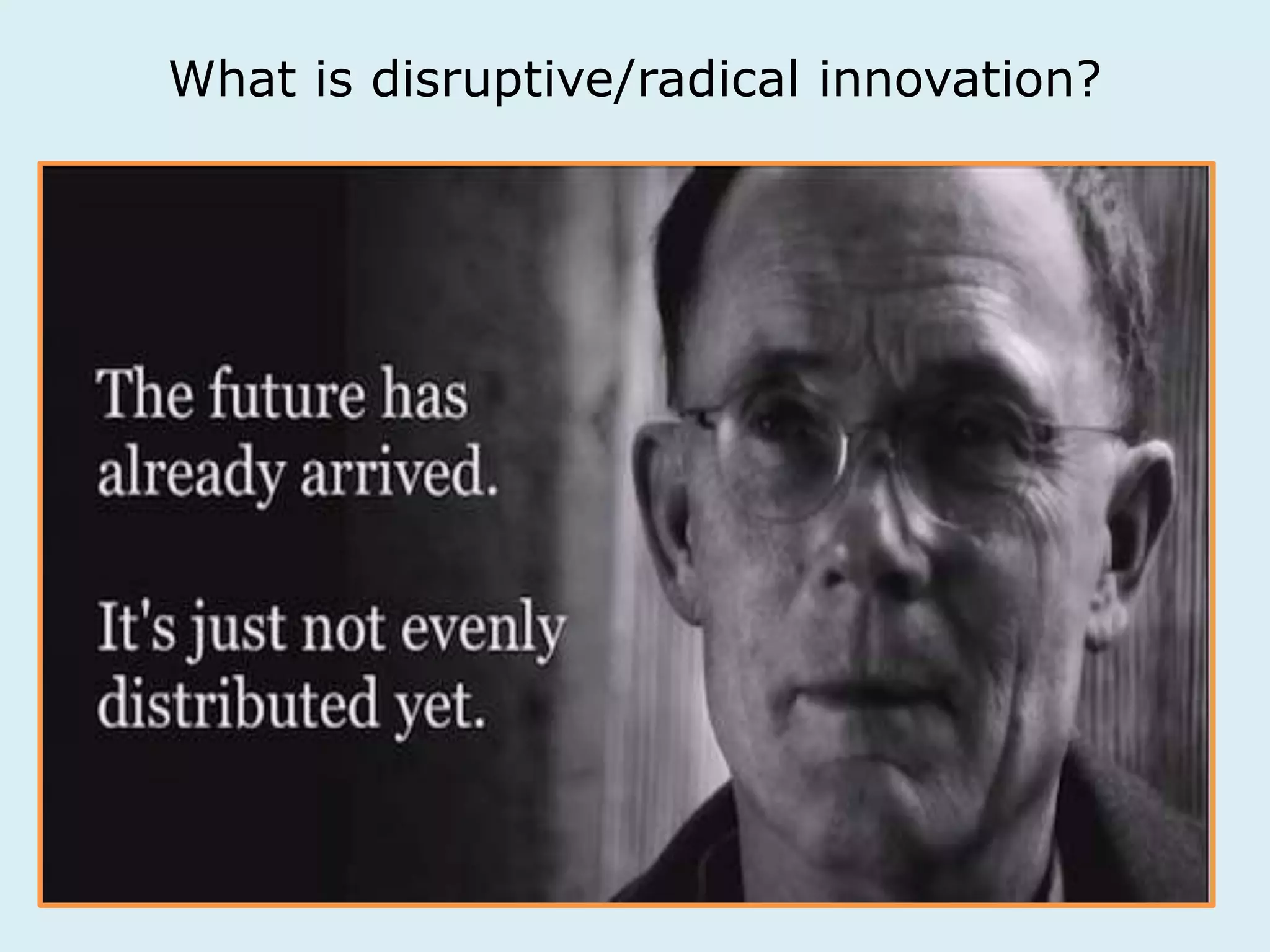
What is disruptive/radical innovation? 
https://www.youtube.com/watch?v=qDrMAzCHFUU#t=188
What is disruptive/radical innovation?
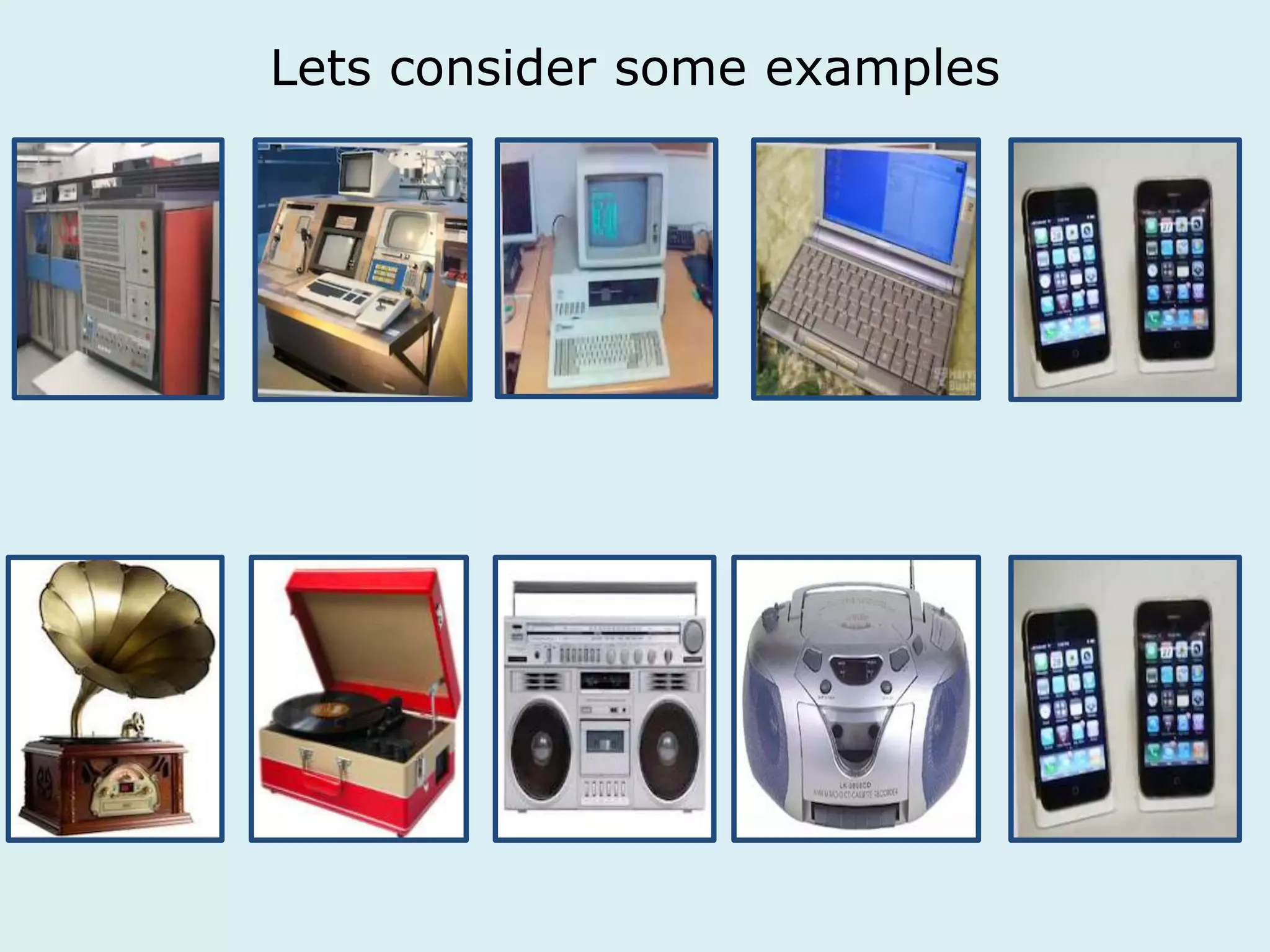
Lets consider some examples
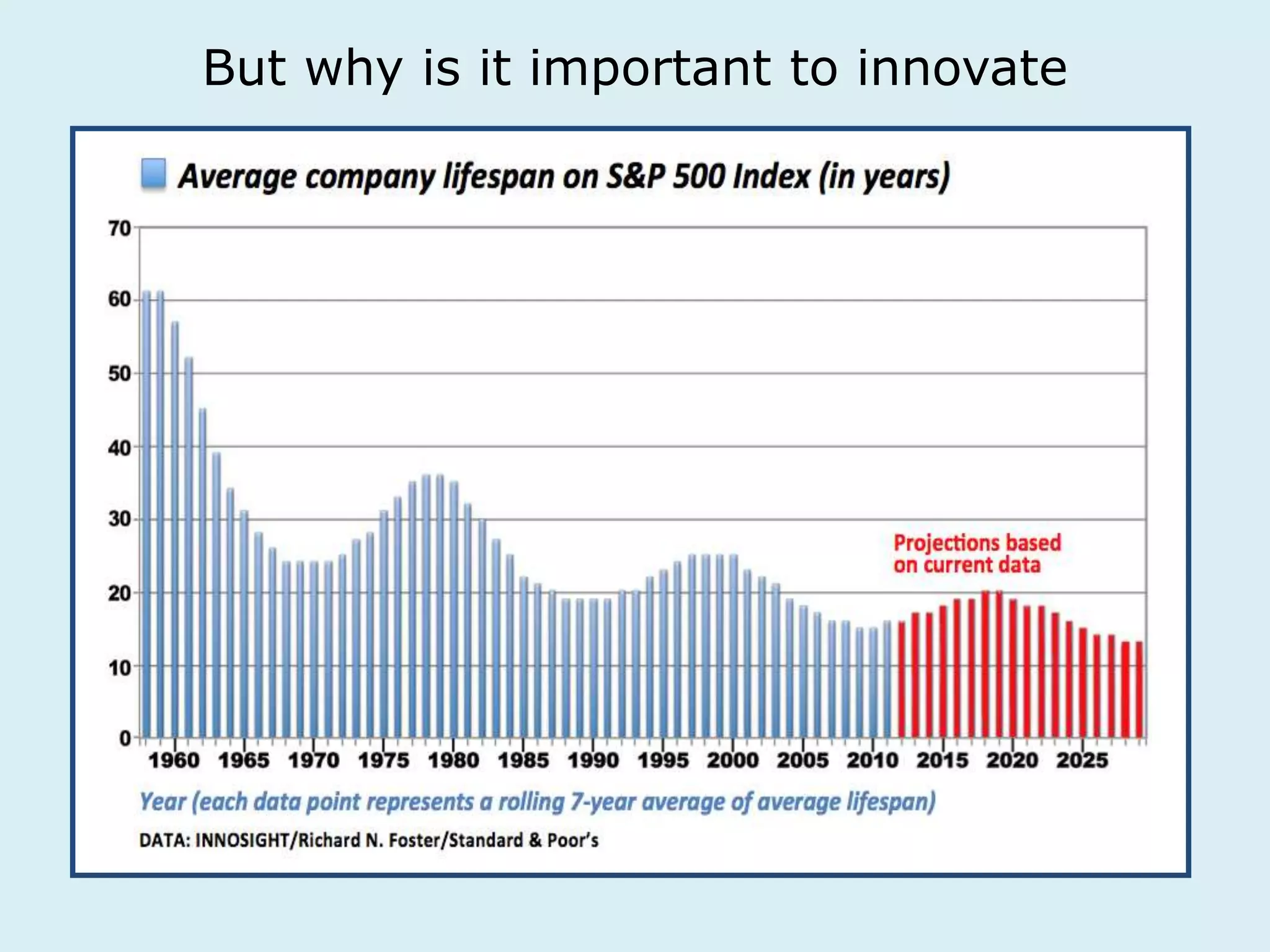
But why is it important to innovate
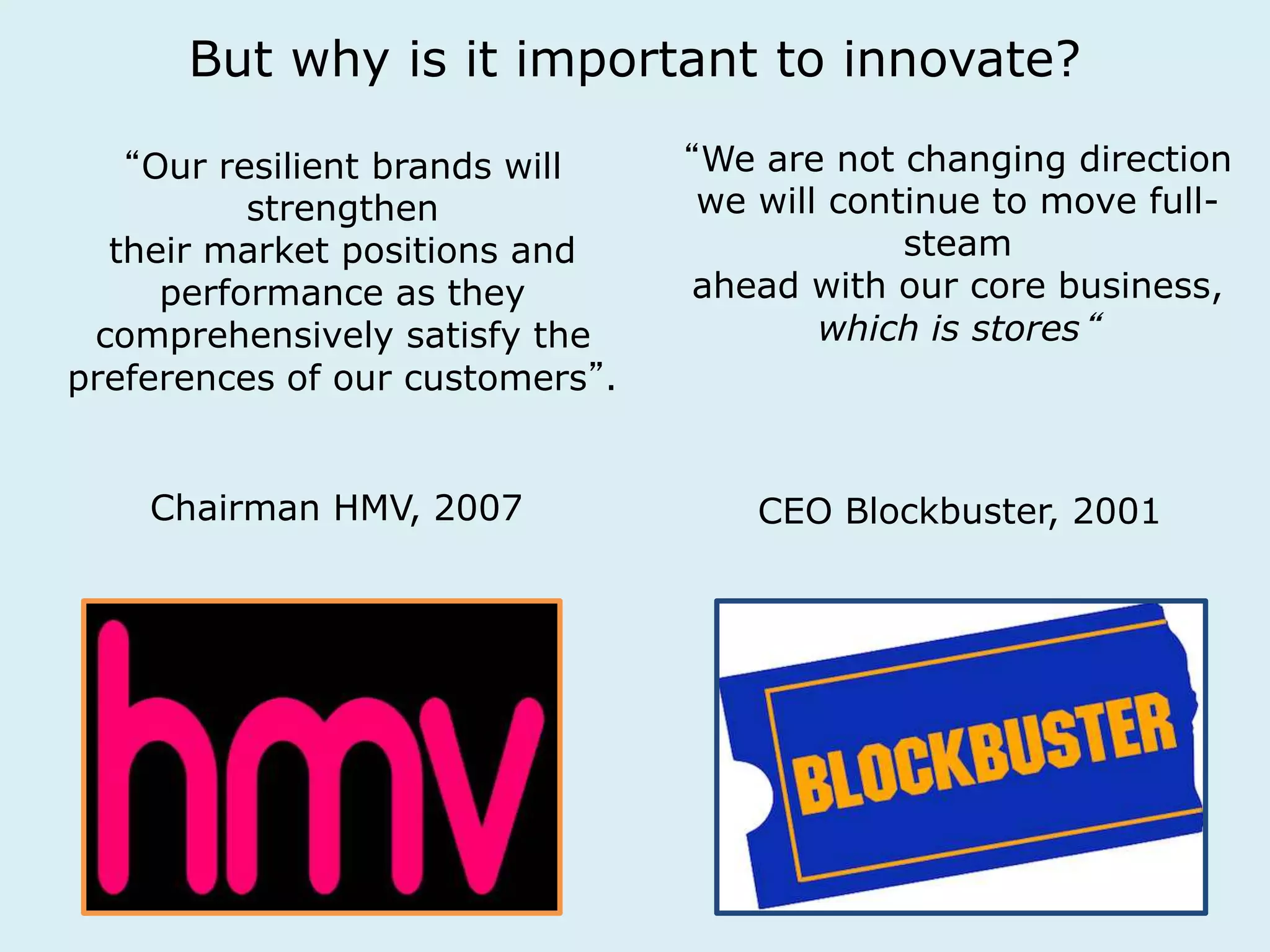
But why is it important to innovate? 
“Our resilient brands will 
strengthen 
their market positions and 
performance as they 
comprehensively satisfy the 
preferences of our customers”. 
“We are not changing direction 
we will continue to move full-steam 
ahead with our core business, 
which is stores“ 
Chairman HMV, 2007 CEO Blockbuster, 2001
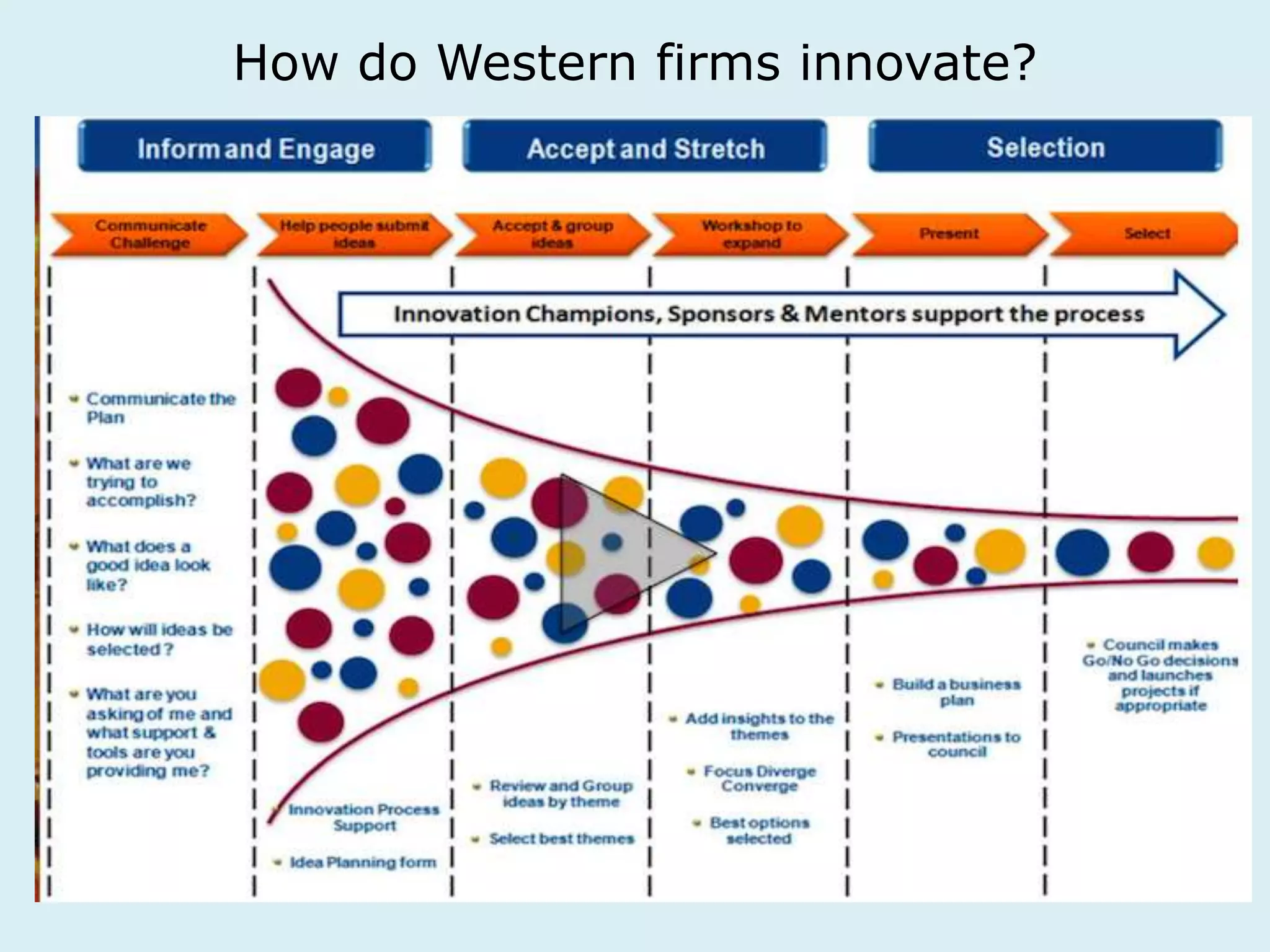
How do Western firms innovate?
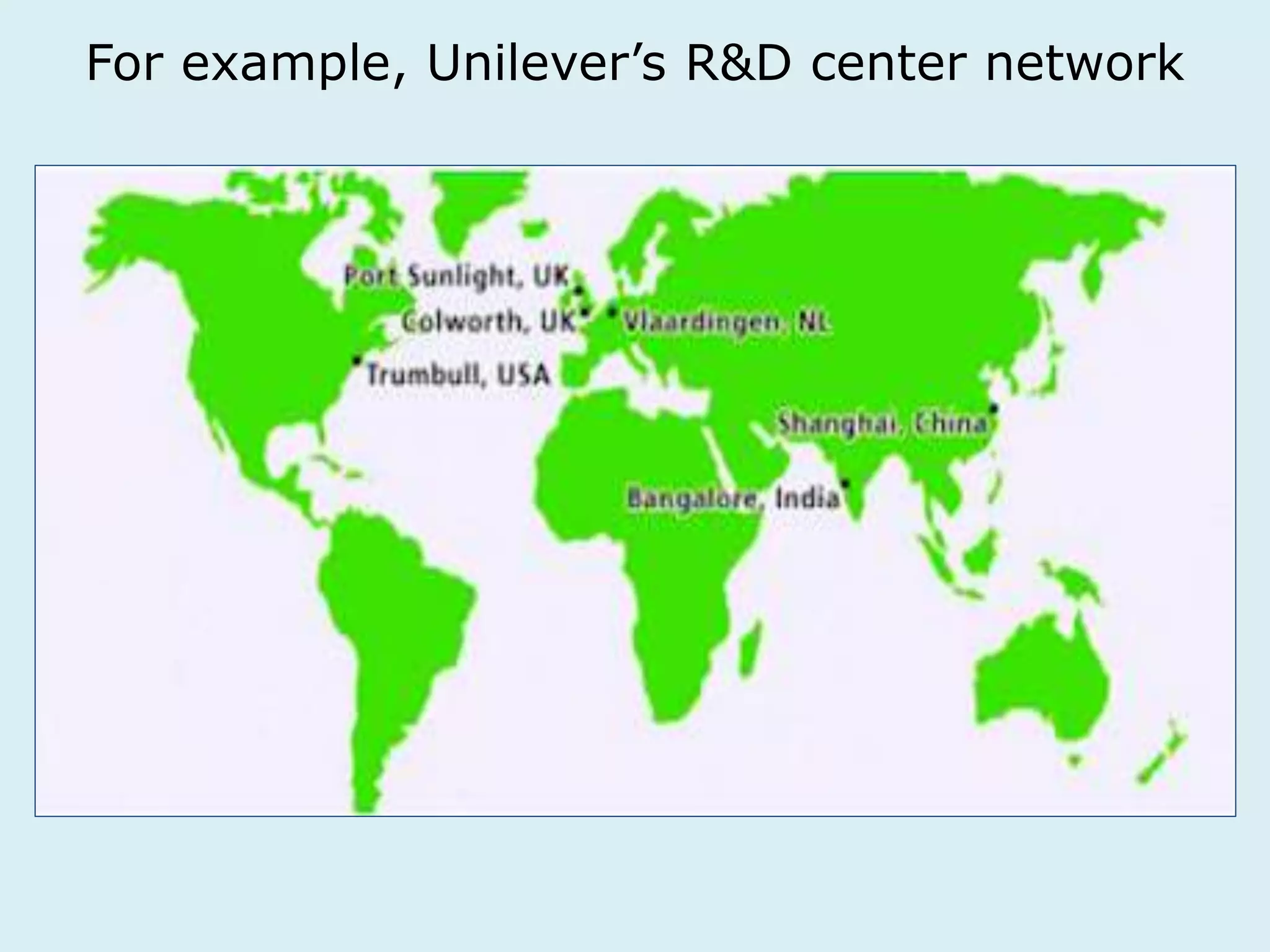
For example, Unilever’s R&D center network
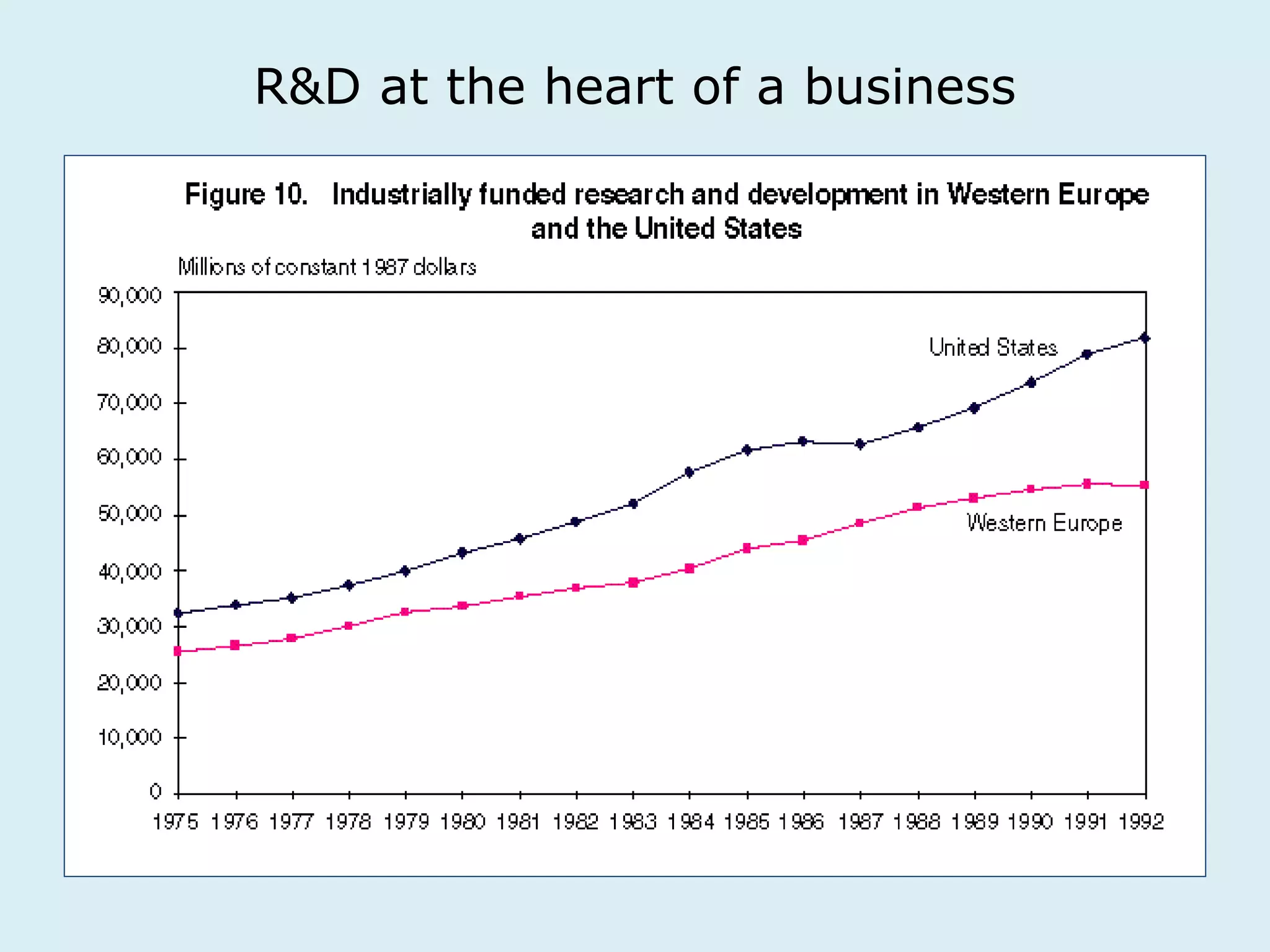
R&D at the heart of a business
However, emerging markets are developing 
their own way of innovating 
https://www.youtube.com/watch?v=hvMQKx-uBi0 
Watch from 1:50
At the heart of Jugaad
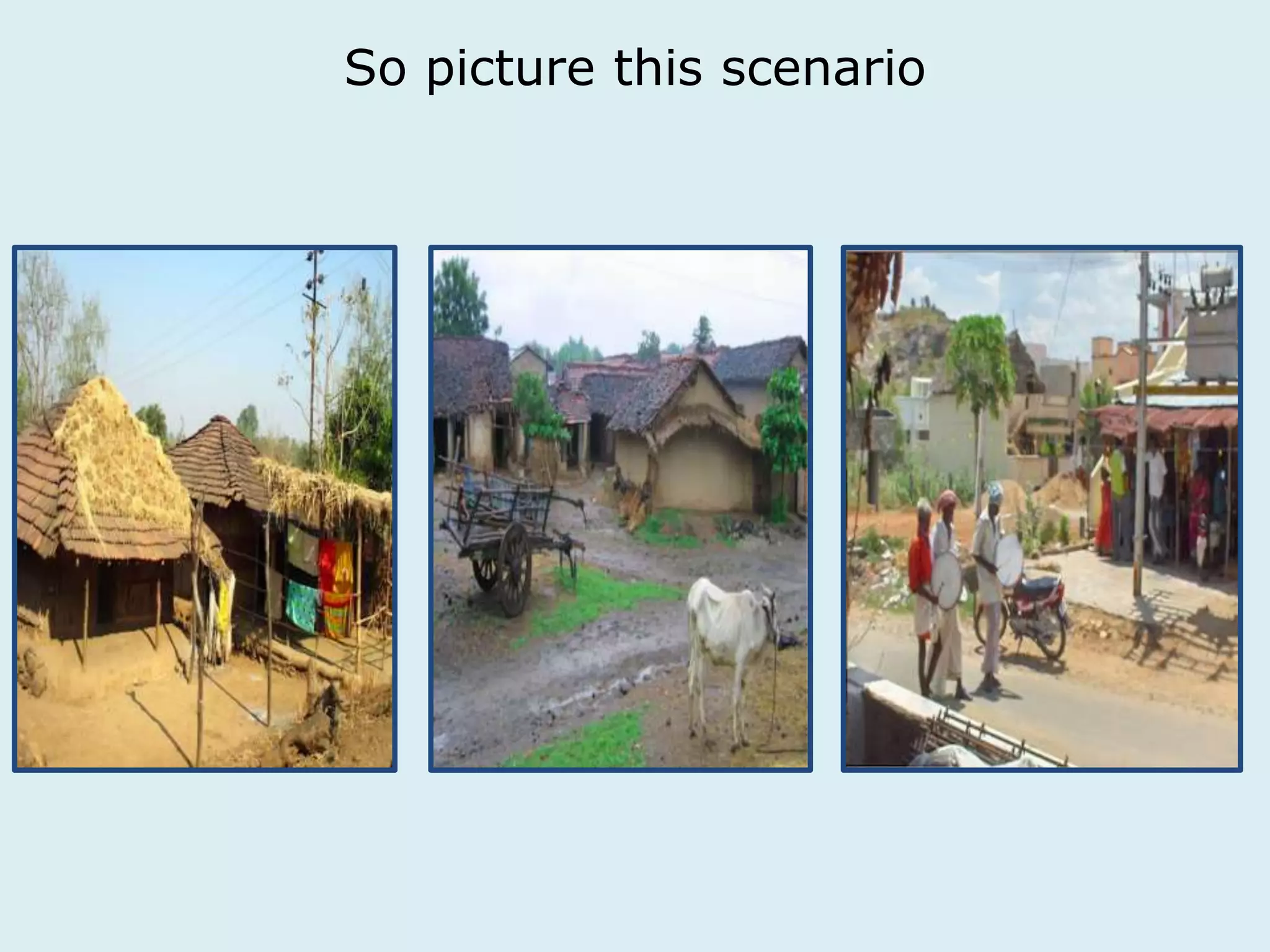
So picture this scenario
What is it? 
Jugaad Innovation 
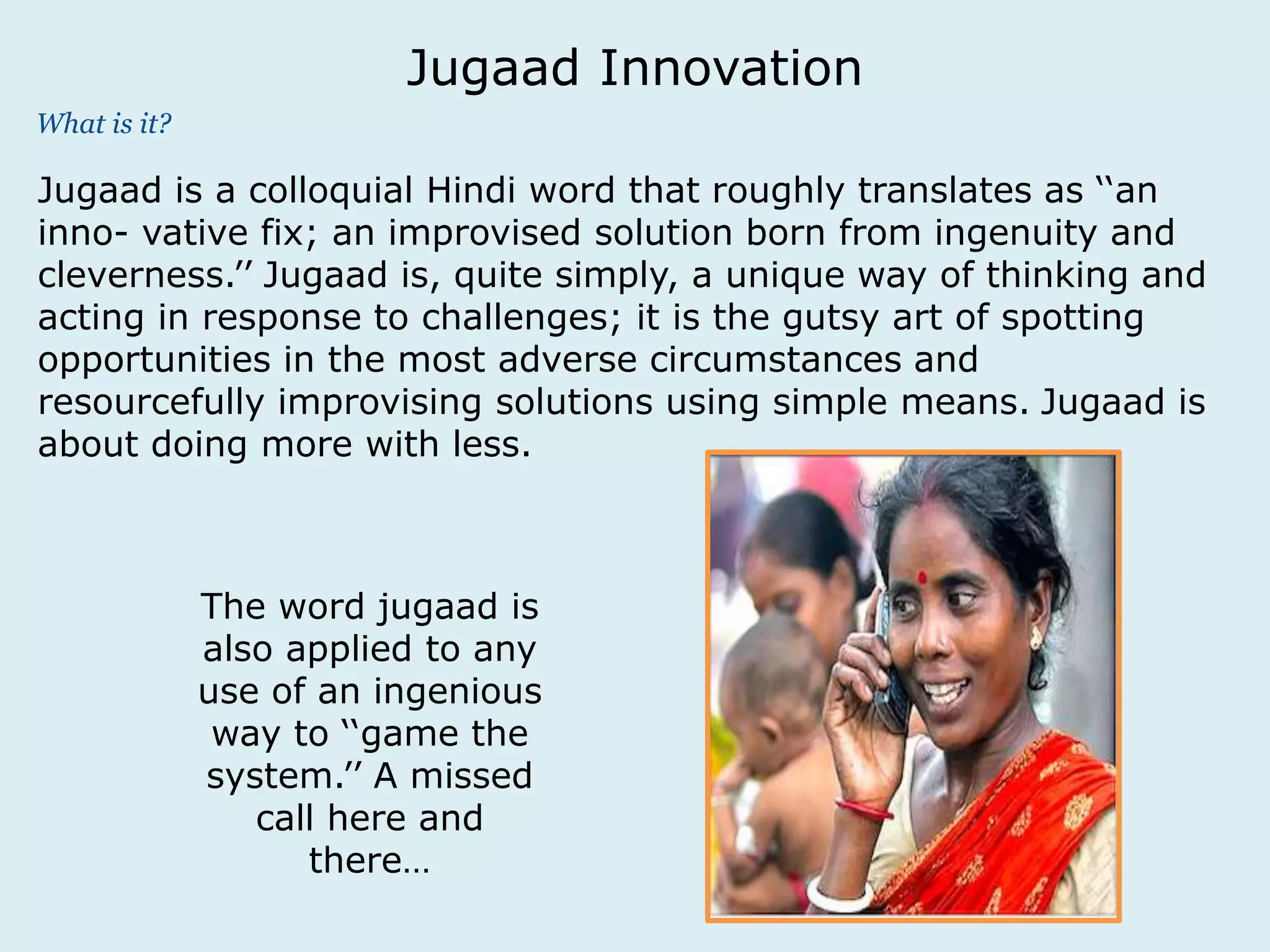
Jugaad is a colloquial Hindi word that roughly translates as ‘‘an 
inno- vative fix; an improvised solution born from ingenuity and 
cleverness.’’ Jugaad is, quite simply, a unique way of thinking and 
acting in response to challenges; it is the gutsy art of spotting 
opportunities in the most adverse circumstances and 
resourcefully improvising solutions using simple means. Jugaad is 
about doing more with less. 
The word jugaad is 
also applied to any 
use of an ingenious 
way to ‘‘game the 
system.’’ A missed 
call here and 
there…
What is it? 
Jugaad Innovation 
https://www.youtube.com/watch?v=mrFyPaie3pQ
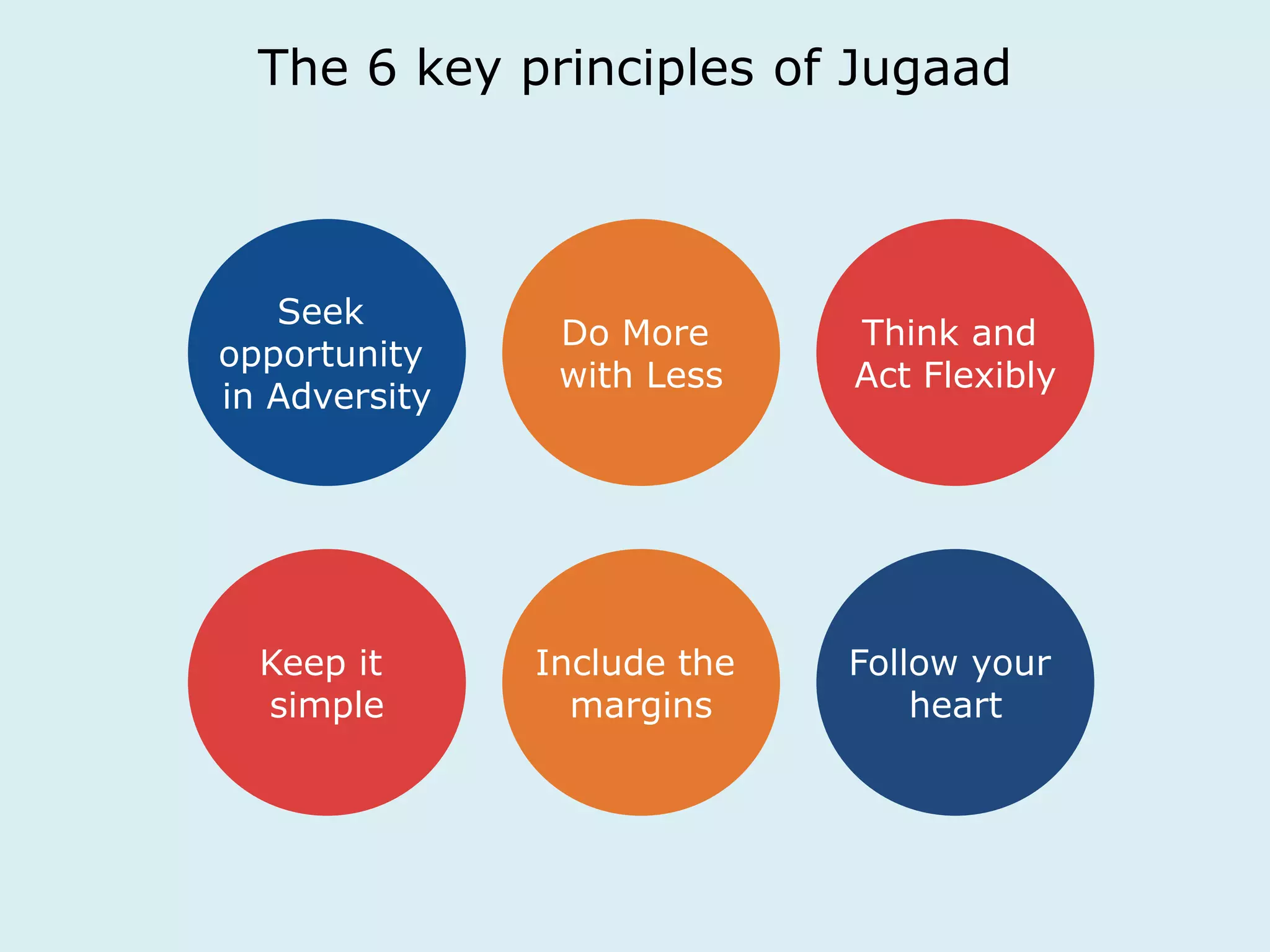
The 6 key principles of Jugaad 
Seek 
opportunity 
in Adversity 
Do More 
with Less 
Think and 
Act Flexibly 
Keep it 
simple 
Include the 
margins 
Follow your 
heart
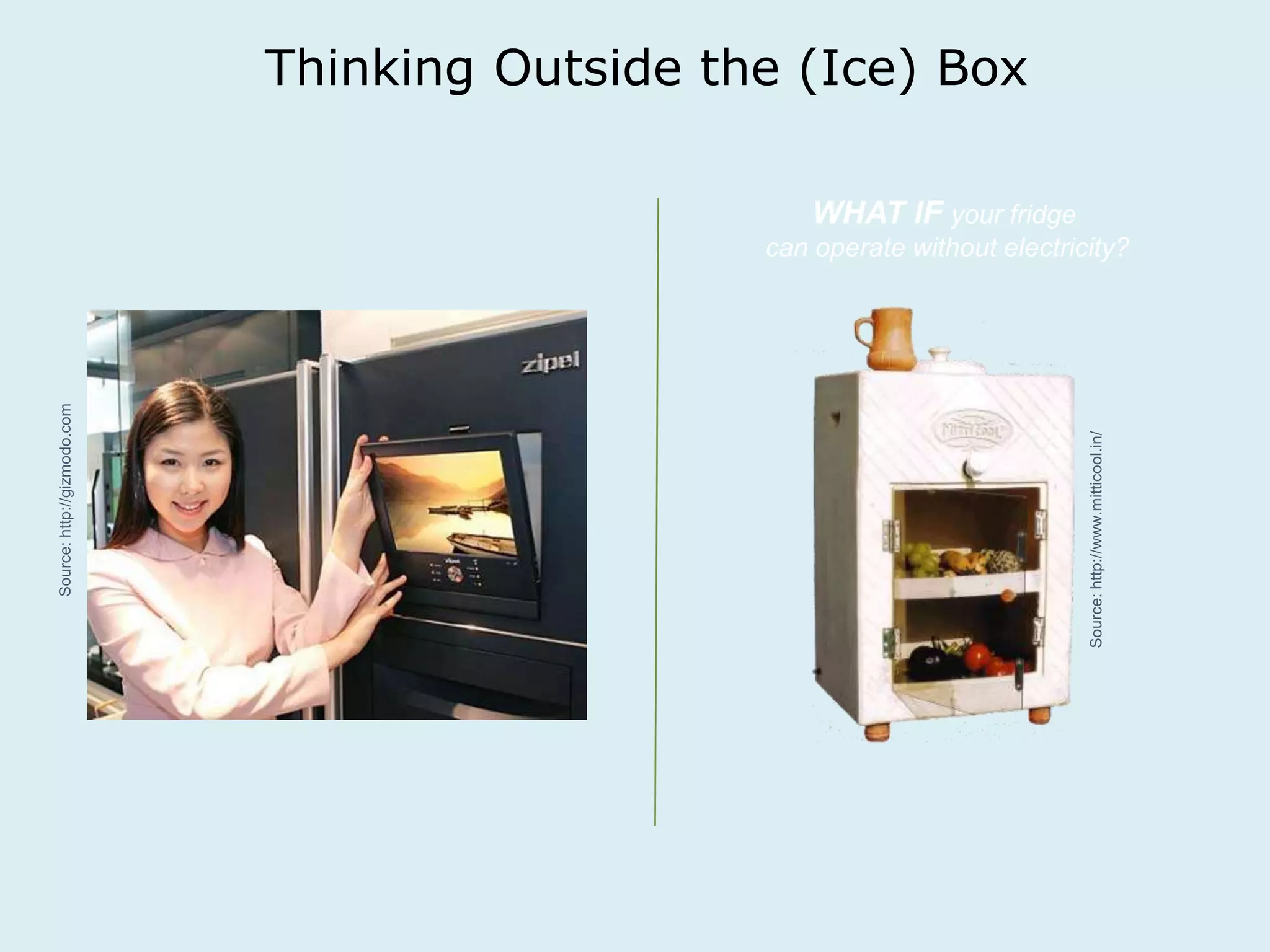
Thinking Outside the (Ice) Box 
WHAT IF your fridge 
can operate without electricity? 
Source: http://www.mitticool.in/ 
Source: http://gizmodo.com
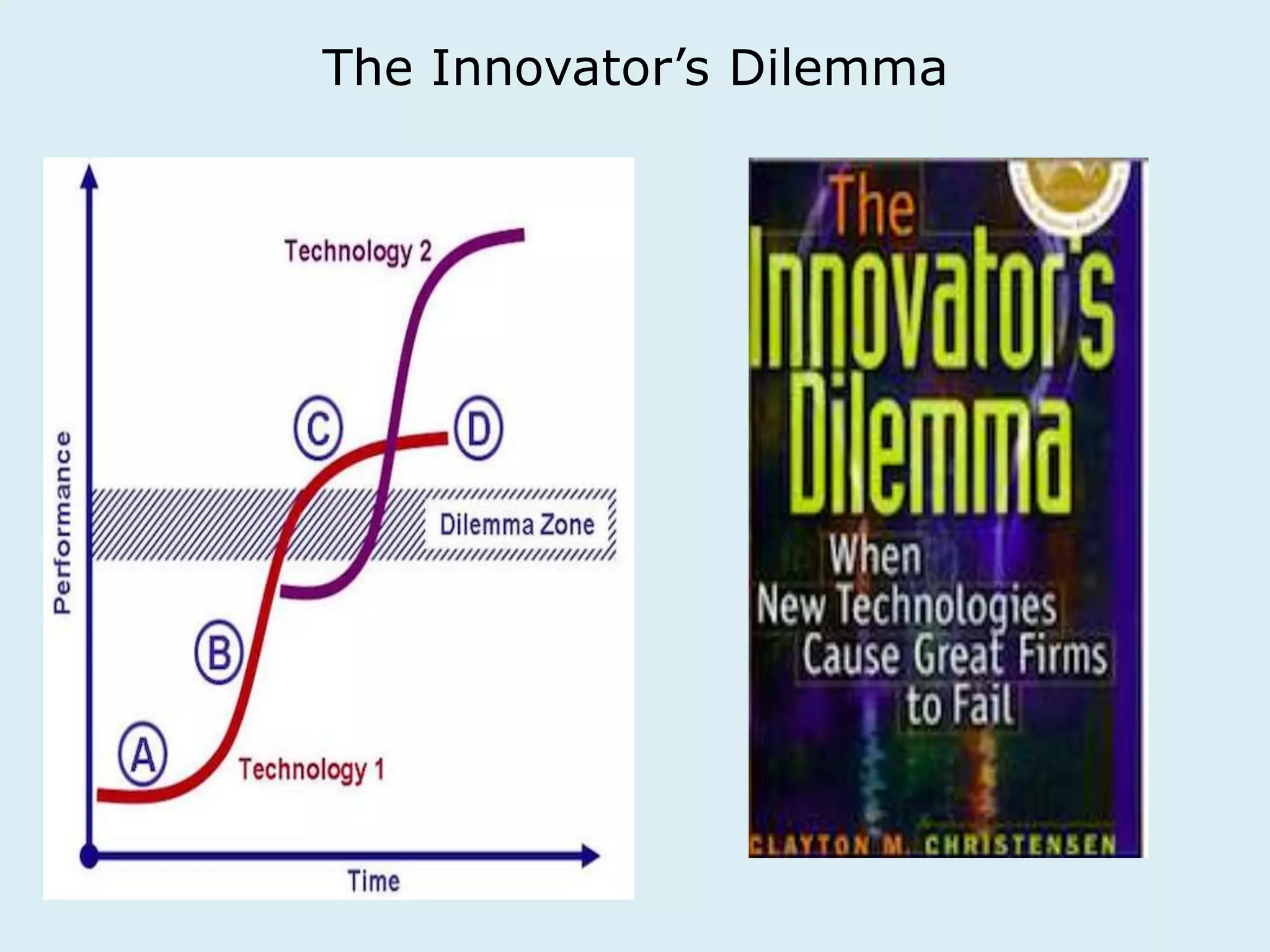
The Innovator’s Dilemma
The Innovator’s Dilemma 
https://www.youtube.com/watch?v=qDrMAzCHFUU
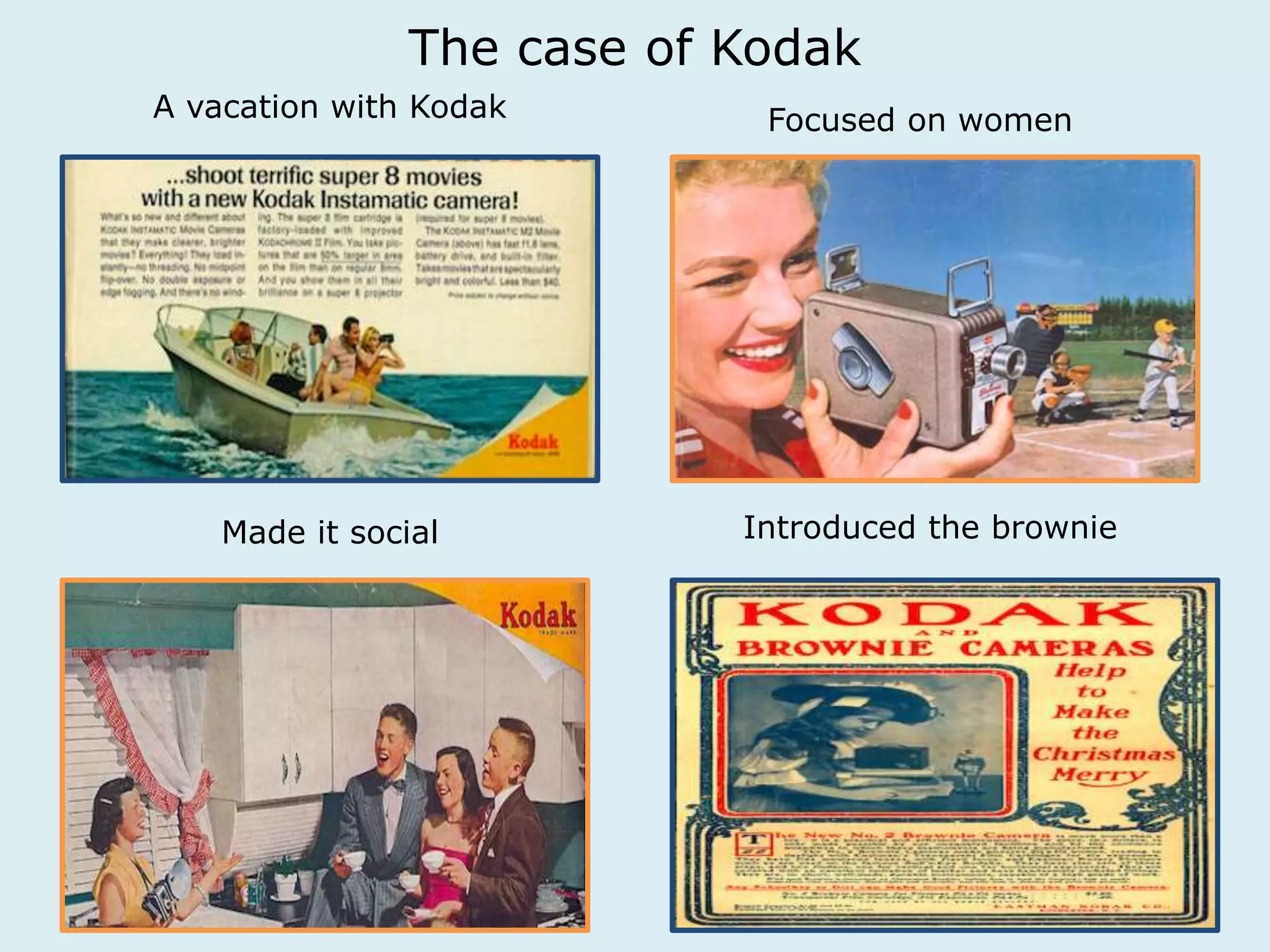
The case of Kodak 
A vacation with Kodak Focused on women 
Made it social Introduced the brownie
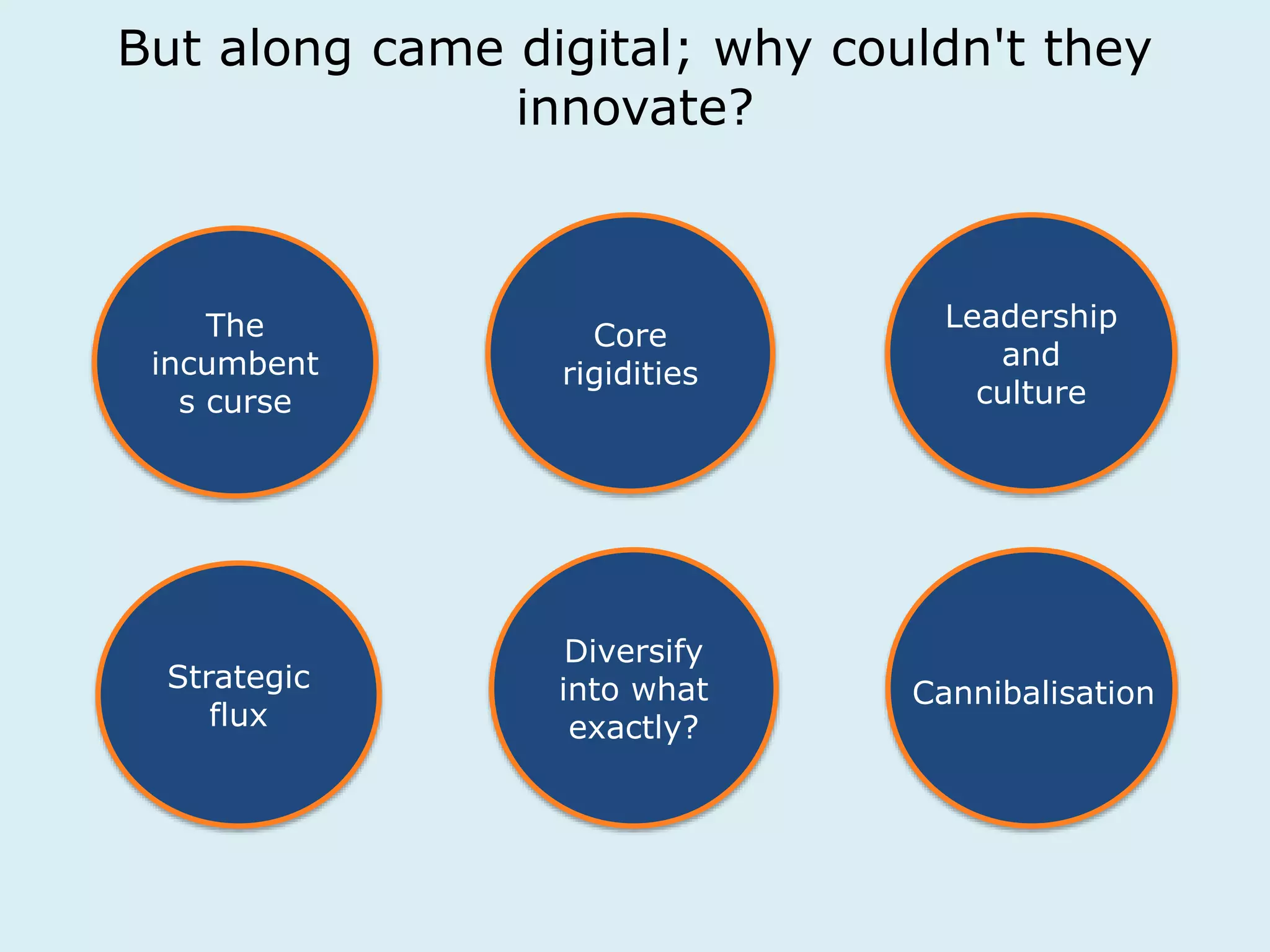
But along came digital; why couldn't they 
The 
incumbent 
s curse 
Core 
rigidities 
Leadership 
and 
culture 
Strategic 
flux 
Diversify 
into what 
exactly? 
Cannibalisation 
innovate?
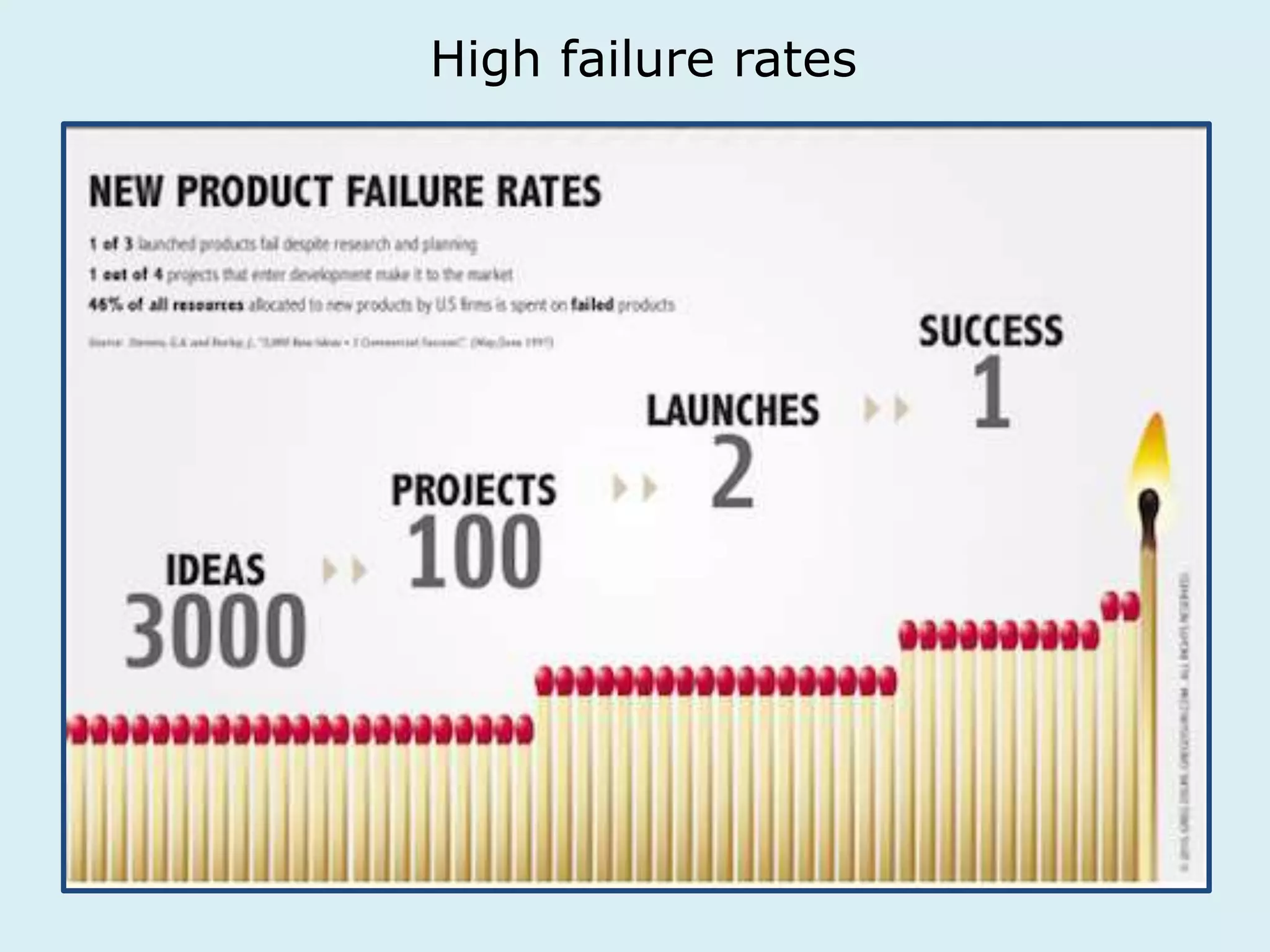
High failure rates
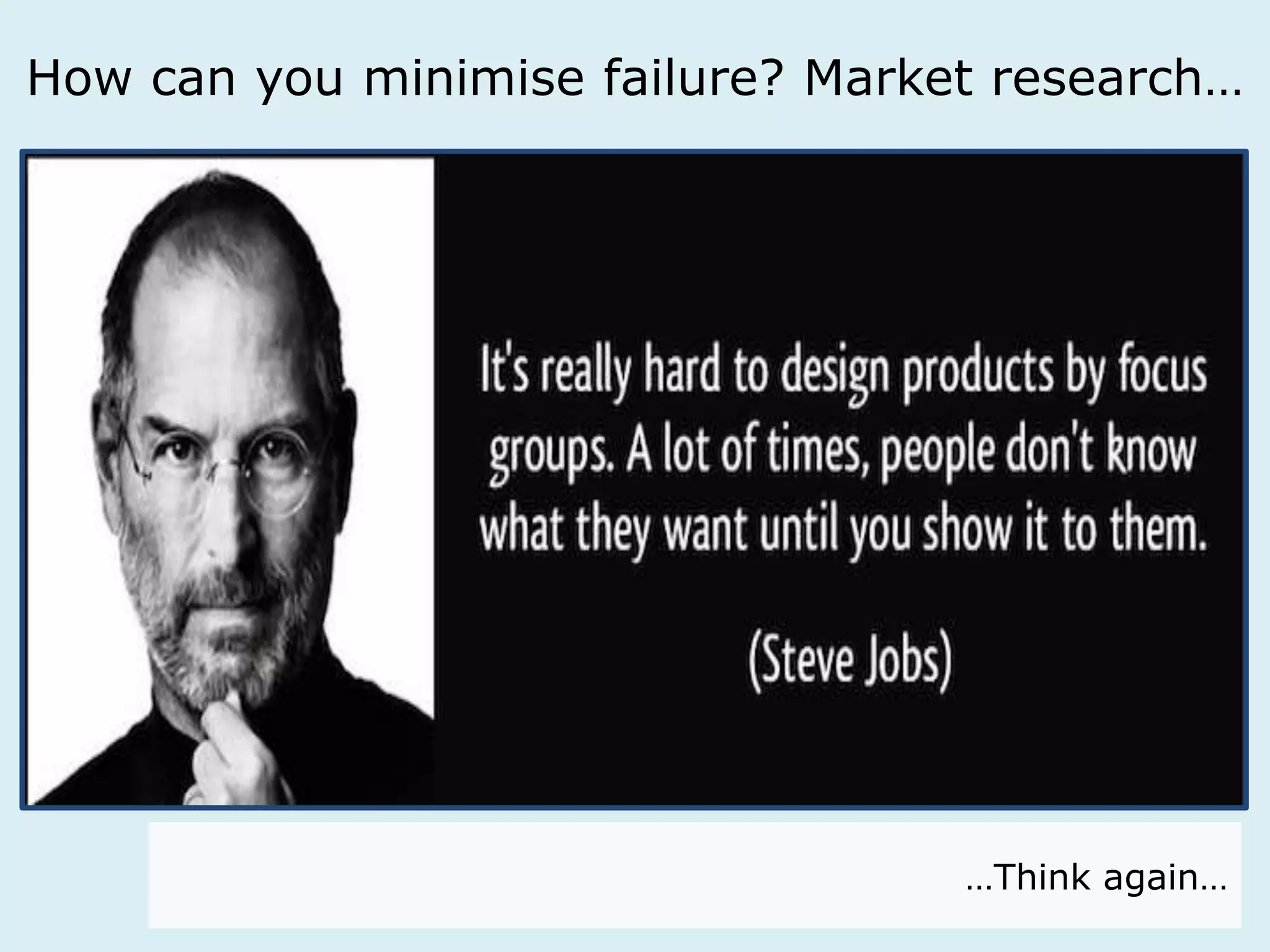
How can you minimise failure? Market research… 
…Think again…
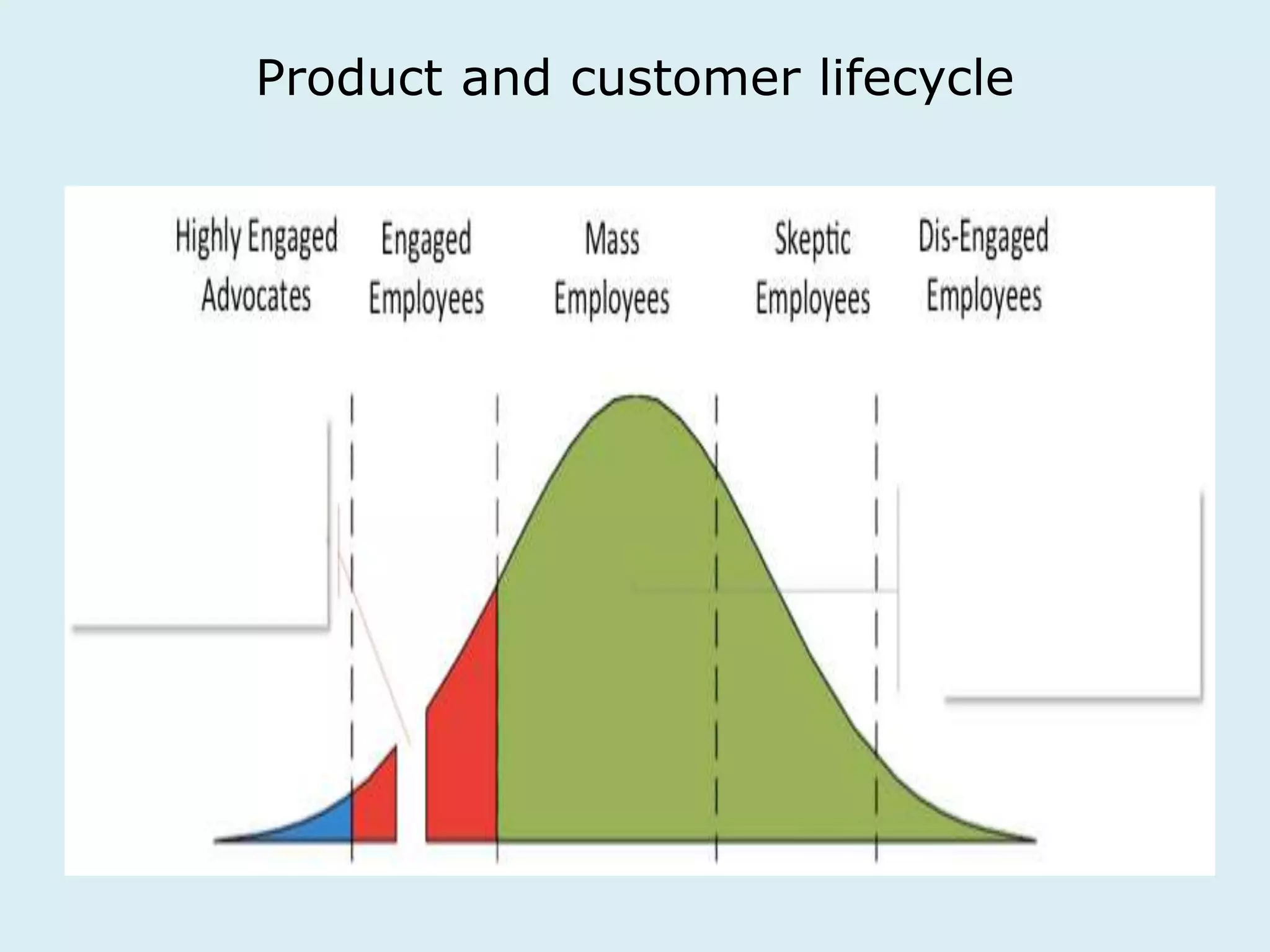
Product and customer lifecycle
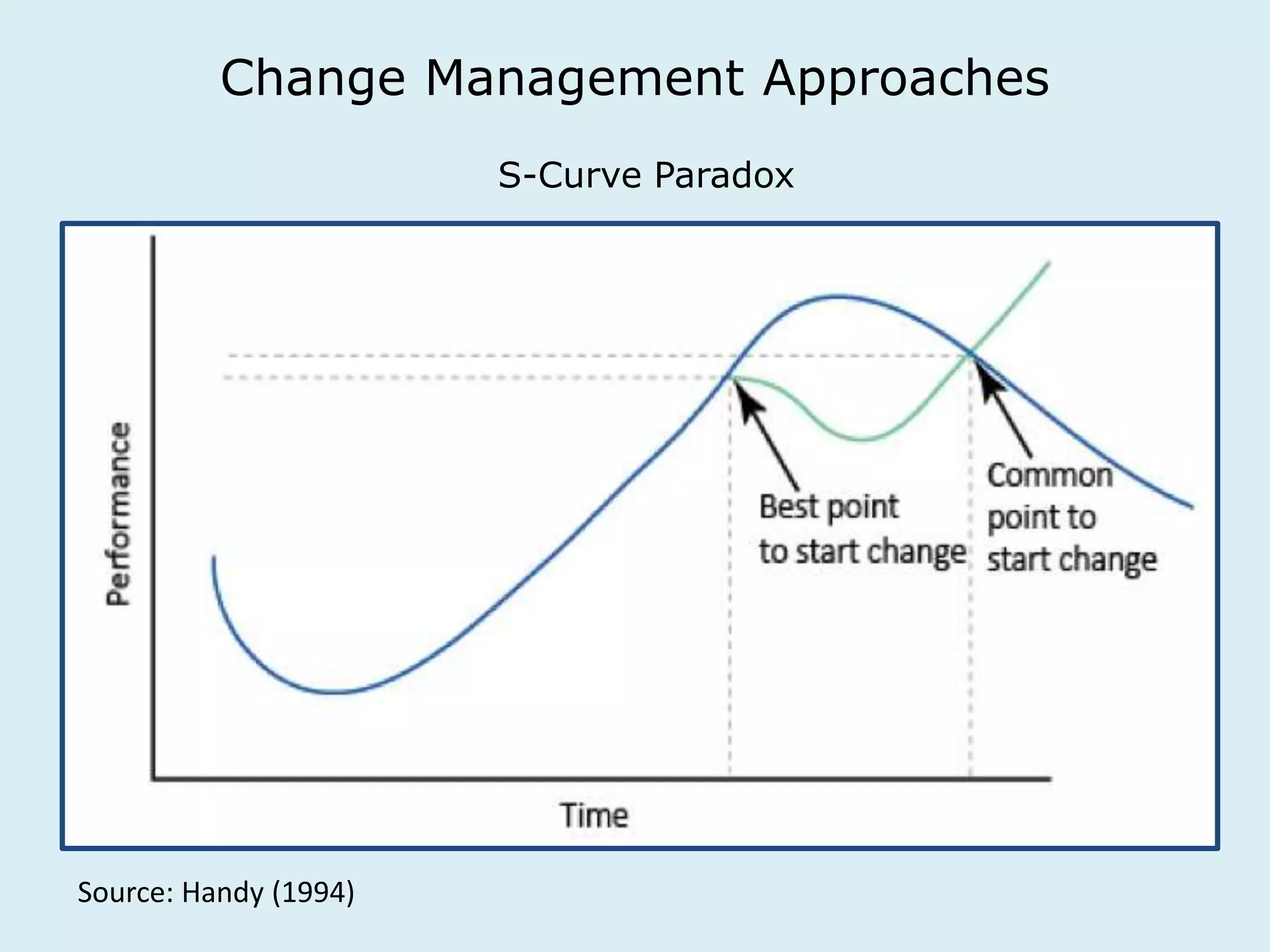
Change Management Approaches 
S-Curve Paradox 
Source: Handy (1994)
Change Management Approaches 
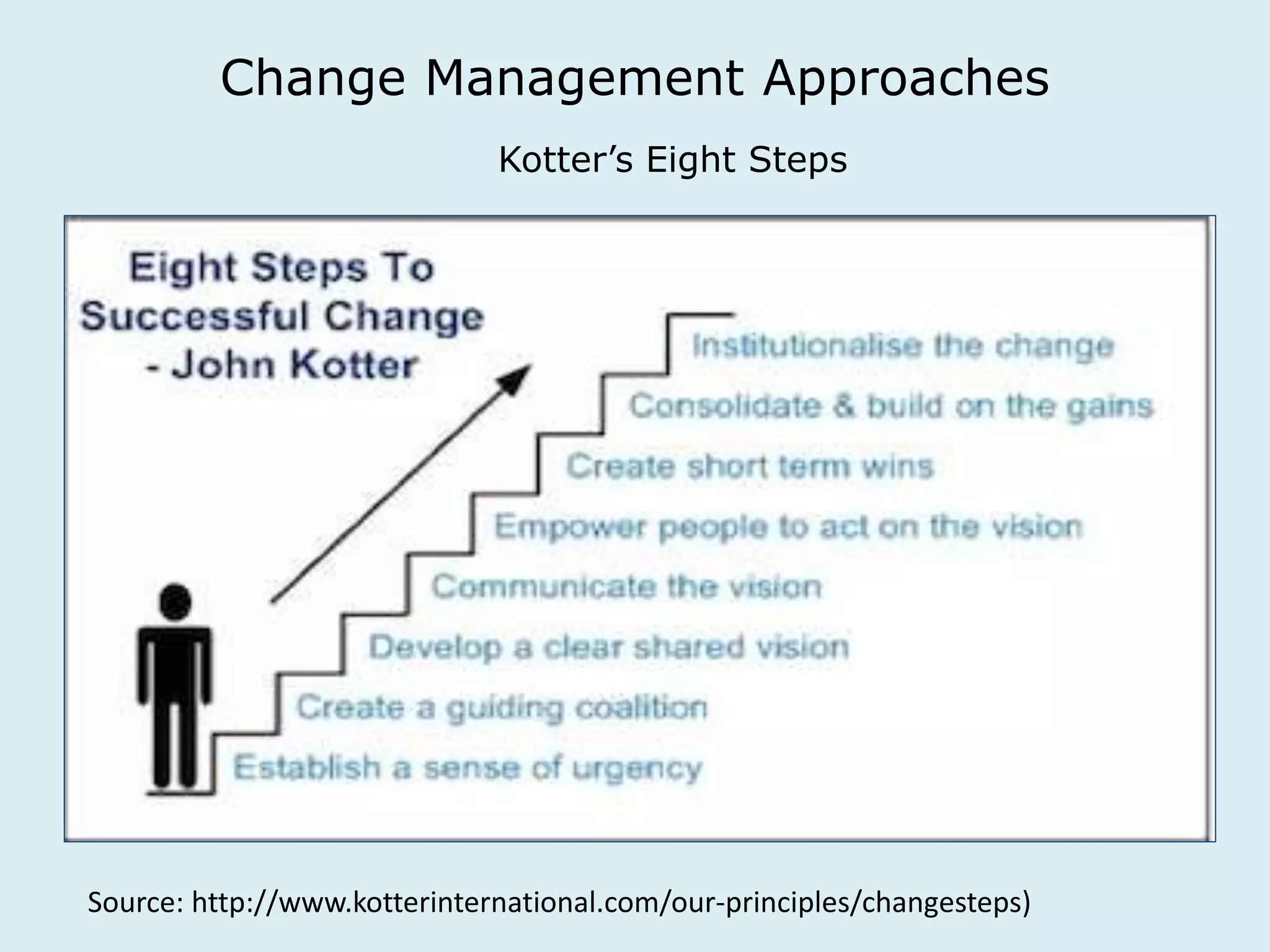
Kotter’s Eight Steps 
Source: http://www.kotterinternational.com/our-principles/changesteps)
Change Management Approaches 
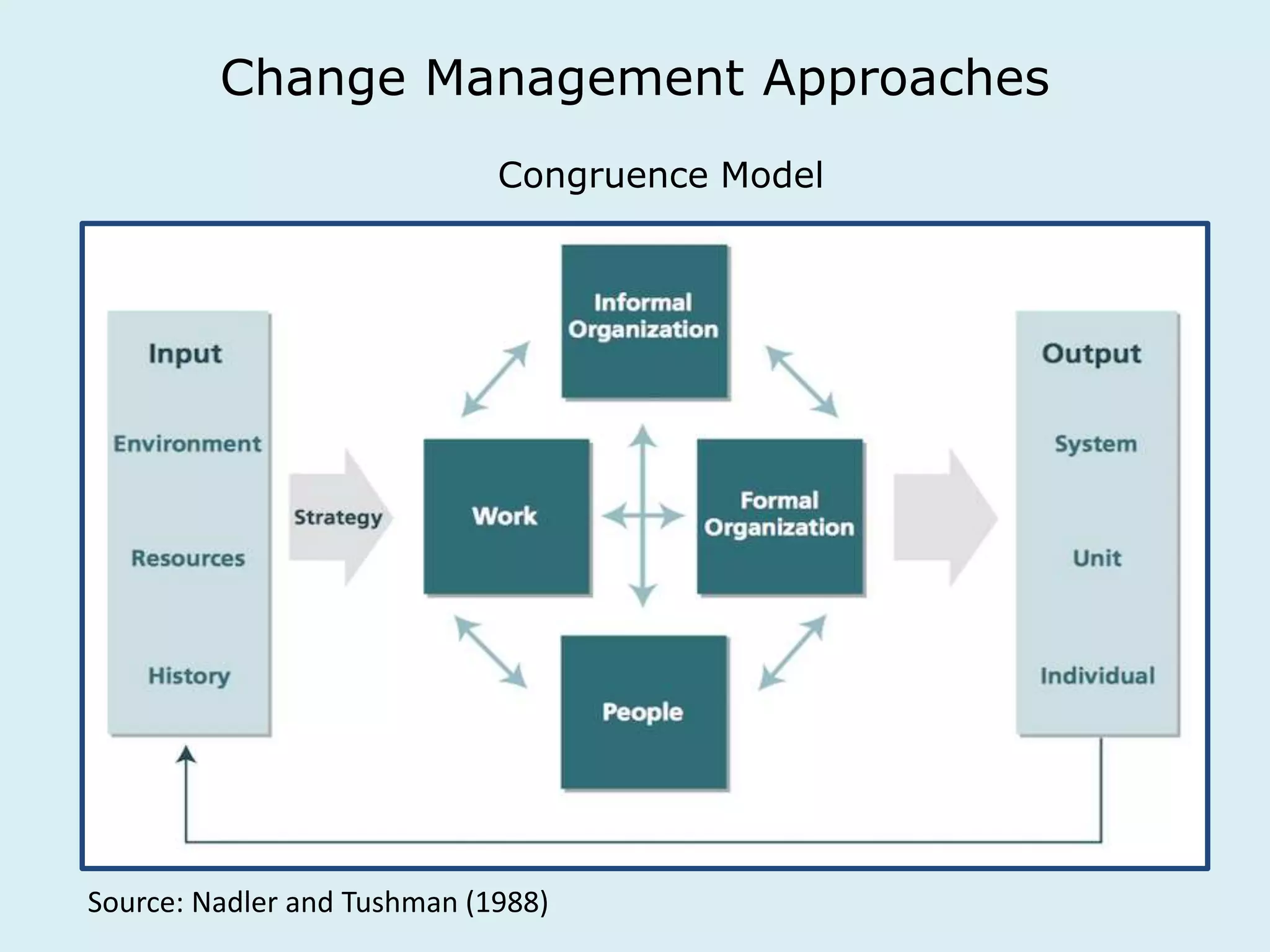
Congruence Model 
Source: Nadler and Tushman (1988)
End of presentation 
© Pearson College 2013

Lecture 8 industry studies student

  • 1.
    Industry Studies: ConsumerGoods Industry Topic: Innovation and Change in the Consumer Goods Industry Topic Number:8
  • 2.
    Overview Innovation andchange play a fundamental role in an organisations ability to keep pace with a market, drive it forward and get ahead of the competition. In addition, it is important for firms operating in the CGI to innovate around process to reduce costs and become more socially conscious and effective. In this lecture, we will learn all about how innovation and change is done in organisations operating in the CGI. We will initially look to understand what innovation is and the different kinds of innovation that firms can adopt. We will also look at emerging forms of innovation from emerging markets. Thereafter, we will look at some of the challenges to making innovation and change happen in organisations and how we can overcome these. Finally, we will look at a number of different approaches to change management organisations can use. 2
  • 3.
    Learning Outcomes 3 • Determine and describe what innovation is in an organisation • Articulate the different models of innovation used in the East and West • Be able to discuss the challenges faced in implementing innovation and change • Critically evaluate a number of change models to determine the optimal way to create change in organisations
  • 4.
    Innovation Most ofus understand that innovation is enormously important. It’s the only insurance against irrelevance. It’s the only guarantee of long-term customer loyalty. It’s the only strategy for out-performing a dismal economy. Gary Hamel Learning and innovation go hand in hand. The arrogance of success is to think that what you did yesterday will be sufficient for tomorrow. William Pollard
  • 5.
  • 6.
    What is innovation? Innovation can be defined as the application of new ideas to the products, processes, or other aspects of the activities of a firm that lead to increased “value.” This “value” is defined in a broad way to include higher value added for the firm and also benefits to consumers or other firms.
  • 7.
    Characteristics of innovation A key issue here is to distinguish innovation, the bringing to market of a truly novel item, from imitation, the adoption of a new technique or design that is already in the market. New to a firm New to a domestic market New to a world market
  • 8.
    Two types ofinnovation Product Innovation Process Innovation The introduction of a new product, or a significant qualitative change in an existing product. The introduction of a new process for making or delivering goods and services.
  • 9.
    Radical vs IncrementalInnovation Incremental Radical • Extension of existing product • Developed in response to a specific market need • Customer pull • New tech creates new market • Market creating • Technology push Substantial
  • 10.
  • 11.
    Where does thissit on the spectrum? https://www.youtube.com/watch?v=dG0vLFFtZDs
  • 12.
    What is disruptive/radicalinnovation? https://www.youtube.com/watch?v=qDrMAzCHFUU#t=188
  • 13.
  • 14.
  • 15.
    But why isit important to innovate
  • 16.
    But why isit important to innovate? “Our resilient brands will strengthen their market positions and performance as they comprehensively satisfy the preferences of our customers”. “We are not changing direction we will continue to move full-steam ahead with our core business, which is stores“ Chairman HMV, 2007 CEO Blockbuster, 2001
  • 17.
    How do Westernfirms innovate?
  • 18.
    For example, Unilever’sR&D center network
  • 19.
    R&D at theheart of a business
  • 20.
    However, emerging marketsare developing their own way of innovating https://www.youtube.com/watch?v=hvMQKx-uBi0 Watch from 1:50
  • 21.
    At the heartof Jugaad
  • 22.
  • 23.
    What is it? Jugaad Innovation Jugaad is a colloquial Hindi word that roughly translates as ‘‘an inno- vative fix; an improvised solution born from ingenuity and cleverness.’’ Jugaad is, quite simply, a unique way of thinking and acting in response to challenges; it is the gutsy art of spotting opportunities in the most adverse circumstances and resourcefully improvising solutions using simple means. Jugaad is about doing more with less. The word jugaad is also applied to any use of an ingenious way to ‘‘game the system.’’ A missed call here and there…
  • 24.
    What is it? Jugaad Innovation https://www.youtube.com/watch?v=mrFyPaie3pQ
  • 25.
    The 6 keyprinciples of Jugaad Seek opportunity in Adversity Do More with Less Think and Act Flexibly Keep it simple Include the margins Follow your heart
  • 26.
    Thinking Outside the(Ice) Box WHAT IF your fridge can operate without electricity? Source: http://www.mitticool.in/ Source: http://gizmodo.com
  • 27.
  • 28.
    The Innovator’s Dilemma https://www.youtube.com/watch?v=qDrMAzCHFUU
  • 29.
    The case ofKodak A vacation with Kodak Focused on women Made it social Introduced the brownie
  • 30.
    But along camedigital; why couldn't they The incumbent s curse Core rigidities Leadership and culture Strategic flux Diversify into what exactly? Cannibalisation innovate?
  • 31.
  • 32.
    How can youminimise failure? Market research… …Think again…
  • 33.
  • 34.
    Change Management Approaches S-Curve Paradox Source: Handy (1994)
  • 35.
    Change Management Approaches Kotter’s Eight Steps Source: http://www.kotterinternational.com/our-principles/changesteps)
  • 36.
    Change Management Approaches Congruence Model Source: Nadler and Tushman (1988)
  • 37.
    End of presentation © Pearson College 2013

Editor's Notes

  • #25 Watch the first minute