
Science and Practice of StrengthTrainingChapter 2
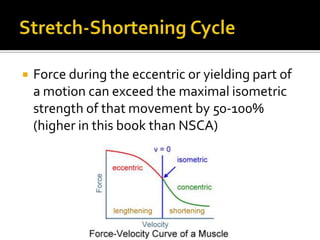
 Force during the eccentric or yielding part of
a motion can exceed the maximal isometric
strength of that movement by 50-100%
(higher in this book than NSCA)
 Ground reaction force is higher during the
yielding or eccentric phase of a depth jump
when compared to the concentric phase.
 Olympic weightlifters can sustain almost
twice their maximal isometric grip strength
during heavy lifts. Typically a weightlifter will
have a static grip strength of around 1000N
per arm, but each arm must sustain a peak of
2000N during the lift (isometric/eccentric
action on grip).
 We already learned that doing heavy
eccentric work in the weightroom will make
an athlete prone to DOMS.
 Lots of dynamic eccentric work can also
cause DOMS through damaged muscle fibers
(microtears). This can be prevented by
proper conditioning before the heavy
eccentric activity (drop jumps, downhill
running) is undertaken.
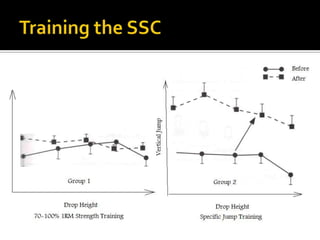
 Also referred to as reversible muscle action
 The SSC involves a muscle shortening
immediately after a stretch. When this occurs
 Force and power increase
▪ Jump Example
 Energy expenditure decreases (efficiency!)
 The Stretch Shortening Cycle occurs when
 A muscle is quickly and forcibly stretched
 Proprioceptors signal the fast stretch and signal
the muscle to contract via a spinal reflex
 The isometric phase is short enough to conserve
elastic energy
 The muscle contracts powerfully
 There are 4 reasons that the SSC causes
increased force production
 At the isometric phase of the SSC high velocity is
avoided and therefore Fmm can be exerted to a
greater degree
 The force begins to develop in the eccentric
phase, therefore, more time is available for force
development
 Tendon elasticity and reflex action
 Elastic energy is very important in athletic
movements
 The tendons work as amplifiers to the work of
the frictional elements of movement (muscle)
 When the muscle
tendon complex is
stretched, the stored
energy is proportional
to the applied force
and induced
deformation
 The amount that the
muscle/tendon
deforms is a function
of its compliance
Research is currently being done on tendon
compliance and training. In general, heavy
weight training and distance running will
make the tendons stiffer. Good sprinters
tend to have compliant tendons in muscle
groups which require a large range of motion.
 The motor reflex of the SSC is controlled by
two reflexes
 Myotatic reflex
 GolgiTendon reflex
 The feedback systems operate
 To keep the muscle close to a preset length
 To prevent unusually high and potentially
damaging muscle tension
 Run parallel to the main (intrafusal) muscle
fibers.
 Sense increased length of muscle (stretching)
 When a rapid stretch occurs, there is an
increased discharge in alpha-motoneurons
and therefore a reflex contraction of the
stretched muscle.
 Arranged in series with muscle fibers at
muscle tendon junction (not outside the
muscle like the spindles).
 GTO’s measure tension in the muscle/tendon
complex and inhibit muscle contraction if
force is too high.
 Athletes without a well developedGTO
response (raised threshold) will never be able
to display the SSC performance of athletes
with well developedGTO ability, regardless of
absolute strength.
 Fmm strength and Fm strength as the result of a
powerful stretch shortening cycle is not
correlated in good athletes, they should be
treated and trained as two separate abilities.
 Muscle Spindle reflex action is considered a
positive (exitatory) effect towards the SSC
 GolgiTendon reflex action is considered a
negative (inhibitory) effect towards the SSC
 To have a more powerful SSC response, you
want more Muscle Spindle reflex action and
less GTO reflex action.
 The maximal force that an athlete can exert
into a bar depends on the height of the
barbell in relation to the athlete
The body posture
in a multi-joint
movement will
change the amount
of force that can
be applied to the
resistance, in this
case, a barbell
 Lifting blocks allow a lifter to lift a weight
from a position of higher force production
% Max strength changes as the
angle of a joint changes during a
strength training (or athletic)
movement.
Some sport training programs will
recommend isometric work either
based on multiple angles, or the
angle of a resistance training
exercise where the force
production is the highest
 The longer the arm, the more resistance that
must be overcome
 Moment=Force x
Distance
M=FD
 As a joint angle changes, the distance from
the muscle origin to insertion changes. The
moment arm of the resistance also changes.
 Aside from the moment arm, the length of a
muscle will affect the force production of a
movement. Generally speaking, the shorter a
muscle becomes in a movement, the less
force it can produce.
 The length of a muscle that covers two joints
(such as hamstrings or calves) depends on the
angular position of both joints.
 Calf Raise Example
 Hip Raise Example
 When a joint approaches its limits in range of
motion, the passive elastic forces increase.
 Examples
 Bringing the arm back in a pitch
 The leg swinging back during sprinting

Lecture 5 task specific strength2_(pt2) ppt

  • 1.
    Science and Practiceof StrengthTrainingChapter 2
  • 2.
     Force duringthe eccentric or yielding part of a motion can exceed the maximal isometric strength of that movement by 50-100% (higher in this book than NSCA)
  • 3.
     Ground reactionforce is higher during the yielding or eccentric phase of a depth jump when compared to the concentric phase.  Olympic weightlifters can sustain almost twice their maximal isometric grip strength during heavy lifts. Typically a weightlifter will have a static grip strength of around 1000N per arm, but each arm must sustain a peak of 2000N during the lift (isometric/eccentric action on grip).
  • 4.
     We alreadylearned that doing heavy eccentric work in the weightroom will make an athlete prone to DOMS.  Lots of dynamic eccentric work can also cause DOMS through damaged muscle fibers (microtears). This can be prevented by proper conditioning before the heavy eccentric activity (drop jumps, downhill running) is undertaken.
  • 5.
     Also referredto as reversible muscle action  The SSC involves a muscle shortening immediately after a stretch. When this occurs  Force and power increase ▪ Jump Example  Energy expenditure decreases (efficiency!)
  • 6.
     The StretchShortening Cycle occurs when  A muscle is quickly and forcibly stretched  Proprioceptors signal the fast stretch and signal the muscle to contract via a spinal reflex  The isometric phase is short enough to conserve elastic energy  The muscle contracts powerfully
  • 7.
     There are4 reasons that the SSC causes increased force production  At the isometric phase of the SSC high velocity is avoided and therefore Fmm can be exerted to a greater degree  The force begins to develop in the eccentric phase, therefore, more time is available for force development  Tendon elasticity and reflex action
  • 8.
     Elastic energyis very important in athletic movements  The tendons work as amplifiers to the work of the frictional elements of movement (muscle)
  • 9.
     When themuscle tendon complex is stretched, the stored energy is proportional to the applied force and induced deformation  The amount that the muscle/tendon deforms is a function of its compliance
  • 10.
    Research is currentlybeing done on tendon compliance and training. In general, heavy weight training and distance running will make the tendons stiffer. Good sprinters tend to have compliant tendons in muscle groups which require a large range of motion.
  • 11.
     The motorreflex of the SSC is controlled by two reflexes  Myotatic reflex  GolgiTendon reflex  The feedback systems operate  To keep the muscle close to a preset length  To prevent unusually high and potentially damaging muscle tension
  • 12.
     Run parallelto the main (intrafusal) muscle fibers.  Sense increased length of muscle (stretching)  When a rapid stretch occurs, there is an increased discharge in alpha-motoneurons and therefore a reflex contraction of the stretched muscle.
  • 13.
     Arranged inseries with muscle fibers at muscle tendon junction (not outside the muscle like the spindles).  GTO’s measure tension in the muscle/tendon complex and inhibit muscle contraction if force is too high.
  • 14.
     Athletes withouta well developedGTO response (raised threshold) will never be able to display the SSC performance of athletes with well developedGTO ability, regardless of absolute strength.  Fmm strength and Fm strength as the result of a powerful stretch shortening cycle is not correlated in good athletes, they should be treated and trained as two separate abilities.
  • 16.
     Muscle Spindlereflex action is considered a positive (exitatory) effect towards the SSC  GolgiTendon reflex action is considered a negative (inhibitory) effect towards the SSC  To have a more powerful SSC response, you want more Muscle Spindle reflex action and less GTO reflex action.
  • 17.
     The maximalforce that an athlete can exert into a bar depends on the height of the barbell in relation to the athlete
  • 18.
    The body posture ina multi-joint movement will change the amount of force that can be applied to the resistance, in this case, a barbell
  • 19.
     Lifting blocksallow a lifter to lift a weight from a position of higher force production
  • 20.
    % Max strengthchanges as the angle of a joint changes during a strength training (or athletic) movement. Some sport training programs will recommend isometric work either based on multiple angles, or the angle of a resistance training exercise where the force production is the highest
  • 21.
     The longerthe arm, the more resistance that must be overcome  Moment=Force x Distance M=FD
  • 22.
     As ajoint angle changes, the distance from the muscle origin to insertion changes. The moment arm of the resistance also changes.  Aside from the moment arm, the length of a muscle will affect the force production of a movement. Generally speaking, the shorter a muscle becomes in a movement, the less force it can produce.
  • 23.
     The lengthof a muscle that covers two joints (such as hamstrings or calves) depends on the angular position of both joints.  Calf Raise Example  Hip Raise Example
  • 24.
     When ajoint approaches its limits in range of motion, the passive elastic forces increase.  Examples  Bringing the arm back in a pitch  The leg swinging back during sprinting